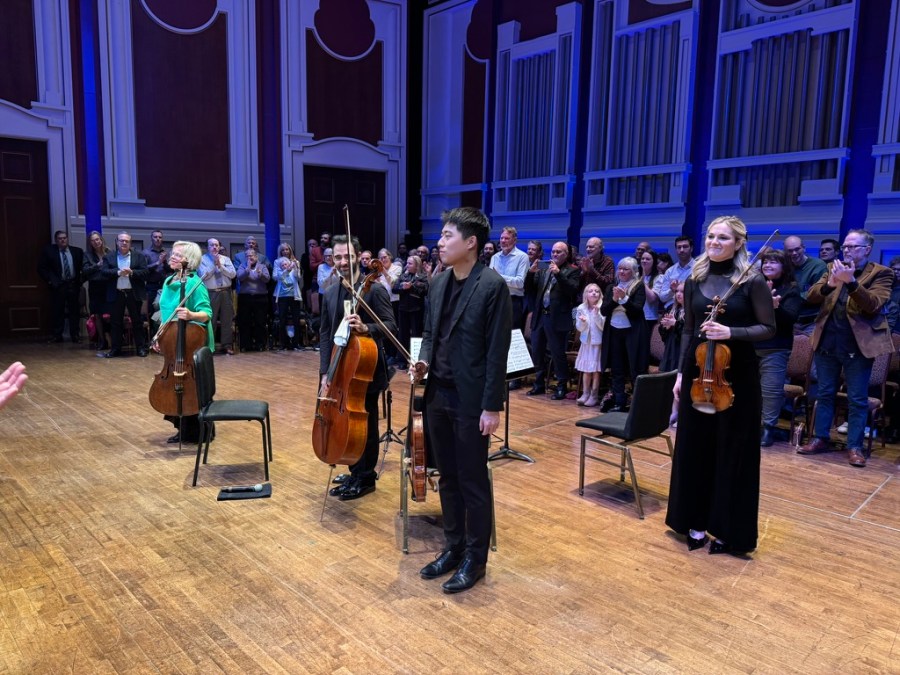
Pablo Ferrández, cello*† David McCarroll, violin† Justine Campagna, violin* Dylan Naroff, violin† Zhenwei Shi, viola*† Anne Martindale Williams, cello*†
Heinz Hall Pittsburgh, PA November 15, 2025
Arensky: String Quartet No. 2 in A minor, Op. 35* Schubert: String Quintet in C major, D956†
Following his lyrical and refined performance of Saint-Saëns with the Pittsburgh Symphony, the next evening cellist Pablo Ferrández was featured in a PSO360 program alongside string players drawn from the orchestra’s ranks — the first three of the violins, principal viola, and principal cello. Both the works programmed were strikingly scored for two cellos: the first a remarkable discovery, the latter, a pillar of the chamber repertoire.
Pittsburgh Symphony Orchestra Manfred Honeck, conductor Yuja Wang, piano David McCarroll, violin Justine Campagna, violin Heinz Hall Pittsburgh, PA September 20, 2025
López: “Techno” from Fiesta! Strauss Jr: Éljen a Magyár!, Op. 332 (arr. Nischkauer) Shostakovich: “Waltz II” from Suite for Variety Orchestra No. 1 Sarasate: Navarra Mascagni: “Intermezzo” from Cavalleria rusticana Mancini: Strings on Fire Tchaikovsky: Piano Concerto No. 1 in B-flat minor, Op. 23
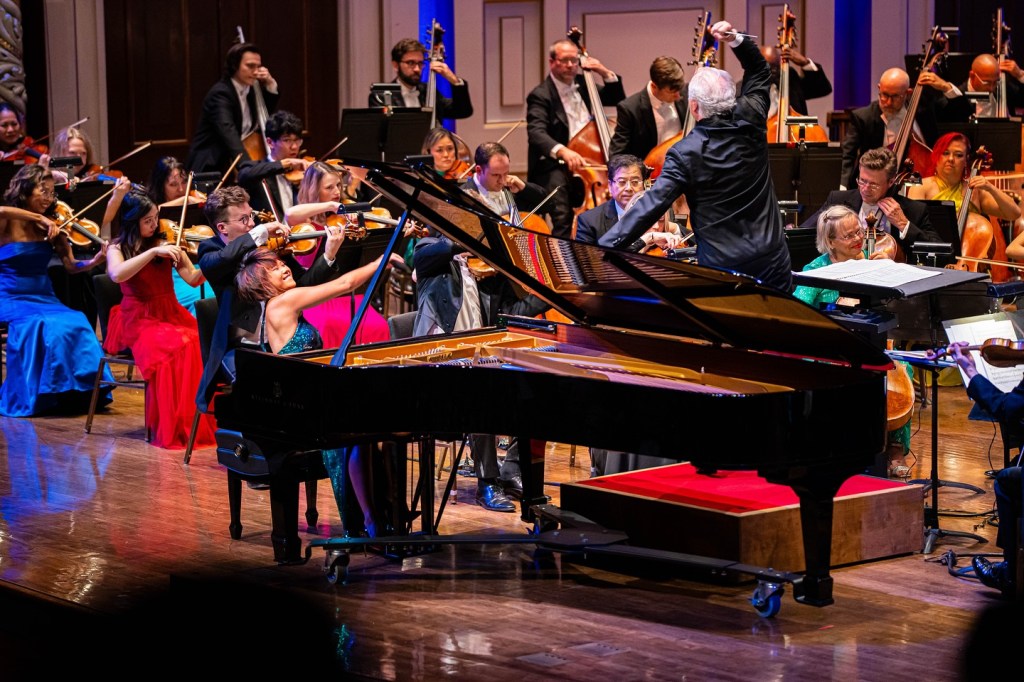
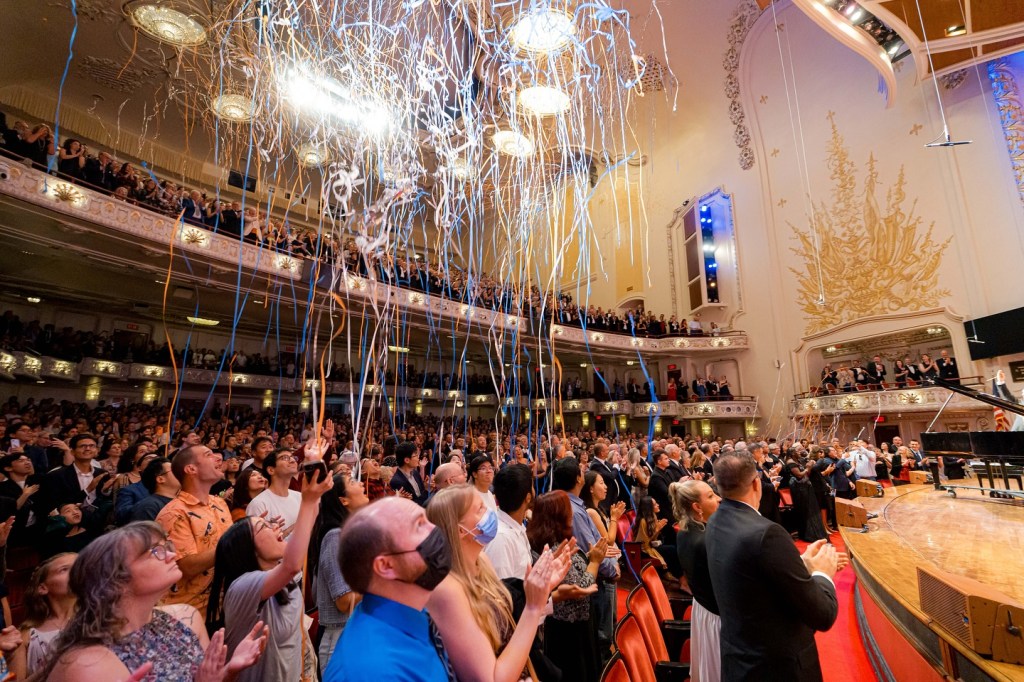
A celebratory gala concert marked the start of the Pittsburgh Symphony’s 2025-26 concert season, featuring a potpourri of appealing orchestral works guided by music director Manfred Honeck before star pianist Yuja Wang took the Heinz Hall stage. A major fundraising event for the organization as well, and a successful one — reportedly raising nearly $1 million.
Yuja Wang with Manfred Honeck and the PSO, photos credit JMilteer Photography
Techno from the Fiesta! suite by Jimmy López certainly made for exciting first notes of the season with its driving kinetic energy, enhanced by an expanded percussion section. Strauss’ Éljen a Magyár! charmed in its infectiously lilting rhythms, and served as an acknowledgment of the composer’s 200th birthday.
Another anniversary was marked with Shostakovich, who we note died 50 years ago. A waltz from his Suite for Variety Orchestra No. 1 was nearly Chopinesque in its blending of elegance and melancholy. Sarasate’s Navarra featured dueling PSO violinists David McCaroll and Justine Campagna, playing the material with inimitable Spanish charm and coruscating virtuosity.
Mascagni’s indelible intermezzo from Cavalleria rusticana (which local audiences got to hear complete at Pittsburgh Opera last season) saw delicate strings blossom into the sumptuous. Finally, Henry Mancini’s (best remembered as composer of The Pink Panther and other films) Strings on Fire was just that — a sizzling, energetic workout.
I heard Yuja Wang play Tchaikovsky’s First Piano Concerto at The Cleveland Orchestra this past March, and was dazzled by her consummate virtuosity, command of the keyboard, and refined playing that revealed details I hadn’t heard before even in this overly familiar warhorse. There’s little else to say about it, but what a thrill it was to see her deliver such impassioned and assured playing with the Pittsburgh musicians, her first local appearance since 2013. Despite a thunderous ovation and numerous curtain calls, she didn’t indulge the capacity crowd with an encore, but perhaps it would have been all but gratuitous after such a satisfying take on Tchaikovsky.
Tom Borrow, piano Justine Campagna, violin Jeremy Black, violin Tatjana Mead Chamis, viola Anne Martindale Williams, cello Strings of the Pittsburgh Symphony Orchestra
Heinz Hall Pittsburgh, PA October 19, 2024
Mozart: Violin Sonata No. 21 in E minor, K304 Grieg: Holberg Suite, Op. 40 Dvořák: Piano Quintet in A major, Op. 81
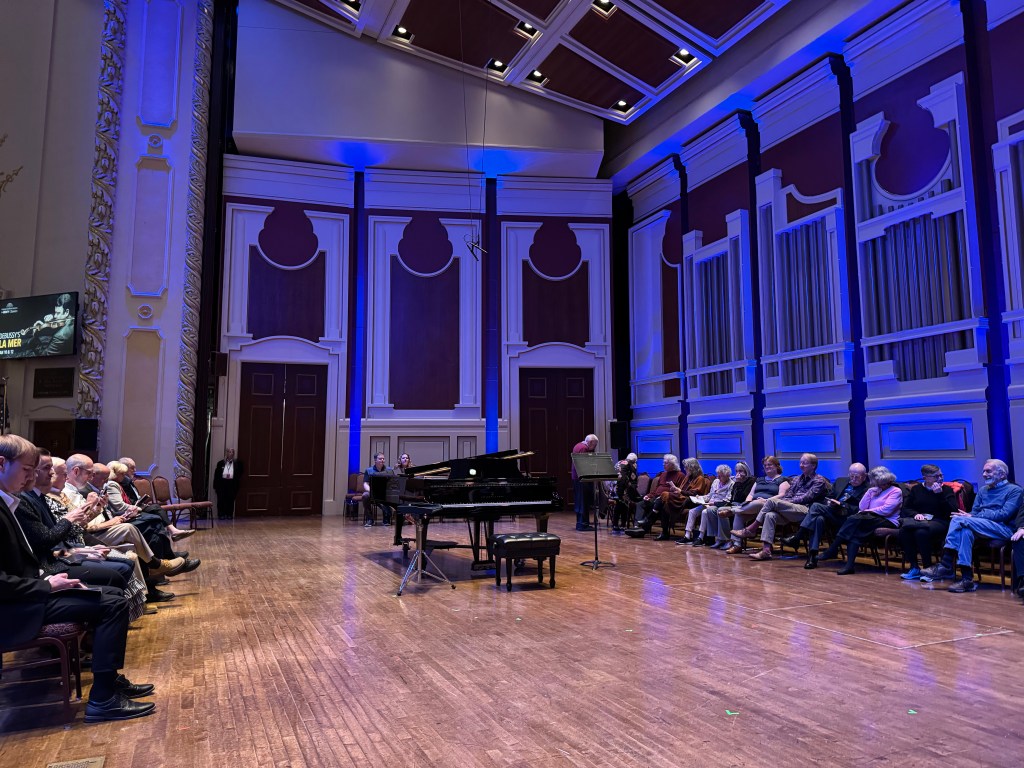
One of the Pittsburgh Symphony’s more enterprising endeavors is the PSO360 series, which engages the guest soloist from the weekend’s subscription concerts in chamber music with select PSO members. An intimate audience of 200 is seated on the Heinz Hall stage, circled around the performers, affording the opportunity to see another side of the soloist and orchestra players alike.
The soloist in question was the young Israeli pianist Tom Borrow, who made a strong impression in the performances of Ravel’s piano concerto that flanked Saturday’s chamber concert. To begin, Borrow teamed up with associate concertmaster Justine Campagna in Mozart’s E minor violin sonata. The only work in Mozart’s vast catalogue to be cast in that key, it’s a particularly deeply-felt creation, one that the program notes aptly compared to the A minor piano sonata (K310) for its expressive range.
Campagna was elegant and articulate, and Borrow responded in kind with sparkling, quintessentially Mozartian pianism. The development section was particularly emotive, and the minuet that closed the two-movement sonata was perhaps the most profound of all minuets, a rich conversation between violinist and pianist.
Grieg’s Holberg Suite brought out the Pittsburgh string section, and there was a visceral energy in being onstage with 20 string players, evident from the effusive prelude which opened. Peaceful, lyrical movements followed, swelling to a warm resonance, and I was especially struck by the clarity of the inner voices. Perhaps most affecting was the Air, songful and mournful — and a touching homage to Bach. The Rigaudon brought the suite to a close with joyous abandon.
Following intermission, Borrow returned with a quartet of strings for Dvořák’s great A major piano quintet. A graceful introduction in the piano paved the way for a lyrical cello passage (Anne Martindale Williams). The five players wove together a rich tapestry with a feverish intensity, yet at its core still as good-natured as the composer himself. An elegant piano gesture marked the Dumka, a wistful essay punctuated by gorgeous interludes.
There was a vivacity to the folk inflections of the Scherzo that could only put a smile on one’s face, and the finale continued in the highest of spirits — but not without a blistering fugato. Here as throughout, Borrow sounded like a seasoned collaborator with these Pittsburgh players.
Tom Borrow with members of the Pittsburgh Symphony