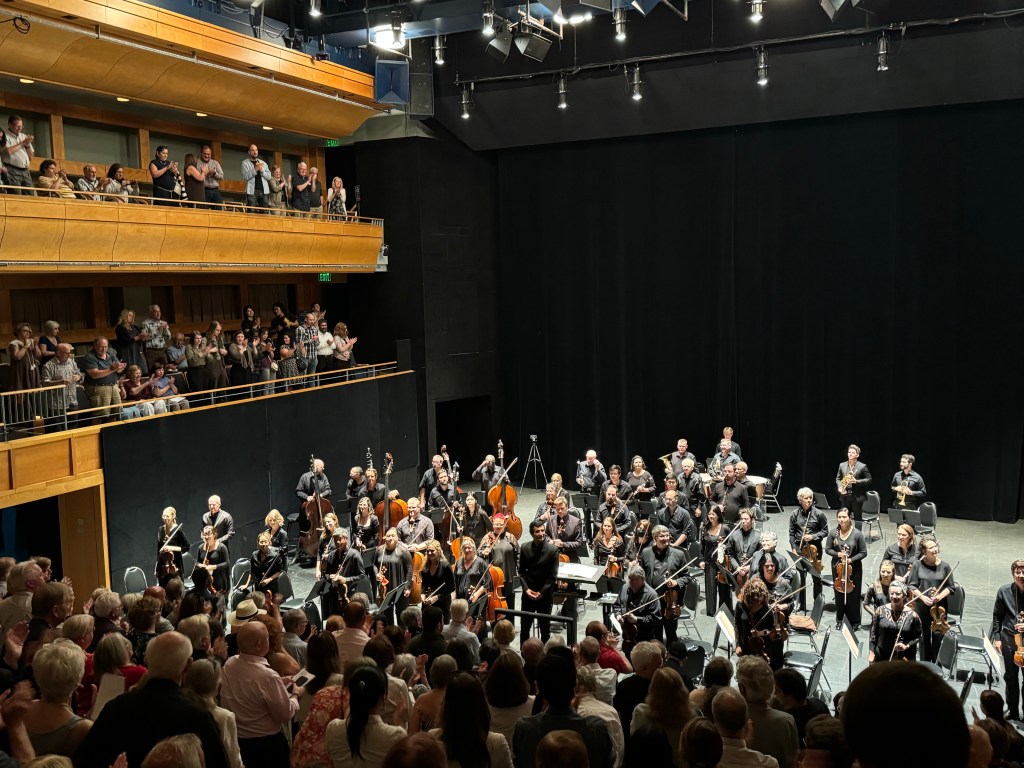
Pittsburgh Opera Antony Walker, conductor Haley Stamats, director
Matthew Soibelman, Idreno Lauryn Davis, Armida Fran Daniel Laucerica, Rinaldo Erik Nordstrom, Ubaldo Audrey Welsh, Clotarca Shannon Crowley, Zelmira
CAPA School Theater Pittsburgh, PA January 28, 2025
Haydn: Armida, Hob. XXVIII:12
The overwhelming majority of the standard opera repertoire dates from the 19th and into the early 20th centuries. Hearing a work outside that admittedly fertile era is always a welcome opportunity, afforded locally in late January by Pittsburgh Opera’s presentation of Haydn’s 1784 dramma eroico, Armida. The subject matter deals with the First Crusade, and inspired a litany of music, including earlier operatic treatments by Handel (Rinaldo) and Lully (Armide).
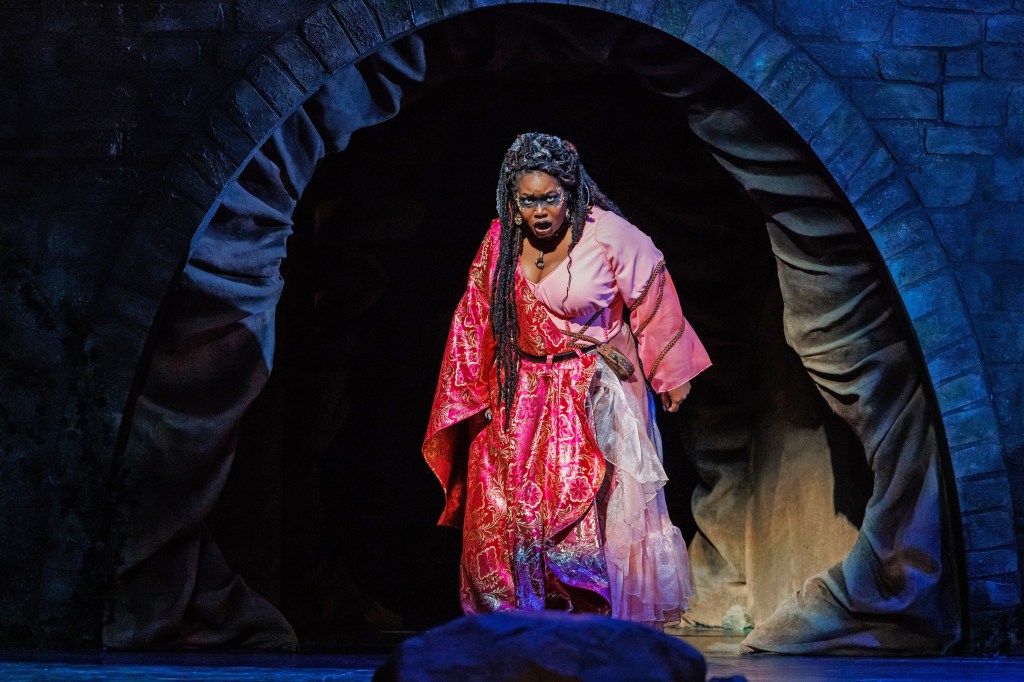
Armida (Lauryn Davis), photos credit David Bachman Photography for Pittsburgh Opera
The forces Armida required conveniently allowed all eight members of this year’s corps of resident artists a moment in the spotlight — six vocalists, along with pianist Maeve Berry and assistant stage director Dana Kinney. The Pittsburgh Opera Orchestra under the baton of Antony Walker opened crisp and articulate, just as adept in the late 18th-century style as they are in Puccini — though I did find the obvious electronic sound of the continuo a bit jarring. Bass Matthew Soibelman made the first vocal appearance in a declamatory recitative.
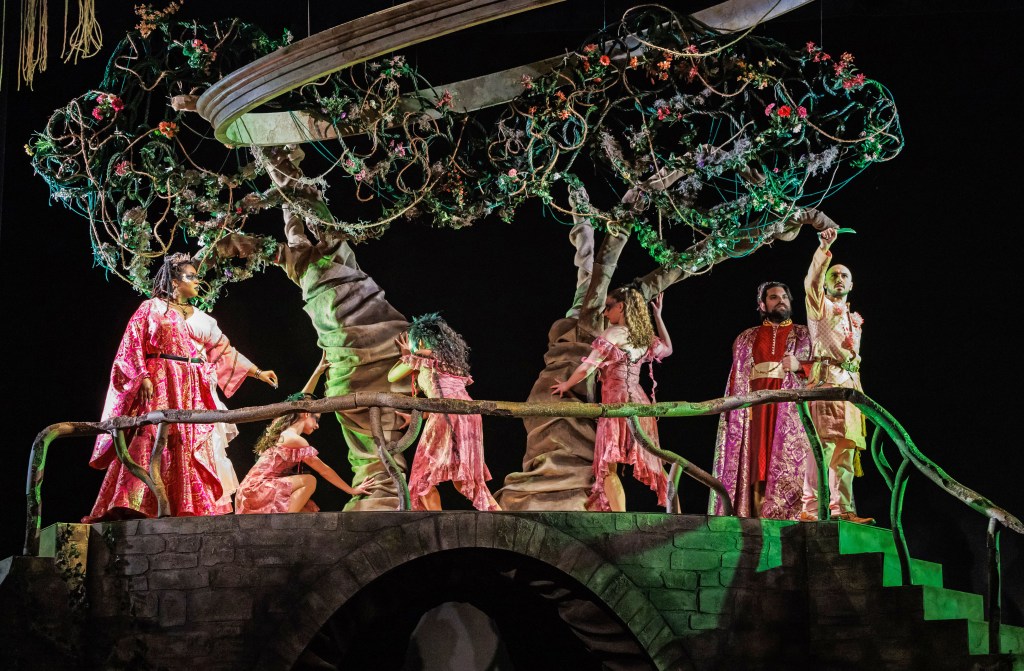
A troupe of dancers from Attack Theatre added a further expressive dimension to the performance, and provided narrative in the absence of text. I particularly enjoyed the various duets when the singers’ voices harmoniously blended — Audrey Welsh as Clotarca (originally, a tenor named Clotarco, but rescored and renamed here to fit the mezzo-soprano) with Shannon Crowley as Zelmira, and certainly the two leads: Fran Daniel Laucerica’s loving and longing take on Rinaldo, with Lauryn Davis as the imposing titular sorceress. With elements of the supernatural achieved through clever staging, the work ultimately drew to a dark and stormy end in this quintessential opera seria.
Armida (Lauryn Davis), nymphs (dancers courtesy of Attack Theatre), Idreno (Matthew Soibelman), Rinaldo (Fran Daniel Laucerica)
Tommy Mesa, cello Michelle Cann, piano PNC Theatre Pittsburgh Playhouse Pittsburgh, PA January 20, 2025
Nadia Boulanger: Three Pieces for Cello and Piano Debussy: Cello Sonata in D minor, L135 Kevin Day: Sonata for Cello and Piano Casarrubios: Mensajes del agua Shostakovich: Cello Sonata in D minor, Op. 40
Encore: Rachmaninoff: Andante from Cello Sonata in G minor, Op. 19
If one longed for an escape from the presidential inauguration and the bitter cold temperatures, Chamber Music Pittsburgh offered a perfect solution the night of January 20 by way of a cello and piano recital. Cuban-American cellist Tommy Mesa was joined by Michelle Cann, and the duo offered a wide-ranging, diverse program, ripe with musical discovery.
Michelle Cann and Tommy Mesa at the PNC Theater, photo credit Chamber Music Pittsburgh
Better known as a pedagogue of enormous influence, Nadia Boulanger was also an accomplished composer in her own right (as was her far too short-lived sister, Lili). The first of her Three Pieces for Cello and Piano boasted an expressive cello melody, underpinned by rippling gestures in the piano’s upper register. The middle piece served as a gentle interlude before the fiery close which saw extrovert playing from both parties to round off these finely crafted gems.
Near the end of his life, Debussy embarked on a set of six sonatas for various instrumental combinations. Sadly, only three were completed, the first being a brief but impactful cello sonata. Introductory material in the piano evidenced a unique soundscape, even for Debussy. Rich tone in the cello and dramatic playing in the piano made for a captivating effect, and yielded a language markedly different from the German tradition (this sonata is worlds apart from the Brahms cello sonatas, for instance). The central Sérénade showed Debussy as the master of effect, with ample use of pizzicato, glissando, and most strikingly, flautando – bowing in such a way as to create a flute-like sound. An interlude that brought to mind the charm of Children’s Corner, ahead of a playful finale that brimmed with Gallic elegance.
A 2016 cello sonata from West Virginia composer Kevin Day closed the first half. Though Day’s first work for the medium, its skillful writing grabbed one in from the beginning with its piquant harmonies and energetic syncopations. The central Lento was especially lovely with a long melody high in the cello’s range, with the piano gently pulsing. The sonata reached a satisfying close with a vigorous, driving finale. Mesa and Cann included this work on their warmly recommended album Our Stories, featuring works by Black and Latinx composers.
Andrea Casarrubios is another composer included on the album, represented in the present program by her work Mensajes del agua (“Messages from water”). Meant to depict the perfection of frozen water, it was meditative in its glacial stillness, and though textures were sparse, it purveyed a deep lyricism. Nikolai Kapustin’s Elegy was originally slotted on the program but jettisoned Monday evening, for which Mesa offered apologies to the Kapustin fans in the audience — a population to which I emphatically identify!
Any disappointment was easily allayed by the masterful performance of Shostakovich’s great cello sonata which closed. The first movement saw pointed articulation and a directness of expression, with Mesa’s burnished tone well-suited to the work. Despite its seeming simplicity, subtleties beneath the surface abounded for both instruments, with Shostakovich ever the subversive. A Largo section was marked by ominous pizzicato figures.
The brief Allegro second movement was perhaps the most remarkable, filled with colorful, sardonic writing. There was somber tragedy in the slow movement, with the cello nearly matching the human voice, and Mesa’s ample vibrato yielded a pained lyricism. A finale was in equal parts playful and gritty, drawing comparison to the composer’s First Piano Concerto from the previous year.
As an encore, the duo offered the slow movement from another great Russian cello sonata: Rachmaninoff’s G minor work. A sumptuously gorgeous close to the evening.
Mendelssohn Choir of Pittsburgh Daniel Singer, director
Jeanine De Bique, soprano Reginald Mobley, countertenor John Matthew Myers, tenor Joshua Hopkins, baritone
Heinz Hall Pittsburgh, PA December 7, 2024
Handel: Messiah, HWV 56
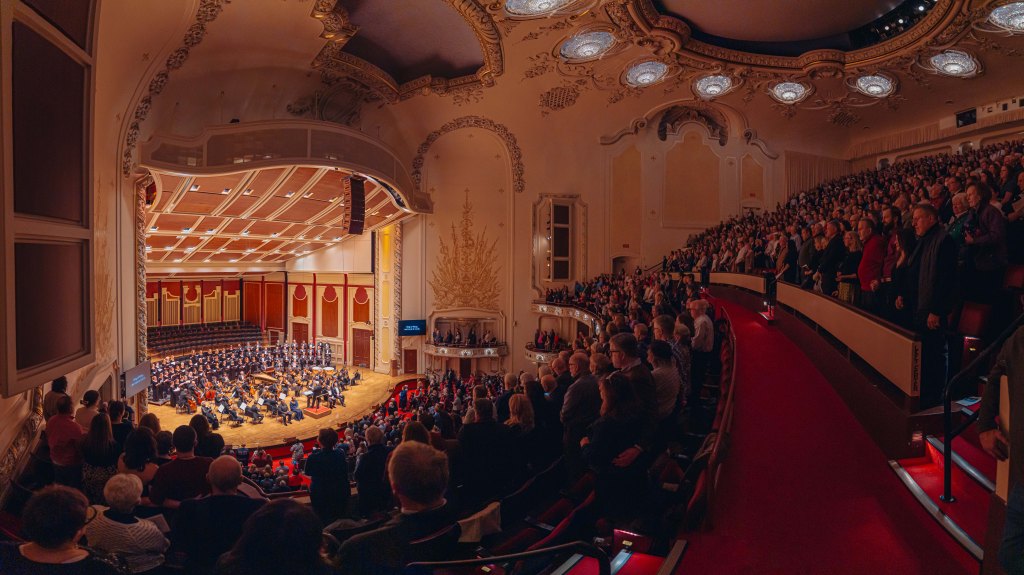
If there’s a sign the holiday season is upon us, surely it would be a performance of Handel’s timeless oratorio Messiah — although it’s worth remembering that its first performance coincided instead with Easter. Buttressing Manfred Honeck and the Pittsburgh Symphony was the Mendelssohn Choir and a quartet of vocal soloists — two of which along with the Choir were featured in the previous night’s performance of the Fauré Requiem.
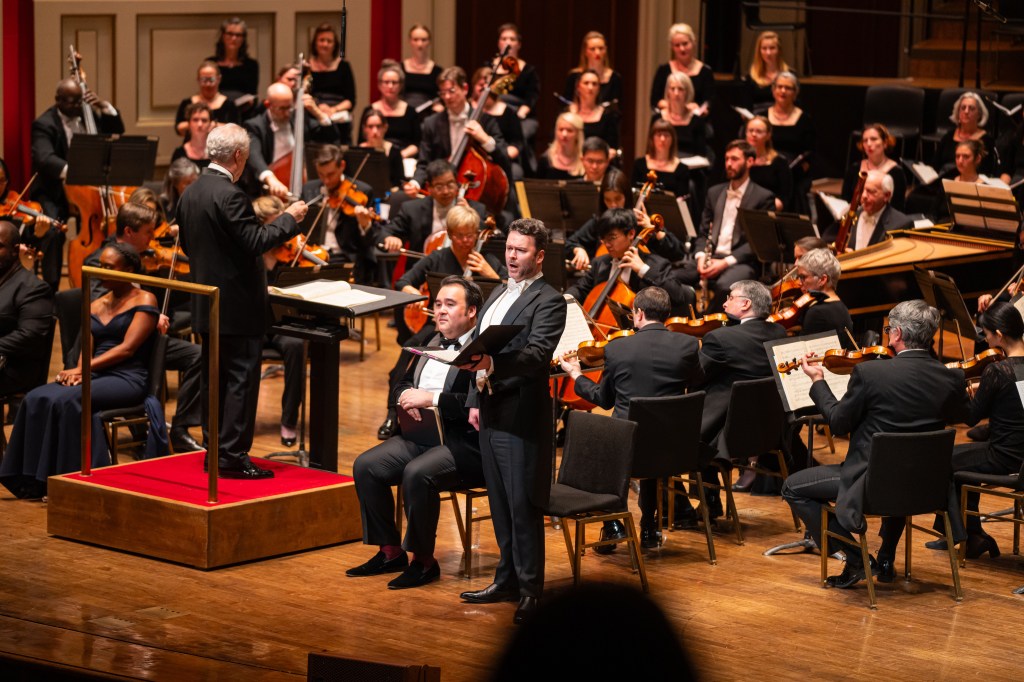
Reginald Mobley (cropped), Jeanine De Bique, John Matthew Myers, and Joshua Hopkins perform with Honeck and the PSO. Photos credit Josh Milteer / Pittsburgh Symphony Orchestra
As is often done, cuts were made to the present performance with Honeck artfully selecting 41 of the 53 segments for a brisk 90 minutes of music. The opening Sinfonia for orchestra alone was crisply articulated, a stern, minor-key affair in sharp contrast from the exultant quality of most of the work. Tenor John Matthew Myers had the first vocal appearance of the evening in “Comfort ye, my people,” purveying a smooth, lyrical tone that was comforting indeed.
Baritone Joshua Hopkins maintained an imposing vocal presence, apparent from his entry in the recitative “Thus saith the Lord.” A highlight of the generally more introspective Part II of the work came in Hopkins’ aria “Why do the nations so furiously rage” — and one longs for a year when this isn’t so topical. “The trumpet shall sound” from the third and final part was fittingly bright with tenor and trumpet in clarion conversation.
Reginald Mobley offered a flexible countertenor, wide in range and elastic in melisma. “Behold, a virgin shall conceive” saw him in delicate dialogue with the principal strings and continuo. All selections that featured the soloists were for a single performer, save for “O death, where is thy sting?” which engaged Mobley and Hopkins in duet. Their voices blended harmoniously — a pity there weren’t more opportunities to hear the quartet in concert with each other.
Appearing for the first time near the end of Part I was soprano Jeanine De Bique, delicate and nuanced. She was particularly angelic in Part III’s aria “I know that my Redeemer liveth,” decorated in tinsel by high and strings and organ. “If God be for us” was a poignant and intimate moment ahead of the exuberant close, with solo passages from the concertmaster and cello touchingly decorating the soprano’s vocal line.
Of course the star of any Messiah performance is the chorus, and the Mendelssohn Choir delivered in spades. “And the Glory of the Lord,” marked their entry, delivering with clarity the intricate, multi-layered choral writing. The Hallelujah chorus, recognizable far beyond the confines of the concert hall, was festive and bright, and the audience followed the time-honored tradition of rising to their feet. “Worthy is the Lamb” closed the evening in the brilliance and weight of the full ensemble.
Pittsburgh Symphony Orchestra Manfred Honeck, conductor Steven Banks, saxophone Heinz Hall Pittsburgh, PA December 1, 2024
Weber: Overture to Der Freischütz Tomasi: Concerto for Alto Saxophone Strauss II: Overture to Die Fledermaus Strauss II: Éljen a Magyar!, Op. 332 Puccini: Intermezzo from Act III of Manon Lescaut Strauss II: Leichtes Blut, Op. 319 Banks: Strength of My Life from Come As You Are (arr. Corey Dundee) Strauss II: Kaiser-Walzer, Op. 437 Strauss II: Auf der Jagd, Op. 373
In a standing tradition, the Pittsburgh Symphony presented a populist Thanksgiving program highlighted by a brimming selection of waltzes, polkas, and marches from the Strauss family. The first half began on a rather more serious note, however, opening with the overture to Weber’s landmark opera Der Freischütz.
Steven Banks, Manfred Honeck, and the PSO. Photo credit Manfred Honeck on Facebook
A long-bowed melody in the arching strings was tempered by warm chorales from the Pittsburgh brass. With vigor, darker material took over in full-fledged operatic drama, though in the end the triumphant conclusion won the day.
A rarity followed in the 1949 Alto Saxophone Concerto by Henri Tomasi, a quantity for the PSO debut of Steven Banks. A modernist soundscape was drawn from its piquant bitonalities, and the lyrical potential of the saxophone was exploited to remarkable effect — a markedly distinct style from the jazz sound one is more accustomed to. The Allegro section that followed the concerto’s introductory remarks was of a coloristic mid-century aesthetic, with a lively orchestration to boot, and Banks traversed a wide array of tone and timbre.
The closing Giration-Final saw the soloist dazzle in rapid fingerwork, and the movement’s dance inflections added to its excitement. As an encore, Banks offered The Lord’s Prayer, a slow and lyrical paragraph that showed yet another side of his instrument — and the power it has to resound unaccompanied.
The Strauss-heavy latter half was very much in the spirit of a Vienna Philharmonic New Year’s Concert, as if Heinz Hall was momentarily morphed into the golden Musikverein (and one should also be reminded that an authentic Austrian-style Christmas market lies a few blocks away at Market Square). One could have hardly asked for a more informed interpreter than Austrian native Manfred Honeck.
Lithe and elegant, the overture to the operetta Die Fledermaus fizzed with vigor and flamboyance. Hungarian folk melodies — including echoes of the indelible Rákóczi March — were woven in the exuberant Éljen a Magyar! Rather different but equally appealing was an intermezzo from Puccini’s Manon Lescaut, lush and filled with longing. Harps swelled for a sumptuous texture, further encouraged by fine playing from the solo cello.
Banks returned to showcase his own composition entitled Come As You Are. Originally scored for tenor saxophone and piano, the suite is a lovely tribute to his faith and family. On offer was an arrangement for tenor sax and strings of the third movement “Strength of My Life.” Touchingly reflective, it was well-suited to the rich, mellow sound of the tenor.
Back to Strauss. The Emperor Waltzes were fittingly regal, and Auf der Jagd concluded the printed program complete with some humorous theatrics. Honeck and the PSO indulged the audience with a pair of encores beginning with Feuerfest! from the pen of Johann Jr’s brother Josef. Brought to life by use of the anvil, it was only outdone by the rambunctious Radetzky March.
In a post-concert performance, the Pittsburgh Cello Quartet (comprised of four PSO cellists) offered a brief selection of mostly holiday fare. More memorable was a transcription of Poulenc’s pensive O magnum mysterium.
Ébène Quartet Belcea Quartet Carnegie Music Hall Pittsburgh, PA November 12, 2024
Mendelssohn: String Octet in E-flat major, Op. 20 Enescu: String Octet in C major, Op. 7
Encore: Fauré: In paradisum from Requiem, Op. 48
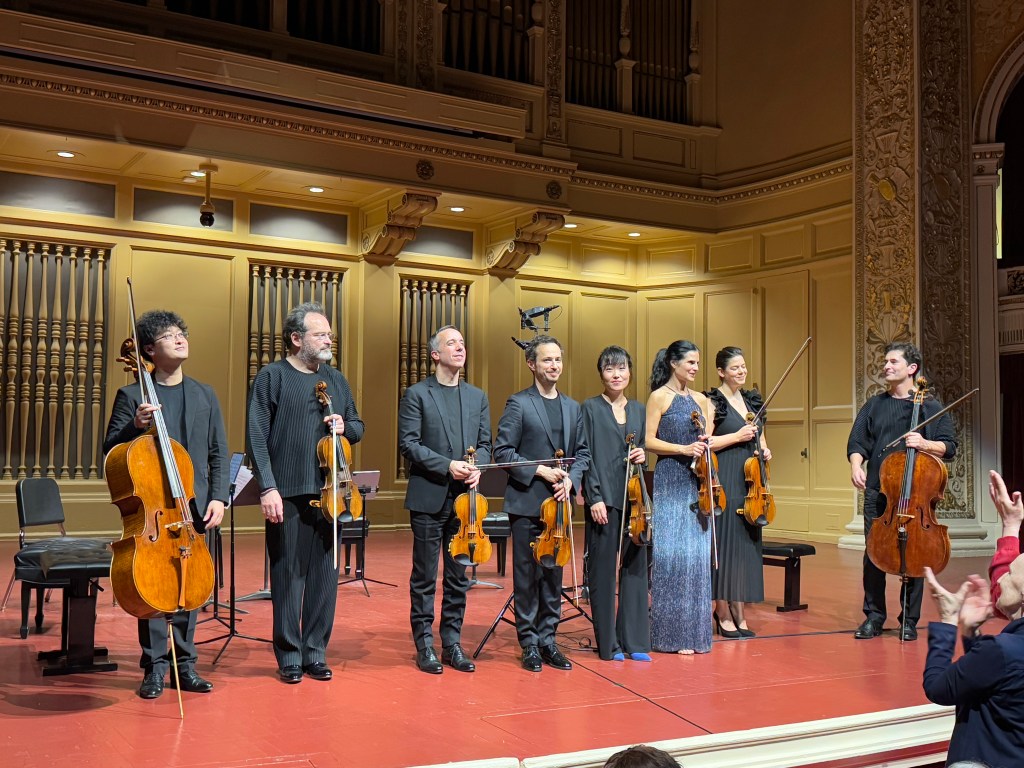
In a special presentation from Chamber Music Pittsburgh, two major string quartets – the Ébène and the Belcea – joined together for an evening of octets. Far and above the most recognizable work of the string octet literature is Mendelssohn’s sterling example, a quantity which was paired with a less familiar octet by George Enescu. Remarkably, this was an evening of music composed by teenagers – Mendelssohn was a prodigious 16-year-old when writing his; Enescu was hardly far behind at 19.
Ébène and Belcea quartets at Chamber Music Pittsburgh
The Mendelssohn opened the program warm and gracious, with a lushly flowing melody from the violin. The eight players on the Carnegie Music Hall stage collectively drew a rich orchestral heft, sounding not as eight soloists or two quartets, but a single, unified organism. A more playful contrasting theme danced in its delicate interplay.
The Andante movement was plaintive and pensive. Just few minutes in duration, the scherzo defined and crystallized the very term Mendelssohnian: fleet and gossamer, it was given with a featherlight touch, the musicians perfectly in sync. Furious gestures from the cello opened the finale, with the others joining in succession in a wide-ranging fugato. A movement of great drama, given here with exacting clarity and attention to detail.
Enescu almost certainly looked to Mendelssohn for inspiration when writing his own octet, but it’s a work that nonetheless bears his individual voice. Some changes were made to the seating arrangement on stage, alternating which players commanded the primo parts. A full-bodied tone and textural richness made for a bracing beginning. The melodic line had some striking harmonic inflections, perhaps a nod to the folk music of the composer’s native Romania. The performers illuminated the opening movement’s complex form, and the work proved an intriguing discovery (though admittedly, anything can seem a letdown after the Mendelssohn – perhaps the Enescu would have been better positioned being programmed first?).
A sudden contrast was had in the following movement, marked with the French Très fougueux (“very fiery”). Spiky, angular material was given with impassioned – and yes, fiery – playing, and a beguiling chord progression served as a transition to the slow movement. Calm and stillness pervaded before the coruscating and bold finale, capping off this ambitious work in grand form.
As an encore, the ensemble offered a transcription for octet of the closing In paradisum from Fauré’s Requiem – which also served to whet one’s appetite for the Pittsburgh Symphony’s upcoming performance of the work. With some particularly lovely pizzicato material given to the viola, it served as a gorgeously beautiful close to the evening.
Though unrelated and quite distinct, Mascagni’s Cavalleria rusticana and Leoncavallo’s Pagliacci have become so inextricably linked that the epithet “Cav/Pag” is ubiquitous in the opera world to denote their coupling. Despite not intending to be paired, they make a satisfying whole, both exemplars of the Italian verismo tradition — and a welcome alternative to more well-worn operas of Puccini (though Pittsburgh Opera proved earlier this season that Tosca is always worth another listen). Saturday night’s performance at the Benedum marked Pittsburgh Opera’s first presentation of this double feature since 1996.
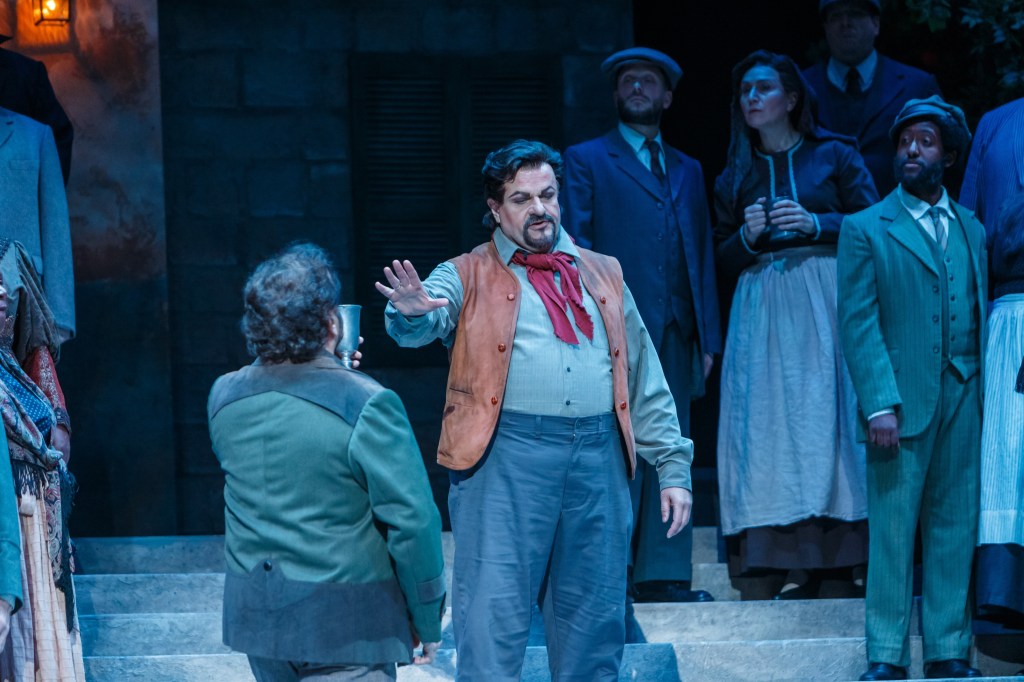
Alfio (Sebastian Catana) confronts Turiddu (Rafael Davila) in Cavalleria, all photos credit David Bachman Photography for Pittsburgh Opera
Cavalleria saw serene beginnings in the opening prelude, with arching strings and a lovely solo passage from the oboe. The first vocal appearance of the evening took the shape of a beguiling offstage serenade, with tenor Rafael Davila as Turiddu. The curtain opened to reveal a terra cotta tinted set, bringing to life a dense Sicilian town. As Santuzza, Eve Gigliotti offered a rich, honeyed tone with genuine feeling. Davila’s vocal instrument was emotive and flexible, blending well with Gigliotti in their duet. As Lola, Pittsburgh Opera Resident Artist Audrey Welsh provided a lighter, coquettish foil to Gigliotti. Sebastian Catana’s Alfio was of powerful projection, particularly effective in a fiery duet with Santuzza.
The Pittsburgh Opera Orchestra had ample opportunity to shine alone during Cavalleria. The Easter hymn was a particularly pensive statement, beginning gently, and swelling to a lushness enhanced by the Chorus. The singularly famous intermezzo was a standout moment, a passage of repose before the drama rapidly catapulted to its inevitably tragic end.
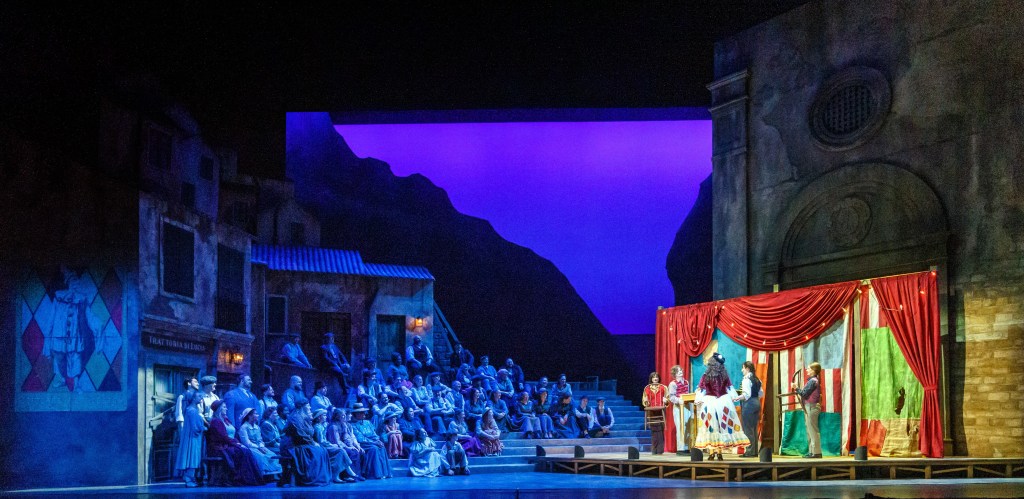
Unlike the inward beginnings of Cavalleria, Pagliacci opened in a blaze. The hapless Tonio (an excellent Sebastian Catana returning for double duty) opened with an introspective monologue in the opera’s Prologue, breaking the fourth wall in speaking to the audience directly. The curtain opened to reveal the same set from Cavalleria being repurposed, suggesting an interconnectivity that isn’t really there but works nonetheless.
Jonathan Burton was imposing as the boorish Canio; as Nedda, Caitlin Gotimer contrasted with a delicate and plaintive voice. Rounding out what was to my ears the stronger of the two casts was Ricardo Jose Rivera as Silvio: suave, and particularly effective in a passionate duet with Nedda, a quantity further enhanced by some lovely playing from the cellos in the pit. The iconic aria for Canio “Vesti la giubba” was given with genuine, affecting emotion, though one wanted perhaps even more.
A pensive intermezzo bridged the two acts, and the latter constructed a play-within-a-play, a conceit later used to great effect in Strauss’ Ariadne. Elegant, festive material was further highlighted by a colorful cast on stage that included acrobats and performers on stilts, reminiscent of the French Quarter scene from Puccini’s La bohème. Beppe’s (Fran Daniel Laucerica) serenade “O Colombina” was long-breathed and astutely phrased, pointing towards the opera’s darker ending. Canio broke character with the tragic force, and the final line “the comedy is over” brought the work to a crashing close.
Escher Quartet Jordan Bak, viola PNC Theatre Pittsburgh Playhouse Pittsburgh, PA October 21, 2024
Barber: String Quartet in B minor, Op. 11 Price: String Quartet No. 2 in A minor Brahms: String Quintet No. 2 in G major, Op. 111
Opening the 2024-25 season of Chamber Music Pittsburgh was the New York-based Escher Quartet — an ensemble whose last local appearance was a streamed performance without audience during the covid lockdown. Euro-centric a tradition as the string quartet may be, the Escher’s program interesting opened with two American works, beginning with Samuel Barber’s youthful entry in B minor.
Escher Quartet with Jordan Bak, photo credit Chamber Music Pittsburgh
Terse, rapid gesture were given with singular intestity, interspersed with more lyrical material. The central Molto adagio would later become the iconic, standalone Adagio for Strings — and how fascinating it was to hear it in its original context, blanketed by contrasting outer movements. Far less saturated than the later expansion for string orchestra, it allowed one to better take note of its intricacies, particularly the melody for viola. The music grew to the impassioned, only to fade to somber quietude. Barber here was at his most neo-Romantic, sharply diverging from the stark modernism that opened. A brief finale followed without pause, at first recalling the gestures of the beginning, but then taking a life of its own in a brief but blistering coda.
The opening of Florence Price’s Second Quartet had a distinctive, recognizably American sound, balancing erudite sophistication with a certain down-to-earth abandon. A genial and gracious melodic line was tinged with folk tradition, and the slow movement that followed was a songful interlude, seemingly at peace with the world. A Juba movement is a device Price often used, and here it took the usual place of the Scherzo. Given without inhibition, bluesy harmonies and vibrant syncopations made for a delightful listen. The finale saw heightened drama, showcasing Price’s compositional skill with its coruscating counterpoint. An impressive close to the American half of the recital, and the Eschers served as strong advocates for Price.
Quartet then became quintet with the addition of violist Jordan Bak, affording the Pittsburgh audience the opportunity to hear Brahms’ expansive G major string quintet. The composer originally envisioned the work as his fifth symphony, and the vestiges of symphonic heft were evident from the grand sweep of the opening. A singing theme added contrast, with the addition of the second viola making matters all the more lovely. Bak blended well with the quartet, and the combined forces offered mastery of the work’s large-scale form.
A pizzicato bass line from the cello was a striking effect in the serene Adagio, as was a richly articulated melodic line in the first violin. The hesitating gesture in the penultimate movement gave it a certain autumnal quality, fitting for a work from late in the composer’s life, but the finale was a playful affair, hardly dour, with a bold and bracing finish fitting for a work of such proportion.
Tom Borrow, piano Justine Campagna, violin Jeremy Black, violin Tatjana Mead Chamis, viola Anne Martindale Williams, cello Strings of the Pittsburgh Symphony Orchestra
Heinz Hall Pittsburgh, PA October 19, 2024
Mozart: Violin Sonata No. 21 in E minor, K304 Grieg: Holberg Suite, Op. 40 Dvořák: Piano Quintet in A major, Op. 81
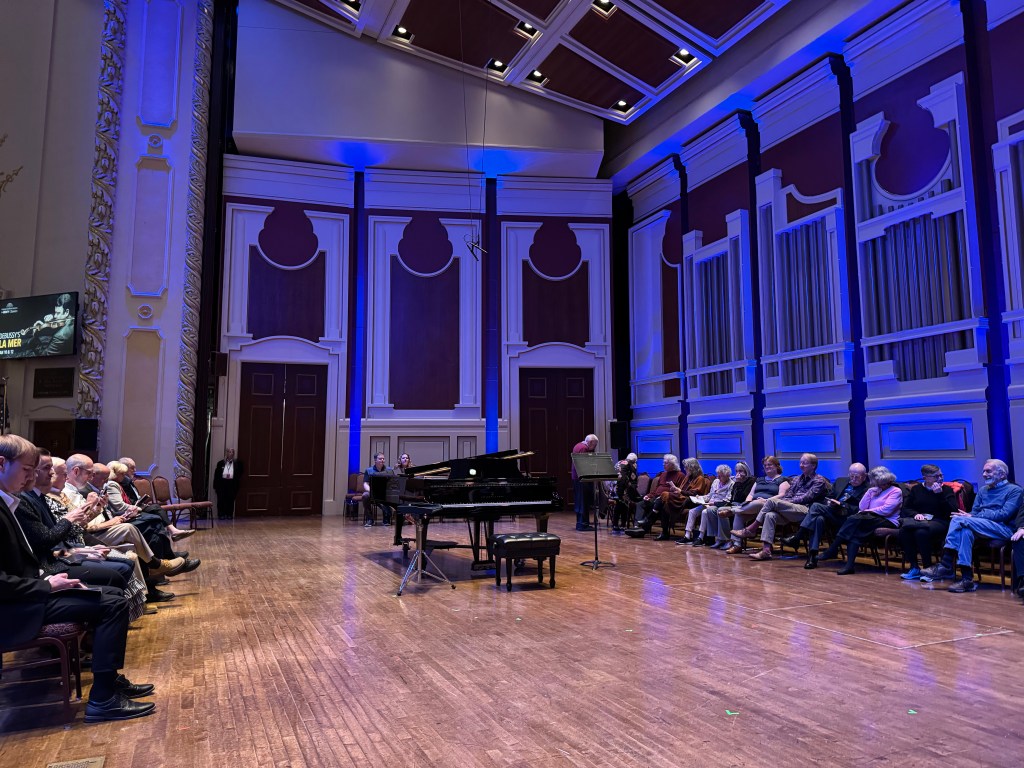
One of the Pittsburgh Symphony’s more enterprising endeavors is the PSO360 series, which engages the guest soloist from the weekend’s subscription concerts in chamber music with select PSO members. An intimate audience of 200 is seated on the Heinz Hall stage, circled around the performers, affording the opportunity to see another side of the soloist and orchestra players alike.
The soloist in question was the young Israeli pianist Tom Borrow, who made a strong impression in the performances of Ravel’s piano concerto that flanked Saturday’s chamber concert. To begin, Borrow teamed up with associate concertmaster Justine Campagna in Mozart’s E minor violin sonata. The only work in Mozart’s vast catalogue to be cast in that key, it’s a particularly deeply-felt creation, one that the program notes aptly compared to the A minor piano sonata (K310) for its expressive range.
Campagna was elegant and articulate, and Borrow responded in kind with sparkling, quintessentially Mozartian pianism. The development section was particularly emotive, and the minuet that closed the two-movement sonata was perhaps the most profound of all minuets, a rich conversation between violinist and pianist.
Grieg’s Holberg Suite brought out the Pittsburgh string section, and there was a visceral energy in being onstage with 20 string players, evident from the effusive prelude which opened. Peaceful, lyrical movements followed, swelling to a warm resonance, and I was especially struck by the clarity of the inner voices. Perhaps most affecting was the Air, songful and mournful — and a touching homage to Bach. The Rigaudon brought the suite to a close with joyous abandon.
Following intermission, Borrow returned with a quartet of strings for Dvořák’s great A major piano quintet. A graceful introduction in the piano paved the way for a lyrical cello passage (Anne Martindale Williams). The five players wove together a rich tapestry with a feverish intensity, yet at its core still as good-natured as the composer himself. An elegant piano gesture marked the Dumka, a wistful essay punctuated by gorgeous interludes.
There was a vivacity to the folk inflections of the Scherzo that could only put a smile on one’s face, and the finale continued in the highest of spirits — but not without a blistering fugato. Here as throughout, Borrow sounded like a seasoned collaborator with these Pittsburgh players.
Tom Borrow with members of the Pittsburgh Symphony
Pittsburgh Symphony Orchestra Jacob Joyce, conductor Nicholas Myers, double bass O’Reilly Theater Pittsburgh, PA July 18, 2024
Rossini: Overture to L’italiana in Algeri Martines: Sinfonia in C major Bottesini: Concerto No. 2 for Bass and Orchestra in B minor Mendelssohn: Symphony No. 4 in A major, Op. 90, Italian
Though the Pittsburgh Symphony falls short of performing a full summer season, Thursday evening’s Summer Shorts performance did much to satisfy one’s musical appetite in a particularly appealing program of music from or about Italy. Helmed by associate conductor Jacob Joyce, the PSO ventured across Penn Avenue to the O’Reilly Theater, an intimate, 650-seat venue home to Pittsburgh Public Theater.
Jacob Joyce and the PSO at the O’Reilly
Rossini’s overtures never fail to bring a smile to one’s face, and the overture to L’italiana in Algeri (one of the composer’s first full-length operas) certainly had that effect, right from its cheeky pizzicato opening. A limber oboe passage provided a lyrical highlight in this otherwise vigorous work, performed by the PSO with the highest of spirits.
Born to Neapolitan parentage, Marianna Martines spent her life in Vienna where she counted amongst her acquaintances Haydn and Mozart. Though a prolific composer, very few of her works were published during her lifetime, and tragically, many manuscripts were destroyed by a fire in 1927. Dating from 1770, the Sinfonia in C major proved an intriguing discovery. Cast in a three-part structure in accordance with the Italian overture form, the work exuded the charm and elegance of the Classical style and of her mentor Haydn, but written with the optimism and self-assurance of a very skilled composer.
The central section could perhaps have been given with greater contrast from the preceding, though the finale – a sprightly, almost danceable affair – offered a minor key episode to beguiling effect. Consider my interest in Martines duly piqued.
Typically relegated to the back of the orchestra, it’s a rare treat to hear the double bass front and center as the protagonist of a concerto. Appointed to principal bass in 2022, this counted as Nicholas Myers’ PSO solo debut. Giovanni Bottesini was a virtuoso on the instrument, even becoming known as the “Paganini of the double bass,” and composed a significant body of work for it. In addition, he was an accomplished conductor, being the one to lead the 1871 premiere of Verdi’s Aïda in Cairo.
Bottesini’s Concerto No. 2 for Bass and Orchestra was perhaps the most intriguing entry on the program. With little fanfare to introduce, the bass entered lyrical and resonant, its capabilities as a solo instrument on full display. Myers impressed in his virtuoso command of the instrument, from the wide leaps in the melodic line to the rapid-fire coda. An Andante was deeply songful, a sound that contrasted with the instrument’s unwieldy appearance, and the rollicking finale evidenced Hungarian influence. In future PSO seasons, perhaps Myers can be invited to lead an exploration of concertos for double bass?
Mendelssohn’s perennial Italian symphony was a fitting and satisfying close to the evening. Its sunny, inimitably Italianate textures were buttressed by Joyce’s sweeping gestures, purveying a bold sound even more apparent in the confines of the O’Reilly. Perhaps because of the Bottesini that prefaced, my ears were particularly attuned to the sextet of double basses, which as ensemble instruments were used to such clever effect in the Andante con moto. The penultimate movement served as an elegant processional before the finale, given a vigorous workout, punctuated by the infectious rhythms of the saltarello.
Pittsburgh Symphony Orchestra Vasily Petrenko, conductor Benjamin Grosvenor, piano Heinz Hall Pittsburgh, PA June 2, 2024
Dukas: The Sorcerer’s Apprentice Liszt: Piano Concerto No. 1 in E-flat major, S124 Encore: Sousa/Horowitz: The Stars and Stripes Forever Tchaikovsky: Manfred Symphony, Op. 58
Under the baton of guest conductor Vasily Petrenko, the Pittsburgh Symphony presented a colorful selection of three contrasting works spanning the Romantic era. Matters began with the inimitably familiar Sorcerer’s Apprentice of Paul Dukas, a familiarity in no small part cemented by its appropriation in Disney’s watershed Fantasia. The tone poem began in suspenseful mystery, decorated with silvery, gossamer texturing. Haughty bassoons introduced the main theme, given with swagger and bringing to life Goethe’s titular poem. The work burgeoned to an overflowing urgency, made the all the more affecting by way of its iridescent orchestration.
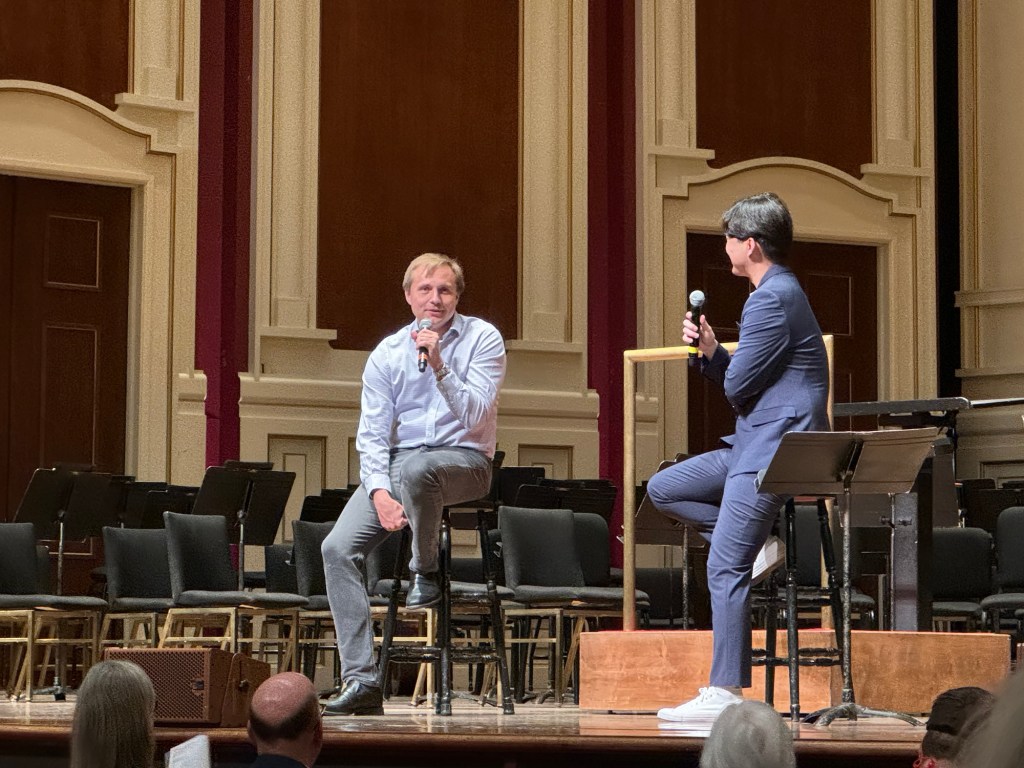
Preconcert interview with Vasily Petrenko, moderated by PSO associate conductor Moon Doh
Liszt’s Piano Concerto No. 1 introduced British pianist Benjamin Grosvenor. Bellicose beginnings were furthered encouraged by the pianist’s steely-toned octaves, but the work wasn’t all fireworks and bombast, being interspersed with lyrical episodes often in dialogue with an orchestra member. The tone produced from the Steinway was bit too bright for my taste, though I’m not sure whether to point fingers at the pianist or the piano.
The ringing of the triangle marked the scherzo section, answered by Grosvenor’s stylish playing. The octaves returned at breakneck speed, pointing the way towards the concerto’s blistering end. An enthusiastic reception brought Grosvenor back for an encore in Horowitz’s transcription of Sousa’s Stars and Stripes Forever. Thunderous bass octaves and intricate filigree in the upper register made for a fun close to the first half – and perhaps a suitable welcome to summer.
Though he didn’t include it amongst his numbered symphonies, Tchaikovsky’s Manfred is one of his most significant orchestral works, chronologically falling between the Fourth and Fifth symphonies. Like the Dukas that opened, it too draws programmatic inspiration from poetry, in this case, Lord Byron. Nearly an hour long, it can be abstruse work to interpret, but Petrenko (who has recorded the work with the Royal Liverpool Philharmonic) made a clear and compelling case for it. I would perhaps suggest a parallel with Liszt’s Dante Symphony heard earlier this season, hyper-Romantic, literary works scored for large orchestra, both perhaps a bit bloated but which nonetheless have much to say when given an incisive interpretation.
Lugubrious, tragic beginnings were had in the expansive opening movement, outlining a brooding main theme that swelled to great passions, depicting our Romantic hero. The Vivace con spirito that followed was lighter fare by comparison, with a central section lush and lyrical. Mercurial filigree in the high strings surfaced near the movement’s end to striking effect. The Andante con moto featured a songful oboe solo, a moment of peace amidst the tumult. The finale amounted to long, arduous journey in of itself. At the very end, the organ filled Heinz Hall for a remarkable moment of lavish orchestration, and the closing hymn led to a peaceful if somber resolution in evocation of Manfred’s death. While the Manfred Symphony might not be a masterpiece on par with the composer’s final three numbered symphonies, a performance like this nonetheless compels one to give it ample attention.