Bruce Liu offers colorful recital at Heinz Hall

Bruce Liu, piano
Heinz Hall
Pittsburgh, PA
June 7, 2025

Tchaikovsky: The Seasons, Op. 37a – January, February, May, June
Tchaikovsky (arr. Wild): “Dance of the Four Swans” from Swan Lake, Op. 20
Scriabin: Piano Sonata No. 4 in F-sharp major, Op. 30
Tchaikovsky: The Seasons, Op. 37a – July, August, October
Chopin: Fantasie-Impromptu in C-sharp minor, Op. 66
Prokofiev: Piano Sonata No. 7 in B-flat major, Op. 83 – mvts 2 & 3

Encore:
Chopin: Nocturne No. 20 in C-sharp minor, Op. posth.

Filling in on short notice for Alice Sara Ott, pianist Bruce Liu was not only tasked with a Pittsburgh Symphony concerto appearance, but also an entry in the distinguished PSO360 series, an intimate chamber music presentation on stage at Heinz Hall. Instead of a collaboration with PSO players, Liu opted for a solo recital — the first to do so since the series’ inception in the 2017-18 season.
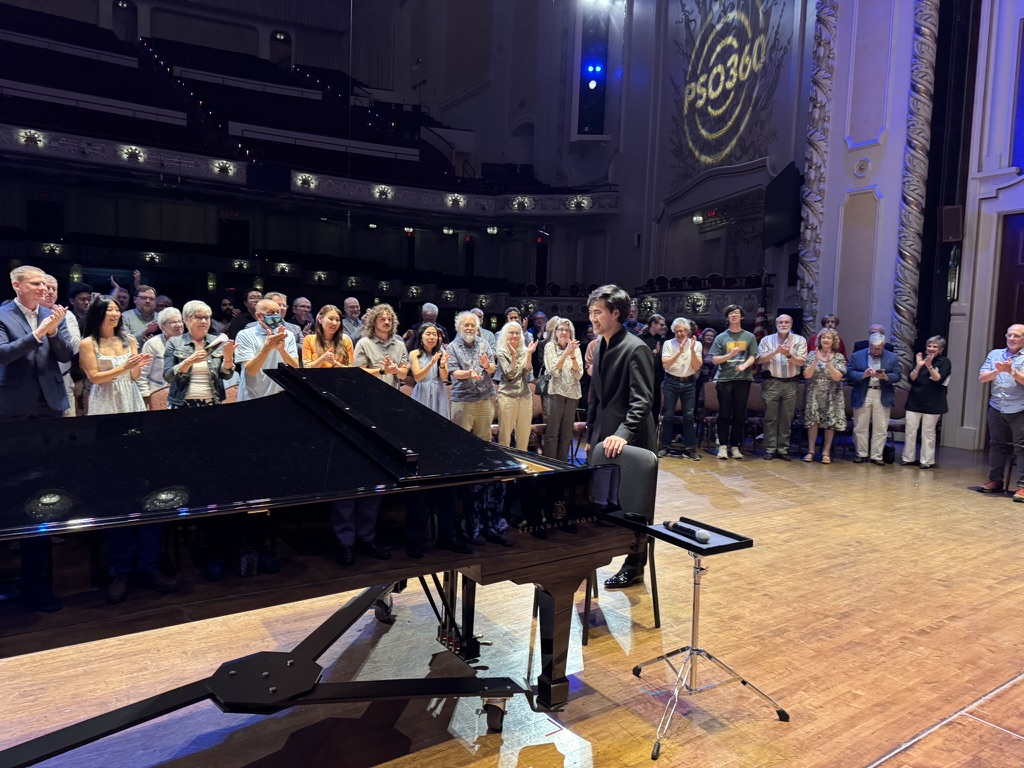
Bruce Liu’s PSO360 recital

A recent recording for Deutsche Grammophon featured Liu performing Tchaikovsky’s suite The Seasons, and Saturday’s recital was anchored by selections from that charming collection. The work shows the more intimate side of the composer — quite a contrast to the emotionally-fraught symphonies and concertos — and quite a perfect choice for the salon setting of a PSO360 performance. Liu imbued each with character and attention to detail, closing the first grouping with the beguiling June barcarolle.

A further Tchaikovsky work followed in Earl Wild’s transcription from Swan Lake in which Liu brought out the feathery filigree (as a sidebar: Earl Wild was a Pittsburgh native and attended Carnegie Mellon). The mystical world of Scriabin followed in the Piano Sonata No. 4 in F-sharp major. The opening movement was languid and atmospheric, further enhanced by the blue light which shrouded the stage — corresponding to the composer’s synesthetic association with F-sharp. The brief Prestissimo volando which closed was explosive, almost like a sudden burst of light and energy.

Three more excerpts from The Seasons followed, highlighted by the melancholic Autumn Song (October). One was certainly keen to hear Chopin played by a laureate of the Chopin Competition, and his Fantasie-Impromptu lived up to expectation. Why Liu jettisoned the first movement of Prokofiev’s Seventh Sonata I don’t know — musically it made little sense to present only a torso of the work. Regardless, the thrilling toccata finale made an exciting close to the recital. For a lone encore, Liu returned to Chopin with a pensive account of the C-sharp minor nocturne.
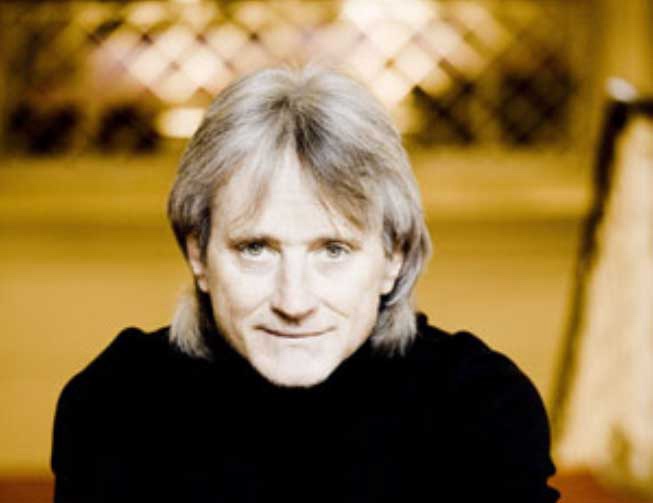
Pianist Claire Huangci returns to Columbus Symphony with Tchaikovsky

Columbus Symphony Orchestra
Carl St. Clair, conductor
Claire Huangci, piano
Ohio Theatre
Columbus, OH
February 23, 2024

Wineglass: Alone Together
Tchaikovsky: Piano Concerto No. 1 in B-flat minor, Op. 23
 Encore:
 Gershwin/Wild: Embraceable You
Brahms: Symphony No. 4 in E minor, Op. 98

Last weekend’s Columbus Symphony concerts brought forth guest conductor Carl St. Clair, currently – and remarkably – in his 34th season as music director of the Irvine, California-based Pacific Symphony. Headlining the performance was pianist Claire Huangci, returning to the Ohio Theatre following a memorable debut two seasons ago. Prefacing the pianistic centerpiece was a local premiere by John Wineglass, perhaps best known for his work in television scoring – most notably for All My Children, garnering him six Emmy nominations.

Carl St. Clair, photo credit pacificsymphony.com

Alone Together dates from 2021, in the throes of the pandemic, and was premiered virtually by St. Clair and his California ensemble on the first anniversary of the murder of George Floyd. Scored for strings, harp, and percussion, it documents a challenging time in recent history (a recording may be heard here). The opening “Strange Pandemic Times” was marked by unsettling harmonics, though generally lushly tonal and reflective. A pulsating drum ominously sounded, taking a darker turn before the closing “A Ray of Hope.” The harp had a calming effect and introduced an appealing melody, but ultimately felt to this listener more akin to “feel-good” music than a work that fully captured the depth of the subject matter.

Tchaikovsky’s evergreen First Piano Concerto was a fitting platform for Huangci’s virtuosity. A bold, brassy opening pointed to the thunderous chords in the piano, but I found the pianist’s approach perplexing at best. She was wont to rapidly release her hands from the keyboard, almost as if the keys were hot to the touch. Not only did this make for an odd visual, but the tone yielded was rarely more than surface-level, inadequate to project over the large orchestra and throughout the cavernous theater – especially apparent in the rapid double octaves which came off rather feeble. Still, I found her technique impressive and effective in the elegant cadenza.

The Andantino semplice opened with pizzicato strings and a lovely flute solo. The pianist seemed at her finest in these more lyrical and restrained moments, including a touching bit of dialogue with cellist Luis Biava. The fiery finale was at heart a lively folk dance, likely of Ukrainian origin. As an encore, Huangci offered the great Earl Wild’s transcription of Gershwin’s Embraceable You – impressive fingerwork colored by sweet, jazz-inflected harmonies.

Brahms’ Fourth Symphony concluded the program. The work’s long journey embarked with a gentle dip in the strings. St. Clair had a keen sense of structure and pacing, though there was something to be desired with regard to balance, given that the brass were often too much in the foreground. The slow movement boasted some lovely string playing, contrasting the stentorian brass, while the scherzo saw jubilation amidst the work’s severity. Eight powerful chords made the spine of the closing passacaglia, its variations unfolding with dignified purpose.