Masterful Brahms and completion of Prokofiev cycle at The Cleveland Orchestra

Cleveland Orchestra
Franz Welser-Möst, conductor
Daniil Trifonov, piano
Mandel Concert Hall
Severance Music Center
Cleveland, OH
October 9, 2025

Prokofiev: Symphony No. 7 in C-sharp minor, Op. 131
Brahms: Piano Concerto No. 2 in B-flat major, Op. 83

Encore:
Prokofiev: No. 20 from Visions fugitives, Op. 22

I’ve been intrigued by Franz Welser-Möst’s endeavor to perform and record all seven of the Prokofiev symphonies with The Cleveland Orchestra. After some eight years, that cycle came to fruition this weekend with the enigmatic Seventh Symphony, the last major work the composer completed. Only the First and Fifth of these symphonies are performed with any regularity, so it’s been a welcome opportunity to discover the rest — though the quality can be uneven.
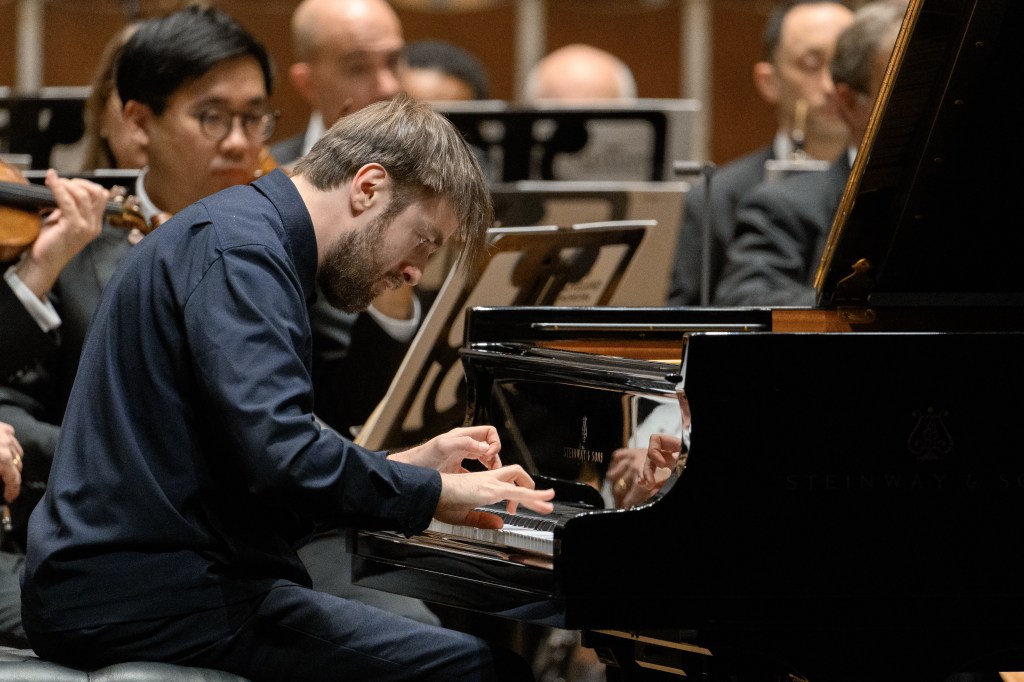
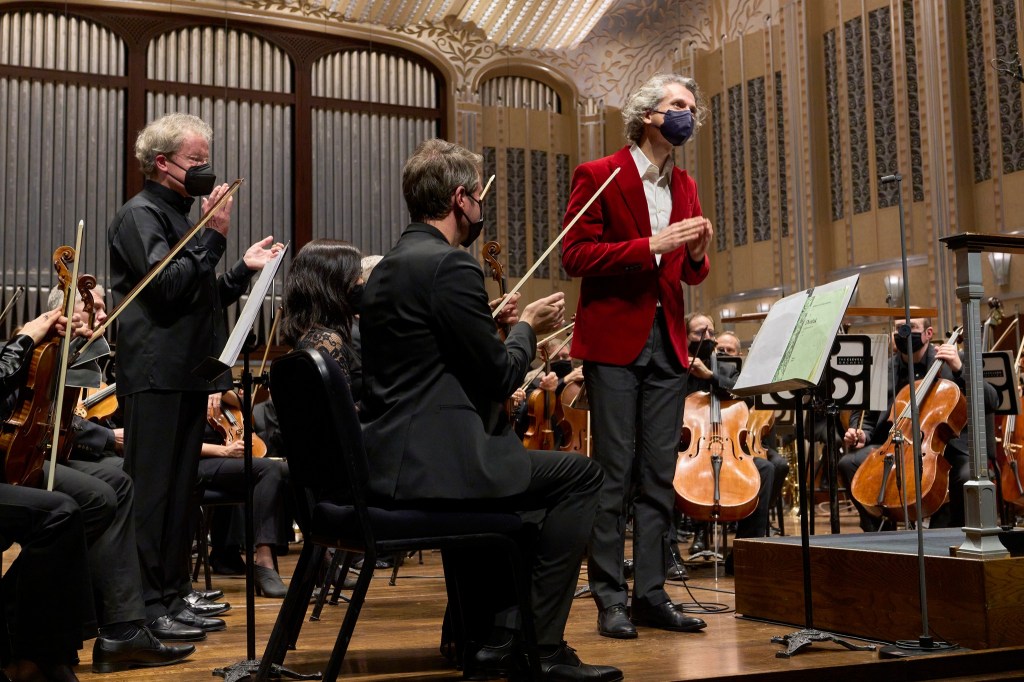
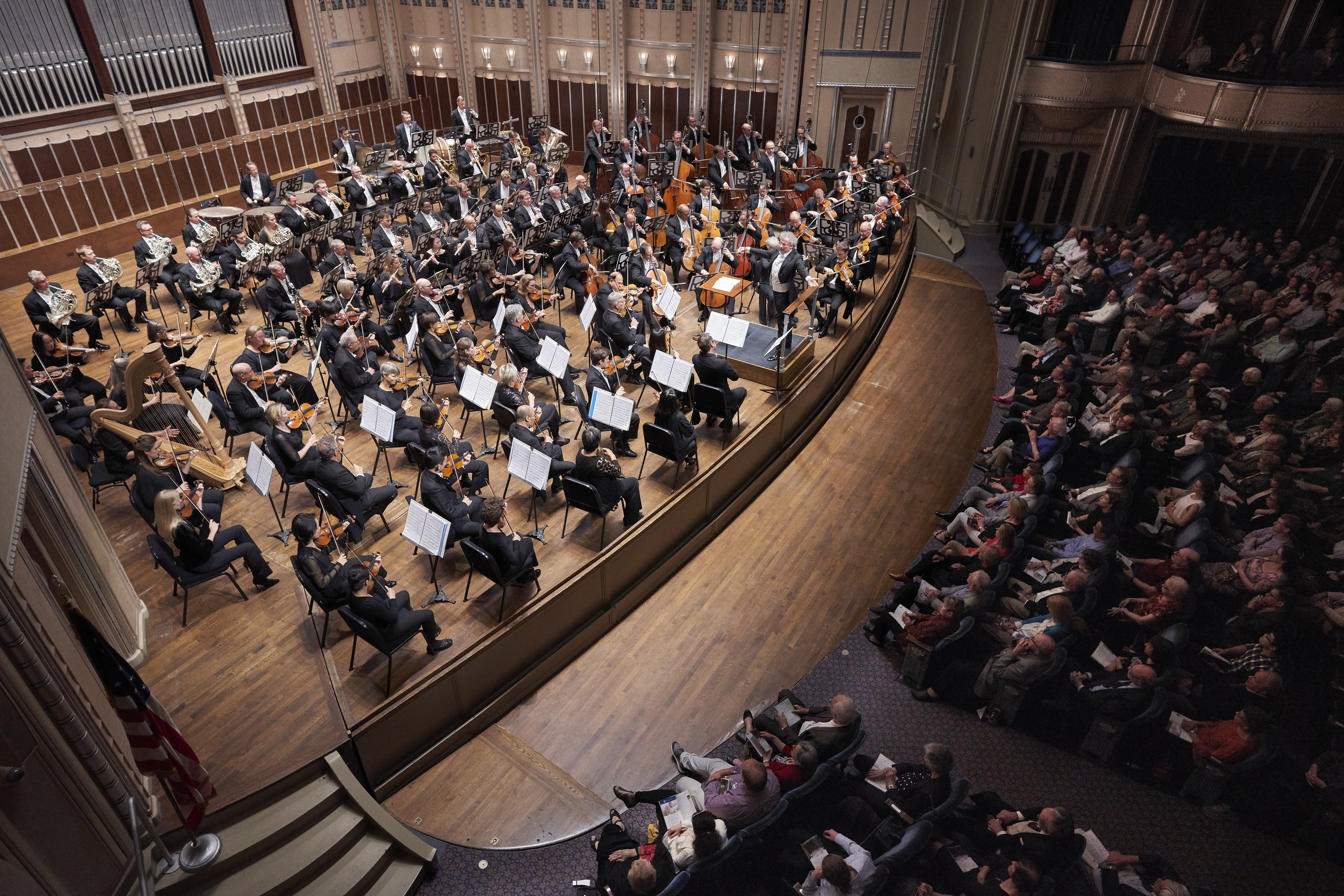
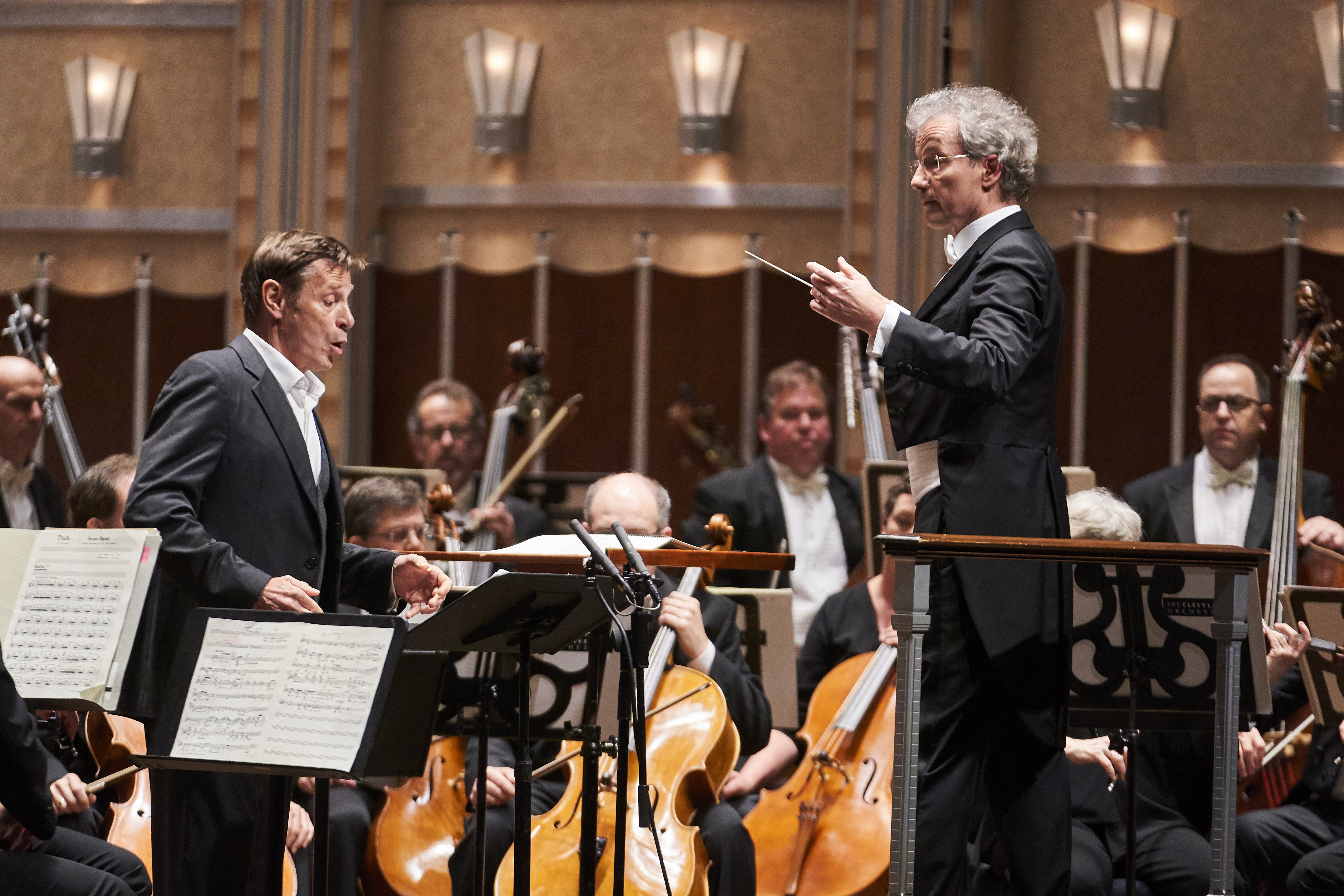
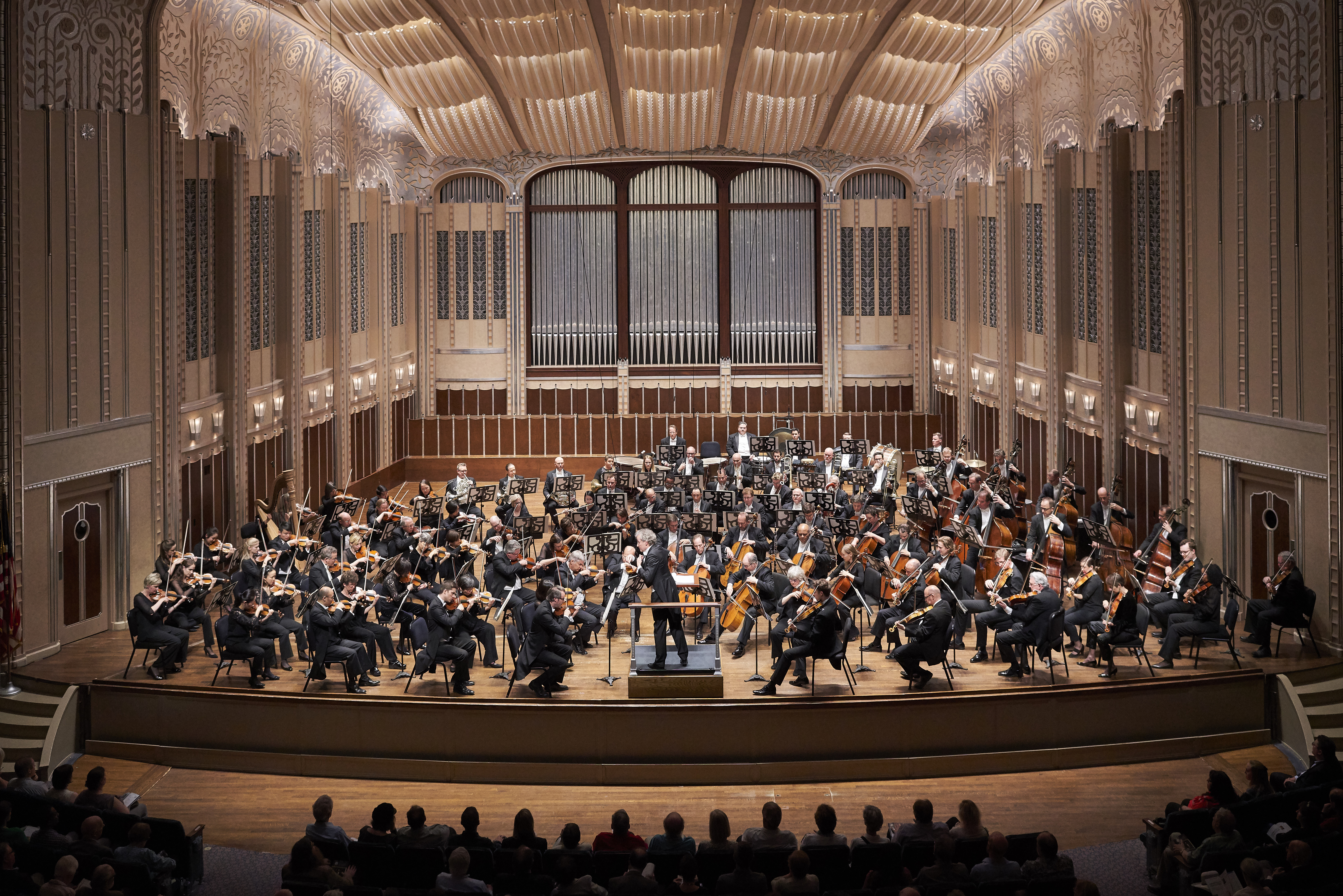
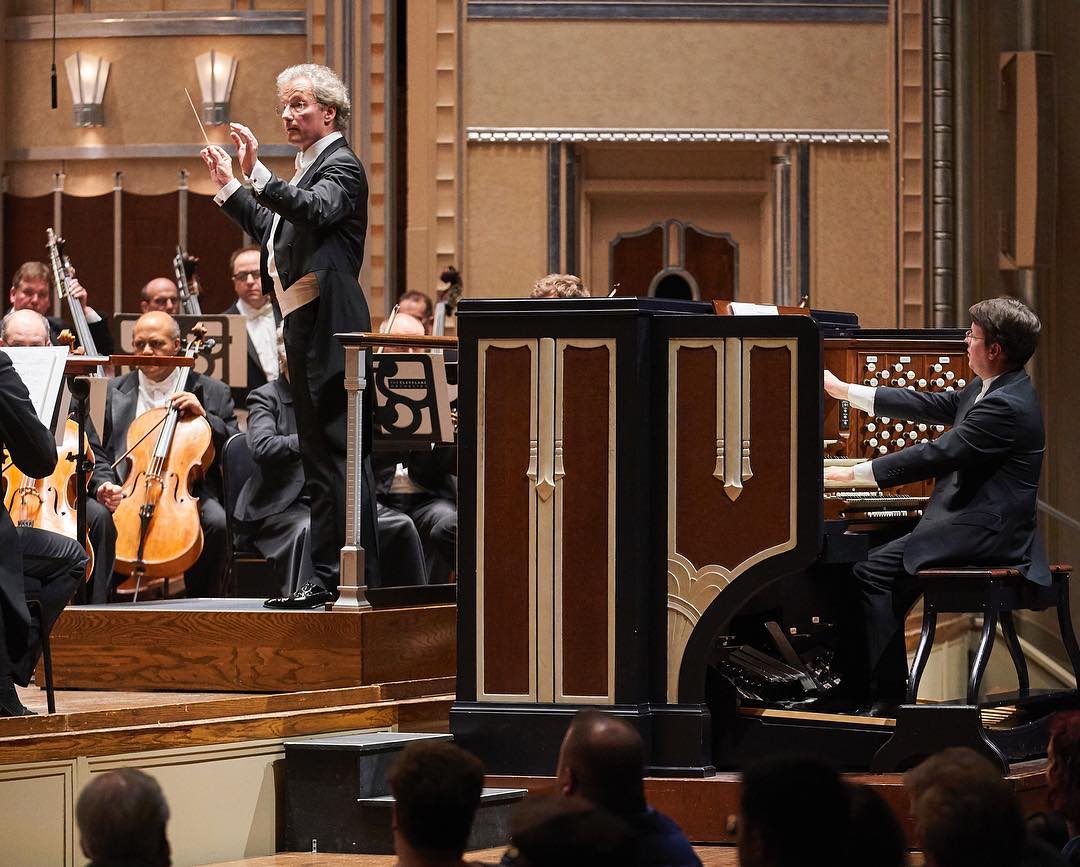
Daniil Trifonov performs Brahms with The Cleveland Orchestra. Photos credit Human Artist / Yevhen Gulenko

Moderately-paced material opened the work in the unusual key of C-sharp minor (common in the piano literature, rare for the orchestra), somewhat mysterious in character in the way that composers’ late works often are. The lyricism was straightforward and unadorned, but what stood out were the striking instrumental combinations, spattered with liberal use of the glockenspiel. A scherzo followed with vestiges of a waltz. A bit spikier than the restrained opening, it was still generally reserved until the boisterous close.

In the Andante espressivo, one was reminded of the poignant lyricism in Prokofiev’s ballet scores, contrasted by the playful and rather sardonic finale. The composer revised the original quiet ending for a bombastic one in an attempt to better appease the Soviet authorities, but was to said to have preferred the original — a preference which Welser-Möst rightfully respected in these performances.

Having been educated at the Cleveland Institute of Music on the precipice of his meteoric rise, pianist Daniil Trifonov remains a local favorite. He served as a probing soloist in Brahms’ daunting Second Piano Concerto (a follow up to his performance of the First two seasons ago — so effectively, another cycle came to a close Thursday evening). An amber horn call opened to herald the gentle arpeggios that rolled across the keyboard. Right at the beginning there was a solo cadenza which put Trifonov’s bold sound and rich tone on full display. An impassioned performance, he conceived the spacious first movement in broad strokes, with piano and orchestra functioning as equal partners in a work that’s perhaps more symphony than concerto.

Though the two works on this program had little in common, they mirrored each other in terms of structure, so as with the Prokofiev, a scherzo followed ahead of the slow movement. Brahms’ was generally a sunny affair though not without discord, played with a driving intensity that was briefly abated during the gentler trio and a passage of ravishing lyricism. Principal cellist Mark Kosower opened the Andante with a gorgeous solo, also serving to give the pianist a momentary but well-earned rest. This slow movement made for a serene moment in an otherwise energetic work. And despite the weight and seriousness of the preceding, the closing movement was of joyous abandon.

As an encore, Trifonov fittingly returned to the composer that opened the evening in Prokofiev, namely the last of the Visions fugitives, a suite of twenty artfully crafted miniatures for piano (the pianist performs the whole set on his recital programs this season). A touching way to bring the evening full-circle.
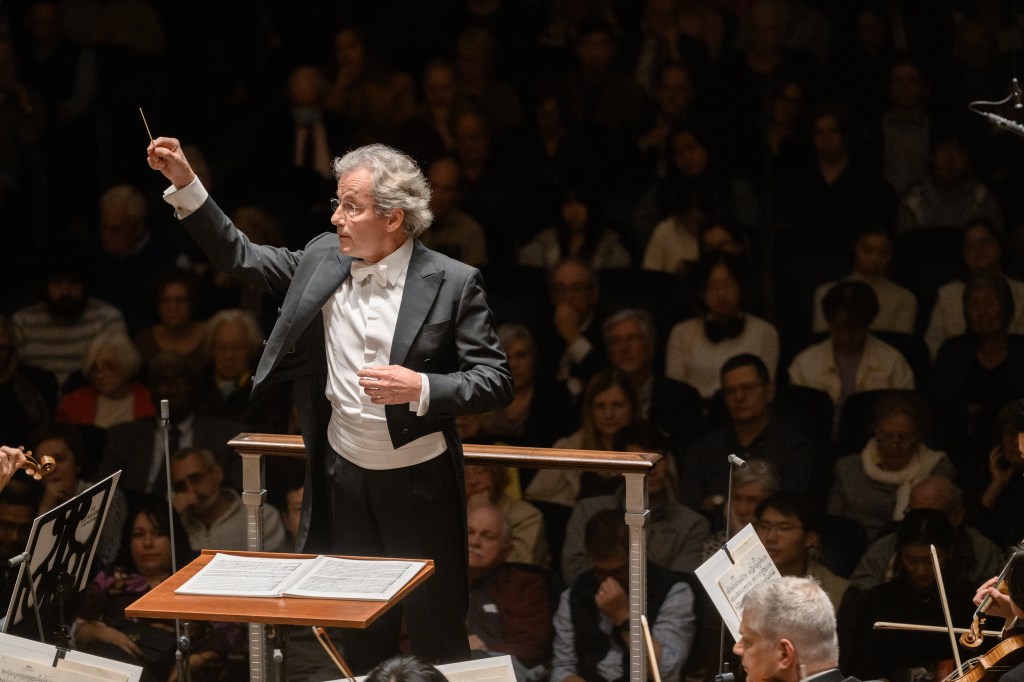
Wesler-Möst and Cleveland Orchestra riveting in iconoclastic symphonies of Prokofiev and Webern

Cleveland Orchestra
Franz Welser-Möst, conductor
Mandel Concert Hall
Severance Music Center
Cleveland, OH
January 18, 2024

Prokofiev: Symphony No. 2 in D minor, Op. 40
Webern: Symphony, Op. 21
Prokofiev: Symphony No. 5 in B-flat major, Op. 100

Franz Welser-Möst is back in Cleveland to start the year off with two weeks of subscription concerts before taking the orchestra on tour to Carnegie Hall and Miami. The conductor seemed in robust form, his first local appearance since undergoing cancer treatment, as well as official confirmation that he will be stepping down as music director in 2027, following a remarkable quarter century in that capacity.

Welser-Möst conducts Prokofiev, photo credit Roger Mastroianni

Thursday’s program offered three works all bearing the title “symphony” and composed within the span of two decades, but each vastly different conceptions of the form. The evening was bookended by Prokofiev, beginning with the rarely-heard Second Symphony. The conductor has turned ample attention to Prokofiev in recent seasons, including traversals of the lesser-known symphonies, albeit with mixed results when the work is more curiosity than masterpiece – though I found the Second to be much more convincing than the Third or Fourth. It’s also worth nothing that the Second was last intended to be performed in March 2020, only to be the first of months of Covid cancellations.

The work opened blistering and uncompromising, in mechanistic fury – in the composer’s own words, music of “iron and steel.” A product of the 1920s, it embraced a celebration of industry that also gave inspiration to Varèse, Antheil, and Honegger, as well as Prokofiev’s own Scythian Suite. Rhythmic pulsating continued unabated with the industriousness of an assembly line, and Welser-Möst managed to find clarity amongst the busy textures. The work’s unusual structure has been compared to that of Beethoven’s final piano sonata: a stormy sonata-form opening movement, followed by an expansive set of variations. A flowing oboe melody (Frank Rosenwein) carved out the theme, a somber turn inward. Animated transformations of the theme followed, while the fourth variation served as the work’s only extended slow passage. The manic and frenetic came back in due course, and strikingly, the theme returned at the end in its unadulterated form, with hauntingly orchestrated final chords shrouded in mystery.

Anton Webern’s sole symphony follows a similar two movement form, but couldn’t be more different. The orchestra was reduced to modest, classically-sized proportions, and barren, almost emaciated textures. Conductor and orchestra gave the coloristic score a nuanced, exacting reading, with the composer’s distinctive Klangfarbenmelodie technique yielding a protean ebb and flow as gestures were passed throughout the ensemble.

Prokofiev’s masterpiece in the form, the Fifth, closed the program (which like the Second, has also been recently recorded by these forces). The orchestra again swelled to the brim of the stage, and articulated a broad opening statement in which one felt the voice of a man with newfound energy and confidence. Welser-Möst emphasized the grand sweep of the movement, pointing towards a triumphant, blazing finale. The Allegro marcato had mechanistic echoes of the earlier symphony, highlighted by the shrill clarinet of Afendi Yusuf as well as prominent piano. With its militant snares, this is to my ears the closest Prokofiev came to sounding like his Soviet compatriot Shostakovich.

The brooding triple meter of the Adagio wouldn’t have sounded out of place in Romeo and Juliet which dates from a similar time, while the angular main melody of the finale had a distinctly Soviet feel. Welser-Möst was keen not to hit the listeners all at once by way of a slow, carefully-judged buildup in potency, leading to the pile-driving intensity of the work’s final statement. This weekend’s Carnegie Hall audiences certainly have an invigorating listen in store.

Cleveland Orchestra strikes operatic gold in La fanciulla del West

Cleveland Orchestra
Franz Welser-Möst, conductor

Emily Magee, soprano (Minnie)
Roman Burdenko, baritone (Jack Rance)
Limmie Pulliam, tenor (Dick Johnson)
Tony Stevenson, tenor (Nick)

Scott Conner, bass (Ashby)
Iurii Samoilov, baritone (Sonora)
Owen McCausland, tenor (Trin)
Joseph Lattanzi, baritone (Sid)
Benjamin Taylor, baritone (Bello)
Joseph Tancredi, tenor (Harry)
Alex McKissick, tenor (Joe)
Joseph Barron, bass-baritone (Happy)
Kyle Miller, baritone (Jim Larkens)
Zachary Altman, bass-baritone (Billy Jackrabbit)
Taylor Raven, mezzo-soprano (Wowkle)
John Brancy, baritone (Jake Wallace)
Michael Adams, baritone (Jose Castro)
John-Joseph Haney, tenor (Pony Express Rider)

Men of the Cleveland Orchestra Chorus

Mandel Concert Hall
Severance Music Center
Cleveland, OH
May 20, 2023

Puccini: La fanciulla del West

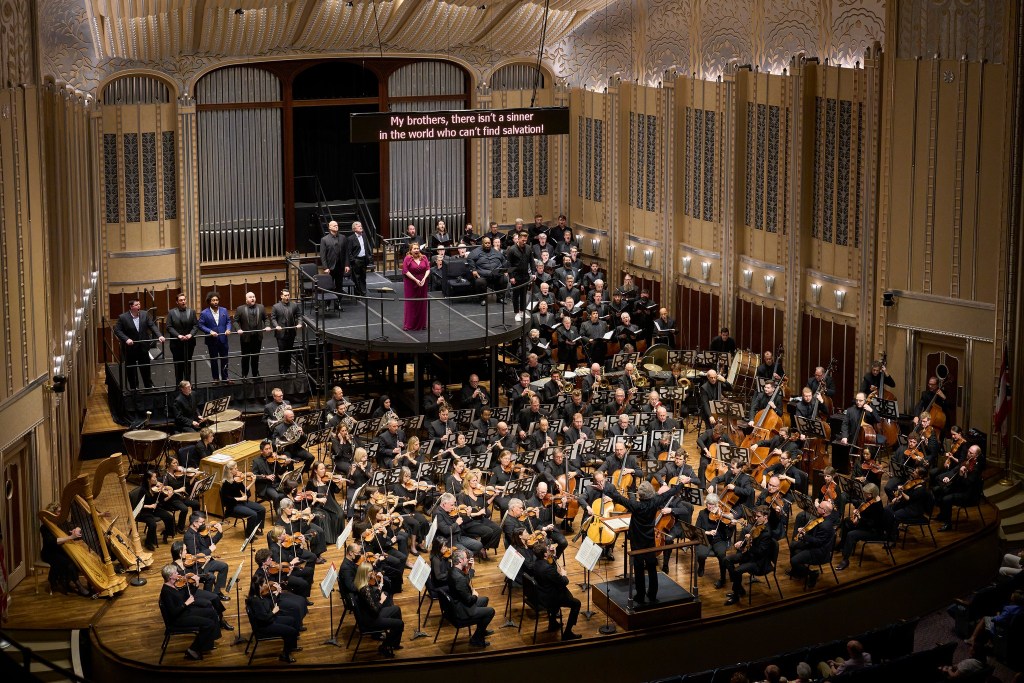
I’ve long felt the Franz Welser-Möst’s greatest achievement as Cleveland Orchestra music director lies in his programming of complete operas, and last weekend’s performance of Puccini’s Fanciulla del West only furthered cemented my contention. Welser-Möst certainly has stellar operatic credentials, holding directorships of the major opera houses of both Zurich and Vienna. Puccini’s 1910 work tends to be overshadowed by the blockbusters that surround it, but Welser-Möst along with TCO and a strong vocal cast made quite the compelling case for it.

Emily Magee as Minnie in The Cleveland Orchestra’s La fanciulla del West, photos credit Roger Mastroianni, courtesy of The Cleveland Orchestra

Announced well before the pandemic – a sign of the long-range planning behind putting on such an ambitious production with an international cast – some cast changes were perhaps all but inevitable, with Emily Magee stepping in for Tamara Wilson as Minnie, and Roman Burdenko singing the role of Jack Rance in place of the originally announced Eric Owens. Though perhaps not as deeply familiar as La bohème or Madama Butterfly, the arresting, lush beginnings from the orchestra made matters instantly recognizable as Puccini, surging with a passion only he could write.

Singing of homesickness – what must have been a common experience for those braving the American West – Kyle Miller’s Jim Larkens was a lovely, inward moment, touchingly accompanied by the harp. Minnie’s entrance showed Emily Magee – despite suffering from a cold – to be a commanding presence, mastering the daunting role. I envy audiences who saw the two performances prior to Saturday, in which her voice presumably would have been in even stronger shape. She blended beautifully with Limmie Pulliam’s Dick Johnson, closing Act I in a sumptuous duet.

This arc continued into the second act, with a rapturous love scene between them before conflict erupted, gunshots chillingly fired, and matters built to the tensely climactic poker scene. The final act began in cacophonous tumult, with the now captured Johnson booming and defiant to the end. Minnie implored for compassion in a heartfelt dialogue with the miners (“Ah! Ah! È Minnie!”), persuasive enough to afford a redemptive ending – for Puccini, a rarity indeed!

Buttressing the cast of soloists were the men of the Cleveland Orchestra Chorus, colorfully portraying a miscellany of miners at a Gold Rush camp. Performing the work in a concert hall rather than an opera house allowed The Cleveland Orchestra to be front and center rather than relegated to the pit – and rightfully so, as they were perhaps the true star of the show, with meticulous and compelling playing that served Puccini well. One doesn’t always get to hear an opera anchored by such fine orchestral playing, certainly a high note on which to close the 2022-23 concert season.

Franz Welser-Möst leads The Cleveland Orchestra, Chorus, and soloists in La fanciulla del West

Cleveland Orchestra’s stellar Mozart and Dvořák bookends Deutsch premiere

Cleveland Orchestra
Franz Welser-Möst, conductor
Mandel Concert Hall
Severance Music Center
Cleveland, OH
January 15, 2022

Mozart: Symphony No. 36 in C major, K425, Linz
Deutsch: Intensity
Dvořák: Symphony No. 8 in G major, Op. 88

Under the baton of music director Franz Welser-Möst, The Cleveland Orchestra offered familiar and appealing symphonies of Mozart and Dvořák as bookends to a compelling premiere from its current composer in residence. Mozart’s Linz symphony made for a pearly opener. The dotted rhythms which opened the slow introduction were punctuated with heft while the ensuing Allegro spiritoso was a fittingly lighter affair, given with such energy as to mirror the frenetic pace at which it was composed. The Andante was delicate and intricately refined by way of Welser-Möst’s exacting attention to articulation and dynamics. In the Menuetto, one was struck by the rhythmic swagger, and the bold, big sound of the modern orchestra which the conductor cultivated – something of a foil to Nicholas McGegan’s airier and comparatively more historically-informed performance of the work a few seasons ago. Contrast was further sharpened by the rather more genial trio, and the finale was given with crystalline clarity even at breakneck tempo.

Bernd Richard Deutsch and The Cleveland Orchestra, photo credit Roger Mastroianni, courtesy of The Cleveland Orchestra

Bernd Richard Deutsch’s Okeanos made a strong impression on this listener when performed by the orchestra in March 2019 (and captured on the excellent A New Century). As the current Daniel R. Lewis Young Composer Fellow, Deutsch was commissioned to write a new work for TCO, originally slated for a May 2020 performance but inevitably postponed until this weekend. The product of this residency was Intensity, an aptly titled twenty-minute fantasy scored for massive orchestral forces – including a particularly extensive percussion battery. A sense of wound-up energy, pregnant with potential permeated the opening bars, and the colorful timbres of the percussion were utilized from the opening notes. Lyrical interludes at various interludes offered an anchor in otherwise stormy waters. The middle of the work’s three sections was spectral and dissipated, achieved through the striking aural palette of high strings, muted brass, percussion, and celesta. The namesake intensity ramped up again in the final section, encouraged by the boisterous percussion and finally culminating in a blast in the brass. A fitting tribute to the virtuosity and technical prowess of the The Cleveland Orchestra, and I hope a recording is released in the near future.

Dvořák’s Symphony No. 8 is certainly one of the most popular in the repertoire, but this performance was refreshingly far above the routine and pedestrian. Passionate beginnings, as coaxed from the resonant cellos, persisted for only a moment before the work’s sunny disposition shone through. Joshua Smith’s solo flute passages were a highlight, and Welser-Möst opted for a brisk tempo, keenly avoiding over-sentimentalizing. The Adagio showed Dvořák at his most lyrical, although a brilliant brass section added bold contrast. The Allegretto grazioso positively sparkled in its lilting textures, while clarion trumpets heralded the finale wherein the conductor guided the orchestra with conviction through the myriad of guises of this rousing theme and variations.

Rare Prokofiev highlights Welser-Möst’s offbeat Cleveland Orchestra program

Cleveland Orchestra
Franz Welser-Möst, conductor
Severance Hall
Cleveland, OH
January 30, 2020

Prokofiev: Symphony No. 6 in E flat minor, Op. 111
Bridge: The Sea, H100
Dukas: The Sorcerer’s Apprentice

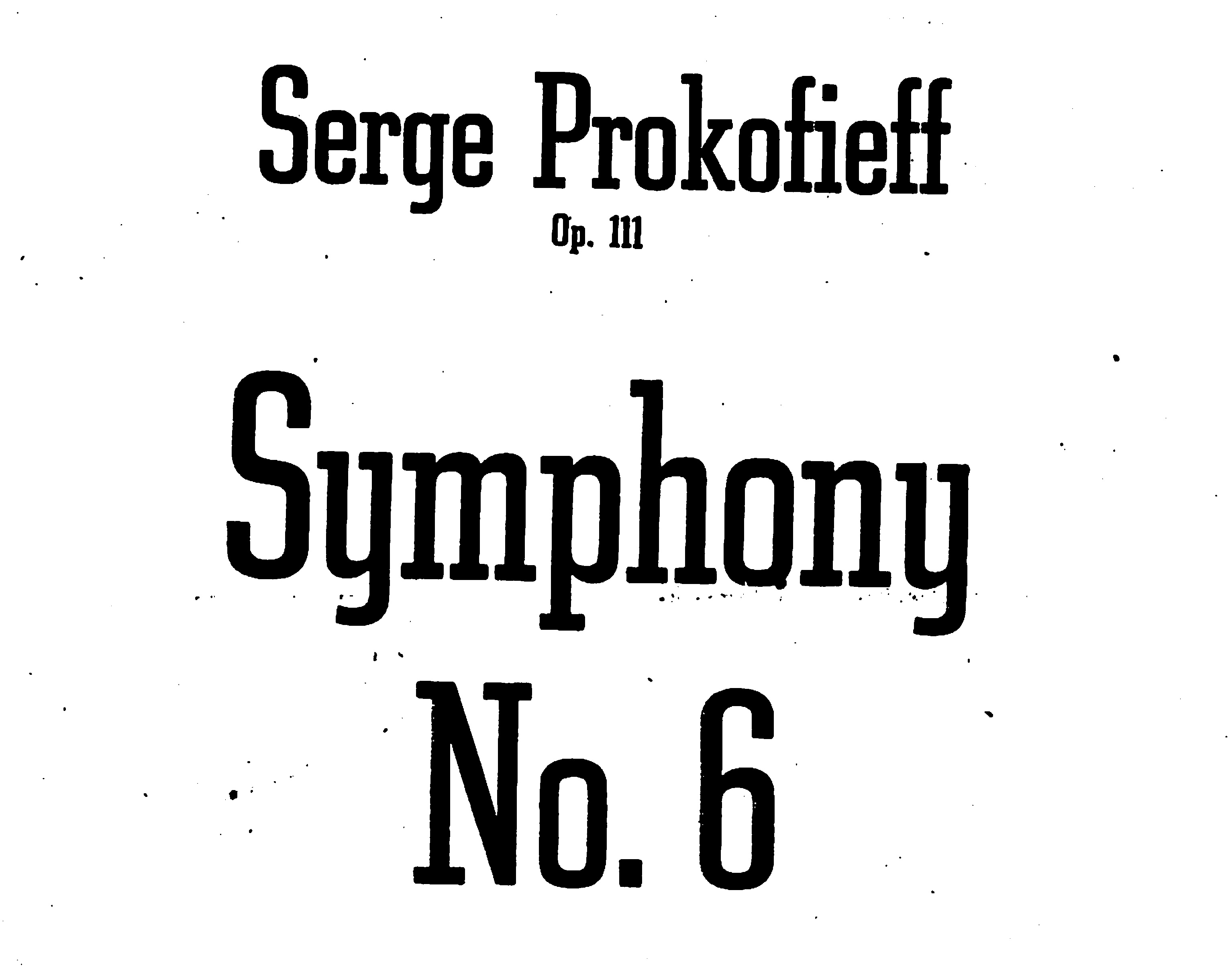
Following their annual residency in Miami, The Cleveland Orchestra is back home for a hearty stretch of concerts leading up to another tour this spring that will take them to Europe and the Middle East. Franz Welser-Möst, continuing his often revelatory exploration of Prokofiev, opened the program with the composer’s seldom heard Sixth Symphony. If the Fifth Symphony celebrates the glories and triumphs of World War II, the Sixth takes a much darker approach in its bracing depiction of the war’s tragedies and losses. As Welser-Möst noted in his spoken introduction, here we have the usually complacent Prokofiev living on the “knife’s edge” of what was acceptable artistically to the Soviet authorities – with its ambiguities and underlying tragedy, it draws comparison to the subversive works of Shostakovich.

prok6
Title page of Prokofiev’s Sixth Symphony

The opening Allegro moderato was thorny and unforgiving, foregoing the familiar cohesion of sonata form for a structure underpinned by garish thematic transitions, through which Welser-Möst guided the orchestra with exacting precision. Stark textures were drawn from the low brass and rather busy piano, and the metallic climaxes depicted in no uncertain terms the true trauma of war. The central Largo served as the emotional crux, with arching strings introducing a pained lyricism. A percussive section, however, ensured this was far from a purely meditative affair, and the celesta added another striking timbre. The motoric finale, patently Prokofiev, delivered rapid fire repeated notes with a Haydnesque wit. An interjection of sparse and forlorn material gave pause before the conclusion – cacophonous, bombastic, and in apparent triumph, albeit only skin-deep.

An even rarer quantity followed after intermission in Frank Bridge’s orchestral suite The Sea. The Cleveland Orchestra gave the US premiere of the work under first music director Nikolai Sokoloff in 1923, and remarkably, hasn’t touched it since. Its four movements depict the titular entity in various guises, and would be a clear inspiration for the Four Sea Interludes from Peter Grimes by Britten, Bridge’s one and only composition student. Additionally, Bridge spent much time on the coast at Eastbourne, where Debussy too gleaned inspiration for another indelible musical sea portrait, La mer.

“Seascape” opened in lavish orchestration with a flowing melody in clear evocation of the sea – music of great beauty and appeal. The scherzo-like frothiness of “Sea Foam” depicted the ever-changing surface, while “Moonlight” unfolded as a nocturne with a delicate flute melody in counterpoint with the harp. Thundering timpani and dissonant brass conjured the closing “Storm”, but the sun shone through for a resplendent end – let us hope it is not nearly another century before we hear the work again!

Dukas’ one-hit wonder The Sorcerer’s Apprentice closed the evening in exciting fashion. Quiet mystery opened, setting the stage for the indestructible march theme, giving the bassoon and contrabassoon a rare moment in the spotlight. The orchestra amassed to vigor in bringing Goethe’s fantastical poem to life in musical terms, only to dissipate in a closing gesture as blistering as it was sudden.

Welser-Möst and Cleveland Orchestra deliver an imposing Mahler 5

Cleveland Orchestra
Franz Welser-Möst, conductor
Severance Hall
Cleveland, OH
September 26, 2019

Neuwirth: Masaot/Clocks Without Hands
Mahler: Symphony No. 5 in C sharp minor

A Mahler symphony is, virtually by definition, an evening’s worth of music in its own right. While including another work on the same program can feel all but gratuitous, a thoughtful choice can offer illuminating possibilities. This was the case Thursday night, with Welser-Möst pairing Mahler’s Fifth Symphony with a work by Austrian compatriot Olga Neuwirth. Welser-Möst has a keen ear for identifying compositional talent from his home country by names otherwise little known this side of the Atlantic. Neuwirth proved to be another such discovery, a composer The Cleveland Orchestra has touched just once before in a 2004 performance of locus…doublure…solus, also under Welser-Möst’s direction.

CLO092619_388
Nathaniel Silberschlag, Franz Welser-Möst, and The Cleveland Orchestra in Mahler’s Fifth. Photos credit Roger Mastroianni, Courtesy of The Cleveland Orchestra

The intriguingly titled Masaot/Clocks Without Hands was originally commissioned by the Vienna Philharmonic for the 2011 centenary of Mahler’s death. Saddled with other projects, Neuwirth delayed composition until 2013-14, and noted that the primary inspiration came from a dream about a grandfather she never met. Nonetheless, the spirit of Mahler runs through the work abundantly. The first part of the title comes from the Hebrew work for “journey”; Neuwirth further depicted a central image of a river that connects disparate groups of people on its long journey to the sea. In that regard, I was reminded of Stromab by Johannes Maria Staud – another work by a contemporary Austrian depicting a river which Welser-Möst fittingly paired with a Mahler symphony two seasons ago.

The work began barely audibly, almost unrecognizable as acoustic sound, but soon erupted into cacophony. Stark contrasts and sharp juxtapositions dominated the bulk of the texture, certainly bringing to mind Mahler’s eclecticism. There was colorfully prominent writing for the celesta, and other passages vaguely brought to mind Jewish folk music, appropriate given the Hebrew title. The woodblock served as a ticking clock – sometimes the only instrument playing – yet by the work’s end, high in the stratosphere, any semblance of time had all but dissolved, hence the titular “clocks without hands.” As a sidenote, the orchestra is bringing the program to Carnegie Hall next week, but replacing the Neuwirth with Widmann’s Trauermarsch – another choice pairing, with the piece directly inspired by the namesake opening movement of Mahler’s Fifth.

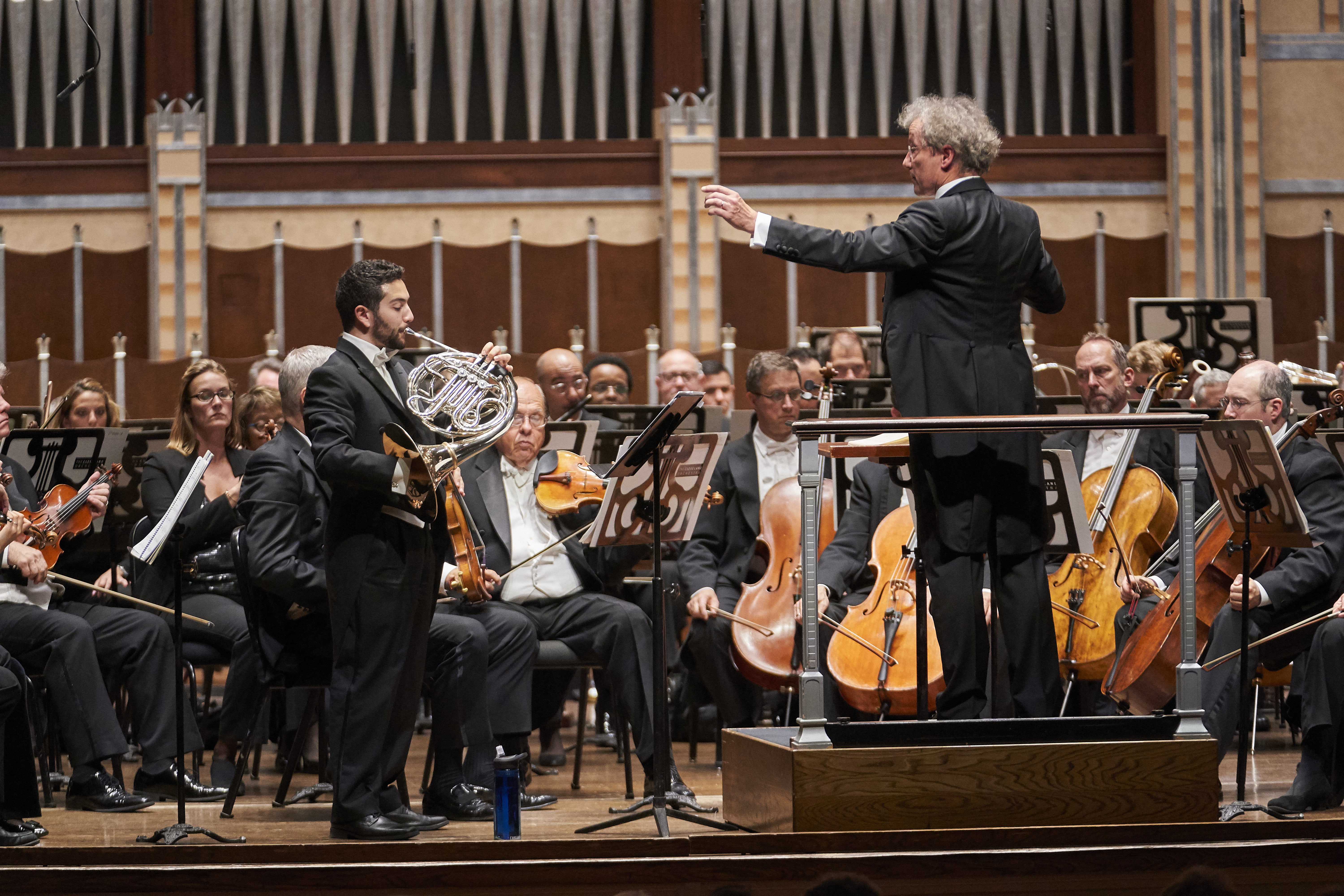
The bold, declamatory trumpet of Michael Sachs made for an imposing beginning to the Mahler, even as the music morphed into a doleful lament in the strings. The glacial dirge crested to powerful climaxes, but ultimately withered away at movement’s end. A motoric intensity marked the ensuing Stürmisch bewegt, filled with biting ironies. The sun was nonetheless eventually allowed to shine through, and quite brilliantly in a powerful chorale, but only for a fleeting moment as darkness ultimately prevailed. A massive scherzo serves as the symphony’s centerpiece; some commenters have likened it to a horn concerto given its extended solos for that instrument. This was taken quite literally with newly appointed principal horn Nathaniel Silberschlag standing front and center – a supreme test of his mettle, and quite an initiation to this orchestra. His gleaming tone surmounted the challenges presented, and I look forward to hearing more from him.

A scherzo to end all scherzos, the movement is something of hybrid between the vigor of Beethoven’s and the tragedy of Chopin’s, offering some lighter contrast to the rest of the work but not without eschewing its monumentalism. Shrill clarinets added splashes of color, and the wistful pizzicato strings were particularly lovely. The Adagietto unfurled as a divine love song, strikingly scored for strings and harp alone. Welser-Möst’s tempo choice was prime, sumptuous but not indulgent. Matters grew rapturously passionate before quietly fading. A sunny horn call marked the closing Rondo-Finale, quite a shift in texture and character. This was hardly a straightforward rondo, not in the least for the contrapuntal intricacies, performed with crystalline clarity. The chorale theme first introduced in the second movement returned, as if being reunited with an old friend. This time, however, it flourished unencumbered for an unambiguously glorious ending.

CLO092619_662


From Scandinavia to Italy, Cleveland Orchestra closes season in colorful travelogue

Cleveland Orchestra
Franz Welser-Möst, conductor
Simon Keenlyside, baritone
Severance Hall
Cleveland, OH
May 23, 2019

Grieg: Morning Mood, The Death of Åse, and At the Wedding from Peer Gynt, Op. 23
Sibelius: Kaiutar, No. 4 from Six Songs, Op. 72
Sibelius: Illale, No. 6 from Seven Songs, Op. 17
Sibelius: Aus banger Brust, No. 4 from Six Songs, Op. 50
Sibelius: Svarta rosor, No. 1 from Six Songs, Op. 36
Sibelius: Kom nu hit, död!, No. 1 from Two Songs for Shakespeare’s The Twelfth Night, Op. 60
Sibelius: Im Feld ein Mädchen singt, No. 3 from Six Songs, Op. 50
Sibelius: Die stille Stadt, No. 5 from Six Songs, Op. 50
Sibelius: Var det en dröm?, No. 4 from Five Songs, Op. 37
Strauss: Aus Italien, Op. 16

Franz Welser-Möst and The Cleveland Orchestra closed the 2018-19 season in an alluring program, with all selections stemming from the late 19th-century (and in to the early 20th), connected by Romantic fascinations from awe-inspiring destinations to drama and poetry. Beginning the evening were selections from Grieg’s incidental music to Peer Gynt. Welser-Möst culled his own suite of three excerpts rather than opting for either of the two suites the composer later produced. The selections were performed in reverse order of appearance in the source material, opening with the familiar Morning Mood (which serves as the prelude to Act 4). Silvery flutes beckoned the morning, with the songful theme passed around the woodwinds before appearing in the strings. Welser-Möst’s brisk tempo ensured matters were never sentimentalized. Lush and mournful strings made The Death of Åse the emotional crux, easily a precursor to Barber’s Adagio. At the Wedding (which opens the complete work) was given with vigor and joyous abandon. A more languorous theme was very finely played in turn by the principal winds while Wesley Collins’ offstage viola radiated folksy charm.

CLO052319__197_select
Simon Keenlyside and Franz Welser-Möst, photos credit Roger Mastroianni, Courtesy of The Cleveland Orchestra

On the heels of his lieder recital a few days prior, Simon Keenlyside returned for the evening’s centerpiece and highpoint – a helping of eight of the seldom-performed songs of Sibelius. The songs at hand were variously in Finnish, Swedish, or German, and in some cases orchestrated by Sibelius himself, others by contemporaries. Keenlyside brought out the lyrical qualities of the Swedish language in Kaiutar, with an orchestration that encouraged its fantastical, fairy-tale atmosphere. Crepuscular strings made Illale a true gem, and the next selection turned to German in a setting of Richard Dehmel’s Aus banger Brust. Dehmel’s poetry served as text for the likes of Strauss and Schoenberg, and Sibelius proved no less adept with the work’s acerbic dissonances and moving solo passages from concertmaster Peter Otto in faithful service of the text. Svarta rosor, a comparatively better-known quantity, was of robust lyricism and grand emotions, nearly operatic with an unforgiving close to boot.

Unlike the others all originally scored for voice and piano, Kom nu hit, död! came from a set of two Swedish settings of Shakespeare’s The Twelfth Night for voice and guitar, given a rather gloomy reading at present. The richness of Im Feld ein Mädchen singt could easily have been mistaken for Strauss, while Die stille Stadt – another Dehmel setting – maintained a remarkably surreal atmosphere, enhanced by ethereal sounds from the glockenspiel, harp, and high strings. The last selection, Var det en dröm?, displayed again Keenlyside’s keen ability to seamlessly switch languages, and brought matters to a passionate, satisfying close, feeling almost as if these eight otherwise disparate songs were conceived as a unified cycle.

Strauss’ Aus Italien drew inspiration from an Italian journey undertaken by the composer as an impressionable youth, and became the first entry in his great series of tone poems. It’s an immature work to be sure, yet many Straussian hallmarks are already firmly in place, setting the stage for the musical revolutions that would soon be flowing from his pen. This was certainly apparent in the opening Auf der Campagne which could only have been written by Strauss, with elemental beginnings burgeoning into material larger than life. Brassy passages were of arresting vigor, although otherwise matters in performance weren’t entirely polished, sounding as if some extra rehearsal time was needed – no doubt, I suspect, ironed out by the Saturday performance.

Rather than the single-movement architecture of the successive tone poems, Aus Italien was conceived far less cohesively as four distinct portraits. In Roms Ruinen followed suit, generally lighter fare of Italianate charm interspersed with more solemn moments in awe of the eponymous ruins. Strauss’ idiomatic orchestral effects certainly began to crystallize in Am Strande von Sorrent, a coloristic painting of the sun-drenched coast of Sorrento. The closing Neapolitanisches Volksleben marked the work as a foreigner’s less than reliable view of Italy in that Strauss mistook a popular tune of the day for bone fide Neapolitan folk music (I was somewhat reminded of the All’Italiana movement from the Busoni piano concerto heard earlier this season – though there the composer was no foreigner, it too juxtaposed Italianate folk melodies in the context of an otherwise very Teutonic musical language). In any case, matters were nonetheless of an infectious joie de vivre, banal yet so colorfully orchestrated. The orchestra’s committed playing heightened one’s interest: ultimately the rewards were mixed, though the players on stage made as strong a case as they could in this vintage work displaying the budding composer’s incipient genius.

CLO052319__039_select
Franz Welser-Möst and The Cleveland Orchestra in Aus Italien

US premiere of Deutsch’s Okeanos makes strong impression

Cleveland Orchestra
Franz Welser-Möst, conductor
Paul Jacobs, organ
Severance Hall
Cleveland, OH
March 14, 2019

Haydn: Symphony No. 34 in D minor, Hob. I:34
Deutsch: Okeanos
Tchaikovsky: Symphony No. 5 in E minor, Op. 64

Prior to The Cleveland Orchestra’s impending and extensive tour of China, Franz Welser-Möst is back in town for a pair of programs, the first of which was centered on Cleveland’s introduction to the tenth Daniel R. Lewis Young Composer Fellow, Bernd Richard Deutsch. Also hailing from Welser-Möst’s native Austria, Deutsch is representative of what is sometimes referred to as the Third Viennese School, a loose amalgamation of composers whose music has been championed by the contemporary music ensemble Klangforum Wien.

54800325_2019833998310847_5346184265367133856_n
Franz Welser-Möst and Paul Jacobs in Okeanos. Photos credit Roger Mastroianni, Courtesy of The Cleveland Orchestra

The work Deutsch made his calling card was Okeanos, a nearly 30-minute canvas for organ and orchestra dating from 2014-15, and inspired by the titular Greek personification of the oceans. Prefacing the performance, Deutsch and organist Paul Jacobs were on hand for a fascinating preconcert discussion (although I did wish that moderator Caroline Oltmanns had been gracious enough to give the two more airtime). Okeanos is conceived in four movements, each representing the fundamental elements, respectively, water, air, earth, and fire. The work began almost indeterminately, with tremolos obscuring fragments of themes, and the organ so wrapped into the fabric of the orchestra as to be hardly discernible. The movement soon grew far more animated, building to a fluid gravitas, with the organ powerfully prominent in music of cosmic visceral impact – yet the movement ended in no more than a whisper.

“Air” opened with rapid fluttering in the organ along with a wind machine used to obvious effect. Colorful glissandi on the organ were imitated by the harp and celesta. “Earth” was a more glacial affair, filled with otherworldly timbres usually emanating from the percussion battery, as vast and diverse as one could imagine. “Fire” was of rapid virtuosity and quite ferocious playing, emphasizing the rhythmic primacy of the percussion. Further striking effects were achieved through muted trombones; at movement’s end the texture dug down into the depths of the organ, ending on a sustained chord at quadruple forte – an imposing effect to be sure. Deutsch noted that the structure of the work was determined by the golden ratio – a thought-provoking compositional approach with antecedents in Debussy and elsewhere, though certainly not apparent on first hearing. As part of his fellowship, Deutsch has been commissioned to write a new work for the orchestra, to be performed at the end of next season (May 2020) – I look forward to music that lies ahead.

The evening began with the first Cleveland Orchestra performances of a lesser-known Haydn symphony, No. 34 in D minor. The first of the composer’s to be cast in the minor, it served as an incubator for the series of Sturm und Drang symphonies that would soon follow. Haydn quite surprisingly begins with the slow movement – what initially sounds like merely an introduction turns out to be a symphonic edifice nearly as long as the remaining movements combined. A lament in the strings was marked by the clarity of the inner voices in this statement of genuine expressive depth. After the weighty beginnings, the minor was all but forgotten and matters proceeded wholly unperturbed. The sudden high spirits of the second movement were further encouraged by the courtly minuet with lovely woodwind triplets during its trio. And as is often the case with Haydn’s whirlwind finales, one only wished it wasn’t so brief.

Tchaikovsky’s evergreen Fifth Symphony completed the program in lush Romanticism. A plaintive presentation of the fate motive in the clarinets opened the work to chilling effect, eventually coalescing as an energetic march, gathering great strength in the face of fate and brimming with endlessly flowing melody. Welser-Möst took matters at a startlingly brisk tempo – while I applaud his resolve to not sentimentalize, I would have preferred the music to breathe a bit more. Low strings of deep emotion marked the slow movement, a backdrop for the sumptuous horn solo, delicately interjected by Afendi Yusuf’s clarinet. While Welser-Möst might not have probed as deep as some, the result was nonetheless long, flowing lines of rapturous beauty. The tragic obsessions of the first two movements were left behind in the lilting Valse, decorated by mercurial strings. The fate motive resurfaced, suddenly benign, setting the stage for the finale wherein matters were miraculously morphed to the triumphant.

53614295_414978859268690_2808613123078089845_n
The Cleveland Orchestra performs Okeanos. Note the percussion battery and muted brass.

Welser-Möst and Cleveland Orchestra score another operatic success in Ariadne auf Naxos

Cleveland Orchestra
Franz Welser-Möst, conductor
Severance Hall
Cleveland, OH
January 13, 2019

Strauss: Ariadne auf Naxos, Op. 60

Tamara Wilson, soprano (Ariadne/Diva)
Andreas Schager, tenor (Bacchus/Tenor)
Daniela Fally, soprano (Zerbinetta)
Kate Lindsey, mezzo-soprano (Composer)
Wolfgang Brendel, speaking role (Major-Domo)

Hanno Müller-Brachmann, baritone (Music Master)
Jonas Hacker, tenor (Dance Master)
Julie Mathevet, soprano (Naiad)
Daryl Freedman, mezzo-soprano (Dryad)
Ying Fang, soprano (Echo)
Ludwig Mittelhammer, baritone (Harlequin)
James Kryshak, tenor (Scaramuccio)
Anthony Schneider, bass (Trufffaldino)
Miles Mykkanen, tenor (Brighella)

Frederic Wake-Walker, director
Alexander V. Nichols, lighting, projection, and set design
Dominic Robertson & Lottie Bowater, collage, animation, and video content design
Jason Southgate, costume design
Mallory Pace, hair and makeup design

In what has become an essential part of The Cleveland Orchestra’s Severance Hall season, music director Franz Welser-Möst led his ensemble in a staged opera production, this season turning attention towards Richard Strauss in Ariadne auf Naxos. A wholly unique work in the operatic canon, Ariadne is preceded by a prologue wherein a cast of characters plan and prepare an evening’s musical program, debating whether it should be serious art or comedic entertainment, and what follows is the resultant product – effectively, an opera with an opera. The new production was designed by Frederic Wake-Walker, who made much of Severance’s small stage and deftly incorporated motifs of the hall into his design.

RICHARD STRAUSS - Ariadne auf Naxos
The ensemble of Ariadne auf Naxos at Severance Hall, with The Cleveland Orchestra led by Music Director Franz Welser-Möst. Photo by Roger Mastroianni.

Welser-Möst eschewed the usual conductor entrance, with the prologue opening practically in medias res with conductor and orchestra in casual dress as perhaps in the middle of a rehearsal: the musicians thus became characters themselves. The instrumental introduction evidenced the finely-tuned Strauss playing of this ensemble. Strauss scored it for the rather modest force of about 35, although owing to the composer’s mastery of orchestration it often sounded as much more. While the scoring was thinner in the winds – particularly given what one might expect for Strauss – it was fleshed out by three keyboard instruments (piano, harmonium, celeste), and the clear textures allowed for the solos of the Cleveland principals to be rendered in sharper focus – notable were passages from the flute, clarinet, oboe, cello, and concertmaster Peter Otto.

As the Major Domo, Wolfgang Brendel was both imposing and avuncular in his spoken role (the character purportedly being tone deaf), explaining to the Composer that the latter’s opera would coincide with a performance by a comedy troupe, setting up the prologue’s central conflict. Dressed in the glam of a rock star, Kate Lindsey brought enormous vigor and defiance to the firebrand Composer, scored for mezzo to portray his youth, which involved an artistic idealism he hardly wanted to yield to comedians. As the Prima Donna (and slated to play title role in the Composer’s opera), soprano Tamara Wilson captured the essence of the stereotypical diva (and incidentally, Wilson is to reprise the role with Welser-Möst at La Scala later this season). When it was announced an inflexibly scheduled fireworks display would necessitate the opera and the comedy to be performed simultaneously, the singers and the comics exchanged ideas in a humorous mashup of the comical and the serious.

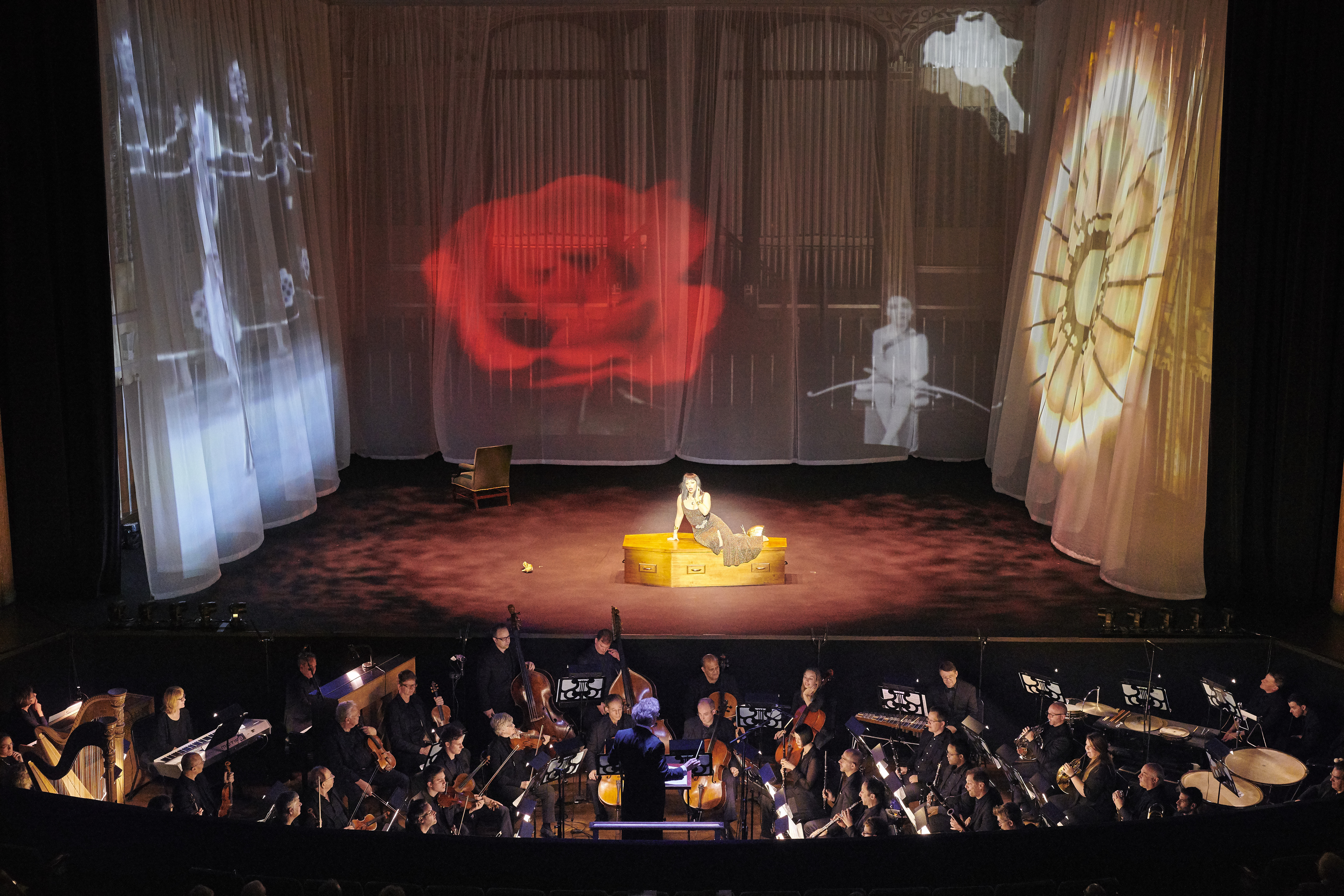
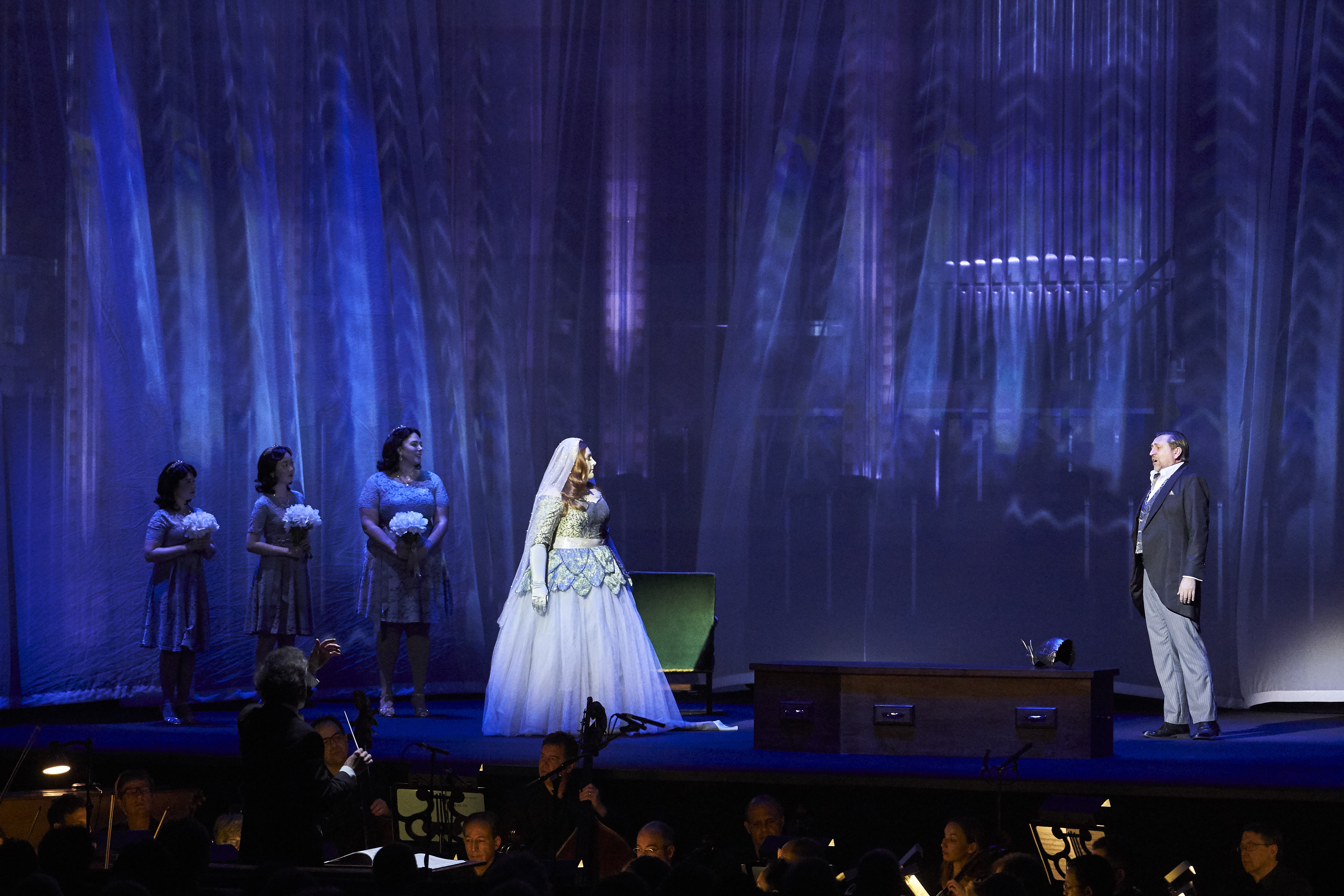
After the prologue’s minimalist staging, Severance Hall underwent a miraculous transformation to host the opera proper. The orchestra was lowered down to the pit, and a curtain draped around the stage’s perimeter served as a canvas for a nearly continuous stream of video projection. In adoration of the production’s venue, patterns reflective of the Severance ceiling were displayed on the curtain, and Ariadne’s dress would invoke the same pattern. While I was impressed with the production being truly made for Cleveland, perhaps the sight lines of the hall could have further been considered during design – particularly in the prologue, some of the action was obscured from my vantage point on the side of the balcony.

RICHARD STRAUSS - Ariadne auf Naxos
Daniela Fally (Zerbinetta) in Ariadne auf Naxos at Severance Hall, with The Cleveland Orchestra led by Music Director Franz Welser-Möst. Photo by Roger Mastroianni.

Following another finely-played orchestral prelude, the celestial voices of the three nymphs were heard from above, reaching out to Wilson now refashioned as Ariadne. In a nod towards (somewhat) contemporaneous comedy, the comedians were costumed as the four Marx Brothers (is there any evidence that Strauss ever saw a Marx Brothers film?!). Additionally, clips from various comedies were projected, including scenes of Charlie Chaplin during the Harlequin’s aria, Lieben, Hassen, Hoffen, Zagen. Ludwig Mittelhammer gave a deeply lyrical and affecting reading of the Harlequin, and during his excellent pre-concert lecture, Prof. Bryan Gilliam observed that the aria in question bears a more than passing resemblance to the first movement theme from Mozart’s piano sonata K331 – a composer who Strauss profoundly admired.

The second half’s centerpiece, Zerbinetta’s extensive Großmächtige Prinzessin, saw Daniela Fally – donning a flapper dress – shining brilliantly in this coloratura tour de force. The ensemble piece Töne, töne, süße Stimme, given by the nymphs in concert with Ariadne, was of sublime beauty as well as another musical homage – in this case, to Schubert (the Wiegenlied, D498). Tenor Andreas Schager entered as Bacchus, stretching to the extremities of his vocal range with great power but always lyrical first and foremost. A transcendent transformation occurred on stage with the darkened hall becoming filled with light as Ariadne gave thought to life with Bacchus outside her cave on the titular Naxos, perhaps alluding to the quest for enlightenment in Plato’s allegory of the cave. Bacchus and Ariadne closed with a duet of luscious lyricism: in the wake of the earlier debates of high art vs. populism, the sublime firmly had the final word.

RICHARD STRAUSS - Ariadne auf Naxos
Tamara Wilson (Ariadne) and Andreas Schager (Bacchus) in Ariadne auf Naxos at Severance Hall, with The Cleveland Orchestra led by Music Director Franz Welser-Möst. Photo by Roger Mastroianni.


Welser-Möst concludes autumn residency with a powerhouse Mahler 2

Cleveland Orchestra
Franz Welser-Möst, conductor

Joélle Harvey, soprano
Sasha Cooke, mezzo-soprano

Cleveland Orchestra Chorus
Lisa Wong, director

Severance Hall
Cleveland, OH
October 5, 2018

Mahler: Symphony No. 2 in C minor, Resurrection

There’s no question about it: The Cleveland Orchestra’s 101st season has gotten off to a stellar start, with the weekend seeing the last of four diverse and weighty programs led by Welser-Möst before he leaves for engagements elsewhere, not to return until January’s performances of Ariadne auf Naxos. The program in question was devoted to Mahler, familiar territory for these forces, namely the imposing and ultimately glorious Second Symphony – a work not performed on this stage since 2007.

IMG_6675
Welser-Möst, Wong, Harvey, and Cooke (l-r) with Cleveland Orchestra & Chorus

A funeral march is integral to virtually all of Mahler’s symphonies, and the Second in fact begins with one – and a formidable one at that. Nervous tremolos opened, leading inexorably down to the grave in this ferocious outpouring, though interspersed with moments of repose in what made for starkly garish contrasts, with the latter particularly encouraged by the plaintive oboe of Frank Rosenwein. Tempos were brisk – perhaps a bit too much so for my taste – but the yield was music of arresting power, never to be sentimentalized. A stirring brass chorale suggested the venerable Dies irae, and the movement concluded in desolation via a final downward gesture, a fate sounding all but inescapable.

But of course Mahler’s arduous journey doesn’t end there, with the following Andante moderato a folksy foil, as if the struggles immediately preceding had been entirely forgotten in this carefree ländler. A much less tightly-wound tempo achieved a simple, rustic peace, with some playful counterpoint between the strings and winds, leading towards a more animated central section. The main theme returned in a gentle pizzicato, unimpeachably good-natured. A thud in the timpani marked the third movement, with sinuous sixteenths testing the dexterity of the orchestra – a challenge easily surmounted, though again I found the tempo choice a tad rushed. This was the first of two nods to Mahler’s own Wunderhorn songs, here a purely instrumental expansion of “Des Antonius von Padua Fischpredigt”, and not entirely a blithe affair as matters erupted into a primal scream.

In another moment of extreme contrast, a sudden shift to light and the divine was achieved in “Urlicht” (another Wunderhorn text), with mezzo-soprano Sasha Cooke’s rich introspection a voice from another world. The brass chorales were heavenly, and though only a few minutes in duration, this movement was easily the emotional heart of the entire work. The text concludes with longing for “das ewig selig Leben” – in his pre-concert lecture, Rabbi Roger Klein suggested that Mahler knew that “Urlicht” alone was inadequate to achieve these lofty ambitions, hence necessitating the massive finale, a grueling undertaking.

The calm of “Urlicht” was immediately uprooted with fury unrelenting. An offstage brass added a spatial dimension to the score’s rich detailing (some flubbed notes notwithstanding), and the resurrection motif was unassumingly introduced in the trombones and trumpets. Climaxes were of shattering power, although a more intimate moment saw the fluttering flute of Joshua Smith joined by delicate touches of piccolo. The chorus entered as a unified whisper, building to great force in due course. Joélle Harvey offered an angelic soprano, naturally blending with Cooke, and the organ added even more magnificence to work’s stunningly spectacular conclusion, surely representing the pinnacle of human triumph.