Masterful Brahms and completion of Prokofiev cycle at The Cleveland Orchestra

Cleveland Orchestra
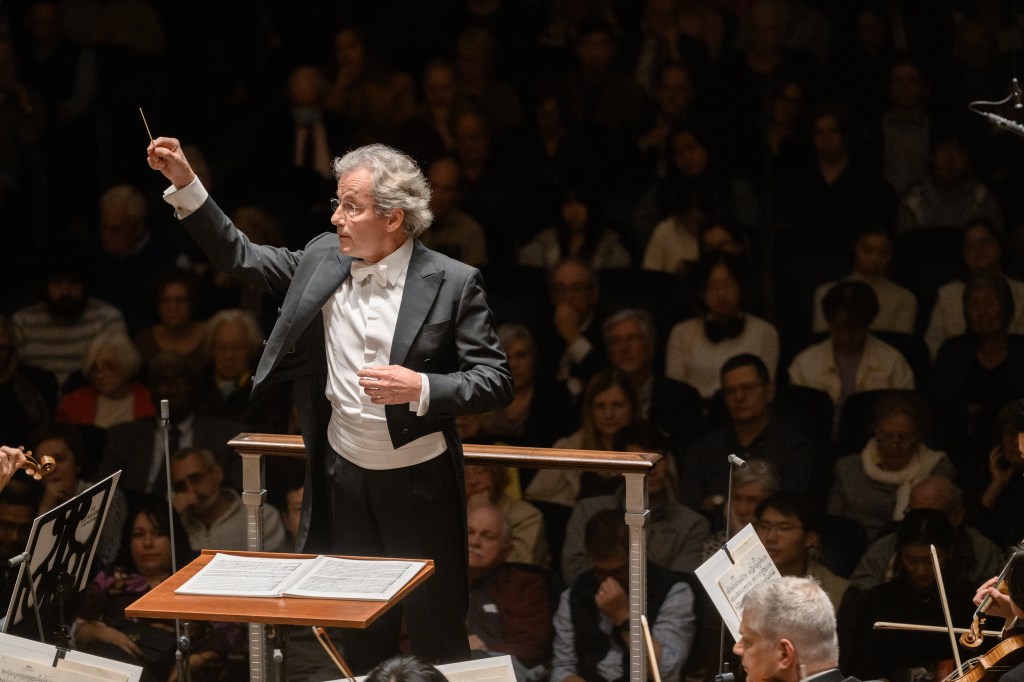
Franz Welser-Möst, conductor
Daniil Trifonov, piano
Mandel Concert Hall
Severance Music Center
Cleveland, OH
October 9, 2025

Prokofiev: Symphony No. 7 in C-sharp minor, Op. 131
Brahms: Piano Concerto No. 2 in B-flat major, Op. 83

Encore:
Prokofiev: No. 20 from Visions fugitives, Op. 22

I’ve been intrigued by Franz Welser-Möst’s endeavor to perform and record all seven of the Prokofiev symphonies with The Cleveland Orchestra. After some eight years, that cycle came to fruition this weekend with the enigmatic Seventh Symphony, the last major work the composer completed. Only the First and Fifth of these symphonies are performed with any regularity, so it’s been a welcome opportunity to discover the rest — though the quality can be uneven.
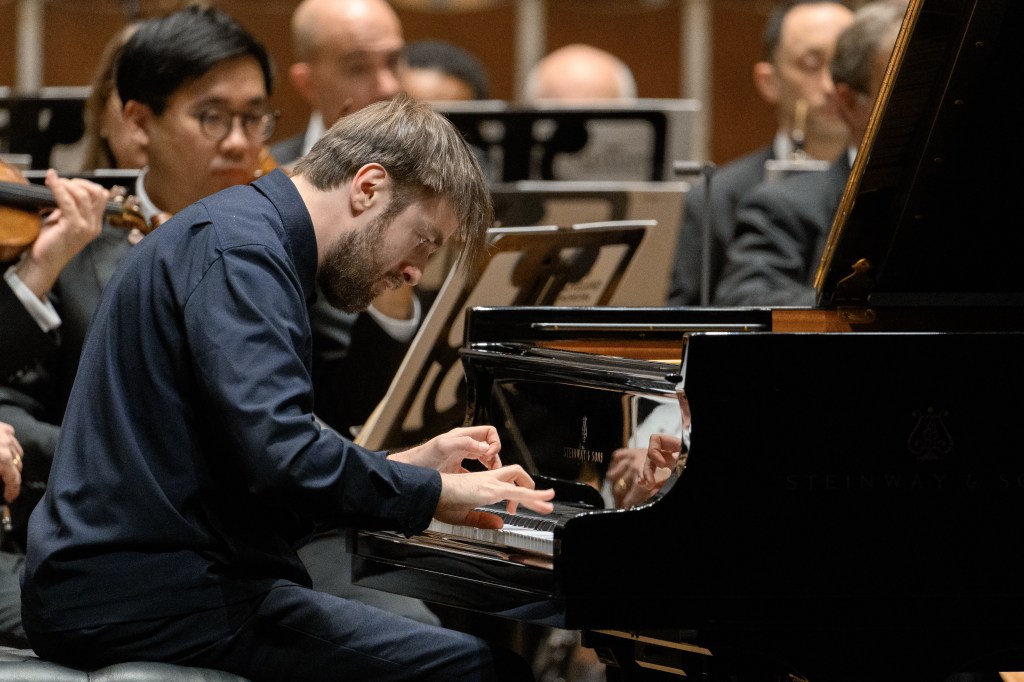
Daniil Trifonov performs Brahms with The Cleveland Orchestra. Photos credit Human Artist / Yevhen Gulenko

Moderately-paced material opened the work in the unusual key of C-sharp minor (common in the piano literature, rare for the orchestra), somewhat mysterious in character in the way that composers’ late works often are. The lyricism was straightforward and unadorned, but what stood out were the striking instrumental combinations, spattered with liberal use of the glockenspiel. A scherzo followed with vestiges of a waltz. A bit spikier than the restrained opening, it was still generally reserved until the boisterous close.

In the Andante espressivo, one was reminded of the poignant lyricism in Prokofiev’s ballet scores, contrasted by the playful and rather sardonic finale. The composer revised the original quiet ending for a bombastic one in an attempt to better appease the Soviet authorities, but was to said to have preferred the original — a preference which Welser-Möst rightfully respected in these performances.

Having been educated at the Cleveland Institute of Music on the precipice of his meteoric rise, pianist Daniil Trifonov remains a local favorite. He served as a probing soloist in Brahms’ daunting Second Piano Concerto (a follow up to his performance of the First two seasons ago — so effectively, another cycle came to a close Thursday evening). An amber horn call opened to herald the gentle arpeggios that rolled across the keyboard. Right at the beginning there was a solo cadenza which put Trifonov’s bold sound and rich tone on full display. An impassioned performance, he conceived the spacious first movement in broad strokes, with piano and orchestra functioning as equal partners in a work that’s perhaps more symphony than concerto.

Though the two works on this program had little in common, they mirrored each other in terms of structure, so as with the Prokofiev, a scherzo followed ahead of the slow movement. Brahms’ was generally a sunny affair though not without discord, played with a driving intensity that was briefly abated during the gentler trio and a passage of ravishing lyricism. Principal cellist Mark Kosower opened the Andante with a gorgeous solo, also serving to give the pianist a momentary but well-earned rest. This slow movement made for a serene moment in an otherwise energetic work. And despite the weight and seriousness of the preceding, the closing movement was of joyous abandon.

As an encore, Trifonov fittingly returned to the composer that opened the evening in Prokofiev, namely the last of the Visions fugitives, a suite of twenty artfully crafted miniatures for piano (the pianist performs the whole set on his recital programs this season). A touching way to bring the evening full-circle.
CIM pianists Babayan and Trifonov dazzle in gala concert

Sergei Babayan, piano
Daniil Trifonov, piano
Mixon Hall
Cleveland Institute of Music
Cleveland, OH
February 19, 2020

Schumann: Andante and Variations for Two Pianos, Op. 46
Pärt: Pari intervallo
Mozart: Sonata for Two Pianos in D Major, K448
Rachmaninov: Suite No. 1 for Two Pianos, Op. 5, Fantasie-Tableaux
Rachmaninov: Suite No. 2 for Two Pianos, Op. 17

Encore:
Prokofiev, transc. Babayan: Idée fixe from The Queen of Spades, Op. 70

To inaugurate the celebrations surrounding the Cleveland Institute of Music’s landmark centennial year, two of the most distinguished pianists associated with the institution teamed up for a duo recital on Wednesday night. Sergei Babayan has held the title of CIM’s Artist-in-Residence since 1992, shortly after taking first prize in the Cleveland International Piano Competition, and at the second piano was his former student Daniil Trifonov. Trifonov’s meteoric rise is surely indebted in part to CIM where he earned an artist certificate in 2013, with an artist diploma following in 2015. Both pianists generously donated their time for the evening, and this benefit concert raised over $100,000 for the student scholarship fund. In his opening remarks, CIM’s president and CEO Paul Hogle further underscored the Institute’s role in the dynamic classical music scene of northeast Ohio, epitomized by over half of The Cleveland Orchestra being connected to CIM as alumni or faculty – if not both.

img_1899
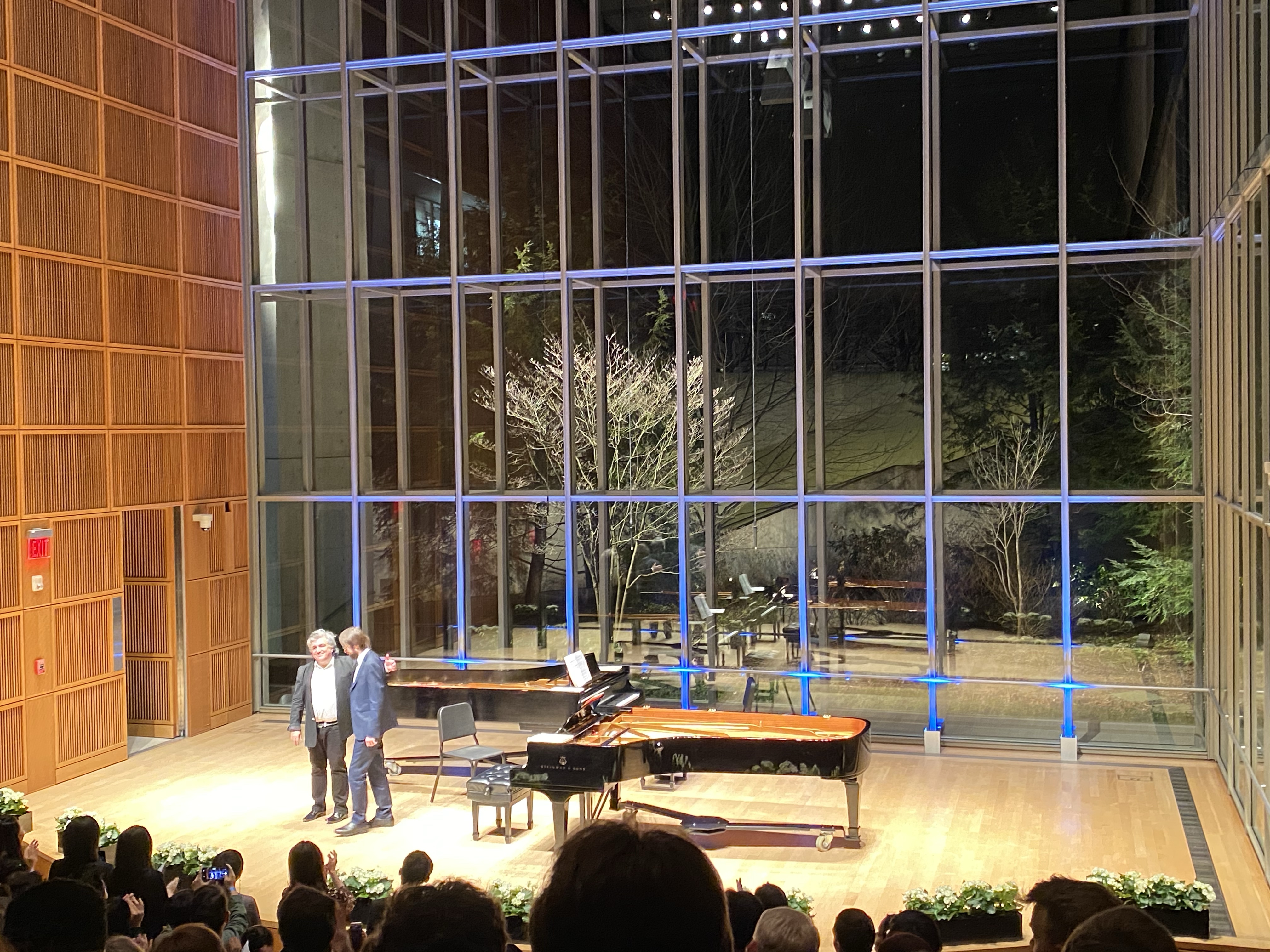
Sergei Babayan and Daniil Trifonov at Mixon Hall

Two pianos on the stage of intimate Mixon Hall made a bold impression, and while both instruments were oriented in opposite directions, their keyboards were aligned to enhance the natural communication between this teacher-student duo. Schumann’s Andante and Variations began the program. An intensely lyrical presentation of the theme opened, burgeoning into quintessentially Schumannesque music of Romantic fantasy and imagination. A militant march variation made for a powerful climax, with matters eventually giving way to a lovely, ruminative conclusion. Arvo Pärt’s Pari intervallo was quite far removed from any other selection performed, but certainly a highlight in spite of its brevity. Evaporated to the essential, its monastic austerity was enchantingly pensive and otherworldly in its repeated bell-like invocations, with the pianists sustaining a meditative state of unblinking concentration.

Mozart’s effervescent Sonata for Two Pianos in D major closed the first half, recalling Babayan’s memorable recital with Martha Argerich two seasons ago. Vigorous energy opened this pearl of the two piano literature, with seamless, crystalline playing evidencing the innate understanding amongst the duo. Rapid passages were crisply in sync, a must in the unforgiving transparency of this repertoire. A singing quality, almost akin to an operatic aria, was given to the central Andante, heightened by its delicate ornaments. The music became rather more unbuttoned in the finale, interspersed with varied material but inexorably gravitating back towards the joyous main theme, of dancing lightness and sparkling articulations.

The latter half was devoted to both of Rachmaninov’s hyper-Romantic Suites for Two Pianos. The “Barcarolle” of the First flowed with liquescent ease, and the pianists cleanly negotiated the detailed filigree. “La nuit… L’amour…” proceeded as a love song of often hypnotic beauty, and the following “Les larmes” was marked by its melancholy cantilena. While both pianists have a reputation for their leonine power, here we saw them turn inwards in music of quiet intimacy: perhaps the description of Rachmaninov possessing “fingers of steel and a heart of gold” applies to them as well. It was the former persuasion, however, that had the last word in the “Pâques” finale. Babayan introduced the theme at a moderate, measured pace, before matters erupted into a modal frenzy to close the suite with formidable weight and power.

A commanding, kinetic opening to the Second Suite showed in no uncertain terms that neither pianist was waning in energy as we neared the end of the program, cutting through the thickness of the dense chordal textures with ease. Here, for the first time, Trifonov assumed the primo role. The “Valse” was handled with rapid legerdemain, varied by an entrancing waltz theme, and the “Romance” offered a wonderfully lyrical interlude. An inevitable tour de force was to be had in the “Tarantelle”: a powerhouse conclusion punctuated by the relentless rhythms of the titular dance. As an encore, the pianists turned to one of Babayan’s own remarkable Prokofiev transcriptions (which can be heard on his emphatically recommended recording with Argerich), namely, the “Idée fixe” from The Queen of Spades, closing the festive evening in pile-driving intensity.

Van Zweden, Trifonov, and the Cleveland Orchestra find fresh inspiration in Mozart and Beethoven

Cleveland Orchestra
Jaap van Zweden, conductor
Daniil Trifonov, piano
Severance Hall
Cleveland, OH
November 27, 2016

Britten: Sinfonia da Requiem, Op. 20
Mozart: Piano Concerto No. 23 in A major, K488
Beethoven: Symphony No. 5 in C minor, Op. 67

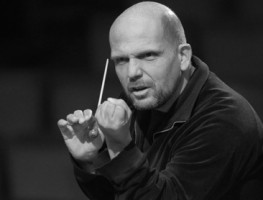
Over the Thanksgiving weekend, the Cleveland Orchestra presented a sumptuous program anchored by seminal works of Mozart and Beethoven.  After being heralded earlier this year as the New York Philharmonic’s music director-designate, all eyes have been on Jaap van Zweden.  The program played on his strengths, and even the most familiar of repertoire sounded dynamic and anew under his probing guidance.

Antwerp_JvZ1-263x200.jpg
Jaap van Zweden, photo credit Bert Hulselmans

The afternoon began in somewhat less familiar territory with Britten’s Sinfonia da Requiem, a work the orchestra has not performed since the 1970s.  A triptych of succinct, interconnected movements, it encapsulates the composer’s pacifist leanings and is an important precursor to the watershed War Requiem.  The opening Lacrymosa began quite strikingly in the timpani and piano, keyboardist Joela Jones providing an unrelenting, anxious ostinato.  The oboe passages of principal Frank Rosenwein were strained and pained in a texture that built to surging brass climaxes in its ethos of despair.

Nervous flutes opened the Dies irae but the heart of the piece was in the concluding Requiem aeternam.  While in lesser hands it can sound like a plodding passacaglia, under van Zweden’s baton it was peaceful and plaintive, building to an arching lyricism in serene resolution, worlds apart from the austerity of the opening.

Mozart’s Piano Concerto No. 23 brought forth the remarkable young pianist Daniil Trifonov, who has an important connection to the city having studied at the Cleveland Institute of Music.  The concerto opened in the airy textures of the strings, with a gesture as gentle as an exhale, and it was with that naturalness the music flowed.  Trifonov’s entrance was unassuming and graceful, and he emphasized the work’s lyrical beauty and dramatic contrasts as per his propensity to the Romantic repertoire, though never in excess.  The cadenza was fleet and deftly balanced, displaying Trifonov’s astonishing dexterity.

7714
Daniil Trifonov

Cast in the relative key of F sharp minor, the slow movement was filled with longing, and the winds were almost decadent in the splendor of their singing lines.  Trifonov would often glance heavenward as if seeking some divine inspiration, fitting for music this sublime.  The sprightly rondo finale is inherently familiar to many Clevelanders, in its frequent appearances as theme music on WCLV.  Although there were shades of darkness in its minor key episodes, the overall mood was of pure joie de vivre.

Perhaps the greatest interpretative challenge of Beethoven’s Fifth Symphony is making one of the most popular pieces in the literature sound anything but trite and clichéd.  Van Zweden proved amply up to the challenge as was apparent right from the crispness of the arresting opening, in a first movement that was lean and taut.  Its violent contrasts were emphasized, keeping the audience on the edge of their seats as it seemingly could devolve into wild abandon at any moment, yet matters were always tightly controlled.

The slow movement began with some especially lovely tones in the cellos, and the interplay between the martial and lyrical themes was cleanly delineated.  I was especially struck by the clarity of the third movement’s fugato section, the contrapuntal lines weaving in and out of the strings.  The finale was an exuberant and joyous affair, and the noteworthy addition of the trombone and the piccolo heightened its sense of drama to bring the concert to a rousing close.