Cleveland, 2019-20: Top 10 classical music performances

It wasn’t long ago that a world in which cultural life – amongst virtually everything else – dictated by a microscopic pathogen seemed almost unimaginable, more likely to be the plot of a dystopian novel than day-to-day reality. Among the casualties was nearly a third of the concert season, cancellations as necessary as they were heartbreaking given the musical riches foregone. Perhaps most regrettable was The Cleveland Orchestra’s festival centered on Berg’s opera Lulu, in what was to be a fascinating exploration of works suppressed by the Nazis. The summer season as well has been jettisoned, and looking ahead, I suspect the fall season too hangs in tenuous balance. Nonetheless, such unprecedented action allows for better times to come, and moreover, the extant torso of the 2019-20 season had more than a few high points to speak of, my picks of which are detailed below.
img_2197
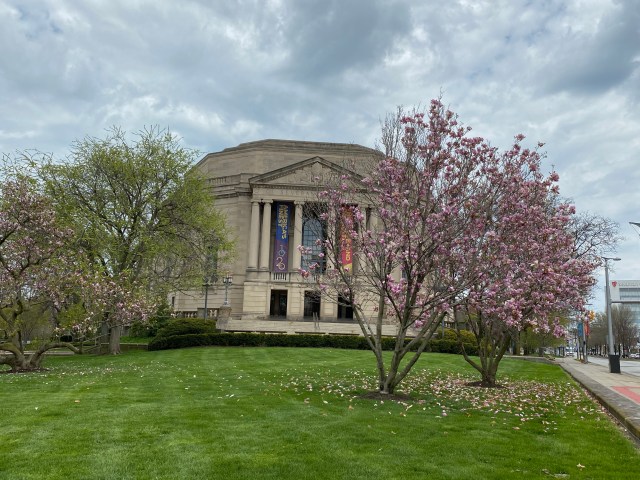
Severance Hall on May 2, 2020 – by which point the music inside had all but stopped

Top 10 classical music performances in Cleveland, 2019-20

  1. Blomstedt’s Bruckner – At 93 years old, Herbert Blomstedt is showing no signs of slowing down, and his reading of Bruckner’s Fifth was simply to die for. Amber brass, arching strings, and the proverbial cathedrals of sound gave one goosebumps for its hour-plus duration.
  2. Uchida plays Schubert – One of my fondest musical memories of living in Chicago is the Sunday afternoon piano recitals at Orchestra Hall. Solo recitals from pianists of stature are comparatively rarer here in Cleveland, but Mitsuko Uchida’s mesmerizing performance of Schubert piano sonatas broke the trend – and certainly whetted one’s appetite for more. I hope that in future seasons piano recitals can become an increasingly integral part of the offerings at Severance Hall.
  3. Mahler 5 – Welser-Möst and Mahler seems to be at least an annual union with this season turning attention towards the Fifth – later performed in New York and Miami. Imposing, powerful, and grippingly intense, it not only showed the orchestra at peak performance, but served as a daunting initiation for newly-appointed principal horn Nathaniel Silberschlag. FWM thoughtfully paired the Mahler with an intriguing work from Olga Neuwirth.
  4. MTT – Exemplifying his dual role as composer and conductor, the first half of Tilson Thomas’ program was devoted to his own very recent composition, the Meditations on Rilke. Something of a Mahler-meets-Copland panoply, the work was as thought-provoking as it was enjoyable, and since the Cleveland performance has been recorded with the San Francisco Symphony. The remainder of the evening gave us a dynamite Symphonie fantastique, one of MTT’s specialities.
  5. Phaeton Piano Trio – The Rocky River Chamber Music Society outdid themselves, providing some of the finest chamber music locally in recent memory with the Phaeton Piano Trio. The German trio gave definitive performances of pillars of the piano trio literature – Beethoven’s Ghost, Mendelssohn’s D minor, and Dvořák’s Dumky – ending with the loveliest of encores in the slow movement of Beethoven’s Op. 11.
  6. Lorenzo Viotti & Yuja Wang – Over the Thanksgiving weekend, Lorenzo Viotti made a very fine TCO debut, filling Severance Hall with delights from the French and Russian repertoires. The incomparable Yuja Wang joined forces for Rachmaninov’s “forgotten” Fourth Piano Concerto.
  7. Babayan/Trifonov – As a gala concert for CIM, two of the most distinguished pianists associated with the Institute teamed up for a duo recital which included both the Rachmaninov suites and an assortment of shorter pieces. An evening of steel-fingered, powerhouse pianism.
  8. Ehnes plays Beethoven – Perhaps the most noteworthy local acknowledgement of Beethoven’s 250th (sestercentennialapparently), was James Ehnes’ cycle of the composer’s violin sonatas with pianist Andrew Armstrong at the Cleveland Chamber Music Society. Alas, the final of three projected installments was inevitably canceled, but one couldn’t have asked for finer interpreters, culminating in a robust Kreutzer sonata.
  9. Schubert/Prokofiev – TCO’s season opened with a further installment of FWM’s dual exploration of Schubert and Prokofiev. Schubert was represented in the charming Third Symphony, Prokofiev in the complete first act of Romeo and Juliet, the latter a quantity much more representative of the composer’s ambition than the perennial, pedestrian suites.
  10. Lobgesang – The unexpected end to the Cleveland Orchestra season, but on gratifyingly high note with two rarities: Křenek’s Statisch und Ekstatisch and Mendelssohn’s Lobegesang, the latter calling upon the lush resources of the Chorus. A premature farewell, and also, given the repertoire, a preview for the above mentioned festival that never came to be.

Honorable mentions

Apollo’s Fire began its season with a colorful evocation of the rich musical tradition of Venice. The O Jerusalem! program was successfully reprised – and served as essentially the final public performances in town before venues began shuttering.

At the Cleveland Chamber Music Society I deeply enjoyed Till Fellner‘s piano recital of Schubert and Schoenberg. The Dover and Apollon Musagète quartets both made strong impressions, and I hope to see these youthful ensembles become mainstays at CCMS. This also marked the Society’s landmark 70th season: kudos to the industrious archivist who included images of past programs in the emails sent out this season, offering a fascinating glimpse into their distinguished history.

I would be remiss not to mention Jakub Hrůša’s Cleveland Orchestra appearances. This season he was deservedly granted a two-week stint, opening with a program pairing Beethoven and Shostakovich, and concluding with another thoughtful counterpoint in Adams and Mahler.

With all the attention to Beethoven this year, there’s another anniversary of a composer still very much alive to be recognized: George Crumb’s 90th. Students from the New Music Ensemble at the Cleveland Institute of Music gave a stunning performance of his iconic Black Angels (available for viewing here).

Pianist Pierre Réach is familiar to me by way of a noteworthy disc of Alkan (a quantity which includes the namesake of the present blog!). Appearing through Tri-C Presents, he showed himself to be a thoughtful interpreter of Beethoven in a recital comprised of four of the composer’s piano sonatas.

A highlight of Arts Renaissance Tremont has been the Amici Quartet‘s ongoing cycle of the complete Beethoven string quartets. This season’s penultimate installment included the Harp and Op. 18 No. 1.

Notable debuts

Two youthful conductors made TCO and/or Severance Hall debuts this season – both strong showings which should surely earn them an invite back: the aforementioned Lorenzo Viotti, along with Klaus Mäkelä who surfaced as a late substitute for Jaap van Zweden in a program that concluded in a particularly rousing Beethoven 7.

In the meantime…

While live performance remains in limbo, The Cleveland Orchestra in particular has been assiduous about providing alternate avenues, the three of which highlighted below are absolutely essential listening:

  • A New Century – This 3-CD box set is emblematic of TCO’s adventurous repertoire choices, traversing works by Beethoven, Varèse, Staud, Strauss, Deutsch, and Prokofiev, and preserves many fine concert memories from the past few seasons.
  • On a Personal Note – A fascinating podcast, comprised of detailed and colorful interviews from Welser-Möst and several orchestra members.
  • TCO Classics – A treasure trove of live recordings from seasons past, many not aired before, with the selection available rotating the third Thursday of each month.

Previous Top Tens: 2018-19 | 2017-18

Cleveland’s 2018-19 classical music season: highlights and retrospective

As the summer comes to a close and the start of the fall concert season is imminent, I wanted to take pause to reflect on the offerings during the 2018-19 season here in Cleveland, following up on last year’s installment. Let’s begin with The Cleveland Orchestra…

Cleveland Orchestra 2018-19 season: Top 10 performances

  1. Ohlsson plays the Busoni piano concerto – I might be biased having long been enamored by Busoni and his gargantuan piano concerto in particular, but Ohlsson’s Olympian performance was one for the ages, and almost 30 years to the date of his recording the work with this orchestra.
  2. Adams conducts Adams – It’s a major event to see a major composer perform their own works. Adams conducted two of his own scores, including the Cleveland premiere of the remarkable Scheherazade.2, along with a pair of works by Copland.
  3. Hrůša and Shostakovich – Jakub Hrůša is one of today’s most exciting young podium presences, and his Shostakovich 5 was one of the most memorable I’ve heard. The program also included a collaboration with Emanuel Ax in Stravinsky, and a rarity by Kabeláč.
  4. FWM and Mahler 2 – Welser-Möst and Mahler is a reliably satisfying combination, and his powerful reading of the Resurrection early in the season didn’t disappoint.
  5. Denève, Thibaudet, and ScriabinStéphane Denève has been one of the more exciting guest conductors and his fascinating program culminated with a brilliant Poem of Ecstasy, but not before memorable new piano concerto from James MacMillan with dedicatee Jean-Yves Thibaudet.
  6. Roth conducts Petrushka – An important debut this season was that of François-Xavier Roth who offered a colorful Petrushka and well as works by Debussy and Ravel.
  7. Jurowski conducts Shostakovich – Another major debut came from Michail Jurowski (at 75 years old!). The Tchaikovsky violin concerto with Vadim Gluzman was answered by a powerhouse Shostakovich 11.
  8. Ariadne – While perhaps not up to the high bar of last season’s Tristan und Isolde or Cunning Little Vixen, Welser-Möst’s semi-staged performance of Ariadne auf Naxos counted as yet another operatic success.
  9. FWM’s Heldenleben – Prior to a(nother) successful European tour, Welser-Möst guided the orchestra through an arresting reading of Strauss’ extravagant autobiographical tone poem, with equally thoughtful performances of Schubert and Webern preceding.
  10. Metzmacher and the Second Viennese School – Ingo Metzmacher’s return to Severance Hall brought the Second Viennese School’s triumvirate into the spotlight. Berg’s violin concerto was given a heartwrenching performance by Christian Tetzlaff, followed by Schoenberg’s sumptuous and infrequently heard Pelleas und Melisande.

Also of note was Simon Keenlyside’s profoundly moving Winterreise, presented just ahead of his collaboration with the orchestra in Sibelius songs during the last week of the season. Can lieder recitals in the Reinberger be a regular thing, please? And I’d be remiss not to mention the 100th anniversary gala headlined by Lang Lang, filmed for posterity on PBS’ Great Performances.

Further mentions

The highlight of the Apollo’s Fire season came in chamber music performance of Heinrich Biber’s endlessly fascinating Mystery Sonatas.

At the Cleveland Chamber Music Society, the Takács Quartet offered a memorable performance of Haydn, Grieg, and Shostakovich. Appearances from the Juilliard and Ehnes quartets further enhanced another rewarding season of chamber music.

The Cleveland International Piano Competition is to be commended for offering a robust concert series in competition off-years, with 2019 being highlighted by Angela Hewitt’s exploration of Bach’s English Suites.

Of note in the panoply of offerings at the Cleveland Institute of Music were two appearances from Sergey Babayan – an all-Chopin program followed a few months later by a duo recital with former student Ardius Žlabys.

Alon Goldstein’s recital at the Tri-C Presents Classical Piano Series was illuminating and varied, traversing Beethoven, Schubert, Scarlatti, Bernstein, and most interestingly, what Goldstein purported to be Debussy’s “second” Suite bergamasque, comprised of Masques, D’un cahier d’esquisses, and L’Isle joyeuse.

The prize for the most offbeat presentation of the year goes to Cleveland State University for The Notorious RBG in Song, a song cycle by Patrice Michaels inspired by the titular Supreme Court Justice. Michaels herself and pianist Angelin Chang were engaging performers in this touching tribute. Also making appearances were Lee Fisher, dean of the Cleveland-Marshall College of Law and Lieutenant Governor to Ted Strickland, as well as James Ginsburg – RBG’s son, Michaels’ husband, and founder of the Chicago-based Cedille Records whose recording of the work is warmly recommended.

The lineup at this year’s Solstice at the Cleveland Museum of Art was ripe with discovery, including a brilliant performance of Terry Riley’s iconic In C and the Afro-fusion of the Brooklyn-based Anbessa Orchestra.

The Cleveland Orchestra’s 100th season: Top 10 Performances

The Cleveland Orchestra’s banner centennial season has come to a close, although music director Franz Welser-Möst and the orchestra are hardly resting on their laurels: this weekend sees them present the complete Beethoven symphonies in Vienna, with the cycle to be repeated in Tokyo the following. Below I’ve listed my top ten picks from the season in roughly descending order, with links to my reviews on here and on Bachtrack.

  1. Tristan und Isolde – This was hands-down the 100th season highlight. The Cleveland Orchestra’s first complete traversal of this epochal opera since 1933, this performance for the ages featured top-drawer orchestral playing from what sounded like a seasoned operatic ensemble, and a stunning Nina Stemme as the preeminent Isolde.
  2. The Cunning Little Vixen – Speaking of opera, the season opened with a revival of Yuval Sharon’s groundbreaking production of The Cunning Little Vixen. A stellar cast was augmented by the ingenious use of digitally projected animations.
  3. Welser-Möst and Mahler 9 – FWM opened 2018 with a valedictory performance of Mahler’s autumnal Ninth Symphony, thoughtfully paired with a recent work of former composer-in-residence Johannes Maria Staud. Welser-Möst previously turned attention to Mahler early on in the season with a gripping reading of the Sixth.
  4. All Ravel with Pintscher and Thibaudet – The glittering splendor of Ravel’s orchestral writing was on full display in an evening surveying his major works, including the complete Daphnis et Chloé (with choir), and the Left Hand Piano Concerto with Jean-Yves Thibaudet, one of the work’s greatest champions (after which the pianist indulged in a gorgeous encore of the Pavane pour une infante défunte).
  5. MTT and Trifonov – Not having conducted TCO since 2006, Michael Tilson Thomas made a welcome return in an enticing Russian program, highlighted by pianist Daniil Trifonov’s powerhouse Prokofiev.
  6. Welser-Möst’s Beethoven symphony cycle – Under the moniker of The Prometheus Project, the season concluded with the nine Beethoven symphonies and a selection of the composer’s overtures. The highlights were many, but I was particularly taken by the energetic workout the orchestra gave to the Eroica. The Ninth certainly didn’t disappoint either, a magnificent summation of the cycle.
  7. Ashkenazy and Ax – Another favorite guest conductor who visits Severance Hall all too infrequently is Vladimir Ashkenazy. He returned in November to conduct Elgar’s Enigma Variations and a Beethoven piano concerto with Emanuel Ax.
  8. Turangalîla – As remarked upon by the New York Times, it isn’t often one gets to hear the Turangalîla right on the heels of Tristan, but such seems to be par for the course here in Cleveland. Just two months after his Ravel performance, Thibaudet came back in steely-fingered pianistic brilliance.
  9. Mozart with Hamelin and McGegan – Early music specialist Nicholas McGegan led the orchestra in pearly performances of a Mozart symphony and piano concerto, the latter in tandem with the incomparable Marc-André Hamelin (who regrettably does not have a Cleveland appearance scheduled for next season). Less-trodden suites by Rameau and Gluck rounded off the program.
  10. Stravinsky and Beethoven – Keen to include as many seminal works as possible during the centennial season, Welser-Möst conducted a bracing Rite of Spring, prefaced by his own transcription for string orchestra of one of Beethoven’s late quartets – a prelude of sorts to The Prometheus Project.

Other mentions:

Despite the rich offerings from The Cleveland Orchestra, the classical music event of the season was surely Martha Argerich’s much-belated Cleveland debut. This took the shape of a duo recital with Sergei Babayan, and the bulk of the program was dedicated to the latter’s jaw-dropping Prokofiev transcriptions. For those wishing to relive that remarkable evening, the duo recorded the Prokofiev shortly thereafter (the Mozart having already been recorded at the 2016 Lugano Festival).

At the Cleveland Chamber Music Society, the Tetzlaff Quartett gave a memorable performance of Schubert’s expansive String Quartet No. 15 along with works of Berg and Mozart and the heart-wrenching Cavatina from Beethoven’s Op. 130 by way of an encore. The Han/Setzer/Finckel Trio presented all six Beethoven piano trios over the course of two nights, concluding with a fittingly majestic Archduke.

This was quite a year for opera in Cleveland, with Apollo’s Fire looking back to the genre’s genesis in Monteverdi’s L’Orfeo, a semi-staged production featuring Karim Sulayman in the title role.

For piano enthusiasts, the Tri-C Presents Classical Piano Series is essential; most notable this season was Lise de la Salle’s local debut. Her engaging recital of Schumann and Prokofiev should surely earn her an invitation to Severance Hall.

And the save of the year goes to Franz Welser-Möst for The Seasons. Two of the three vocal soloists fell ill a matter of hours before the performance – what would be a catastrophe for most was seemingly no obstacle for Welser-Möst.  Salvaging the music that could still be performed with the forces available, he filled in the gaps with informative and enjoyable commentary. By the Saturday performance, a full cast was assembled and a complete performance given.