Yuja Wang headlines Pittsburgh Symphony’s glittering gala

Pittsburgh Symphony Orchestra
Manfred Honeck, conductor
Yuja Wang, piano
David McCarroll, violin
Justine Campagna, violin
Heinz Hall
Pittsburgh, PA
September 20, 2025

López: “Techno” from Fiesta!
Strauss Jr: Éljen a Magyár!, Op. 332 (arr. Nischkauer)
Shostakovich: “Waltz II” from Suite for Variety Orchestra No. 1
Sarasate: Navarra
Mascagni: “Intermezzo” from Cavalleria rusticana
Mancini: Strings on Fire
Tchaikovsky: Piano Concerto No. 1 in B-flat minor, Op. 23

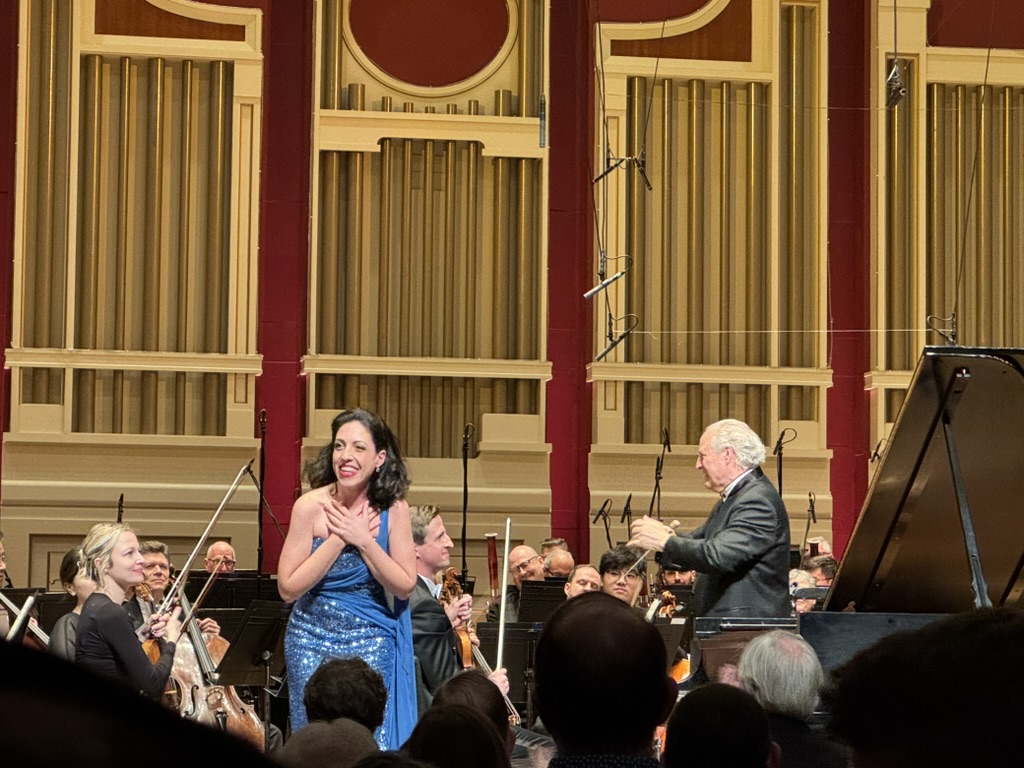
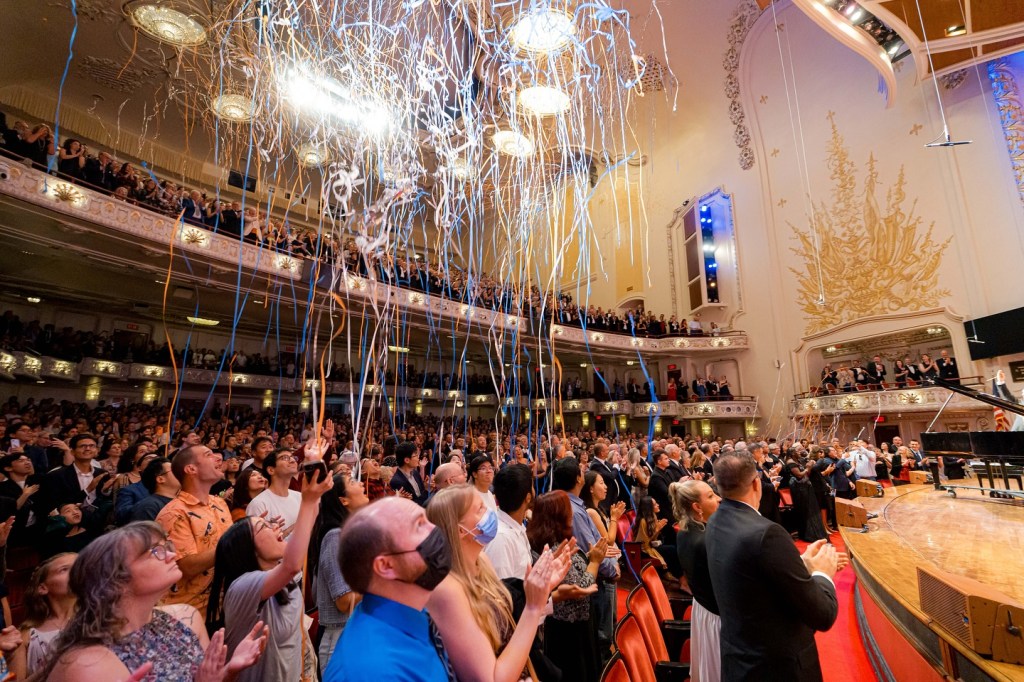
A celebratory gala concert marked the start of the Pittsburgh Symphony’s 2025-26 concert season, featuring a potpourri of appealing orchestral works guided by music director Manfred Honeck before star pianist Yuja Wang took the Heinz Hall stage. A major fundraising event for the organization as well, and a successful one — reportedly raising nearly $1 million.
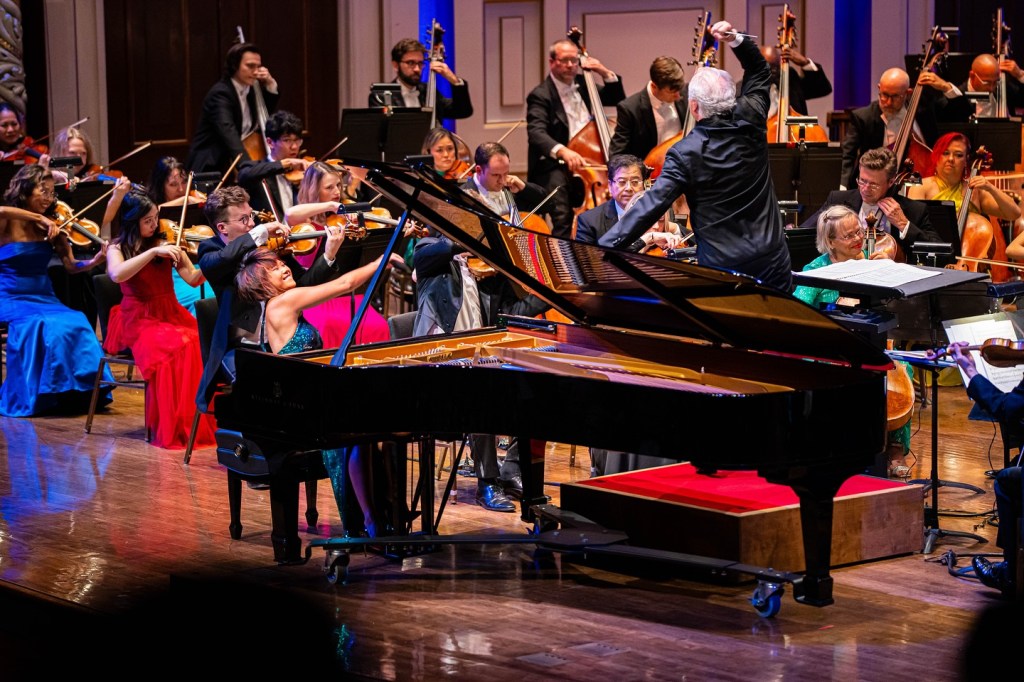
Yuja Wang with Manfred Honeck and the PSO, photos credit JMilteer Photography

Techno from the Fiesta! suite by Jimmy López certainly made for exciting first notes of the season with its driving kinetic energy, enhanced by an expanded percussion section. Strauss’ Éljen a Magyár! charmed in its infectiously lilting rhythms, and served as an acknowledgment of the composer’s 200th birthday.

Another anniversary was marked with Shostakovich, who we note died 50 years ago. A waltz from his Suite for Variety Orchestra No. 1 was nearly Chopinesque in its blending of elegance and melancholy. Sarasate’s Navarra featured dueling PSO violinists David McCaroll and Justine Campagna, playing the material with inimitable Spanish charm and coruscating virtuosity.

Mascagni’s indelible intermezzo from Cavalleria rusticana (which local audiences got to hear complete at Pittsburgh Opera last season) saw delicate strings blossom into the sumptuous. Finally, Henry Mancini’s (best remembered as composer of The Pink Panther and other films) Strings on Fire was just that — a sizzling, energetic workout.

I heard Yuja Wang play Tchaikovsky’s First Piano Concerto at The Cleveland Orchestra this past March, and was dazzled by her consummate virtuosity, command of the keyboard, and refined playing that revealed details I hadn’t heard before even in this overly familiar warhorse. There’s little else to say about it, but what a thrill it was to see her deliver such impassioned and assured playing with the Pittsburgh musicians, her first local appearance since 2013. Despite a thunderous ovation and numerous curtain calls, she didn’t indulge the capacity crowd with an encore, but perhaps it would have been all but gratuitous after such a satisfying take on Tchaikovsky.
Honeck closes Pittsburgh season with scorching Shostakovich

Pittsburgh Symphony Orchestra
Manfred Honeck, conductor
Beatrice Rana, piano
Heinz Hall
Pittsburgh, PA
June 13, 2025

Auerbach: Frozen Dreams
Mendelssohn: Piano Concerto No. 1 in G minor, Op. 25
 Encore:
 Tchaikovsky/Pletnev: Intermezzo from The Nutcracker
Shostakovich: Symphony No. 10 in E minor, Op. 93

In the final subscription program of the season, Manfred Honeck and the Pittsburgh Symphony selected a program which has become a familiar format this season: a new work, a concerto with an impressive soloist, and a major symphony to cap things off. Friday’s new work was the world premiere of Lera Auerbach’s Frozen Dreams (which Honeck is due to conduct in Vienna the following weekend).

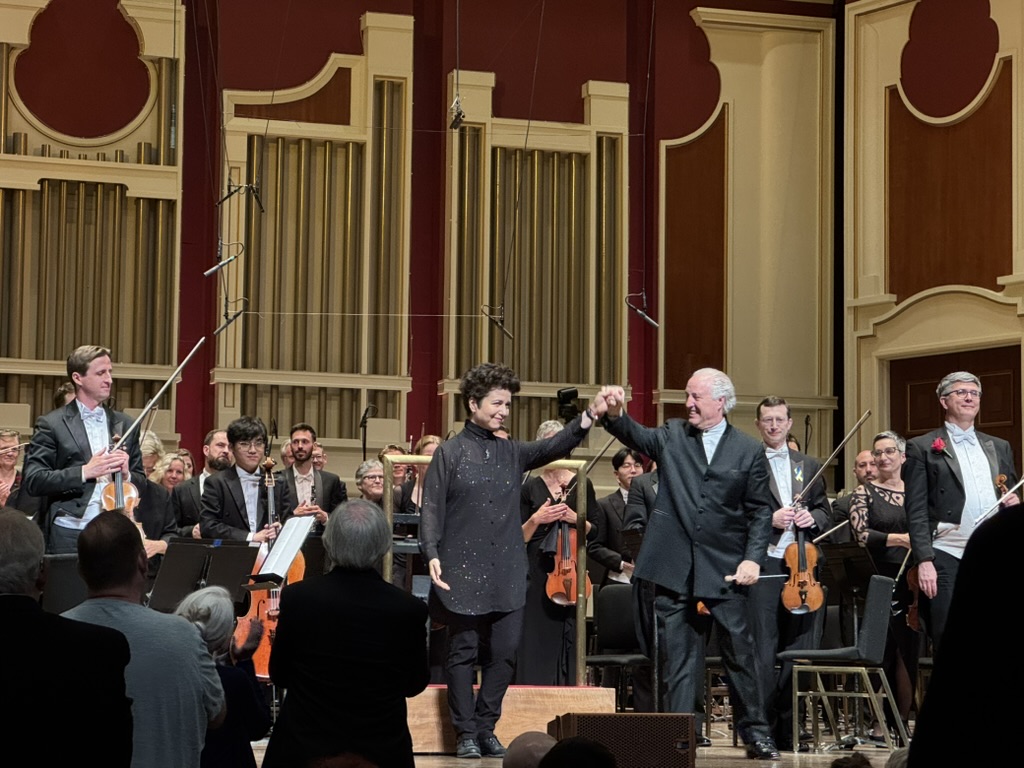
Lera Auerbach with Honeck and the PSO

Frozen Dreams had its roots in a 2020 work for string quartet. The expanded version for full orchestra gave the composer the opportunity to include some unique bits of instrumentation — for example, scraping the edge of the gong — to create an otherworldly, spiritual dimension, and a dreamy, phantasmagoric atmosphere. A folk-inspired theme took shape in a solo line from concertmaster David McCarroll. Pointillist-styled textures circulated around the orchestra in this captivating music that though required acute listening drew one in. The distinctive tones of the gong returned before matters faded to silence.

Mendelssohn’s brilliant Piano Concerto No. 1 saw the return of Italian pianist Beatrice Rana. A sizzling orchestral opening introduced her fleet fingers in playing that sparkled like the sequins of her dress. More lyrical passages were delicately shaped. Some lovely playing in the low strings and brass surfaced in the central Andante in service of Rana’s graceful pianism. The fiery finale saw the pianist in crisp command of the keyboard. As an encore, Rana had much to say in the lyrical and passionate Intermezzo from Tchaikovsky’s Nutcracker (part of an ingenious set of transcriptions by Mikhail Pletnev).

Shostakovich’s massive and shattering Tenth Symphony made for an imposing close to the season. A deep gravitas was felt from the very beginning, with the richness of the strings sounding world-weary, further answered by a lonesome clarinet. Gradually, the movement built to powerful and often ferocious climaxes, only to close on a forlorn flute. The Allegro served as an uncompromising portrait of Stalin’s brutality, a breathless aural assault. The following Allegretto began quietly unsettled, and morphed into a grotesque dance. Ponderous introductory material in the finale took flight into what seemed at first glance a jubilant fanfare, but a much grimmer reality was revealed in due course. The work ended, however, in what potentially could be felt as a glimmer of hope — but not without ambiguity and uncertainty.

Beatrice Rana with Honeck and the PSO

Bruce Liu offers colorful recital at Heinz Hall

Bruce Liu, piano
Heinz Hall
Pittsburgh, PA
June 7, 2025

Tchaikovsky: The Seasons, Op. 37a – January, February, May, June
Tchaikovsky (arr. Wild): “Dance of the Four Swans” from Swan Lake, Op. 20
Scriabin: Piano Sonata No. 4 in F-sharp major, Op. 30
Tchaikovsky: The Seasons, Op. 37a – July, August, October
Chopin: Fantasie-Impromptu in C-sharp minor, Op. 66
Prokofiev: Piano Sonata No. 7 in B-flat major, Op. 83 – mvts 2 & 3

Encore:
Chopin: Nocturne No. 20 in C-sharp minor, Op. posth.

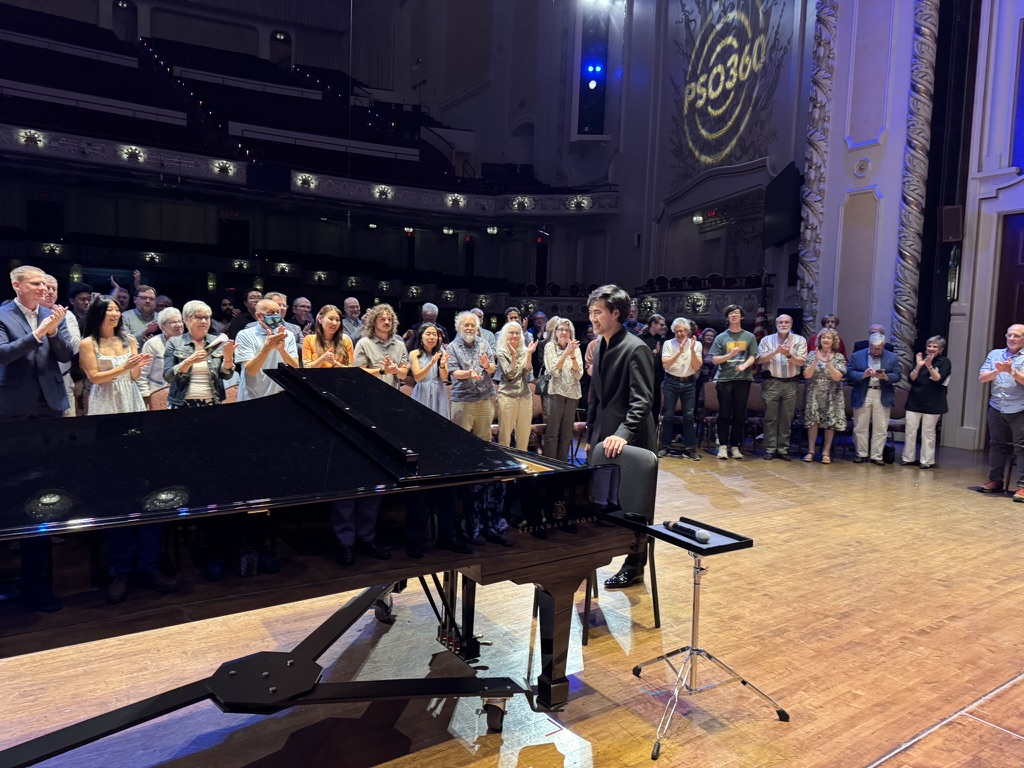
Filling in on short notice for Alice Sara Ott, pianist Bruce Liu was not only tasked with a Pittsburgh Symphony concerto appearance, but also an entry in the distinguished PSO360 series, an intimate chamber music presentation on stage at Heinz Hall. Instead of a collaboration with PSO players, Liu opted for a solo recital — the first to do so since the series’ inception in the 2017-18 season.

Bruce Liu’s PSO360 recital

A recent recording for Deutsche Grammophon featured Liu performing Tchaikovsky’s suite The Seasons, and Saturday’s recital was anchored by selections from that charming collection. The work shows the more intimate side of the composer — quite a contrast to the emotionally-fraught symphonies and concertos — and quite a perfect choice for the salon setting of a PSO360 performance. Liu imbued each with character and attention to detail, closing the first grouping with the beguiling June barcarolle.

A further Tchaikovsky work followed in Earl Wild’s transcription from Swan Lake in which Liu brought out the feathery filigree (as a sidebar: Earl Wild was a Pittsburgh native and attended Carnegie Mellon). The mystical world of Scriabin followed in the Piano Sonata No. 4 in F-sharp major. The opening movement was languid and atmospheric, further enhanced by the blue light which shrouded the stage — corresponding to the composer’s synesthetic association with F-sharp. The brief Prestissimo volando which closed was explosive, almost like a sudden burst of light and energy.

Three more excerpts from The Seasons followed, highlighted by the melancholic Autumn Song (October). One was certainly keen to hear Chopin played by a laureate of the Chopin Competition, and his Fantasie-Impromptu lived up to expectation. Why Liu jettisoned the first movement of Prokofiev’s Seventh Sonata I don’t know — musically it made little sense to present only a torso of the work. Regardless, the thrilling toccata finale made an exciting close to the recital. For a lone encore, Liu returned to Chopin with a pensive account of the C-sharp minor nocturne.

A celebration of the national parks at the Wheeling Symphony

Wheeling Symphony Orchestra
Josh Devlin, conductor
Madeline Adkins, violin
Capitol Theatre
Wheeling, WV
February 8, 2025

Jackfert: Foggy Moon Over the Gorge
Lincoln-DeCusatis: The Maze
Tchaikovsky: Symphony No. 4 in F minor, Op. 36

Legendary as the US national park system is, there isn’t all that much music directly inspired by it (Grofé’s Grand Canyon and Death Valley suites, Messiaen’s From the canyons to the stars – am I missing any others?). Saturday afternoon’s performance by the Wheeling Symphony Orchestra celebrated the wonders of the park system with two recent additions to the list, acknowledging West Virginia’s own New River Gorge and Utah’s Canyonlands.

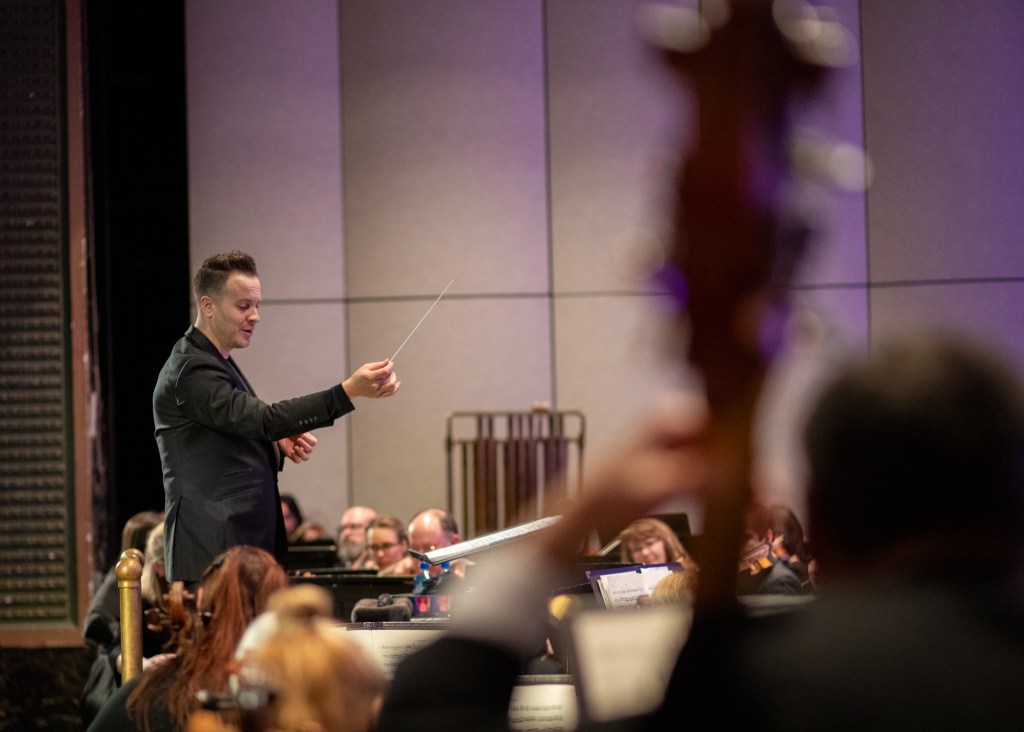
Josh Devlin conducts the Wheeling Symphony Orchestra, photos credit WSO

A native of Charleston, WV, composer Matthew Jackfert cites a late-night drive over the Glade Creek Bridge just outside of New River Gorge as inspiration for Foggy Mountain Over the Gorge, a seven-minute essay that artfully captures its striking scenery (an excerpt may be heard here). Colorful, individualistic writing painted the foggy nightscape, a lovely homage to the natural beauty of the composer’s home state.

In an effort to reach out to the community at large, local students were asked to create art inspired by West Virginia’s scenery, on display in the theater’s ballroom and projected onstage during the performance of Jackfert’s piece. In addition, the WSO was enhanced by string students from the Wheeling Symphony Youth Orchestra performing side-by-side.

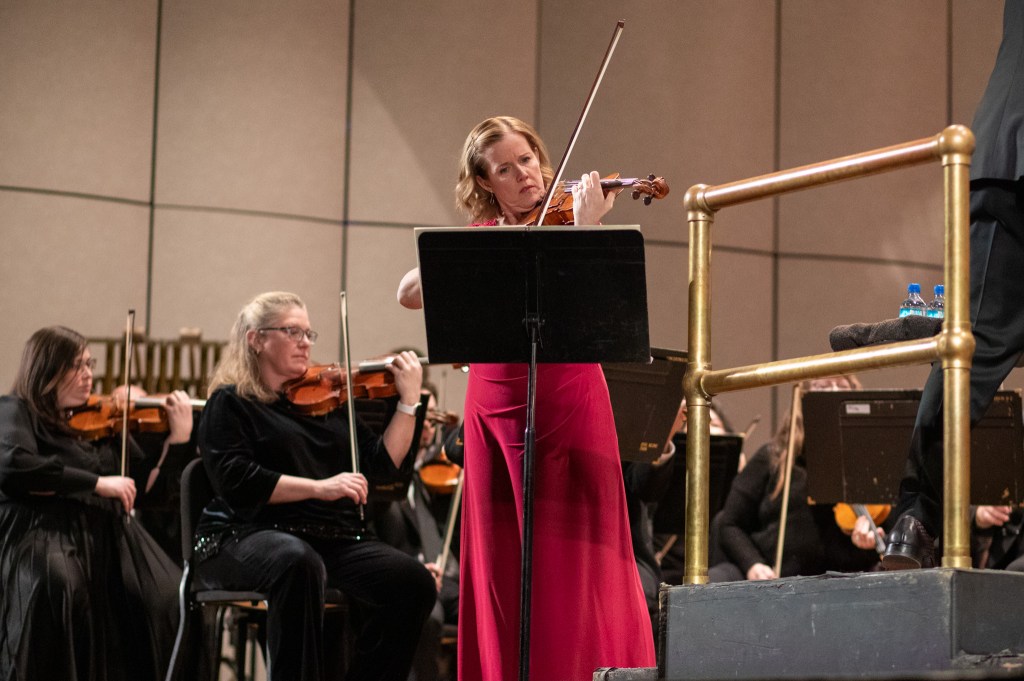
Moving matters westward was The Maze, a 2021 violin concerto by Nathan Lincoln-DeCusatis, inspired by the titular formation in Canyonlands. Written for Madeline Adkins, concertmaster of the Utah Symphony, she served as a commanding soloist here in Wheeling as well. In his prefatory remarks, the composer explained that the soloist serves as a lone explorer of the canyon, and the orchestra represents the landscape itself. A kaleidoscopic chord opened and would recur throughout, serving as a re-orienting signpost amidst the labyrinthine walls of the craggy canyons. Adkins was almost in perpetual motion, as if a particularly enthusiastic explorer, and a dazzling cadenza heralded a final push to the close.

Tchaikovsky’s Fourth Symphony rounded off the program with a mainstay of the repertoire. An arresting brass fanfare opened, and music director Josh Devlin guided the orchestra through the vast swath of the expansive first movement with a keen sense of direction and purpose. A languid oboe solo marked the slow movement, and one was particularly struck by the richness of the strings, with inflections of Russian folk music. In an almost solely pizzicato affair, the strings exerted control and precision during even the softest moments of the scherzo. Bombastic as it was, the finale capped the work off with vigor, not excess.

Madeline Adkins with the WSO

Vasily Petrenko and Pittsburgh Symphony deliver a gripping Manfred

Pittsburgh Symphony Orchestra
Vasily Petrenko, conductor
Benjamin Grosvenor, piano
Heinz Hall
Pittsburgh, PA
June 2, 2024

Dukas: The Sorcerer’s Apprentice
Liszt: Piano Concerto No. 1 in E-flat major, S124
 Encore:
 Sousa/Horowitz: The Stars and Stripes Forever
Tchaikovsky: Manfred Symphony, Op. 58

Under the baton of guest conductor Vasily Petrenko, the Pittsburgh Symphony presented a colorful selection of three contrasting works spanning the Romantic era. Matters began with the inimitably familiar Sorcerer’s Apprentice of Paul Dukas, a familiarity in no small part cemented by its appropriation in Disney’s watershed Fantasia. The tone poem began in suspenseful mystery, decorated with silvery, gossamer texturing. Haughty bassoons introduced the main theme, given with swagger and bringing to life Goethe’s titular poem. The work burgeoned to an overflowing urgency, made the all the more affecting by way of its iridescent orchestration.

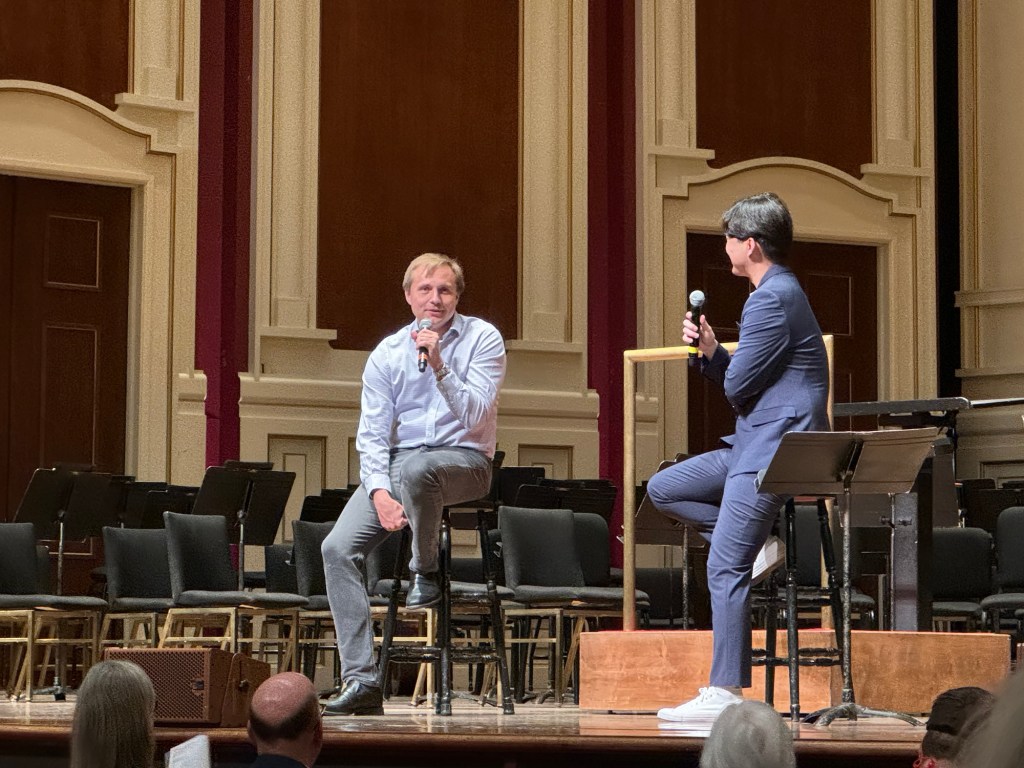
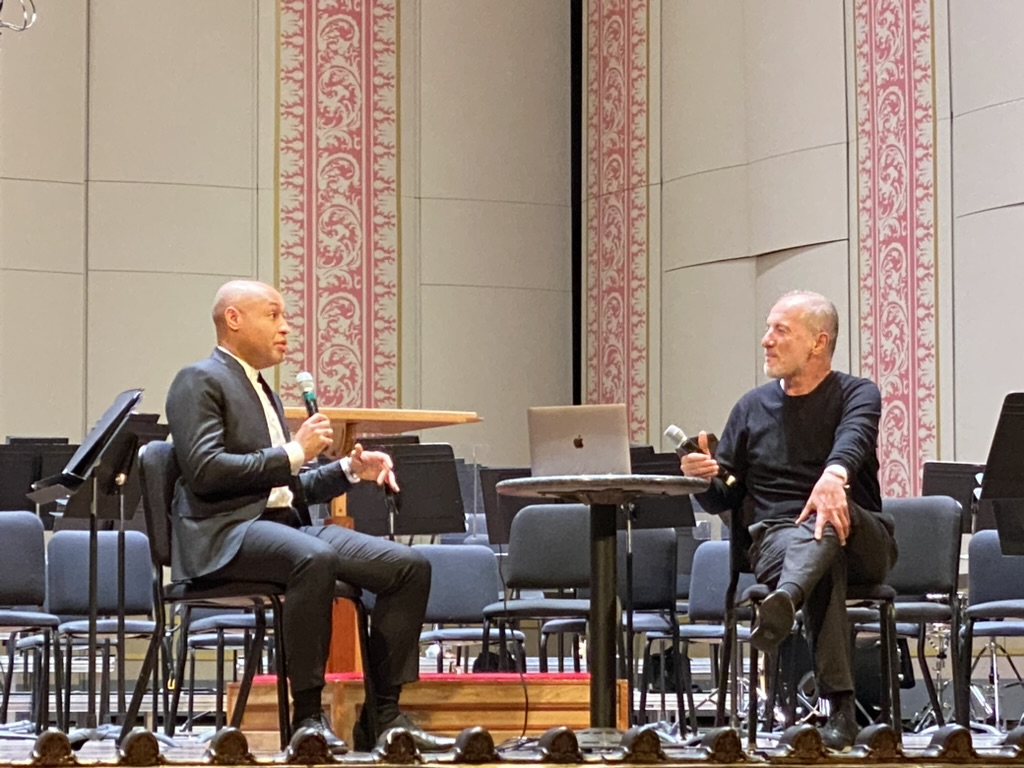
Preconcert interview with Vasily Petrenko, moderated by PSO associate conductor Moon Doh

Liszt’s Piano Concerto No. 1 introduced British pianist Benjamin Grosvenor. Bellicose beginnings were furthered encouraged by the pianist’s steely-toned octaves, but the work wasn’t all fireworks and bombast, being interspersed with lyrical episodes often in dialogue with an orchestra member. The tone produced from the Steinway was bit too bright for my taste, though I’m not sure whether to point fingers at the pianist or the piano.

The ringing of the triangle marked the scherzo section, answered by Grosvenor’s stylish playing. The octaves returned at breakneck speed, pointing the way towards the concerto’s blistering end. An enthusiastic reception brought Grosvenor back for an encore in Horowitz’s transcription of Sousa’s Stars and Stripes Forever. Thunderous bass octaves and intricate filigree in the upper register made for a fun close to the first half – and perhaps a suitable welcome to summer.

Though he didn’t include it amongst his numbered symphonies, Tchaikovsky’s Manfred is one of his most significant orchestral works, chronologically falling between the Fourth and Fifth symphonies. Like the Dukas that opened, it too draws programmatic inspiration from poetry, in this case, Lord Byron. Nearly an hour long, it can be abstruse work to interpret, but Petrenko (who has recorded the work with the Royal Liverpool Philharmonic) made a clear and compelling case for it. I would perhaps suggest a parallel with Liszt’s Dante Symphony heard earlier this season, hyper-Romantic, literary works scored for large orchestra, both perhaps a bit bloated but which nonetheless have much to say when given an incisive interpretation.

Lugubrious, tragic beginnings were had in the expansive opening movement, outlining a brooding main theme that swelled to great passions, depicting our Romantic hero. The Vivace con spirito that followed was lighter fare by comparison, with a central section lush and lyrical. Mercurial filigree in the high strings surfaced near the movement’s end to striking effect. The Andante con moto featured a songful oboe solo, a moment of peace amidst the tumult. The finale amounted to long, arduous journey in of itself. At the very end, the organ filled Heinz Hall for a remarkable moment of lavish orchestration, and the closing hymn led to a peaceful if somber resolution in evocation of Manfred’s death. While the Manfred Symphony might not be a masterpiece on par with the composer’s final three numbered symphonies, a performance like this nonetheless compels one to give it ample attention.

Guest conductor, cellist feature in Columbus Symphony program

Columbus Symphony Orchestra
Kenneth Bean, conductor 
Tommy Mesa, cello
Ohio Theatre
Columbus, OH
May 17, 2024

Mendelssohn: The Hebrides, Op. 26
Montgomery: Divided
Tchaikovsky: Variations on a Rococo Theme, Op. 33
Beethoven: Symphony No. 2 in D major, Op. 36

The penultimate offering of the Columbus Symphony season saw a local podium debut from Kenneth Bean, currently an assistant conductor at the Princeton Symphony Orchestra (CSO music director Rossen Milanov’s other ensemble). The evening began with Mendelssohn’s Hebrides overture, a bit rushed here for my taste, not quite capturing the foggy mystery of the Scottish coast. Matters improved, however, with more measured drama, and fine solo passages from the clarinets.

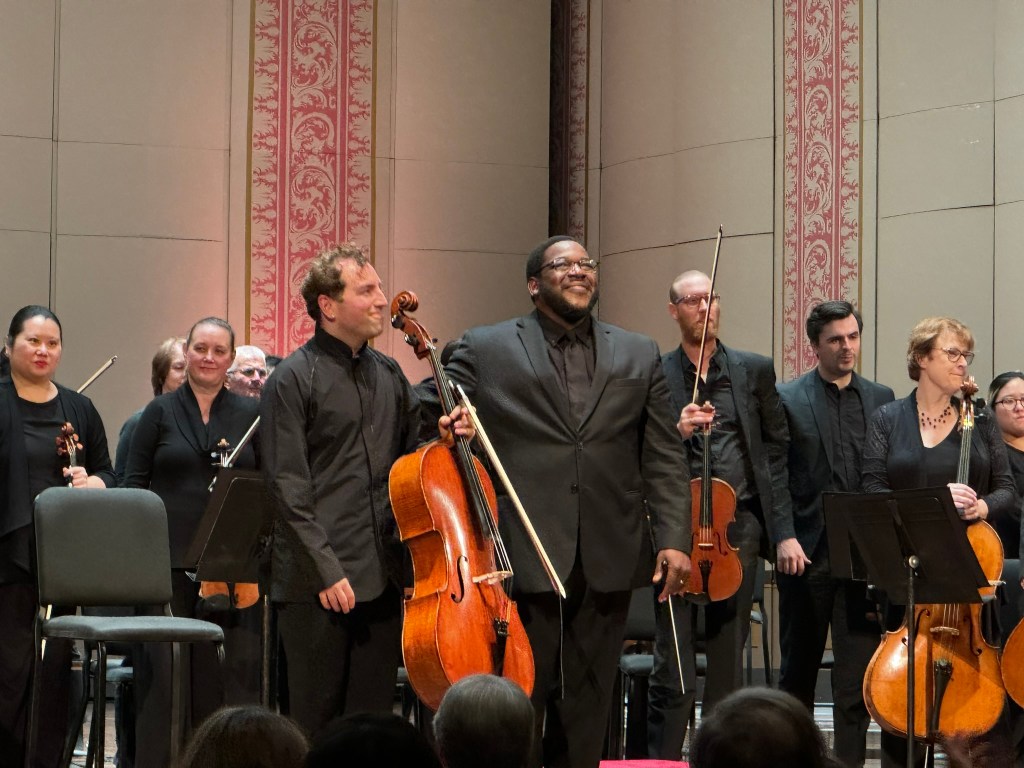
Tommy Mesa and Kenneth Bean with the Columbus Symphony

Two works for cello and orchestra followed, bringing forth Cuban-American cellist Tommy Mesa. Both works fell short of a full-fledged cello concerto, but said much in the space of their more modest dimensions. Mesa himself gave the premiere of Jessie Montgomery’s Divided with the Sphinx Ensemble at Carnegie Hall in 2022. The work’s title refers to the divisions and inequalities rampant in American society, with the cello often at grating odds with the orchestra. A drone from the soloist in the manner of a lamentation opened. The orchestra joined as if in conflict with the soloist, but the cello part became more declamatory and impassioned, a lyricism that suggested tepid resolution.

Tchaikovsky’s Rococo Variations began with an elegant presentation of the alluring theme following a brief orchestral introduction. The variations that succeeded further elaborated on the theme, and displayed Mesa’s limber technique – though his intonation at times left something to be desired. A slow variation offered contrast, and Mesa was perhaps at his best in a pensive section ahead of the ebullient conclusion.

Though still an early work, Beethoven’s Second Symphony is very much recognizable as the composer’s own, an epoch-defining musical language that had already begun to crystallize. A weighty introduction was anchored by the timpani before the first movement proper took flight with a jovial theme interwoven with drama. It was in this work that Bean seemed to gel best with the CSO. An extended Larghetto was calm and bucolic, though not quite of the heart-wrenching depths Beethoven would aspire to in his slow movements to come. The Second is noted for using a scherzo in place of the time-honored minuet, something that would certainly become one of the composer’s hallmarks, and the jocular finale brought the work to a bold finish.

ProMusica celebrates a decade of artistic partnership to close season

ProMusica Chamber Orchestra
David Danzmayr, conductor
Vadim Gluzman, violin
Southern Theatre
Columbus, OH
May 11, 2024

Silvestrov: Hymn – 2001
Tchaikovsky: Violin Concerto in D major, Op. 35
 Encore:
 Bach: Sarabande from Violin Partita No. 2 in D minor, BWV 1004
Brahms: Symphony No. 2 in D major, Op. 73

There was a celebratory air to ProMusica’s closing performances of their 45th season in marking a decade of having both David Danzmayr and Vadim Gluzman in the fold as music director and creative partner respectively. As has become tradition, the final weekend was opened with a short performance by students from the Play Us Forward program – this year, an excerpt from Vivaldi’s Autumn – celebrating ProMusica’s impact in the greater Columbus community.

Vadim Gluzman performs with David Danzmayr and ProMusica, photo credit ProMusica

Valentin Silvestrov’s Hymn – 2001 began ProMusica’s program with a lush essay for string orchestra. There were fine solo passages from concertmaster Katherine McLin and principal second violin Jennifer Ross. Meaning was also drawn from punctuated moments of silence, with the Ukrainian composer acknowledging Cage’s 4’33” as an inspiration for this lyrical paean.

Tchaikovsky’s evergreen Violin Concerto served as the evening’s centerpiece, and put on full display the collaborative spark between Danzmayr and Gluzman. It’s a particular pleasure to see Gluzman play this work as he performs on a violin once owned by Leopold Auer, the concerto’s original dedicatee – in other words, the very violin this concerto was written for. I have fond memories of Gluzman performing this work with The Cleveland Orchestra and the late Michail Jurowski a few years ago – a privilege to hear this instrument in this work again.

Matters began with graceful charm, and the violinist filled the Southern with a resonantly lyrical tone. Gluzman gave an impassioned performance, and I was often simply in awe of the sound he drew from his storied instrument (Tchaikovsky must have liked it too!). Fleet fingers pulled off the more rapid passegework, further encouraged by a taut communication with Danzmayr, the product of a fruitful decade.

A choir of winds opened the central slow movement, and Gluzman answered with a long-bowed, somber melody, an articulate dialogue between soloist and orchestra. The finale was of rapid fire excitement, though a downtempo section of distinctly Slavic inflection contrasted before the blistering finish. An enthusiastic ovation brought the violinist back for an encore by Bach, a lovely pendant to the concerto, with Gluzman noting it an apropos choice given Silvestrov’s affinity for Bach.

Last season closed with a Brahms symphony, a feat reprised this past weekend with attention turned to the sunny Second. Once again, ProMusica, buttressed by an expanded string section, proved that the Brahms symphonies can be convincingly performed by a chamber-sized orchestra. A dip in the strings opened, warmly answered by horns and winds, with a particularly rich theme in the cellos to follow. Danzmayr opted out of the long repeat of the exposition, delving right into the energetic development. The slow movement proceeded as a beautifully lyrical paragraph, though seemingly all cares were left behind for the Allegretto grazioso, given with an abandon that was only a warmup for the jubilant finale.

Inkinen makes Cleveland Orchestra debut in hearty Eastern European program

Cleveland Orchestra
Pietari Inkinen, conductor
Augstin Hadelich, violin
Mandel Concert Hall
Severance Music Center
Cleveland, OH
November 24, 2023

Dvořák: Othello Overture, Op. 93
Tchaikovsky: Violin Concerto in D major, Op. 35
 Encore:
 Forrester: Wild Fiddler’s Rag
Dvořák: Symphony No. 8 in G major, Op. 88

The Thanksgiving weekend saw the Finnish conductor Pietari Inkinen make his Cleveland Orchestra debut in a program of works all composed within just over a decade and from the heart of Eastern Europe. Dvořák’s Othello Overture opened, conceived as the final entry of a trilogy of related overtures. Written just four years after Verdi’s landmark opera on the same subject, Dvořák likely drew inspiration from the Italian he greatly admired, though his overture tended to suggest the essence of the Shakespearean source material rather than spell out a specific narrative.

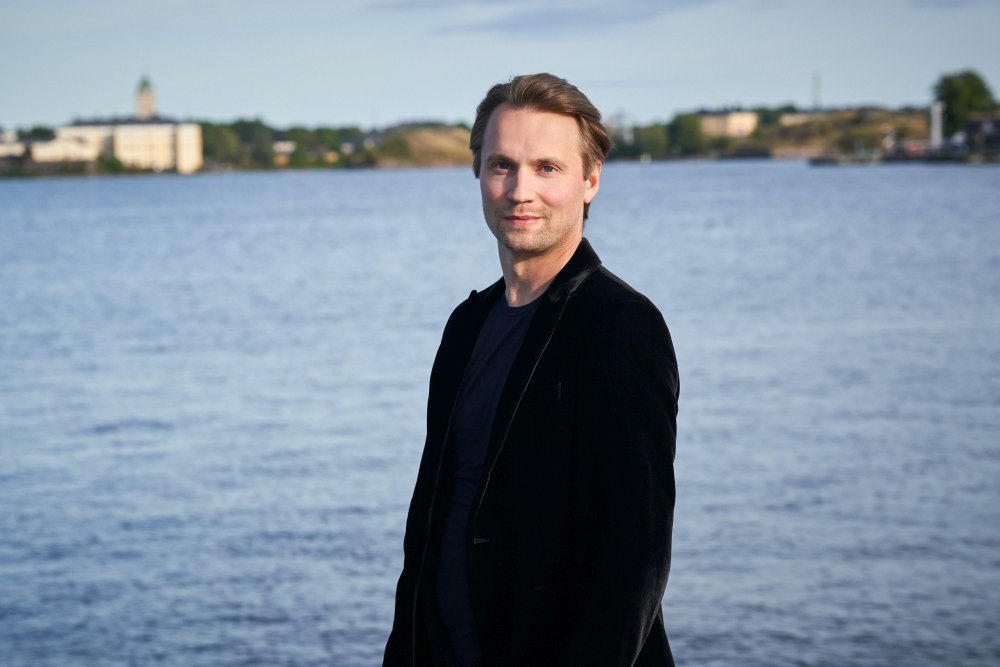
Pietari Inkinen, photo credit pietariinkinen.com

Slow and somber introductory material built to music of great drama. It seemed that Inkinen could have benefited from some additional rehearsal time with a handful of uncoordinated entrances, but an effective performance was managed nonetheless. The slow material returned at the end, with stentorian brass strikingly invoking the slumber motif from Wagner’s Die Walküre as something of a final prayer before the unequivocally tragic end. So much of the time Dvořák is programmed we hear one of the last few symphonies (or the cello concerto), but this overture was a welcome discovery, and should certainly encourage listens to look at Dvořák’s orchestral corpus beyond the warhorses.

The balance of the program, however, was dedicated to warhorses – and in no way a detriment! Tchaikovsky’s evergreen Violin Concerto called upon soloist Augustin Hadelich. A gentle dip set things in motion in this most graceful of openings, with Hadelich’s solo line articulate, keenly phrased, and above all, richly lyrical. Nimble and nuanced, he displayed some especially impressive fingerwork in the cadenza. A choir of winds opened the central Canzonetta, and the songful, mournful violin purveyed a delicate cantilena. The finale is such joyous affair for someone who lived such a tragic life as its composer, and Hadelich’s sprightly virtuosity closed the work in the highest spirits. He returned for a well-deserved encore, his own arrangement of Howdy Forrester’s Wild Fiddler’s Rag – a piece of great fun with its bluesy inflections.

Franz Welser-Möst set the bar high for Dvořák’s Eighth Symphony two seasons ago; while Inkinen didn’t quite reach that height, it was here he made the strongest impression – and opted to conduct this score from memory. The deeply lyrical opening gesture gave way in due course to material of an inimitable Bohemian charm, aided by fine solo passages from the principal winds. Still, greater dynamic contrast would have helped, with conductor leaning a bit too heavily in the orchestra’s upper end of the range.

A bucolic slow movement built to a resonant climax, and the lovely Allegretto grazioso was flowing and deftly shaped, though a tad rushed for my taste. The call to arms in the trumpet initiated the energetic and often boisterous finale, nearly overflowing with gracious material that never strayed far from the composer’s Czech origins. On a final note, how gratifying it was to see nearly every seat of Severance Hall filled, and with such a warm, enthusiastic audience.

Augustin Hadelich, photo credit Suxiao Yang

A hearty Russian afternoon from Milanov and the Columbus Symphony

Columbus Symphony Orchestra
Rossen Milanov, conductor
Zhu Wang, piano
Ohio Theatre
Columbus, OH
May 7, 2023

Mussorgsky: Dawn on the Moscow River from Khovanshchina
Rachmaninov: Piano Concerto No. 2 in C minor, Op. 18
Tchaikovsky: Symphony No. 5 in E minor, Op. 64

For the penultimate installment of the Masterworks series, Rossen Milanov and the Columbus Symphony turned towards the Russian repertoire in a program anchored by favorites of Rachmaninov and Tchaikovsky. The afternoon began, however, with Mussorgsky’s Dawn on the Moscow River, a quantity which serves as the prelude to his opera Khovanshchina. The CSO opted for its orchestration by Rimsky-Korsakov, though some years later Shostakovich devised an effective version as well. A gentle ebb and flow made for a touchingly restrained musical sunrise – quite a contrast to the sunrises one might find in a Strauss tone poem!

Zhu Wang, photo credit zhuwangpiano.com

Rachmaninov’s evergreen Second Piano Concerto followed with pianist Zhu Wang. Wang’s fluid playing blended well with the orchestra, probing at its lyrical heart. Still, one wanted more dramatic tension, and I found his reading a bit too cool and reserved. The slow movement was sweetly nostalgic and had the pianist in lovely dialogue with the clarinet, though it bordered on the sentimental. Wang gave the finale with vigor and virtuosity, balancing out the more extrovert material with the composer’s quintessentially lush melodies.

Hollow winds opened Tchaikovsky’s Fifth Symphony for a haunting statement of the fate motif that binds the work, and soon surged to great passions. Darkly resonant material began the slow movement with a gorgeous horn solo from Brian Mangrum. Deeply affecting, this movement saw perhaps the most inspired playing of the afternoon. A gently lilting Valse was contrasted with more animated material, and the fate motif returned, pointing inexorably towards the driving finale.

Columbus Symphony explores the confluence of classical and jazz

Columbus Symphony Orchestra
Rossen Milanov, conductor
Aaron Diehl, piano
Ohio Theatre
Columbus, OH
March 17, 2023

Perry: Study for Orchestra
Gershwin: Concerto in F
Tchaikovsky: Suite from The Nutcracker, Op. 71a
Ellington/Strayhorn: The Nutcracker Suite

The Columbus Symphony’s program served as a colorful depiction of elements of jazz seeping into the classical tradition – and vice-versa. Matters began on a different note, however, with an example of the considerable body of work from the often forgotten 20th century American composer Julia Perry. A native of Lexington, Kentucky who spent her final years in Akron, Ohio, her reputation was tragically stifled by the establishment’s prejudices towards an African-American woman.

Aaron Diehl in conversation with Rossen Milanov

Nonetheless, she produced a substantial output – including more than ten symphonies – and the 1952 Study for Orchestra, included on the present program, was performed by the New York Philharmonic in 1965, certainly a major milestone. Bracing, strident beginnings gave way to more lyrical interludes. Albeit brief, it was a work of adroit craftsmanship, and certainly piqued my interest in discovering more of her music.

Gershwin’s great Concerto in F filled the balance of the first half, and was fitting platform for the belated CSO debut of Aaron Diehl – a Columbus native, Juilliard-trained, and equally at home in classical and jazz. A thunderous opening in the timpani pointed towards a lively Charleston rhythm. The pianist’s entry was graceful and elegant, with the virtuosity and vigor quickly ramping up. An impassioned lyrical melody served as the first movement’s climax, as lush as anything Rachmaninov wrote.

The brass with which the slow movement opened evidenced Gershwin’s skill at orchestration, much improved from the earlier Rhapsody in Blue for which he had the enlist the assistance of Ferde Grofé. The gently cascading piano was quite lovely, and the cadenza afforded Diehl the opportunity to improvise – and the orchestra musicians seemed to be watching him in awe. A motoric toccata-like movement closed the work with a big-boned finish. Diehl offered an encore (perhaps of his own composition?) that filled the theater with ethereal jazz harmonies.

In 1960, Duke Ellington released an album re-imagining Tchaikovsky’s Nutcracker as a jazz piece. Conductor Rossen Milanov cleverly devised a suite in which Tchaikovsky’s originals were interwoven with Ellington’s take, and it was quite fascinating to hear them juxtaposed. Delicate musical tinsel marked the opening Overture; in the ensuing Ellington version, the orchestra seamlessly morphed into a bona fide jazz band. Ellington’s adaptation of the Marche was styled as the “Peanut Brittle Brigade”; it expanded the rhythm and harmonies while the source material remained recognizable. In the “Dance of the Sugar Plum Fairy” the celesta sparkled; Ellington’s “Sugar Rum Cherry” retooled it for sax and brass. Tchaikovsky was given the final word, however, with a lush and lilting “Waltz of the Flowers.”