Yuja Wang headlines Pittsburgh Symphony’s glittering gala

Pittsburgh Symphony Orchestra
Manfred Honeck, conductor
Yuja Wang, piano
David McCarroll, violin
Justine Campagna, violin
Heinz Hall
Pittsburgh, PA
September 20, 2025

López: “Techno” from Fiesta!
Strauss Jr: Éljen a Magyár!, Op. 332 (arr. Nischkauer)
Shostakovich: “Waltz II” from Suite for Variety Orchestra No. 1
Sarasate: Navarra
Mascagni: “Intermezzo” from Cavalleria rusticana
Mancini: Strings on Fire
Tchaikovsky: Piano Concerto No. 1 in B-flat minor, Op. 23

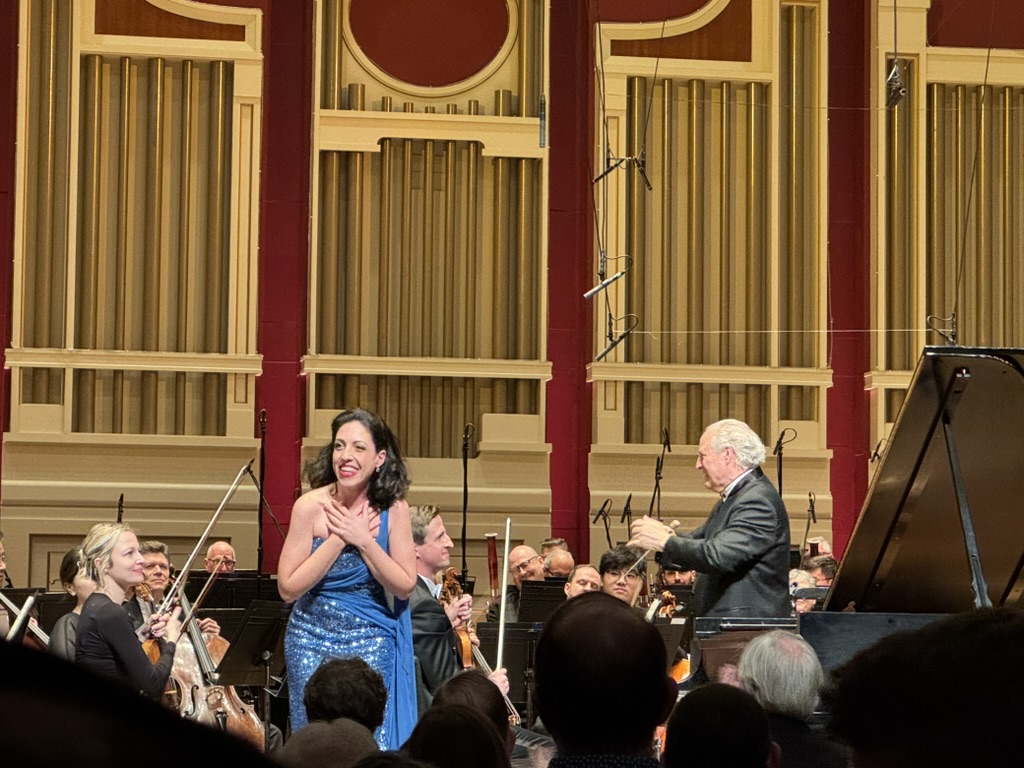
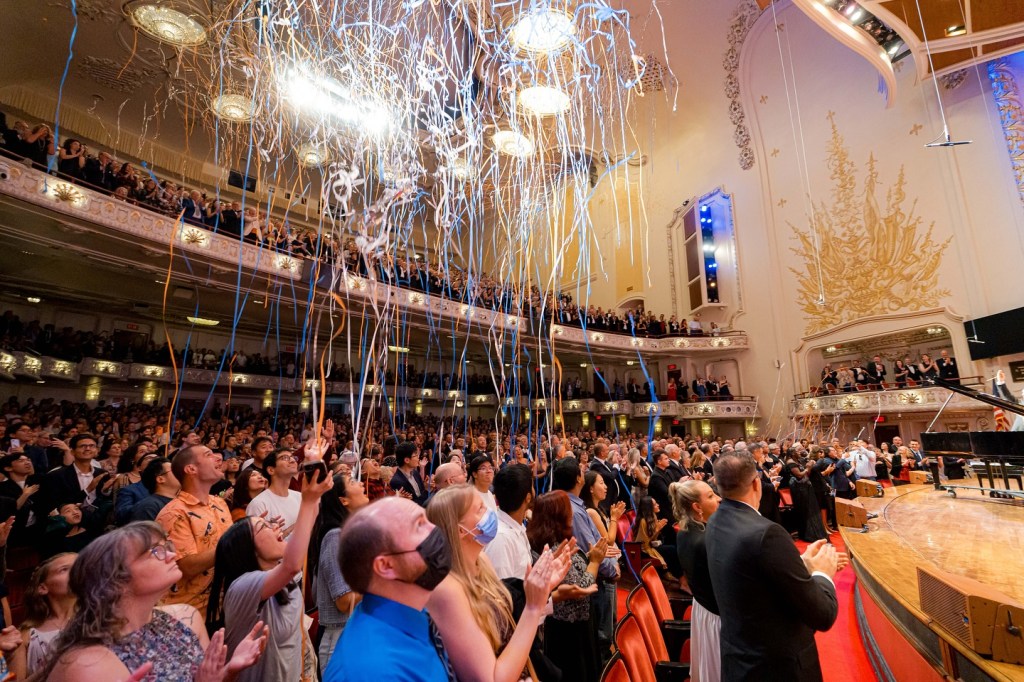
A celebratory gala concert marked the start of the Pittsburgh Symphony’s 2025-26 concert season, featuring a potpourri of appealing orchestral works guided by music director Manfred Honeck before star pianist Yuja Wang took the Heinz Hall stage. A major fundraising event for the organization as well, and a successful one — reportedly raising nearly $1 million.
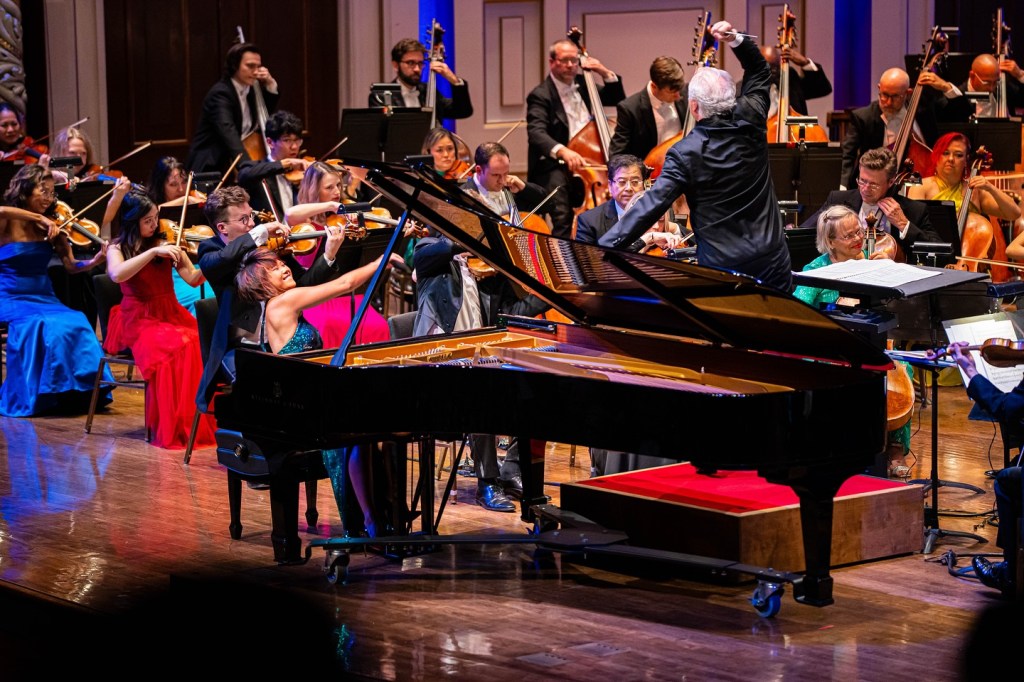
Yuja Wang with Manfred Honeck and the PSO, photos credit JMilteer Photography

Techno from the Fiesta! suite by Jimmy López certainly made for exciting first notes of the season with its driving kinetic energy, enhanced by an expanded percussion section. Strauss’ Éljen a Magyár! charmed in its infectiously lilting rhythms, and served as an acknowledgment of the composer’s 200th birthday.

Another anniversary was marked with Shostakovich, who we note died 50 years ago. A waltz from his Suite for Variety Orchestra No. 1 was nearly Chopinesque in its blending of elegance and melancholy. Sarasate’s Navarra featured dueling PSO violinists David McCaroll and Justine Campagna, playing the material with inimitable Spanish charm and coruscating virtuosity.

Mascagni’s indelible intermezzo from Cavalleria rusticana (which local audiences got to hear complete at Pittsburgh Opera last season) saw delicate strings blossom into the sumptuous. Finally, Henry Mancini’s (best remembered as composer of The Pink Panther and other films) Strings on Fire was just that — a sizzling, energetic workout.

I heard Yuja Wang play Tchaikovsky’s First Piano Concerto at The Cleveland Orchestra this past March, and was dazzled by her consummate virtuosity, command of the keyboard, and refined playing that revealed details I hadn’t heard before even in this overly familiar warhorse. There’s little else to say about it, but what a thrill it was to see her deliver such impassioned and assured playing with the Pittsburgh musicians, her first local appearance since 2013. Despite a thunderous ovation and numerous curtain calls, she didn’t indulge the capacity crowd with an encore, but perhaps it would have been all but gratuitous after such a satisfying take on Tchaikovsky.
Honeck closes Pittsburgh season with scorching Shostakovich

Pittsburgh Symphony Orchestra
Manfred Honeck, conductor
Beatrice Rana, piano
Heinz Hall
Pittsburgh, PA
June 13, 2025

Auerbach: Frozen Dreams
Mendelssohn: Piano Concerto No. 1 in G minor, Op. 25
 Encore:
 Tchaikovsky/Pletnev: Intermezzo from The Nutcracker
Shostakovich: Symphony No. 10 in E minor, Op. 93

In the final subscription program of the season, Manfred Honeck and the Pittsburgh Symphony selected a program which has become a familiar format this season: a new work, a concerto with an impressive soloist, and a major symphony to cap things off. Friday’s new work was the world premiere of Lera Auerbach’s Frozen Dreams (which Honeck is due to conduct in Vienna the following weekend).

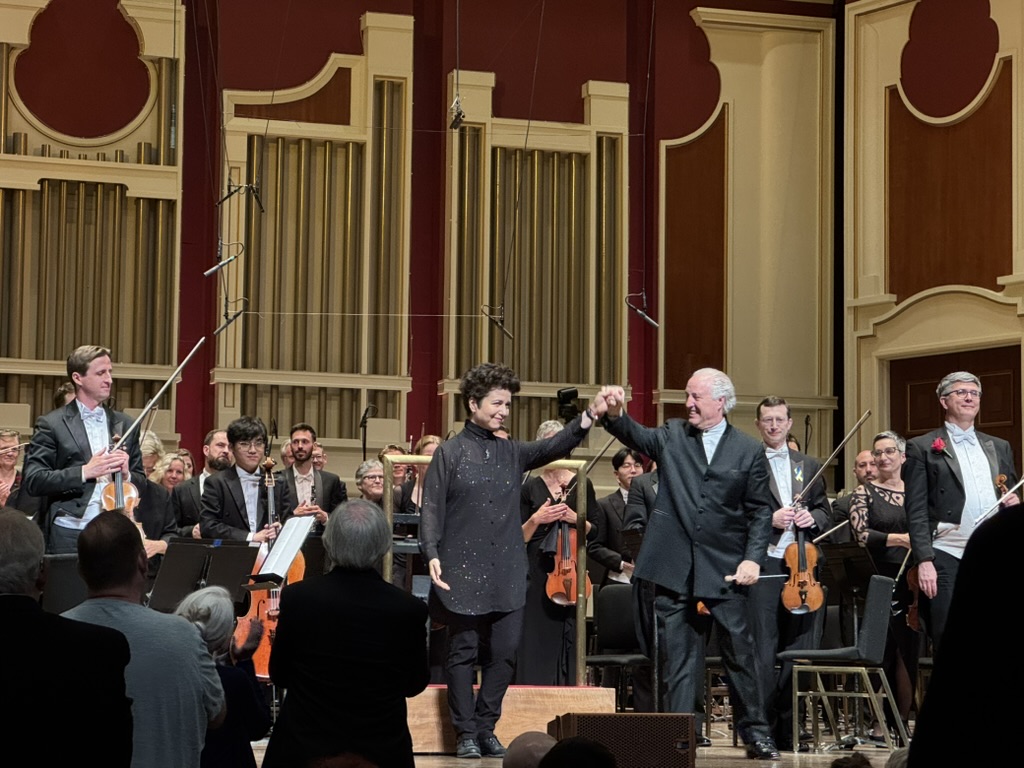
Lera Auerbach with Honeck and the PSO

Frozen Dreams had its roots in a 2020 work for string quartet. The expanded version for full orchestra gave the composer the opportunity to include some unique bits of instrumentation — for example, scraping the edge of the gong — to create an otherworldly, spiritual dimension, and a dreamy, phantasmagoric atmosphere. A folk-inspired theme took shape in a solo line from concertmaster David McCarroll. Pointillist-styled textures circulated around the orchestra in this captivating music that though required acute listening drew one in. The distinctive tones of the gong returned before matters faded to silence.

Mendelssohn’s brilliant Piano Concerto No. 1 saw the return of Italian pianist Beatrice Rana. A sizzling orchestral opening introduced her fleet fingers in playing that sparkled like the sequins of her dress. More lyrical passages were delicately shaped. Some lovely playing in the low strings and brass surfaced in the central Andante in service of Rana’s graceful pianism. The fiery finale saw the pianist in crisp command of the keyboard. As an encore, Rana had much to say in the lyrical and passionate Intermezzo from Tchaikovsky’s Nutcracker (part of an ingenious set of transcriptions by Mikhail Pletnev).

Shostakovich’s massive and shattering Tenth Symphony made for an imposing close to the season. A deep gravitas was felt from the very beginning, with the richness of the strings sounding world-weary, further answered by a lonesome clarinet. Gradually, the movement built to powerful and often ferocious climaxes, only to close on a forlorn flute. The Allegro served as an uncompromising portrait of Stalin’s brutality, a breathless aural assault. The following Allegretto began quietly unsettled, and morphed into a grotesque dance. Ponderous introductory material in the finale took flight into what seemed at first glance a jubilant fanfare, but a much grimmer reality was revealed in due course. The work ended, however, in what potentially could be felt as a glimmer of hope — but not without ambiguity and uncertainty.

Beatrice Rana with Honeck and the PSO

Cellist Kanneh-Mason makes memorable Pittsburgh Symphony debut

Pittsburgh Symphony Orchestra
Manfred Honeck, conductor
Sheku Kanneh-Mason, cello
Heinz Hall
Pittsburgh, PA
March 21, 2025

Shekhar: Lumina
Shostakovich: Cello Concerto No. 1 in E-flat major, Op. 107
 Encore: I Say a Little Prayer
Strauss: Don Juan, Op. 20
Strauss: Symphonic Fantasy from Arabella, Op. 79 (arr. Honeck/Ille)

The Pittsburgh Symphony is to be commended for its advocacy of contemporary music, with many of this season’s programs introducing a recent work by a living composer. This week’s program began with the 2020 work Lumina by Nina Shekhar. Shekhar is currently a doctoral student in music composition at Princeton (presumably classmates with Hannah Ishizaki, featured on a PSO program a month ago). The composer also draws from an engineering background, evident in the present work that concerns the spectrum of light.

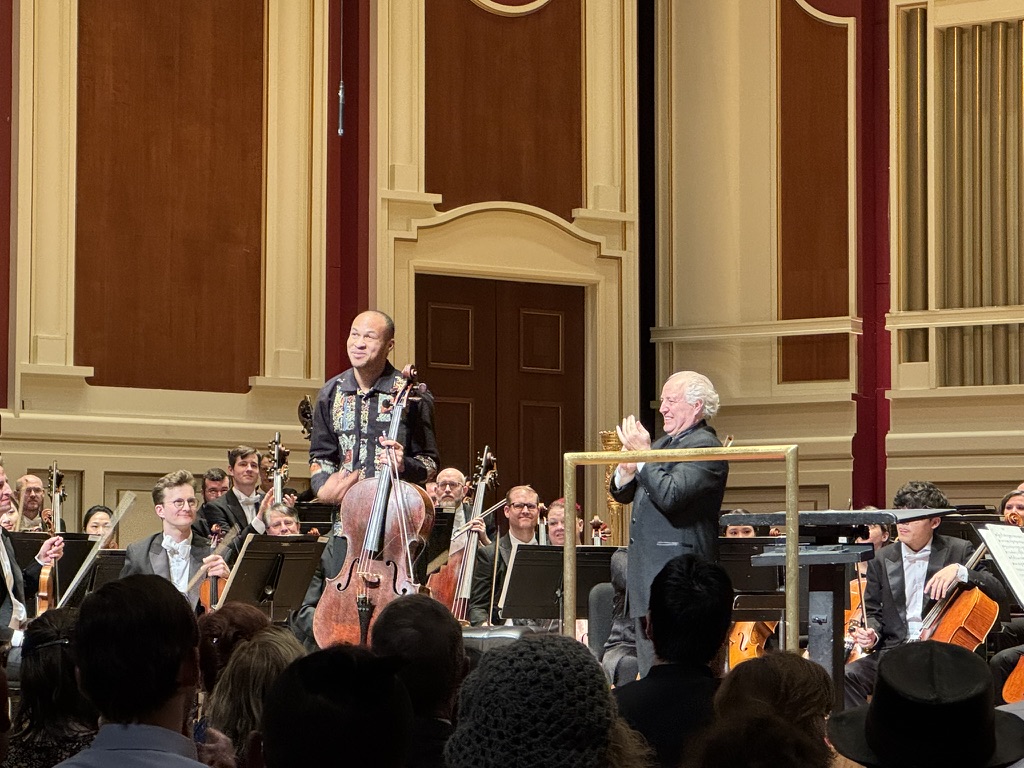
Sheku Kanneh-Mason with Manfred Honeck and the Pittsburgh Symphony

It’s a work that demands attention from both performers and audience. Silence is just as important as sound, and effects are achieved through subtle, nearly imperceptible gestures: microtones, harmonics, bowing of the vibraphone. A soft-spoken essay, it occasionally burgeoned into strident climaxes. I’m not sure this is a piece that fully earned the attention it required, yet I appreciate the PSO’s attention to a rising composer.

The main draw of the evening was the Pittsburgh debut of cellist Sheku Kanneh-Mason in the Cello Concerto No. 1 of Shostakovich. Kanneh-Mason drew a fittingly gritty tone out of his Matteo Goffriller instrument that dates from 1700, delivering a variation on the composer’s musical signature with a caustic bite. The cellist was flexible and limber, imbuing the score with character and color. Manfred Honeck and the PSO supported the soloist with piquant accompaniment. Unusually for Shostakovich, the horn is the only brass instrument used — a tip of the hat to William Caballero for single-handedly serving as the brass section. The Moderato was of desolate, pained lyricism, reduced to a skeletal orchestration.

Like the composer’s First Violin Concerto, an extended cadenza served as effectively a standalone movement in the heart of the work. One was struck by Kanneh-Mason’s expressive range — and while not an overtly virtuosic affair, the cellist showed a deep command of his instrument. The finale was quintessential Shostakovich in both its urgency and coloristic writing, up to the blistering end. As an encore, Kanneh-Mason offered a transcription I Say a Little Prayer, the Burt Bacharach song made famous by both Dionne Warwick and Aretha Franklin — a lovely piece in its jazzy pizzicato (for a recording, see Kanneh-Mason’s warmly recommend album Song).

The second half was devoted to Richard Strauss, beginning with his iconic tone poem Don Juan. Its opening was akin to drinking from a firehose, with blazing virtuosity and brassy splendor. The music crested to searing passions, highlighted by a long and languid oboe solo from Cynthia Koledo DeAlmeida. By the coda, matters came crashing down for a tragic, somber end.

Closing the program was an appealing alternative to the more well-worn tone poems, in the world premiere of a suite based on Strauss’ opera Arabella. Conceived by Manfred Honeck and arranged by Tomáš Ille (a team that has previously devised suites based on Elektra and Janáček’s Jenůfa), it captured the essence of the opera in a span of eighteen minutes. A bold, dense opening was arresting in its rich chromaticism. A lilting waltz — in a similar spirit to Rosenkavalier — contrasted, and the PSO’s superb playing brought out a gorgeous lyricism, leading to a brilliant close.

Elder leads Pittsburgh Symphony in brooding Sibelius, Shostakovich – and an interlude in the English countryside

Pittsburgh Symphony Orchestra
Sir Mark Elder, conductor
Cynthia Koledo DeAlmeida, oboe
Heinz Hall
Pittsburgh, PA
January 31, 2025

Sibelius: Pohjola’s Daughter, Op. 49
Vaughan Williams: Concerto in A minor for Oboe and Strings
Shostakovich: Symphony No. 15 in A major, Op. 141

Sir Mark Elder is certainly a conductor with a knack for devising intriguing and offbeat programs, and his Friday night appearance with the Pittsburgh Symphony was no exception. Sibelius’ tone poem Pohjola’s Daughter opened, beginning with darkly brooding material from the cellos. Vigorous brass joined in the lush orchestration, though any glimmers of hope in this grisly tale from the Kalevala were duly snuffed out for its quiet, somber ending. On either side of the stage, plot events from the source material were projected in sync with the music — though Sibelius’ writing is so detailed, one hardly needed it.

Sir Mark Elder, Cynthia Koledo DeAlmeida, and the Pittsburgh Symphony, photo credit Josh Milteer

Vaughan Williams’ 1944 Oboe Concerto followed, featuring PSO principal Cynthia Koledo DeAlmeida. This is a work the PSO has performed only once before, and nearly 30 years ago. DeAlmeida served as soloist in that performance as well, and in prerecorded remarks, she reflected on playing it as a relatively new addition to the PSO’s ranks, to now revisiting it decades later as a seasoned member.

Because the oboe doesn’t project particularly well, Vaughan Williams reduced the orchestral accompaniment to strings alone. The concerto serves as a companion piece to the composer’s Fifth Symphony (the “Pastoral”): it, too, purveys a ponderous pastoralism, and the concerto’s finale came from sketches originally intended for the symphony. DeAlmeida offered a lyrical, songful tone, keenly phrased and in delicate balance with her stringed colleagues. Cadenzas at various intervals showed her limber and dexterous.

The central movement took its cue from English country dances, sprightly and charming. The closing scherzo traversed the oboe’s range, and saw the soloist in fleet interplay with the orchestra. A closing section returned to the tender and reflective, and theme that perhaps interpolates The Last Rose of Summer in quintessential English fashion.

Shostakovich’s Fifteenth and final symphony occupied the latter half. Quite unlike any of the composer’s previous groundbreaking works in the form — or any symphony that came before or after, for that matter — it reflects on a lifetime of turmoil and triumphant in idiosyncratic fashion. Pings in the glockenspiel began, answered by a silvery flute — flippant and unsettled as only Shostakovich could do. Themes from William Tell and other works were seamlessly woven in, an eerie soundscape with the composer in a dreamlike trance of music by others that resonated with him.

A low brass chorale opened the lugubrious slow movement, highlighted by a devastatingly austere cello solo (Anne Martindale Williams). Angular material in the clarinet marked the Allegretto, along with a fine solo from concertmaster David McCarroll. Echoes of Wagner and many others were heard in the eclectic finale, as if Shostakovich wanted to use the final movement of his final symphony to comprehensively reflect on all that inspired him. The ticking of clocks, achieved through woodblocks (a device previously used in his iconoclastic Fourth Symphony), made for an ending as extraordinary as it was enigmatic.

Tommy Mesa and Michelle Cann warm a cold evening with colorful recital

Tommy Mesa, cello
Michelle Cann, piano
PNC Theatre
Pittsburgh Playhouse
Pittsburgh, PA
January 20, 2025

Nadia Boulanger: Three Pieces for Cello and Piano
Debussy: Cello Sonata in D minor, L135
Kevin Day: Sonata for Cello and Piano
Casarrubios: Mensajes del agua
Shostakovich: Cello Sonata in D minor, Op. 40

Encore:
Rachmaninoff: Andante from Cello Sonata in G minor, Op. 19

If one longed for an escape from the presidential inauguration and the bitter cold temperatures, Chamber Music Pittsburgh offered a perfect solution the night of January 20 by way of a cello and piano recital. Cuban-American cellist Tommy Mesa was joined by Michelle Cann, and the duo offered a wide-ranging, diverse program, ripe with musical discovery.

Michelle Cann and Tommy Mesa at the PNC Theater, photo credit Chamber Music Pittsburgh

Better known as a pedagogue of enormous influence, Nadia Boulanger was also an accomplished composer in her own right (as was her far too short-lived sister, Lili). The first of her Three Pieces for Cello and Piano boasted an expressive cello melody, underpinned by rippling gestures in the piano’s upper register. The middle piece served as a gentle interlude before the fiery close which saw extrovert playing from both parties to round off these finely crafted gems.

Near the end of his life, Debussy embarked on a set of six sonatas for various instrumental combinations. Sadly, only three were completed, the first being a brief but impactful cello sonata. Introductory material in the piano evidenced a unique soundscape, even for Debussy. Rich tone in the cello and dramatic playing in the piano made for a captivating effect, and yielded a language markedly different from the German tradition (this sonata is worlds apart from the Brahms cello sonatas, for instance). The central Sérénade showed Debussy as the master of effect, with ample use of pizzicato, glissando, and most strikingly, flautando – bowing in such a way as to create a flute-like sound. An interlude that brought to mind the charm of Children’s Corner, ahead of a playful finale that brimmed with Gallic elegance.

A 2016 cello sonata from West Virginia composer Kevin Day closed the first half. Though Day’s first work for the medium, its skillful writing grabbed one in from the beginning with its piquant harmonies and energetic syncopations. The central Lento was especially lovely with a long melody high in the cello’s range, with the piano gently pulsing. The sonata reached a satisfying close with a vigorous, driving finale. Mesa and Cann included this work on their warmly recommended album Our Stories, featuring works by Black and Latinx composers.

Andrea Casarrubios is another composer included on the album, represented in the present program by her work Mensajes del agua (“Messages from water”). Meant to depict the perfection of frozen water, it was meditative in its glacial stillness, and though textures were sparse, it purveyed a deep lyricism. Nikolai Kapustin’s Elegy was originally slotted on the program but jettisoned Monday evening, for which Mesa offered apologies to the Kapustin fans in the audience — a population to which I emphatically identify!

Any disappointment was easily allayed by the masterful performance of Shostakovich’s great cello sonata which closed. The first movement saw pointed articulation and a directness of expression, with Mesa’s burnished tone well-suited to the work. Despite its seeming simplicity, subtleties beneath the surface abounded for both instruments, with Shostakovich ever the subversive. A Largo section was marked by ominous pizzicato figures.

The brief Allegro second movement was perhaps the most remarkable, filled with colorful, sardonic writing. There was somber tragedy in the slow movement, with the cello nearly matching the human voice, and Mesa’s ample vibrato yielded a pained lyricism. A finale was in equal parts playful and gritty, drawing comparison to the composer’s First Piano Concerto from the previous year.

As an encore, the duo offered the slow movement from another great Russian cello sonata: Rachmaninoff’s G minor work. A sumptuously gorgeous close to the evening.

Carpe Diem offers a heartfelt afternoon of string quartets

Carpe Diem String Quartet
First Unitarian Universalist Church
Columbus, OH
November 5, 2023

Gabriella Smith: Carrot Revolution
Mayer: String Quartet in G minor, Op. 14
Vali: CHAS
Shostakovich: String Quartet No. 9 in E-flat major, Op. 117

Last weekend marked the opening of the Carpe Diem String Quartet’s first season with violinist Sam Weiser. The varied program was a a sign of good things to come, balancing contemporary works with earlier ones – one of which has been long forgotten. A wonderfully energetic and exciting opener was had in Gabriella Smith’s Carrot Revolution, a 2015 work written for the Aizuri Quartet. Rarely does a string quartet sound so percussive! The body of the cello was repurposed as a percussion instrument, and guttural sounds from the second violin did much to explore a vast range of textures, given with an unwavering rhythmic intensity.

With a life spanning 1812-1883, Emilie Mayer was an exact contemporary of Wagner and Liszt. Her String Quartet in G minor was an intriguing discovery, evidencing Mayer to be a highly accomplished and skilled musical voice. Marked by a recurrent sighing gesture, the first movement was sweeping and passionate. A slow movement was quite touching, the dotted rhythms of its main melody elegantly articulated. Despite ending firmly in the minor, the finale was largely and a warm and genial affair. Carpe Diem’s committed advocacy has piqued my interest in exploring more of Mayer’s body of work.

The second half opened with the premiere of CHAS, a moving work by Reza Vali written in memory of Charles Weatherbee. Vali has had a long relationship with Carpe Diem – violist Korine Fujiwara spoke fondly of a 2012 festival of Persian music in which quartet and composer first collaborated; several recordings of his works have followed. The letters of CHAS were spelled out in music (using the German nomenclature), as individual entities and then layered on top of each other, creating an aura of inward contemplation. A viola melody perhaps evidenced the composer’s Persian roots in its inflections, and another statement of the titular theme in the quartet’s highest register was of striking effect in its otherworldly harmonics.

Shostakovich was another composer who employed the spelling of his name (DSCH) as a musical theme, and it was his Ninth Quartet which closed the program. The 1964 work was cast in five movements, alternating fast and slow, almost in the manner of a Baroque suite. Carpe Diem gave it a poignant reading, evident from the searching, wandering theme which opened. The second movement Adagio was particularly mournful, while the following Allegretto was Shostakovich at his blistering, sardonic best. The finale spanned more than twice as much time as any of the preceding movements, a quantity which cellist Ariana Nelson introduced as a “200 bar crescendo”, and indeed, it brought the recital to a bold, uncompromising finish.

Merz Trio brings Chamber Music Columbus’ 75th season to an impassioned close

Merz Trio
Southern Theatre
Columbus, OH
May 6, 2023

Hu: An Eternal Hope
Rachmaninov: Trio élégiaque No. 1 in G minor
Al-Zand: Lines in Motion
Shostakovich: Piano Trio No. 1 in C minor, Op. 8
Schumann: Piano Trio No. 2 in F major, Op. 80

Encore:
Piaf: La Vie en rose

Chamber Music Columbus’ 75th season has now come to a close, and what a celebration it has been. Seven momentous concerts, each featuring a newly commissioned work, and the season finale from the Merz Trio certainly closed matters on a high note. A particularly lush program, leaning heavily into the Romantic repertoire, it was an evening of energetic and virtuosic performance.

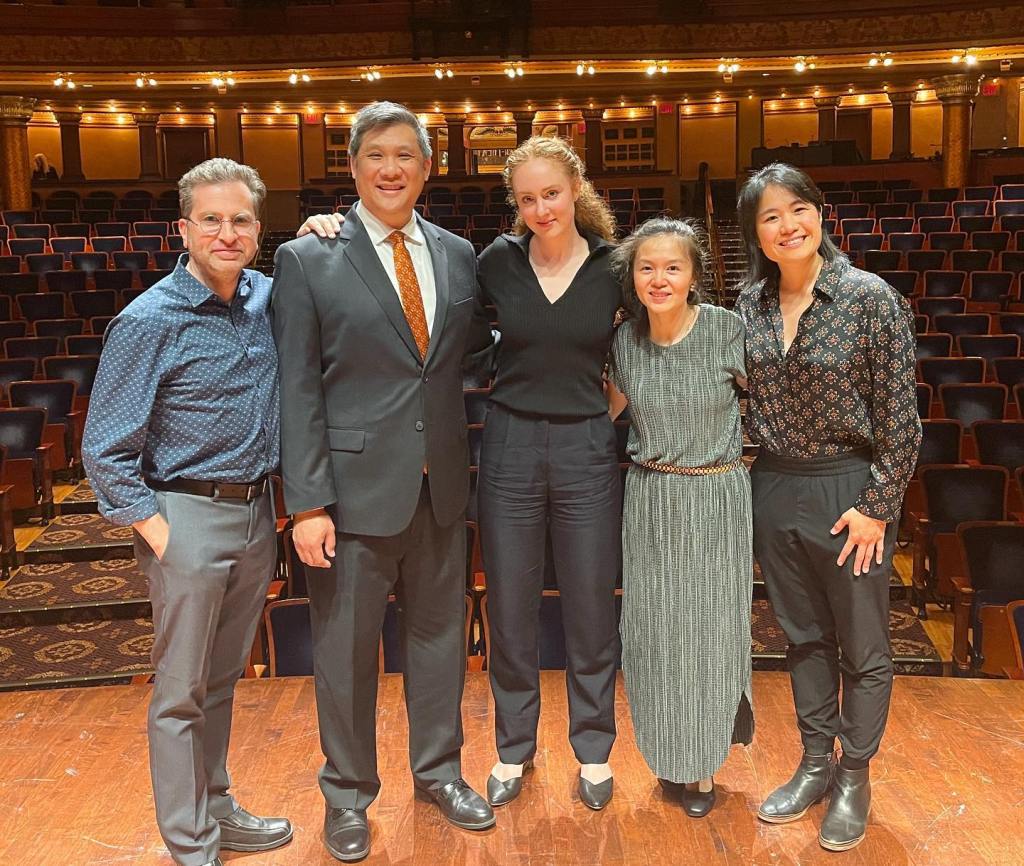
Merz Trio with Karim Al-Zand and Ching-chu Hu, photo credit Merz Trio

Ching-Chu Hu is certainly a familiar presence at the Southern Theatre by now, and the Merz Trio presented the final piece of his season-long fanfare, titled An Eternal Hope. In his spoken remarks, Hu noted the work conveys a hope for growth, beautifully timed with the advent of spring here in early May. A busy piano part made this rather more extrovert than some of the previous installments. It evoked a certain radiance and built to a bold finish. The trio has recently undergone a changing of the guard with a new pianist; one would never have guessed she was new to ensemble given how seamlessly she gelled with her string colleagues.

Rachmaninov’s first Trio élégiaque opened with a soft, undulating gesture in the strings, setting up a distinctly Russian melody in the piano. Though the composer was a mere 18 year old when writing the work, its sumptuous melody and surging passions left little doubt as to who the composer was, with the work fulfilling the promise of its title in leading to a somber, funereal close. Another early work from a major Russian composer followed in a C minor trio from the pen of a 16 year old Shostakovich. Though there were hints of his idiosyncratic wit and sarcasm, it was largely a Romantic work, with meditative beginnings and particularly lovely passage in thirds on the piano.

Sandwiched between the Russian works was Lines in Motion, a commission from Karim Al-Zand, first performed this past January at Chamber Music Houston, where the composer is based. A he discussed in our interview, Al-Zand has a particular affinity for extramusical inspirations. Lines in Motion was no exception, with the composer pointing to selected black and white woodcut illustrations (helpfully reproduced in the program books), corresponding to each of the three movements. As the title suggests, each of prints in question striking use geometric lines to convey a sense of motion on the printed page.

The opening On the Big Sea took inspiration from René Quillivic’s En pleine mar. Roiling piano figurations were answered by calming lines in the strings, and I heard shades of French Impressionism which often used water and the sea as subject material. Angular gestures and bright, brilliant textures dominated In the Big City, capturing the busy skyscraper scene of Frans Masereel’s America. At the Spirit Dance (a nod to Rhythms by Wharton Esherick) was of energetic, driving dance rhythms for a rollicking close. This is a work I certainly look forward to hearing again.

The latter half was devoted to Schumann’s F major piano trio, a work uncharacteristically cheery and optimistic for the often depressive composer. The ensemble purveyed an attractive, singing tone in articulating the bounty of beautiful melody the composer provided. Sophisticated contrapuntal passages provided some textural contrast, delivered with nuanced clarity. The second movement bears the marking Mit innigem Ausdruck (“with innermost expression”), and it was indeed a look inward, lovingly conveyed.

The following movement was marked by a loose suggestion of a waltz figure, while the finale excited in its further use of counterpoint, giving each individual voice of the trio the space to shine. An well-deserved encore was offered, namely, an arrangement of Edith Piaf’s song La Vie en rose, wistful and nostaglic. A memorable close to a memorable season!

Columbus Symphony opens new year with hearty Russian program

Rossen Milanov, conductor
Bella Hristova, violin
Columbus Symphony Orchestra
Ohio Theatre
Columbus, OH
January 6, 2023

Rimsky-Korsakov: Suite from The Snow Maiden 
Prokofiev: Violin Concerto No. 1 in D major, Op. 19
Shostakovich: Symphony No. 6 in B minor, Op. 54

The Columbus Symphony’s first program of 2023 surveyed three giants of the Russian repertoire – Rimsky-Korsakov, Prokofiev, and Shostakovich. A suite from Rimsky’s opera The Snow Maiden opened, an appealing selection of highlights, though its twelve minute duration barely scratches the surface of the expansive opera – a work which the composer considered his finest. The Introduction brimmed with a quintessentially Russian melancholy. “Dance of the Birds” unmistakably portrayed the subject material from this master of orchestration, and “Dance of the Buffoons” – the most recognizable excerpt – made for a rollicking close.

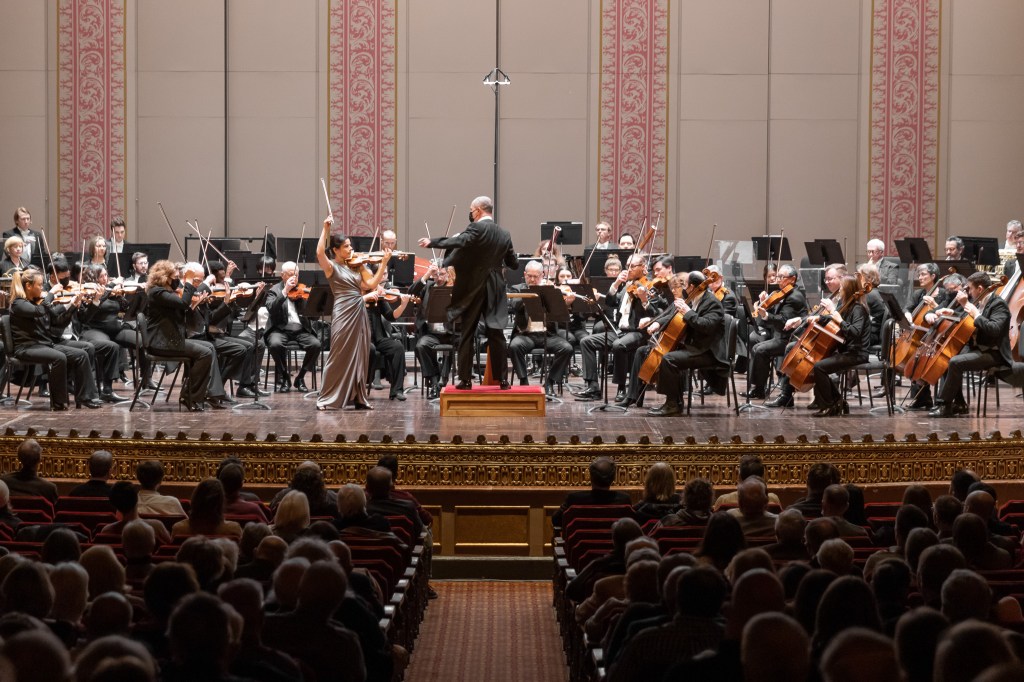
Bella Hristova, Rossen Milanov, and the Columbus Symphony, photo credit Corinne Mares

Prokofiev’s First Violin Concerto brought forth music director Rossen Milanov’s Bulgarian compatriot Bella Hristova – who was graciously on hand for a pre-concert interview with the conductor. Dreamy, meditative material opened, with a beguiling melody from the soloist. The movement gathered momentum, making relentless technical demands without being an overt display of showmanship. A thorny though brief scherzo as the concerto’s centerpiece showed the composer in a more recognizable guise as an enfant terrible. Severe challenges by and large met with aplomb, one nonetheless wanted cleaner intonation when the scoring reached high into the soloist’s register.

The finale served as the most wide-ranging segment of this compact concerto, at its endpoint landing on dreamy material in the spirit of where it all began. As an encore, Hristova offered the Bulgarian folk song “Ratchenitsa”, quipping that it would “break the mood of that gorgeous ending” – which it surely did, but in the best way possible!

Shostakovich’s Sixth Symphony dates from 1939, right on the cusp of World War II. It’s a powerful statement to be sure, but a perplexing work, not in the least because of its unusual structure: three movements, beginning with a vast Largo that occupies more space than the latter two fast movements combined. A searching melody in the low strings opened, not quite grounded. Sparse textures prevailed in this deeply personal, unembellished statement, sustaining a desolate atmosphere. A particularly striking moment came when string trills were pitted against strident brass.

The following Allegro was light-hearted, playful fare by contrast, gaining enormous vigor with its bombastic percussion. A oblique invocation of the Dies irae, however, suggested the darkness of the opening had hardly been overcome. The closing Presto was marked by a rambunctious dance-like theme, as caustic and sardonic as anything Shostakovich wrote.

Mäkelä returns to Cleveland with stunning Shostakovich

Cleveland Orchestra
Klaus Mäkelä, conductor
Nikolaj Szeps-Znaider, violin
Mandel Concert Hall
Severance Music Center
Cleveland, OH
April 23, 2022

Sibelius: Violin Concerto in D minor, Op. 47
 Encore:
 Bach: Partita No. 2 in D minor, BWV 1004 – Sarabande
Shostakovich: Symphony No. 10 in E minor, Op. 93

Following one of the most memorable debuts in recent seasons, the amazingly youthful Finnish conductor Klaus Mäkelä made a much-anticipated return to Cleveland in a meaty program of Sibelius and Shostakovich. Sibelius was represented by way of his towering Violin Concerto, a work first performed in Cleveland in 1922 by Ferenc Vecsey, the concerto’s dedicatee. The work opened shrouded in mysterious tremolos, with soloist Nikolaj Szeps-Znaider pointing the way with resonant lyricism. Thornier material swiftly multiplied virtuoso demands, played with aplomb and searing passion – and the energetic orchestral accompaniment evidenced Mäkelä’s innate understanding of his fellow Finn.

Nikolaj Szeps-Znaider, Klaus Mäkelä, and The Cleveland Orchestra, photo credit Roger Mastroianni, courtesy of The Cleveland Orchestra

Szeps-Znaider’s command of his instrument was on full display in the extended cadenza, intriguingly placed in the center of the movement in emphasis of its structural significance. Much-need repose was to be had in the central Adagio di molto, noted for its wonderfully long-breathed melody. Contrast was once again found in the finale with its foot-tapping polonaise rhythms. As an encore, the violinist offered a deeply poignant Bach sarabande which he noted to be his token of gratitude for being back in Cleveland for the first time post-pandemic.

Quiet rumblings began Shostakovich’s mighty Tenth Symphony, reaching towards ponderous depths. A forlorn clarinet solo – which has been astutely compared to Mahler’s Urlicht – was profoundly moving, and the climaxes scaled cataclysmic heights – a pacing that benefitted from the conductor’s singular sense of architecture. An unexpected physical manifestation of the intensity with which he conducted came when he inadvertently knocked over the concertmaster’s music stand! The brief Allegro, often thought to be a portrait of Stalin, was unrelenting and uncompromising, not in the least during the machine gun fire of the percussion.

Rather flippant by comparison, the Allegretto introduced the DSCH motive, with the politically engaged composer ever keen to willingly inject himself into the commentary. The gleaming Elmira motive in the horn further solidified the composer’s personal connection to the work. A slow introduction – the closest thing to a proper slow movement in this symphony – opened the finale, as if the composer was gathering together his final thoughts. The DSCH returned in incessant prominence, hammered home for a powerhouse conclusion. Just a stunning performance from this dynamic podium presence.

Michail Jurowski makes belated US debut in blistering Shostakovich, Tchaikovsky

Cleveland Orchestra
Michail Jurowski, conductor
Vadim Gluzman, violin
Severance Hall
Cleveland, OH
May 5, 2019

Tchaikovsky: Violin Concerto in D major, Op. 35
 Encore:
 Bach: Violin Partita No. 2 in D minor, BWV 1004 – Sarabande
Shostakovich: Symphony No. 11 in G minor, Op. 103, The Year 1905

Last weekend’s Cleveland Orchestra concerts marked not only Michail Jurowski’s local debut, but – astonishingly for a 75-year-old with a long and distinguished career – his US debut. Good things come to those who wait, and given the level of playing, one could have easily mistook conductor and orchestra as seasoned collaborators. Adding to the occasion was Jurowski’s participation in a pre-concert interview along with violin soloist Vadim Gluzman, both offering fascinating insights. Gluzman spoke of his cherished instrument, a 1690 Stradivarius formerly played by Leopold Auer, the original dedicatee of Tchaikovsky’s Violin Concerto – this is to say, this is the instrument for which the composer envisioned his now ubiquitous concerto. In deference to the violin’s provenance, Gluzman remarked on his preference for Auer’s edition of the work. Jurowski fondly recalled his first exposure to The Cleveland Orchestra while the latter was on tour to Moscow in 1965 under Szell. This performance he called one of the “most powerful feelings from live music” he’d ever experienced, and was thus particularly keen to stand in front of them as conductor. He further reminisced about his personal friendship with Shostakovich, with whom he played piano duets!

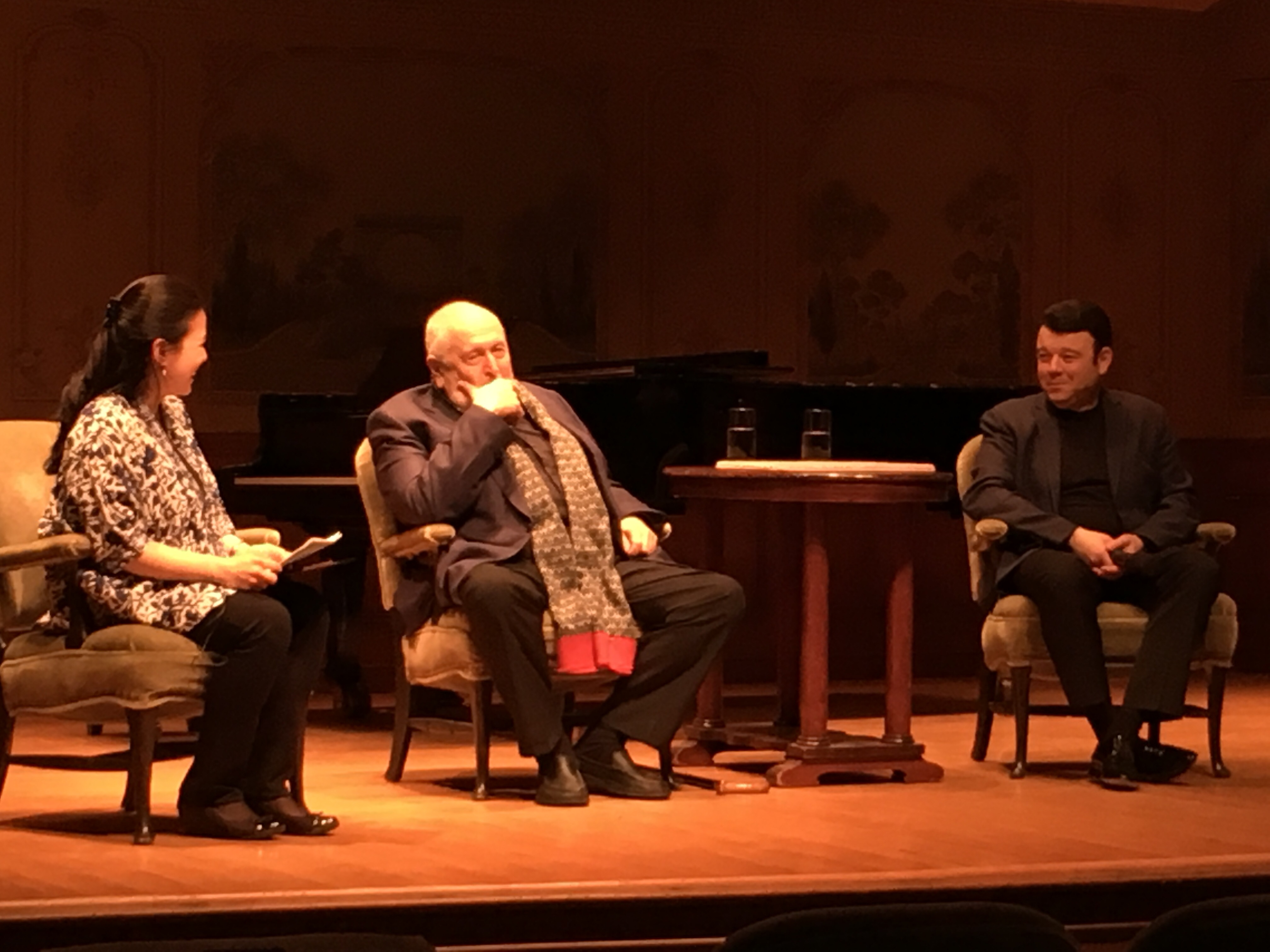
Pre-concert interview, left to right: moderator Cicilia Yudha, Michail Jurowski, Vadim Gluzman

The Tchaikovsky Violin Concerto is certainly a well-known quantity, yet violinist and conductor managed to forge a fresh interpretation. A gentle, untroubled lyricism opened the work, so much at odds with the composer’s tormented life. Gluzman’s instrument was particularly rich in the low register, something Tchaikovsky took advantage of when writing the work, emanating a songful, burnished tone in this music of endless, organic development, with one theme flowing out of the next. The orchestral climax was given with vigor and swagger, and in the cadenza, one was struck by Gluzman’s crystal clear intonation of the stratospherically high notes and thorough command of his storied instrument – joined by flutist Joshua Smith in a particularly affecting moment. A choir of winds – a notch too loud to my ears – opened the central Canzonetta, and the violin sang with an ineffable melancholy, quite a contrast from the breakneck dance of the finale. Gluzman encored with the sarabande from Bach’s Second Partita, given with stately introspection.

Shostakovich’s Eleventh Symphony is patently programmatic, recounting the horrific events of Bloody Sunday in graphic detail. The events – occurring one year before the composer’s birth and witnessed firsthand by his father – entailed the mass murder of peaceful demonstrators by the tsarist regime on a fateful Sunday in January 1905. The symphony was completed in 1957, and Jurowski suggested it was inspired by the Hungarian Revolution of the year prior which had some clear parallels – in other words, ever the subversive, Shostakovich was using historical events to comment upon the present. The work opened with the eerie and chilling motionlessness of a St. Petersburg January, a calm before the storm, aspiring to the monumental stasis of a Bruckner symphony. A plethora of folk songs in support of the revolutionary program was integral to the fabric of the work, first appearing in the brilliant trumpet of Michael Sachs.

A jarring contrast was had in the following movement, structurally serving as a scherzo but miles removed from a light-hearted affair. Matters seemed to crest to apparent triumph, only to devolve into music of shattering, shocking violence, with the snare depicting gunshots in gruesome recount, leading to a grinding fugue in the low strings of blistering contrapuntal ferocity. What followed was music of a broken world, never the same, this being the beginning of the end for the tsarists, and ghostly sounds of the celesta and muted trumpet finally brought matters to an inconclusive close. The third movement, titled “Eternal Memory”, was mourning of deepest lamentation. The strings initiated, followed ominously by the low brass. Matters burgeoned to an impassioned outcry, but in due course retreated to the somber beginnings. The closing “Tocsin” (“Alarm” – fittingly at this point a siren was heard from a passing emergency vehicle outside) jolted matters out of the shadows, startling in intensity. A march of relentless vigor proceeded, toppling over into a reminiscence of the quietude of the work’s distant opening, heightened by a plaintive English horn solo from Robert Walters. The coda added bells to the texture, material as impressive and blood rushing as anything Shostakovich wrote, yet after such bombast, Jurowski held the audience suspended in shocking silence.