
Sheku Kanneh-Mason, cello
David McCarroll, violin
Anne Martindale Williams, cello
Dale Jeong, cello
Bronwyn Banerdt, cello
Alexandra Lee, cello
Additional Strings and Harp of the Pittsburgh Symphony
Heinz Hall
Pittsburgh, PA
March 22, 2025
Bach: Komm, süßer Tod, komm selge Ruh, BWV 478 (arr. Kanneh-Mason)
Bach: Nun komm, der Heiden Heiland, BWV 659 (arr. Kanneh-Mason)
Bach: Adagio from Toccata, Adagio and Fugue in C major, BWV 564 (arr. Kanneh-Mason)
Finnis: Five Preludes for Solo Cello
Villa-Lobos: Prelude from Bachianas Brasileiras No. 1 (arr. Simon Parkin)
Clapton: Layla (arr. Parkin)
Ravel: Sonata for Violin and Cello, M. 73
Dvořák: Nocturne in B major for String Orchestra, Op. 40
Bloch: From Jewish Life (arr. Christopher Palmer)
Following the Pittsburgh Symphony debut of Sheku Kanneh-Mason the night before, local concertgoers got to see many more sides of the cellist during an entry of the innovative and intimate PSO360 series. An indispensable offering at the PSO, for those who haven’t been, a guest artist bands together with select PSO musicians, and a small audience is seated in the round on the Heinz Hall stage. Entitled Soul of the Cello, the enterprising program showed the diverse potential of the instrument, and leaned heavily into music originally for other forces transcribed for cello — several of which were recorded on Kanneh-Mason’s Song album.
A trio of works by J.S. Bach began, all in transcriptions by Kanneh-Mason himself. The chorale prelude Komm, süßer Tod, komm selge Ruh opened, cast for a quintet of cellos. Deeply felt, and the resonance of five cellos was quite striking. A further chorale prelude in Nun komm, der Heiden Heiland followed — this one scored for four cellos — showing that this is music so universal it transcends the medium on which it is performed (the Busoni transcription for piano is a favorite of this writer). A pensive Adagio extracted from an organ work thoughtfully capped of this unique exploration of Bach.
Written for Kanneh-Mason in 2021 were the Five Preludes for Solo Cello by British composer Edmund Finnis. Each one of these pearls achieved a captivating expressive range in just a short span. Melodic contours were deftly shaped in the opening prelude, the second, marked Fleeting, was of minimalist gestures à la Philip Glass. The penultimate piece was underpinned by a drone, surfacing as a calming presence.
Returning to scoring for cello quintet, a pair of widely contrasting works rounded off the first half. In the remarkable suites titled Bachianas Brasileiras, composer Heitor Villa-Lobos wove Brazilian musical tradition into the style of Bach. Each is for a different combination of instruments; the first is for eight cellos. Redistributed amongst the five players on stage, it was like listening in on a close conversation amongst friends, a sentiment further encouraged by the cello’s proximity to the human voice. An energetic transcription of Eric Clapton’s Layla followed, filled with glissandos and other techniques to capture the effects of Clapton’s electric guitar. A sheer delight to see Kanneh-Mason rock out with the PSO cello section!
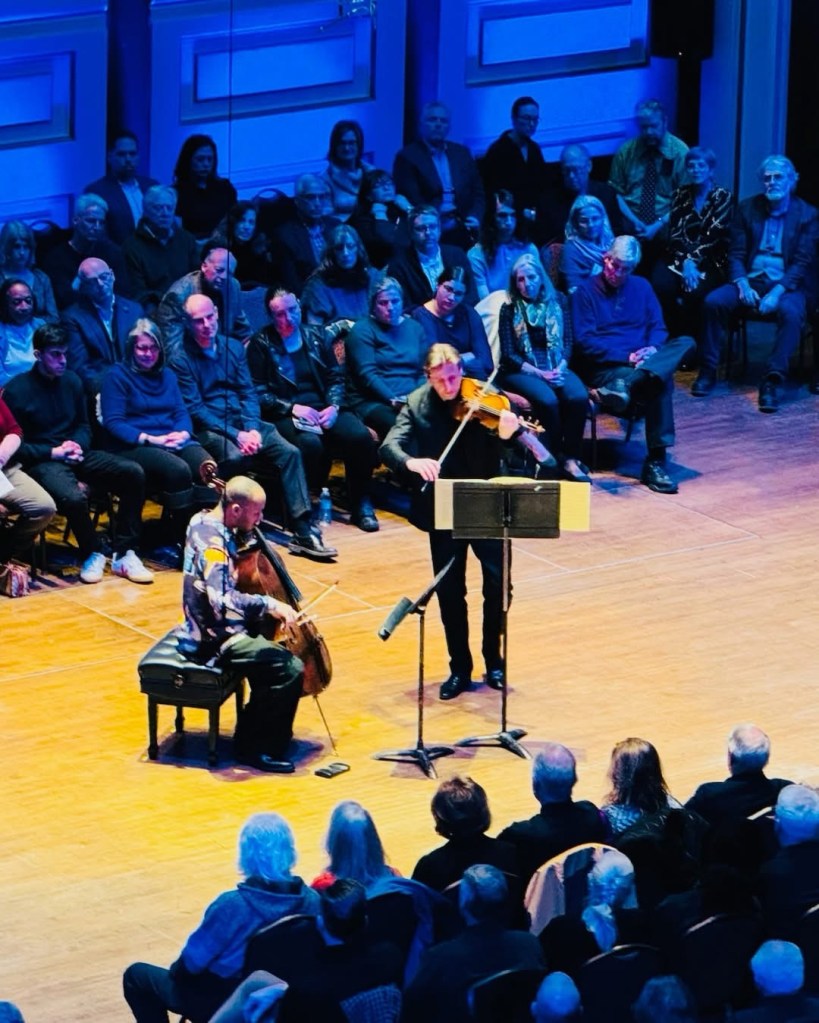
Opening the second half was Ravel’s remarkable duo sonata for violin and cello, a work the composer dedicated to the memory of Debussy. Kanneh-Mason teamed up with PSO concertmaster David McCarroll in a work that explored the different personalities of these string instruments. Taut communication between the two negotiated the score’s complexities. Textures in the second movement were strikingly spiked with pizzicato, and I was taken by the drive and vitality with which the work closed.
Dvořák’s Nocturne for string orchestra was sole work performed without the participation of Kanneh-Mason, affording the cellist a well-earned respite. An expanded version of the slow movement from his G major string quintet (the first movement of which was heard following a recent PSO performance), the PSO strings offered a serene, arching lyricism in this loveliest of creations.
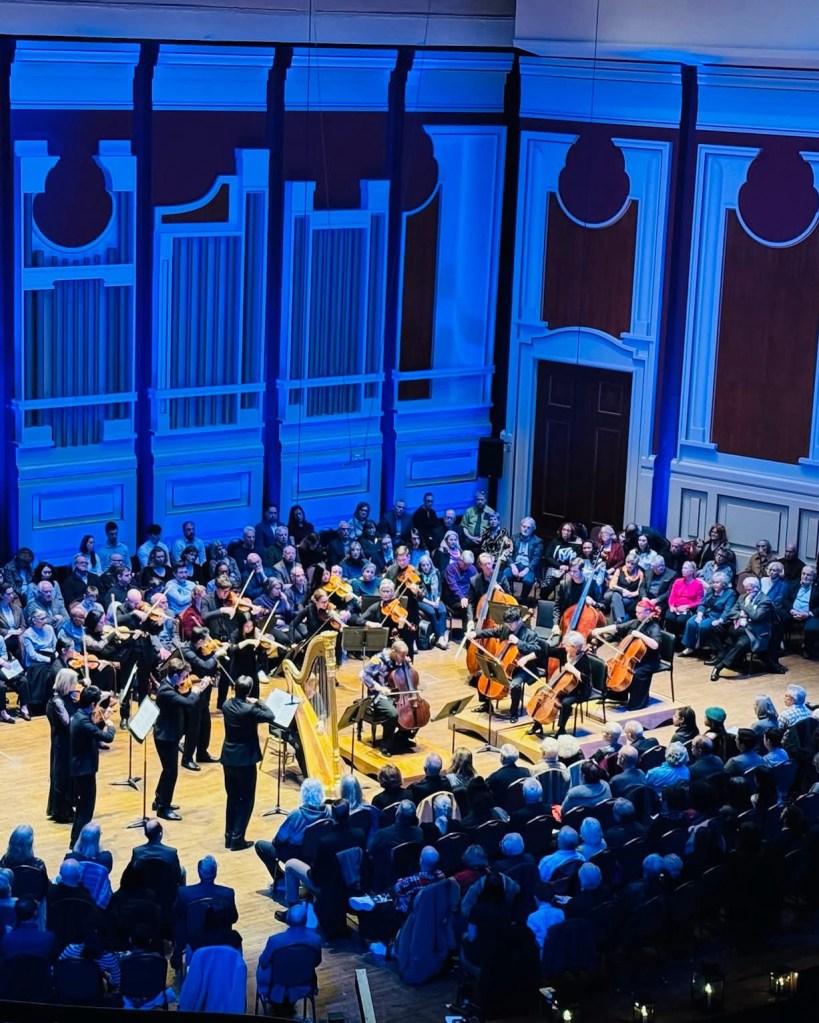
Closing the memorable evening was Ernest Bloch’s From Jewish Life, a work originally for cello and piano. An arrangement by Christopher Palmer thoughtfully rescored the piece for solo cello buttressed by string orchestra and harp. A powerful “Prayer” began, showing the beauty of the cello and richness of the harp (Gretchen Van Hoesen). The central “Supplication” was of growing urgency, marked by a long cello line inflected by Jewish folk gestures; “Jewish Song” closed the piece in a manner more reflective than celebratory.
 quasi-faust