
Rossen Milanov, conductor
Bella Hristova, violin
Columbus Symphony Orchestra
Ohio Theatre
Columbus, OH
January 6, 2023
Rimsky-Korsakov: Suite from The Snow Maiden
Prokofiev: Violin Concerto No. 1 in D major, Op. 19
Shostakovich: Symphony No. 6 in B minor, Op. 54
The Columbus Symphony’s first program of 2023 surveyed three giants of the Russian repertoire – Rimsky-Korsakov, Prokofiev, and Shostakovich. A suite from Rimsky’s opera The Snow Maiden opened, an appealing selection of highlights, though its twelve minute duration barely scratches the surface of the expansive opera – a work which the composer considered his finest. The Introduction brimmed with a quintessentially Russian melancholy. “Dance of the Birds” unmistakably portrayed the subject material from this master of orchestration, and “Dance of the Buffoons” – the most recognizable excerpt – made for a rollicking close.
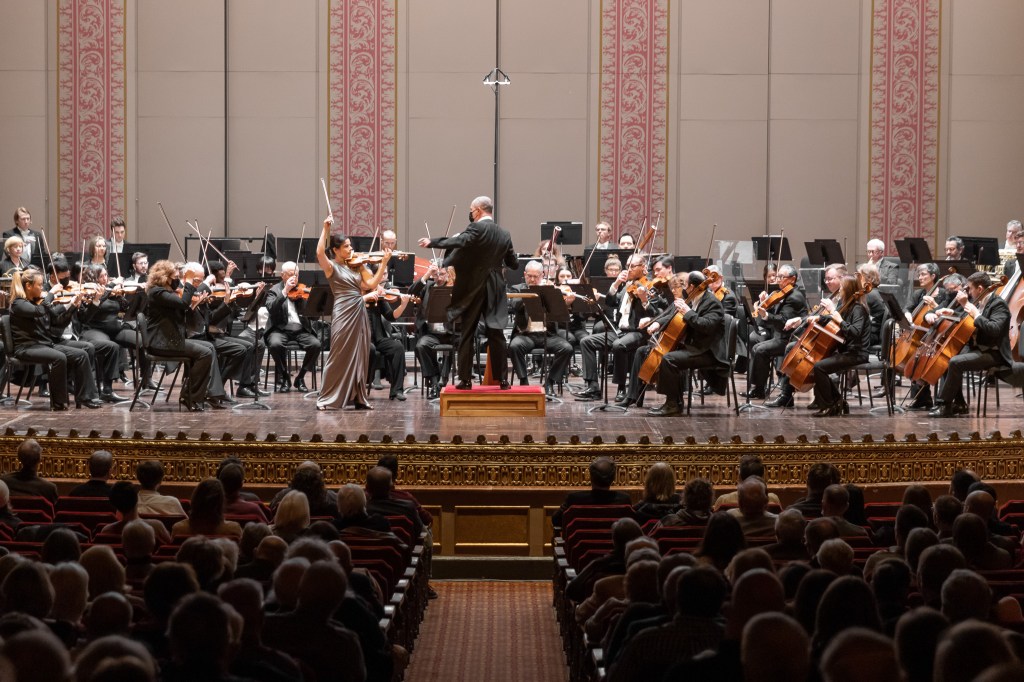
Prokofiev’s First Violin Concerto brought forth music director Rossen Milanov’s Bulgarian compatriot Bella Hristova – who was graciously on hand for a pre-concert interview with the conductor. Dreamy, meditative material opened, with a beguiling melody from the soloist. The movement gathered momentum, making relentless technical demands without being an overt display of showmanship. A thorny though brief scherzo as the concerto’s centerpiece showed the composer in a more recognizable guise as an enfant terrible. Severe challenges by and large met with aplomb, one nonetheless wanted cleaner intonation when the scoring reached high into the soloist’s register.
The finale served as the most wide-ranging segment of this compact concerto, at its endpoint landing on dreamy material in the spirit of where it all began. As an encore, Hristova offered the Bulgarian folk song “Ratchenitsa”, quipping that it would “break the mood of that gorgeous ending” – which it surely did, but in the best way possible!
Shostakovich’s Sixth Symphony dates from 1939, right on the cusp of World War II. It’s a powerful statement to be sure, but a perplexing work, not in the least because of its unusual structure: three movements, beginning with a vast Largo that occupies more space than the latter two fast movements combined. A searching melody in the low strings opened, not quite grounded. Sparse textures prevailed in this deeply personal, unembellished statement, sustaining a desolate atmosphere. A particularly striking moment came when string trills were pitted against strident brass.
The following Allegro was light-hearted, playful fare by contrast, gaining enormous vigor with its bombastic percussion. A oblique invocation of the Dies irae, however, suggested the darkness of the opening had hardly been overcome. The closing Presto was marked by a rambunctious dance-like theme, as caustic and sardonic as anything Shostakovich wrote.
 quasi-faust