Marc-André Hamelin offers probing virtuosity at Akron’s Tuesday Musical

Marc-André Hamelin, piano
EJ Thomas Hall
Akron, OH
October 21, 2025

Beethoven: Piano Sonata No. 29 in B-flat major, Op. 106, Hammerklavier
Schumann: Waldszenen, Op. 82
Ravel: Gaspard de la nuit

Encore:
Debussy: Reflets dans l’eau (No. 1 from Images, Book 1)

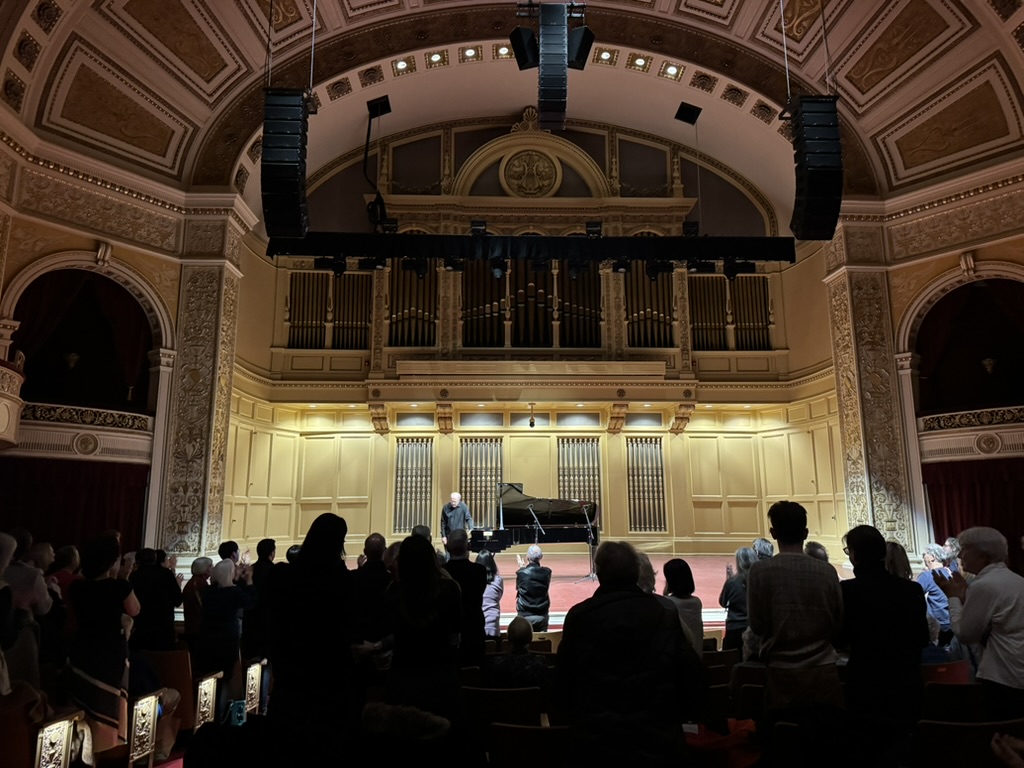
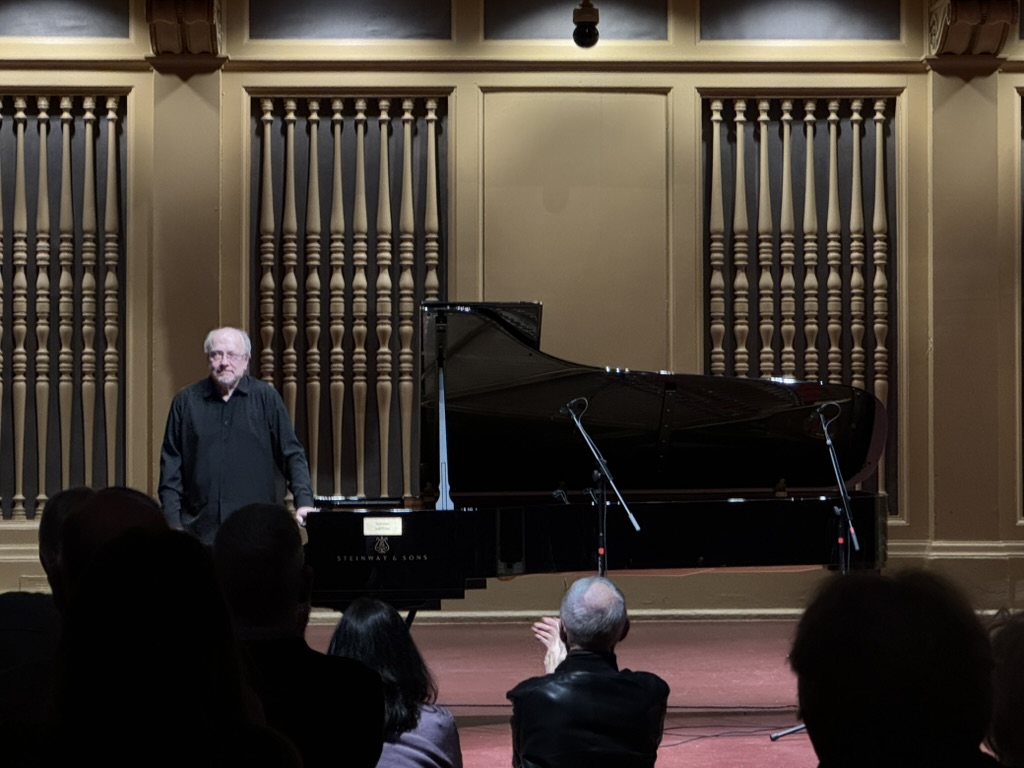
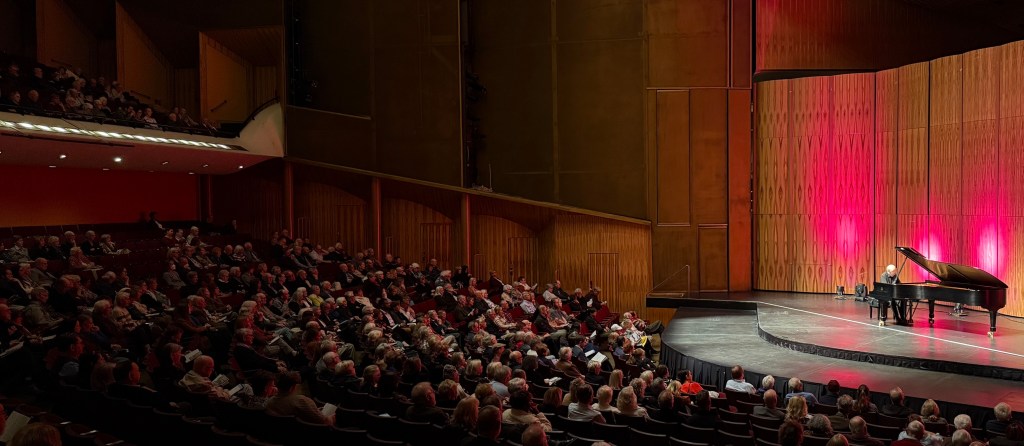
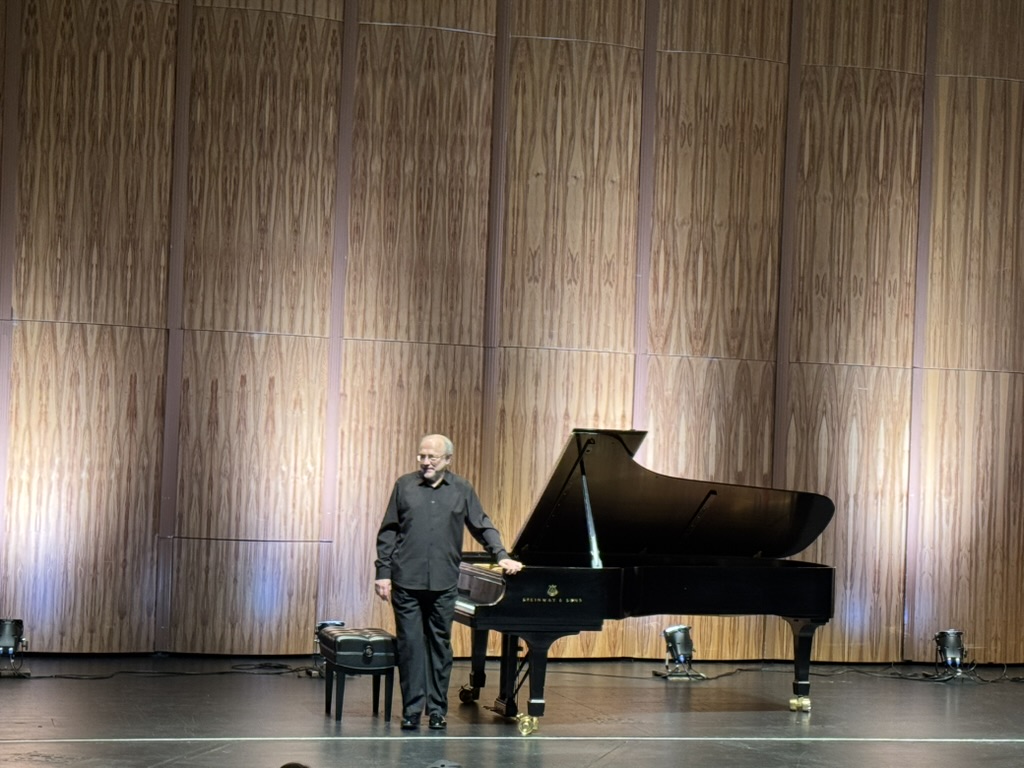
No part of Marc-André Hamelin’s recital at Akron’s Tuesday Musical was for the faint of heart. The repertoire spanned a mammoth Beethoven sonata, the rewarding Romanticism of Schumann, and Ravel at his most mercurial and ferocious. Opening night of Tuesday Musical’s 138th(!) season, Hamelin served as the annual Margaret Baxtresser Pianist, in which capacity he led a masterclass at Kent State the following day. Additionally, the evening performance began with a rippling account of Liszt’s La leggierezza by local high school student Saya Uejima.

Marc-André Hamelin at EJ Thomas Hall, photo credit Tuesday Musical

Along with the Diabelli Variations, the Hammerklavier is Beethoven’s largest and most demanding work for solo piano. A granite monument of the piano literature, Hamelin has recently recorded it to acclaim. As if totally unfazed by its technical demands, it comprised merely the first half of Tuesday’s recital. The bold Allegro movement made for a commanding beginning. Hamelin opted to strike the opening bass note with the right hand rather than the left for added power. Textures were crisp and brisk, with deft voicing of its intricacies, balancing the exuberant with more graceful material. The development saw some spiky contrapuntal passages, a preview of sorts for what was to come, before the movement’s blistering, uncompromising coda.

Though short in length, the scherzo that followed was hardly a trifle. Hamelin conjured a tempest, though an impulse towards restraint here kept the otherwise tumultuous writing in check. What followed was the work’s magnificent slow movement. Drawing on deep reserves of emotion, Hamelin sustained a spellbinding atmosphere over its nearly twenty-minute duration. Worlds apart from the robustness of the outer movements, here Hamelin purveyed a velvety touch to striking effect, landing on the profound sequence of chords that closed, beautifully voiced. With meditative, improvisatory beginnings, the massive fugue that concluded the sonata saw Hamelin at his best — a dazzling technique used in service of the music.

Schumann’s Waldszenen (Forest Scenes) made for a genial opening to the second half. Eintritt (Arrival) extended a warm and gracious entry into the forest, played with rippling lyricism. Hunting songs came second and second-to-last in this nine-part suite, in both cases given with vigorous flexibility. I was touched by the delicate nostalgia of Einsame Blumen (Lonely Flowers) and the uber-Romantic lushness of Herberge (Wayside Inn). The closing Abschied (Farewell) bid adieu with the same warmth with which it began.

The evening concluded with another work famous for its extraordinary technical demands in Ravel’s Gaspard de la nuit. Though a mainstay of Hamelin’s recital programs for years, it’s the only work of the present selection he has not yet recorded. The work brings to life in musical terms poems by Aloysious Bertrand, all of which deal with fantastical, rather demonic figures — a seasonally appropriate selection for late October! Ondine positively shimmered in this remarkable soundworld of the titular water nymph, building to an ecstatic climax. Le Gibet was a striking contrast in its funereal stasis ahead of Scarbo, closing with a spattering of iridescent colors and ferocious virtuosity.

Hamelin offered just a single encore in Debussy’s Reflets dans l’eau, which like Ondine, paints a mesmerizingly impressionist aquatic scene. A clip of Hamelin discussing the work can be viewed here.

Two years ago, I saw Hamelin play a very similar program in Cleveland with another massive piano sonata — Charles Ives’ Concord — in place of the Hammerklavier. See review here. Lastly, Hamelin was on hand ahead of his Akron recital for a brief but affable interview with WCLV’s Jacqueline Gerber, available for listening here.

Kanneh-Mason bares the soul of the cello with Pittsburgh Symphony players

Sheku Kanneh-Mason, cello
David McCarroll, violin
Anne Martindale Williams, cello
Dale Jeong, cello
Bronwyn Banerdt, cello
Alexandra Lee, cello
Additional Strings and Harp of the Pittsburgh Symphony

Heinz Hall
Pittsburgh, PA
March 22, 2025

Bach: Komm, süßer Tod, komm selge Ruh, BWV 478 (arr. Kanneh-Mason)
Bach: Nun komm, der Heiden Heiland, BWV 659 (arr. Kanneh-Mason)
Bach: Adagio from Toccata, Adagio and Fugue in C major, BWV 564 (arr. Kanneh-Mason)
Finnis: Five Preludes for Solo Cello
Villa-Lobos: Prelude from Bachianas Brasileiras No. 1 (arr. Simon Parkin)
Clapton: Layla (arr. Parkin)
Ravel: Sonata for Violin and Cello, M. 73
Dvořák: Nocturne in B major for String Orchestra, Op. 40
Bloch: From Jewish Life (arr. Christopher Palmer)

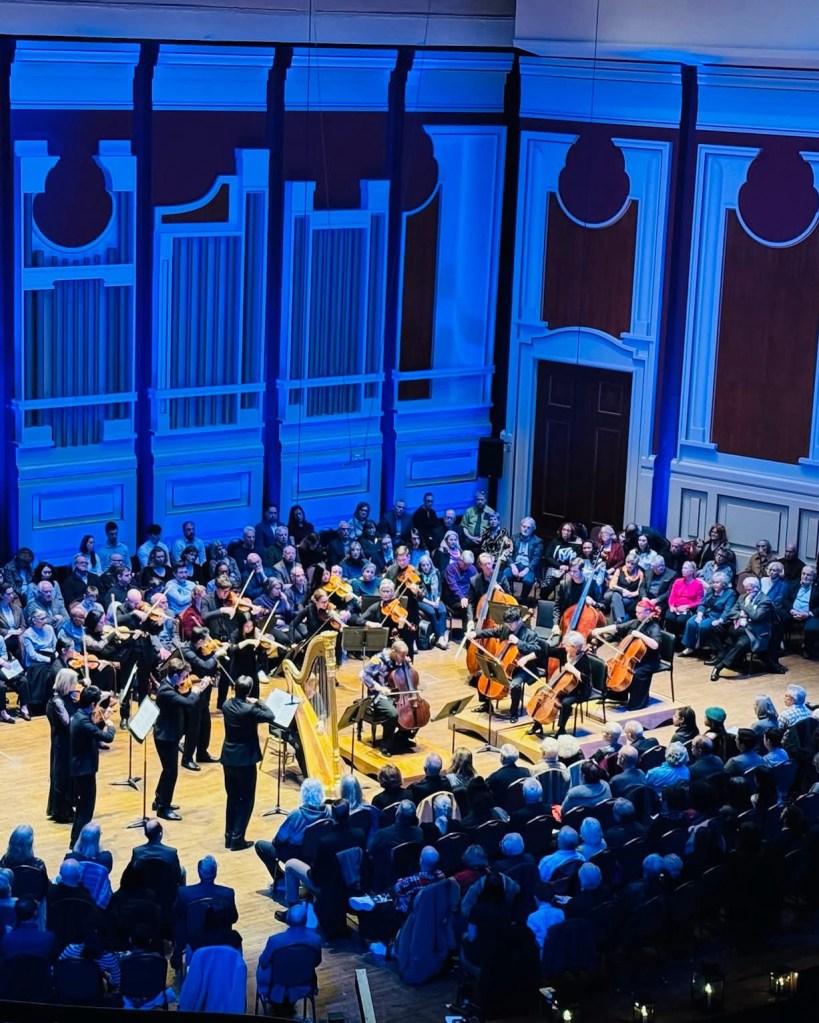
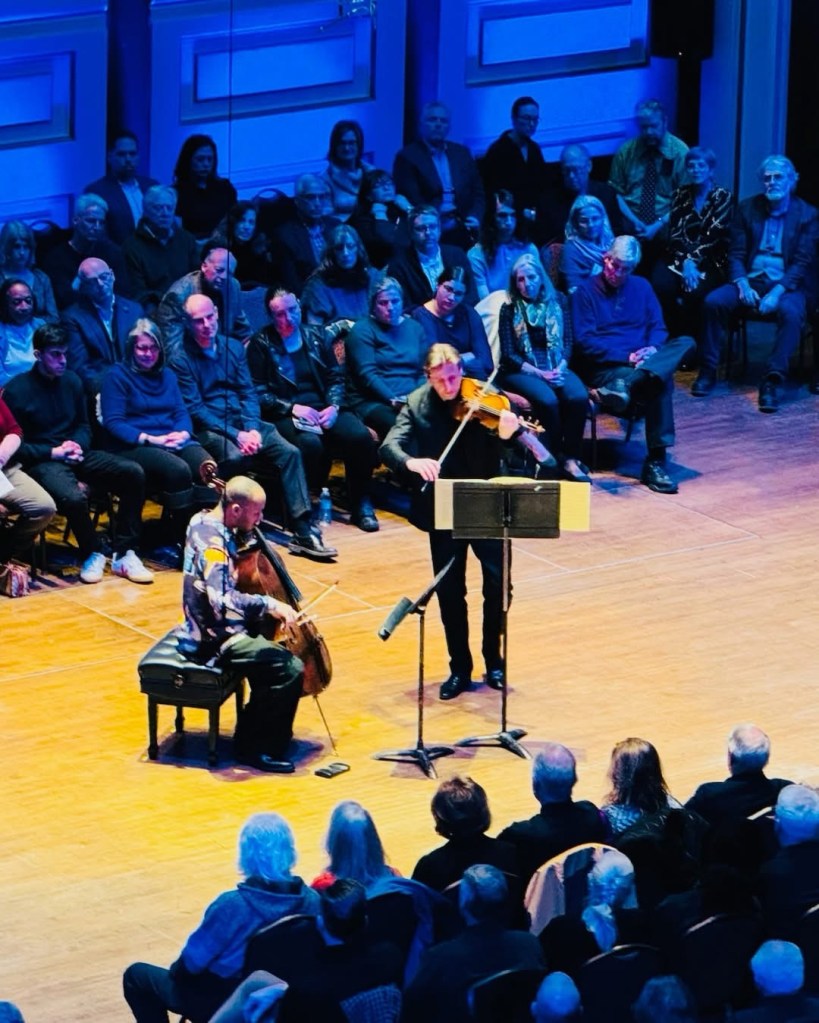
Following the Pittsburgh Symphony debut of Sheku Kanneh-Mason the night before, local concertgoers got to see many more sides of the cellist during an entry of the innovative and intimate PSO360 series. An indispensable offering at the PSO, for those who haven’t been, a guest artist bands together with select PSO musicians, and a small audience is seated in the round on the Heinz Hall stage. Entitled Soul of the Cello, the enterprising program showed the diverse potential of the instrument, and leaned heavily into music originally for other forces transcribed for cello — several of which were recorded on Kanneh-Mason’s Song album.

Sheku Kanneh-Mason with members of the PSO, photos credit Sheku Kanneh-Mason on Facebook

A trio of works by J.S. Bach began, all in transcriptions by Kanneh-Mason himself. The chorale prelude Komm, süßer Tod, komm selge Ruh opened, cast for a quintet of cellos. Deeply felt, and the resonance of five cellos was quite striking. A further chorale prelude in Nun komm, der Heiden Heiland followed — this one scored for four cellos — showing that this is music so universal it transcends the medium on which it is performed (the Busoni transcription for piano is a favorite of this writer). A pensive Adagio extracted from an organ work thoughtfully capped of this unique exploration of Bach.

Written for Kanneh-Mason in 2021 were the Five Preludes for Solo Cello by British composer Edmund Finnis. Each one of these pearls achieved a captivating expressive range in just a short span. Melodic contours were deftly shaped in the opening prelude, the second, marked Fleeting, was of minimalist gestures à la Philip Glass. The penultimate piece was underpinned by a drone, surfacing as a calming presence.

Returning to scoring for cello quintet, a pair of widely contrasting works rounded off the first half. In the remarkable suites titled Bachianas Brasileiras, composer Heitor Villa-Lobos wove Brazilian musical tradition into the style of Bach. Each is for a different combination of instruments; the first is for eight cellos. Redistributed amongst the five players on stage, it was like listening in on a close conversation amongst friends, a sentiment further encouraged by the cello’s proximity to the human voice. An energetic transcription of Eric Clapton’s Layla followed, filled with glissandos and other techniques to capture the effects of Clapton’s electric guitar. A sheer delight to see Kanneh-Mason rock out with the PSO cello section!

Opening the second half was Ravel’s remarkable duo sonata for violin and cello, a work the composer dedicated to the memory of Debussy. Kanneh-Mason teamed up with PSO concertmaster David McCarroll in a work that explored the different personalities of these string instruments. Taut communication between the two negotiated the score’s complexities. Textures in the second movement were strikingly spiked with pizzicato, and I was taken by the drive and vitality with which the work closed.

Dvořák’s Nocturne for string orchestra was sole work performed without the participation of Kanneh-Mason, affording the cellist a well-earned respite. An expanded version of the slow movement from his G major string quintet (the first movement of which was heard following a recent PSO performance), the PSO strings offered a serene, arching lyricism in this loveliest of creations.

Closing the memorable evening was Ernest Bloch’s From Jewish Life, a work originally for cello and piano. An arrangement by Christopher Palmer thoughtfully rescored the piece for solo cello buttressed by string orchestra and harp. A powerful “Prayer” began, showing the beauty of the cello and richness of the harp (Gretchen Van Hoesen). The central “Supplication” was of growing urgency, marked by a long cello line inflected by Jewish folk gestures; “Jewish Song” closed the piece in a manner more reflective than celebratory.

Sheku Kanneh-Mason and David McCarroll

Classical symphonies bookend wunderkind violinist at ProMusica

ProMusica Chamber Orchestra
David Danzmayr, conductor
Fiona Khuong-Huu, violin
Southern Theatre
Columbus, OH
January 28, 2024

Prokofiev: Symphony No. 1 in D major, Op. 25, Classical
Saint-Saëns: Introduction et Rondo capriccioso, Op. 28
Ravel: Tzigane
Haydn: Symphony No. 104 in D major, Hob. I:104, London

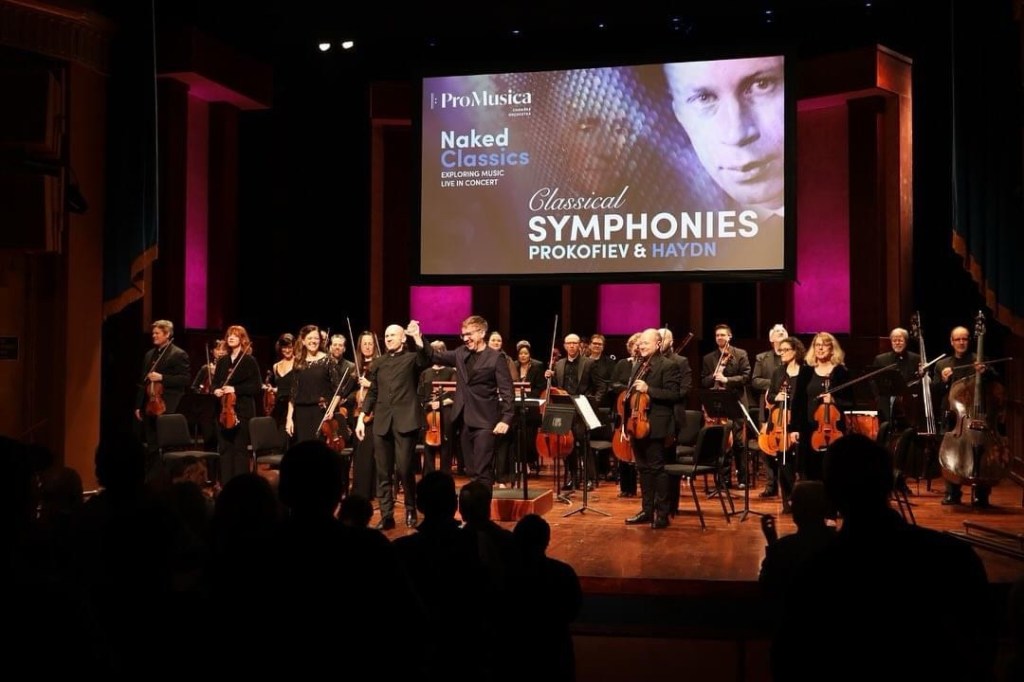
Last weekend’s ProMusica performances introduced Columbus audiences to the remarkable – and remarkably young – violinist Fiona Khuong-Huu. Just 16 years old, she has already scored a New York Philharmonic debut and is currently a student in Juilliard’s pre-college division. Additionally, she is recipient of the Fomin Scholarship Fund from the Chicago-area North Shore Chamber Festival, an organization helmed by ProMusica’s creative partner Vadim Gluzman.

Fiona Khuong-Huu, David Danzmayr, and ProMusica, photos credit ProMusica

Khuong-Huu offered two 10-minute or so virtuoso showpieces, beginning with Saint-Saëns’ Introduction and Rondo capriccioso. A long-bowed melody marked the introductory material, and the violinist played with a rich tone and a maturity beyond her years. The Rondo was elegantly ornamented, with Khuong-Huu self-assured across the range of her instrument. In a particularly striking moment, the soloist played a series of rapid, wide-ranging arpeggios as the theme surfaced in the winds.

Ravel’s Tzigane opened with a monologue for violin alone, replete with modal inflections in invocation of Romani music. It’s a work that made substantial technical demands, surmounted by the soloist with seeming effortlessness. It’s also a piece filled with novel timbres, from the rapid pizzicato passages to a substantial part for harp (Jeanne Norton). Khuong-Huu certainly has a bright future ahead of her, and a career I look forward to watching.

The evening began and ended with “classical” symphonies of various flavors – Prokofiev’s First, which consciously sought to emulate and imitate his symphonic forbears, and Haydn’s last, a veritable archetype of the form. The fizzy opening of the Prokofiev was further buttressed by a buoyant contrasting theme, almost weightless, though vigor was amassed as much was made from efficient use of the chamber-sized orchestra. The delicate inner voices were intricately brought out in the Larghetto, and the piquant dissonances of the haughty gavotte were given a stylish reading. The effervescence of the whirlwind finale was a worthy rival to Haydn himself.

A broad-stroked introduction began Haydn’s London symphony at the other end of the program, pointing towards an essay in equal parts energetic and elegant, epitomizing classical symmetry and balance. The irregularly dispersed accents and pauses of the minuet were of charming effect, as was the finale, derived from a Croatian folk song that sounded almost indistinguishable from a bona fide Haydn theme.

The preceding Friday night saw a further installment of Naked Classics, hosted by the ebullient and informed Paul Rissmann. Parallels and contrasts between the Haydn and Prokofiev symphonies were illuminated, culminating in a performance of both works. Here, the two symphonies were intertwined, with a movement of Prokofiev alternating with a movement of Haydn, an approach which may have helped illustrate comparisons but ultimately made for a disjointed listen.

Paul Rissmann with David Danzmayr and ProMusica

VIVO closes festival in style with French repertoire, Choi premiere

Alicia Hui, violin †
Siwoo Kim, violin †‡
Henry Kramer, piano *‡
Jeffrey Myers, violin *
John Stulz, viola *†
Alice Yoo, cello *
Matthew Zalkind, cello †‡
Gabriel Campos Zamora, clarinet †

* Fauré / † Choi / ‡ Ravel

Southern Theatre
Columbus, OH
September 4, 2022

Fauré: Piano Quartet No. 1 in C minor, Op. 15
Choi: With Winds III
Ravel: Piano Trio

VIVO Music Festival closed the eighth edition of its annual chamber music celebration Sunday afternoon at the Southern Theatre, an event which also served to unofficially open Chamber Music Columbus’ banner 75th season. As with all of the elder organization’s upcoming concerts, Sunday’s included a newly commissioned work, as well as poem from the season’s poet laureate, Jennifer Hambrick – known to listeners of WOSU, as well as the host of VIVO’s “Beer & Beethoven” held a few nights prior. Hambrick’s entry “Stones to join the mountain with the rock” fit the spirit of the occasion, the joining of forces of two very fine chamber music organizations.

L-R: Jaehyuck Choi, Jeffrey Myers, John Stulz, Gabriel Campos Zamora, Alicia Hui, Alice Yoo, Siwoo Kim, Henry Kramer, Matthew Zalkind. Photo credit VIVO Music Festival

Fauré’s Piano Quartet No. 1 boasted dark-hued, dramatic beginnings, rather Brahmsian in persuasion, with the virtuosic piano writing and its tumultuous octaves (Henry Kramer) a standout. The scherzo was markedly more Gallic and of irresistible charm, while the Adagio was a gorgeous respite, with a particularly affecting and resonant cello line (Alice Yoo). The finale recalled the virtuosity of the beginning to bring the opening selection to an enthusiastic close.

South Korean composer Jaehyuck Choi was present to introduce his clarinet quintet With Winds III, the first of Chamber Music Columbus’ seven commissions to come to life. A taste of Choi’s work was sampled at the aforementioned Beer & Beethoven event in which violinist Alicia Hui performed his Self in Mind I. In addition to VIVO, violist John Stulz also counts himself a member of the Paris-based new music group Ensemble intercontemporain, and it was there he first became acquainted with Choi. Choi’s commission served as a tribute to CMC’s founder James N. Cain, and moreover, the clarinet quintet medium was apropos as one of the organization’s first performances featured the Walden Quartet with clarinetist Donald McGinnis. Choi spoke of finding influence from contrasting works of visual arts, a thread he discussed at length during my interview with him a few months prior.

Terse, rapid gestures in the strings opened, punctuated by a long-breathed tone in the clarinet (Gabriel Campos Zamora), emblematic of the work’s near obsession with pointed contrasts. The work’s dense textures made substantial use of extended techniques, pushing the capabilities of both the musicians and their instruments alike. A passage cast in the violin’s highest possible range was otherworldly in effect, while a mute in the clarinet provided yet another striking sonority in work’s final segment before matters evaporated into silence.

The afternoon closed with Ravel’s remarkable Piano Trio. The opening Modéré was dreamy and evocative, with the performers adroitly negotiating the 8/8 meter – suggestive of the Basque zortziko – complexities that felt all but effortless in this musical conversation amongst friends. What followed was a rare scherzo from Ravel, its gossamer textures almost like a work of Saint-Saëns. The Passacaille easily serves as the heart of the work, searching probing depths. A solemn statement, it was a juxtaposition of the austere and the deeply felt. Decorative filigree was abundant in the finale, given with meticulous attention to detail, and the self-assured piano in particular pointed towards a big-boned finish.

Columbus Symphony opens new year in powerful Russian repertoire

Columbus Symphony Orchestra
Rossen Milanov, conductor
Ohio Theatre
Columbus, OH
January 7, 2022

Mussorgsky/Ravel: Pictures at an Exhibition
Stravinsky: Le sacre du printemps (arr. Jonathan McPhee)

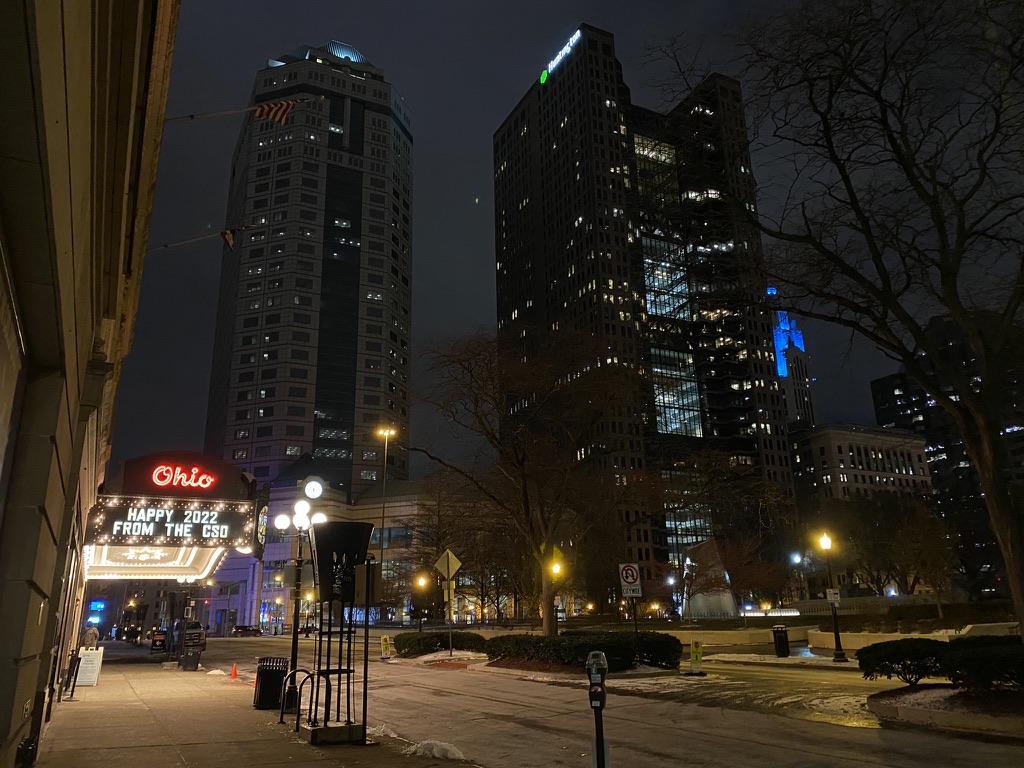
The Columbus Symphony opened the New Year with its annual Russian Winter Festival, now in its seventh year. The first of two programs in the Festival, Friday night’s offering put forth two of the most pivotal works – and orchestral showpieces – of the Russian repertoire: Mussorgsky’s Pictures at an Exhibition and Stravinsky’s Rite of Spring. Such a meaty program made for an exciting night of orchestral virtuosity.

Presented in its (overly?) familiar Ravel orchestration, Pictures at Exhibition was certainly a rousing way with which to begin the year, with the clarion trumpets calls of the opening “Promenade” setting a ceremonial tone (principal trumpet Mark Grisez). The coloristic “Gnomus” put Ravel’s mastery of instrumentation on full display. Marked contrast was to be had in the lightness of “Tuileries” preceding the weight of the imposing “Bydło” – the latter a shining moment for the tuba. “Samuel Goldenberg und Schmuÿle” stood out by its striking use of the muted trumpet, showing the many colors of an instrument so pivotal to the suite. A tragic chorale opened the “Catacombae” segment, perhaps the emotional core of the work, while closing “Great Gate of Kiev” was solemn and stentorian, with a suitably grandiose finish enhanced by the tolling bells.

Stravinsky’s Rite of Spring amply filled out the balance of the evening. Milanov opted to use a version for reduced orchestra arranged by conductor Jonathan McPhee. While perhaps some of the raw excitement is lost when performed by slimmer forces, the McPhee arrangement stays faithful to the original (a few samples can he heard here) and is the only reduction to be approved by the Stravinsky estate (and when the work is performed as a staged ballet, this version accommodates venues that lack a pit large enough to fit the vast number of players the composer originally envisioned).

The work began in a bassoon solo (Betsy Sturdevant), sounding nearly otherworldly in its unnaturally high register. The music progressed discursively, gaining momentum until it crested in the iconic passage of manically repeated, pulsating rhythmic gestures. Milanov’s exacting baton work carefully guided the orchestra through the piece’s fearsome rhythmic complexes. Part II opened shrouded in the same mystery as the beginning with fine solo contributions from concertmaster Joanna Frankel, astringently portraying a desolate atmosphere. The pounding bass drum ignited the kinetic energy of “Glorification of the Chosen One”, bursting with a primal fury that pointed in due course towards the final, cataclysmic crash. There’s certainly much to forward to in the second installment of the Russian Winter Festival, featuring works of Tchaikovsky and Rachmaninov.

Viotti makes memorable Cleveland debut in Russo-French program

Cleveland Orchestra
Lorenzo Viotti, conductor
Yuja Wang, piano
Severance Hall
Cleveland, OH
November 29, 2019

Prokofiev: Suite from The Love for Three Oranges, Op. 33bis
Rachmaninov: Piano Concerto No. 4 in G minor, Op. 40
 Encore:
 Gluck-Sgambati: “Dance of the Blessed Spirits” from Orfeo ed Euridice
Poulenc: Sinfonietta, FP 141
Ravel: La valse

Over the Thanksgiving weekend, The Cleveland Orchestra dependably serves a musical feast, and this year was hardly an exception. Friday (coincidentally, the 150th birthday of the orchestra’s founder, Adella Prentiss Hughes) marked the local debut of 29-year-old conductor Lorenzo Viotti. Currently principal conductor of Portugal’s Gulbenkian Orchestra, and dubbed to assume the same role with the Netherlands Philharmonic Orchestra next season, Viotti is a conductor who Cleveland music director Franz Welser-Möst singled out as being especially promising during an interview previewing the current season. Viotti’s colorfully appealing program was bifurcated by nationality with a Russian first half preceding a French second.

900 Lorenzo-liggend (1)
Lorenzo Viotti, photo credit Desiré van den Berg

Prokofiev’s six-movement suite from The Love for Three Oranges opened with the composer’s characteristically vigorous orchestrations, bringing to life the opera’s colorful cast of characters with gentler, dancing winds contrasting. The following “Infernal Scene” was darkly surreal in its unusual timbres, while the “Marche” – the opera’s most indelible quantity – was given a crisply rhythmic and foot-tapping workout. “The Prince and the Princess” made for a lyrical interlude, the deeply touching language anticipating Romeo and Juliet. Viotti roused the requisite virtuosity for the roiling “Flight” that closed.

As central to repertoire as Rachmaninov’s works for piano and orchestra are, the Fourth Concerto has been relegated to periphery, not having been performed by this orchestra since 1996. An arsenal of energy opened, quickly paving the way for the full-bodied entry of the incomparable Yuja Wang. The fiendishly difficult piano writing was easily surmounted by her fleet fingerwork, and about two thirds of the way through the movement, matters burgeoned to a climax as grand and lush as anything Rachmaninov wrote. The solo introduction of the Largo was of deep melancholy, revealing Wang’s lyrical gifts, and in due course aided by burnished strings.

Textures grew impassioned and stormier, leading to the jarring transition to the closing Allegro vivace. Wang’s sleight-of-hand pianism negotiated the jazz-inflected rhythmic complexities, and chains of double octaves were effortlessly delivered with fire and panache. The orchestra supported Wang with a colorful accompaniment – Jeffrey Rathbun’s oboe a standout – culminating in a muscular conclusion. While ultimately perhaps not as memorable as the composer’s other works in the medium, it certainly merits hearings at more regular intervals! Although not indulging the Severance Hall audience in one of her encore marathons, Wang nonetheless responded to the hearty ovation with the wistful lyricism of a transcription from Gluck’s Orfeo ed Euridice.

The Cleveland Orchestra gave the US premiere of Poulenc’s Sinfonietta under George Szell in 1949, but remarkably hasn’t touched it since. Kudos then to Viotti for resurrecting this vintage gem, which despite its obscurity, local audiences had the chance to hear as recently as this past March on a CityMusic program. The opening movement brimmed with melodies of immediate appeal, piquant and bright, a sort of synthesis of 20th-century sensibilities within a classical economy, invoking comparison to Prokofiev’s Classical symphony. The inner movements were respectively joyfully light-hearted and sweetly songful, the latter with noteworthy solo passages from the trumpet and clarinet. Perhaps an expression of post-war bliss, the finale was utterly untroubled, and delectably so.

Continuing with French appropriations Germanic forms, matters turned to waltz in Ravel’s iconic La valse. Originally conceived for solo piano (heard just the previous weekend in Soyeon Kate Lee’s recital at the Cleveland Museum of Art), the orchestral version shows in no uncertain terms the composer’s stunning mastery of instrumentation. Beginning with barely audible rumbles, a sultry waltz theme took shape, with sumptuous harps adding to the dizzyingly rich tapestry: a glitteringly cataclysmic dissolution of the once venerable waltz.

Yuja-Wang-by-Norbert-Kniat-DG-11
Yuja Wang, photo credit Norbert Kniat


Musical discoveries abound in Bychkov’s Cleveland Orchestra program

Cleveland Orchestra
Semyon Bychkov, conductor
Katia Labèque, piano
Marielle Labèque, piano
Severance Hall
Cleveland, OH
May 9, 2019

Glanert: Weites Land, Musik mit Brahms
Bruch: Concerto for Two Pianos, Op. 88a
 Encore:
 Ravel: Le jardin féerique, from Ma mère l’Oye
Smetana: Vyšehrad, Vltava, and Šárka from Má vlast

The Cleveland Orchestra certainly has a knack for presenting programs that resist the tried-and-true, and Thursday’s concert was no exception, another triumph of imaginative programming with both works on the first half receiving their inaugural performances from this ensemble. Guest conductor Semyon Bychkov has championed the works of contemporary composer Detlev Glanert, and opened the evening with the US premiere of the 2013 work Weites Land. Roughly translating to English as Wide Open Land, the work also bears the subtitle Musik mit Brahms. Like Brahms, Glanert hails from Hamburg, and the work of the elder composer has often served as his guiding lighthere quite patently so, with the arching primary theme of the Fourth Symphony serving as the present work’s structural backbone. An obvious invocation of the symphony opened, familiar for a fleeting moment, then morphing into dissipated modernity. The Brahms theme served as guideposts at various intervals, while the wide, open spaces between were filled with colorfully dissonant filigree, often unexpected yet still approachable, and ultimately a brief Brahmsian gesture brought matters to a close.

A true rarity followed in the Concerto for Two Pianos by Max Bruch, featuring the acclaimed Labèque sisters (who opted for the Bruch in favor of the initially programmed work for the same forces by Martinů). Bruch completed the work in 1915, near the tail end of his career, in fact with another sibling duo in mind, Rose and Ottilie Sutro. To the composer’s dismay, the dedicatees performed the work in a vastly simplified version, and Bruch’s original version didn’t surface to the public until the 1970s. Bruch’s intentions were certainly respected and challenges easily surmounted Thursday evening; between the two pianists, the opening theme was presented in eight octaves, a commanding beginning saturated in solemnity. An exacting fugue followed, beginning in the pianos, and blossoming to great power when the orchestra joined.

Bychkov and the Labèque sisters’ 1993 recording of the Bruch concerto

A slow introduction marked the next movement, with sweeping arpeggios on the keyboards and gentle touches in the oboe from Frank Rosenwein. The movement proper was of scherzo-like playfulness, contrasted by the lyrical beauty of the succeeding. The octave theme returned in the finale, a passionate last vestige of German Romanticism (indeed, the four movement structure certainly pointed towards the Brahms concertos as inspiration). A work which soloists and conductor clearly believe in (having recorded it some years ago), though to my ears not the most melodically rewarding. The duo encored with the final segment of Ravel’s Ma mère l’Oye – gorgeous playing which said more in those few minutes than in Bruch’s twenty-five.

Bychkov currently serves as music director of the Czech Philharmonic, and accordingly was able to offer penetrating insights to the first three selections of Smetana’s Má vlast. A work central to Czech musical culture, it inaugurates the storied Prague Spring International Music Festival every year on May 12, the anniversary of the composer’s death – coming just days after the present performance. Vyšehrad opened with a pair of harps, lush and rhapsodic, to set the stage for the epic tale of the namesake fortress. The Vyšehrad theme – which reappears throughout the cycle – was first sounded by the horns, warm and mellow. The vicissitudes of the castle through history were depicted, always majestic in the end.

By far the most recognizable of the six tone poems, Vltava began with liquescent flutes in evocation of the confluence of the springs that form the titular river. Matters swelled to a richly lyrical theme, arching, aching, and the picturesque journey of the river was painted in delirious detail. Most memorable was the “night music”, fantastical and sublime, as well as the appearance of the Vyšehrad theme when the river snaked its way through Prague, displaying the full splendor of the Cleveland brass. The ferocity with which Šárka opened portended the darkly murderous tale to come. Folk-inflected material and the lambent clarinet of Afendi Yusuf offered some momentary respite, yet the music inexorably culminated in a violent, gruesome end. One’s appetite was certainly whetted for more Smetana – as noted in the program books, the orchestra hasn’t performed Má vlast complete since 1976, so surely it is high time for a traversal of the full cycle!

Roth makes Cleveland Orchestra debut in brilliant Parisian program

Cleveland Orchestra
François-Xavier Roth, conductor
Javier Perianes, piano
Severance Hall
Cleveland, OH
February 28, 2019

Debussy: Rêve, from Première Suite d’Orchestre (orch. Manoury)
Ravel: Piano Concerto in G major
 Encore:
 Falla: Danza ritual del fuego, from El amor brujo
Stravinsky: Petrushka (1947 version)

An unexpected artist cancellation had the ancillary effect of morphing François-Xavier Roth’ Cleveland Orchestra debut program into a decidedly Parisian affair. Due to illness, violinist Patricia Kopatchinskaja was obliged to cancel her scheduled performance of Peter Eötvös’ Seven, a violin concerto written in memoriam the astronauts aboard the Space Shuttle Columbia – hopefully a work which can be programmed again in a future season. Spanish pianist Javier Perianes was on hand for the Ravel piano concerto instead, neatly complemented by works of Debussy and Stravinsky. The program change did little to derail Roth’s auspicious debut, a colorful portrait of Parisian musical life as the 19th-century gave way to the twentieth, and something of a pendant to Ingo Metzmacher’s program earlier in the season comprised of works of the same time period from Vienna.

FXR-c-HolgerTalinski3
François-Xavier Roth, photo credit Holger Talinski

Debussy catalogues had long indicated the existence of a Première Suite d’Orchestre dating from his student days, but it was assumed to be lost until as recently as 2008 when the score surfaced in New York’s Pierpont Morgan Library. Two extant versions of the four-movement suite were unearthed: a version for two pianos and a full orchestral score. The latter, however, was missing the third movement (Rêve) which was in due course orchestrated from the piano version by Philippe Manoury. While one might have wished for the entire suite to be performed, Rêve made for a fine opening selection as a standalone work. String tremolos and bubbling winds showed the present piece to be a clear precursor to La mer despite its youthful ambitions, with a lyrical theme (especially prominent in the oboe) taking its cue from the Romanticism of Debussy’s predecessors. An attractive piece – and a US premiere – with orchestration remarkably faithful to Debussy’s palette.

Credit is due to the orchestra administration to booking a first-class substitute in Perianes at short notice. Ravel’s Piano Concerto in G major was a vehicle well-suited to the pianist and a welcome addition to the evening (and parenthetically, Ravel’s other piano concerto, for left hand alone, was performed here almost exactly a year ago). Its striking whip crack opening was answered by a prominent piccolo, glittering glissandi on the keyboard, and ebullient trumpet, giving way to a bluesy, quasi-improvisatory theme in the piano. A wondrous texture from the harp led to the cadenza, bringing Perianes’ formidable technique in the spotlight. The Adagio assai opened sans orchestra, a heart-wrenchingly beautiful nocturne somewhat reminiscent of Satie’s Gymnopédies, made all the more affecting by the pianist’s lyrical phrasing and touch. A lovely flute passage ushered in the rest of the orchestra. Matters grew more impassioned, only to recede to delicate filigree in the piano in dialogue with the English horn. The finale was a wild toccata of bright colors and bursts of jazz, inevitably leading to demands for an encore. Perianes obliged in a solo transcription of Falla’s Ritual Fire Dance, with a slithery main theme growing to staggering virtuosity.

14_PERIANES ©IGOR STUDIO
Javier Perianes, photo credit Igor Studio

Stravinsky’s Petrushka, written for the Paris-based Ballets Russes in 1911, was presented in its 1947 revision which refined and clarified the orchestration. “The Shrovetide Fair” was awash with color, immediately pulling the audience in to a bustling street scene, with busy fragments of themes quickly shifting focus from one character to the next. The vigorous “Russian Dance” was a further highpoint, later reoccurring prominently in the piano. Piquant bitonalities, first appearing in the clarinets, displayed in no uncertain terms the conflicted duality of the titular puppet, while a fine trumpet solo from Michael Sachs offered some impish, folksy charm. The final scene returned to the opening fair at evening with textures even denser than as before. Shrill clarinets added to the dizzying array of colors, ominously predicting the puppet’s eventual death with the bitonal theme having the last word – now distant and disembodied, as if the post-mortem puppet was in ghostly dialogue with himself.

Altinoglu leads Cleveland Orchestra in Ravel, Debussy, and Pintscher

Alain Altinoglu, conductor
Joshua Smith, flute
Cleveland Orchestra
Severance Hall
Cleveland, OH
November 8, 2018

Debussy: Suite from Pelléas et Mélisande (arr. Altinoglu)
Pintscher: Transir
Ravel: Rapsodie espagnole
Ravel: Pavane pour une infante défunte
Ravel: Boléro

Following last week’s podium appearance from Matthias Pintscher, this week’s Cleveland Orchestra programs afforded the opportunity to hear from Pintscher as composer albeit under the capable baton of Alain Altinoglu. The work in question was Transir, a 2006 composition for flute and chamber orchestra, originally conceived for Emmanuel Pahud, principal flute of the Berlin Philharmonic. Last month, principal cello was Mark Kosower was afforded a concerto appearance; the present program passed the reins to another distinguished principal, namely Joshua Smith who has served as principal flute since 1990, when he was appointed at a mere twenty years old.

6G5MGMMWPJARTLF5WA7TZ77OGI
Joshua Smith, Alain Altinoglu, and The Cleveland Orchestra, photo credit Roger Mastroianni, Courtesy of The Cleveland Orchestra

Thursday’s performance counted as the American premiere of Transir. The French title suggests a state of paralysis due to cold, and it’s a work that certainly occupies a rarefied soundworld and atmosphere. In the spirit of the Debussy that preceded it, Pintscher favored a language that gave primacy to suggestion over directness. Unfamiliar – and quite unsettling – timbres were present without respite from the opening, and the score required Smith to engage in extended techniques to the extreme, including breathy sounds in the high register scarcely recognizable as emanating from a flute. Smith was supported by a chamber-sized orchestra which in spite of its modest dimensions included a substantial percussion section, offering garish contrasts. Sustained soprano notes in the violins were another important part of the fabric, in a sense presenting the melody one would think the flute should be doing in a more traditional piece. While I applaud The Cleveland Orchestra’s commitment to programming contemporary works – and Smith’s far-reaching virtuosity – I found the present work unconvincing, a bizarre though intriguing study in extended technique, novel timbres, and intense concentration.

Opening the evening was a twenty-minute suite drawn by Altinoglu himself from Debussy’s opera Pelléas et Mélisande – a fitting follow-up to TCO’s reading of Schoenberg’s work on the same subject a few weeks prior. The aura was immediately enigmatic with the orchestra offering a warm tone yet never fully disclosing. Altinoglu’s suite was chiefly comprised of the opera’s orchestral interludes, preserving much fine music while necessarily omitting much more. A solo from the concertmaster was of deep yearning, and flourishes in the harps were painted with impressionistic watercolors. The music grew in urgency only to ultimately shy away to a serene ending, tragic yet obfuscated.

Following the somewhat uneven first half was a generous sampling of Ravel, bringing to mind last season’s all-Ravel evening (which while not including a work by Pintscher, was conducted by Pintscher) – although the playing on Thursday, alluring as it was, rather fell short of the inspired level witnessed then. A descending four-note motif opened Rapsodie espagnole, serving as a binding element for the work as a whole. The hazy mystery of the night gave way to the comparatively livelier Malagueña, picking up energy but still generally subdued, and heightened by an extended English horn solo from Robert Walters. Initially written well before the rest of the work, the Habanera that followed was dreamy and sultry before daybreak came suddenly in the brilliant Feria. Fluid playing in the winds set the stage for the conclusion of brassy and percussive exuberance.

The Pavane pour une infante défunte served as a calming interlude of sumptuous orchestration. The gorgeous main theme appeared in various instrumental combinations, beginning in the horns – mellow yet not quite the liquid gold one might hope for – and most touchingly in the strings and harp. Boléro made for an ebullient close (not to mention an endurance test for the snare drum), giving virtually all the instruments a chance in the spotlight, beginning with the silvery flute – a fine test for the freshly appointed Jessica Sindell. An exercise in repetition as refracted through an orchestral kaleidoscope, the perpetual crescendo never fails to excite.

Shimmering Ravel from Pintscher and Thibaudet

Cleveland Orchestra
Matthias Pintscher, conductor
Jean-Yves Thibaudet, piano

Cleveland Orchestra Chorus
Lisa Wong, acting director

Severance Hall
Cleveland, OH
February 22, 2018

Ravel: Suite from Ma mère l’Oye
Ravel: Piano Concerto in D major for the Left Hand
 Encore:
 Ravel: Pavane pour une infante défunte
Ravel: Daphnis et Chloé

While much of this year’s attention in the realm of French impressionism is focused on Debussy, it being the centenary of his death, the weekend’s Cleveland Orchestra concerts opted to acknowledge another anniversary – the 90th of Ravel’s 1928 concert tour across North America, wherein he introduced audiences this side of the Atlantic to many of his works for the first time. The program, a generous sampling of Ravel at his best, was devised by Charles Dutoit, who was to conduct it with several major orchestras across the country, but alas, now that the truth has come to light, TCO and others have severed ties with him – and better late than never. On hand to take the reins was the talented composer-conductor Matthias Pintscher, who previously served as this orchestra’s Daniel R. Lewis Young Composer Fellow from 2001-03.

CLO022218_228
Matthias Pintscher and The Cleveland Orchestra, all photos © Roger Mastroianni, Courtesy of The Cleveland Orchestra

The lovely suite from Mother Goose opened the evening, the fine flute solo in the “Pavane of the Sleeping Beauty” setting the tone of a nostalgic look backwards towards childhood. “Tom Thumb” had to be restarted after a minor disruption from latecomers filing in, but once matters got underway, limpid passages in the oboe and English horn conveyed a wonderful innocence, an innocence later marred by the lively portrayal of birds that expunged the titular character’s trail of breadcrumbs. Colorful orchestrations and playful pentatonicism made “Laideronette, Empress of the Pagodes” especially charming, while “Conversations Between Beauty and the Beast” was marked by the contrast of Afendi Yusuf’s lyrical clarinet with Jonathan Sherwin’s stilted and lumbering contrabassoon. The concluding “Fairy Garden”, not tied to a narrative, was a magical world of iridescent orchestral color.

Both of Ravel’s piano concertos have long been central to Jean-Yves Thibaudet’s repertoire, and one couldn’t have asked for a more convincing soloist in the idiosyncratic Piano Concerto for the Left Hand, cast in a single movement, 18-minute arc. Thibaudet took to the stage looking as dapper as ever in his custom-made Vivienne Westwood suit. The work began with ominous, rumbling tremolos and, most unusually, a contrabassoon solo (what a night this was for the contrabassoon!). A commanding entrance in the piano followed suit, and one had to see it to believe that Thibaudet was indeed playing with only one hand in this powerful extended monologue. In the more lyrical passages, Thibaudet beautifully brought out the melody, a feat for which the left hand is particularly well-suited as the melodic notes are by design played with the hand’s strongest fingers. The pianist was finely abetted by richness of the orchestra, greatly expanded from the relatively modest forces of Mother Goose.

Downward cascades in the piano, later echoed in the winds, marked the work’s livelier second half, dominated by a spunky martial theme and boisterous, jazz-inflected climaxes. An expansive cadenza put Thibaudet in the spotlight once more, and the concerto was brought to an enormously satisfying close, as only someone who has truly mastered this daunting work could do. A rousing ovation brought Thibaudet back for an encore, and in keeping with the evening’s theme, he selected the same composer’s Pavane for a Dead Princess – a perfect choice indeed. When introducing the piece he jokingly noted that this time he’d play with both hands; his performance gorgeously brought out the heart-wrenching melody over the sumptuously chromatic accompaniment.

CLO022218_019
Jean-Yves Thibaudet – playing with the left hand alone

Daphnis and Chloé is best known in the suites Ravel later distilled (the second of the two almost always the preferred choice), but at 50 minutes, the complete ballet remains the composer’s longest and most ambitious work, and it’s a shame it isn’t presented in its original conception more often – especially after a performance as memorable as what Pintscher and the Clevelanders gave. The ballet is particularly remarkable in its scoring for chorus, their wordless vocalizations alternating between open- and closed-mouthed for a variety of striking effects. Appearing early and often, the chorus added a rich layer to the already kaleidoscopic tapestry, further evidence that the well-worn suites are a mere shell of Ravel’s ambition. With several principals sitting out the first half, they appeared with vigor for Daphnis, of particular note was the silvery flute of Joshua Smith, and the winding oboe lines of Frank Rosenwein. Graceful solos were later had by concertmaster William Preucil, while the Danse générale was an energetic affair, boasting a glittering orchestration as only Ravel could do, replete with ample harp and celesta. The nocturne that closed Part I introduced a wind machine, an intriguing effect to be sure, but yet seemed perhaps out of place in a work otherwise so finely crafted (Stravinsky famously compared Ravel’s fastidiousness to that of a Swiss watch).

Part II opened with an interlude, made all the more mysterious by the chorus, and matters built to the aggressive War Dance, and there saw the evening’s most extrovert playing. Chloé’s Dance of Supplication was lush and sensuous by contrast, heightened by an English horn passage from Robert Walters. The familiar Daybreak marked the ballet’s final scene, a shimmering sunrise, with these liquescent rays of light a veritable apotheosis, and a much fuller effect was to be had with the inclusion of the chorus unlike as in the leaner suite. Pantomime was highlighted by an extended flute solo from Smith which represented Syrinx, also bringing to mind Debussy’s work for solo flute on the same subject. A further Danse générale closed the work which saw the chorus at full throttle for a most dramatic finish.

CLO022218_388
Pintscher leading the Cleveland Orchestra and Chorus