Columbus Symphony Orchestra Rossen Milanov, conductor Inon Barnatan, piano Ohio Theatre Columbus, OH January 23, 2022
Tchaikovsky: Orchestral Suite No. 3 in G major, Op. 55 Rachmaninov: Piano Concerto No. 3 in D minor, Op. 30
Two weeks after a memorable first entry of the Russian Winter Festival, the Columbus Symphony offered an even more compelling second foray into the repertoire, in this case focusing on Tchaikovsky and Rachmaninov. Despite the seemingly innocuous title, at over forty minutes, Tchaikovsky’s Suite No. 3 is a work very much on the scale of the symphonies. If there are salient differences to be noted, the Suite is rather lighter in character than the often tragic symphonies, and includes scoring for English horn and harp – instruments the composer avoided in the symphonies. The opening Élégie was graceful, delicate, and tinged with melancholy. Tchaikovsky’s arching lyricism was in plain sight, heightened by a languid English horn solo from Robert Royse. The Valse mélancolique that followed was of an ineffable charm, a lilting waltz but with doleful underpinnings, subsequently countered by an energetic yet featherlight scherzo.
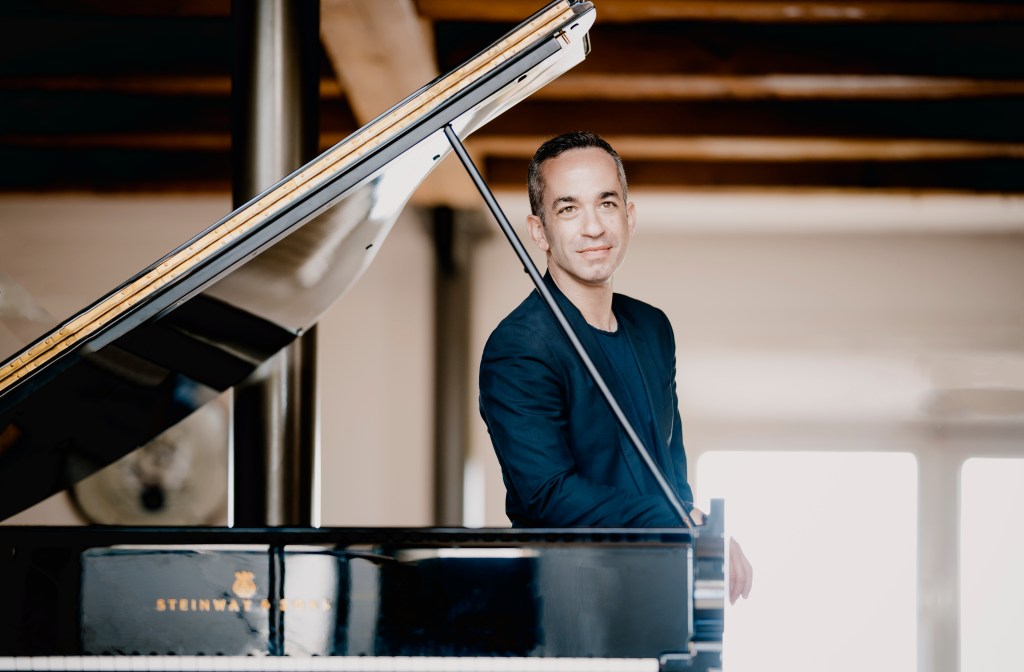
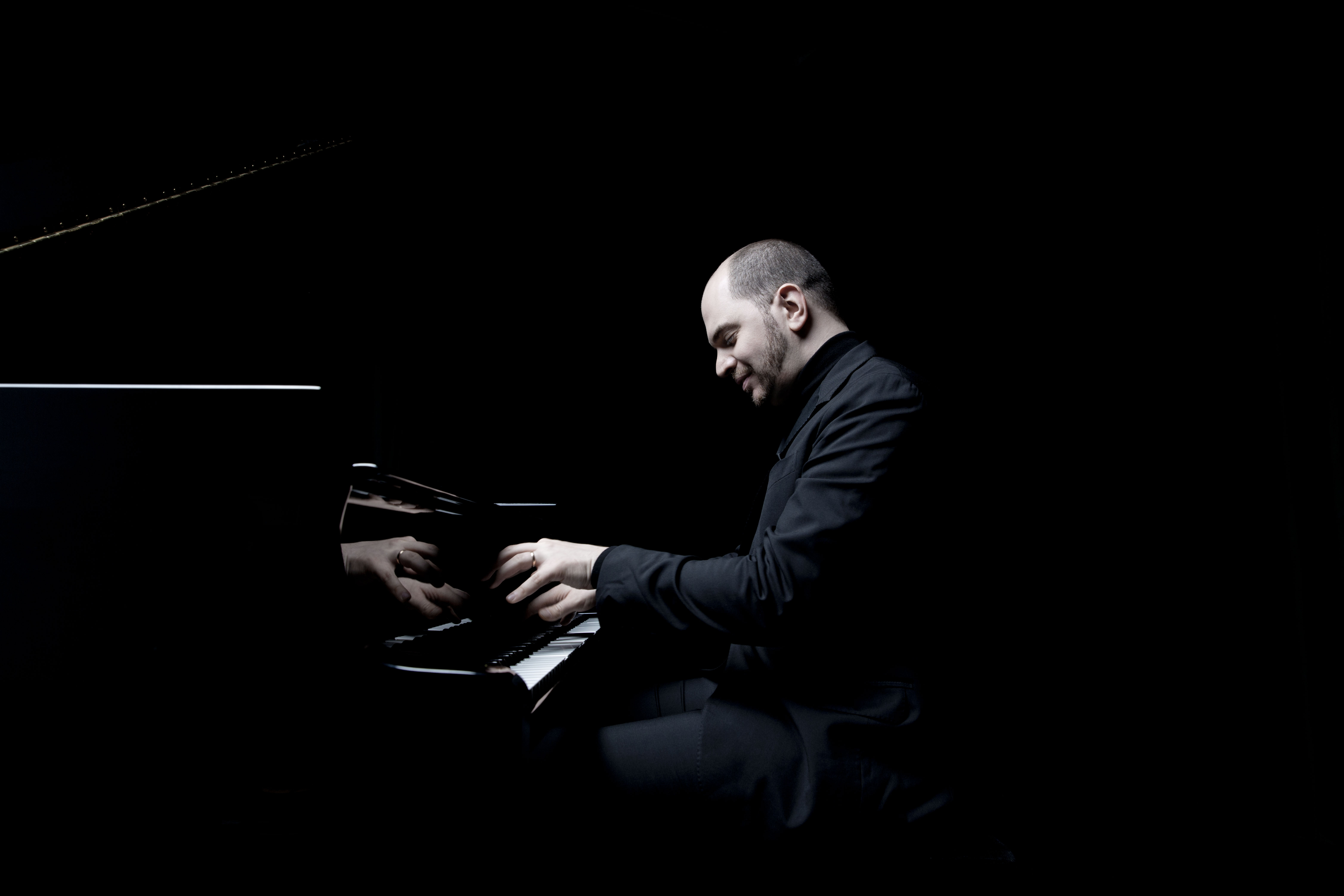
Inon Barnatan, photo credit Marco Borggreve
The closing theme and variations is as long as the first three movements combined. Matters were inaugurated by a stately presentation of the theme in the strings, and with charm and delight, Milanov shaped each of the twelve variations that followed with individual character in this first CSO performance of the work. Variation 4 featured a powerful invocation of the Dies irae, and the fugato of the following was given with exacting clarity. Variation 9 closed with a wonderfully virtuosic violin cadenza from associate concertmaster Leonid Polonsky, leading into the deeply melancholic tenth variation. Not only is the suite as a whole end-weighted, but so are the variations themselves with the final few being the most extensive and expressive. A grandiose polonaise concluded the set in bellicose fashion. Following the performance, Milanov offered gratitude and tribute to violist Mary Farrington, stepping down after a remarkable 42 years.
Rachmaninov’s famously virtuosic Piano Concerto No. 3 brought Israeli pianist Inon Barnatan in the spotlight. Haunting, monastic beginnings were taken at an indulgently slow tempo, but vigor was amassed in due course. The sumptuous orchestral accompaniment complemented Barnatan’s virtuosity well, with the pianist conveying a rich tone, amply projected, though perhaps a bit too mild-mannered for such impassioned repertoire. Barnatan opted for the shorter of the two cadenzas Rachmaninov provided, though it still packed a punch, putting his commanding technique on full display – certainly one of the most thrilling moments in the piano concerto literature. Lush textures crested to passionate outpourings in the central movement, and a seamless transition led directly into the energetic march of the finale, building to a blazingly virtuosic conclusion.
Gartner Auditorium Cleveland Museum of Art Cleveland, OH July 29 – August 1, 2021
Inevitably postponed last summer due to the pandemic, the Cleveland International Piano Competition has made a remarkable comeback here in 2021, a wonderfully exciting return to in-person performances. An initial pool of over 250 applicants from more than 40 countries was pared down to 26 contestants, all of whom performed in the Competition’s first two rounds. Owing to the travel and health restrictions that still persist, these rounds were conducted virtually, filmed at venues across the world – and available for free viewing on YouTube. Eight outstanding semi-finalists were selected to proceed onsite in Cleveland, a cohort to be further narrowed down to four finalists who will perform a chamber music round with the Escher Quartet and a concerto round with The Cleveland Orchestra under the baton of Jahja Ling.
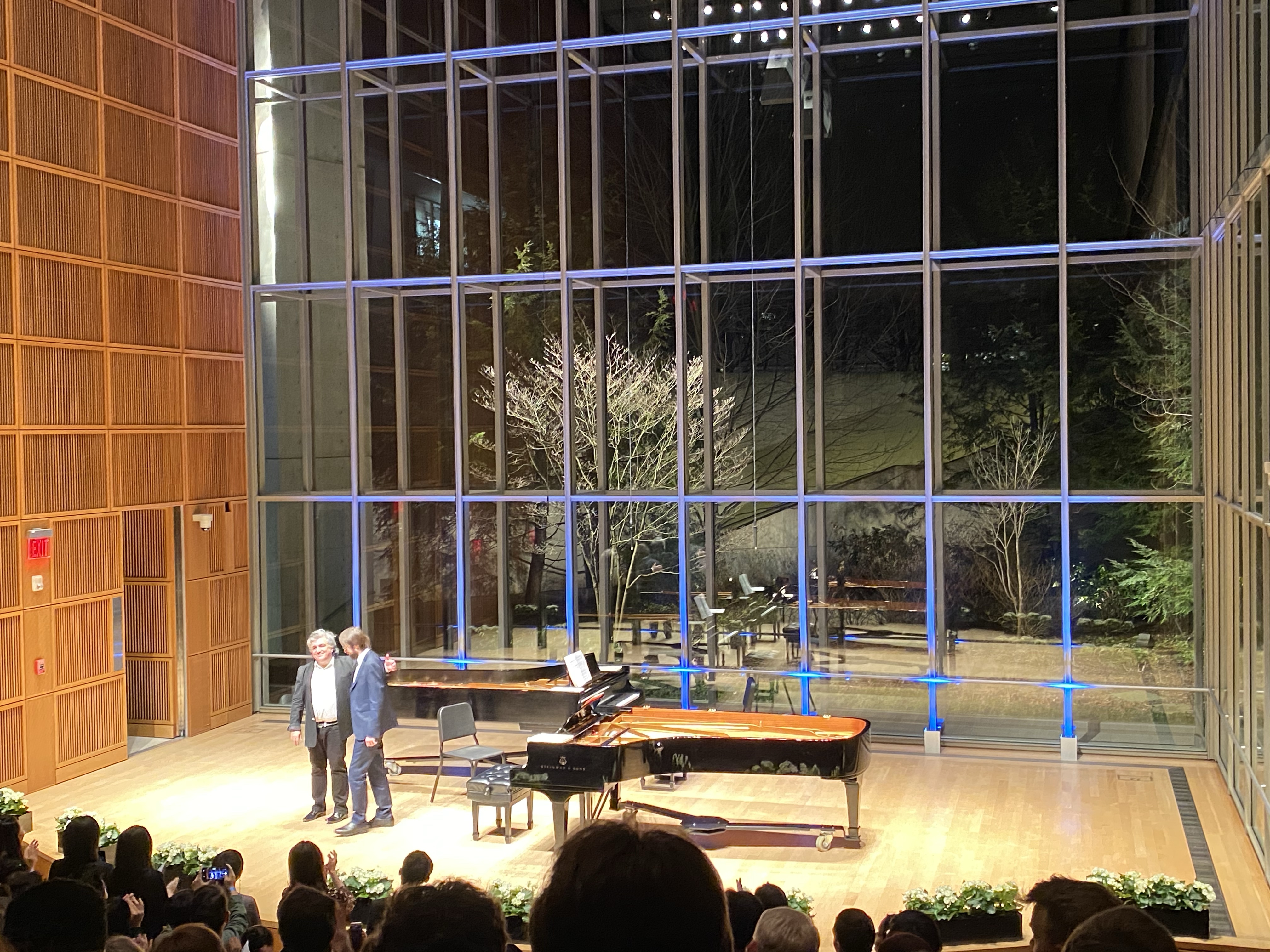
Gartner Auditorium before Session 1 of the Semi-Final Round
Compared to the relative brevity of the first two rounds, the semi-finals offer an even more in-depth portrait of each artist, performing a recital of approximately 40 minutes. A few new and welcome additions for this year’s edition: each semi-finalist included in their program a popular song transcription commissioned from composer Alexey Kurbatov. Four selections were available, namely “America” from Bernstein’s West Side Story, Queen’s “Bohemian Rhapsody”, themes from Mission Impossible, and John Williams’ Olympic Fanfare. Regrettably, none of the eight selected the Williams piece, but perhaps a recording can be posted in due course. I also hope publication of these scores is imminent as they undoubtedly can serve as particularly enjoyable encore pieces.
Also for the first time was the inclusion of piano duets – the two performers from each session teamed up following their solo material for either the Fantasie in F minor by Schubert or Mozart’s Sonata for Two Pianos in D major. A lovely addendum that not only tested the contestants’ ability to collaborate with another pianist, but encouraged a spirit of camaraderie. Finally, excellent program notes for every piece performed – from the first round to the finals – were provided by Marissa Glynias Moore, Anna M. O’Connell, and Marco Ladd. Indispensable reading for attendees and a veritable crash course in piano literature. Below are some brief impressions I had of each semi-finalist.
Session 1 July 29, 2021
Ying Li Mozart: Piano Sonata No. 13 in B-flat Major, K. 333 Grainger: “Ramble on Love” from Der Rosenkavalier Bartók: Piano Sonata, Sz. 80 Schifrin: Themes from Mission Impossible (arr. Kurbatov)
Honggi Kim Schifrin: Themes from Mission Impossible (arr. Kurbatov) Chopin: Twelve Etudes, Op. 25
Schubert: Fantasie in F Minor, D. 940
Ying Li (China) opened the semi-final round with a Mozart sonata, delicate and balanced, exuding the pearly classical style. I found her pacing of the slow movement a bit hard to follow but was quite taken by the sprightly finale. Grainger’s so-called Ramble on Love, paraphrasing themes from Strauss’ Rosenkavalier, gave sumptuous treatment to the source material’s lush and languid melody. Bartók’s Piano Sonata was for me the highlight of her performance, opening with a manic energy – and the live video screens did much to enhance the audience experience, offering close-ups of the intricate hand-crossings.
Honggi Kim (South Korea) opened with the same piece with which Li closed, namely the Kurbatov Mission Impossible transcription. Kim was perhaps a bit more percussive than Li; both displayed how the composer brilliantly interpolated the familiar themes. All contestants are required to present a Chopin etude in the first two rounds – here in the semi-finals, Kim offered all twelve etudes from Op. 25. An ambitious undertaking to be sure, though I found his playing fitfully uneven. No. 2, for instance, would have benefitted from greater clarity, although I did like the way he brought out melodic material in the left hand. In No. 5, one wanted more accentuated contrast between the dissonant sections and the lyrical. The rapid double thirds of No. 6 were quite impressive, however. Op. 25 is certainly an end-weighted set, and perhaps one’s performance should be judged primarily on the final three which concluded on a high note: the rapid octaves of No. 10, a chillingly dramatic “Winter Wind”, and a rather marvelous finish in the intense depths of the “Ocean” etude.
Li and Kim were impressive four-hands partners in the Schubert Fantasie, bringing out contrasts from the brooding to the dancing.
Session 2 July 30, 2021
Jiarui Cheng Scarlatti: Sonata in B Minor, K. 87 Chopin: Barcarolle in F-sharp Major, Op. 60 Rachmaninov: Variations on a Theme of Corelli, Op. 42 Bernstein: “America” from West Side Story (arr. Kurbatov)
Yedam Kim Chopin: Polonaise-Fantaisie in A-flat Major, Op. 61 Prokofiev: Sonata No. 4 in C Minor, Op. 29 Mercury: Bohemian Rhapsody (arr. Kurbatov)
Mozart: Sonata for Two Pianos in D Major, K. 448
Jiarui Cheng (China) selected one of the more introspective of the Scarlatti sonatas, emphasizing its lyrical quality. Continuing the thread, he did much to bring out the wistful melancholy in Chopin’s late gem, the Barcarolle. In Rachmaninov’s Corelli Variations, Cheng sculpted an individual character in each variation – an excellent performance. Kurbatov’s transcription of Bernstein’s “America” ended matters on a jovial note.
Yedam Kim (South Korea) opened with a mesmerizing account of Chopin’s Polonaise-Fantaisie – contemporaneous with the previously-heard Barcarolle – the composer’s crowning achievement in the polonaise form. A commanding performance of Prokofiev’s Fourth Sonata followed, with searching, unsettling material leading to a bright and brilliant finale. In the Queen original, “Bohemian Rhapsody” is something of a mini tone poem with its wealth of thematic material and operatic narrative and dramatic flow – qualities very much brought out in Kim’s performance, perhaps the most impressive of the Kurbatov transcriptions.
Session 3 July 31, 2021
Rafael Skorka Bernstein: “America” from West Side Story (arr. Kurbatov) Leighton: Fantasia Contrappuntistica, Op. 24 (“Homage to Bach”) (1956) Brahms: Sieben Fantasien, Op. 116
Martín García García Schubert: Wanderer-Fantasie in C Major, D. 760 Liszt: “Les cloches de Genève (Nocturne)” from Années de Pèlerinage I, S. 160 Liszt: Étude de Concert, S. 145, No. 2 (“Gnomenreigen”) Liszt: Transcendental Etude, S. 139, No. 10 Mercury: Bohemian Rhapsody (arr. Kurbatov)
Schubert: Fantasie in F Minor, D. 940
Rafael Skorka (Israel) had confident beginnings with a memorable account of Bernstein’s “America”. The most intriguing discovery during the semi-final round came in the shape of Kenneth Leighton’s Fantasia Contrappuntistica, a 1956 homage to Bach (and to Busoni, given the elder composer’s monumental work of the same title). A virtuosic opening gave way to a pensive chorale and a pair of fugues rounded off the work. Skorka deftly negotiated the contrapuntal intricacies to bring matters to a vigorous close. The pianist continued to make a strong showing in Brahms’ Fantasies, Op. 116, just as convincing in the lyrical selections (nos. 2, 4, and the touching chorale of no. 6) as the more extrovert ones, giving the first piece an energetic workout and reserving the most overt virtuosity for the seventh and final fantasy.
Martín García García (Spain) offered an arresting account of Schubert’s ingenious Wanderer-Fantasie. While his tone at times veered a bit too percussive for my taste, he did much to bring out a wide dynamic and dramatic contrast and a keen sense of the work’s large-scale architecture. An interesting selection of three Liszt pieces followed. Deft use of the pedal did much to bring out the sonorities of the titular bells in Les cloches de Genève while García conveyed much charm in the impish legerdemain of Gnomenreigen. The Transcendental Etude No. 10 was technically impressive, although I found myself longing for even more firepower.
Session 4 August 1, 2021
Byeol Kim C. Schumann: Notturno in F Major, Op. 6, No. 2 Schumann: Arabeske in C Major, Op. 18 Mendelssohn: Fantasie in F-sharp Minor, Op. 28 Mercury: Bohemian Rhapsody (arr. Kurbatov) Jalbert: Toccata (2001) Gottschalk: The Union, Op. 48
Lovre Marušić Scarlatti: Sonata in E Major, K. 380 Schumann: Kreisleriana, Op. 16 Mercury: Bohemian Rhapsody (arr. Kurbatov)
Mozart: Sonata for Two Pianos in D Major, K. 448
Byeol Kim (South Korea) assembled the most diverse and wide-ranging semi-final program, beginning with music from both the Schumanns. Clara’s Notturno boasted a haunting, Chopinesque melody, a performance which should put Kim in the running for the Female Composer Prize, one of over a dozen special prizes being offered. A limpid account of Robert’s Arabeske followed, and Mendelssohn’s Fantasie in F sharp minor was given a passionate and dramatic performance. I really enjoyed the way Kim brought out the sweeping lyrical main theme in her take on the “Bohemian Rhapsody” transcription. Jalbert’s Toccata was a breathless study in perpetual motion, and Gottschalk’s Union, a wonderfully inventive cornucopia of Americana, put Kim’s searing virtuosity and vast dynamic range on full display. A clear audience favorite, she was the only one of the eight to receive a standing ovation.
Lovre Marušić (Croatia) began with a stately account of Scarlatti’s K380 sonata. Schumann’s extensive Kreisleriana followed. I felt Marušić’s reading would have been even more engaging with sharper contrasts between the wide range of expressions the work explores, but I certainly sensed the pianist becoming increasingly self-assured as the work progressed. Sunday’s session was a high note on which to conclude the semi-finals as we await the jury’s announcement of the four finalists, and the fine level of pianism we can expect from them in the subsequent chamber and concerto rounds.
Sergei Babayan, piano
Daniil Trifonov, piano
Mixon Hall
Cleveland Institute of Music
Cleveland, OH
February 19, 2020
Schumann: Andante and Variations for Two Pianos, Op. 46
Pärt: Pari intervallo
Mozart: Sonata for Two Pianos in D Major, K448
Rachmaninov: Suite No. 1 for Two Pianos, Op. 5, Fantasie-Tableaux
Rachmaninov: Suite No. 2 for Two Pianos, Op. 17
Encore:
Prokofiev, transc. Babayan: Idée fixe from The Queen of Spades, Op. 70
To inaugurate the celebrations surrounding the Cleveland Institute of Music’s landmark centennial year, two of the most distinguished pianists associated with the institution teamed up for a duo recital on Wednesday night. Sergei Babayan has held the title of CIM’s Artist-in-Residence since 1992, shortly after taking first prize in the Cleveland International Piano Competition, and at the second piano was his former student Daniil Trifonov. Trifonov’s meteoric rise is surely indebted in part to CIM where he earned an artist certificate in 2013, with an artist diploma following in 2015. Both pianists generously donated their time for the evening, and this benefit concert raised over $100,000 for the student scholarship fund. In his opening remarks, CIM’s president and CEO Paul Hogle further underscored the Institute’s role in the dynamic classical music scene of northeast Ohio, epitomized by over half of The Cleveland Orchestra being connected to CIM as alumni or faculty – if not both.
Sergei Babayan and Daniil Trifonov at Mixon Hall
Two pianos on the stage of intimate Mixon Hall made a bold impression, and while both instruments were oriented in opposite directions, their keyboards were aligned to enhance the natural communication between this teacher-student duo. Schumann’s Andante and Variations began the program. An intensely lyrical presentation of the theme opened, burgeoning into quintessentially Schumannesque music of Romantic fantasy and imagination. A militant march variation made for a powerful climax, with matters eventually giving way to a lovely, ruminative conclusion. Arvo Pärt’s Pari intervallo was quite far removed from any other selection performed, but certainly a highlight in spite of its brevity. Evaporated to the essential, its monastic austerity was enchantingly pensive and otherworldly in its repeated bell-like invocations, with the pianists sustaining a meditative state of unblinking concentration.
Mozart’s effervescent Sonata for Two Pianos in D major closed the first half, recalling Babayan’s memorable recital with Martha Argerich two seasons ago. Vigorous energy opened this pearl of the two piano literature, with seamless, crystalline playing evidencing the innate understanding amongst the duo. Rapid passages were crisply in sync, a must in the unforgiving transparency of this repertoire. A singing quality, almost akin to an operatic aria, was given to the central Andante, heightened by its delicate ornaments. The music became rather more unbuttoned in the finale, interspersed with varied material but inexorably gravitating back towards the joyous main theme, of dancing lightness and sparkling articulations.
The latter half was devoted to both of Rachmaninov’s hyper-Romantic Suites for Two Pianos. The “Barcarolle” of the First flowed with liquescent ease, and the pianists cleanly negotiated the detailed filigree. “La nuit… L’amour…” proceeded as a love song of often hypnotic beauty, and the following “Les larmes” was marked by its melancholy cantilena. While both pianists have a reputation for their leonine power, here we saw them turn inwards in music of quiet intimacy: perhaps the description of Rachmaninov possessing “fingers of steel and a heart of gold” applies to them as well. It was the former persuasion, however, that had the last word in the “Pâques” finale. Babayan introduced the theme at a moderate, measured pace, before matters erupted into a modal frenzy to close the suite with formidable weight and power.
A commanding, kinetic opening to the Second Suite showed in no uncertain terms that neither pianist was waning in energy as we neared the end of the program, cutting through the thickness of the dense chordal textures with ease. Here, for the first time, Trifonov assumed the primo role. The “Valse” was handled with rapid legerdemain, varied by an entrancing waltz theme, and the “Romance” offered a wonderfully lyrical interlude. An inevitable tour de force was to be had in the “Tarantelle”: a powerhouse conclusion punctuated by the relentless rhythms of the titular dance. As an encore, the pianists turned to one of Babayan’s own remarkable Prokofiev transcriptions (which can be heard on his emphatically recommended recording with Argerich), namely, the “Idée fixe” from The Queen of Spades, closing the festive evening in pile-driving intensity.
Cleveland Orchestra
Lorenzo Viotti, conductor
Yuja Wang, piano
Severance Hall
Cleveland, OH
November 29, 2019
Prokofiev: Suite from The Love for Three Oranges, Op. 33bis
Rachmaninov: Piano Concerto No. 4 in G minor, Op. 40
Encore:
Gluck-Sgambati: “Dance of the Blessed Spirits” from Orfeo ed Euridice
Poulenc: Sinfonietta, FP 141
Ravel: La valse
Over the Thanksgiving weekend, The Cleveland Orchestra dependably serves a musical feast, and this year was hardly an exception. Friday (coincidentally, the 150th birthday of the orchestra’s founder, Adella Prentiss Hughes) marked the local debut of 29-year-old conductor Lorenzo Viotti. Currently principal conductor of Portugal’s Gulbenkian Orchestra, and dubbed to assume the same role with the Netherlands Philharmonic Orchestra next season, Viotti is a conductor who Cleveland music director Franz Welser-Möst singled out as being especially promising during an interview previewing the current season. Viotti’s colorfully appealing program was bifurcated by nationality with a Russian first half preceding a French second.
Lorenzo Viotti, photo credit Desiré van den Berg
Prokofiev’s six-movement suite from The Love for Three Oranges opened with the composer’s characteristically vigorous orchestrations, bringing to life the opera’s colorful cast of characters with gentler, dancing winds contrasting. The following “Infernal Scene” was darkly surreal in its unusual timbres, while the “Marche” – the opera’s most indelible quantity – was given a crisply rhythmic and foot-tapping workout. “The Prince and the Princess” made for a lyrical interlude, the deeply touching language anticipating Romeo and Juliet. Viotti roused the requisite virtuosity for the roiling “Flight” that closed.
As central to repertoire as Rachmaninov’s works for piano and orchestra are, the Fourth Concerto has been relegated to periphery, not having been performed by this orchestra since 1996. An arsenal of energy opened, quickly paving the way for the full-bodied entry of the incomparable Yuja Wang. The fiendishly difficult piano writing was easily surmounted by her fleet fingerwork, and about two thirds of the way through the movement, matters burgeoned to a climax as grand and lush as anything Rachmaninov wrote. The solo introduction of the Largo was of deep melancholy, revealing Wang’s lyrical gifts, and in due course aided by burnished strings.
Textures grew impassioned and stormier, leading to the jarring transition to the closing Allegro vivace. Wang’s sleight-of-hand pianism negotiated the jazz-inflected rhythmic complexities, and chains of double octaves were effortlessly delivered with fire and panache. The orchestra supported Wang with a colorful accompaniment – Jeffrey Rathbun’s oboe a standout – culminating in a muscular conclusion. While ultimately perhaps not as memorable as the composer’s other works in the medium, it certainly merits hearings at more regular intervals! Although not indulging the Severance Hall audience in one of her encore marathons, Wang nonetheless responded to the hearty ovation with the wistful lyricism of a transcription from Gluck’s Orfeo ed Euridice.
The Cleveland Orchestra gave the US premiere of Poulenc’s Sinfonietta under George Szell in 1949, but remarkably hasn’t touched it since. Kudos then to Viotti for resurrecting this vintage gem, which despite its obscurity, local audiences had the chance to hear as recently as this past March on a CityMusic program. The opening movement brimmed with melodies of immediate appeal, piquant and bright, a sort of synthesis of 20th-century sensibilities within a classical economy, invoking comparison to Prokofiev’s Classical symphony. The inner movements were respectively joyfully light-hearted and sweetly songful, the latter with noteworthy solo passages from the trumpet and clarinet. Perhaps an expression of post-war bliss, the finale was utterly untroubled, and delectably so.
Continuing with French appropriations Germanic forms, matters turned to waltz in Ravel’s iconic La valse. Originally conceived for solo piano (heard just the previous weekend in Soyeon Kate Lee’s recital at the Cleveland Museum of Art), the orchestral version shows in no uncertain terms the composer’s stunning mastery of instrumentation. Beginning with barely audible rumbles, a sultry waltz theme took shape, with sumptuous harps adding to the dizzyingly rich tapestry: a glitteringly cataclysmic dissolution of the once venerable waltz.
Cleveland Orchestra
Matthias Pintscher, conductor
Kirill Gerstein, piano
Severance Hall
Cleveland, OH
November 1, 2018
Rachmaninov: Piano Concerto No. 3 in D minor, Op. 30
Encore:
Chopin: Waltz in A flat major, Op. 42
Bartók: The Wooden Prince, Op. 13, Sz. 60
A return appearance from former Daniel R. Lewis Young Composer Fellow Matthias Pintscher is always a welcome sight at Severance Hall. Pintscher’s program was comprised of two large-scale works, both from Eastern Europe, and both from the first decades of the 20th-century. Rachmaninov’s enduring Third Piano Concerto made for a meaty first half with Gilmore Artist Award winner Kirill Gerstein at the keyboard. The opening melody was haunting in its monastic simplicity, and never sentimentalized. Gerstein took matters at a fairly brisk tempo – at times feeling a bit rushed, but he always maintained a certain elegance. His commanding tone and massive dynamic range made the lasting impact, however – an unflagging intensity which paid its dividends especially in the cadenza. Gerstein elected for the larger of the two the composer supplied; beginning with a rumbling in the bass it built to immense power. The cadenza quite ingeniously also served as the movement’s recapitulation; without much left to say after that monstrosity the movement ended quietly, almost impressionistically.
Mathias Pintscher and The Cleveland Orchestra, photo credit Roger Mastroianni, Courtesy of The Cleveland Orchestra
A doleful lament marked the slow movement, encouraged by the choir of winds and long-bowed strings. Gerstein’s line was initially distressed but soon gave way to display his lyrical gift, and a multitude of moods were traversed, in turns scherzo-like, impassioned, and the sudden yet seamless transition to the finale. A vigorous march, bright and brilliant, offered no respite for Gerstein’s prodigious stamina and technical arsenal, up to and including the triumphant major-key ending in cascading glory. An encore was nearly demanded; Gerstein obliged with a Chopin waltz of effortless elegance.
Bartók’s The Wooden Prince, in only its third Cleveland Orchestra performance, was a foray into much less familiar territory. A one-act ballet spanning the continuum of nearly an hour, it is scored for an astonishingly large orchestra (some highlights: quadruple woodwinds – including two contrabassoons and two saxophones – an extensive percussion section, and four-hands celesta). The work began with a mysterious sounding drone (perhaps echoing Wagner’s Das Rheingold), firmly in a late-Romantic idiom. In many ways, this is a work in the tradition of Stravinsky’s groundbreaking scores for the Ballets Russes, with the intensity of some passages rivaling even that of the Rite.
The story of The Wooden Prince is a bit convoluted, but certain instruments representing specific characters served as a loose roadmap. The sweetly playful tone Afendi Yusuf’s clarinet deftly brought the princess’s coquettishness to life, and a folk melody in the low strings that would later resurface was quite striking. The dance between the princess and titular wooden prince (much to the chagrin of the real prince) was given with a relentless drive and folksy authenticity, with clever scoring emphasizing the prince’s wooden composition – castanets, xylophone, and col legno strings. Robert Walters’ fine English horn solo brought forth an apotheosis, buttressed by heavenly high strings (to my ears, another nod to Wagner, namely the prelude to Lohengrin). A happily-ever-after ending was achieved, marked by peaceful resolution and a sparkling celesta. Like the Rachmaninov that preceded, this was a supreme test of stamina and energy which Pintscher and the orchestra surmounted admirably. By happy coincidence (or smart programming), those interested in Pintscher’s other persona as a composer will have a chance to hear one of his works next week.
Cleveland Orchestra
Stéphane Denève, conductor
Jory Vinikour, harpsichord
Severance Hall
Cleveland, OH
March 25, 2018
Poulenc: Concert champêtre, FP 49
Encore:
Scarlatti: Keyboard Sonata in D major, Kk. 96
Rachmaninov: Symphony No. 2 in E minor, Op. 27
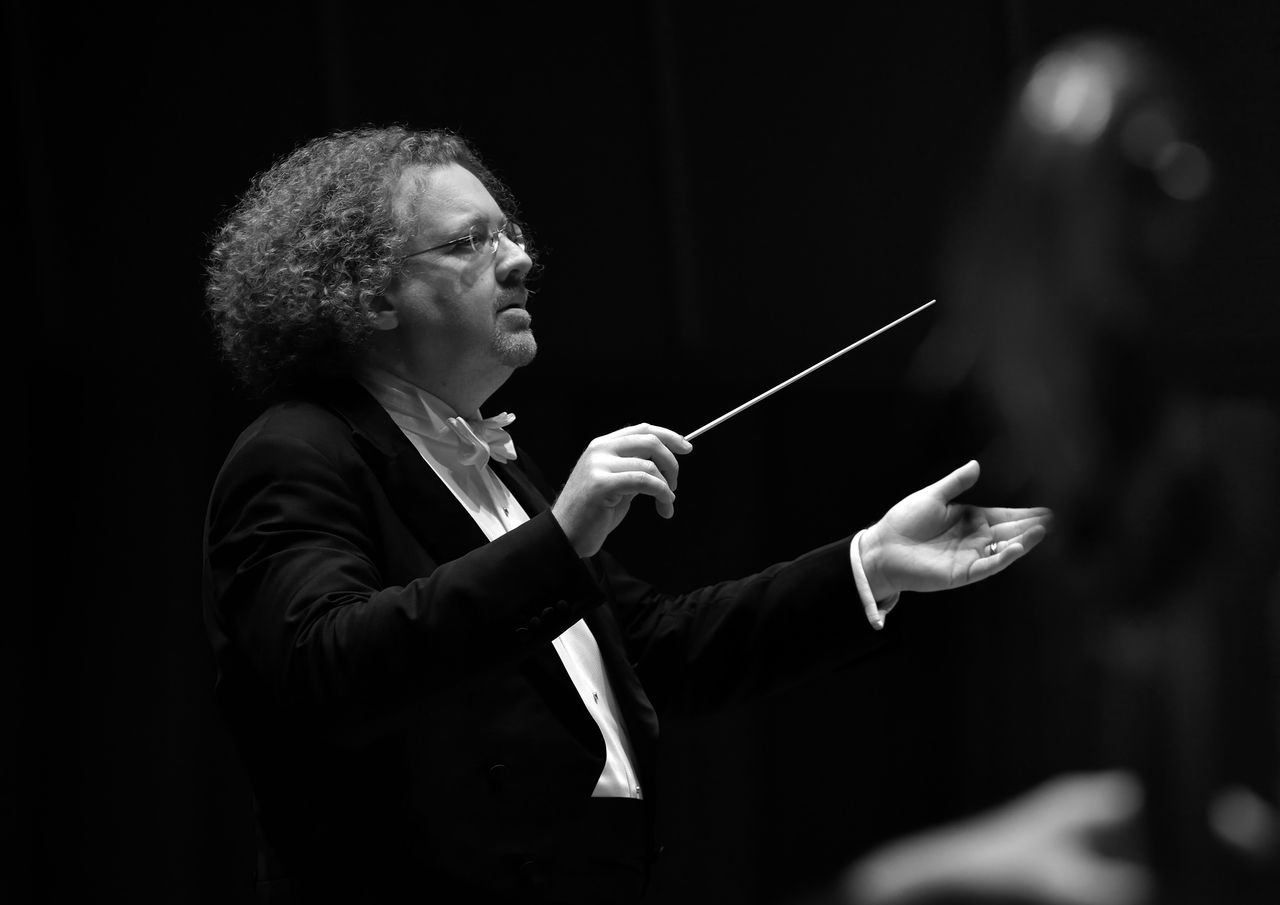
Stéphane Denève, poised to succeed David Robertson as music director of the St. Louis Symphony, is a conductor with a magnificent ear for orchestral color. This paid its dividends during his lustrous Cleveland Orchestra program, comprised of a pair of works which could hardly have been more disparate despite being composed only two decades apart: Poulenc’s rarely heard Concert champêtre, and Rachmaninov’s evergreen Second Symphony.
Stéphane Denève, photo credit Nobuo Mikawa
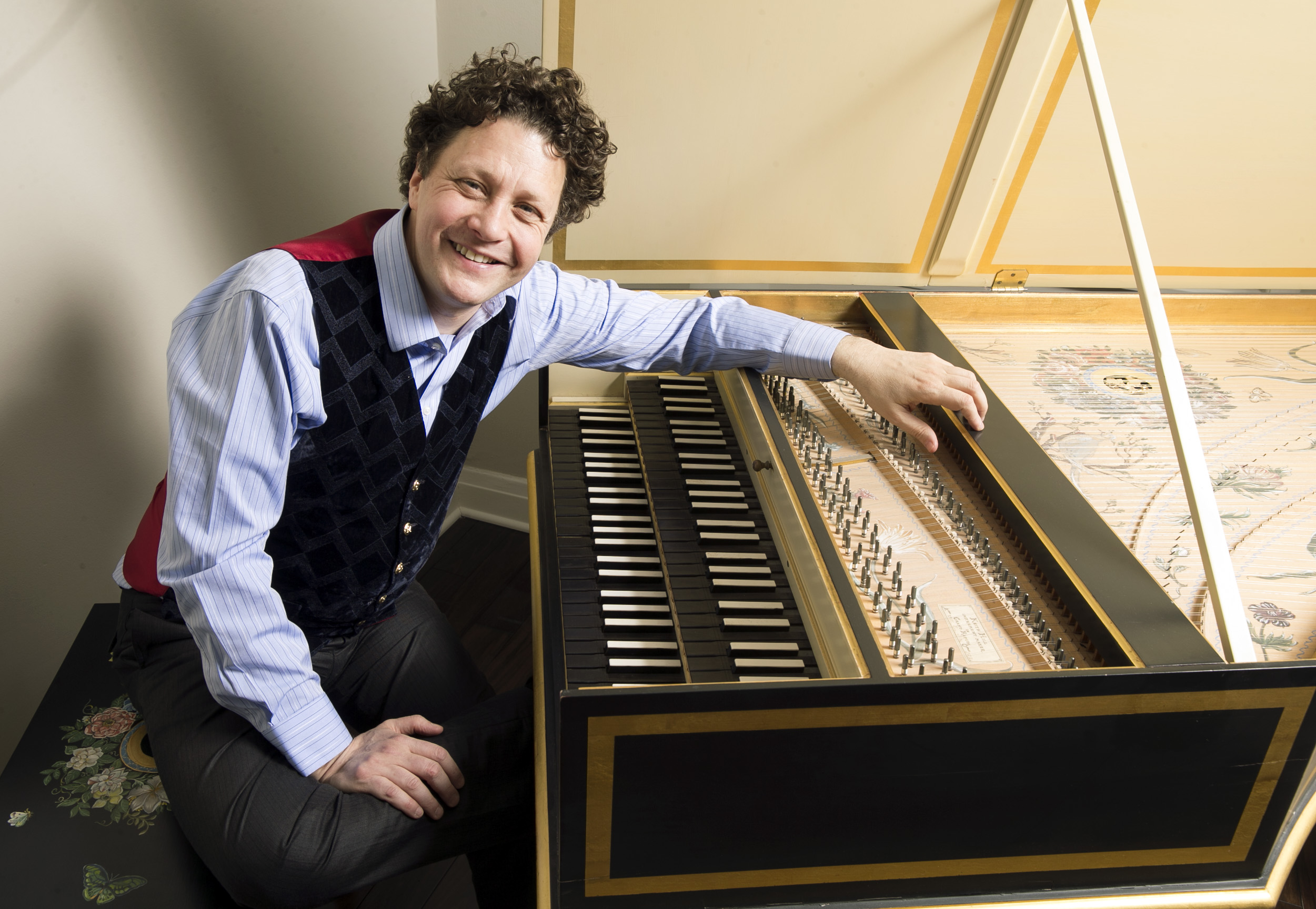
The Concert champêtre is an odd yet enjoyable concoction, with last weekend’s performances counting as The Cleveland Orchestra’s first traversal of the work. It’s at its core something of an anachronism with the full resources of the modern orchestra supporting a harpsichord soloist, the latter serving as a platform for the Cleveland Orchestra debut of Jory Vinikour. Given the harpsichord’s limited projection, some amplification was necessary, although matters were still occasionally muted, especially when pitted against the sheen of the very fine brass section. Poulenc wrote the work in the late 1920s for Wanda Landowska, perhaps the first modern-day advocate of the harpsichord. It opened with piquant sonorities, bright and sweetly dissonant, and very much of a Stravinskyian neoclassicism. More playful material ensued, which Vinikour gave with high spirits and abandon.
A melancholic sicilienne served as the central slow movement, with the harpsichord most often relegated to an arpeggiated accompaniment, save for a striking passage of rumbling trills in its bass register. The finale opened with a passage for the soloist, the concerto’s most patent Baroque pastiche, sounding as if it was a page out of Scarlatti. A nostalgic evocation of the opening movement was later heard, and in spite of the work’s outward brilliance, it took a much darker turn at the very end. For his encore, Vinikour appropriately selected a Scarlatti sonata (Kk. 96 in D major) – a virtuosic affair, replete with the requisite hand-crossings.
Jory Vinikour, photo credit Nuccio di Nuzzo
There’s little to say in Rachmaninov’s Second Symphony that hasn’t already been said many times, yet Denève’s reading more than justified a further hearing. Somber cellos initiated the work, soon to be answered by the reassuring warmth of the horns and a lush melody in the violins. The texture built to heart-wrenching swells with conductor and orchestra seemingly in no hurry, savoring the moment while nonetheless skirting indulgence. Powerhouse climaxes were scaled in the development, an extensive exercise in large-scale architecture, with Denève (fortunately) electing for the uncut text.
The Allegro molto was marked by a mercurial vigor and blazing kinetic energy, in due course overturned by an intensely lyrical theme (which, incidentally, I can no longer dissociate from the film Birdman). I’ve long been looking forward to the opportunity to hear newly-appointed principal clarinet Afendi Yusuf tackle the extended solo in the heavenly Adagio, and to say he didn’t disappoint would be a colossal understatement. The orchestra was in fine form in the movement’s outpourings of sumptuous beauty with the high-reaching solos of concertmaster Peter Otto also of note, and the swashbuckling finale brought the work to an enormously satisfying close.



 quasi-faust