Gluzman and Roman terrific soloists with ProMusica

ProMusica Chamber Orchestra
David Danzmayr, conductor
Vadim Gluzman, violin
Joshua Roman, cello
Southern Theatre
Columbus, OH
April 2, 2022

Golijov: Last Round
Mendelssohn: Violin Concerto in E Minor, Op. 64
 Encore:
 Silvestrov: Serenade
Roman: Confluence
Haydn: Symphony No. 94 in G major, Hob. I:94, Surprise

April’s ProMusica program began in the always intriguing world of contemporary Argentine composer Osvaldo Golijov, namely with the 1996 string orchestra work Last Round. It was a lively, high-octane opener, marked by rhythmic drive and astringent harmonies. The more languid, tango-inflected latter section contrasted in its impassioned lyricism.
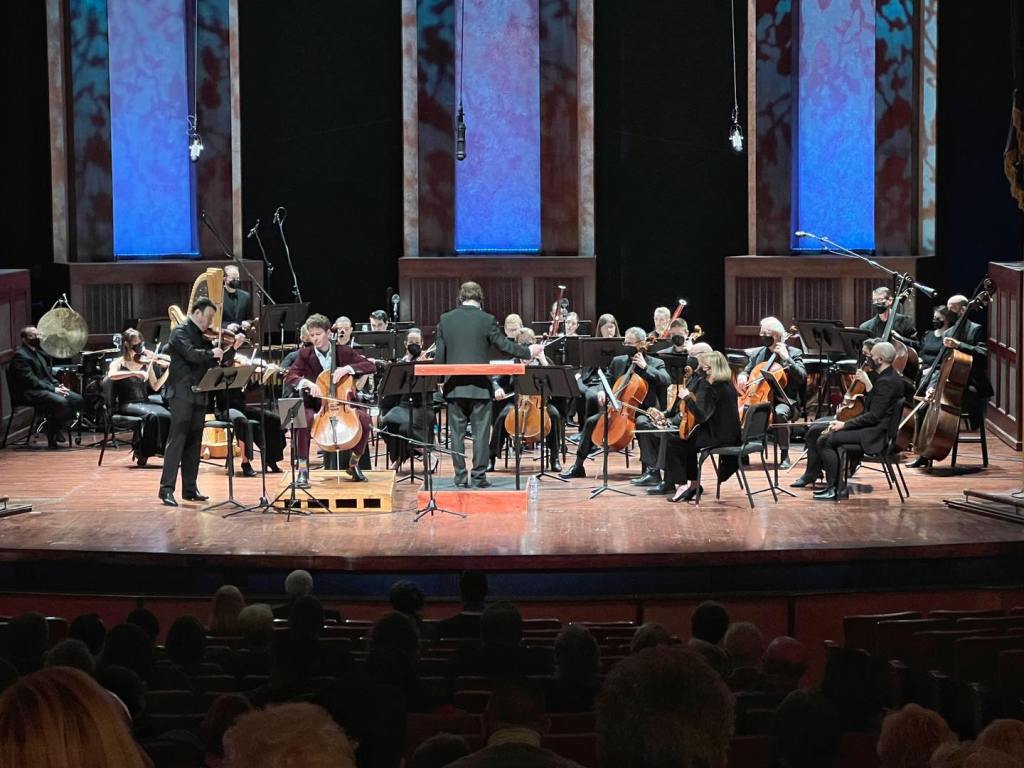
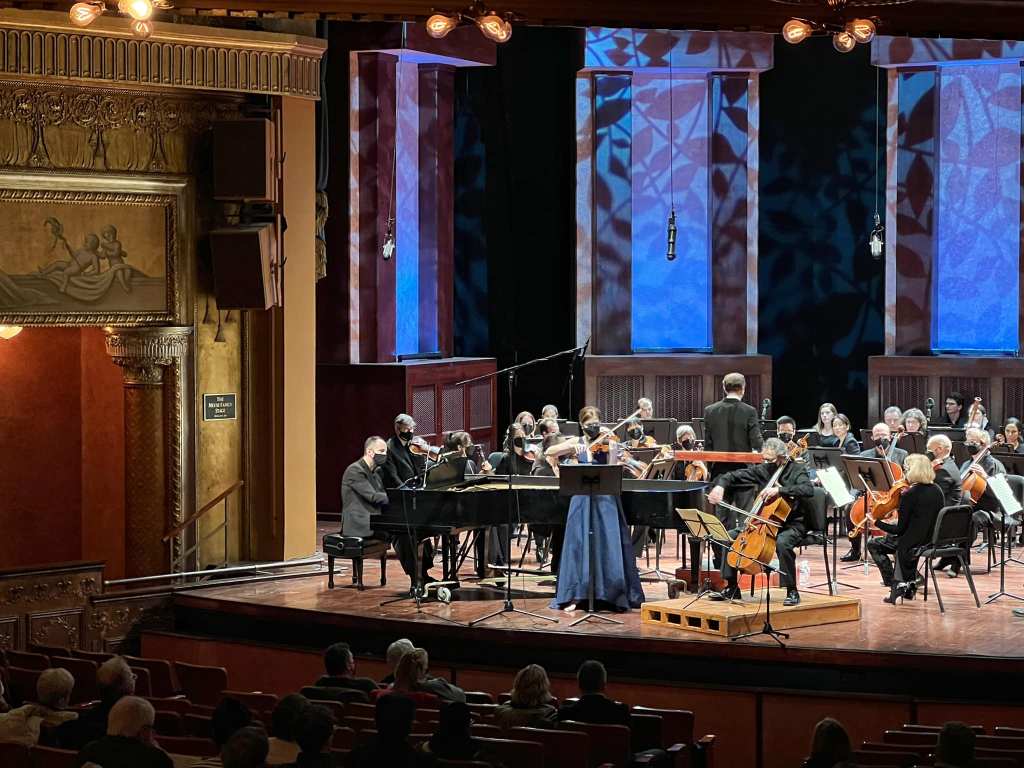
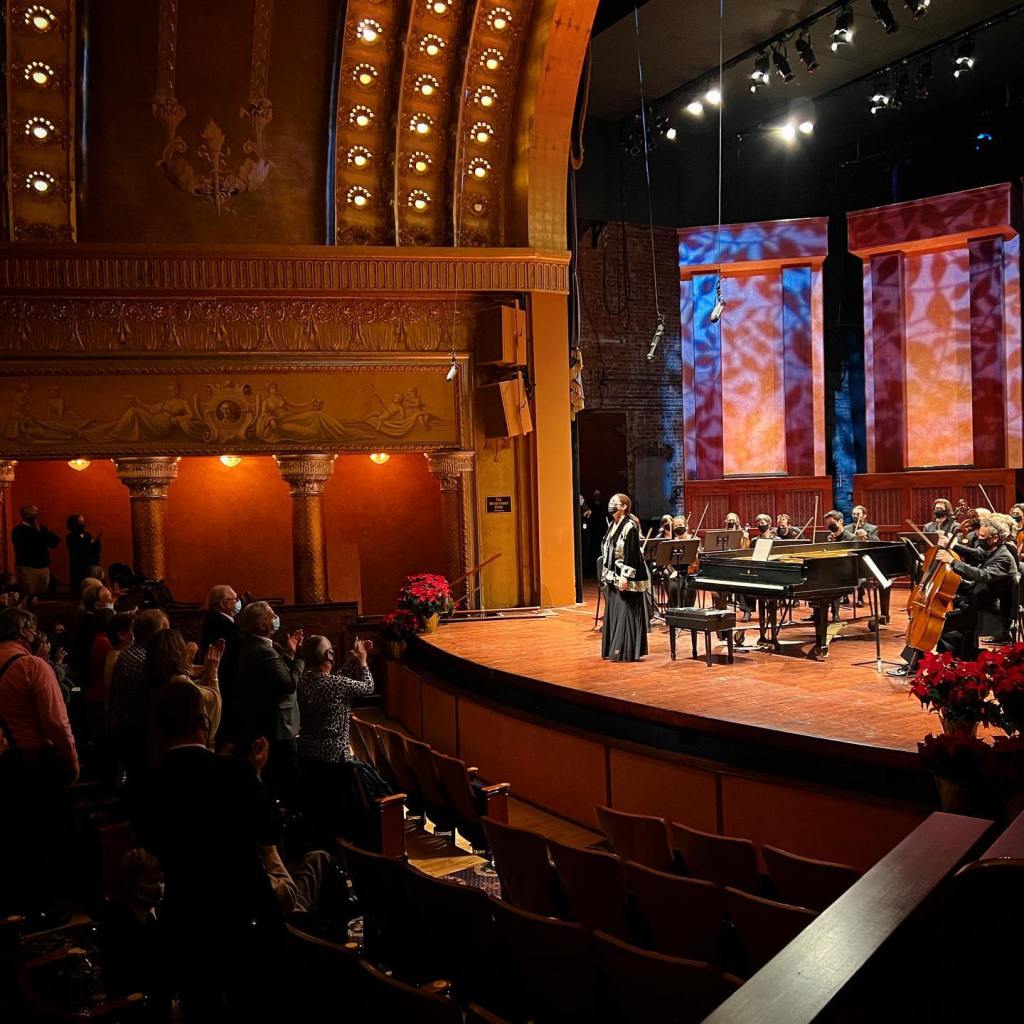
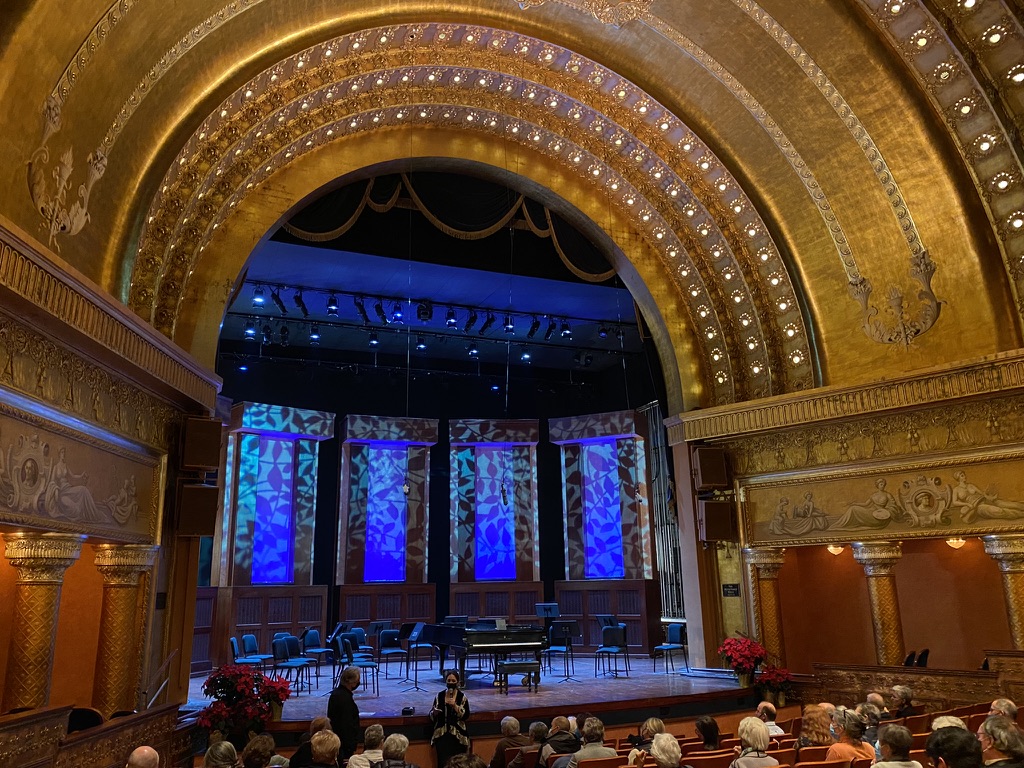
Vadim Gluzman, Joshua Roman, David Danzmayr, and ProMusica Chamber Orchestra, photo credit ProMusica

Mendelssohn’s evergreen Violin Concerto followed with ProMusica’s Creative Partner and Principal Guest Artist Vadim Gluzman as soloist. The haunting opening melody was clear-toned as it seared and soared, and Gluzman projected well atop the vigorous and supportive orchestral accompaniment. The cadenza displayed his virtuosity and control over whole range of the violin’s register, with the work clearly ingrained deep in his fingers. The Andante proceeded as a gentle song without words, and the finale was fleet and featherlight. As an encore, Gluzman turned towards music of his Ukrainian home country in Valentin Silvestorv’s deeply poignant Serenade. In contending with a heartbreaking global situation, Gluzman reminded us of the importance of art, referencing the Soviet quote “when the cannons are heard, the muses are silent. When the cannons are silent, the muses are heard.”

The latter half saw saw the latest entry in ProMusica’s enterprising Composer/Performer Project, an endeavor which features musicians distinguished in both disciplines – and has resulted in now 68 commissions. Joshua Roman’s Confluence was at last brought to life almost exactly two years to the day of the originally scheduled premiere, owing to covid cancellations. Roman was appointed principal cellist of the Seattle Symphony at age 22 – the youngest principal player in that ensemble’s history – but left after just a few years to pursue a solo career, and this marked the fourth work of his featured on a ProMusica program.

Confluence is a fifteen-minute work that hearkens back to the double concerto, featuring both cello and violin as soloists. A pulsating marimba made for a striking opening, and Gluzman’s rapid violin blended well with Roman’s lyrical cello. Roman did much to capitalize on his instrument’s resonant bass register, and true to the title, the work was marked by a confluence of harmonious, lyrical voices. A glass harp (wine glasses) added to the colorful soundscape, and a tender ending felt at peace with the world – in a way, at odds with the uncertain backdrop in which the piece was written.

The program closed with Haydn’s Surprise symphony, and Austrian conductor David Danzmayr showed a natural affinity for music of his compatriot. An effervescent joie de vivre made matters all the more delightful, and the musicians were clearly having fun in emphasizing the dynamic contrasts of the Andante which earned this symphony its moniker.
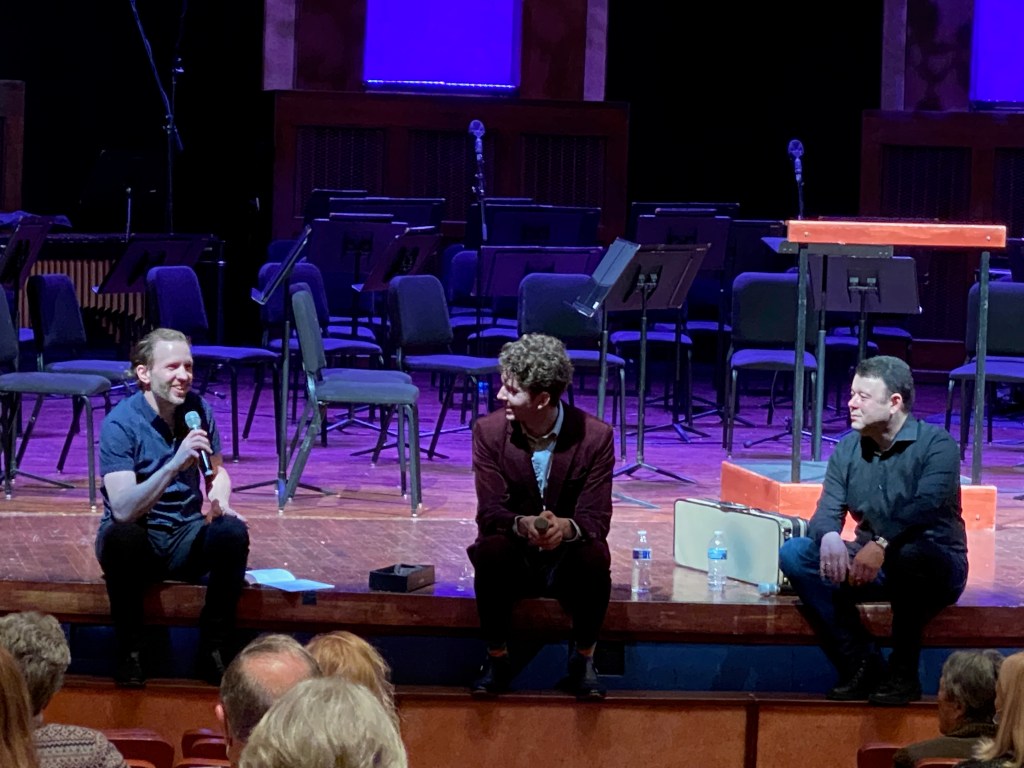
Post-concert Q&A with David Danzmayr, Joshua Roman, and Vadim Gluzman

ProMusica brings lush Vaughan Williams and vibrant Piazzolla to St Mary

ProMusica Chamber Orchestra
David Danzmayr, conductor
Katherine McLin, violin
St. Mary Catholic Church
Columbus, OH
March 20, 2022

Vaughan Williams: Fantasia on a Theme by Thomas Tallis
Piazzolla: The Four Seasons of Buenos Aires (arr. Desyatnikov)

Encore:
Piazzolla: Adios Nonino

Nestled in the heart of German Village, Saint Mary Catholic Church – a structure that dates back to 1868 – recently underwent an extensive restoration, and proved to be a gorgeous setting for last weekend’s ProMusica performance. The program opened with Vaughan Williams’ Fantasia on a Theme by Thomas Tallis, and the plaintive theme reflected the solemnity of the setting in this glance backwards in English musical history. Though the heavy reverb in a church can create acoustical challenges, here the resonance seemed to further enhance the richness of the strings – and indeed, the work’s 1910 premiere occurred at Gloucester Cathedral. The work is scored for double string orchestra with string quartet, and one was struck by the clarity of the interplay between the various subsets of the ensemble.

ProMusica at St Mary, photo credit ProMusica

The remainder of the evening was devoted to Piazzolla, continuing the celebration of his centenary begun at last month’s chamber music concert. The Four Seasons of Buenos Aires, rendered in Spanish as Estaciones porteñasporteño being the demonym for one from a port city, though it chiefly refers specifically to the Argentine capital – paints a colorful, vibrant portrait of the composer’s homeland. The work was presented in its arrangement by Leonid Desyatnikov, recast so as to highlight connections with its Vivaldian predecessor, including some direct quotations from Vivaldi, and scoring for string orchestra with violin soloist, a role undertaken with aplomb and verve by concertmaster Katherine McLin.

A sultry energy began the opening Otoño porteño, and a series of glissandos showed the composer to be a master of effect. A languid lyricism offered some pointed contrast. Invierno porteño was noted for its substantial passage for cello (Marc Moskovitz), thorny at first but melting into the songful. Given the concert’s coincidence with the vernal equinox, Primavera porteña was certainly the most topical – and perhaps the most ardently lyrical of the set, though not without some sprightly violin acrobatics. Verano porteño made for a vigorous finale with some particularly striking timbres achieved through sul ponticello playing from the soloist. Danzmayr and the orchestra offered a further Piazzolla work as an encore, Adios Nonino. Touchingly lyrical and with rich chromatic harmonies, it burgeoned into a big-boned, almost Hollywood-esque sumptuousness. The performance was billed as “a delightful evening” – a promise amply delivered upon.

ProMusica musicians delight in folk-inspired chamber works

Victoria Moreira, violin
Joel Becktell, cello
Renee Keller, marimba & percussion
The Fives
Columbus, OH
February 18, 2022

Piazzolla: Fugata
Piazzolla: Mumuki
Barilari: The Mysteries
Kodály: Duo for Violin and Cello, Op. 7
Diz: Poema Bachiano
Granados: Danzas españolas, Op. 37 – No. 2 “Orientale”
Bartók/arr. Kraeuter – Selected Hungarian Folk Melodies
Piazzolla: Milonga del Angel
Piazzolla: Lo que vendrá

Friday evening saw the first of a series of three chamber music performances featuring various combinations of players from ProMuscia. The venue of choice was The Fives, ProMusica’s home last season wherein they found a way to perform even in the midst of the pandemic. Friday brought forth Victoria Moreira, Joel Becktell, and Renee Keller in music for violin, cello, and marimba – an intriguing if unusual combination. There’s a paucity of repertoire for these forces as one might expect; most of the selections were thus presented in arrangements or adaptations to fit the ensemble at hand. The program was refreshingly offbeat, with the common thread being each composers’ engagement with the folk music traditions of their respective homelands. Additionally, there was acknowledgement of Astor Piazzolla’s centenary (last year) with two pairs of the Argentine’s works framing the recital.

L-R: Victoria Moreira, Renee Keller, and Joel Becktell, photo credit ProMusica

Piazzolla’s Fugata opened the program, its contrapuntal intricacies tinged with a distinctive Latin flavor. From the onset, we were introduced to the appealing sound of this novel instrumentation and the fluid chemistry of the three musicians on stage. Mumuki was touchingly lyrical, and the scoring put the often stratospherically high cello in the spotlight. A world premiere followed, namely a three movement suite titled The Mysteries by Uruguayan composer Elbio Barilari, currently on the faculty at the University of Illinois at Chicago. Barilari was on hand to introduce the work and noted his inspiration from ancient Greece, which he aptly called the “cradle of civilization.” The opening “Delphic Dance” featured an incessant, pulsating dance rhythm, and some passing references to Greek scales. “Adonic Dance” was marked by a busy part for the violin, while the closing “Eleusinian Dance” was grounded by the beating drum and pizzicato cello. I wasn’t convinced the work probed as deep as the title suggested, but the music was as good-natured as the composer himself.

The first half closed with the most substantial work on the program, Kodály’s Duo for Violin and Cello. Cast in three movements, the first was commanding and big-boned, making much of the resources of the duo. One was taken by the resonant cello in the middle movement, often blending with high register of the violin for striking combinations, and the rapid-fire finale showcased the consummate virtuosity of these two string players. The most interesting discovery of the evening to my ears opened the latter half: Poema Bachiano, a 2008 work by Argentine composer Ezequiel Diz. A duet for marimba and violin, the work alludes to Bach’s D minor keyboard concerto in gesture and inflection. The complexities of the work were delivered with aplomb in this compelling reimagining of its Bachian influences, and perhaps something of a response to Villa-Lobos’ Bachianas Brasileiras. A second work of the same title was composed in 2020, a piece I suspect would be worth exploring on a future chamber music program.

A series of short pieces by Granados and Bartók followed, presented in arrangements for cello and percussion – thereby exhausting all combinatorial possibilities of the instruments available. A pulsating accompaniment in the marimba made a touching backdrop for the wistful cello melody of Granados’ “Orientale.” The three Bartók arrangements employed the vibraphone as the percussion of choice – its metallic brilliance was quite striking, further encouraging a piquant, folksy charm. Two Piazzolla selections reunited all members of the trio and brought us back full circle. Milonga del Angel was dreamy and evocative, while Lo que vendrá (“What is to come,” suggesting a sense of possibility after the composer’s formative studies with Boulanger) made for a rousing finish.

Soloists shine in Beethoven’s Triple Concerto at ProMusica

ProMusica Chamber Orchestra
David Danzmayr, conductor
Katherine McLin, violin
Marc Moskovitz, cello
Spencer Myer, piano
Southern Theatre
Columbus, OH
January 23, 2022

Coleridge-Taylor: Four Novelletten, Op. 52 – Nos. 3 & 4
Beethoven: Triple Concerto in C major, Op. 56
Mendelssohn: Symphony No. 3 in A minor, Op. 56, Scottish

A true rarity – and wonderful discovery – opened ProMusica’s January program, namely the latter two entries of Samuel Coleridge-Taylor’s Four Novelletten, scored for string orchestra with a touch of percussion. The Valse was imbued with melancholy, in a similar vein to Tchaikovsky’s Valse mélancolique heard earlier in the day from the Columbus Symphony. Free-falling solo passages from assistant concertmaster Rebecca Willie added much charm, and the modest percussion neatly complemented the strings. A vigorous foil was to be had in the closing Allegro molto – with music of such quality and allure, I wish there had been time for the complete work!

Spencer Myer, Katherine McLin, and Marc Moskovitz with David Danzmayr and ProMusica, photo credit ProMusica

Beethoven’s Triple Concerto formed the heart of the program – and as a somewhat late program change, a tip of the hat to the soloists for nonetheless putting together a tight and convincing performance. ProMusica’s concertmaster Katherine McLin and principal cello Marc Moskovitz were buttressed by pianist Spencer Myer, and the trio purveyed a warm chemistry, both amongst themselves and with the orchestra at large. The graceful orchestral introduction began in the low strings, and Moskovitz’s lyrical cello introduced the soloists – the cello being the most prominent of the trio (in the informative post-concert conversation, it was suggested that this is effectively Beethoven’s cello concerto in all but name). What followed in the spacious opening movement was genial and untroubled, showing a lighter side of the composer – worlds apart from weighty works that comprise the adjacent opus numbers, namely the Eroica symphony and Appassionata piano sonata. The serene Largo peered inward, given with the intimacy of chamber music, before a seamless transition to the rambunctious Rondo alla Polacca, wherein once again the main theme was guided by the cello.

Mendelssohn’s Scottish symphony closed the program and offered the finest playing of the evening. Matters opened in brooding solemnity, conveying the composer’s awe of his Scottish sojourn. The first movement was shrouded in mystery, encouraged by Danzmayr’s taut dynamic control, and often passionate with some particularly notable playing from the clarinet. As a counter to the weight of the preceding, the scherzo was of folksy charm, quintessentially Mendelssohnian in its sparkling textures. A certain solemnity returned in the following movement, heightened by striking chorale writing, while the vigorous finale was an uncompromising affair until the triumphant closing material, unequivocally arriving in the major.

Dinnerstein shines as both pianist and conductor with ProMusica

ProMusica Chamber Orchestra
Simone Dinnerstein, piano and leader
Southern Theatre
Columbus, OH
December 11, 2021

Bach: Keyboard Concerto No. 7 in G minor, BWV 1058
Bach: Erbarm’ dich mein, o Herre Gott, BWV 721 (arr. Lasser)
Bach: Orchestral Suite No. 2 in B minor, BWV 1067
Glass: Piano Concerto No. 3

Encore:
Glass: Etude No. 6

The spotlight shone on Simone Dinnerstein during this weekend’s ProMusica performances in which she served dual role as pianist and conductor. This was an event that was originally on the calendar a year ago, inevitably cancelled due to the pandemic – during which time Dinnerstein was involved in bringing to life Richard Danielpour’s monumental tribute to the heroes of the pandemic (see my interview with her on that project). Ever keen to draw out thoughtful connections between composers, Dinnerstein curated a poignant program comprised of Bach and Glass. It’s an inspired coupling, to be sure: Dinnerstein noted that Glass was intensely immersed in Bach during his studies with Nadia Boulanger, and moreover, one can draw parallels in the two composers’ musical languages, for instance, in their extensive use of motivic repetition.

Simone Dinnerstein with ProMusica Chamber Orchestra, photo credit ProMusica

Bach’s Keyboard Concerto No. 7 in G minor is a reworking of his Violin Concerto in A minor, transposed down a tone to better suit the harpsichord used at the time. Dinnerstein purveyed a seamless, flowing playing, leading the orchestra – just as the composer would have done – as if an extension of herself. The vigor of the opening movement offered little respite until the central Andante, a lovely moment, delicate and carefully judged. A crisp contrapuntal vigor opened the finale, and Dinnerstein’s stylish playing, punctuated by rippling chains of sixteenth notes, made full use of the resources of the modern concert grand.

The chorale prelude Erbarm’ dich mein, o Herre Gott was presented in a transcription for piano and strings, an arrangement made for Dinnerstein by Philip Lasser – a composer with whom she has had numerous collaborations. Much was said in the work’s brief duration. The resonant reserves of the piano were tastefully aided and abetted by the strings, yielding a touching gravitas, and matters built to a stentorian climax.

The Orchestral Suite No. 2 in B minor followed without break, allowing the previous work to function quite literally as a prelude. It’s a well-known quantity, but Dinnerstein heightened one’s interest by imbuing the work with her own individual stamp and making subtle alterations to the score, for instance, adding some pizzicatos and playing an octave higher in certain places. The overture opened in stately fashion, with its dotted rhythms sharply delineated. Dinnerstein offered a lively and incisive continuo (along with cellist Marc Moskovitz) while adeptly directing her orchestral colleagues – and it was quite striking hearing a modern piano rather than harpsichord play the role. A contrasting series of dances ensued, among them, a languid sarabande, a lively bourée, and a regal polonaise. The suite culminated in the much-loved badinerie, bringing principal flute Nadine Hur front and center. Her rapid-fire playing made for an exhilarating close.

Philip Glass dedicated his 2017 Piano Concerto No. 3 to Dinnerstein – indeed, half the works on the program were written with Dinnerstein in mind. He intended the work to be paired with the Bach concerto that opened the program (as it also is on her recording of the work). The work opened with a meditative solo statement from the pianist, instantly recognizable as coming from Glass’ pen. This was music deeply lyrical and affecting, showing minimalism not as just a cold experiment but an aesthetic that can have a real heart to it. The last movement made perhaps the strongest impression. Written for fellow minimalist Arvo Pärt (though both composers have resisted such labeling), it opened with a monastic done in the bass, alluding to the Estonian’s idiosyncratic use of bell-like textures. This gesture was repeated incessantly yet purposefully, eventually fading away into the ether. As an encore, Dinnerstein offered Glass’ Etude No. 6, a fitting pendant to the concerto, and her reading was as dramatic as it was mesmerizing.

Post-concert Q&A with Dinnerstein and WOSU’s Boyce Lancaster