An unexpected Severance Hall debut yields appealing results

Cleveland Orchestra
Klaus Mäkelä, conductor
Augustin Hadelich, violin
Severance Hall
Cleveland, OH
October 17, 2019

Messiaen: Les Offrandes oubliées
Prokofiev: Violin Concerto No. 2 in G minor, Op. 63
 Encore:
 Tárrega: Recuerdos de la Alhambra
Beethoven: Symphony No. 7 in A major, Op. 92

Following the cancellation of Jaap van Zweden, the weekend’s Cleveland Orchestra concerts found a substitute in the shape of the youthful Finnish conductor Klaus Mäkelä, poised to become chief conductor of the Oslo Philharmonic next season. Thursday counted as Mäkelä’s Severance Hall debut, having first conducted TCO at Blossom just a few months ago. Van Zweden’s program stayed intact save for the originally slated opener of Louis Andriessen’s Agamemnon, which hopefully can be revisited in a future season. When faced with a last-minute program change, most orchestras would opt for the familiar, but not so for TCO who turned attention to Messiaen’s Les Offrandes oubliées.
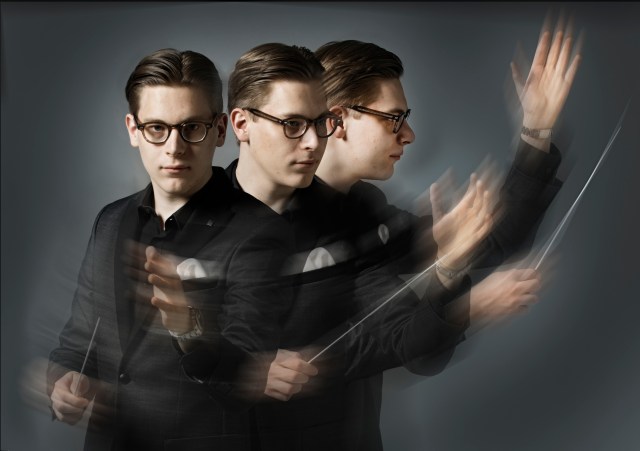
Makela_17-04-25_067c_A4
Klaus Mäkelä, photo credit Heikki Tuuli

Dating from 1930, Les Offrandes oubliées is the composer’s first published orchestral work (a piano transcription would follow the next year). Structured as triptych in evocation of the trinity, the plaintive opening was almost monastic in its austerity. The central section contrasted in every way, often violent in intensity, and time stood still in the glacially-paced final panel, entranced in spiritual contemplation – even in spite of the particularly vociferous army of coughers present in Thursday night’s audience.

Violinist Augustin Hadelich was also making his Severance Hall debut, having performed with this orchestra a handful of times at Blossom since 2009. Prokofiev’s Violin Concerto No. 2 shows the composer at his most lyrical, beginning unaccompanied with a winding and rather unsettling lyricism emanating from Hadelich’s “Ex-Kiesewetter” Stradivarius. The orchestra supported him via a colorful accompaniment, with Hadelich in deft balance, always achieving a clear projection. The central slow movement features one of Prokofiev’s most lush and lovely melodies, so different from the motoric and mechanistic works of his youthful years as an iconoclastic firebrand. Near the movement’s end was a striking role reversal wherein Hadelich offered a pizzicato accompaniment to buttress the orchestra’s lyricism. The foot-tapping finale was given with a driving vigor, its dance inflections heightened by the use of castanets, also a nod to where the concerto received its 1935 premiere: Madrid. Hadelich’s encore continued the Spanish thread with a transcription of Tárrega’s Recuerdos de la Alhambra, the rapid repeated notes of mesmerizing effect.

The finale of the Prokofiev also dovetailed neatly with the closing Beethoven: none of Beethoven’s works invoke dance as much as the Seventh Symphony, which Wagner famously called “the apotheosis of the dance.” The introduction, the longest of any of the Beethoven symphonies, was given with marked weight in hinting at all that was to come. Rhythmic fragments were introduced, eventually coalescing into the movement proper’s thematic material, heralded by principal flute Joshua Smith. Featherlight textures danced, soon to be countered by the might of the full orchestra. The principal winds were all in fine form, the leading force of the orchestra’s seemingly boundless reserves of energy.

Mäkelä rightly conducted the Allegretto not as a funereal dirge, but in emphasizing its songful beauty, with matters solemn and often awe-inspiring. Rambunctious strings took flight in the scherzo, contrasted by the gleaming brass of its trio. The energy was cranked up yet another notch for the finale, taken at a brisk, uncompromising tempo. An all-around strong showing from a talented young conductor.
Welser-Möst explores Prokofiev symphonies with a Bartók centerpiece

Cleveland Orchestra
Franz Welser-Möst, conductor
Yefim Bronfman, piano
Severance Hall
September 30, 2018

Prokofiev: Symphony No. 1 in D major, Op. 25, Classical
Bartók: Piano Concerto No. 2 in G major, Sz. 95
Prokofiev: Symphony No. 3 in C minor, Op. 44

Franz Welser-Möst has expressed an interest in devoting part of the next few seasons to exploring works – particularly those lesser known – of both Prokofiev and Schubert. The first installment came last weekend, with a program bookended by Prokofiev symphonies. Of Prokofiev’s seven works in the genre, only the First and the Fifth are played with any regularity, the remainder being brushed to the periphery. While the remaining five are admittedly somewhat uneven in quality, an opportunity to discover them – particularly at the level of playing witnessed over the weekend – is emphatically welcomed.

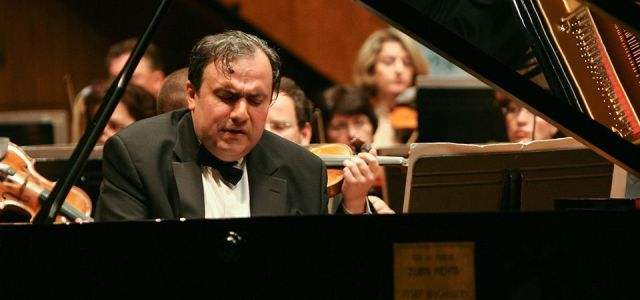
yefim-bronfman-piano-960x450-1
Yefim Bronfman, photo credit Oded Antman

Familiar territory opened the program, however, with the composer’s First Symphony, the so-called Classical for its patent inspiration to Haydn but as through the wit of a 20th-century modernist. It opened with a burst of energy capped by its classical charm, with transparent textures balancing a classical economy and Prokofiev’s piquant harmonies. The Larghetto was gentle and untroubled, evidencing a side of the composer wholly different than the enfant terrible as he is often characterized. The gavotte glanced back in time even further with its roots in the Baroque; here a stately theme was spiked with sweet dissonances, a creation that must have satisfied the composer as he re-used the material in Romeo and Juliet. Although I did find the flutes to be a bit overzealous, the dynamics in the movement’s conclusion were brought down to a whisper, setting the stage for the high-spirited finale.

The rarely-heard Third Symphony closed the afternoon, with the orchestra blossoming substantially, no longer in classical proportions for this daunting, unwieldy work. Some its material was taken from the composer’s ill-fated opera The Fiery Angel, here completely reimagined as a symphony (the Fourth Symphony was also based on material from a stage work, namely The Prodigal Son). The clangorous opening movement was an affair of overwhelmingly dense texture, in some semblance of sonata form, difficult to follow yet the orchestra had a keen sense of its architecture. Striking orchestrations yielded unforgiving sonorities, and matters closed with an extended passage in the contrabassoon leading down to the grave.

A strained wistfulness opened the Andante, less unrelenting than the previous but still filled with a pervasive unease. There were notable solo contributions from concertmaster Peter Otto and clarinetist Afendi Yusuf, and eerie glissandos added to the restlessness. The third movement overflowed with a motoric drive and bizarre effects, not the least of which were the rapid yet quiet glissandos that dotted the score’s dense pages. A more measured B section offered momentary respite, only for matters to end with an eruption in the brass. The finale was shrouded in the darkness of the low brass, merciless in its shrill bombast inexorably leading to a crashing ending.

Situated between the two symphonies was Bartók’s second piano concerto, a formidable work notorious for its technical demands, here conquered by one its greatest champions, Yefim Bronfman (incidentally, the last soloist to perform the work here was Lang Lang who graced the same stage during the previous night’s gala). The opening flourish saw Bronfman in counterpoint with the brass, and the pianist delivered with a kinetic drive, this work ideal for his supersized virtuosity and steel-fingered playing. The movement continued apace with relentlessness but yet a sheer brilliance of sound, and Bronfman was in fine balance with his orchestral colleagues, never at the risk of getting swallowed by their expansiveness.

Plaintive strings – their first appearance – opened the central movement, sounding almost incorporeal after the mechanistic physicality of the preceding. A simple, direct melody in the piano offered utter clarity of tone, while the contrasting Presto was rapid and unsettling. The slow passage returned, filled with spectral trills, evidencing Bartók’s idiosyncratic “night music.” A bass drum initiated the finale, and matters exploded with a nervous energy, dashing any hopes of a peaceful conclusion – and Bronfman’s flurry of double octaves had to be seen to be believed.