
Ivo Pogorelić, piano
Gallagher Student Center Theater
Xavier University
Cincinnati, OH
April 22, 2022
Chopin: Fantaisie in F minor, Op. 49
Chopin: Piano Sonata No. 3 in B minor, Op. 58
Chopin: Polonaise-fantaisie in A-flat major, Op. 61
Chopin: Berceuse in D-flat major, Op. 57
Chopin: Barcarolle in F-sharp major, Op. 60
Encores:
Chopin: Prelude in C-sharp minor, Op. 45
Chopin: Nocturne No. 18 in E major, Op. 62 No. 2
Ivo Pogorelić is perhaps the archetypal maverick amongst pianists, coming to international attention not by winning a competition, but by being cut in the 1980 edition of the Chopin Competition – which famously caused Martha Argerich to resign from the jury in protest. What followed was a legendary rise to prominence in the 1980s and 1990s, a subsequent hiatus from the public eye, a return which led to the infamous New York Times review calling him “an immense talent gone tragically astray,” and individualized, idiosyncratic interpretations of standard repertoire that continue to this day to polarize audiences.
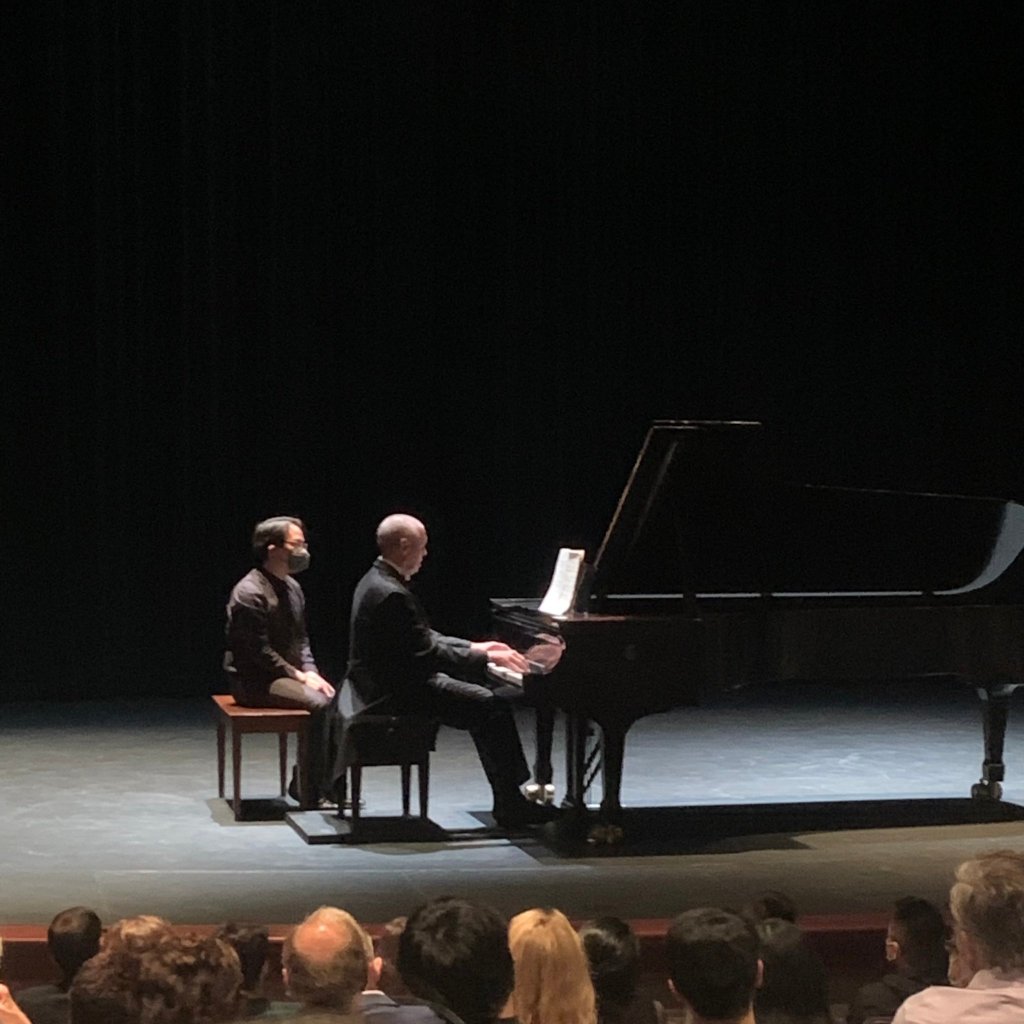
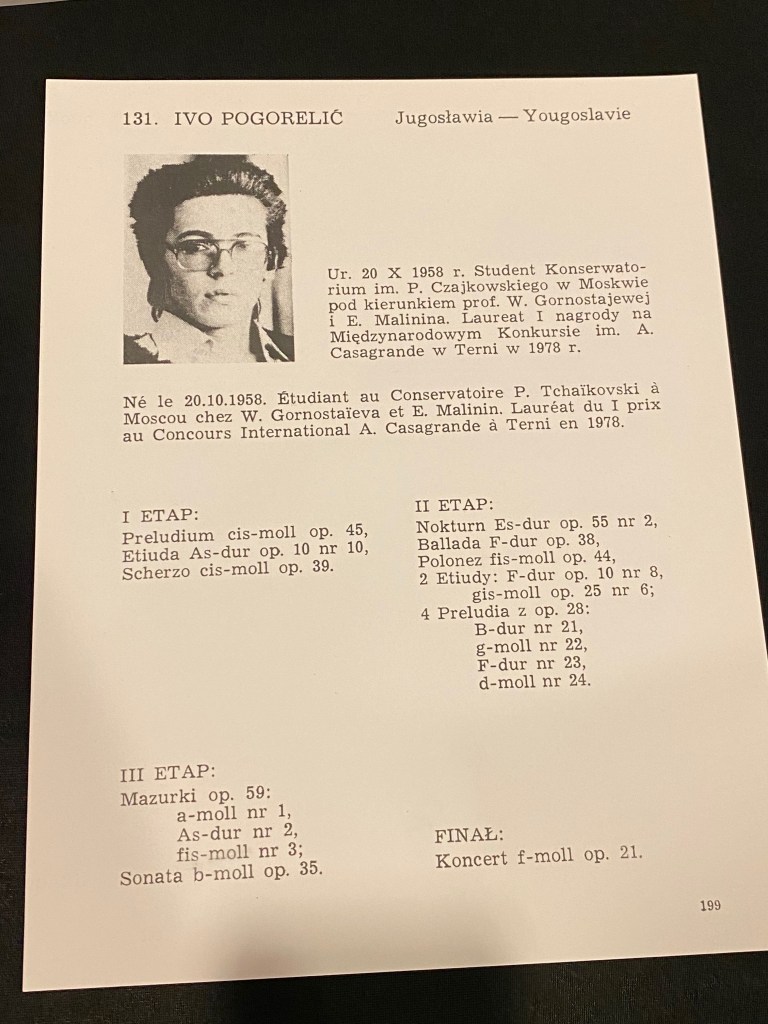
In 2019, Pogorelić returned to the recording studio after more than two decades away, producing an album of sonatas by Beethoven and Rachmaninov, and a survey of Chopin’s late piano music appeared at the beginning of this year. Friday night’s program at Xavier’s Classical Piano Series overlapped with much of the contents of the Chopin album, focusing on the Polish composer’s late masterpieces – and this marks the pianist’s only US appearance on his current recital tour. A fascinating display of memorabilia pertaining to Pogorelić and the Chopin Competition was on display in the lobby. Though generally customary for pianists to memorize recital programs, Pogorelić played from score – with no less than Zsolt Bognár as page-turner.
In the Fantaisie in F minor which opened, the pianist played the gestures in the bass dry and detached, proceeding at a glacial tempo choice and dynamics barely above a whisper. In due course, however, the fantasy took flight, rhapsodically building to great drama – though the oceanic fortes came across rather too percussive for Chopin. The Third Piano Sonata filled out the first half, with an almost funereal tempo choice in the Allegro maestoso, anchored by muscular playing – but again, really to the point of overkill. Textures were murky, and the fleet scherzo that followed also would have benefitted from greater clarity in its articulation. The Largo is perhaps the heart of the work, and here Pogorelić was far more convincing in this languid nocturne, holding the audience spellbound in stasis before the return of the main theme. In the finale, matters were in equal measure impassioned and bombastic.
Following intermission, the Polonaise-fantaisie was initiated with a commanding opening, and rhapsodic flourishes that recalled the previously heard Fantaisie. Pogorelić punctuated the polonaise rhythms, and maintained intense concentration and composure in spite of the many latecomers filing in. Two comparatively more subdued selections rounded out the printed program to counter the dramatic and tragic works – to my ears, where Pogorelić was at his best. A delicate cantilena highlighted the Berceuse, and the chromatically-tinted lyricism of the Barcarolle made for a poignant close. Pogorelić offered a pair of encores before even taking a curtain call – the resonant Prelude, Op. 45, and finally, ending on a gentle note with a late nocturne.
On a personal note, I have a memory of attempting to attend a Pogorelić recital at the Vienna Konzerthaus back in October 2008. A completely sold-out affair, I was amongst a sizable group queuing at the box office in hopes of scoring a returned ticket, only for all of us to be disappointedly turned away. How glad I am to have now had the chance to see Pogorelić in concert some fourteen years later.
 quasi-faust