
Maria João Pires, piano
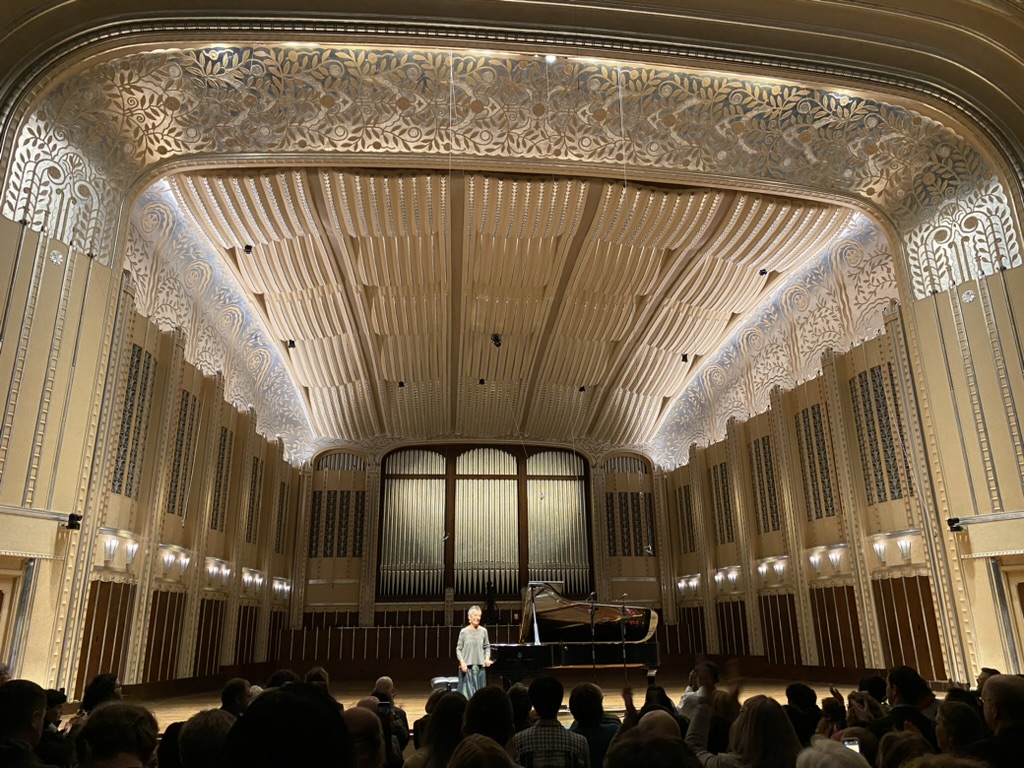
Mandel Concert Hall
Severance Music Center
Cleveland, OH
May 3, 2023
Schubert: Piano Sonata No. 13 in A major, D664
Debussy: Suite bergamasque, L75
Schubert: Piano Sonata No. 21 in B-flat major, D960
Encore:
Debussy: No.1 from Deux arabesques, L66
The Cleveland Orchestra’s inaugural recital series came to a divinely inspired close Wednesday evening, with Maria João Pires showing herself a true poet of the piano in works of Schubert and Debussy. Pires officially retired from the concert stage in 2017 – I sorely regretted missing her Cleveland appearance the previous year upon hearing that news – making the present recital all the more wonderful of an occasion, evidenced by the sizable and enthusiastic audience.

Pires began with Schubert’s Piano Sonata No. 13 – middle period Schubert, still very much in the classical style insofar as it predated the sublime late sonatas, but not without the composer’s individual hallmark markedly apparent. Matters opened gracious and gentle, but colored by passing shadows in quintessentially Schubertian effect. Pires deftly shaped the phrasing and melody; stormier material in the development offered contrast but only for a fleeting moment before we returned to sunny A major. The Andante showed the pianist’s detailed voicing and nuance; the finale’s sprightly fingerwork playfully contrasted.
Debussy’s Suite bergamasque followed. The opening Prélude was given confident, self-assured beginnings, but not without an essential lyricism. Distinctive dance rhythms marked the Menuet, burgeoning to more impassioned material. Though Clair de lune is often presented as a standalone piece, it was quite intriguing hearing it in the context of the whole suite. Familiar a work as it may be, Pires’ lovely reading was anything but routine. A foil to its shimmering stasis came in the Passepied, an essay of near perpetual motion.
Schubert’s transcendent final piano sonata occupied the second half, and it truly was nothing short of a spiritual experience. An elegantly sculpted melodic line wondrously took shape, punctuated by profound silence after its first statement. Pires was particularly remarkable in the way she varied bringing out the inner voices, never content to merely repeat a phrase in the same way twice, and her keen attention to balance and coloring kept one in rapturous attention. The pianist took the long repeat of the first movement exposition, offering its dramatic first ending that would otherwise have been jettisoned. Distant keys were explored in the development before the movement’s serene close.
Pires opted for minimal pedaling in the Andante sostenuto, allowing the dotted rhythmic gesture to be strikingly detached, seemingly making the sumptuously gorgeous central section resound all the more lyrical. The scintillating scherzo was wonderfully charming, and the myriad guises in which the main theme recurred in the closing rondo oscillated between the insouciant and the dramatic.
For a lone encore, Pires returned to Debussy in the first of the Arabesques, an account limpid and lithe. Certainly a high bar on which to conclude the recital series, and kudos to the Cleveland Orchestra administration for such a successful endeavor. Next season’s offerings provide much to look forward to with solo recitals or chamber collaborations from Marc-André Hamelin, Emanuel Ax, Yefim Bronfman, and Evgeny Kissin.
 quasi-faust