
PUBLIQuartet
PNC Theatre
Pittsburgh Playhouse
Pittsburgh, PA
March 10, 2025
PUBLIQuartet: What is American? Improvisations on Dvořák’s “American” Quartet
Vijay Iyer: Dig the Say
Mazz Swift: Digging Gold; Deeper Blue
Henry Threadgill: Sixfivetwo
Jeff Scott: Blues for Buddy
Jlin: Baobab
Sun Ra: Interstellar Low Ways
Duke Ellington: “Come Sunday” from Black, Brown, and Beige
Julia Perry: Prelude for Piano (arr. Hamilton Berry)
PUBLIQuartet: Wild Women Don’t Get the Blues. Improvisations on Tina Turner’s “Black Coffee,” Betty Davis’ “They Say I’m Different,” Alice Coltrane’s “Er Ra,” and Ida Cox’s “Wild Women Don’t Have the Blues”
Monday evening saw the Pittsburgh debut of the New York-based PUBLIQuartet in a diverse, inventive program at Chamber Music Pittsburgh. Entitled “Found Futures”, the program focused on particularly forward-thinking composers as part of the quartet’s larger project, What is American. An ambitious offering, the selections offered bore little resemblance to what one might expect at a typical string quartet recital.
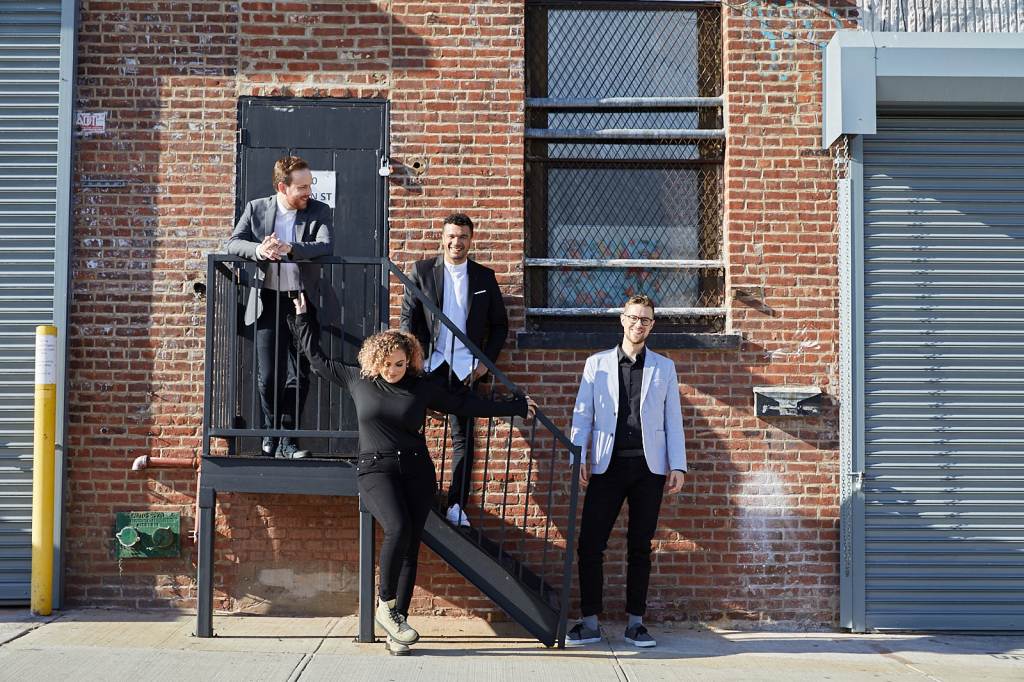
The evening began with one of PUBLIQuartet’s own creations, an improvisation based upon Dvořák’s American quartet (and the original version will be heard at Chamber Music Pittsburgh’s next event with the Dover Quartet). PQ has recast the entire work in their invigoratingly idiosyncratic style, but offered just the first movement on Monday. Nebulous beginnings were achieved through a panoply of extended techniques, and Dvořák’s sunny theme emerged out of the ether. A tapestry of American styles were woven into Dvořák’s music, traversing elements of blues, jazz, rock, and hip-hop.
Vijay Iyer’s Dig the Say was a tribute to the music of James Brown — never before have I heard a string quartet sound so groovy! Pizzicato cello served as a funky bass line, and the ensemble was asked to clap and stomp to further enliven this colorful score. Digging Gold; Deeper Blue by Mazz Swift followed. With elements of improvisation, it was a complex, multi-threaded score of interlocking intricacies, akin to solving a puzzle.
Henry Threadgill’s Sixfivetwo came about as part of the Kronos Quartet’s staggeringly ambitious 50 for the Future endeavor (see here for my review of Kronos performing several works from that project). PUBLIQuartet astutely negotiated the complex score, though to my ears it wasn’t a piece particularly approachable on first listen. A work by Jeff Scott (horn player and founding member of the Imani Winds) closed the first half, Blues for Buddy. Scott revealed to the quartet that Buddy was his late uncle, and the brief but touching work looked inward, sounding as a bluesy elegy.
Like the Scott piece, Jlin’s Baobab was also commissioned by the PUBLIQuartet. An electronic music composer, Jlin had the group improvise over pre-recorded electronica, oftentimes evoking an African drumming ensemble. Three transcriptions for string quartet followed, beginning with music based upon Sun Ra’s Interstellar Low Ways in its first performance. “Come Sunday” from Duke Ellington’s jazz symphony Black, Brown, and Beige was languid and pensive, proving to be effective when cast for these forces.
Originally for solo piano, a prelude by Julia Perry was given in a transcription by PQ’s cellist Hamilton Berry, showing its rich, forward-looking harmonic palette (one is further referred to a recent recording of Perry’s violin concerto by PQ violinist Curtis Stewart). Closing the evening was another PQ original, Wild Women Don’t Get the Blues, featuring the group’s improvisations and musical reflections on female singer-songwriters from generations past: Tina Turner, Betty Davis, Alice Coltrane, and Ida Cox.

 quasi-faust