Ólafsson and Wang dazzle in spectacular two piano recital

Yuja Wang, piano
Víkingur Ólafsson, piano
Mandel Concert Hall
Severance Music Center
Cleveland, OH
February 23, 2025

Berio: Wasserklavier (No. 3 from Six Encores)
Schubert: Fantasie in F minor, D940
Cage: Experiences No. 1
Nancarrow: Study No. 6 (arr. Adès)
Adams: Hallelujah Junction
Pärt: Hymn to a Great City
Rachmaninoff: Symphonic Dances, Op. 45

Encores:
Brahms: Waltz in A-flat major, Op. 39 No. 15
Dvořák: Slavonic Dance in E minor, Op. 72 No. 2
Brahms: Hungarian Dance No. 1 in G minor
Brahms: Waltz in E major, Op. 39 No. 2
Brahms: Waltz in G-sharp major, Op. 39 No. 3

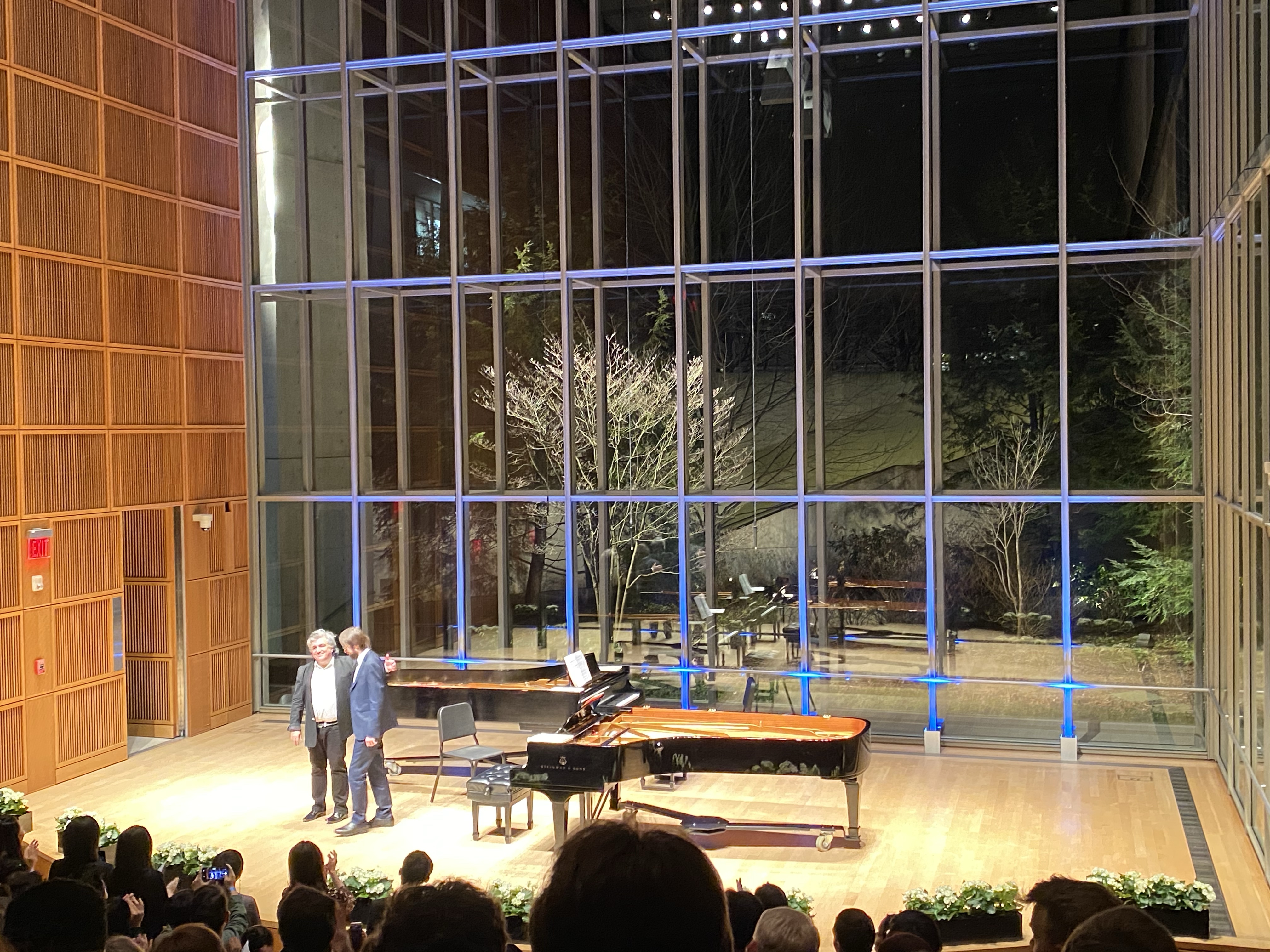
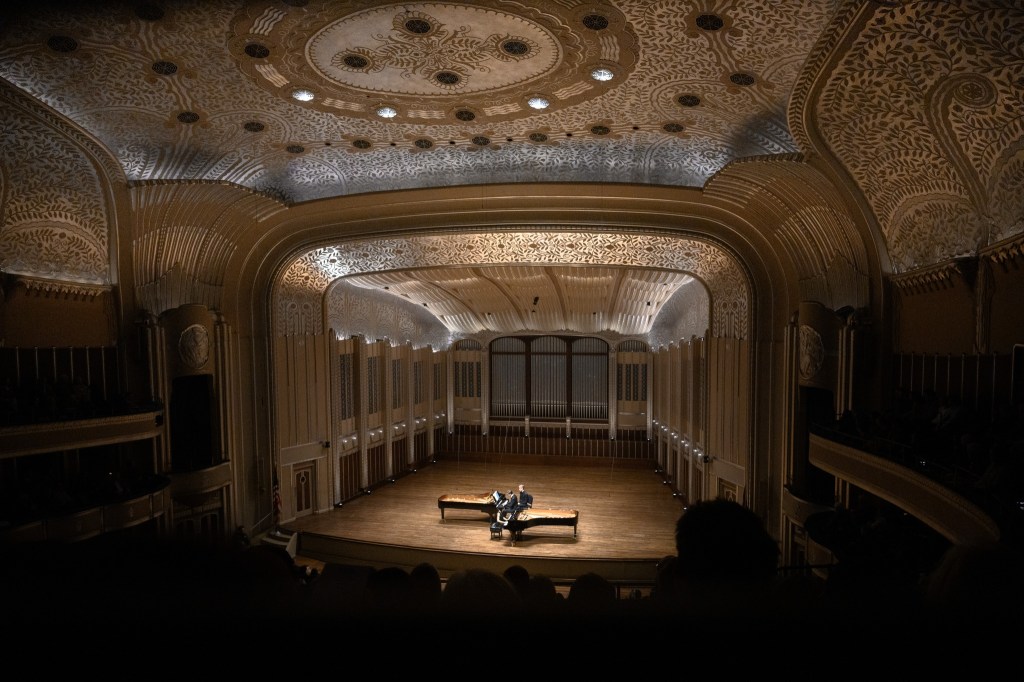
Sunday afternoon marked a remarkable high point in The Cleveland Orchestra’s immensely rewarding recital series, with pianists Yuja Wang and Víkingur Ólafsson joining forces in a stop at Severance Hall on a brief US tour. Both superstar soloists in their own right, it was truly electrifying seeing these two band together. Yet this was more than just a celebrity pairing calculated to maximize box office receipts: their artistic temperaments complemented each other well, showing the whole can be greater than the sum of its parts.
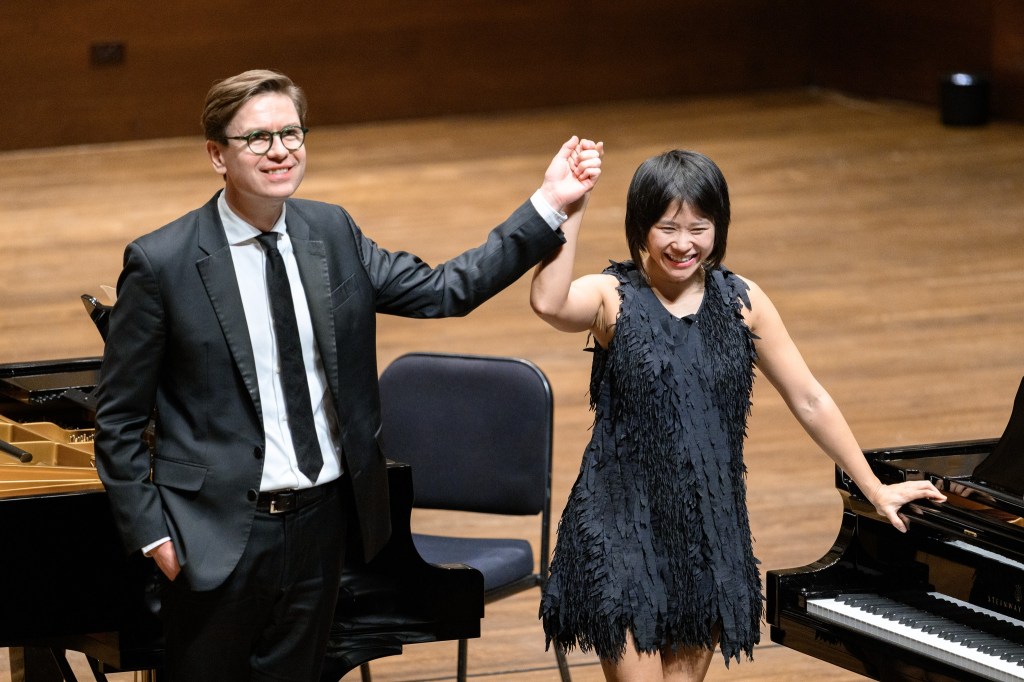
Víkingur Ólafsson and Yuja Wang at Severance Hall, photos credit Human Artist Photography + Cinema 

The program was ripe with discovery, skirting some of the more commonly played fare for two pianos. Luciano Berio’s Wasserklavier began, a meditative opening with liquescent textures freely flowing. The piece made subtle nods to Brahms and Schubert, and fittingly, the pianists artfully segued directly into the latter’s own Fantasie in F minor. Usually played four hands on a single piano, hearing it spread across two instruments gave the work a greater resonance and depth of sound.

Crisply articulated dotted rhythms began, plunging into penetrating drama — rarely will one hear Schubert played with such intensity. Dance-like sections contrasted, exuding joy with the twenty fingers at work, intricately choreographed. A fascinating selection of works from the late 20th-century followed, beginning with John Cage’s Experiences No. 1. The composer’s characteristic minimalist textures were piquantly harmonized, punctuated by silence.

The sixth of Conlon Nancarrow’s 49 studies for player piano followed, made humanly playable in its two-piano arrangement by Thomas Adès (who local concertgoers had the chance to see conduct a remarkable Cleveland Orchestra program just the night before). In this case, the two pianos seemed to be at odds with one another, yet the jagged rhythms fit together in interlocking fashion.
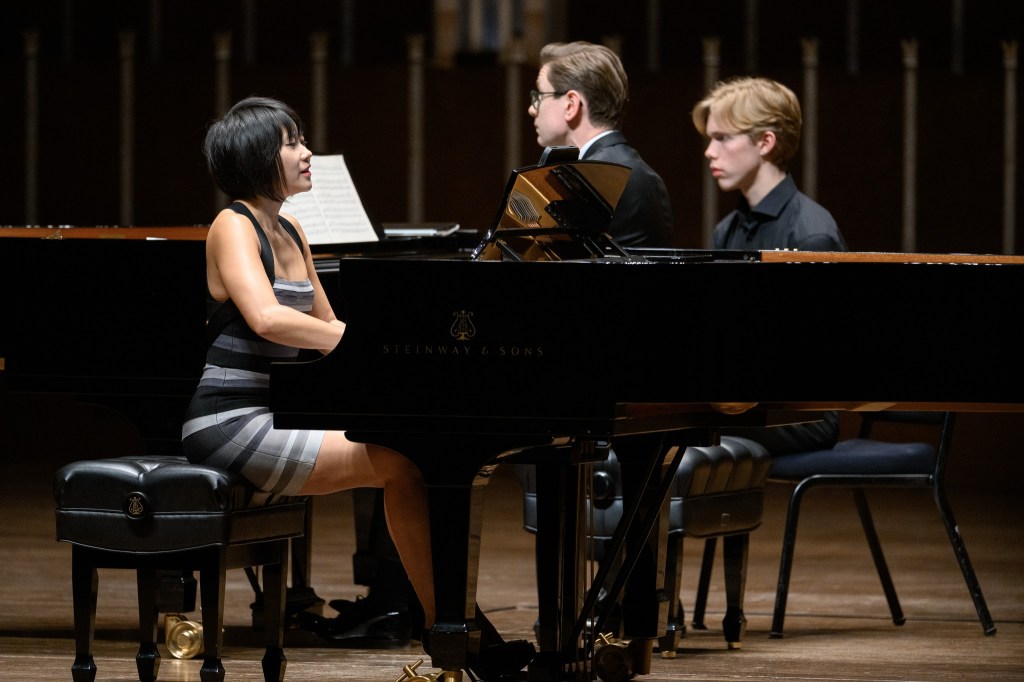
The first half closed with John Adams’ Hallelujah Junction, to my mind, the highlight of the program. Pulsating energy filled Severance Hall with pianistic brilliance. Music of almost perpetual motion — quite a contrast to the minimalism of Cage — gave a larger-than-life portrayal of the namesake town on the California-Nevada border, and demonstrated in no uncertain terms the electric chemistry between these two pianists. The more lyrical pulses of a downtempo section captivated in their rhythmic intricacies, only to build back up to a dazzling density of sound.

Arvo Pärt’s Hymn to a Great City was marked by Wang’s playing in the upper register that rang with the purity of bells, and some delicate filigree that decorated the otherwise barren textures. Rachmaninoff’s Symphonic Dances — his final work — closed the printed program. Hammering out the main theme with pile-driving intensity, an almost manic energy between the two created a rich orchestral sonority. Yet matters were still clear and articulate, with a contrasting theme of haunting lyrical beauty. Sultry waltz rhythms in the central dance were given with stylish playing, and the finale was bold and grandiose, with broad gestures cascading spectacularly.

No less than five encores followed, a delightful selection of dances by Brahms and Dvořák, performed on a single piano, four hands. A charming, convivial close to a memorable afternoon.
ProMusica closes season with Beethoven and Mendelssohn

ProMusica Chamber Orchestra
David Danzmayr, conductor
Martina Filjak, piano
Southern Theatre
Columbus, OH
May 7, 2022

Clyne: Stride
Beethoven: Piano Concerto No. 3 in C minor, Op. 37
 Encore:
 Pärt: Für Alina
Mendelssohn: Symphony No. 4 in A major, Op. 90, Italian

This weekend saw the close of ProMusica’s 43rd season, and the first full season since the pandemic hit. The evening kicked off in particularly delightful fashion with young students from ProMusica’s Play Us Forward program performing two short works for strings. ProMusica then took to the stage with a recent work by Anna Clyne, written in 2020 for the Beethoven 250th anniversary. Stride takes its cue from Beethoven’s Pathétique sonata and its name comes from the broken octave figures in the bass that one finds in the sonata and would later be associated with stride piano playing. Clyne’s work is cast in three interconnected movements, mirroring the structure of the source material. As in the Pathétique, prominent dotted rhythm gestures opened, and the “stride” figures were interlaced with quotes from the sonata, some more veiled than others. I was particularly struck by theme of the rondo finale being presented at a slow tempo, revealing a languid character beneath the surface. A brilliant reimagining of this venerable sonata.

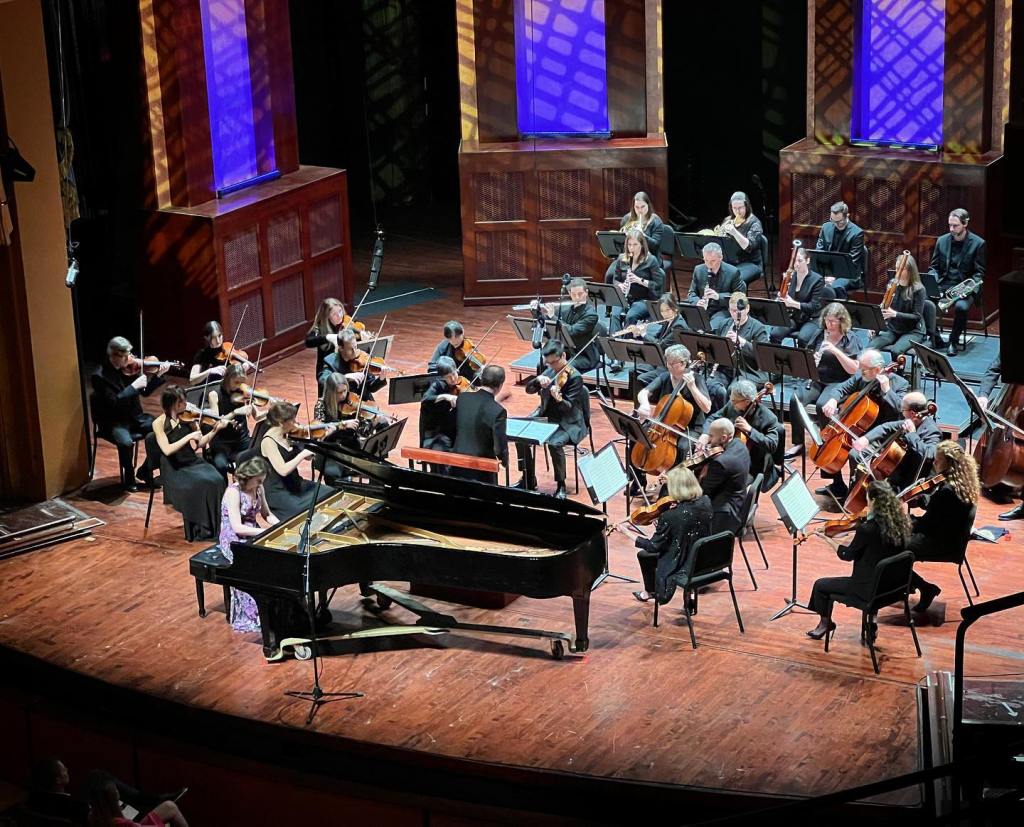
Martina Filjak, David Danzmayr, and ProMusica, photo credit ProMusica

Beethoven reserved C minor for some of his most personal works – a body of work that includes the Pathétique sonata as well as the Third Piano Concerto, the latter of which engaged Croatian pianist Martina Filjak. I remember seeing her last when she won the 2009 edition of the Cleveland International Piano Competition, and it was wonderful to see her again all these years later with a flourishing career to her name. The orchestral introduction was crisply articulated, although one perhaps wanted conductor David Danzmayr to draw out even greater dynamic contrasts and variety. Filjak’s entry had the requisite drama, but her playing was stylish and elegant at heart, showing Beethoven at his most urbane and cosmopolitan. It seemed that she approached the work more akin to a Mozart concerto; while the first two certainly show indebtedness to the composer’s predecessor, the Third marks a stark departure. Nonetheless, the cadenza was fiery and impassioned, and the first movement’s enigmatic ending was deftly executed.

The lovely Largo was prayer-like and plaintive, and the concluding Rondo started with a sudden burst of the energy, building to the brilliant switch to the major in the final few bars. As an encore, Filjak opted for a work worlds apart from Beethoven (despite any associations to Beethoven the title might suggest): Pärt’s Für Alina, strikingly wonderful in its barren textures and mystical musings.

This season has seen several major works of Mendelssohn performed – the Scottish symphony, the violin concerto – and the trend was continued with the ebullient Italian symphony. Some unevenness in the brass did little to detract from the first movement’s buoyancy, given with classical economy and balance. A really delightful performance, perhaps nowhere more so than in the kinetic energy of the vibrant, sunny saltarello that closed.

CIM pianists Babayan and Trifonov dazzle in gala concert

Sergei Babayan, piano
Daniil Trifonov, piano
Mixon Hall
Cleveland Institute of Music
Cleveland, OH
February 19, 2020

Schumann: Andante and Variations for Two Pianos, Op. 46
Pärt: Pari intervallo
Mozart: Sonata for Two Pianos in D Major, K448
Rachmaninov: Suite No. 1 for Two Pianos, Op. 5, Fantasie-Tableaux
Rachmaninov: Suite No. 2 for Two Pianos, Op. 17

Encore:
Prokofiev, transc. Babayan: Idée fixe from The Queen of Spades, Op. 70

To inaugurate the celebrations surrounding the Cleveland Institute of Music’s landmark centennial year, two of the most distinguished pianists associated with the institution teamed up for a duo recital on Wednesday night. Sergei Babayan has held the title of CIM’s Artist-in-Residence since 1992, shortly after taking first prize in the Cleveland International Piano Competition, and at the second piano was his former student Daniil Trifonov. Trifonov’s meteoric rise is surely indebted in part to CIM where he earned an artist certificate in 2013, with an artist diploma following in 2015. Both pianists generously donated their time for the evening, and this benefit concert raised over $100,000 for the student scholarship fund. In his opening remarks, CIM’s president and CEO Paul Hogle further underscored the Institute’s role in the dynamic classical music scene of northeast Ohio, epitomized by over half of The Cleveland Orchestra being connected to CIM as alumni or faculty – if not both.

img_1899
Sergei Babayan and Daniil Trifonov at Mixon Hall

Two pianos on the stage of intimate Mixon Hall made a bold impression, and while both instruments were oriented in opposite directions, their keyboards were aligned to enhance the natural communication between this teacher-student duo. Schumann’s Andante and Variations began the program. An intensely lyrical presentation of the theme opened, burgeoning into quintessentially Schumannesque music of Romantic fantasy and imagination. A militant march variation made for a powerful climax, with matters eventually giving way to a lovely, ruminative conclusion. Arvo Pärt’s Pari intervallo was quite far removed from any other selection performed, but certainly a highlight in spite of its brevity. Evaporated to the essential, its monastic austerity was enchantingly pensive and otherworldly in its repeated bell-like invocations, with the pianists sustaining a meditative state of unblinking concentration.

Mozart’s effervescent Sonata for Two Pianos in D major closed the first half, recalling Babayan’s memorable recital with Martha Argerich two seasons ago. Vigorous energy opened this pearl of the two piano literature, with seamless, crystalline playing evidencing the innate understanding amongst the duo. Rapid passages were crisply in sync, a must in the unforgiving transparency of this repertoire. A singing quality, almost akin to an operatic aria, was given to the central Andante, heightened by its delicate ornaments. The music became rather more unbuttoned in the finale, interspersed with varied material but inexorably gravitating back towards the joyous main theme, of dancing lightness and sparkling articulations.

The latter half was devoted to both of Rachmaninov’s hyper-Romantic Suites for Two Pianos. The “Barcarolle” of the First flowed with liquescent ease, and the pianists cleanly negotiated the detailed filigree. “La nuit… L’amour…” proceeded as a love song of often hypnotic beauty, and the following “Les larmes” was marked by its melancholy cantilena. While both pianists have a reputation for their leonine power, here we saw them turn inwards in music of quiet intimacy: perhaps the description of Rachmaninov possessing “fingers of steel and a heart of gold” applies to them as well. It was the former persuasion, however, that had the last word in the “Pâques” finale. Babayan introduced the theme at a moderate, measured pace, before matters erupted into a modal frenzy to close the suite with formidable weight and power.

A commanding, kinetic opening to the Second Suite showed in no uncertain terms that neither pianist was waning in energy as we neared the end of the program, cutting through the thickness of the dense chordal textures with ease. Here, for the first time, Trifonov assumed the primo role. The “Valse” was handled with rapid legerdemain, varied by an entrancing waltz theme, and the “Romance” offered a wonderfully lyrical interlude. An inevitable tour de force was to be had in the “Tarantelle”: a powerhouse conclusion punctuated by the relentless rhythms of the titular dance. As an encore, the pianists turned to one of Babayan’s own remarkable Prokofiev transcriptions (which can be heard on his emphatically recommended recording with Argerich), namely, the “Idée fixe” from The Queen of Spades, closing the festive evening in pile-driving intensity.

Cleveland Orchestra explores “divine ecstasy” in eclectic program

Cleveland Orchestra
Franz Welser-Möst, conductor
Vinay Parameswaran, conductor
Lisa Wong, conductor
Iestyn Davies, countertenor
Paul Jacobs, organ
Cleveland Orchestra Chorus
Severance Hall
Cleveland, OH
April 28, 2018

Gabrieli: Canzon per Sonar Septimi Toni No. 2, from Sacrae symphoniae
Gabrieli: Canzon per Sonar in Echo Duodecimi, from Sacrae symphoniae
Pärt: Magnificat
Gabrieli: O Magnum Mysterium, from Sacrae symphoniae
Kernis: “I Cannot Dance, O Lord”, No. 3 from Ecstatic Meditations
A. Gabrieli: Fantasia Allegra del duodecimo to­no
Gabrieli: Omnes gentes plaudite manibus
Bach: Cantata No. 170: Vergnügte Ruh, beliebte Seelenlust, BWV 170
Liszt: Fantasy and Fugue on the Chorale “Ad nos, ad salutarem undam”

Encore:
Bach: Prelude and Fugue in D Major, BWV 532 – Fugue

Saturday night marked the final program of The Cleveland Orchestra’s utterly remarkable festival exploring Tristan und Isolde and its incalculable influence. The notion of ecstasy served as a common thread in the festival’s programs, certainly in the opera itself, and even more explicitly in Messiaen’s Turangalîla. Saturday’s program explored ecstasy in music through a religious lens, serving a wonderfully diverse smorgasbord of works that spanned five centuries. The first half was comprised of seven brief selections, thoughtfully strung together as a continuous arc. After introducing the program, Welser-Möst didn’t return until after intermission, passing the baton to Vinay Parameswaran (assistant conductor of TCO and music director of the Cleveland Orchestra Youth Orchestra), and Lisa Wong, acting director of the Chorus.

31739802_10155868572646888_4595952092933259264_o
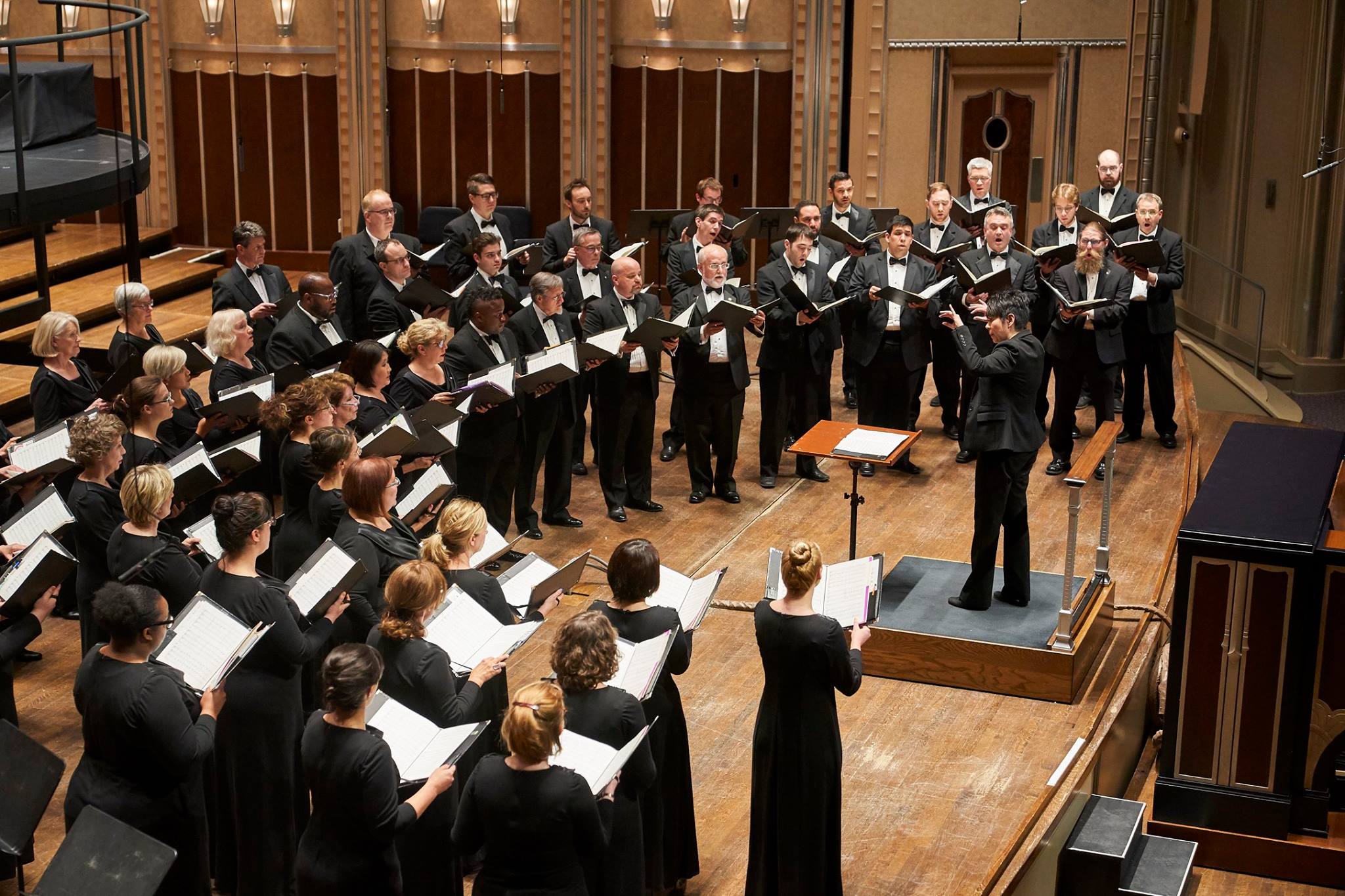
Lisa Wong and Cleveland Orchestra Chorus, all photos © Roger Mastroianni, Courtesy of The Cleveland Orchestra

Giovanni Gabrieli is often considered a veritable father figure in the realm of brass playing, writing extensively for brass ensembles that would be dispersed throughout the cavernous galleries at Venice’s Basilica di San Marco. Four of his works dating from the late 16th-century punctuated the first half, presented in arrangements for modern brass ensemble by Timothy Higgins, principal trombone of the San Francisco Symphony. In loose approximation of how the works would have performed at San Marco, two brass choirs were positioned at opposite ends of the stage. The Canzon per Sonar Septimi Toni No. 2 was a bright and festive opener, while Canzon per Sonar in Echo Duodecimi had a striking echo effect as suggested by the title with great intimacy of communication between players, even from across the stage.

Principal trumpet Michael Sachs switched the flugelhorn in O Magnum Mysterium, producing a timbre mellow and stentorian. Scored for the formidable forces of four choirs (two vocal, two brass) grounded by the organ as continuo, Omnes gentes plaudite manibus closed the first half in rousing fashion. The brass had a fine vocal quality – at the end unambiguously intoning the “Alleluja” – and were deftly balanced with the singers.

A varied assortment served as interludes between the Gabrieli, beginning with Arvo Pärt’s Magnificat for unaccompanied five-part chorus. Embodying the composer’s iconic tintinnabuli technique, the beauty of sound resonated as if frozen in time – and how well it fit alongside Gabrieli despite being displaced by several centuries. Aaron Jay Kernis’ “I Cannot Dance O Lord”, also scored a capella, offered a more jarring stylistic contrast (it being the program’s most contemporary work, composed in 1999). The choir was quite virtuosic with some colorful word-painting, very literally “whirling” at the close. Organist Paul Jacobs (a local favorite who appeared on this stage as recently as last November) was the standout of the evening, his first contribution taking the shape of the Fantasia Allegra for solo organ by Andrea Gabrieli – Giovanni’s uncle. A joyous and exultant affair, its contrapuntal intricacies were easily surmounted by the organist, a mere warm-up for what was to come.

The concert’s latter half took a rather different form in focusing on two lengthier works, beginning with Bach’s Cantata No. 170, engaging Welser-Möst, Jacobs, and countertenor Iestyn Davies. Welser-Möst imbued the opening aria with graceful, fluid gestures, and Davies offered a rounded and mellow tone, although at certain points I would have preferred crisper diction. The two recitatives (movements 2 and 4) were marked by organ obliggato, while prominent organ colored the central aria (Wie jammern mich doch die verkehrten Herzen) as well. Here, Davies communicated deep melancholy and made an impressive showing in the melismas. Though concerned with sin, one couldn’t help but feel a certain sense of joy during the running sixteenths in organ of the concluding Mir ekelt mehr zu leben.

31769513_10155868573021888_9183743563320524800_o
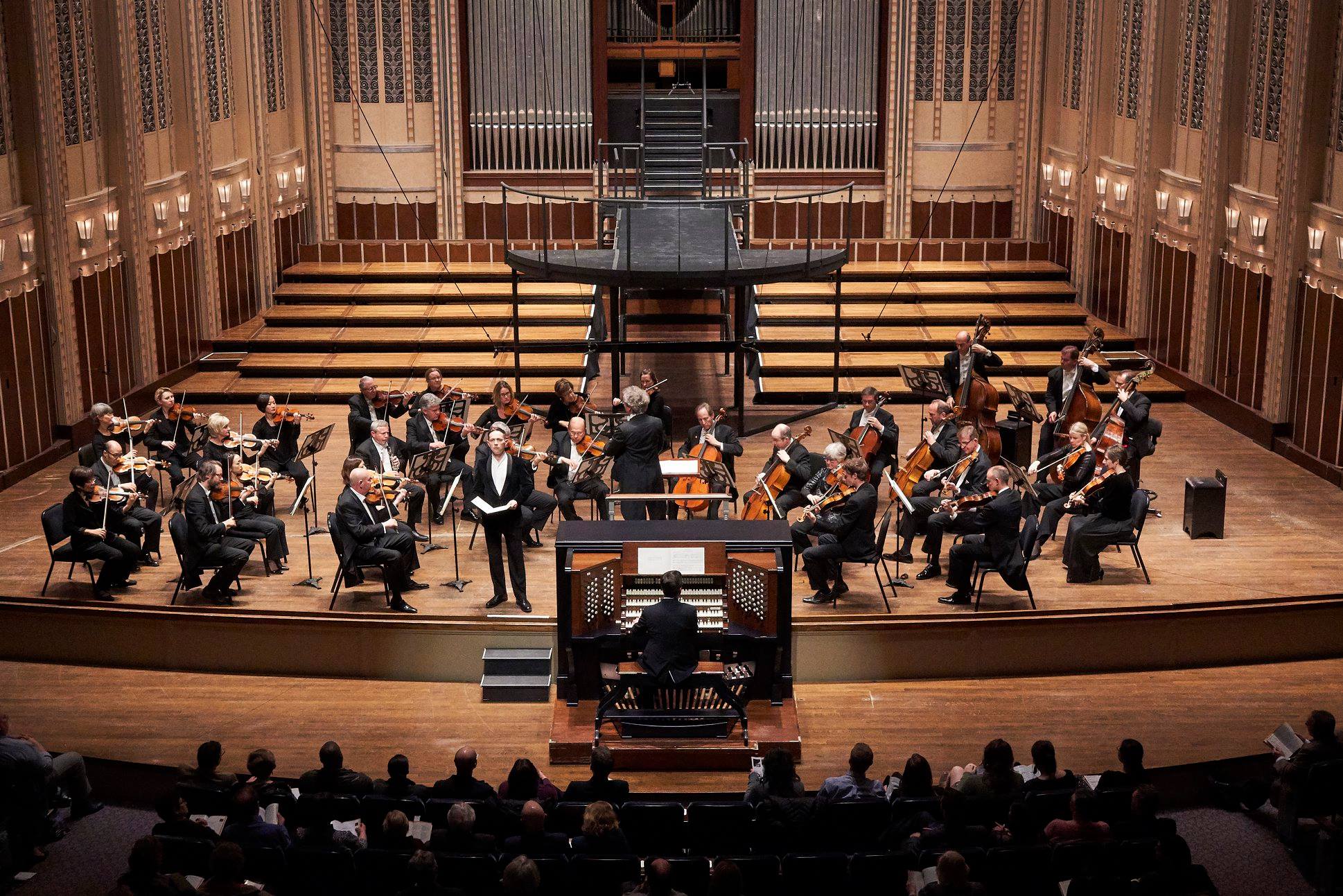
Bach’s Cantata No. 170: Iestyn Davies, Franz Welser-Möst, and Paul Jacobs with The Cleveland Orchestra

Jacobs was the sole performer on stage for the program’s remainder, devoted to Liszt’s daunting Fantasy and Fugue on the Chorale “Ad nos, ad salutarem undam” from Meyerbeer’s Le prophète. An interesting work to include during a festival celebrating Wagner as Meyerbeer’s meteoric success in Paris – particularly with Le prophète – fueled much of the envious German composer’s antisemitism. The Fantasy and Fugue is one of Liszt’s crowning achievements; written contemporaneously with the Piano Sonata in B minor, it too shows absolute mastery of large-scale form. It opened with darkness and foreboding, the dissonances piling on top of one another, and emerged as a free-form fantasy of a vast range of moods and colors. A central slow section presented the most literal statement of Meyerbeer’s chorale which Liszt generally used only obliquely, and offered a meditative respite. Liszt left much of the dynamics and registration open to interpretation; at one point Jacobs opted for some bell-like sororities, striking and quite effective. A fiery transition led to the massive fugue, with contrapuntal complexities defying imagination, Jacobs unleashed a firestorm of startling virtuosity.

Miraculously, the indefatigable Jacobs was still up for an encore, clearly enjoying the magnificent instrument. He returned to Bach in the D major fugue (BWV 532), ending the evening on a markedly cheerier note.

31698889_10155868572566888_5241225140510916608_o
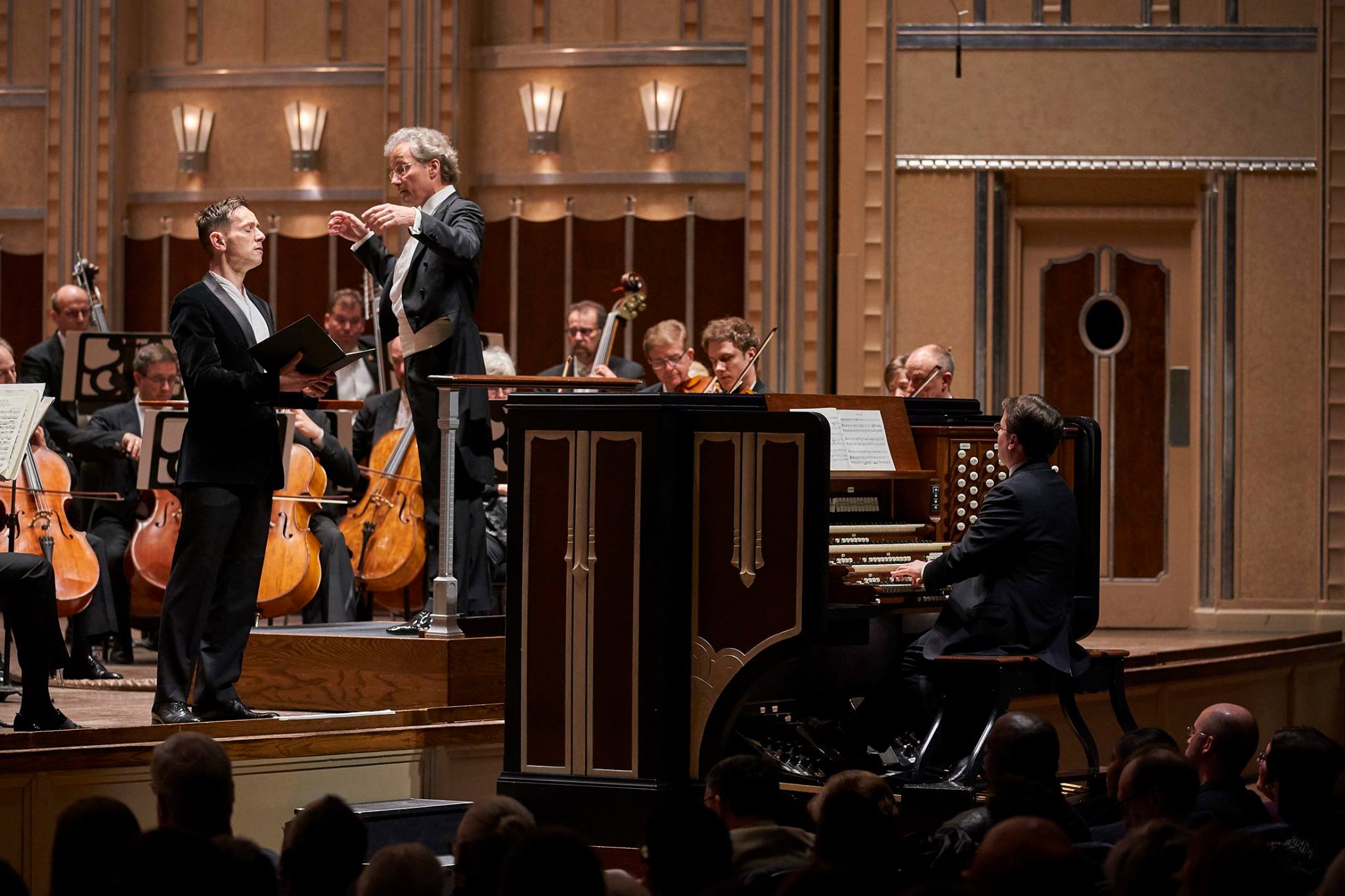
Davies, Welser-Möst, and Jacobs