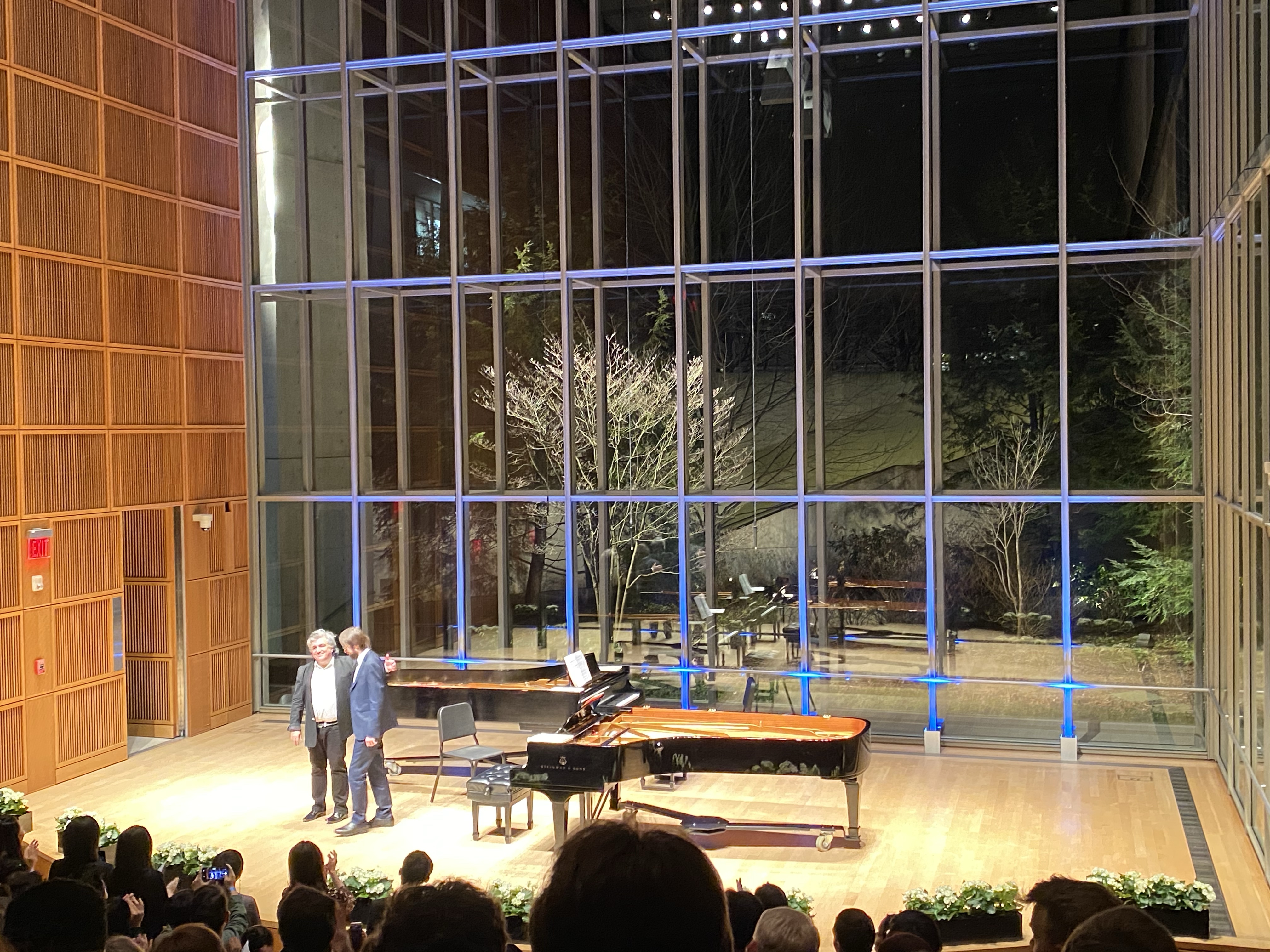
2021 Cleveland International Piano Competition: Semi-final round

Gartner Auditorium
Cleveland Museum of Art
Cleveland, OH
July 29 – August 1, 2021

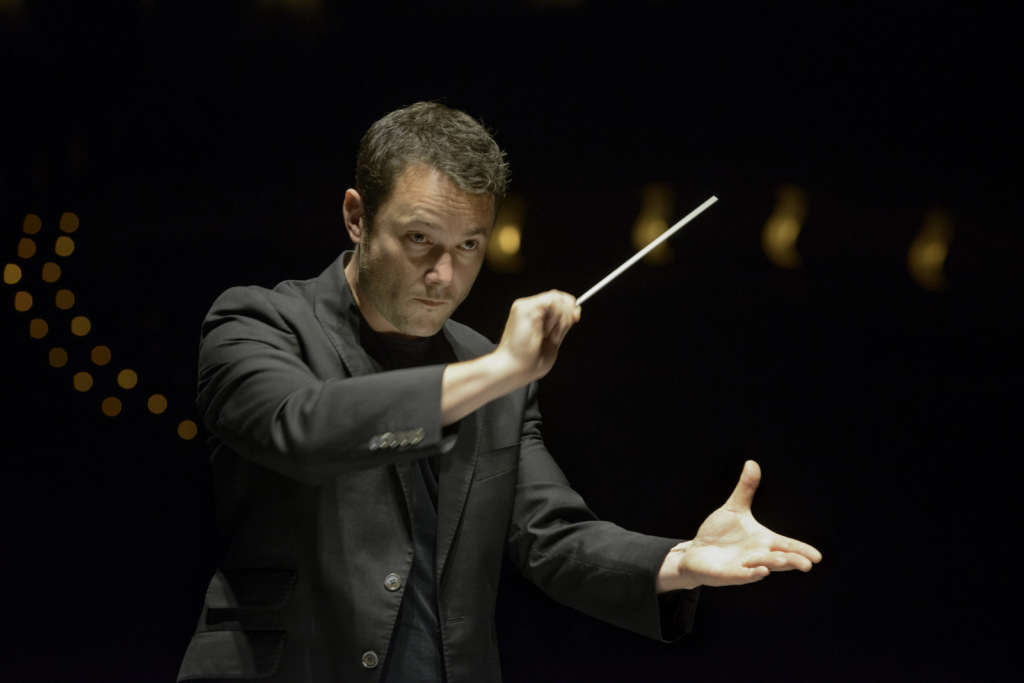
Inevitably postponed last summer due to the pandemic, the Cleveland International Piano Competition has made a remarkable comeback here in 2021, a wonderfully exciting return to in-person performances. An initial pool of over 250 applicants from more than 40 countries was pared down to 26 contestants, all of whom performed in the Competition’s first two rounds. Owing to the travel and health restrictions that still persist, these rounds were conducted virtually, filmed at venues across the world – and available for free viewing on YouTube. Eight outstanding semi-finalists were selected to proceed onsite in Cleveland, a cohort to be further narrowed down to four finalists who will perform a chamber music round with the Escher Quartet and a concerto round with The Cleveland Orchestra under the baton of Jahja Ling.

Compared to the relative brevity of the first two rounds, the semi-finals offer an even more in-depth portrait of each artist, performing a recital of approximately 40 minutes. A few new and welcome additions for this year’s edition: each semi-finalist included in their program a popular song transcription commissioned from composer Alexey Kurbatov. Four selections were available, namely “America” from Bernstein’s West Side Story, Queen’s “Bohemian Rhapsody”, themes from Mission Impossible, and John Williams’ Olympic Fanfare. Regrettably, none of the eight selected the Williams piece, but perhaps a recording can be posted in due course. I also hope publication of these scores is imminent as they undoubtedly can serve as particularly enjoyable encore pieces.

Also for the first time was the inclusion of piano duets – the two performers from each session teamed up following their solo material for either the Fantasie in F minor by Schubert or Mozart’s Sonata for Two Pianos in D major. A lovely addendum that not only tested the contestants’ ability to collaborate with another pianist, but encouraged a spirit of camaraderie. Finally, excellent program notes for every piece performed – from the first round to the finals – were provided by Marissa Glynias Moore, Anna M. O’Connell, and Marco Ladd. Indispensable reading for attendees and a veritable crash course in piano literature. Below are some brief impressions I had of each semi-finalist.

Session 1
July 29, 2021

Ying Li
Mozart: Piano Sonata No. 13 in B-flat Major, K. 333
Grainger: “Ramble on Love” from Der Rosenkavalier
Bartók: Piano Sonata, Sz. 80
Schifrin: Themes from Mission Impossible (arr. Kurbatov)

Honggi Kim
Schifrin: Themes from Mission Impossible (arr. Kurbatov)
Chopin: Twelve Etudes, Op. 25

Schubert: Fantasie in F Minor, D. 940

Ying Li (China) opened the semi-final round with a Mozart sonata, delicate and balanced, exuding the pearly classical style. I found her pacing of the slow movement a bit hard to follow but was quite taken by the sprightly finale. Grainger’s so-called Ramble on Love, paraphrasing themes from Strauss’ Rosenkavalier, gave sumptuous treatment to the source material’s lush and languid melody. Bartók’s Piano Sonata was for me the highlight of her performance, opening with a manic energy – and the live video screens did much to enhance the audience experience, offering close-ups of the intricate hand-crossings.

Honggi Kim (South Korea) opened with the same piece with which Li closed, namely the Kurbatov Mission Impossible transcription. Kim was perhaps a bit more percussive than Li; both displayed how the composer brilliantly interpolated the familiar themes. All contestants are required to present a Chopin etude in the first two rounds – here in the semi-finals, Kim offered all twelve etudes from Op. 25. An ambitious undertaking to be sure, though I found his playing fitfully uneven. No. 2, for instance, would have benefitted from greater clarity, although I did like the way he brought out melodic material in the left hand. In No. 5, one wanted more accentuated contrast between the dissonant sections and the lyrical. The rapid double thirds of No. 6 were quite impressive, however. Op. 25 is certainly an end-weighted set, and perhaps one’s performance should be judged primarily on the final three which concluded on a high note: the rapid octaves of No. 10, a chillingly dramatic “Winter Wind”, and a rather marvelous finish in the intense depths of the “Ocean” etude.

Li and Kim were impressive four-hands partners in the Schubert Fantasie, bringing out contrasts from the brooding to the dancing.

Session 2
July 30, 2021

Jiarui Cheng
Scarlatti: Sonata in B Minor, K. 87
Chopin: Barcarolle in F-sharp Major, Op. 60
Rachmaninov: Variations on a Theme of Corelli, Op. 42
Bernstein: “America” from West Side Story (arr. Kurbatov)

Yedam Kim
Chopin: Polonaise-Fantaisie in A-flat Major, Op. 61
Prokofiev: Sonata No. 4 in C Minor, Op. 29
Mercury: Bohemian Rhapsody (arr. Kurbatov)

Mozart: Sonata for Two Pianos in D Major, K. 448

Jiarui Cheng (China) selected one of the more introspective of the Scarlatti sonatas, emphasizing its lyrical quality. Continuing the thread, he did much to bring out the wistful melancholy in Chopin’s late gem, the Barcarolle. In Rachmaninov’s Corelli Variations, Cheng sculpted an individual character in each variation – an excellent performance. Kurbatov’s transcription of Bernstein’s “America” ended matters on a jovial note.

Yedam Kim (South Korea) opened with a mesmerizing account of Chopin’s Polonaise-Fantaisie – contemporaneous with the previously-heard Barcarolle – the composer’s crowning achievement in the polonaise form. A commanding performance of Prokofiev’s Fourth Sonata followed, with searching, unsettling material leading to a bright and brilliant finale. In the Queen original, “Bohemian Rhapsody” is something of a mini tone poem with its wealth of thematic material and operatic narrative and dramatic flow – qualities very much brought out in Kim’s performance, perhaps the most impressive of the Kurbatov transcriptions.

Session 3
July 31, 2021

Rafael Skorka
Bernstein: “America” from West Side Story (arr. Kurbatov)
Leighton: Fantasia Contrappuntistica, Op. 24 (“Homage to Bach”) (1956)
Brahms: Sieben Fantasien, Op. 116

Martín García García
Schubert: Wanderer-Fantasie in C Major, D. 760
Liszt: “Les cloches de Genève (Nocturne)” from Années de Pèlerinage I, S. 160
Liszt: Étude de Concert, S. 145, No. 2 (“Gnomenreigen”)
Liszt: Transcendental Etude, S. 139, No. 10
Mercury: Bohemian Rhapsody (arr. Kurbatov)

Schubert: Fantasie in F Minor, D. 940

Rafael Skorka (Israel) had confident beginnings with a memorable account of Bernstein’s “America”. The most intriguing discovery during the semi-final round came in the shape of Kenneth Leighton’s Fantasia Contrappuntistica, a 1956 homage to Bach (and to Busoni, given the elder composer’s monumental work of the same title). A virtuosic opening gave way to a pensive chorale and a pair of fugues rounded off the work. Skorka deftly negotiated the contrapuntal intricacies to bring matters to a vigorous close. The pianist continued to make a strong showing in Brahms’ Fantasies, Op. 116, just as convincing in the lyrical selections (nos. 2, 4, and the touching chorale of no. 6) as the more extrovert ones, giving the first piece an energetic workout and reserving the most overt virtuosity for the seventh and final fantasy.

Martín García García (Spain) offered an arresting account of Schubert’s ingenious Wanderer-Fantasie. While his tone at times veered a bit too percussive for my taste, he did much to bring out a wide dynamic and dramatic contrast and a keen sense of the work’s large-scale architecture. An interesting selection of three Liszt pieces followed. Deft use of the pedal did much to bring out the sonorities of the titular bells in Les cloches de Genève while García conveyed much charm in the impish legerdemain of Gnomenreigen. The Transcendental Etude No. 10 was technically impressive, although I found myself longing for even more firepower.

Session 4
August 1, 2021

Byeol Kim
C. Schumann: Notturno in F Major, Op. 6, No. 2
Schumann: Arabeske in C Major, Op. 18
Mendelssohn: Fantasie in F-sharp Minor, Op. 28
Mercury: Bohemian Rhapsody (arr. Kurbatov)
Jalbert: Toccata (2001)
Gottschalk: The Union, Op. 48

Lovre Marušić
Scarlatti: Sonata in E Major, K. 380
Schumann: Kreisleriana, Op. 16
Mercury: Bohemian Rhapsody (arr. Kurbatov)

Mozart: Sonata for Two Pianos in D Major, K. 448

Byeol Kim (South Korea) assembled the most diverse and wide-ranging semi-final program, beginning with music from both the Schumanns. Clara’s Notturno boasted a haunting, Chopinesque melody, a performance which should put Kim in the running for the Female Composer Prize, one of over a dozen special prizes being offered. A limpid account of Robert’s Arabeske followed, and Mendelssohn’s Fantasie in F sharp minor was given a passionate and dramatic performance. I really enjoyed the way Kim brought out the sweeping lyrical main theme in her take on the “Bohemian Rhapsody” transcription. Jalbert’s Toccata was a breathless study in perpetual motion, and Gottschalk’s Union, a wonderfully inventive cornucopia of Americana, put Kim’s searing virtuosity and vast dynamic range on full display. A clear audience favorite, she was the only one of the eight to receive a standing ovation.

Lovre Marušić (Croatia) began with a stately account of Scarlatti’s K380 sonata. Schumann’s extensive Kreisleriana followed. I felt Marušić’s reading would have been even more engaging with sharper contrasts between the wide range of expressions the work explores, but I certainly sensed the pianist becoming increasingly self-assured as the work progressed. Sunday’s session was a high note on which to conclude the semi-finals as we await the jury’s announcement of the four finalists, and the fine level of pianism we can expect from them in the subsequent chamber and concerto rounds.

Alexi Kenney and Renana Gutman celebrate the return of live chamber music

Alexi Kenney, violin
Renana Gutman, piano

St. Paschal Baylon
Highland Heights, OH
April 27, 2021

Bach: Sonata for Violin and Keyboard No. 3 in E major, BWV 1016
Strozzi: L’Eraclito amoroso – No. 14 from Cantate, ariette e duetti, Op. 2 (arr. Kenney)
Messiaen: Thème et variations
Kurtág: Hommage à J.S.B., from Signs, Games and Messages
Messiaen: Louange à l’Immortalité de Jésus, from Quatuor pour la fin du temps
Schumann: Fantasiestücke, Op. 73
Mozart: Violin Sonata No. 35 in A major, K526

Encore:
Paradis: Sicilienne

In a sure sign of light at the end of the tunnel, the Cleveland Chamber Music Society returned to live, in person performances Tuesday evening. Instead of the usual venue at Plymouth Church, an alternative was to be found in the bright and airy St. Paschal Baylon in Highland Heights, a space rather more conducive to the requisite social distancing (the remaining two performances on the calendar will take place here as well). Violinist Alexi Kenney and pianist Renana Gutman offered a thoughtfully-curated recital, generously filled with curiosities and discoveries.

Bach is always a fine choice with which to begin a recital, and the Sonata for Violin and Keyboard No. 3 was indeed such a selection. The bright E major tonality made for a stately opening, and the lively Allegro that followed purveyed seamless blending of violin and piano: these duo sonatas were pivotal amongst the composer’s output insofar as they gave both instruments roughly equal prominence. A passacaglia movement served as the emotional core of the work, given a heartfelt reading, while the finale was as uplifting as anything Bach wrote. Barbara Strozzi’s brief song L’Eraclito amoroso was presented in a transcription by Kenney. Long-breathed playing drew out a beguiling melody, delicately ornamented.

Following Baroque beginnings, the balance of the first half was rounded out by works from the 20th century. Messiaen’s Thème et variations is an early work, dating from 1932. Even in this early incarnation, the rich chromaticism made its composer unmistakably recognizable, with splashes of color hinting at all that was to come. Despite its the work’s brevity in five variations, Messiaen nonetheless found the space and time for matters to crest to a searing passion. Kurtág’s Hommage à J.S.B. (J.S. Bach, that is) made for a thoughtful connection to the program’s opening. A monologue for violin, the textures obliquely hinted at Baroque dance rhythms. (Local audiences might recall Isabelle Faust memorably presenting a Kurtág piece from the same collection during a Cleveland Orchestra performance a few seasons ago). 

The duo revisited Messiaen once more in Louange à l’Immortalité de Jésus, the final movement from Quatuor pour la fin du temps. Though written for clarinet, violin, cello, and piano (the instruments available to him composing while imprisoned in a German POW camp), most movements are scored for various subsets of the quartet, with the closing movement distilled to violin and piano. This performance had an otherworldly effect. The music proceeded at a wondrously glacial pace, ending high in the stratosphere.

The latter half retreated to rather more familiar territory, but hardly less insightful. The first of Schumann’s three Fantasiestücke was brooding and passionate in its flights of fancy, while the middle piece made for a playful, light-hearted foil before the blistering finale. Mozart’s Violin Sonata in A major, K526 was his last of a long series of violin sonatas (notwithstanding the very brief K547), and served as a substantive conclusion. Sparkling, pearly playing in the opening Molto allegro was further encouraged by Gutman’s stylish accompaniment. There was a nuanced beauty of tone in the lyrical slow movement, always tinged with an ineffable melancholy. The closing Presto was a high-octane affair, though its vigor was deftly interlaced with more lyrical material. As an encore, the duo offered the Sicilienne by Maria Theresia von Paradis (purported dedicatee of Mozart’s Piano Concerto No. 18): a beautiful pendant to a wonderful program.

CIM pianists Babayan and Trifonov dazzle in gala concert

Sergei Babayan, piano
Daniil Trifonov, piano
Mixon Hall
Cleveland Institute of Music
Cleveland, OH
February 19, 2020

Schumann: Andante and Variations for Two Pianos, Op. 46
Pärt: Pari intervallo
Mozart: Sonata for Two Pianos in D Major, K448
Rachmaninov: Suite No. 1 for Two Pianos, Op. 5, Fantasie-Tableaux
Rachmaninov: Suite No. 2 for Two Pianos, Op. 17

Encore:
Prokofiev, transc. Babayan: Idée fixe from The Queen of Spades, Op. 70

To inaugurate the celebrations surrounding the Cleveland Institute of Music’s landmark centennial year, two of the most distinguished pianists associated with the institution teamed up for a duo recital on Wednesday night. Sergei Babayan has held the title of CIM’s Artist-in-Residence since 1992, shortly after taking first prize in the Cleveland International Piano Competition, and at the second piano was his former student Daniil Trifonov. Trifonov’s meteoric rise is surely indebted in part to CIM where he earned an artist certificate in 2013, with an artist diploma following in 2015. Both pianists generously donated their time for the evening, and this benefit concert raised over $100,000 for the student scholarship fund. In his opening remarks, CIM’s president and CEO Paul Hogle further underscored the Institute’s role in the dynamic classical music scene of northeast Ohio, epitomized by over half of The Cleveland Orchestra being connected to CIM as alumni or faculty – if not both.

img_1899
Sergei Babayan and Daniil Trifonov at Mixon Hall

Two pianos on the stage of intimate Mixon Hall made a bold impression, and while both instruments were oriented in opposite directions, their keyboards were aligned to enhance the natural communication between this teacher-student duo. Schumann’s Andante and Variations began the program. An intensely lyrical presentation of the theme opened, burgeoning into quintessentially Schumannesque music of Romantic fantasy and imagination. A militant march variation made for a powerful climax, with matters eventually giving way to a lovely, ruminative conclusion. Arvo Pärt’s Pari intervallo was quite far removed from any other selection performed, but certainly a highlight in spite of its brevity. Evaporated to the essential, its monastic austerity was enchantingly pensive and otherworldly in its repeated bell-like invocations, with the pianists sustaining a meditative state of unblinking concentration.

Mozart’s effervescent Sonata for Two Pianos in D major closed the first half, recalling Babayan’s memorable recital with Martha Argerich two seasons ago. Vigorous energy opened this pearl of the two piano literature, with seamless, crystalline playing evidencing the innate understanding amongst the duo. Rapid passages were crisply in sync, a must in the unforgiving transparency of this repertoire. A singing quality, almost akin to an operatic aria, was given to the central Andante, heightened by its delicate ornaments. The music became rather more unbuttoned in the finale, interspersed with varied material but inexorably gravitating back towards the joyous main theme, of dancing lightness and sparkling articulations.

The latter half was devoted to both of Rachmaninov’s hyper-Romantic Suites for Two Pianos. The “Barcarolle” of the First flowed with liquescent ease, and the pianists cleanly negotiated the detailed filigree. “La nuit… L’amour…” proceeded as a love song of often hypnotic beauty, and the following “Les larmes” was marked by its melancholy cantilena. While both pianists have a reputation for their leonine power, here we saw them turn inwards in music of quiet intimacy: perhaps the description of Rachmaninov possessing “fingers of steel and a heart of gold” applies to them as well. It was the former persuasion, however, that had the last word in the “Pâques” finale. Babayan introduced the theme at a moderate, measured pace, before matters erupted into a modal frenzy to close the suite with formidable weight and power.

A commanding, kinetic opening to the Second Suite showed in no uncertain terms that neither pianist was waning in energy as we neared the end of the program, cutting through the thickness of the dense chordal textures with ease. Here, for the first time, Trifonov assumed the primo role. The “Valse” was handled with rapid legerdemain, varied by an entrancing waltz theme, and the “Romance” offered a wonderfully lyrical interlude. An inevitable tour de force was to be had in the “Tarantelle”: a powerhouse conclusion punctuated by the relentless rhythms of the titular dance. As an encore, the pianists turned to one of Babayan’s own remarkable Prokofiev transcriptions (which can be heard on his emphatically recommended recording with Argerich), namely, the “Idée fixe” from The Queen of Spades, closing the festive evening in pile-driving intensity.

Halls leads Cleveland Orchestra in moving Mozart mass

Cleveland Orchestra
Matthew Halls, conductor

Joélle Harvey, soprano
Krisztina Szabo, mezzo-soprano
Paul Appleby, tenor
Michael Sumuel, bass-baritone
Blossom Festival Chorus
Lisa Wong, director

Severance Hall
Cleveland, OH
August 2, 2019

Mozart: Mass in C minor, K427, Great

The Blossom Festival Chorus had one chance to shine during the Summers@Severance series this year, and they more than made it count in Friday’s performance of Mozart’s Mass in C minor. Mozart perplexingly never completed the Mass (and unlike the case of the also incomplete Requiem, he lived for nearly another decade), yet even its fragmentary state, it remains an undisputed masterwork. Several attempts have been made to complete the work, but conductor Matthew Halls opted for the extant torso in a performing edition by Helmut Eder.

Matt-Halls-41-1024x683
Matthew Halls, photo credit Jon Christopher Meyers © Oregon Bach Festival

A weighty pathos, buttressing the epithet Great, was to be had from the onset of the Kyrie. The force of the chorus was quickly introduced, countered by the delicate beauty of soprano Joélle Harvey’s voice (in a passage I cannot dissociate from a memorable scene in Amadeus). A powerful response from the chorus was elicited. Tenor Paul Appleby introduced the Gloria unaccompanied as if to announce the commanding fugue, a rather glorious affair bearing a more than passing resemblance to Handel’s Hallelujah chorus.

Mozart wrote the work with his soprano wife Constanze in mind, and consequently there exists a bounty of wondrous writing for the two soprano soloists – and Krisztina Szabo’s flexible instrument was up to the vocal acrobatics in the “Laudamus te”. Crisp dotted rhythms during “Qui tollis” were emblematic of Halls’ tight direction, and there the choral passages were of a tragic beauty that foreshadowed the Requiem. The closing “Cum Sancto Spiritu” beamed in its contrapuntal splendors, anchored by an imposing bass line in the trombone.

The booming bass-baritone of Michael Sumuel opened the Credo just as Appleby did in the Gloria. “Et incarnatus est” was a highlight in its delicate orchestrations, with fine contributions from the principal winds, strings, organ, and Harvey’s limpid vocals. An ebullient and brassy Sanctus led to the prematurely closing Benedictus, the only time vocal quartet were scored together – one only wished there were more opportunities for the ensemble to explore their obvious chemistry.

Vivaldi features prominently on Cleveland Orchestra’s Thanksgiving menu

Cleveland Orchestra
Nicholas McGegan, conductor
Peter Otto, violin
Severance Hall
Cleveland, OH
November 23, 2018

Vivaldi: Le quattro stagioni
Mozart: Ballet Music for Idomeneo, K367 – Chaconne
Haydn: Symphony No. 94 in G major, Hob. I:94, Surprise

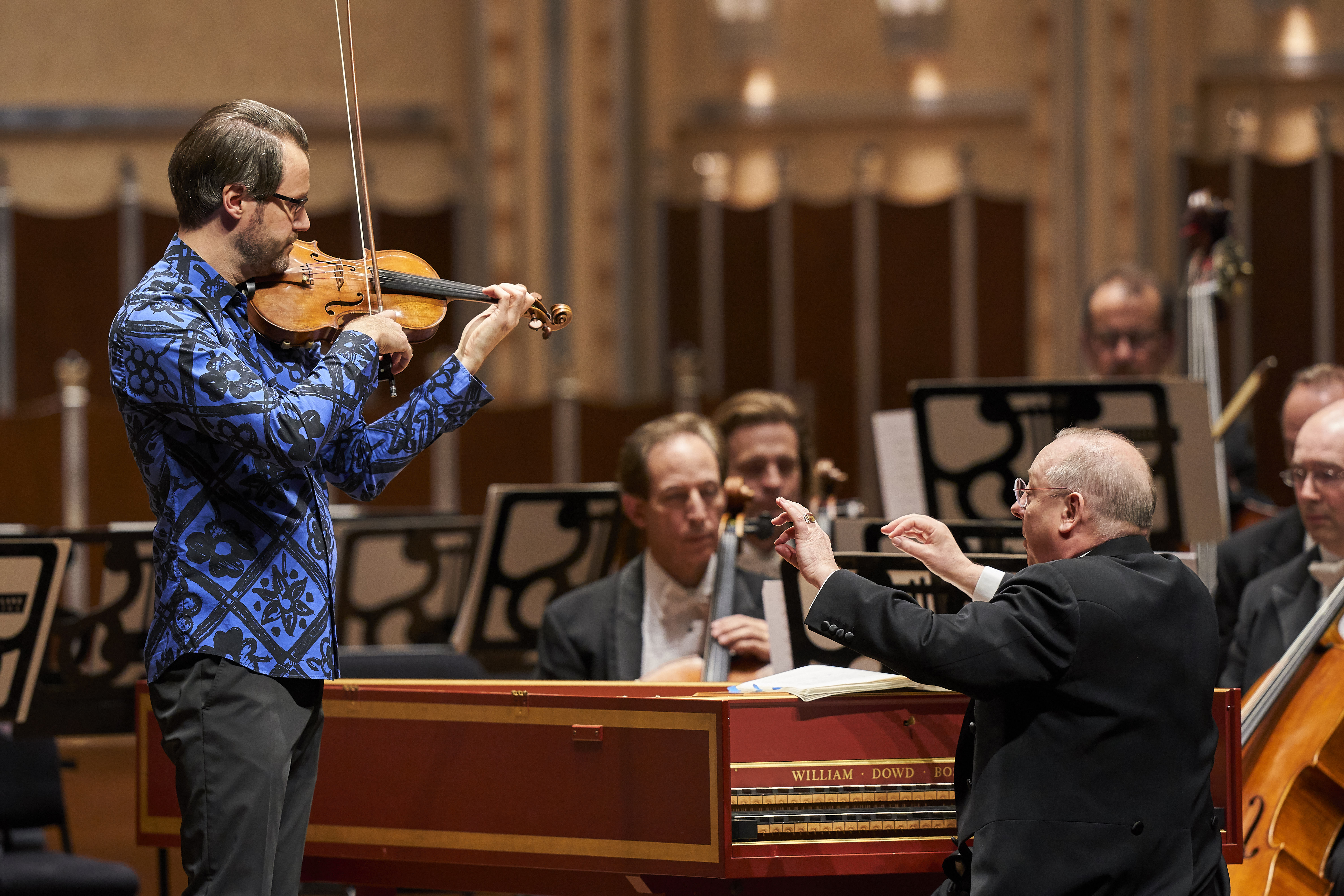
The Cleveland Orchestra’s Thanksgiving weekend concerts were an ample serving of comfort food, with the first half devoted to Vivaldi’s The Four Seasons – a follow up of sorts to last season’s traversal of another seasonal quadriptych, namely Haydn’s oratorio The Seasons. Initially published as part of the composer’s The Contest Between Harmony and Invention (Op. 8), The Four Seasons comprise the first four and certainly best known selections. These concerts were not without some controversy, however, as the violin soloist was originally slated to be the ousted William Preucil (whom I saw perform the work on this stage back in February 2007, coincidentally also under the baton of McGegan). First associate concertmaster Peter Otto was on hand to more than capably take the reins.

CLO112318_160
Peter Otto, all photos credit Roger Mastroianni, Courtesy of The Cleveland Orchestra

The immediately familiar strains of Spring featured Otto in some sprightly interplay with second violin chair Stephen Rose. Some minor intonation issues were apparent initially but soon resolved. The Largo was of long-bowed repose while the closing was a joyous dance filled with rapid passagework. A minor-key haze marked Summer, taking flight in due course in evidence of the orchestra’s tight chemistry under McGegan’s expert direction from the harpsichord. A remarkable expressiveness was achieved in the finale, while the fire returned in the breathless finale.

Autumn boasted the rustic charm of the harvest, given with an authentic rhythmic snap. An affecting melody played over undulating arpeggios in the harpsichord made the Adagio molto a standout, while the closing Allegro was – appropriately – a joyful Thanksgiving. Winter introduced dissonances that must have been shocking to audiences in Vivaldi’s day; the songful Largo, however, was enough to warm even the coldest of winter days.

The Viennese classicism of Haydn and Mozart rounded off the program. Mozart’s opera Idomeneo is thought of as his first fully mature operatic foray. The composer produced a fine suite of ballet music to accompany the work as per the French tradition, likely owing to the French origins of the original libretto. McGegan offered the opening chaconne; although satisfying I would have preferred inclusion of the modest remainder of the ballet score. Apparent from the declamatory opening onward was the immediate charm of a Mozart opera, here with the intimacy of communication fostered through the reduced-sized orchestra in playing of sparkling transparency and clarity.

Last on the menu was Haydn’s Symphony No. 94 in G major, known by its memorable moniker Surprise. A graceful and leisurely introduction set the stage for the vigor of the movement proper. Under McGegan, the orchestra operated as a single organism, achieving a wide range of expression in the development even within classical proportions. The Andante is what earned the work its nickname, full of tongue-in-cheek wit, and McGegan maximized the dynamic contrasts to further its irresistible appeal. A fine oboe solo from Jeffrey Rathbun counted as another highlight; the penultimate movement carried the swagger of an Old World minuet while the finale was a whirlwind of effervescence – one only wished it could have lasted longer.

CLO112318_214
Peter Otto and Nicholas McGegan


Summers@Severance closes in homage to 18th-century masters

Cleveland Orchestra
Jonathan Cohen, conductor
Kristian Bezuidenhout, piano
Severance Hall
Cleveland, OH
August 24, 2018

Handel: An Occasional Oratorio, HWV 62 – Overture
Haydn: Keyboard Concerto No. 11 in D major, Hob. XVIII/11
Mozart: Symphony No. 25 in G minor, K183

This summer’s concluding offering at Severance Hall from The Cleveland Orchestra culled three masterworks from the 18th-century, compressing the tried-and-true overture-concerto-symphony program format to just over an hour. Making his Cleveland Orchestra debut was conductor Jonathan Cohen, a specialist in this repertoire of particular note as artistic director of the early music ensemble Arcangelo.

The earliest work was presented first, namely the overture to Handel’s Occasional Oratorio in its first Cleveland Orchestra performance. Cohen led the reduced, almost chamber-sized orchestra in tight direction from the harpsichord, with the overture opening bold and stately, contoured by the dotted rhythms as per the French style. The small brass section added a sheen of brightness, and following the introductory material, matters took off via the fleet strings. Cast in four sections, the penultimate featured a lovely long-breathed oboe solo from Frank Rosenwein, and the work concluded in a brief but jubilant march.

Haydn’s Keyboard Concerto No. 11 in D major served as a platform for another local debut, that of South African keyboardist Kristian Bezuidenhout. The opening movement was lithe and sprightly, encouraged by Bezuidenhout’s crisp playing, direct in expression and always of utmost economy. The cadenza demonstrated his fine technique, but not without moments of introspection. In the slow movement, the sweet lyricism offered repose if not quite achieving the rapt beauty one would find in a Mozart concerto, and Hungarian finale recalled the composer’s dutiful service to the Esterházy family. Bursting with a folksy joviality, a vigorous theme in concert with the horns was of particular delight.

Mozart’s first minor key symphony – No. 25 in G minor – concluded the evening (incidentally, a few months prior TCO traversed Mozart’s only other minor key symphony, also in G minor). Opening in energetic Sturm und Drang, a looming darkness was assuaged by a singing oboe line and the buoyancy of the dance-like secondary subject. The delicate gestures of the Andante counted as calm following the storm, while the main theme of the ensuing minuet was sharply punctuated, contrasted by the mellifluous winds and brass of the trio – though here and elsewhere regrettably plagued by intonation issues. A nervous energy began the finale, its potential soon becoming kinetic to guide the work with inevitability to its ominous conclusion.

Hough and Imani Winds a sheer delight in Mostly Mozart’s A Little Night Music

Stephen Hough, piano
Imani Winds
Stanley H. Kaplan Penthouse
Lincoln Center
New York, NY
August 10, 2018

Debussy: Clair de lune from Suite bergamasque
Mozart: Quintet in E-flat major for Piano and Winds, K452
Poulenc: Sextet for Piano and Wind Quintet, FP 100

Encore:
Poulenc, arr. Hough: No. 1 from Trois mouvements perpétuels, FP 14

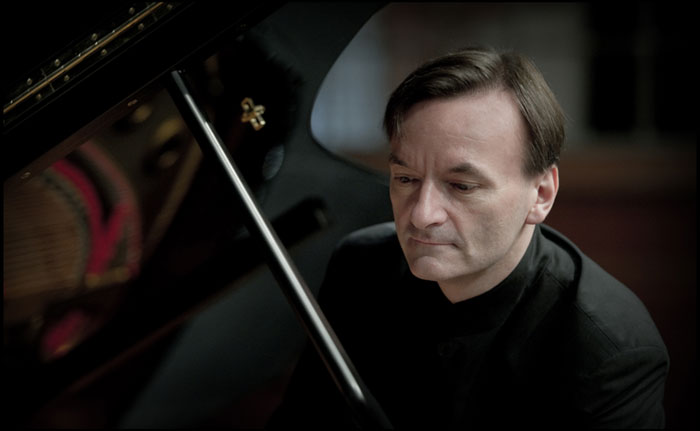
Right on the heels of the Mostly Mozart Festival Orchestra’s concluding performance of the summer season, one had a late-night opportunity to see pianist Stephen Hough in a much more intimate setting: a remarkable chamber music performance with the Imani Winds at the Stanley H. Kaplan Penthouse, part of the festival’s A Little Night Music series. Hough opened the program sans winds in a luminous, shimmering account of Debussy’s Clair de lune. Debussy is a composer to whom Hough has recently turned ample attention, releasing a very fine all-Debussy album at the beginning of the year (although one would need to look to his French Album for a recording of the present work). The acoustics in the Penthouse were a bit dry, but the striking setting of flickering candlelight and the Manhattan skyline made it a small price to pay, an atmospheric complement to the rapturous beauty of Hough’s pianism.

hough_pic46_large
Stephen Hough, photo credit Sim Canetty-Clarke

The remainder of the brief program was devoted to sterling examples of chamber works for piano and winds by Mozart and Poulenc. Hough noted that these disparate composers had little in common musically save for their wry sense of humor. A stately introduction opened the former’s Quintet (K452), giving way to a jaunty primary theme which beautifully melded Hough’s elegant keyboard playing with the graceful winds – a harmonious blend of diverse timbres. The Larghetto was sweet and dulcet in its delicate trills and ornaments, and an almost sinfully sumptuous melody was passed through the winds. The finale was a jovial affair yet in no apparent hurry with a lyrical subject at its core.

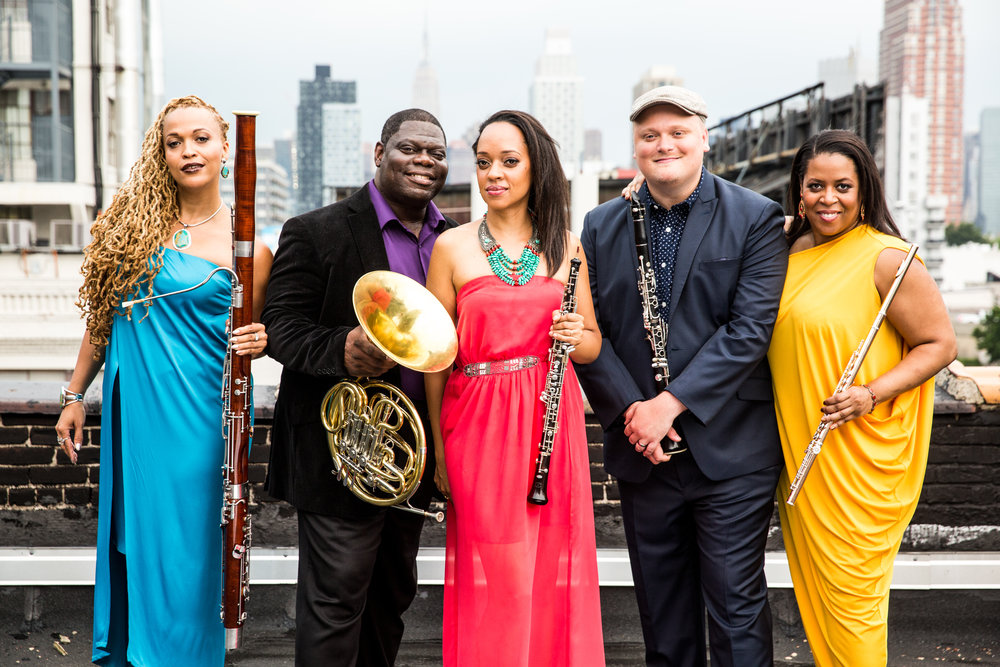
Poulenc’s Sextet, dating from the early 1930s, added the flute to the forces onstage. The commanding opening brought to life a scene bustling with coloristic contrasts and manic syncopations evoking American ragtime. A searching monologue in the bassoon (Monica Ellis) and impressionistic writing from the piano offered some introspection, only for the movement to conclude in a dramatic flourish. An underlying melancholy – perhaps another parallel to Mozart – was palpable in the central divertissement with some especially fine playing from oboist Toyin Spellman-Diaz. More frenzied contrast was manifest in due course, with a rambunctious and perky finale leading inexorably to a bright and brilliant end.

A lone encore continued the ensemble’s exploration of Poulenc, namely Hough’s own transcription for the sextet of the first of the Mouvements perpétuels (originally a work for solo piano). Hough was certainly apt in remarking it had “not a bit of angst”, and the seamless performance closed the evening in pure delight.

IMANI_WINDS_7_25_16_1022
Imani Winds, photo credit Matt Murphy

An evening in the minor with Bernard Labadie

Cleveland Orchestra
Bernard Labadie, conductor
Isabelle Faust, violin
Severance Hall
Cleveland, OH
February 15, 2018

Rigel: Symphony No. 4 in C minor, Op. 12 No. 4
Mendelssohn: Violin Concerto in E minor, Op. 64
 Encore:
 Kurtág: Doloroso, from Signs, Games and Messages
Mozart: Symphony No. 40 in G minor, K550

Despite Thursday evening’s program containing two of the most popular works in the repertoire, matters began with a certified rarity, a little-known work by a little-known composer: the Symphony No. 4 in C minor of Henri-Joseph Rigel. German born but transplanted to Paris, he was a contemporary of Haydn and Mozart with no less than fourteen symphonies to his name. The C minor work in question, published in a set of six that comprise the composer’s Op. 12, is one which this weekend’s conductor Bernard Labadie has championed for some time; I recall him including it on a Chicago Symphony program a few years back (reviewed by a colleague here).

Labadie imbued the opening with a nervous energy, a textbook example of Sturm und Drang, and the thematic material was sharply defined, given with an appropriate punch. The Teutonic fire was tempered by Gallic sensibilities during the central slow movement, a graceful, untroubled affair in the relative major, while the minor key intensity returned for the sprightly finale.

More familiar terrain was to be had in the Mendelssohn Violin Concerto which brought forth soloist Isabelle Faust. Faust took flight over the orchestra with the haunting, almost mystical theme, a rich lyricism emanating from her 1704 Stradivarius. The rapid scalar passages demonstrated her sound and confident technique (it should be remembered that this concerto was written for the legendary virtuoso Ferdinand David), while she opted for a more burnished tone in the introspective moments. At the movement’s end came a dramatic coda, while an ordinary composer would have closed here, the endless innovation of Mendelssohn’s fertile mind called for a long-breathed note in the bassoon to serve as a seamless transition to the Andante, a sublime song without words.

Further transitional material connected the finale, passionately yearning before giving way to the movement proper, spirited and celebratory. Faust received an enthusiastic and certainly well-deserved ovation – she seemed genuinely moved by it – and treated the audience to a most imaginative encore choice in Kurtág’s Doloroso, atmospheric in its unnervingly barren texture.

One could reasonably trace the Rigel symphony as a distant forebear to Mozart’s incomparable Symphony No. 40 in G minor, it also being a work of searing intensity in the minor. Labadie elected to conduct the Mozart from memory, and the fact that he remained seated at a piano bench did little to detract from the energy he offered. The work began in a whisper, almost sotto voce, with germs of themes building to great pathos, occasionally alleviated by a more lyrical secondary theme. Labadie achieved deft balance of the instrumental voices, and one was grateful that Mozart later rescored the work to include the clarinet as the pair added a lovely and mellifluous contrast.

The Andante served as a respite with the downward cascades in the winds especially charming, while the irregular syncopations of the minuet were dynamically punctuated, countered by the gentler trio (a horn flub or two notwithstanding). The brisk finale was a whirlwind of orchestral effect, one moment in the minor, the next in a joyous major, and perhaps most impressive was the sophisticated fugato, executed with a crystal-clear precision.

Amidst program changes, Pittsburgh Symphony shines in Mozart and Schubert

Pittsburgh Symphony Orchestra
Manfred Honeck, conductor
Lorna McGhee, flute
Heinz Hall
Pittsburgh, PA
November 5, 2017

Mozart: Overture to Idomeneo, K366
Mozart: Flute Concerto No. 1 in G major, K313/285c
Schubert: Symphony No. 9 in C major, D944, Great

Last weekend’s program at the Pittsburgh Symphony underwent several iterations before taking its final form, and it was a testament to strength of the musicians on stage how polished the end result came across nonetheless. Christoph von Dohnányi was originally scheduled to conduct, but was forced to withdraw all of his autumn engagements (which were also to include appearances with the orchestras of New York, Boston, Cleveland, and Chicago) while still recovering from a fracture suffered earlier this year. Dohnányi’s program was slated to open with Bartók’s Music for Strings, Percussion, and Celesta, but when PSO music director Manfred Honeck stepped in, the Bartók was dropped in favor of Mozart’s Concerto for Flute, Harp, and Orchestra. All was well until harpist Gretchen Van Hoesen had the misfortune of a hand injury, and the program was altered one last time to a Mozart overture and flute concerto.

Manfred_Honeck_c_Felix_Broede_MG_2748-small_300
Manfred Honeck, photo credit Felix Broede

The overture to the opera seria Idomeneo boasted a stately, regal opening, but soon took some unexpected chromatic excursions. This brief but rousing selection was given with a grandeur and a high-energy workout by the PSO. The Flute Concerto No. 1 in G major brought PSO principal Lorna McGhee into the spotlight, a gifted soloist whom I have previously enjoyed hearing serve on occasion as guest principal at the Chicago Symphony (see here and here).

The opening Allegro maestoso was of pearly balance and clearly delineated proportions, while McGhee’s limber flute passages were a graceful addition, always with an elegant attention to phrasing, and the cadenza showed her at her acrobatic best. The central slow movement featured the unusual inclusion of a pair of orchestral flutes, and McGhee responded to her colleagues in kind with a gorgeous, long-breathed melody. As for the concluding rondo, playfulness and joviality abounded in Mozart at his sunniest, leading up to its unassuming tongue-in-cheek ending.

The one constant of the program otherwise in the aforementioned flux was Schubert’s Symphony No. 9 in C major, to make for a weighty second half. Now in his tenth season as music director, Honeck has cultivated a remarkable rapport with the musicians, and this was quite apparent in the way the moving parts of this daunting work came together so seamlessly. A spacious opening in the trombones served as a gentle call to attention, and a burst of energy inaugurated the movement proper. Honeck took matters at a brisk pace (with total performance time only just passing the 50-minute mark), and opted for a tauter structure in jettisoning the repeat of the exposition. The proportionally brief development was highlighted by fine solos from the principal winds, and in due course the trombones returned to herald a triumphant coda.

A sumptuous song without words made for a memorable slow movement, notable for the intensely lyrical solos in the oboe. Music of more urgency offered some contrast and initiated a gorgeous, flowing theme chiefly in the strings with guest concertmaster Alexi Kenney at the helm. There was breathless vigor in the scherzo, countered by a more songful trio, and the finale was yet another high-octane affair – while it began perhaps a notch too loud, this zealousness did little to detract from the symphony’s bold conclusion.

_O1A8961
Lorna McGhee, photo credit Takuyuki Saito

Mozart’s Requiem a rousing close to Summers@Severance

Cleveland Orchestra
Patrick Dupré Quigley, conductor

Lauren Snouffer, soprano
Emily Fons, mezzo-soprano
Steven Soph, tenor
Dashon Burton, bass-baritone

Blossom Festival Chorus
Robert Porco, director

Severance Hall
Cleveland, OH
August 18, 2017

Mozart: Requiem, K626

In a thrilling close to this season’s triptych of Summers@Severance offerings, the Cleveland Orchestra joined forces with the Blossom Festival Chorus and a quartet of vocal soloists in Mozart’s enigmatic final work, the incomparable Requiem (presented in the familiar completion by Franz Xaver Süssmayr).  Making his podium debut was Patrick Dupré Quigley, founder and artistic director of the South Florida based choral ensemble Seraphic Fire, who collaborated with the Orchestra in last March’s memorable performance of Stravinsky’s Threni.  Not one to be restrained by the conventions of historical performance practice, Quigley opted for an orchestra and chorus expansive in number, what it may have lacked in authenticity it more than made up for in a rich tapestry of sound.

PDQ Pub Conducting
Patrick Dupré Quigley

From the opening bars of the Introit, one was struck by the gripping intensity and seriousness of purpose, and the resonant tones of the pair of basset horns offered an early instrumental highlight, while Joela Jones’ organ gave matters an almost monastic quality. With graceful gestures, Quigley adroitly held all the moving parts in tight alignment, and soprano Lauren Snouffer provided and heaven-reaching solo passage.  The brief Kyrie was marked by an intricate fugato, with all voices deftly balanced and clearly delineated.

Ample fire and passion filled the Dies irae to open the extensive Sequence, and rapid execution was to be found in this technical tour de force.  The Tuba mirum constituted a further highpoint, with the heft of bass-baritone Dashon Burton in dialogue with the trombone, and the more strained quality of Steven Soph’s tenor offered effective contrast.  The full force of the chorus was rallied in the ensuing Rex tremendae, coming together in especially striking fashion on the word “majestatis”, a majestic moment indeed.  All four soloists had their due in the Recordare; in spite of the relatively youthful age of the quartet, they attained a balance and chemistry one would expect from a much more seasoned group.

A menacing vigor drove the Confutatis, with particular grit in the strings, only to be countered by the angelic voices of the female choir.  A resounding major closed the famous Lacrymosa, a glorious moment which could hardly have been anticipated by the innocent sighs with which it began.  The polish of the Blossom Festival Chorus (incidentally, a volunteer group) truly shone in the Offertory, and further in negotiating the counterpoint of “Osanna in excelsis” which concluded both the Sanctus and Benedictus.

Melancholy returned in the august Agnus Dei (this is, after all, a requiem), and the wistful introspection of the opening was invoked in the concluding Lux aeterna, surely the most inspired moment of Süssmayr’s completion.  Snouffer was effective in her final solo, and the weight of the chorus built to one last fugue.  A dramatic pause kept the audience spellbound before delivery of the concluding line, a memorable finish to a very successful summer season at Severance Hall.