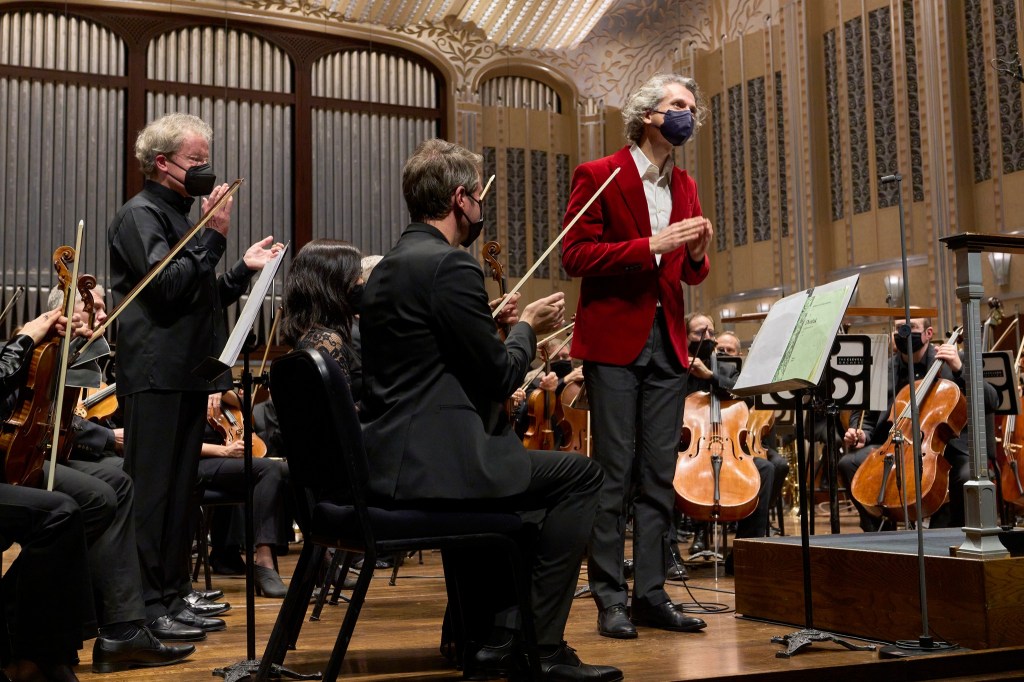
Robin Ticciati makes notable Pittsburgh debut with impassioned Berlioz

Pittsburgh Symphony Orchestra
Robin Ticciati, conductor
Francesco Piemontesi, piano
Heinz Hall
Pittsburgh, PA
October 10, 2025

Beethoven: Piano Concerto No. 4 in G major, Op. 58
 Encore:
 Mozart: Piano Sonata No. 12 in F major, K332 – 2. Adagio
Berlioz: Symphonie fantastique, Op. 14

The second week of the Pittsburgh Symphony’s 2025-26 subscription season saw the first of several debuts on tap in British conductor Robin Ticciati. The program was comprised of two major and deeply rewarding works, one at the precipice of Romanticism, the other, the epitome of Romanticism. Beethoven’s genial Piano Concerto No. 4 brought back pianist Francesco Piemontesi, last appearing on this stage just a few months ago.
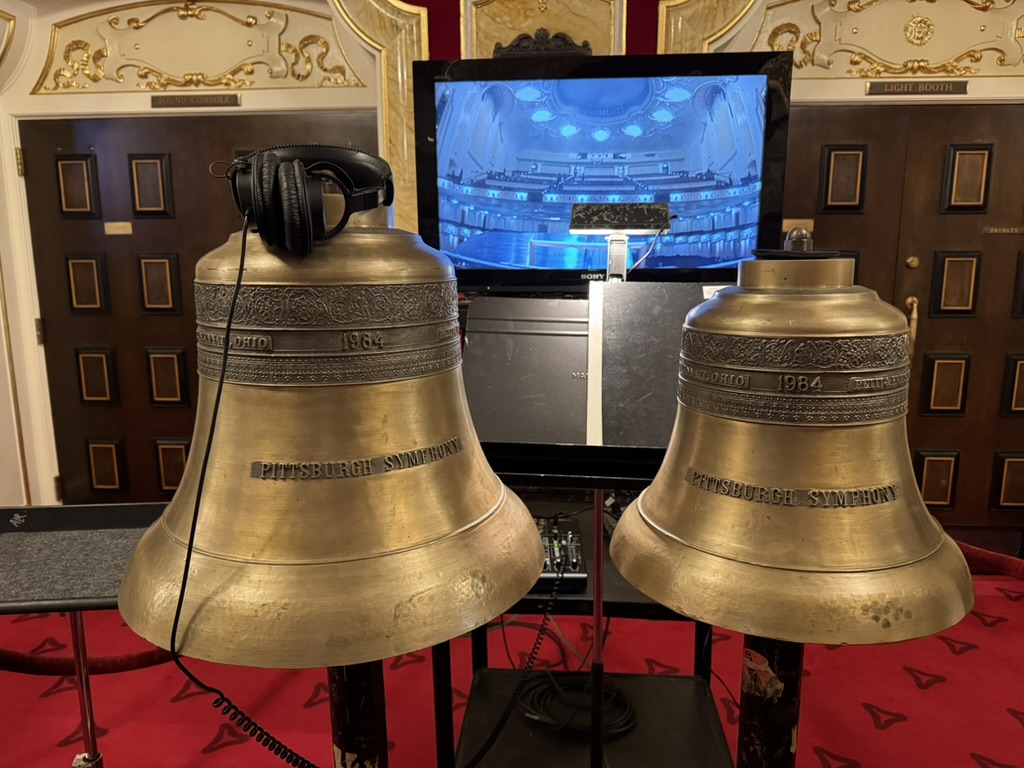
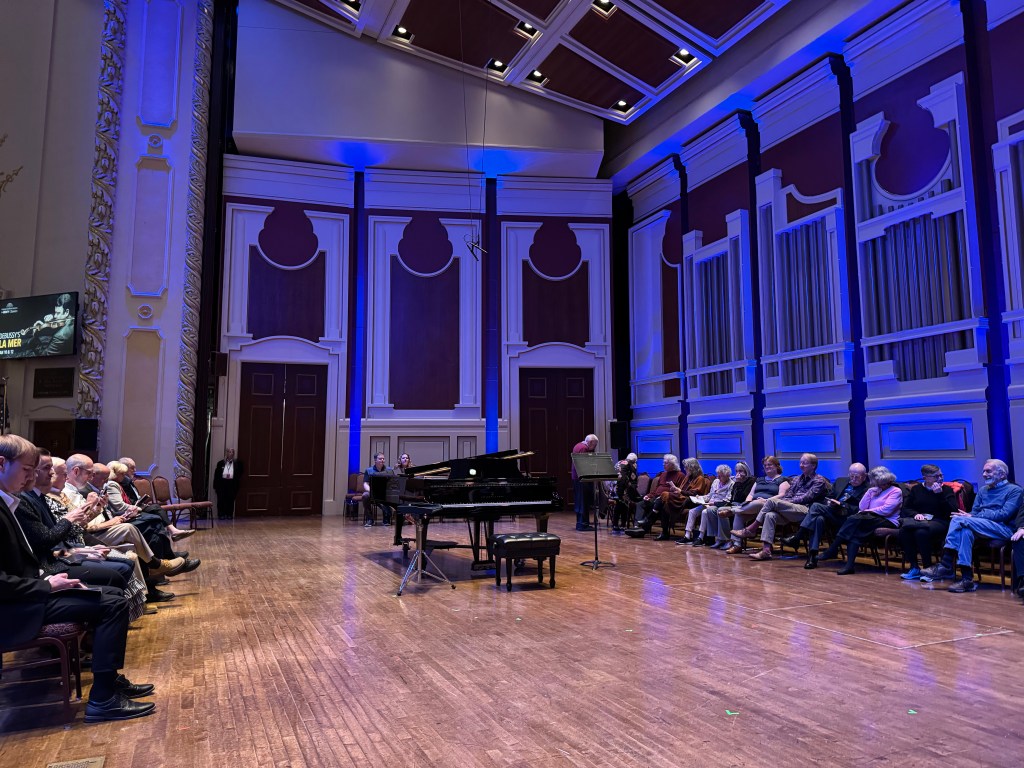
Offstage bells used in the Symphonie fantastique

The solo piano opened the work with a gentle resonance, followed by a long-breathed orchestral exposition. The most intimate and personal of Beethoven’s five piano concertos, Piemontesi drew deep reserves of expression. His thoughtful, probing playing perhaps recalled that of his mentor, Alfred Brendel, and he found great drama in the cadenza. In the Andante con moto, coarse strings introduced the plaintive piano, arriving at a spiritual stasis amidst moments of agitation. As if unsure what direction to go after, the closing rondo started in hesitation before robustly bursting forth with vigor and abandon. For an encore, the pianist selected a lovely slow movement from a Mozart sonata.

Revolutionary a work as it may be, Berlioz’s Symphonie fantastique was written only three years after Beethoven’s death. Tentative beginnings introduced a dreamlike trance, and Ticciati teased out the richness of the strings, favoring minimal vibrato. I was struck by his energetic conducting, nearly using his entire body as his baton danced along to the music. Still, at times the orchestral balance left something to be desired. The first presentation of the idée fixe that binds the work was graceful and filled with longing.

In Un bal, the harps introduced an elegant waltz theme; a striking dialogue between English horn and offstage oboe opened the central Scène aux champs. A widely contrasting portrait of nature, matters went from the calm to the passionate to the stormy, ending with the forlorn English horn all alone. Matters came alive in the iconic Marche au supplice, given an energetic workout in all its brassy splendor. The closing Songe d’une nuit du sabbat opened in an eerie soundscape, filled with the striking timbres of the shrill E-flat clarinet, tolling bells (performed offstage from the lobby), and a chilling invocation of the Dies irae chant in the low brass.

In a post-concert performance, Piemontesi teamed up with PSO wind players for the latter two movements of Beethoven’s Quintet for Piano and Winds. A lovely pendant to the evening, and given the pianist’s chemistry with these players, I’d love to see him perform as part of the orchestra’s PSO360 series.

Two personal notes. One of my fondest concert memories consists of this same Beethoven/Berlioz pairing. The first of many performances I attended at Vienna’s Musikverein during a formative college year in the Austrian capital, conductor and piano were respectively Claudio Abbado and Maurizio Pollini — two of my musical heroes who are sadly no longer with us.

I am eagerly anticipating Marc-André Hamelin’s next album Found Objects/Sound Objects, due for release at the end of the month. In quintessential MAH fashion, it’s an enterprising blend of little-known works mostly dating from the last half-century. The disc concludes with his own Hexensabbat (Witches’ Sabbath). With obvious allusions to the Berlioz (including use of the Dies irae), how fitting it was for the track to be released as a single the same day as the PSO performance — and it’s a thrilling listen.
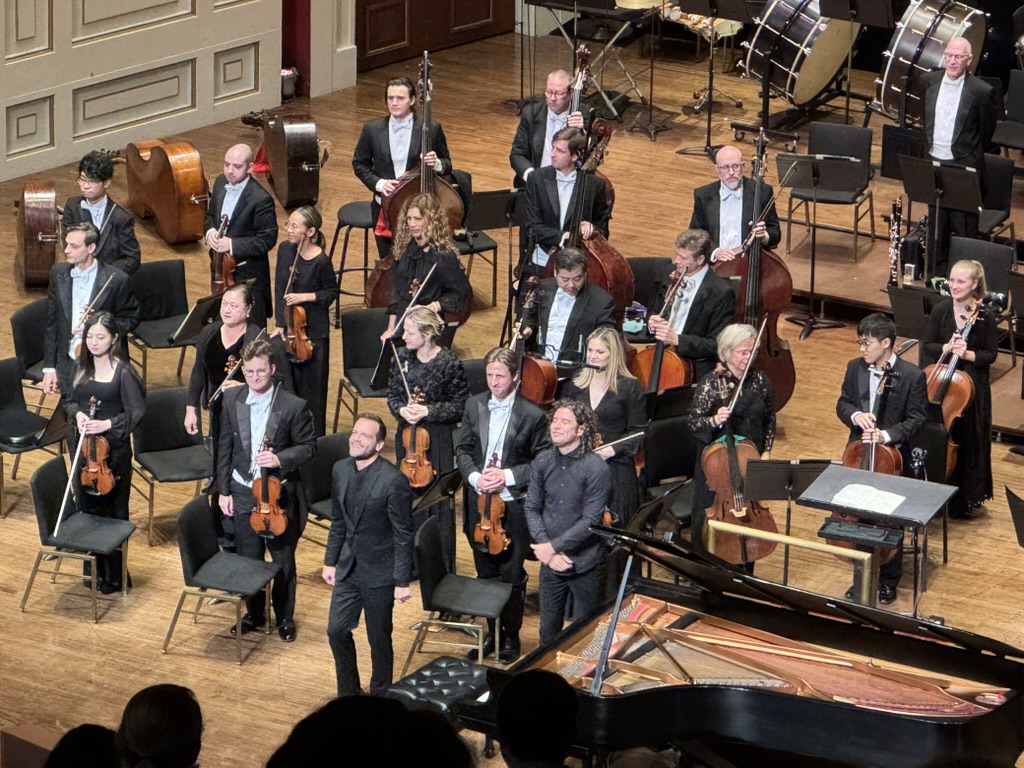
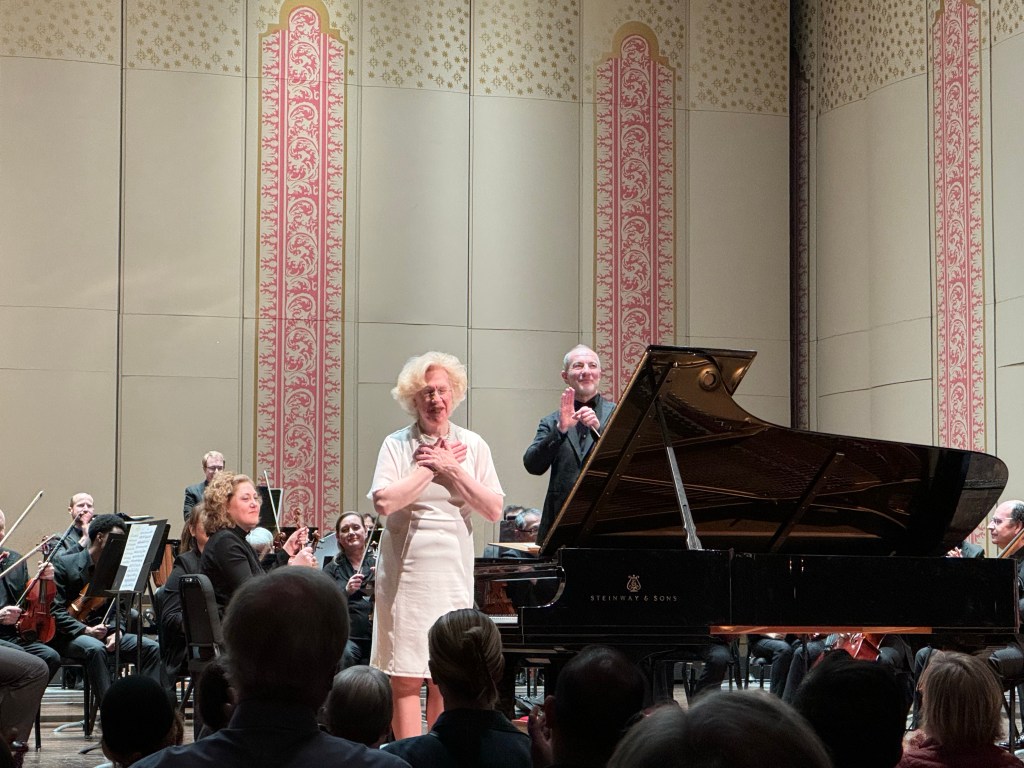
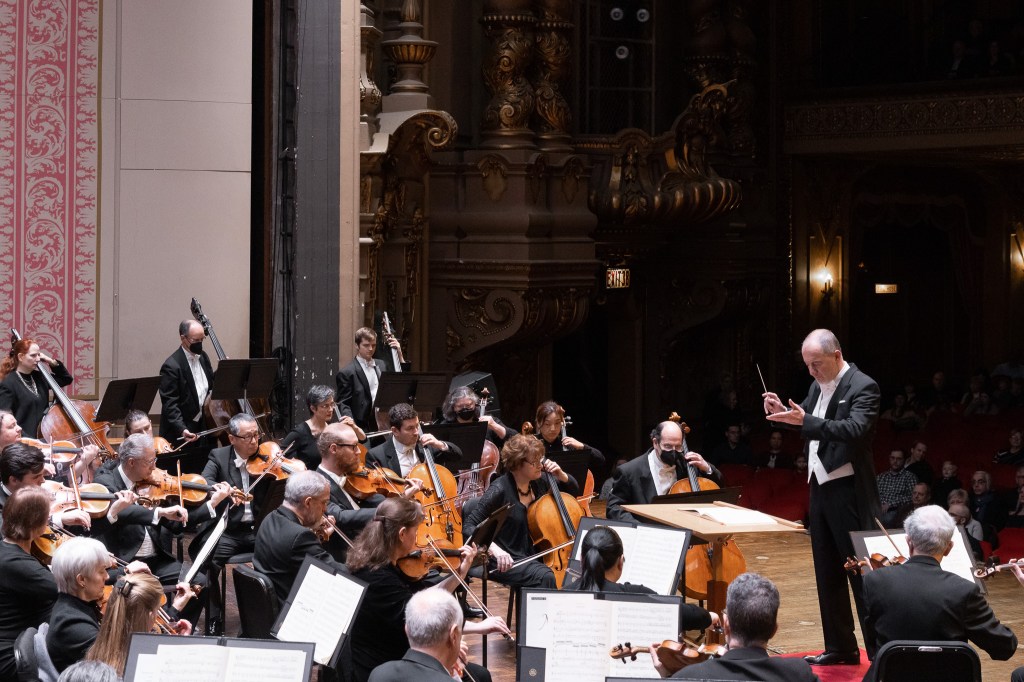
Francesco Piemontesi, Robin Ticciati, and the PSO

Honeck leads lavish program of varied Viennese repertoire in Pittsburgh

Pittsburgh Symphony Orchestra
Manfred Honeck, conductor
Emanuel Ax, piano
Heinz Hall
Pittsburgh, PA
February 21, 2025

Ishizaki: Spin
Mozart: Piano Concerto No. 25 in C major, K503
 Encore:
 Chopin: Nocturne No. 7 in C-sharp minor, Op. 27 No. 1
Korngold: Symphony in F-sharp major, Op. 40

All three works on Manfred Honeck’s generous Pittsburgh Symphony engaged in some fashion with the rich musical heritage of Vienna. The opening turned to a local voice, 24-year-old Pittsburgh area native Hannah Ishizaki, currently a doctoral student in music composition at Princeton (see NEXTpittsburgh for a lovely interview). Receiving its world premiere was Spin, a five-minute curtain-raiser that drew on dance traditions as disparate as Viennese waltz and electronic dance music.

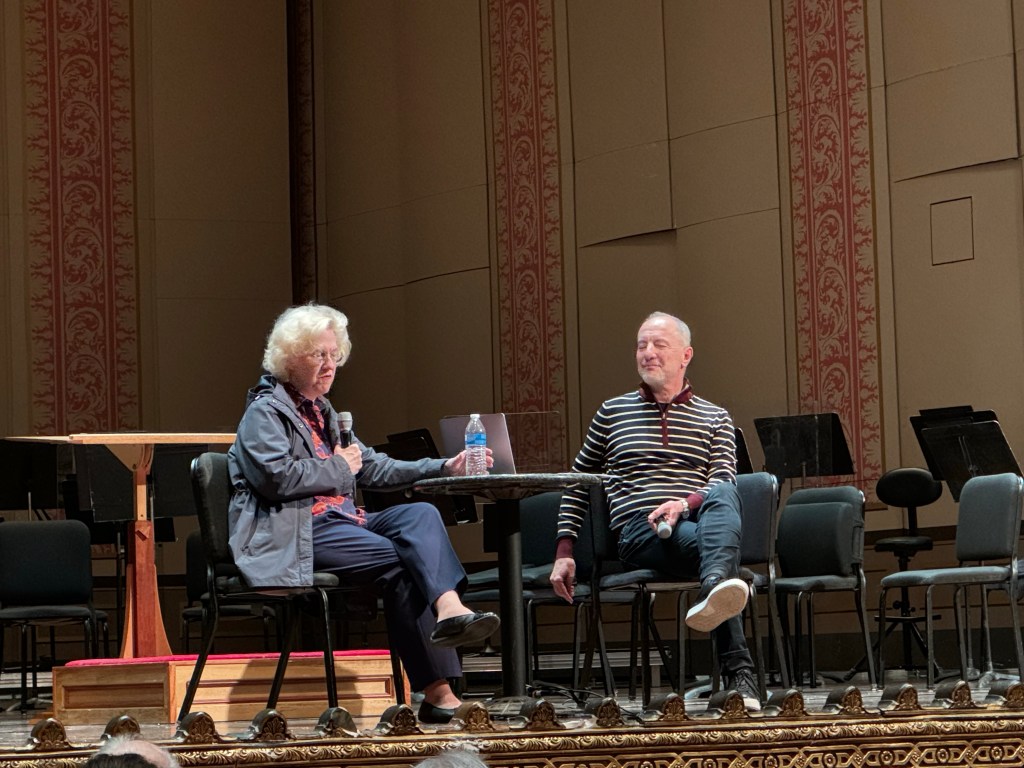
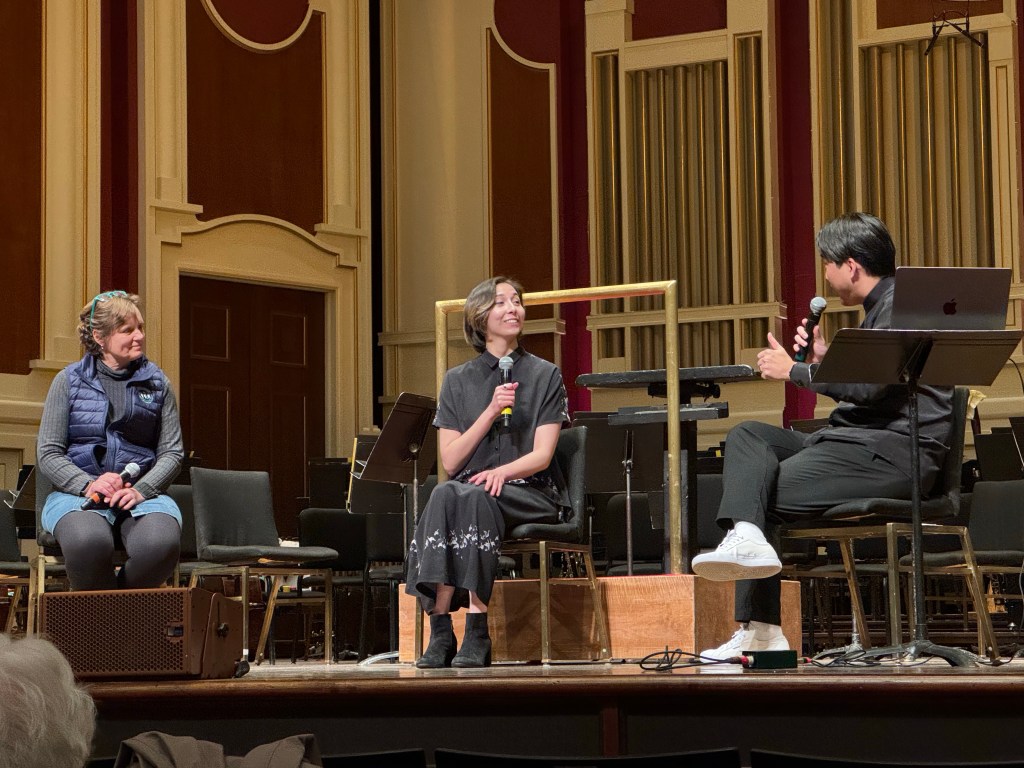
Pre-concert interview with piccolo Rhian Kenny, composer Hannah Ishizaki, and assistant conductor Moon Doh

The work began almost in media res, as if it had always been in motion, dropping the needle in the thick of things. Driving rhythms made for an exciting listen, and Ishizaki made skillful use of the large orchestra she employed. A homecoming for the composer, writing for this orchestra in this hall is not without deep personal significance. A solo passage invoking a kinetic dance club beat was given to the contrabassoon, whom the composer counts as a mentor.

There’s hardly a more choice soloist in a Mozart piano concerto than Emanuel Ax, and the regal no. 25 in C major was a particularly fine vehicle for the pianist’s pearly technique and refined interpretation. A bold opening was fitting for one of the composer’s grandest conceptions in the medium, and the orchestra offered a nuanced reading, with detailed inflections and attention to the inner voices. The pianist’s entry was in the shape of just a single line, hesitant at first, before its full flourishing, displaying the crystalline, rippling playing of this masterful Mozartean.

Easily surmounting the decorative trills, rapid scales, and other technical demands, Ax also offered his own cadenza, an essay artfully expressive and wide-ranging. The central Andante served as a songful blending of piano and orchestra, and the finale brimmed with Viennese elegance, pointed and articulate. More so than the typical Mozart finale, it also probed the lyrical, particularly when Ax was in a lovely dialogue with the winds. A warmly enthusiastic reception — Ax seemed visibly moved — brought him back for an encore in a Chopin nocturne, a quantity which starkly contrasted the languid and the dramatic.

Something of a Mozart of his day, Erich Wolfgang Korngold was a prodigy in Vienna of extraordinary precocity. Fleeing the Nazis, he then found fame and fortune in Hollywood where he became one of the first major composers of film scores (John Williams cites him as a major influence). His sole symphony dates from the mid-1950s and is cast in the unusual key of F-sharp major. It’s not a work one encounters in concert often, but seems to have had a resurgence lately — a performance by the Berlin Philharmonic was quite memorable for this listener, and The Cleveland Orchestra has also programmed it in a recent season.

A jagged primary theme took shape in the clarinet, teetering on the brink of tonality, but firmly residing in the late Romantic tradition. Honeck and the PSO delivered a bracing, razor-sharp reading of this dense score with singular drama. As sumptuous as it gets, it’s almost to the point of excess and — as if one perhaps had a few too many slices of sachertorte. A high-octane scherzo followed, further showing the variegated color spectrum, with particularly piquant splashes from the piano and celesta. Matters were at the very edge of control without ever falling into chaos, and the brass passages had the cinematic effect of a film score.

Korngold looked towards Austrian compatriot Anton Bruckner in the towering slow movement, conceived in this case as a memorial to FDR. Brass and strings resounded through Heinz Hall, swelling to lush textures, though a solo passage for flute was delicately forlorn. The finale returned to the vigor and angular gestures of the opening, and militant brass fanfares threaded George M. Cohan’s Over There into the score. A welcome opportunity to hear a major if infrequently performed work — and certainly a highlight of the PSO season thus far.

In a brief post-concert performance, a quintet of PSO string players offered the first movement of Dvořák’s String Quintet No. 2, Op. 77. The use of double bass gives this work an orchestral heft, and made for a delightful capstone to the Dvořák heard the previous week.

Manfred Honeck, Emanuel Ax, and the Pittsburgh Symphony

Pianist Tom Borrow joins Pittsburgh Symphony musicians for an evening of chamber music

Tom Borrow, piano
Justine Campagna, violin
Jeremy Black, violin
Tatjana Mead Chamis, viola
Anne Martindale Williams, cello
Strings of the Pittsburgh Symphony Orchestra

Heinz Hall
Pittsburgh, PA
October 19, 2024

Mozart: Violin Sonata No. 21 in E minor, K304
Grieg: Holberg Suite, Op. 40
Dvořák: Piano Quintet in A major, Op. 81

One of the Pittsburgh Symphony’s more enterprising endeavors is the PSO360 series, which engages the guest soloist from the weekend’s subscription concerts in chamber music with select PSO members. An intimate audience of 200 is seated on the Heinz Hall stage, circled around the performers, affording the opportunity to see another side of the soloist and orchestra players alike.

The soloist in question was the young Israeli pianist Tom Borrow, who made a strong impression in the performances of Ravel’s piano concerto that flanked Saturday’s chamber concert. To begin, Borrow teamed up with associate concertmaster Justine Campagna in Mozart’s E minor violin sonata. The only work in Mozart’s vast catalogue to be cast in that key, it’s a particularly deeply-felt creation, one that the program notes aptly compared to the A minor piano sonata (K310) for its expressive range.

Campagna was elegant and articulate, and Borrow responded in kind with sparkling, quintessentially Mozartian pianism. The development section was particularly emotive, and the minuet that closed the two-movement sonata was perhaps the most profound of all minuets, a rich conversation between violinist and pianist.

Grieg’s Holberg Suite brought out the Pittsburgh string section, and there was a visceral energy in being onstage with 20 string players, evident from the effusive prelude which opened. Peaceful, lyrical movements followed, swelling to a warm resonance, and I was especially struck by the clarity of the inner voices. Perhaps most affecting was the Air, songful and mournful — and a touching homage to Bach. The Rigaudon brought the suite to a close with joyous abandon.

Following intermission, Borrow returned with a quartet of strings for Dvořák’s great A major piano quintet. A graceful introduction in the piano paved the way for a lyrical cello passage (Anne Martindale Williams). The five players wove together a rich tapestry with a feverish intensity, yet at its core still as good-natured as the composer himself. An elegant piano gesture marked the Dumka, a wistful essay punctuated by gorgeous interludes.

There was a vivacity to the folk inflections of the Scherzo that could only put a smile on one’s face, and the finale continued in the highest of spirits — but not without a blistering fugato. Here as throughout, Borrow sounded like a seasoned collaborator with these Pittsburgh players.

Tom Borrow with members of the Pittsburgh Symphony

Columbus Symphony closes season in the splendor of Mozart

Columbus Symphony Orchestra
Rossen Milanov, conductor
Aubry Ballarò, soprano
Hilary Ginther, mezzo-soprano
David Walton, tenor
James Eder, bass

Stephen Caracciolo, chorus director
Columbus Symphony Chorus

Ohio Theatre
Columbus, OH
May 24, 2024

Mozart: Mass in C minor, K427, Great (completion by Ulrich Leisinger)

For the final program of the 2023-24 Masterworks season, the Columbus Symphony offered a single work in a brief but affecting program, an evening dedicated to Mozart’s C minor mass. Like the Requiem, Mozart never completed the Mass, and the CSO presented the work in a 2019 realization by Ulrich Leisinger, which eschews a liturgically complete mass in favor of only minimal additions to Mozart’s extant corpus.

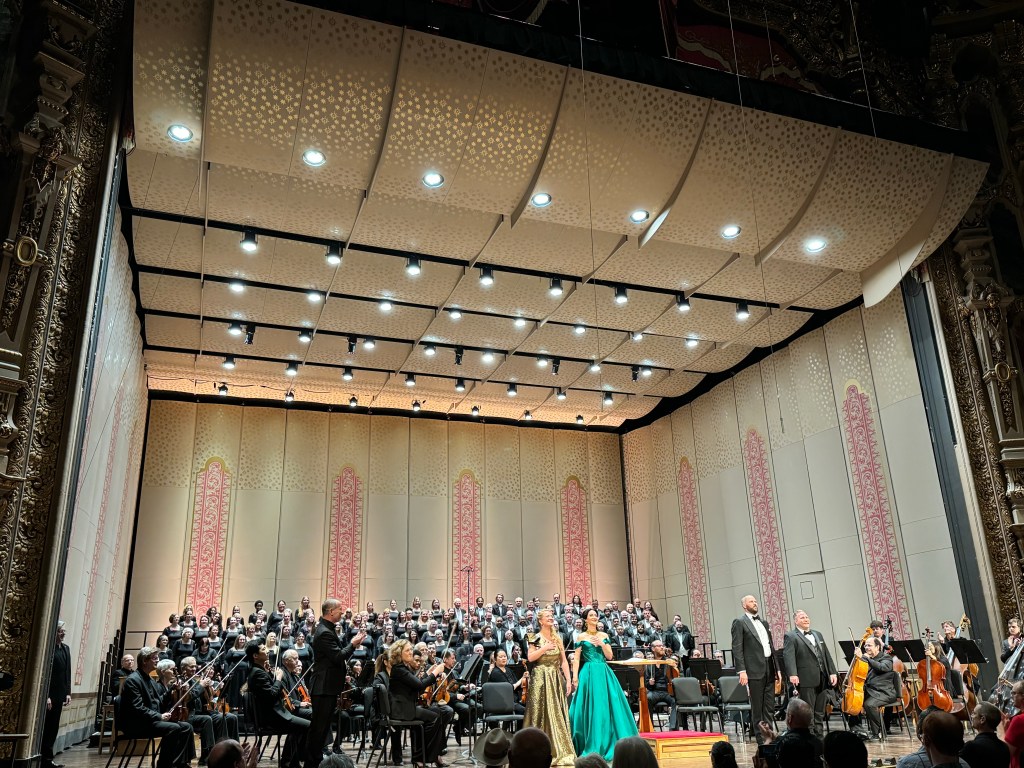
L-R: Rossen Milanov, Aubry Ballarò, Hilary Ginther, David Walton, and James Eder with the Columbus Symphony & Chorus

Under Rossen Milanov’s baton, the opening Kyrie began intimate and inward, quite striking for such a grandiose conception. Matters quickly grew in urgency, however, with the Chorus – prepared by Stephen Caracciolo – filling the cavernous Ohio Theatre. “Christe eleison” was intoned by soprano Aubry Ballarò, with flowing, extended melismas yielding a resonant effect – and I couldn’t help being reminded of the passage’s use in Amadeus.

The extensive Gloria began resplendent and exultant, structured such that the chorus alternated with the soloists, either as individuals or in various combinations. Hilary Ginther offered a second soprano voice in “Laudamus te,” articulate, and in command of the vocal intricacies, while “Dominus Deus” saw her in harmonious blend with Ballarò. In “Qui tollis,” the chorus was rapt and pious in the minor key profundities. The women were combined with tenor David Walton in “Quoniam,” the latter a bit overshadowed, and the final passage of the Gloria was given to the chorus, resplendent in its exacting counterpoint.

In the Credo, a soprano solo (Ballarò) prefaced an orchestral interlude, notable for fine playing from the winds. This was somewhat lighter fare compared to the preceding, but still certainly no trifle. The Sanctus was brightened by the brass – with the trombones especially striking – and the closing Benedictus was given heft with the sole appearance of bass James Eder, though it was the chorus who ultimately brought the work to its resonant close.

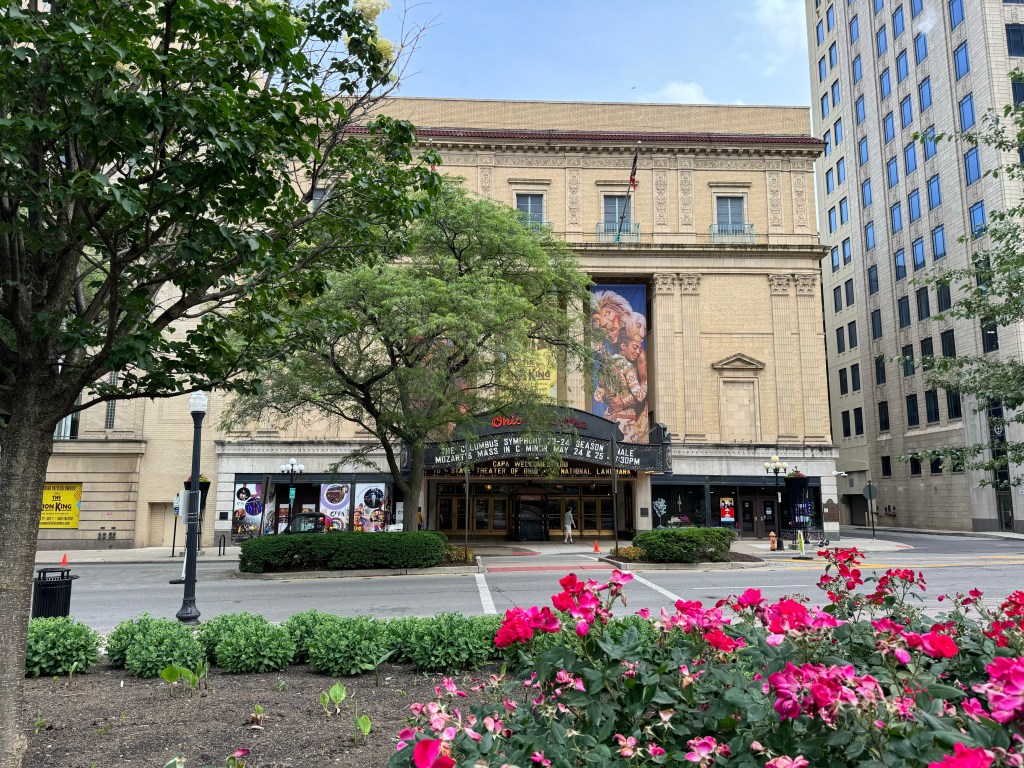
Ohio Theatre ahead of Friday’s performance

Sara Davis Buechner joins Columbus Symphony in Viennese program

Columbus Symphony Orchestra
Rossen Milanov, conductor 
Sara Davis Buechner, piano
Ohio Theatre
Columbus, OH
April 5, 2024

Haydn: Symphony No. 82 in C major, Hob. I:82, The Bear
Mozart: Symphony No. 31 in D major, K297, Paris
Beethoven: Piano Concerto No. 1 in C major, Op. 15

Encore:
Gershwin: The Man I Love

This weekend’s Columbus Symphony program traversed Haydn, Mozart, and Beethoven, all of whom spent most of their professional life in Vienna, and crystallized and embodied what we now know as the Classical style. Though a Viennese evening, the first two selections were associated with Paris, beginning with Haydn’s Symphony No. 82. The first of the six so-called Paris symphonies, it and its successors were written on commission for performances in the French capital throughout 1786.

Sara Davis Buechner, Rossen Milanov, and the Columbus Symphony

Despite its numerical order, No. 82 was the last of the Paris symphonies to be composed. The rather heavy-handed opening lumbered forward, soon to be countered by a gentler theme in a back and forth with the more martial material. The development introduced some piquant dissonances that to my ears seemed to anticipate those in Beethoven’s Eroica. Haydn showed himself master of the double variation in the Allegretto. The finale was marked by a sustained drone, giving rise to the work’s ursine nickname, imitating the music used to accompany the barbaric practice of dancing bears, in any case, themes of folk inflection gave the symphony a spirited close.

Though the program was presented chronologically by composer, Mozart’s Paris symphony (no. 31) predates Haydn’s by almost a decade. A bold opening – and perhaps a bit overbearingly so Friday night – showcased the expanded orchestra (inclusive of clarinets, the first Mozart symphony to employ them), a quantity that must have dazzled Parisian audiences at the time. Delicately drawn-out melody made the central slow movement especially lyrical, and the finale was a pristine balance of both abandon and sophistication.

The first of Beethoven’s five genre-defining piano concertos brought forth Sara Davis Buechner as soloist. A gentle theme brimming with playful potential was heard from the orchestra, though the time-honored tradition of an orchestral introduction is a device the composer would jettison in his later works in the medium. Buechner’s entry was an elegant affair, deftly ornamented and replete with smooth runs across the keyboard, engaging in an energetic conversation with the orchestra. Though the work still very much bears the influence of Mozart, a lyrical flourish several minutes in unmistakably showed Beethoven’s individual stamp. Buechner’s snappy rhythmic punctuations and dynamic contrasts imbued the performance with excitement, and especially so in the wide-ranging cadenza of her own device (though perhaps not as wide-ranging as the one Alkan supplied for the Third Concerto!).

The Largo was gorgeous and serene, a mood sustained by the delicate cantilena in the piano. Quite a contrast to the Allegro scherzando finale which rivaled the mischievousness of his teacher Haydn – and moreover, in this case a nod to one Andreas Hofer – and Buechner offered a reading with flexibility and freedom. An enthusiastic reception brought her back for an encore which she introduced as “an unnecessary delay before my first martini” – a delay we’re grateful for, as it proved to be a lovely and sultry account of Gershwin’s The Man I Love.

Buechner and Milanov during the preconcert conversation

Rare Rachmaninoff anchors Columbus Symphony’s decidedly D minor program

Columbus Symphony Orchestra
Rossen Milanov, conductor
Elina Vähälä, violin
Ohio Theatre
Columbus, OH
March 22, 2024

Mozart: Overture to Don Giovanni, K527
Sibelius: Violin Concerto in D minor, Op. 47
Rachmaninoff: Symphony No. 1 in D minor, Op. 13

All three works on last night’s Columbus Symphony program were cast in the stormy key of D minor, a programming choice that seemingly mirrored the gloomy, rainy conditions outside the Ohio Theatre (Beethoven also chose that key for his Tempest sonata). The overture to Mozart’s great opera Don Giovanni is always an effective and attention-grabbing curtain-raiser. Beginning unequivocally bold and tragic, contrasting material was given briskly and with crisp articulation.

Preconcert conversation with Elina Vähälä and Rossen Milanov

Jean Sibelius’s Violin Concerto brought forth soloist Elina Vähälä who shares the composer’s Finnish heritage (though she spent the first part of her childhood in Iowa). Hesitant tremolos in the orchestra opened, with Vähälä’s lyrical, dark-hued solo line taking shape. She delivered with a passion that was fiery yet never showy, not the least in the extended cadenza. A slow movement followed in songful fashion, growing in intensity with a series of searing, rising trills. The foot-tapping rhythmic vitality of the finale left one in good spirits after the Nordic chill of the preceding.

The premiere of Rachmaninoff’s First Symphony is one of music history’s greatest disasters. The most ambitious work to date from the composer then in his early twenties, the first performance of the complex score suffered from inadequate rehearsal time and a purportedly inebriated Alexander Glazunov at the podium. The symphony – despite showing enormous promise – was all but forgotten until after the composer’s death, and Rachmaninoff fell into a deep depression that impeded his ability to write for the next few years. Friday night marked its very belated Columbus premiere, and credit to Milanov and the CSO for shedding light on an unjustly neglected work.

A triplet motif opens all four movements; in the first, it signaled a plunge into darkness. Despite being a youthful work, so many of the hallmarks one associates with Rachmaninoff are already very much apparent: sweeping melodies, colorful orchestrations, folk-inflected themes, and use of the plainchant Dies irae. This is in fact the composer’s first appropriation of Dies irae, a theme that would virtually become his calling card, wandering through so much of his output – and here it was given a particularly scintillating treatment about halfway through the opening movement.

The lilting Allegro animato was a bit gentler, though not immune from the somber Dies irae which acted as a binding agent throughout the work. A Larghetto was a calming interlude, if not quite reaching the heartwrenching heights of the slow movements the composer would become famous for, though an extended clarinet solo seemed to predict that of the Second Symphony. Delicate dialogue between concertmaster Joanna Frankel and principal cello Luis Biava was a further highpoint. A swashbuckling march theme opened the finale, swelling to searing melody in true Rachmaninoff-ian fashion. In the closing moments, the tempo slowed considerably for a coda with gravitas – and at long last, a brief glimpse of D major.

Calidore Quartet contrasts elegant Mozart and Beethoven with contemporary works at Chamber Music Columbus

Calidore String Quartet
Southern Theatre
Columbus, OH
April 1, 2023

Hu: A Wondrous Hope
Mozart: String Quartet No. 17 in B-flat major, K458, The Hunt
Watkins: String Quartet No. 2
Beethoven: String Quartet No. 16 in F major, Op. 135

Encore:
Beethoven: Cavatina from String Quartet No. 13 in B-flat major, Op. 130

The penultimate installment of Chamber Music Columbus’ 75th season saw the Calidore Quartet – the third consecutive string quartet to be featured this season – in a program anchored by major works of Mozart and Beethoven. The next “puzzle piece” of Ching-Chu Hu’s ubiquitous fanfare opened the evening, titled A Wondrous Hope. Filled with yearning, it explored different combinations within the quartet in harmonious balance, and shifts in texture added variety and color.

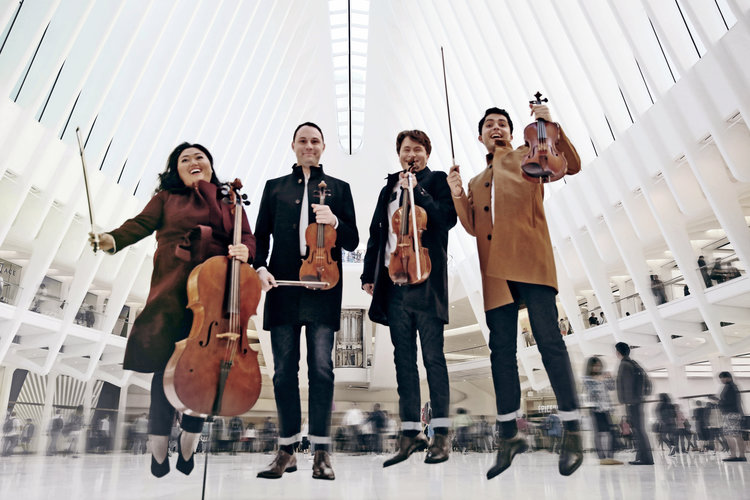
Calidore Quartet, photo credit calidorestringquartet.com

Mozart’s Hunt quartet was given with deft balance and clear articulation – particularly evident during the delicate ornaments – and a genteel approach at times tempered by a more rustic feel, fitting per its epithet. The minuet danced with light touch and an elegant melody from first violinist Jeffrey Myers (who also appeared on this stage during the season-opening performance with VIVO). The Adagio was a songful, flowing statement, and like the best of Mozart’s finales, the closing movement was of high spirits and exuberance.

Though unable to make it to Columbus in person, Huw Watkins conveyed to the trio his “thoughts of joy and optimism” when writing his String Quartet No. 2, premiered by Calidore at the Wigmore Hall last May, with Saturday counting as the first American performance. Starting with a single pluck, fragments of themes coalesced, signaling much potential to be explored. Matters took flight, fluttering into the strings’ high register, and was given an energetic workout. A central slow movement began sweetly nostalgic, growing in urgency as the composer explored more dissonant harmonies, though never straying too far from resolute tonality. The opening pluck returned to set off the finale of vigorous, pungent harmonies, closing in a burst of energy.

Beethoven’s final string quartet (the last major work he completed) closed the evening. A resonant gesture in the viola began, evidencing the ensemble’s keen attention to the inner voices for a reading refined and reflective. The Vivace was of rhythmic vitality and intricacy, and not without some unexpected syncopations. Deeply felt, the plaintive slow movement unfolded with eloquence, a divinely beautiful prayer. A discursive, questioning gesture initiated the wide-ranging finale, further demonstrating the quartet’s chemistry and cohesion.

Introducing the encore, Myers – a Columbus native – spoke fondly of the influence of two luminary violinists we have sadly lost in recent months, Charles Weatherbee and David Niwa. Dedicating the closing selection of Beethoven’s Cavatina from the op. 130 quartet to their memory, it was a gorgeous, loving tribute.

An eclectic mix prefaces a Mozart symphony at ProMusica’s neighborhood series

ProMusica Chamber Orchestra
David Danzmayr, conductor
Ellen Connors, bassoon
St Mary Catholic Church
Columbus, OH
March 19, 2023

Strauss: Serenade in E-flat major, Op. 7
Villa-Lobos: Ciranda das sete notas, W325
Tauský: Coventry: Meditation for Strings
Mozart: Symphony No. 38 in D major, K504, Prague

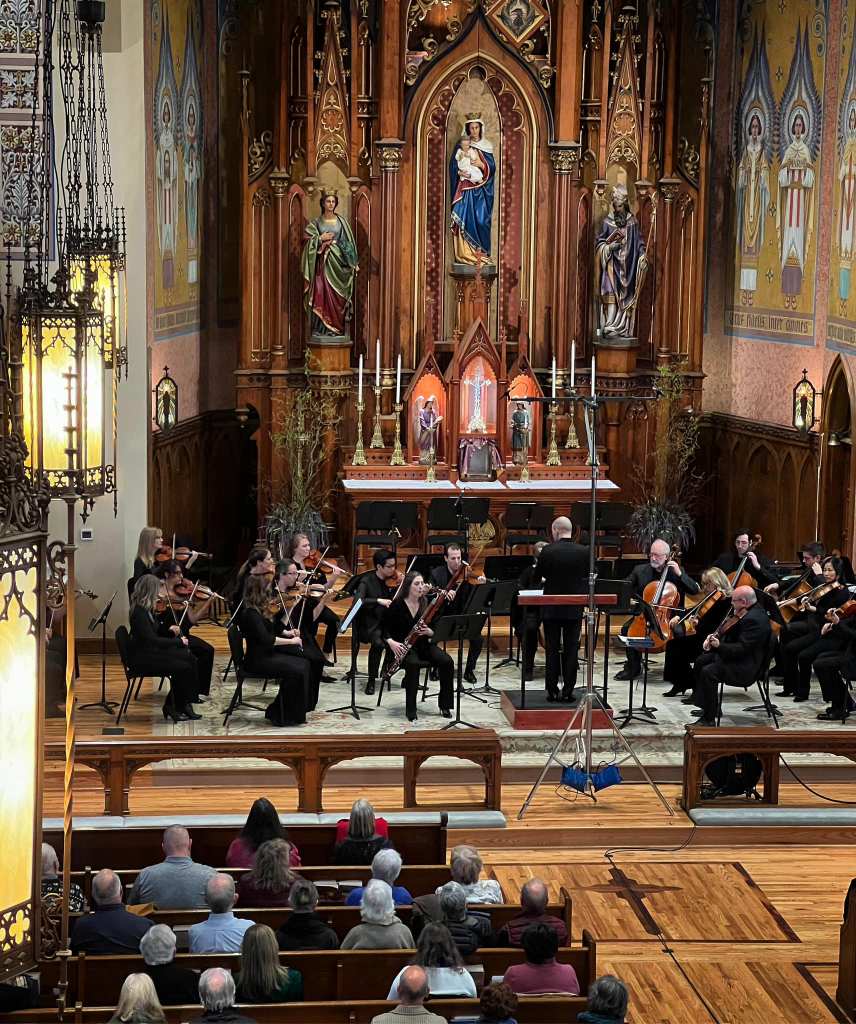
In a continued effort to reach wider audiences, ProMusica presents a “neighborhood series,” leaving their usual home at the Southern Theatre in favor of various locations throughout Columbus. I caught Sunday afternoon’s performance at the beautiful St Mary Church in German Village. A youthful Serenade by Richard Strauss opened. The winds and brass for which it was scored were warm and mellifluous in this classically-proportioned work, hardly foreshadowing the extravagant use of those instruments in the mighty tone poems that would follow. The ensemble filled the church almost like an organ; such a venue can suffer from excessive reverberation, though apparent, conductor David Danzmayr did much to adapt to the space.

Ellen Connors with David Danzmayr and ProMusica at St Mary, photo credit ProMusica

Villa-Lobos’ single movement Ciranda das sete notas (“Round Dance of Seven Notes”) brought forth ProMusica’s principal bassoon Ellen Connors. There was a wonderful energy present from the onset, and the richly harmonized material captured one’s attention. Connors offered a clear tone with playing surprisingly limber for such a lumbering instrument. The work demanded a substantial range and speed, with barely a moment for the soloist the breathe even in the slower central section. The meditative final moments were especially lovely.

A work for strings from the Czech composer Vilém Tauský followed. A Jew, he was forced to flee in homeland in 1939, settling in England where he remained until his death in 2004. Coventry, written in 1979, reflects with raw emotion on the trauma of war. One was struck by the resonance of low strings that opened, soon to be joined by the violins. Lyrical at heart but peppered with dissonances pained and poignant, it was a piece of solemn intensity that painted a forlorn picture.

Mozart’s Prague symphony was a markedly cheerier affair. Only a small handful of the composer’s 41 symphonies begin with a slow introduction; the Prague has the most substantial, stately and weighty beginnings before one of Mozart’s most delightful themes took shape. Danzmayr opted for a brisk tempo choice, but clarity was maintained even during the bracing development. A graceful and measured slow movement served as a moment of repose before the whirlwind finale, wherein the ProMusica woodwinds were in especially fine form.

Columbus Symphony delights in Viennese triumvirate

Rossen Milanov, conductor
Columbus Symphony Orchestra
Ohio Theatre
Columbus, OH
January 20, 2023

Beethoven: Leonore Overture, Op. 72b
Mozart: Symphony No. 36 in C major, K425, Linz
Haydn: Symphony No. 100 in G major, Hob. I:100, Military

Haydn, Mozart, and Beethoven are all but synonymous with the classical style, and this weekend’s Columbus Symphony program offered one sterling example from each of these Viennese masters (and although indelibly associated with the Austrian capital, none were in fact natives). Beethoven produced no less than four overtures for his sole opera Fidelio; the third, bearing the opera’s original title Leonore, opened the program. Ripe with operatic drama, it functions well as a standalone concert piece – and in the opera house, it has become a long-standing tradition to inject this version between scenes in the second act.

 Rossen Milanov and the Columbus Symphony, photo credit Corinne Mares

Somber beginnings gave rise to dramatic tension, thoughtfully paced by Milanov. Offstage trumpets sounded as a fanfare, suggesting narrative details of the source material, and the work ended in brassy splendor. Slow introductions were par for the course in Haydn’s symphonies, but rather rare for Mozart’s output. He employed such a device for the first time in the Linz symphony (No. 36), a technique he would only revisit twice (nos. 38 and 39). It made for a stately opening, setting up the effervescent main subject of the movement proper, given with airy clarity.

The Andante made for a gentle interlude, though punctuated by insistent brass and timpani. A most elegant of minuets followed, with Milanov’s baton bringing emphasis to the sprightly triple meter. The finale was lithe, lean, and joyous – one of Mozart’s most untroubled creations.

The introduction to Haydn’s Military symphony was given with clarity and careful articulation; the main theme was established with the unusual scoring for flute and oboe, and matters proceeded with a refined charm. Over two centuries later, the Allegretto which gives this symphony its moniker is still so striking and wonderfully surprising with its ceremonial percussion and brass fanfare. Such a movement is a hard act to follow, but the minuet was full of wit and charisma, with playing from the well-rehearsed CSO boasting the requisite transparency demanded by this repertoire. A vigorous return of the percussion made the finale an especially exciting affair.

Cleveland Orchestra’s stellar Mozart and Dvořák bookends Deutsch premiere

Cleveland Orchestra
Franz Welser-Möst, conductor
Mandel Concert Hall
Severance Music Center
Cleveland, OH
January 15, 2022

Mozart: Symphony No. 36 in C major, K425, Linz
Deutsch: Intensity
Dvořák: Symphony No. 8 in G major, Op. 88

Under the baton of music director Franz Welser-Möst, The Cleveland Orchestra offered familiar and appealing symphonies of Mozart and Dvořák as bookends to a compelling premiere from its current composer in residence. Mozart’s Linz symphony made for a pearly opener. The dotted rhythms which opened the slow introduction were punctuated with heft while the ensuing Allegro spiritoso was a fittingly lighter affair, given with such energy as to mirror the frenetic pace at which it was composed. The Andante was delicate and intricately refined by way of Welser-Möst’s exacting attention to articulation and dynamics. In the Menuetto, one was struck by the rhythmic swagger, and the bold, big sound of the modern orchestra which the conductor cultivated – something of a foil to Nicholas McGegan’s airier and comparatively more historically-informed performance of the work a few seasons ago. Contrast was further sharpened by the rather more genial trio, and the finale was given with crystalline clarity even at breakneck tempo.

Bernd Richard Deutsch and The Cleveland Orchestra, photo credit Roger Mastroianni, courtesy of The Cleveland Orchestra

Bernd Richard Deutsch’s Okeanos made a strong impression on this listener when performed by the orchestra in March 2019 (and captured on the excellent A New Century). As the current Daniel R. Lewis Young Composer Fellow, Deutsch was commissioned to write a new work for TCO, originally slated for a May 2020 performance but inevitably postponed until this weekend. The product of this residency was Intensity, an aptly titled twenty-minute fantasy scored for massive orchestral forces – including a particularly extensive percussion battery. A sense of wound-up energy, pregnant with potential permeated the opening bars, and the colorful timbres of the percussion were utilized from the opening notes. Lyrical interludes at various interludes offered an anchor in otherwise stormy waters. The middle of the work’s three sections was spectral and dissipated, achieved through the striking aural palette of high strings, muted brass, percussion, and celesta. The namesake intensity ramped up again in the final section, encouraged by the boisterous percussion and finally culminating in a blast in the brass. A fitting tribute to the virtuosity and technical prowess of the The Cleveland Orchestra, and I hope a recording is released in the near future.

Dvořák’s Symphony No. 8 is certainly one of the most popular in the repertoire, but this performance was refreshingly far above the routine and pedestrian. Passionate beginnings, as coaxed from the resonant cellos, persisted for only a moment before the work’s sunny disposition shone through. Joshua Smith’s solo flute passages were a highlight, and Welser-Möst opted for a brisk tempo, keenly avoiding over-sentimentalizing. The Adagio showed Dvořák at his most lyrical, although a brilliant brass section added bold contrast. The Allegretto grazioso positively sparkled in its lilting textures, while clarion trumpets heralded the finale wherein the conductor guided the orchestra with conviction through the myriad of guises of this rousing theme and variations.