
ProMusica Chamber Orchestra
David Danzmayr, conductor
Katherine McLin, violin
Marc Moskovitz, cello
Spencer Myer, piano
Southern Theatre
Columbus, OH
January 23, 2022
Coleridge-Taylor: Four Novelletten, Op. 52 – Nos. 3 & 4
Beethoven: Triple Concerto in C major, Op. 56
Mendelssohn: Symphony No. 3 in A minor, Op. 56, Scottish
A true rarity – and wonderful discovery – opened ProMusica’s January program, namely the latter two entries of Samuel Coleridge-Taylor’s Four Novelletten, scored for string orchestra with a touch of percussion. The Valse was imbued with melancholy, in a similar vein to Tchaikovsky’s Valse mélancolique heard earlier in the day from the Columbus Symphony. Free-falling solo passages from assistant concertmaster Rebecca Willie added much charm, and the modest percussion neatly complemented the strings. A vigorous foil was to be had in the closing Allegro molto – with music of such quality and allure, I wish there had been time for the complete work!
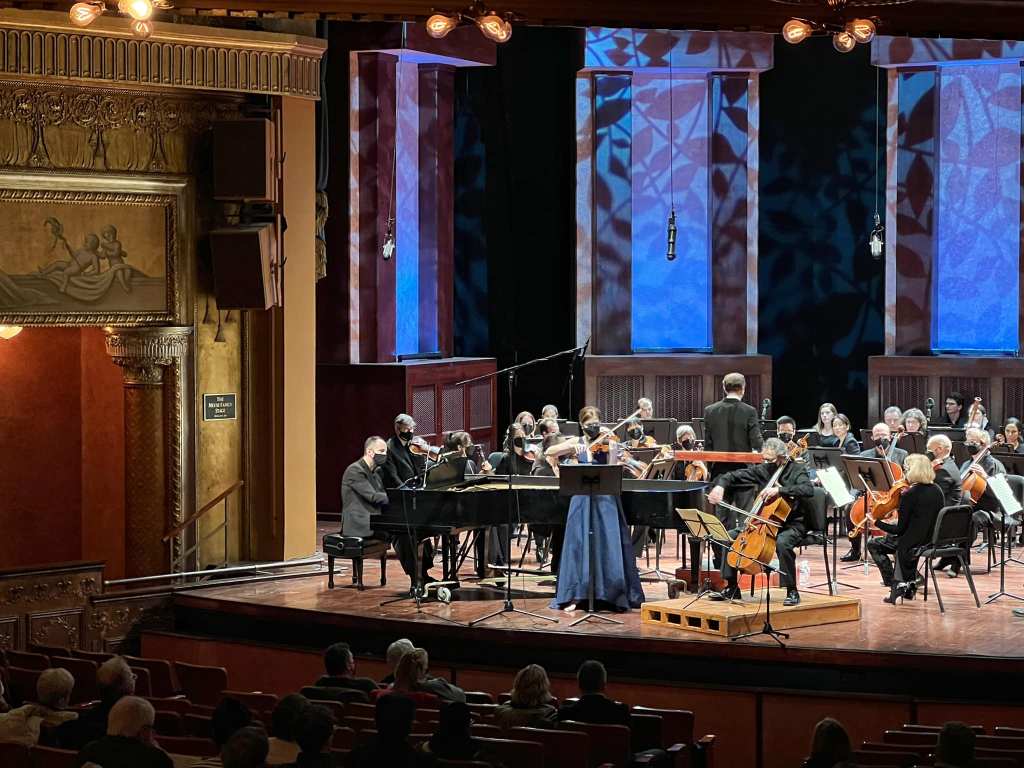
Beethoven’s Triple Concerto formed the heart of the program – and as a somewhat late program change, a tip of the hat to the soloists for nonetheless putting together a tight and convincing performance. ProMusica’s concertmaster Katherine McLin and principal cello Marc Moskovitz were buttressed by pianist Spencer Myer, and the trio purveyed a warm chemistry, both amongst themselves and with the orchestra at large. The graceful orchestral introduction began in the low strings, and Moskovitz’s lyrical cello introduced the soloists – the cello being the most prominent of the trio (in the informative post-concert conversation, it was suggested that this is effectively Beethoven’s cello concerto in all but name). What followed in the spacious opening movement was genial and untroubled, showing a lighter side of the composer – worlds apart from weighty works that comprise the adjacent opus numbers, namely the Eroica symphony and Appassionata piano sonata. The serene Largo peered inward, given with the intimacy of chamber music, before a seamless transition to the rambunctious Rondo alla Polacca, wherein once again the main theme was guided by the cello.
Mendelssohn’s Scottish symphony closed the program and offered the finest playing of the evening. Matters opened in brooding solemnity, conveying the composer’s awe of his Scottish sojourn. The first movement was shrouded in mystery, encouraged by Danzmayr’s taut dynamic control, and often passionate with some particularly notable playing from the clarinet. As a counter to the weight of the preceding, the scherzo was of folksy charm, quintessentially Mendelssohnian in its sparkling textures. A certain solemnity returned in the following movement, heightened by striking chorale writing, while the vigorous finale was an uncompromising affair until the triumphant closing material, unequivocally arriving in the major.
 quasi-faust