Kibbey and Kenney delight in harp and violin duos at Chamber Music Columbus

Bridget Kibbey, harp
Alexi Kenney, violin
Southern Theatre
Columbus, OH
November 5, 2022

Saint-Saëns: Fantaisie in A major, Op. 124
Hu: Chamber Music Columbus Fanfare
CPE Bach: Sonata in G Minor, H 542.5
Bartók: Romanian Folk Dances
Larsen: Sun Strider
Biber: Mystery Sonata No. 1 (“Annunciation”)
Messiaen: Vocalise-étude
Dowland: Flow my Teares
Rodrigo: Madrigales amatorios
Falla: Siete canciones populares españolas
Currier: Night Time

Appealing as the combination may seem, music for harp and violin duo is an uncommon occurrence. Leave it Bridget Kibbey and Alexi Kenney to make a strong case for the medium in lovely program of duets at Chamber Music Columbus. Most of the selections performed were by necessity arrangements of other works, but the duo highlighted a few pieces written expressly for this combination, including a world premiere from Libby Larsen.

Alexi Kenney and Bridget Kibbey, photo credit Chamber Music Columbus

One such work with this instrumentation in mind was Saint-Saëns’ Fantaisie in A major. Graciously lyrical, the musical synergy between Kibbey and Kenney was apparent from the first bars. Impressive virtuosity served well the fantasy, improvisatory-like elements of the piece. Following was Ching-chu Hu’s Fanfare, a mainstay of all Chamber Music Columbus performances this season. After previously hearing it cast for brass quintet, it was quite fascinating to hear it undertaken by such vastly different forces.

A transcription of a sonata by CPE Bach opened with extravagant material for harp alone, and the violin later joined in imitation. A long-bowed violin melody over harp filigree made a touching Adagio, and the rapid finale was given with seamless cohesion. In place of the Clara Schumann Romances, Op. 22 listed on the program, the duo opted for the livelier Romanian Folk Dances of Bartók, a series of six miniatures (originally for piano, Sz. 56) boasting a folksy flair.

A co-commission from Chamber Music Columbus and the Schubert Club of Saint Paul, Minnesota (an ever older organization than CMC – celebrating 140 years this season!), Libby Larsen’s Sun Strider opened the second half. Matters gradually amassed, gathering energy, and the different characteristics of the strings of each instrument were exploited for contrast (a subject Larsen discussed during my interview with her). Novel sounds were drawn from the harp, taking full advantage of Kibbey’s peerless technique, and the work was at heart deeply lyrical – and generously so. The title evokes the sun’s journey across the sky; when sunset arrived, the music faded away, leaving only the vibrations of the strings.

A varied selection of shorter works followed, beginning with the first of Biber’s mystical Mystery Sonatas. Though separated by a few centuries. Messiaen’s Vocalise-étude occupied a similar sense of religious wonderment. For a Spanish sojourn, Rodrigo’s Madrigales amatorios were interwoven with selections from Falla’s Siete canciones populares españolas, works by turn feisty and jaunty or sultry and seductive.

Sebastian Currier’s 1998 work Night Time closed the recital – along with the Saint-Saëns and the new Hu and Larsen pieces, the only other work on the program conceived originally for harp and violin. Depicting the enigma of the night, its striking musical language seemed to be Currier’s response to Bartók’s “night music.” The second movement “Sleepless” was appropriately filled with jarringly irregular accents, though calm arrived in the concluding “Starlight” wherein matters drifted off into the depths of night.

Alexi Kenney and Renana Gutman celebrate the return of live chamber music

Alexi Kenney, violin
Renana Gutman, piano

St. Paschal Baylon
Highland Heights, OH
April 27, 2021

Bach: Sonata for Violin and Keyboard No. 3 in E major, BWV 1016
Strozzi: L’Eraclito amoroso – No. 14 from Cantate, ariette e duetti, Op. 2 (arr. Kenney)
Messiaen: Thème et variations
Kurtág: Hommage à J.S.B., from Signs, Games and Messages
Messiaen: Louange à l’Immortalité de Jésus, from Quatuor pour la fin du temps
Schumann: Fantasiestücke, Op. 73
Mozart: Violin Sonata No. 35 in A major, K526

Encore:
Paradis: Sicilienne

In a sure sign of light at the end of the tunnel, the Cleveland Chamber Music Society returned to live, in person performances Tuesday evening. Instead of the usual venue at Plymouth Church, an alternative was to be found in the bright and airy St. Paschal Baylon in Highland Heights, a space rather more conducive to the requisite social distancing (the remaining two performances on the calendar will take place here as well). Violinist Alexi Kenney and pianist Renana Gutman offered a thoughtfully-curated recital, generously filled with curiosities and discoveries.

Bach is always a fine choice with which to begin a recital, and the Sonata for Violin and Keyboard No. 3 was indeed such a selection. The bright E major tonality made for a stately opening, and the lively Allegro that followed purveyed seamless blending of violin and piano: these duo sonatas were pivotal amongst the composer’s output insofar as they gave both instruments roughly equal prominence. A passacaglia movement served as the emotional core of the work, given a heartfelt reading, while the finale was as uplifting as anything Bach wrote. Barbara Strozzi’s brief song L’Eraclito amoroso was presented in a transcription by Kenney. Long-breathed playing drew out a beguiling melody, delicately ornamented.

Following Baroque beginnings, the balance of the first half was rounded out by works from the 20th century. Messiaen’s Thème et variations is an early work, dating from 1932. Even in this early incarnation, the rich chromaticism made its composer unmistakably recognizable, with splashes of color hinting at all that was to come. Despite its the work’s brevity in five variations, Messiaen nonetheless found the space and time for matters to crest to a searing passion. Kurtág’s Hommage à J.S.B. (J.S. Bach, that is) made for a thoughtful connection to the program’s opening. A monologue for violin, the textures obliquely hinted at Baroque dance rhythms. (Local audiences might recall Isabelle Faust memorably presenting a Kurtág piece from the same collection during a Cleveland Orchestra performance a few seasons ago). 

The duo revisited Messiaen once more in Louange à l’Immortalité de Jésus, the final movement from Quatuor pour la fin du temps. Though written for clarinet, violin, cello, and piano (the instruments available to him composing while imprisoned in a German POW camp), most movements are scored for various subsets of the quartet, with the closing movement distilled to violin and piano. This performance had an otherworldly effect. The music proceeded at a wondrously glacial pace, ending high in the stratosphere.

The latter half retreated to rather more familiar territory, but hardly less insightful. The first of Schumann’s three Fantasiestücke was brooding and passionate in its flights of fancy, while the middle piece made for a playful, light-hearted foil before the blistering finale. Mozart’s Violin Sonata in A major, K526 was his last of a long series of violin sonatas (notwithstanding the very brief K547), and served as a substantive conclusion. Sparkling, pearly playing in the opening Molto allegro was further encouraged by Gutman’s stylish accompaniment. There was a nuanced beauty of tone in the lyrical slow movement, always tinged with an ineffable melancholy. The closing Presto was a high-octane affair, though its vigor was deftly interlaced with more lyrical material. As an encore, the duo offered the Sicilienne by Maria Theresia von Paradis (purported dedicatee of Mozart’s Piano Concerto No. 18): a beautiful pendant to a wonderful program.

An unexpected Severance Hall debut yields appealing results

Cleveland Orchestra
Klaus Mäkelä, conductor
Augustin Hadelich, violin
Severance Hall
Cleveland, OH
October 17, 2019

Messiaen: Les Offrandes oubliées
Prokofiev: Violin Concerto No. 2 in G minor, Op. 63
 Encore:
 Tárrega: Recuerdos de la Alhambra
Beethoven: Symphony No. 7 in A major, Op. 92

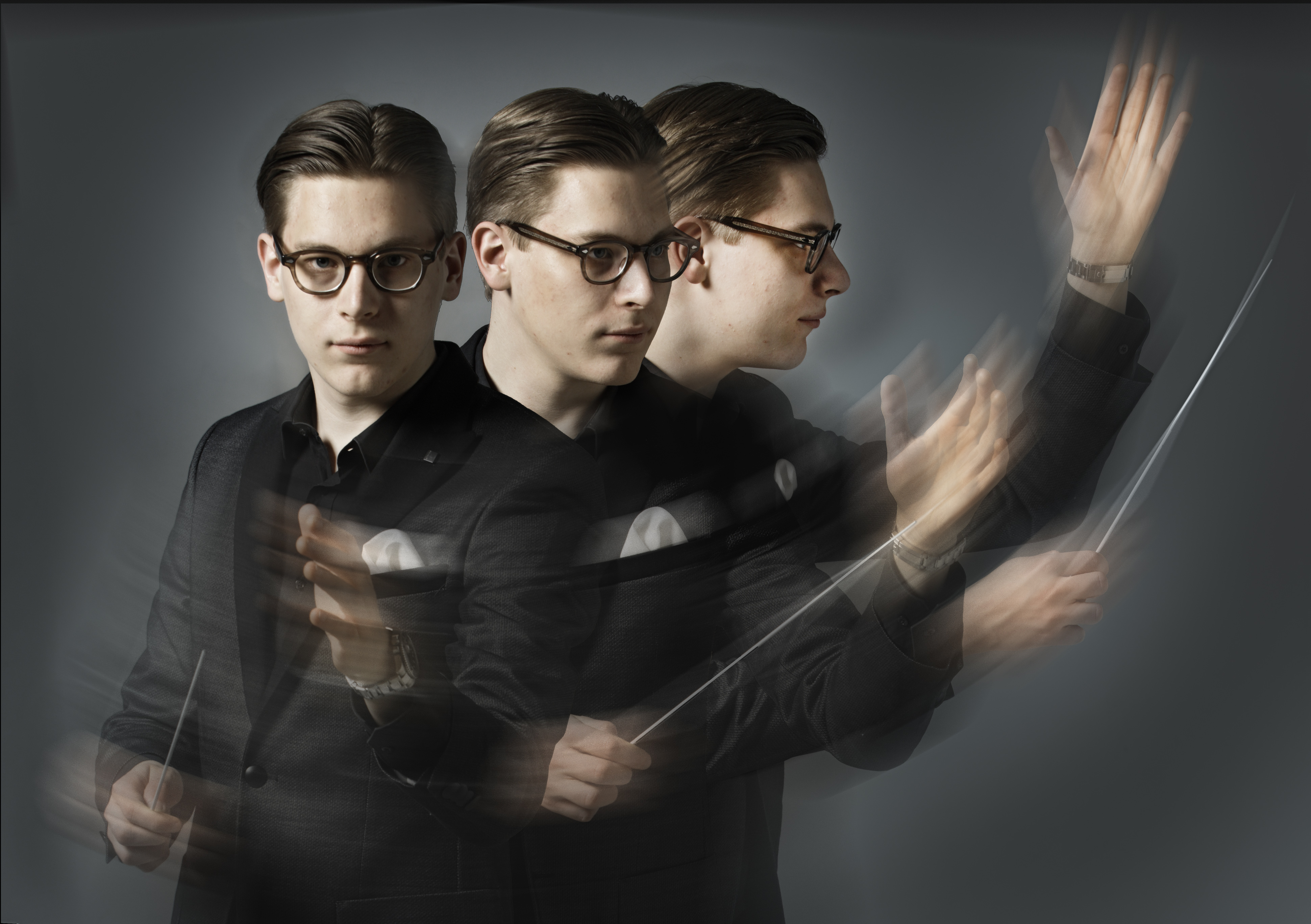
Following the cancellation of Jaap van Zweden, the weekend’s Cleveland Orchestra concerts found a substitute in the shape of the youthful Finnish conductor Klaus Mäkelä, poised to become chief conductor of the Oslo Philharmonic next season. Thursday counted as Mäkelä’s Severance Hall debut, having first conducted TCO at Blossom just a few months ago. Van Zweden’s program stayed intact save for the originally slated opener of Louis Andriessen’s Agamemnon, which hopefully can be revisited in a future season. When faced with a last-minute program change, most orchestras would opt for the familiar, but not so for TCO who turned attention to Messiaen’s Les Offrandes oubliées.

Makela_17-04-25_067c_A4
Klaus Mäkelä, photo credit Heikki Tuuli

Dating from 1930, Les Offrandes oubliées is the composer’s first published orchestral work (a piano transcription would follow the next year). Structured as triptych in evocation of the trinity, the plaintive opening was almost monastic in its austerity. The central section contrasted in every way, often violent in intensity, and time stood still in the glacially-paced final panel, entranced in spiritual contemplation – even in spite of the particularly vociferous army of coughers present in Thursday night’s audience.

Violinist Augustin Hadelich was also making his Severance Hall debut, having performed with this orchestra a handful of times at Blossom since 2009. Prokofiev’s Violin Concerto No. 2 shows the composer at his most lyrical, beginning unaccompanied with a winding and rather unsettling lyricism emanating from Hadelich’s “Ex-Kiesewetter” Stradivarius. The orchestra supported him via a colorful accompaniment, with Hadelich in deft balance, always achieving a clear projection. The central slow movement features one of Prokofiev’s most lush and lovely melodies, so different from the motoric and mechanistic works of his youthful years as an iconoclastic firebrand. Near the movement’s end was a striking role reversal wherein Hadelich offered a pizzicato accompaniment to buttress the orchestra’s lyricism. The foot-tapping finale was given with a driving vigor, its dance inflections heightened by the use of castanets, also a nod to where the concerto received its 1935 premiere: Madrid. Hadelich’s encore continued the Spanish thread with a transcription of Tárrega’s Recuerdos de la Alhambra, the rapid repeated notes of mesmerizing effect.

The finale of the Prokofiev also dovetailed neatly with the closing Beethoven: none of Beethoven’s works invoke dance as much as the Seventh Symphony, which Wagner famously called “the apotheosis of the dance.” The introduction, the longest of any of the Beethoven symphonies, was given with marked weight in hinting at all that was to come. Rhythmic fragments were introduced, eventually coalescing into the movement proper’s thematic material, heralded by principal flute Joshua Smith. Featherlight textures danced, soon to be countered by the might of the full orchestra. The principal winds were all in fine form, the leading force of the orchestra’s seemingly boundless reserves of energy.

Mäkelä rightly conducted the Allegretto not as a funereal dirge, but in emphasizing its songful beauty, with matters solemn and often awe-inspiring. Rambunctious strings took flight in the scherzo, contrasted by the gleaming brass of its trio. The energy was cranked up yet another notch for the finale, taken at a brisk, uncompromising tempo. An all-around strong showing from a talented young conductor.