
Tommy Mesa, cello
Michelle Cann, piano
PNC Theatre
Pittsburgh Playhouse
Pittsburgh, PA
January 20, 2025
Nadia Boulanger: Three Pieces for Cello and Piano
Debussy: Cello Sonata in D minor, L135
Kevin Day: Sonata for Cello and Piano
Casarrubios: Mensajes del agua
Shostakovich: Cello Sonata in D minor, Op. 40
Encore:
Rachmaninoff: Andante from Cello Sonata in G minor, Op. 19
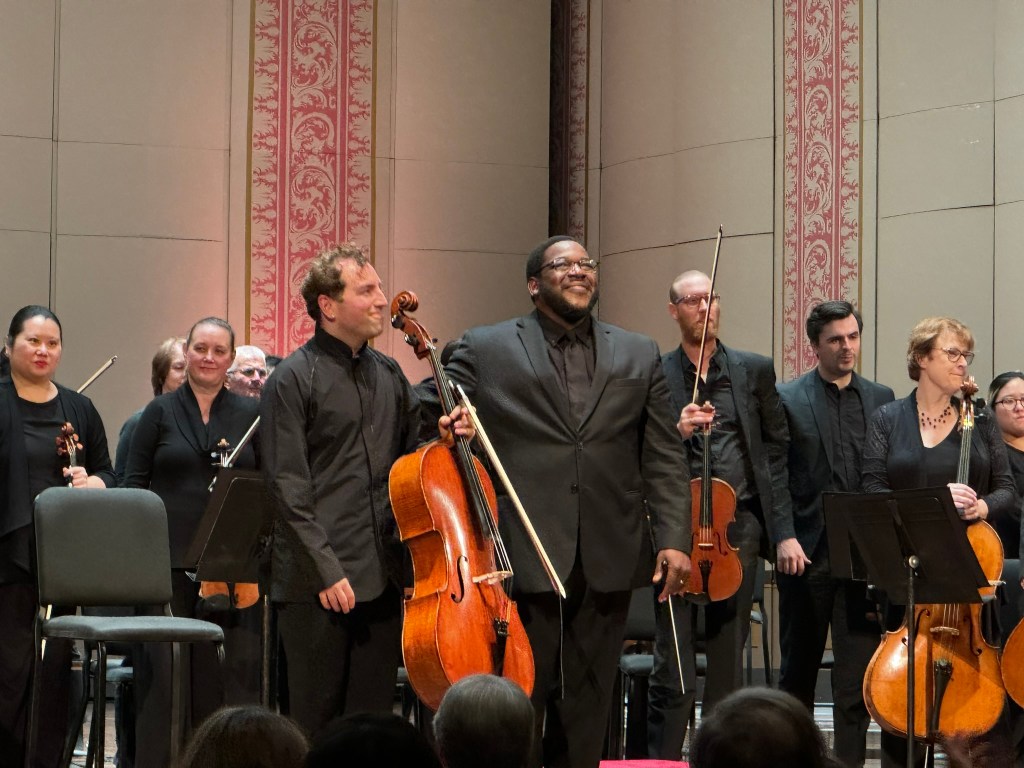
If one longed for an escape from the presidential inauguration and the bitter cold temperatures, Chamber Music Pittsburgh offered a perfect solution the night of January 20 by way of a cello and piano recital. Cuban-American cellist Tommy Mesa was joined by Michelle Cann, and the duo offered a wide-ranging, diverse program, ripe with musical discovery.

Better known as a pedagogue of enormous influence, Nadia Boulanger was also an accomplished composer in her own right (as was her far too short-lived sister, Lili). The first of her Three Pieces for Cello and Piano boasted an expressive cello melody, underpinned by rippling gestures in the piano’s upper register. The middle piece served as a gentle interlude before the fiery close which saw extrovert playing from both parties to round off these finely crafted gems.
Near the end of his life, Debussy embarked on a set of six sonatas for various instrumental combinations. Sadly, only three were completed, the first being a brief but impactful cello sonata. Introductory material in the piano evidenced a unique soundscape, even for Debussy. Rich tone in the cello and dramatic playing in the piano made for a captivating effect, and yielded a language markedly different from the German tradition (this sonata is worlds apart from the Brahms cello sonatas, for instance). The central Sérénade showed Debussy as the master of effect, with ample use of pizzicato, glissando, and most strikingly, flautando – bowing in such a way as to create a flute-like sound. An interlude that brought to mind the charm of Children’s Corner, ahead of a playful finale that brimmed with Gallic elegance.
A 2016 cello sonata from West Virginia composer Kevin Day closed the first half. Though Day’s first work for the medium, its skillful writing grabbed one in from the beginning with its piquant harmonies and energetic syncopations. The central Lento was especially lovely with a long melody high in the cello’s range, with the piano gently pulsing. The sonata reached a satisfying close with a vigorous, driving finale. Mesa and Cann included this work on their warmly recommended album Our Stories, featuring works by Black and Latinx composers.
Andrea Casarrubios is another composer included on the album, represented in the present program by her work Mensajes del agua (“Messages from water”). Meant to depict the perfection of frozen water, it was meditative in its glacial stillness, and though textures were sparse, it purveyed a deep lyricism. Nikolai Kapustin’s Elegy was originally slotted on the program but jettisoned Monday evening, for which Mesa offered apologies to the Kapustin fans in the audience — a population to which I emphatically identify!
Any disappointment was easily allayed by the masterful performance of Shostakovich’s great cello sonata which closed. The first movement saw pointed articulation and a directness of expression, with Mesa’s burnished tone well-suited to the work. Despite its seeming simplicity, subtleties beneath the surface abounded for both instruments, with Shostakovich ever the subversive. A Largo section was marked by ominous pizzicato figures.
The brief Allegro second movement was perhaps the most remarkable, filled with colorful, sardonic writing. There was somber tragedy in the slow movement, with the cello nearly matching the human voice, and Mesa’s ample vibrato yielded a pained lyricism. A finale was in equal parts playful and gritty, drawing comparison to the composer’s First Piano Concerto from the previous year.
As an encore, the duo offered the slow movement from another great Russian cello sonata: Rachmaninoff’s G minor work. A sumptuously gorgeous close to the evening.
 quasi-faust