Pittsburgh Symphony rings in holiday season with a joyous Messiah

Pittsburgh Symphony Orchestra
Manfred Honeck, conductor

Mendelssohn Choir of Pittsburgh
Daniel Singer, director

Jeanine De Bique, soprano
Reginald Mobley, countertenor
John Matthew Myers, tenor
Joshua Hopkins, baritone

Heinz Hall
Pittsburgh, PA
December 7, 2024

Handel: Messiah, HWV 56

If there’s a sign the holiday season is upon us, surely it would be a performance of Handel’s timeless oratorio Messiah — although it’s worth remembering that its first performance coincided instead with Easter. Buttressing Manfred Honeck and the Pittsburgh Symphony was the Mendelssohn Choir and a quartet of vocal soloists — two of which along with the Choir were featured in the previous night’s performance of the Fauré Requiem.
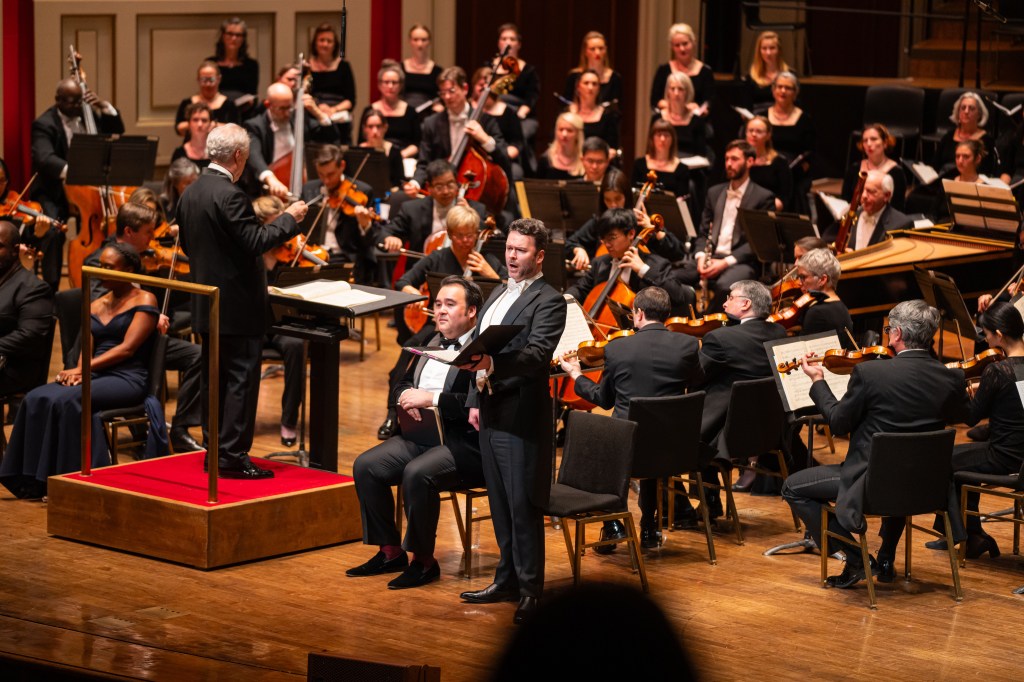
Reginald Mobley (cropped), Jeanine De Bique, John Matthew Myers, and Joshua Hopkins perform with Honeck and the PSO. Photos credit Josh Milteer / Pittsburgh Symphony Orchestra

As is often done, cuts were made to the present performance with Honeck artfully selecting 41 of the 53 segments for a brisk 90 minutes of music. The opening Sinfonia for orchestra alone was crisply articulated, a stern, minor-key affair in sharp contrast from the exultant quality of most of the work. Tenor John Matthew Myers had the first vocal appearance of the evening in “Comfort ye, my people,” purveying a smooth, lyrical tone that was comforting indeed.

Baritone Joshua Hopkins maintained an imposing vocal presence, apparent from his entry in the recitative “Thus saith the Lord.” A highlight of the generally more introspective Part II of the work came in Hopkins’ aria “Why do the nations so furiously rage” — and one longs for a year when this isn’t so topical. “The trumpet shall sound” from the third and final part was fittingly bright with tenor and trumpet in clarion conversation.

Reginald Mobley offered a flexible countertenor, wide in range and elastic in melisma. “Behold, a virgin shall conceive” saw him in delicate dialogue with the principal strings and continuo. All selections that featured the soloists were for a single performer, save for “O death, where is thy sting?” which engaged Mobley and Hopkins in duet. Their voices blended harmoniously — a pity there weren’t more opportunities to hear the quartet in concert with each other.

Appearing for the first time near the end of Part I was soprano Jeanine De Bique, delicate and nuanced. She was particularly angelic in Part III’s aria “I know that my Redeemer liveth,” decorated in tinsel by high and strings and organ. “If God be for us” was a poignant and intimate moment ahead of the exuberant close, with solo passages from the concertmaster and cello touchingly decorating the soprano’s vocal line.

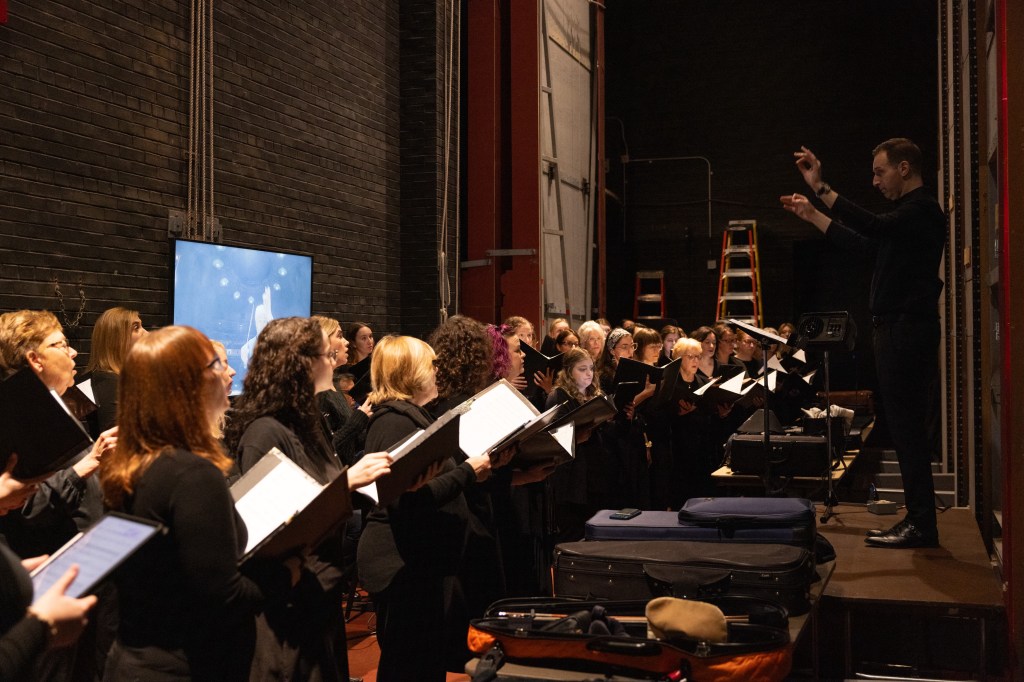
Of course the star of any Messiah performance is the chorus, and the Mendelssohn Choir delivered in spades. “And the Glory of the Lord,” marked their entry, delivering with clarity the intricate, multi-layered choral writing. The Hallelujah chorus, recognizable far beyond the confines of the concert hall, was festive and bright, and the audience followed the time-honored tradition of rising to their feet. “Worthy is the Lamb” closed the evening in the brilliance and weight of the full ensemble.
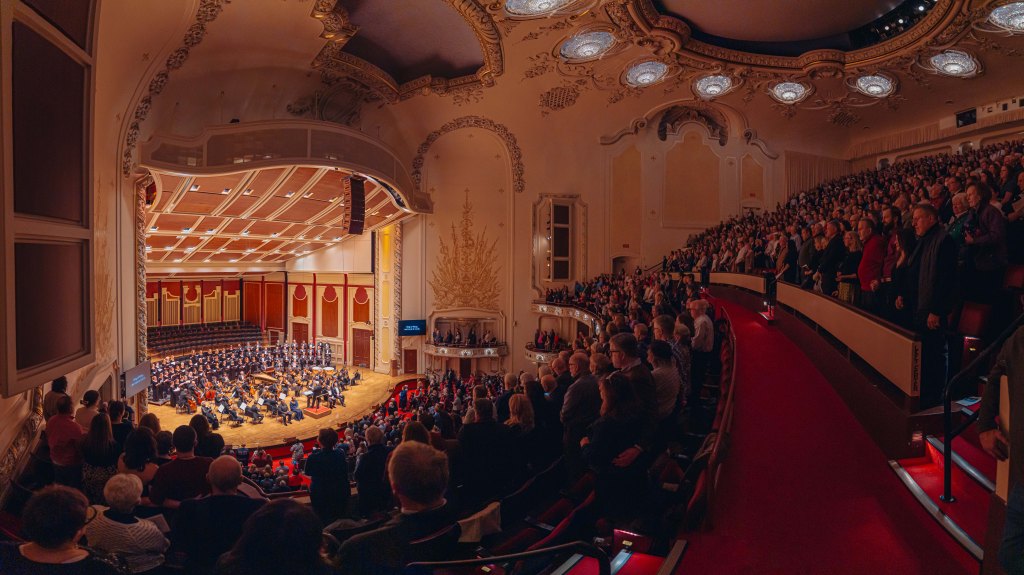
The PSO performs Handel’s Messiah at Heinz Hall

A devilish afternoon at the Pittsburgh Symphony

Pittsburgh Symphony Orchestra
Manfred Honeck, conductor
Leif Ove Andsnes, piano

Women of the Mendelssohn Choir of Pittsburgh
Daniel Singer, director

Heinz Hall
Pittsburgh, PA
April 21, 2024

Rachmaninoff: Piano Concerto No. 3 in D minor, Op. 30
 Encore:
 Chopin: Mazurka in D major, Op. 33 No. 2
Liszt: Dante Symphony, S109

Sunday afternoon’s Pittsburgh Symphony performance began on a somber note, with a moment of silence in memoriam of Sir Andrew Davis, who served as the PSO’s artistic advisor from 2005-07. Music director Manfred Honeck offered a few words and dedicated the performance to Davis’ memory. On a personal note, I have fond memories of seeing Davis often during his two decade stint at Lyric Opera of Chicago, and caught him in robust form as recently as last June with the Minnesota Orchestra.

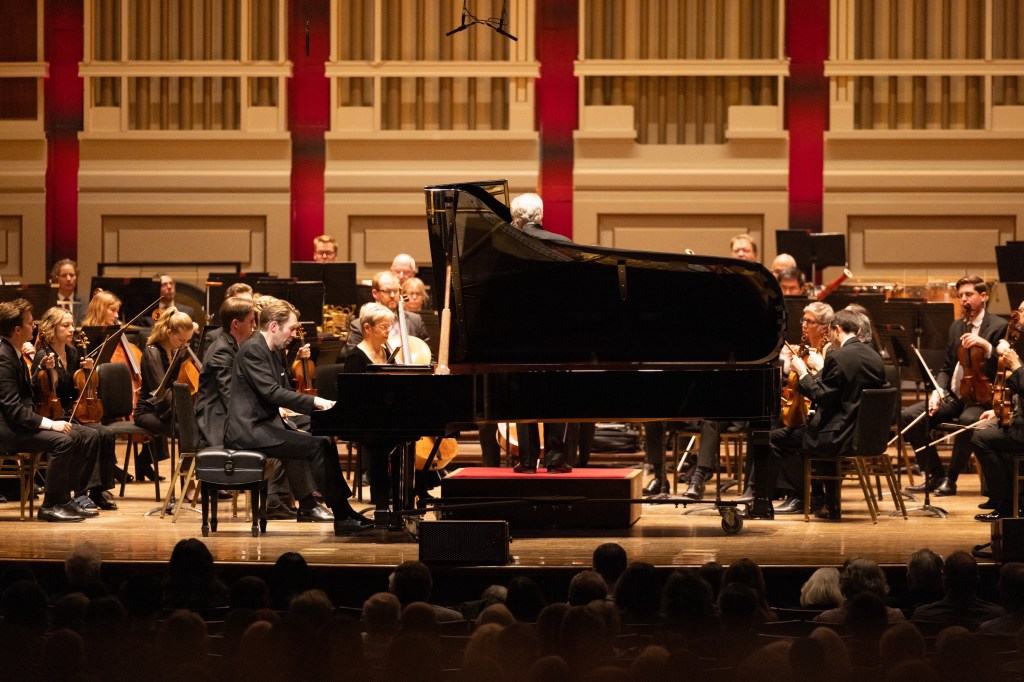
Leif Ove Andsnes with Manfred Honeck and the Pittsburgh Symphony, photos credit George Lange

The first half of the program was devoted to Rachmaninoff’s fiendishly difficult Third Piano Concerto, calling upon Leif Ove Andsnes as soloist. A barren, monastic melody opened, direct and undiluted in its expression before complexities multiplied. Andsnes drew a bold and robust tone, amply projecting through the hall and over the large orchestra. The PSO was a fine partner to the pianist, with some particularly sturdy playing from the brass. Andsnes opted for the larger of the two cadenzas the composer supplied, cresting to a thunderous climax.

The opening of the central intermezzo offered a rare respite for the piano, a strained paragraph for strings and winds to introduce a ravishing melody in the piano, increasingly impassioned. The finale proceeded as an electric march, with a grand, sweeping melody at the heart. One was kept at the edge of their seat through the sparkling coda in this bombshell of a performance. Andsnes returned for an encore in Chopin’s D major mazurka (op. 33 no. 2), bringing out the dance’s stylish rhythms and ineffable charm.

Matters went from warhorse to rarity with the latter half seeing a rare outing of Liszt’s Dante Symphony, an extensive work the composer wrote moved by his reading of the Divine Comedy (and a companion of sorts to the better-known Dante Sonata). This weekend marked the belated Pittsburgh premiere of the work, though I’ve had the unexpected fortune of seeing it elsewhere over the last few years – Chicago (2017) and Columbus (2022). Two large movements represent the Inferno and Purgatorio respectively; not feeling music could adequately represent Paradisio, Liszt instead opted to close with a brief Magnificat that employs a female choir.

Low brass opened in an uncompromising descent to hell, with thundering timpani further conjuring the inferno in no uncertain terms. A bit overblown, perhaps, but Honeck and the PSO were strong advocates of the work and offered a compelling interpretation. A lyrical contrast was provided in material that represented Francesca da Rimini, conveyed by the bass clarinet and harp. With a certain inevitability, the movement was brought to a bleak, crashing close – with all hope duly abandoned.

Purgatorio was far more at peace in music that appropriately suggested a sense of stasis. A fine passage for oboe was a highlight, as well as a moving chorale for low brass – here, no longer a menacing force. The closing Magnificat offered a spiritual glimpse of the divine, with the angelic voices of the women of the Mendelssohn Choir coming from backstage. High strings and harp further conveyed the celestial in this closing hymn, a touchingly beautiful statement that Wagner no doubt looked towards when writing the final moments of Parsifal.

Daniel Singer leads the Women of the Mendelssohn Choir from backstage