Mälkki and Josefowicz champion Sibelius, Knussen with The Cleveland Orchestra

Cleveland Orchestra
Susanna Mälkki, conductor
Leila Josefowicz, violin
Severance Hall
Cleveland, OH
February 6, 2020

Sibelius: En saga, Op. 9
Knussen: Violin Concerto, Op. 30
Sibelius: Symphony No. 1 in E minor, Op. 39

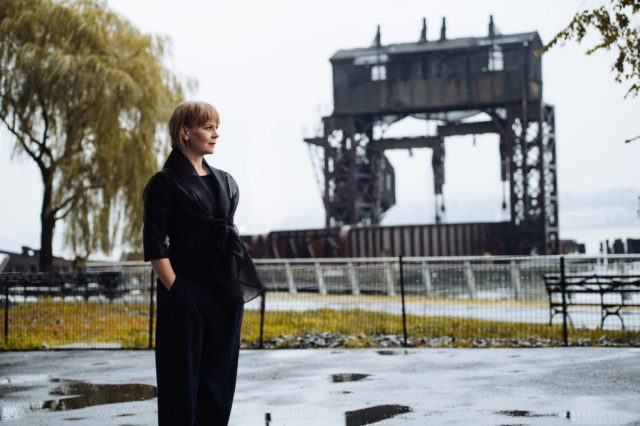
Ever the dynamic podium presence, Susanna Mälkki brought to The Cleveland Orchestra a pair of imposing yet less-trodden Sibelius scores, bookending a seminal 21st-centruy concerto from the late Oliver Knussen. Sibelius’ early tone poem En saga is the work of a confident young composer self-assuredly finding his voice, not heard at Severance Hall since a 1965 performance under George Szell. Undulating strings gave this single-movement essay an epic sense of scale, countered by thornier winds with the composer masterfully spinning a tale worthy its saga designation. A particularly memorable theme was articulated through the burnished, musky warmth of the violas and cellos, while a solo from clarinetist Daniel McKelway pointed towards a somber end: a mere whisper in the strings, fading away with remarkable control at the ppp dynamic level.
DSC_0072_nolamp-1024x683
Susanna Mälkki, photo credit Jiyang Chen

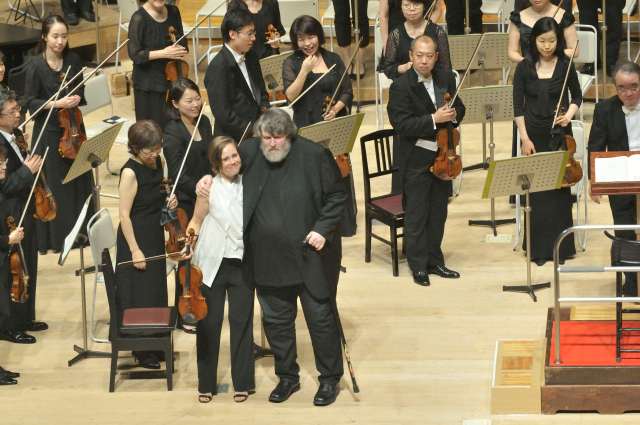
Knussen is a man who had a wonderfully fruitful relationship with TCO up to his untimely passing in 2018, both as composer and conductor. His 2002 violin concerto received its second Cleveland hearing, this time with champion of the contemporary violin repertoire Leila Josefowicz. Orchestral bells opened the work in striking fashion, with rapid runs high in the violin’s stratosphere. Despite the modernist dissonances, Josefowicz delivered with a luminous clarity. In many regards, this is a Romantic work at heart, a persuasion most pronounced in the resonant lyricism of the central Aria. The closing Gigue thrilled in its intricate web of rhythmic intricacies, negotiated with aplomb and finesse by all.

While the influences of the late Romantic milieu abound in Sibelius’ First Symphony, its opening of a solo clarinet – gorgeously played by Afendi Yusuf – over a rumbling timpani is pure Sibelius, unmistakably the composer’s own rarefied language, even in this inaugural symphonic effort. The strings entered in their celestial radiance for the movement proper with the music lush and rewarding. A dose of Nordic chill was introduced in the development, and perhaps it was Mälkki’s shared heritage with the composer that gave her such innate Sibelian fluency in this thoroughly convincing performance.

The endless melody of the Andante could easily be mistaken for a Tchaikovsky slow movement: he we saw not the forward-thinking Sibelius we would later come to know, but one firmly – and comfortably – rooted in the 19th-century. The scherzo was in turn a nod to Bruckner, and the orchestra remained in tight cohesion even at vigorous speed. A slow, measured introduction to the finale was seeped in melancholy and tragedy, yet in due course gave way to a boisterous, unrelenting affair, occasionally contrasted by a rich melody that resided deep in the strings. The brash coda proceeded with confident swagger, only to turn inward at the last moment to close in unexpected anticlimax.
20150924_C000231cRikimaru_Hotta
Leila Josefowicz with Oliver Knussen in 2015, photo credit Rikimaru Hotta

Chamayou makes impressive Cleveland debut with Scriabin rarity

Cleveland Orchestra
Susanna Mälkki, conductor
Bertrand Chamayou, piano
Severance Hall
Cleveland, OH
July 28, 2017

Scriabin: Piano Concerto in F sharp minor, Op. 20
Schumann: Symphony No. 3 in E flat major, Op. 97, Rhenish

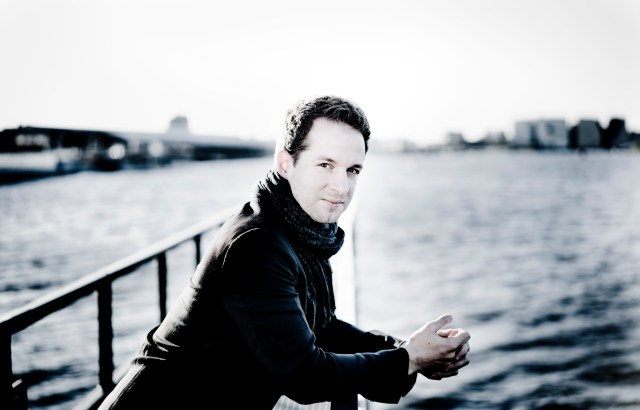
After opening the Summers@Severance season with a bread-and-butter all-Beethoven program, the Cleveland Orchestra turned to less familiar repertoire for the second installment.  Two firsts for the orchestra were to be had in the opening selection of Scriabin’s youthful piano concerto: it was a vehicle for the Cleveland Orchestra debut of the French pianist Bertrand Chamayou, as well as the inaugural performance of the work in the ensemble’s century-long history.  At the podium was Susanna Mälkki, a dynamic podium presence who never fails to strike me in her attention to color and nuance (and parenthetically, this was right on the heels of her memorable performance I caught in Chicago last month).

Bertrand Chamayou (c) Marco Borggreve - Warner Classics 2
Bertrand Chamayou, photo credit Marco Borggreve

The Scriabin piano concerto is firmly in the grand Romantic tradition, in no way anticipatory of the revolutionary atonality the composer’s works would soon embrace.  That being said, it’s a relatively compact work, the three movements cumulatively clocking in at under a half hour, and tends towards restraint over bombast.  Opening with solo passages for the horn and clarinet, the wistful piano entrance piano entrance was unmistakably Chopinesque, displaying the influence of Scriabin’s muse at the time, and later countered by a more jestful theme.  Arching melodies swelled in the orchestra, Mälkki skillfully balancing the dense orchestration with the solo piano, and movement built to a grandiose conclusion.

The central movement was cast in variations, an unusual form for Scriabin.  Serene strings introduced the theme, while the first variation was marked by delicate filigree in the piano in dialogue with the clarinet.  More animated material was to be had in the following variation, evidencing Chamayou’s considerable technical arsenal, while the third variation – and heart of the movement – was a somber funeral march, grounded in the piano’s lowest registers.  A dramatic flourish in the piano opened the finale, Scriabin at his most extrovert.  This gave way to a deeply passionate melody, of the kind one could easily mistake for the composer’s fellow Moscow Conservatory student Rachmaninov, and a display of blistering virtuosity and rich orchestral texture continued unabated through the resounding final chord.

Schumann’s Rhenish symphony made for a fitting counterpart to the concerto.  The opening movement was majestic, the orchestral lines flowing together as one to bring to life the work’s namesake river, and it exuded the heroic potential of its key of E flat major, by no coincidence the same key as Beethoven’s Eroica.  Widely-spaced strings characterized the scherzo, as if gently gliding along the water, and a choir of gentle winds highlighted the slow movement, later contrasted by the lushness of the strings.  The crux of the symphony – and where Schumann breaks from his classical forebears – is in the penultimate movement, a stirring brass chorale, presaging the awe-inspiring solemnity of Bruckner (who was also quite fond of the movement in question’s marking of feierlich).  While not without some unfortunate flubs in the brass, the effect was nonetheless imposing; the finale, however, was of unfettered jubilation, offering spirited playfulness to counter the stoicism of the preceding.