Angelic Mahler – and an unexpected debut – at the Pittsburgh Symphony

Pittsburgh Symphony Orchestra
Manfred Honeck, conductor
Bruce Liu, piano
Lilit Davtyan, soprano
Heinz Hall
Pittsburgh, PA
June 6, 2025

Vali: The Camel Bell
Beethoven: Piano Concerto No. 3 in C minor, Op. 37
 Encore:
 Chopin: Fantasie-Impromptu in C-sharp minor, Op. 66
Mahler: Symphony No. 4 in G major

Both of the Pittsburgh Symphony’s final two subscription programs of the season are scheduled to open with a world premiere, the first of which saw Reza Vali’s The Camel Bell come into being. Born in Iran, Vali is a composer with strong connections to Pittsburgh, having completed his PhD in composition at Pitt and subsequently teaching for many years at Carnegie Mellon. Additionally, this counts as his fourth PSO commission — the first three of which have been recorded on a recent Naxos release.
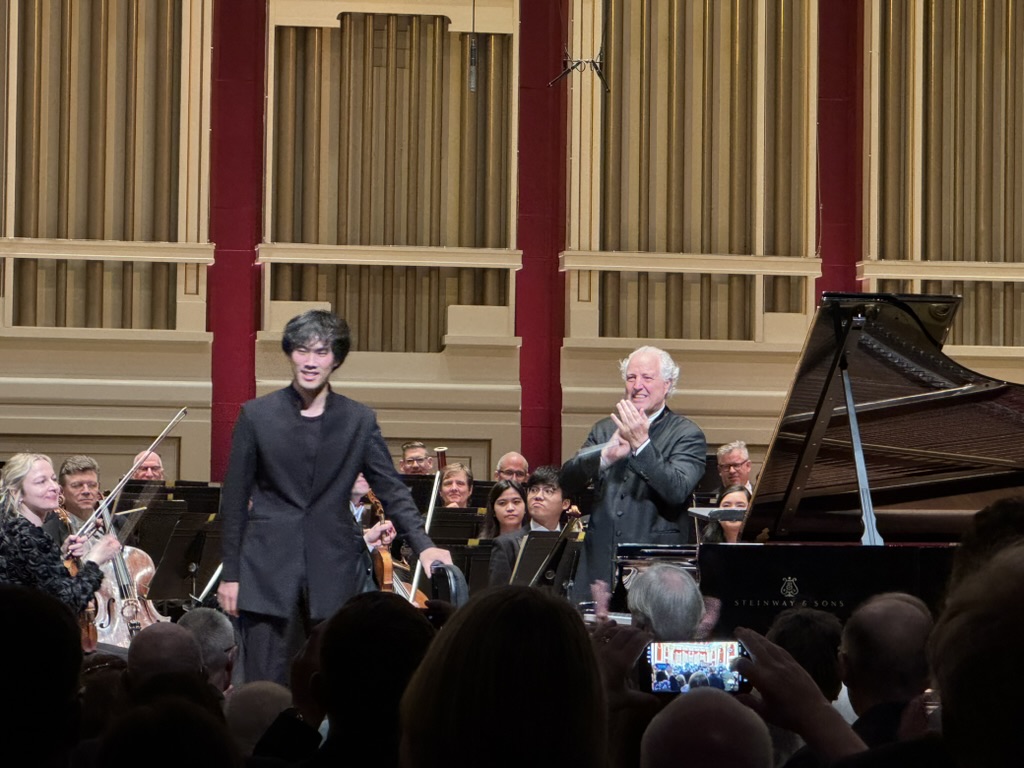
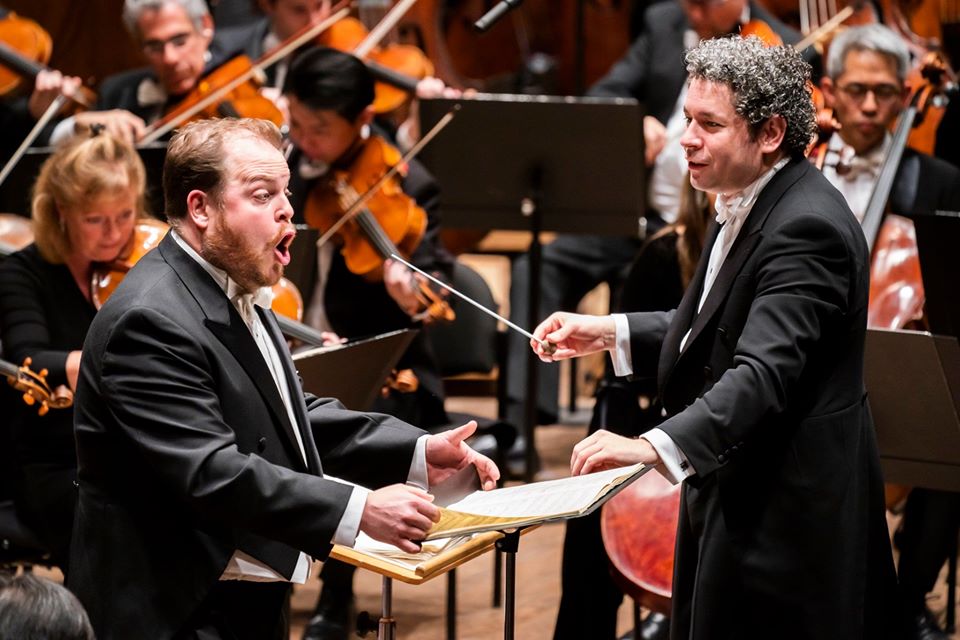
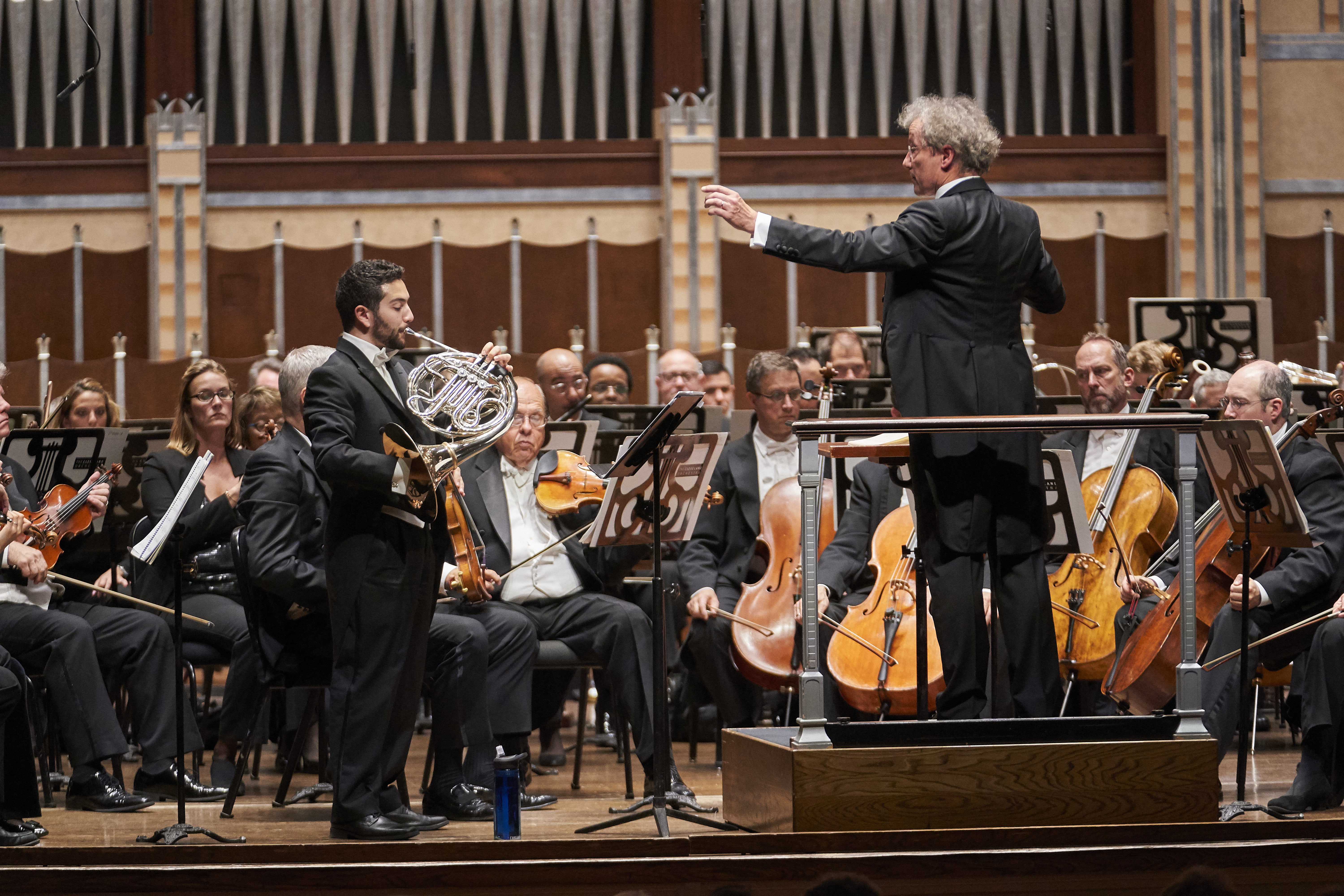
Bruce Liu with Manfred Honeck and the PSO

In his prefatory remarks, Vali likened the work to a “dialogue between great musical civilizations,” specifically noting it weaves together European, American, and Persian influences. A burst of energy began, and work explored the sounds of quarter tones – somewhat jarring to the Western ear, but a striking effect. Inflections even of jazz surfaced in this kaleidoscopic confluence of musical cultures, and I enjoyed the dueling solos between violinists David McCarroll and Jeremy Black. A tour de force closed one of the most impressive new pieces the PSO has introduced this season.

Pianist Alice Sara Ott was regrettably obliged to bow out of this weekend’s appearances due to acute tendinitis — much admiration to Bruce Liu for stepping in on short notice (as well as for the PSO360 recital situated between the two performances of this program). Liu has come to prominence after capturing first prize in the 2021 International Chopin Piano Competition, so a PSO debut from him was a welcome surprise.

Crisply articulated, the orchestral introduction to Beethoven’s Piano Concerto No. 3 introduced the C minor tonality, replete with requisite tension. Liu entered the fold by way of a fiery flourish on the keyboard, while nonetheless purveying a tone elegant and rippling, and the cadenza was given with dramatic flair. The unaccompanied piano opened the central Largo, prayer-like, and probing its great expressive potential. I was struck by Liu’s limber, flexible fingerwork in the stylishly elegant finale, ending in the brightness of C major. As an encore, Liu offered a marvelous account of Chopin’s impassioned Fantasie-Impromptu.

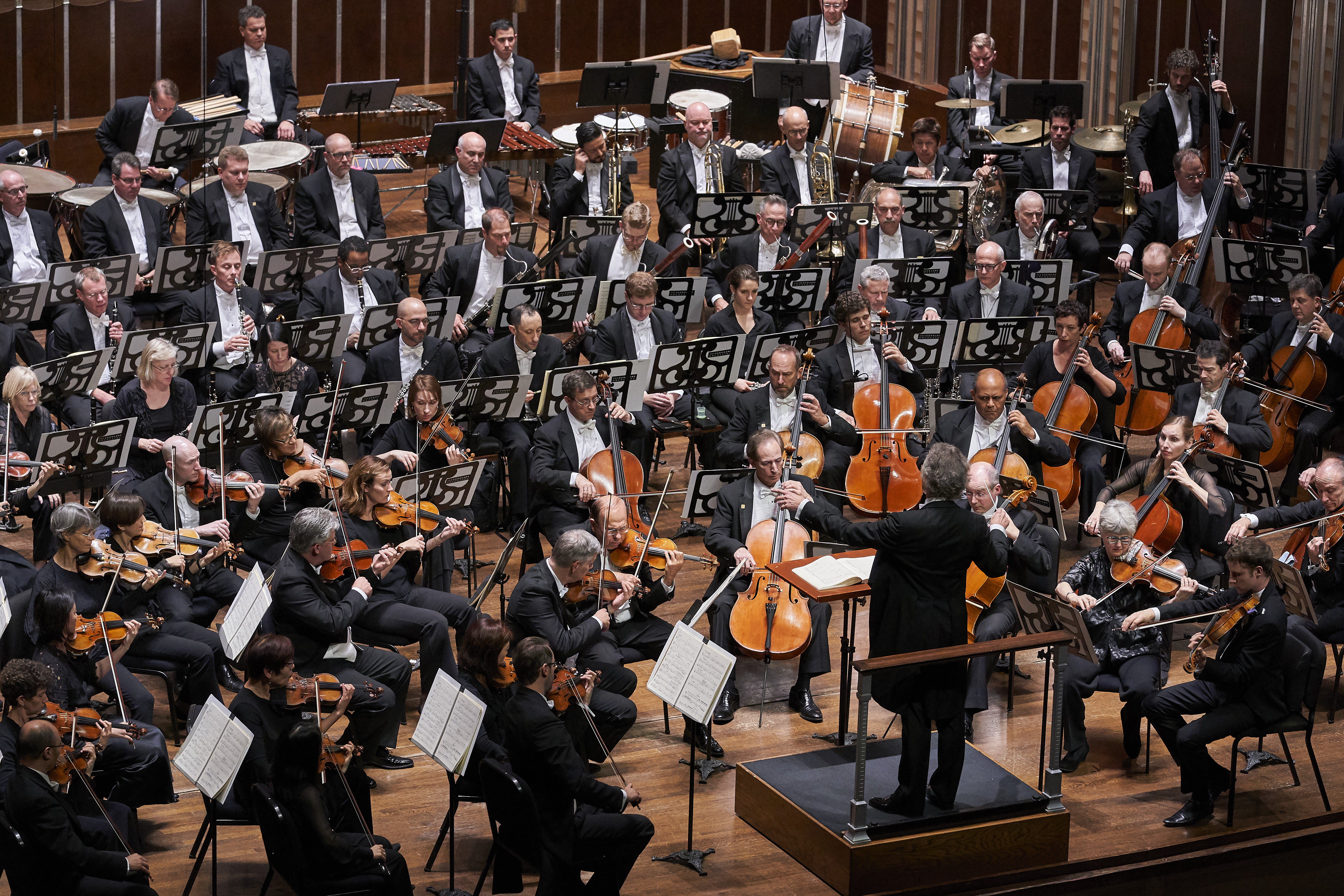
Mahler’s Fourth Symphony is a different animal than the composer’s other symphonies, slimmer and rather classically proportioned, yet still unmistakably Mahlerian. Music director Manfred Honeck drew the orchestral fabric with clarity and transparency, and a classical economy that brought out its details and nuances — and not without an infectious lilt. In the second movement, concertmaster McCarroll played a de-tuned violin, purveying a coarse, rustic quality further enhanced by a shrill clarinet.

In the sprawling Ruhevoll we were given the first glimpse of heaven, plaintive and serene, seemingly at peace — but still not without a certain strife with which to contend. The finale began with an innocent purity, free from world-weary concerns. Soprano Lilit Davtyan perhaps could have benefitted from clearer diction, but I was mostly taken by the angelic quality of her voice, and the way the orchestra deftly matched it.
Walking into paradise at the Kansas City Symphony

Kansas City Symphony
Michael Stern, conductor
Julia Bullock, soprano
Helzberg Hall
Kauffman Center for the Performing Arts
Kansas City, MO
June 3, 2023

Delius: The Walk to the Paradise Garden
Montgomery: Five Freedom Songs
Mahler: Symphony No. 4 in G major

Under the baton of music director Michael Stern, the Kansas City Symphony’s program for the first weekend of June paired the most charming of the Mahler symphonies with a certified rarity and a recent work which the ensemble co-commissioned. Frederick Delius’ The Walk to the Paradise Garden, an extended interlude from his opera A Village Romeo and Juliet, made for a lovely opener. Marked by a gentle, rising theme, there was especially fine playing from the oboe. Lush textures and surging phrases in this gem of a piece piqued my interest in exploring more Delius.

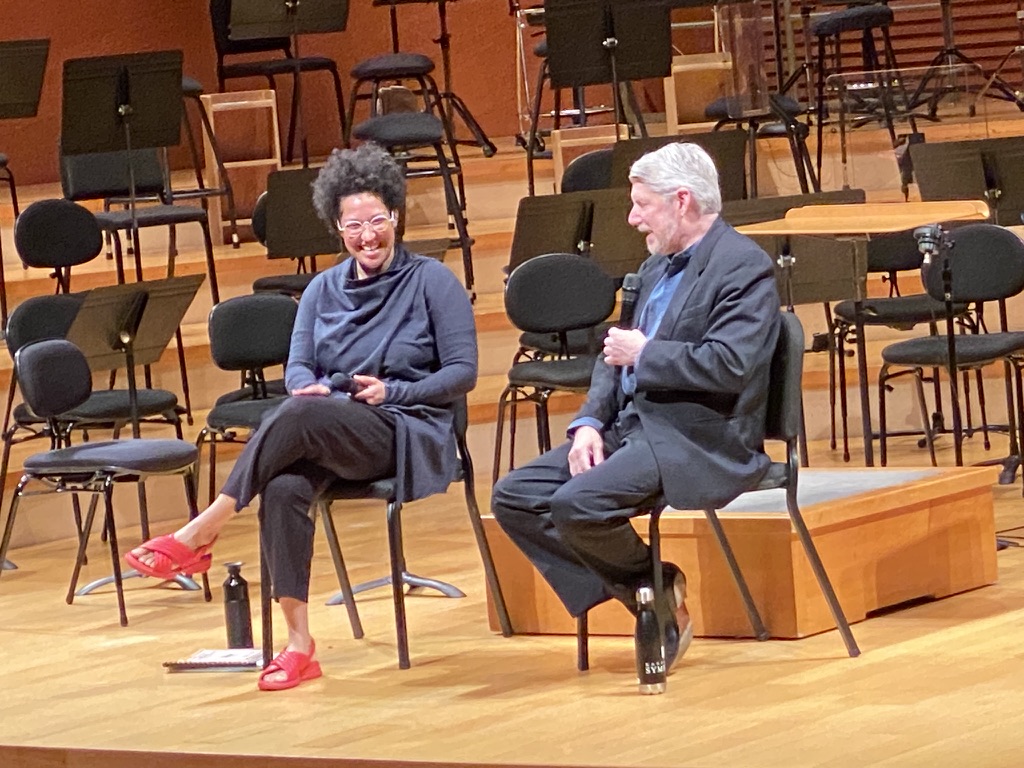
Pre-concert conversation with Michael Stern and Julia Bullock

Jessie Montgomery’s 2021 work Five Freedom Songs takes its texts from the anthology Slave Songs of the United States and featured soprano Julia Bullock, whom the composer collaborated with in the song cycle’s conception. Between Bullock being amplified and the inclusion of a drum set, it had more of the guise of a popular idiom, contrasted by the sophistication of Montgomery’s orchestration – which in the opening “My Lord, What a Morning” included the delicate addition of glockenspiel; concertmaster Jun Iwasaki’s passage in the reflective “I Want to Go Home” was fittingly wistful.

“Lay dis Body Down” amounted to a somber funeral procession, wherein different groups of instruments plodded along at different paces – not unlike something one might encounter in a Mahler symphony. “My Father, How Long?” was a work a defiance, its text emanating form a jail in Georgetown, South Carolina on the brink of revolt, a theme explored further in the closing “The Day of Judgment,” with a percussive effect achieved by the string players tapping on the body of their instruments.

Like the Delius that opened, Mahler’s Fourth Symphony depicts entry to paradise (sharply contrasted from the Montgomery which concerns the struggle to find a higher place). Bright sounds of sleigh bells opened, limpid and graceful in this tautly proportioned work – much leaner than the composer’s previous symphonies, but a work that nonetheless manages to be just as all-encompassing. Crisply articulated, Stern purveyed a rich lyricism, though there was certainly no shortage of dramatic tension – one even encounters the germ of the funereal theme that famously opens the Fifth Symphony.

The scherzo saw Iwasaki playing a detuned violin, gritty and rustic. Clarinets were pointed outward for their shrill interjections: Mahler at his satirical best in this deconstructing of the presumably innocuous ländler. The Ruhevoll is one of my favorite things Mahler wrote: beginning with singing cellos, it surged to pained lyricism, reaching and reaching for a higher spiritual plane, a destination achieved in Das himmlische Leben, for which Bullock returned. Honeyed clarinet conveyed a childlike innocence, and without amplification here, Bullock nonetheless projected well and with clear German diction in this wonderfully touching portrait of the afterlife.

Milanov leads Columbus Symphony in a Mahlerian farewell to life

Columbus Symphony Orchestra
Rossen Milanov, conductor
Ohio Theatre
Columbus, OH
March 3, 2023

Mahler: Symphony No. 9 in D major

In his preconcert remarks, Columbus Symphony music director Rossen Milanov noted it has long been his dream to conduct Mahler’s final completed work, the Ninth Symphony. That opportunity finally arrived this weekend, leading the CSO – expanded to over 80 players – in this autumnal, valedictory canvas.

The work began tentatively, hesitantly, almost as if unsure of its footing – some have suggested the limping rhythmic figure was meant to mirror the composer’s irregular heartbeat. Nonetheless, the work soon found its stride in sighing, calming lyricism. The music surged to grating climaxes at key inflection points in the long paragraph of the opening Andante comodo, yet they tended to come across a bit thin, lacking the robustness one desires for Mahler. The tolling of the tubular bells was of striking effect, heralding the welcome return of the main theme after a long journey. A solo passage from concertmaster Joanna Frankel was quite tenderly played.

The following movement brought us back down to the corporeal world from the philosophical musings of the opening. A spunky ländler took shape, with Mahler ever keen to invoke his affinity for folk traditions, even (or perhaps especially) in this late work. A panoply of striking timbres colored the movement, with the orchestra sounding quite a bit more polished here. The ensuing Rondo-Burleske opened with a strident, angular trumpet call, and a vigor that inexorably pulled matters forward, only to be later stopped in its tracks by an impossibly high passage for trumpet, echoed in the strings and winds – and a preview of the plaintive finale to come. At one point, Milanov’s baton was launched airborne, as sure a sign as any of the intensity with which he conducted!

The finale is simply quite unlike anything else in the repertoire. A heartwrenching chorale resonated through the Ohio Theatre, with the Columbus strings shining in their aching, arching lyricism. In the final bars, matters were all but disembodied, drifting away to peaceful, serene resolution, and Milanov managed to hold the audience in contemplative silence – perhaps the most appropriate response to such a singular statement.

Berlin Philharmonic closes Carnegie Hall residency with astonishing Mahler

Berliner Philharmoniker
Kirill Petrenko, conductor
Stern Auditorium
Carnegie Hall
New York, NY
November 12, 2022

Mahler: Symphony No. 7 in E minor

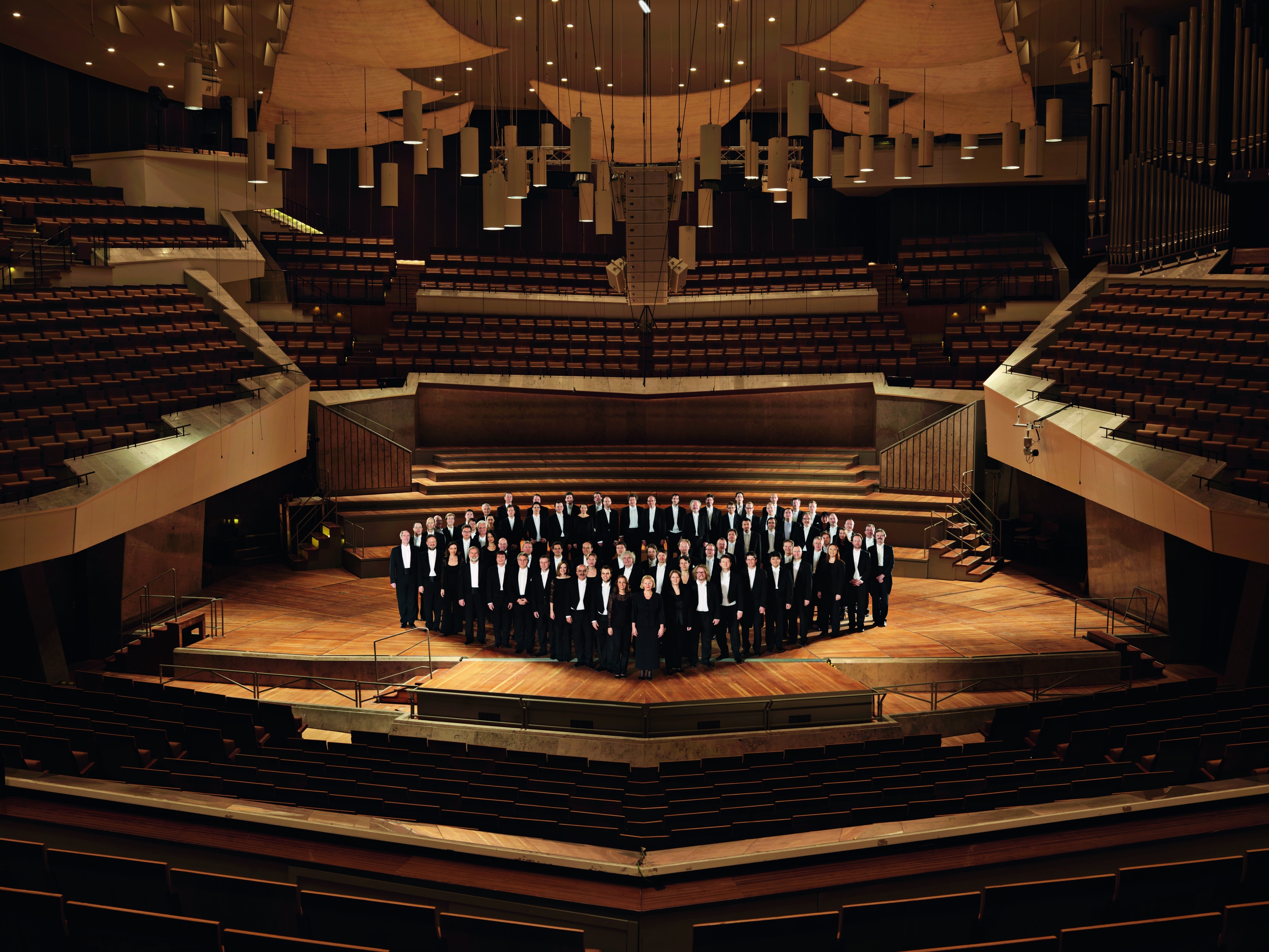
The first concert reviewed on this blog was the Berlin Philharmonic performing Mahler’s Seventh in Ann Arbor under former chief conductor Simon Rattle on Saturday, November 12, 2016. Exactly six years to the day later, we here at quasi-faust had the distinct privilege of witnessing the same ensemble in the same work, this time around at Carnegie Hall with Rattle’s successor Kirill Petrenko. The Seventh is perhaps the most enigmatic of all the Mahler symphonies, hanging on the precipice of musical modernism without quite leaving behind its Romantic pathos. Memory fades over time, but it seemed to me that Petrenko’s approach was generally a similar conception to Rattle’s, lushly Romantic and soaring to intensely dramatic heights. A thrilling close to the Philharmonic’s three-night stint at Carnegie Hall, its first appearance there since Petrenko took the reins.

Kirill Petrenko leads the Berlin Philharmonic at Carnegie Hall, photo credit Chris Lee

The idiosyncratic rhythmic gesture that opened the sprawling first movement was given with pointed articulation, emphasizing the dotted rhythms. Matters were shrouded in an ineffable air of mystery, and the imposing solo for tenor horn grabbed one’s attention with chilling intensity. The music amassed weight and vigor as a march-like processional, while a peaceful interlude spoke to the composer’s wonderment of nature with particularly lush and lovely passagework in the harp. The coda – one of my favorite moments – was thrilling and unrelenting, a masterful conclusion.

The first of the two Nachtmusik movements began with a memorable dialogue between horns – one present, one distant. Col legno strings added to the vast palette of orchestral color, and folk-inflected melodies invoked the Austrian countryside, with cowbells leaving little guesswork as to Mahler’s alpine inspiration. With its Schattenhaft (“shadowy”) tempo marking, the central scherzo too occupied the realm of the night. Unlike the lightheartedness one might associate with such a movement, this was an essay mysterious and enigmatic, often as if in terror of some spectral presence, though the occasional lyrical passage offered moments of clarity. The latter Nachtmusik turned languid and sensuous, with some fine playing from concertmaster Daishin Kashimoto, and the lovely addition of the guitar and mandolin. Goosebumps-inducing lyricism made this one of the highpoints.

A startling wakeup was the to be had in the Rondo Finale, opening in boisterous resound with the theme hammered out in the timpani, a spirit only outdone by the brilliance of the brass. Despite being well past the one-hour mark at this point, the orchestra showed no sign of waning energy. Horns were pointed outward for maximum impact, and the clangorous percussion battery made matters all the more visceral. A truly remarkable performance, duly satisfying one’s hopes and desires for one of Mahler’s most remarkable conceptions.

Dudamel and NY Phil strong partners in Mahler and Schubert

New York Philharmonic
Gustavo Dudamel, conductor
Michelle DeYoung, mezzo-soprano
Andrew Staples, tenor
David Geffen Hall
Lincoln Center
New York, NY
January 23, 2020

Schubert: Symphony No. 4 in C minor, D417, Tragic
Mahler: Das Lied von der Erde

Not having had a New York Philharmonic appearance since 2009, Gustavo Dudamel made an eagerly anticipated return in a two week stint, the second of which coupled an early symphony by Schubert with a late work of Mahler. While Schubert’s Fourth Symphony may seem like a trifle in the wake of Mahler’s Das Lied von der Erde, it too is a canvas of deep poignancy, often befitting of its sobriquet Tragic ­– not in the least during the opening of gripping Beethovenian pathos.

83237169_10159478172377293_2274896116283604992_o
Gustavo Dudamel and Andres Staples in Das Lied von der Erde, photo credit Chris Lee

Dudamel allowed for the introduction to be spacious and breathable, and the movement proper was of pointed dynamic contrasts. He took matters at a noticeably slow tempo in spite of the Allegro vivace indication – while perhaps this served to amass gravitas, to my mind it felt unnecessarily plodding as a dirge. The orchestra on stage was quite large for Schubert, but clarity was maintained with the delicate inner voices never lost in the masses.

The Andante came as a more gentle foil, this gem of a slow movement boasting a lieder-like intimacy and a particularly fine oboe solo. What followed was a propellant Menuetto, with its trio a rather more halcyon affair. The Allegro finale returned to the pathos of the opening, with Dudamel saving the brisker firepower for the end. Lyrical interjections from the winds offered some respite, but matters were generally tightly wound and with sharp articulations by the strings, rounded off by a driving trio of chords.

Deborah Borda, the Philharmonic’s president and CEO, took to the stage to announce that Simon O’Neill, the previously scheduled tenor, was indisposed and would be replaced by Andrew Staples. Fresh off playing the role of Andres at the Met’s well-regarded run of Wozzeck, Staples hardly sounded as a mere stand-in, handily overcoming Mahler’s substantial technical demands. In its large-scale conception, rallying two singers and massive orchestra, Das Lied von der Erde is perhaps the non plus ultra of the song cycle, a venerable form with modest beginnings in Beethoven’s An die ferne Geliebte – by happy coincidence, heard the previous night at 92Y.

The opening “Das Trinklied vom Jammer der Erde” was of brassy energy and of a certain epic quality despite being a rather mundane drinking song. Staples had no issue projecting over the surging passions of the orchestra, and each intonation of “Dunkel ist das Leben, ist der Tod!” was increasingly pained. The interludes for orchestra alone were consistently highlights, often appropriating the pentatonic scale to invoke a certain orientalism. “Der Einsame im Herbst” turned inwards to the forlorn and pensive, beautifully captured by the frosty tone of masterful Mahlerian Michelle DeYoung.

“Von der Jugend”, the most patently pentatonic, was a burst of youthful nonchalance, a marked departure from the weight of the bulk of the work. Sparkling orchestrations gave an appealing sheen to “Von der Schönheit”, and a more agitated section arrived on cue with the text’s depiction of lads arriving on horses; a genial orchestral postlude closed. Staples’ final contribution came in “Der Trunkene im Frühling” – another drinking song – given haughtily, but portrayal of the twittering birds in the violins added a layer of fragility.

The closing “Der Abschied”, clocking in at the length of the previous five songs combined, was nothing short of extraordinary. Its otherworldly beginnings and striking timbres – of harps, celesta, and sinuous oboe – brought to mind Stefan George’s line “Ich fühle luft von anderem planeten”, written virtually contemporaneously with Das Lied von der Erde. DeYoung had a full, resounding tone, but in equal measure delicate and fragile, as if hanging on to these last embers of earthly life. Dudamel offered a keen sense of direction for the long-form trajectory, and the orchestral transition between the two poems that comprise this final movement was deeply moving. After the arduous journey, the musings landed on the repeated incantation of “ewig, ewig”, a heavenly drifting away, to which the audience responded with perhaps the greatest praise of all: a full minute of reverential silence.

82839733_10159478172522293_7752154556095528960_o
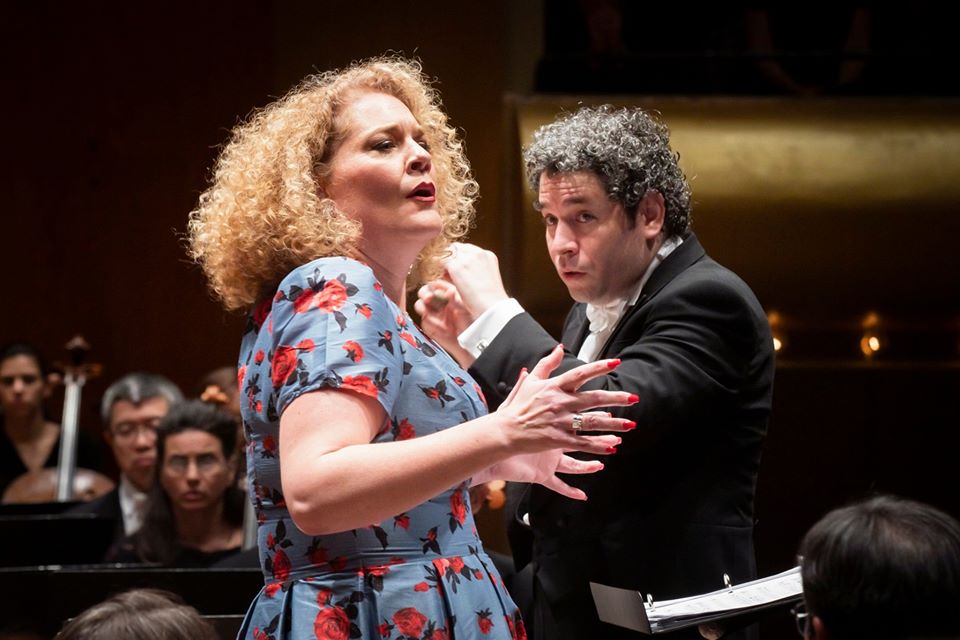
Gustavo Dudamel and Michelle DeYoung in Das Lied von der Erde, photo credit Chris Lee

Hrůša explores the end of life through Adams and Mahler

Cleveland Orchestra
Jakub Hrůša, conductor
Joélle Harvey, soprano

Cleveland Orchestra Chorus
Lisa Wong, director
Cleveland Orchestra Children’s Chorus
Ann Usher, director
Cleveland Orchestra Youth Chorus
Daniel Singer, director

Severance Hall
Cleveland, OH
November 14, 2019

Adams: On the Transmigration of Souls
Mahler: Symphony No. 4 in G major

Following up on last week’s juxtaposition of Shostakovich and Beethoven, Jakub Hrůša offered a second week of incisive contrasts in Adams and Mahler. Both works were concerned in some fashion with the end of life, though of vastly different orientations. Written as a tombeau for the victims of 9/11, Adams’ On the Transmigration of Souls received its belated Cleveland premiere this week. Conceived almost immediately in the wake of the events memorialized, the work was first performed in New York in September 2002, and earned Adams the Pulitzer Prize for Music the following year.

151730-clo111419-508-credit-roger-mastroianni-courtesy-of-the-cleveland-orchestra
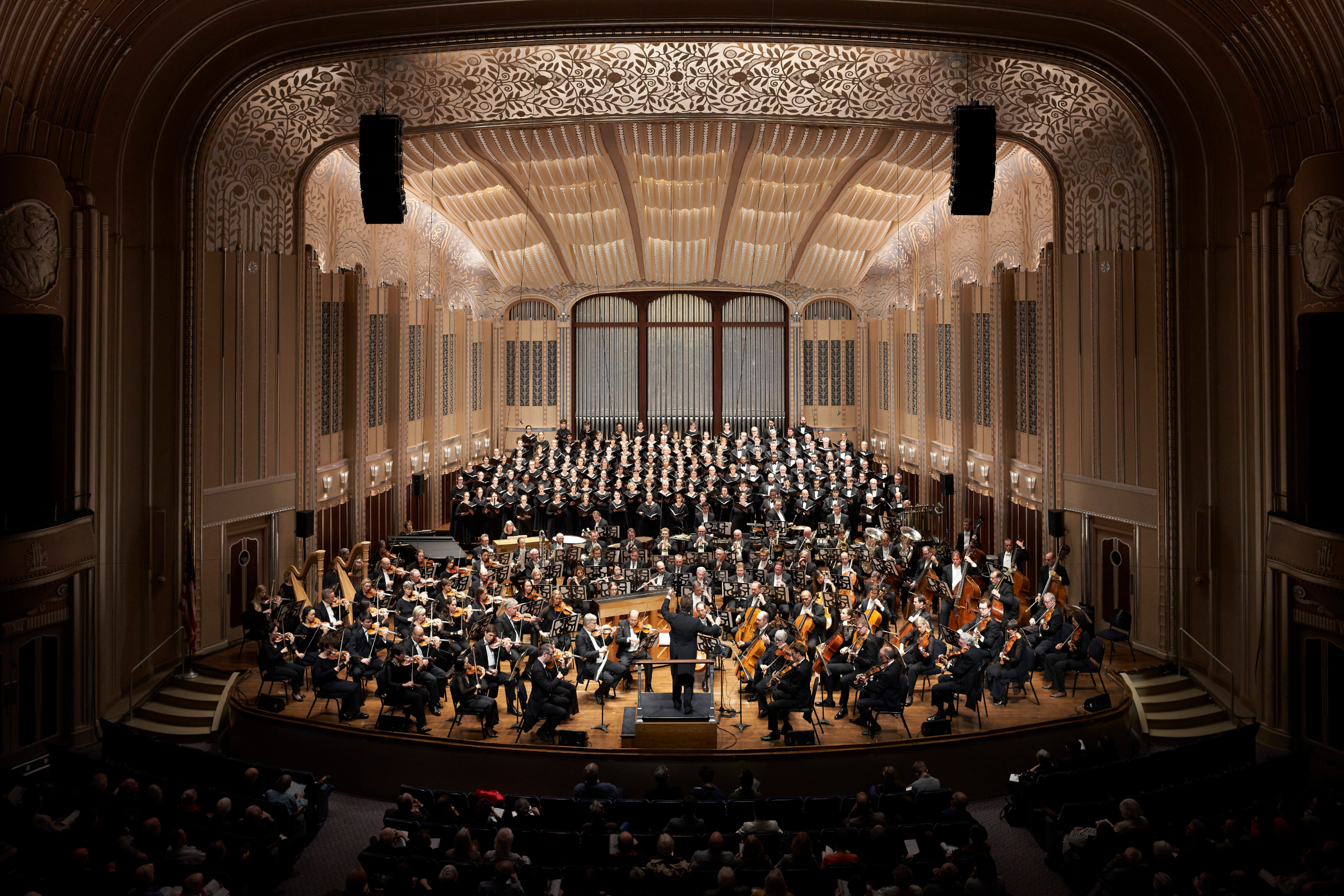
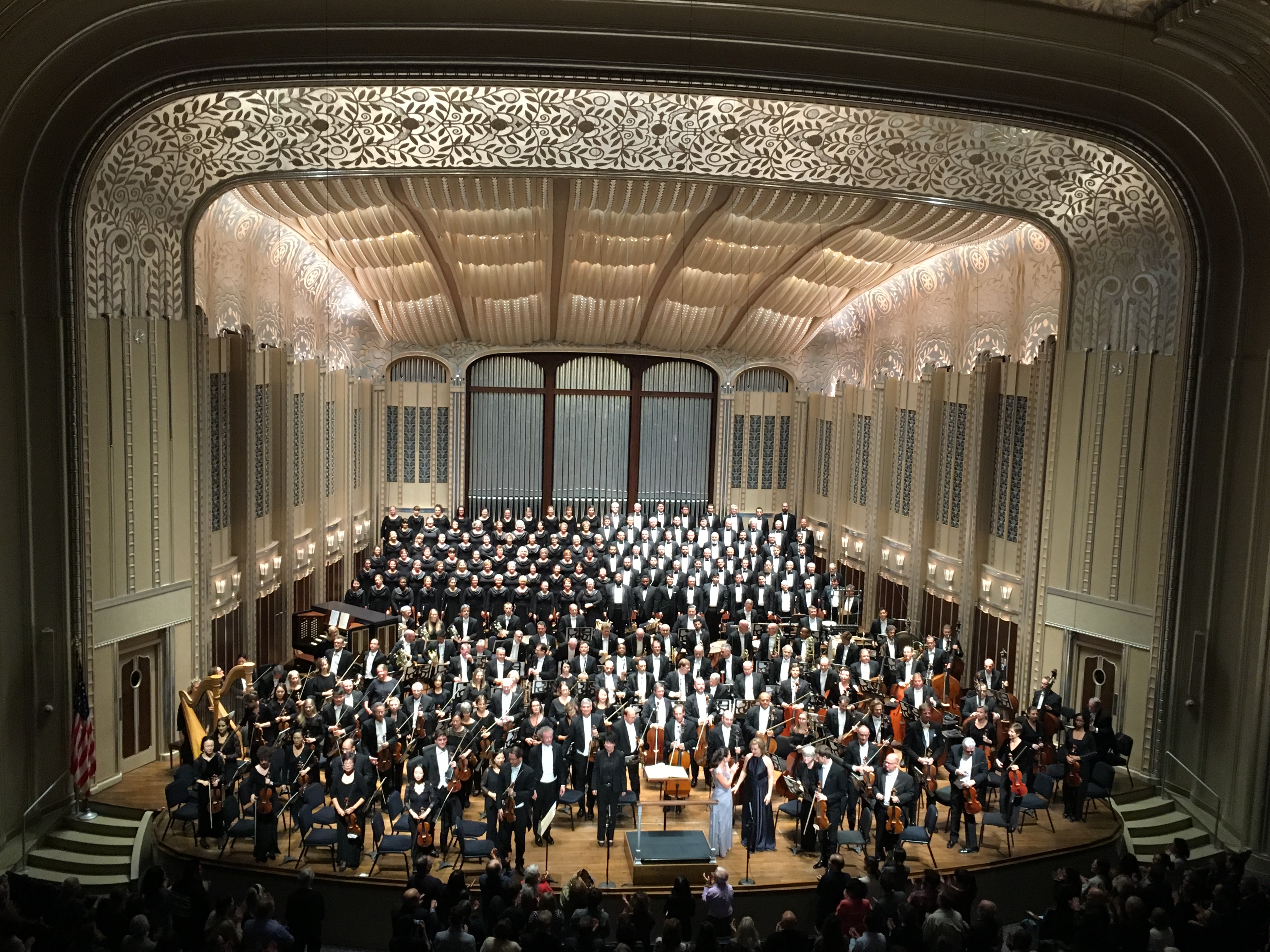
Jakub Hrůša and Cleveland Orchestra and choruses perform On the Transmigration of Souls. Photos credit Roger Mastroianni, Courtesy of The Cleveland Orchestra

In addition to large orchestra, chorus, and children’s chorus, the work makes extensive use of pre-recorded electronica, with an elaborate array of speakers wrapping the hall in surround sound. Ambient sounds of the city opened the piece, initially sounding as business as usual, but quickly giving way to sirens and boy’s repeated incantation of “missing.” The choir entered, ethereal and wordless, and strident trumpet solo was heard from an offstage Michael Sachs. It’s a daunting task to adequately capture the emotions of this subject matter in music, and to that end, Adams took pains to eschew any conventional notions of a requiem, instead producing a work with almost no narrative structure, allowing for a multitude of individual responses to its entrancing and mournful solemnity.

Particularly poignant were the recordings of brief tributes to certain victims – one who was described as having “a voice like an angel”: and such a voice we were to hear in the subsequent Mahler. About two-thirds of the way in came a caustic climax, and one could viscerally feel the weight of the events of that day. I would suggest another parallel to Mahler in that it follows a similar arc to the first movement of the Tenth Symphony, spanning roughly the same length, and of autumnal feeling until the shattering crest at about the same point. The music waned, especially doleful as names were read, and matters faded once again into the fabric of the cityscape.

Mahler’s Fourth Symphony has been called the most Viennese of his symphonies, following a more traditional four movement structure and of modest proportions in length and orchestration (by Mahler’s standards, at least). It’s a piece thus particularly well-suited to this orchestra, noted for their classical precision and balance as well as a strong Mahler tradition – and documented in a noted recording of this symphony with Pierre Boulez. The sleigh bells that opened made for a fantastical, almost fairy-tale like atmosphere, countered by graceful strings. The apparent naïveté ran only surface-deep, however, with Hrůša probing beyond its appealing veneer. The winds were in fine form, especially principal flute Joshua Smith, bright and bucolic, and the trumpets hinted at what would become the iconic opening of the Fifth. The more impassioned sections could have benefited from greater clarity, but there was a wonderful moment of serenity before the movement’s boisterous end.

Announced by the horns, the second movement was rooted in the ländler, but as through a distorted lens. Concertmaster Peter Otto coarsely played a detuned violin, emulating a folksy fiddle, and Daniel McKelway’s contributions on the clarinet were shrill yet stylish. The ensuing Ruhevoll opened in a divine simplicity, the strings of the orchestra playing with the intimacy of a quartet. In his pre-concert lecture, Bryan Gilliam keenly noted that Mahler created a nostalgia for a world that never was. The brass were particularly warm in the climactic opening of heaven’s gates, with the strings reaching higher and higher, grounded by the angelic harp. A silky clarinet marked the finale, introducing soprano Joélle Harvey, who previously sang Mahler with this orchestra in last season’s performance of the Second. Her limpid and fluid voice offered the Wunderhorn setting much character, closing each stanza with a profundity that gave weight and authenticity to this child’s depiction of heaven.

151728-clo111419-390-credit-roger-mastroianni-courtesy-of-the-cleveland-orchestra
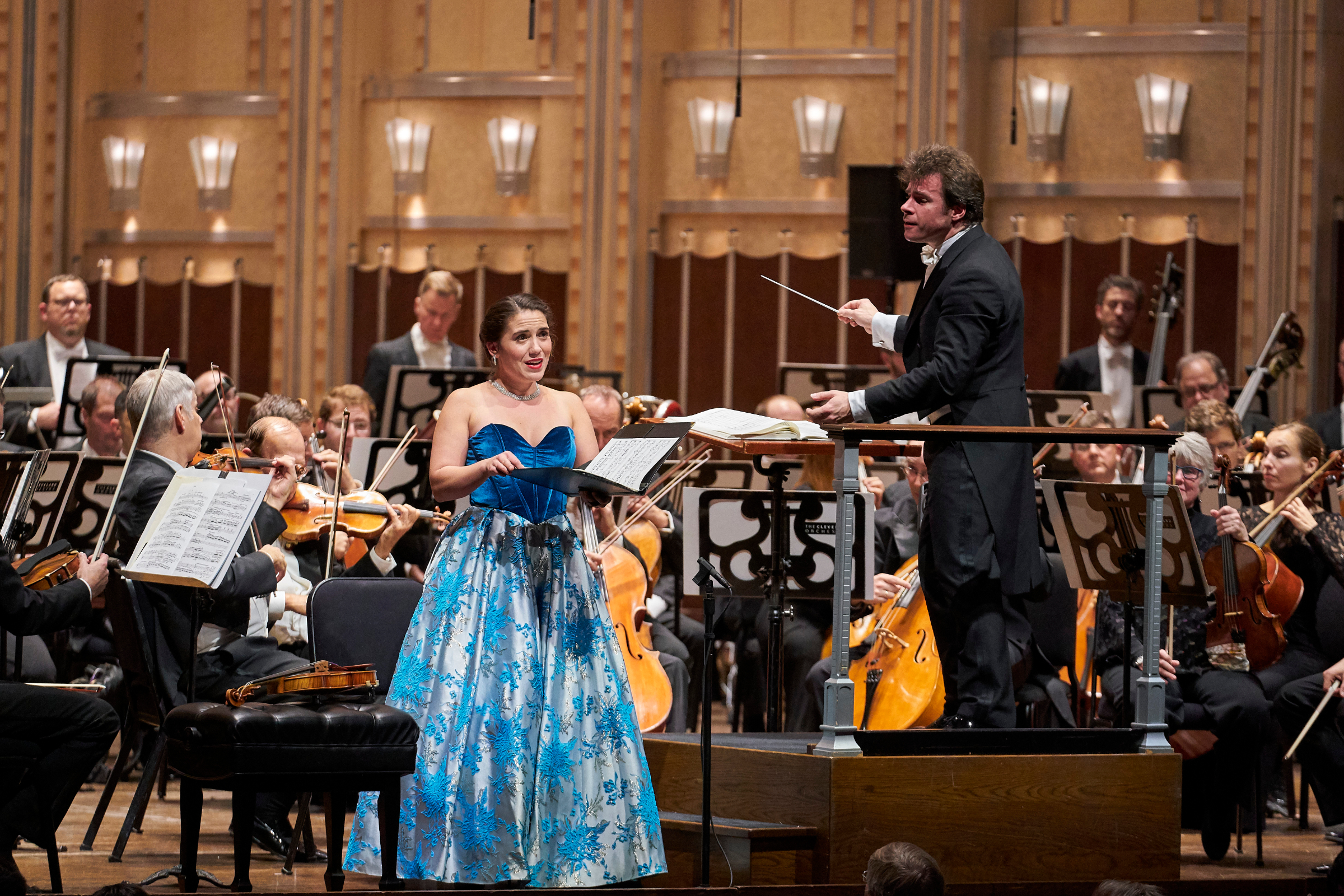
Joélle Harvey in Mahler’s Fourth Symphony

Welser-Möst and Cleveland Orchestra deliver an imposing Mahler 5

Cleveland Orchestra
Franz Welser-Möst, conductor
Severance Hall
Cleveland, OH
September 26, 2019

Neuwirth: Masaot/Clocks Without Hands
Mahler: Symphony No. 5 in C sharp minor

A Mahler symphony is, virtually by definition, an evening’s worth of music in its own right. While including another work on the same program can feel all but gratuitous, a thoughtful choice can offer illuminating possibilities. This was the case Thursday night, with Welser-Möst pairing Mahler’s Fifth Symphony with a work by Austrian compatriot Olga Neuwirth. Welser-Möst has a keen ear for identifying compositional talent from his home country by names otherwise little known this side of the Atlantic. Neuwirth proved to be another such discovery, a composer The Cleveland Orchestra has touched just once before in a 2004 performance of locus…doublure…solus, also under Welser-Möst’s direction.

CLO092619_388
Nathaniel Silberschlag, Franz Welser-Möst, and The Cleveland Orchestra in Mahler’s Fifth. Photos credit Roger Mastroianni, Courtesy of The Cleveland Orchestra

The intriguingly titled Masaot/Clocks Without Hands was originally commissioned by the Vienna Philharmonic for the 2011 centenary of Mahler’s death. Saddled with other projects, Neuwirth delayed composition until 2013-14, and noted that the primary inspiration came from a dream about a grandfather she never met. Nonetheless, the spirit of Mahler runs through the work abundantly. The first part of the title comes from the Hebrew work for “journey”; Neuwirth further depicted a central image of a river that connects disparate groups of people on its long journey to the sea. In that regard, I was reminded of Stromab by Johannes Maria Staud – another work by a contemporary Austrian depicting a river which Welser-Möst fittingly paired with a Mahler symphony two seasons ago.

The work began barely audibly, almost unrecognizable as acoustic sound, but soon erupted into cacophony. Stark contrasts and sharp juxtapositions dominated the bulk of the texture, certainly bringing to mind Mahler’s eclecticism. There was colorfully prominent writing for the celesta, and other passages vaguely brought to mind Jewish folk music, appropriate given the Hebrew title. The woodblock served as a ticking clock – sometimes the only instrument playing – yet by the work’s end, high in the stratosphere, any semblance of time had all but dissolved, hence the titular “clocks without hands.” As a sidenote, the orchestra is bringing the program to Carnegie Hall next week, but replacing the Neuwirth with Widmann’s Trauermarsch – another choice pairing, with the piece directly inspired by the namesake opening movement of Mahler’s Fifth.

The bold, declamatory trumpet of Michael Sachs made for an imposing beginning to the Mahler, even as the music morphed into a doleful lament in the strings. The glacial dirge crested to powerful climaxes, but ultimately withered away at movement’s end. A motoric intensity marked the ensuing Stürmisch bewegt, filled with biting ironies. The sun was nonetheless eventually allowed to shine through, and quite brilliantly in a powerful chorale, but only for a fleeting moment as darkness ultimately prevailed. A massive scherzo serves as the symphony’s centerpiece; some commenters have likened it to a horn concerto given its extended solos for that instrument. This was taken quite literally with newly appointed principal horn Nathaniel Silberschlag standing front and center – a supreme test of his mettle, and quite an initiation to this orchestra. His gleaming tone surmounted the challenges presented, and I look forward to hearing more from him.

A scherzo to end all scherzos, the movement is something of hybrid between the vigor of Beethoven’s and the tragedy of Chopin’s, offering some lighter contrast to the rest of the work but not without eschewing its monumentalism. Shrill clarinets added splashes of color, and the wistful pizzicato strings were particularly lovely. The Adagietto unfurled as a divine love song, strikingly scored for strings and harp alone. Welser-Möst’s tempo choice was prime, sumptuous but not indulgent. Matters grew rapturously passionate before quietly fading. A sunny horn call marked the closing Rondo-Finale, quite a shift in texture and character. This was hardly a straightforward rondo, not in the least for the contrapuntal intricacies, performed with crystalline clarity. The chorale theme first introduced in the second movement returned, as if being reunited with an old friend. This time, however, it flourished unencumbered for an unambiguously glorious ending.

CLO092619_662


Welser-Möst concludes autumn residency with a powerhouse Mahler 2

Cleveland Orchestra
Franz Welser-Möst, conductor

Joélle Harvey, soprano
Sasha Cooke, mezzo-soprano

Cleveland Orchestra Chorus
Lisa Wong, director

Severance Hall
Cleveland, OH
October 5, 2018

Mahler: Symphony No. 2 in C minor, Resurrection

There’s no question about it: The Cleveland Orchestra’s 101st season has gotten off to a stellar start, with the weekend seeing the last of four diverse and weighty programs led by Welser-Möst before he leaves for engagements elsewhere, not to return until January’s performances of Ariadne auf Naxos. The program in question was devoted to Mahler, familiar territory for these forces, namely the imposing and ultimately glorious Second Symphony – a work not performed on this stage since 2007.

IMG_6675
Welser-Möst, Wong, Harvey, and Cooke (l-r) with Cleveland Orchestra & Chorus

A funeral march is integral to virtually all of Mahler’s symphonies, and the Second in fact begins with one – and a formidable one at that. Nervous tremolos opened, leading inexorably down to the grave in this ferocious outpouring, though interspersed with moments of repose in what made for starkly garish contrasts, with the latter particularly encouraged by the plaintive oboe of Frank Rosenwein. Tempos were brisk – perhaps a bit too much so for my taste – but the yield was music of arresting power, never to be sentimentalized. A stirring brass chorale suggested the venerable Dies irae, and the movement concluded in desolation via a final downward gesture, a fate sounding all but inescapable.

But of course Mahler’s arduous journey doesn’t end there, with the following Andante moderato a folksy foil, as if the struggles immediately preceding had been entirely forgotten in this carefree ländler. A much less tightly-wound tempo achieved a simple, rustic peace, with some playful counterpoint between the strings and winds, leading towards a more animated central section. The main theme returned in a gentle pizzicato, unimpeachably good-natured. A thud in the timpani marked the third movement, with sinuous sixteenths testing the dexterity of the orchestra – a challenge easily surmounted, though again I found the tempo choice a tad rushed. This was the first of two nods to Mahler’s own Wunderhorn songs, here a purely instrumental expansion of “Des Antonius von Padua Fischpredigt”, and not entirely a blithe affair as matters erupted into a primal scream.

In another moment of extreme contrast, a sudden shift to light and the divine was achieved in “Urlicht” (another Wunderhorn text), with mezzo-soprano Sasha Cooke’s rich introspection a voice from another world. The brass chorales were heavenly, and though only a few minutes in duration, this movement was easily the emotional heart of the entire work. The text concludes with longing for “das ewig selig Leben” – in his pre-concert lecture, Rabbi Roger Klein suggested that Mahler knew that “Urlicht” alone was inadequate to achieve these lofty ambitions, hence necessitating the massive finale, a grueling undertaking.

The calm of “Urlicht” was immediately uprooted with fury unrelenting. An offstage brass added a spatial dimension to the score’s rich detailing (some flubbed notes notwithstanding), and the resurrection motif was unassumingly introduced in the trombones and trumpets. Climaxes were of shattering power, although a more intimate moment saw the fluttering flute of Joshua Smith joined by delicate touches of piccolo. The chorus entered as a unified whisper, building to great force in due course. Joélle Harvey offered an angelic soprano, naturally blending with Cooke, and the organ added even more magnificence to work’s stunningly spectacular conclusion, surely representing the pinnacle of human triumph.

Welser-Möst and Cleveland Orchestra soar to tragic heights in Mahler’s Sixth

Cleveland Orchestra
Franz Welser-Möst, conductor
Severance Hall
Cleveland, OH
October 5, 2017

Mahler: Symphony No. 6 in A minor, Tragic

The Cleveland Orchestra is pulling all the stops in opening their centennial season, with this week’s attention turned toward a monumental Mahler score in addition to Saturday night’s gala. Before the music began, Thursday’s performance saw the annual presentation of the Distinguished Service Award, this year given to Chair of the Board of Trustees Dennis W. LaBarre. Following that moment of celebration, Welser-Möst and the orchestra embarked on a journey through darkness with Mahler’s Sixth Symphony, unique amongst the composer’s symphonic corpus in that it ends in unresolved tragedy.

CLO100617_725
Franz Welser-Möst and The Cleveland Orchestra, photo credit Roger Mastroianni, courtesy of The Cleveland Orchestra
The opening movement was taken at a brisk tempo, and one could sense the immediate buildup of potential energy that would power the work’s unrelenting cataclysms. Terse, motivic cells yielded a pulsating march theme, punctuated by the shrillness of the winds. Another gesture was introduced that would recur throughout, namely the major triad collapsing into the minor, prescient of the tragic trajectory. Some contrast was to be had in the lushly flowing “Alma” theme, while the development offered a particularly striking moment with the celesta and offstage cowbells suggesting some distant, hallucinogenic dream of the Austrian countryside. Perhaps Mahler’s most classically-proportioned movement, the recapitulation brought to a triumphant close, though as was later evident, only deceptively so in this hollow victory.

There has long been contention regarding the ordering of the two inner movements. The critical edition places the scherzo ahead of the Andante, while Mahler changed his mind during rehearsals and opted to conduct the Andante first. Welser-Möst honored Mahler’s decision, not just with regards to the Sixth’s chronology, but in terms of tempo as well – as he remarked in the program notes, its 1906 premiere with the composer conducting spanned 77 minutes, and Thursday’s performance clocked in at that on the dot. The Andante is in the distant key of E flat major, a tritone apart from the A minor of the other movements, and indeed, it occupied a peaceful world far removed from the surrounding tumult. One was struck by the genial warmth of the clarinets, and in due course, gleaming solos in the cor anglais and horn.

The march theme from the first movement returned in the scherzo, this time mutated into the grotesque and exhibiting a manic energy. The percussion added a particular grimness, while the pair of trios provided some lighter moments, if only relatively speaking. Afendi Yusuf’s solo clarinet passages were filled with rhythmic swagger though perhaps a notch too loud, and answered by the uneasiness of the col legno strings. Otherworldly sounds in the celesta opened the finale, thus beginning the plunge into infinite darkness. A stentorian brass chorale of enormous power, again embodying the decay from major to minor, initiated the movement’s epic, monumental fight, albeit one that would ultimately end in futility. Moments with the apparent potential of victory were quickly snuffed out by the two crashing hammer blows, the second with even more finitude than the first, signifying the point of no return. Some tender moments in the oboe from Frank Rosenwein suggested the possibility of respite, but overtaken as if with inevitability by the hollow emptiness of the conclusion, an unmitigated tragedy after which Welser-Möst held the audience spellbound in reverential silence.

CLO100617_771
Franz Welser-Möst and The Cleveland Orchestra – note the hammer in the back row, photo credit Roger Mastroianni, courtesy of The Cleveland Orchestra

Mahler in Michigan: Rattle and the Berliners thrill in Ann Arbor

Berliner Philharmoniker
Sir Simon Rattle, conductor
Hill Auditorium
Ann Arbor, MI
November 12, 2016

Boulez: Éclat
Mahler: Symphony No. 7 in E minor

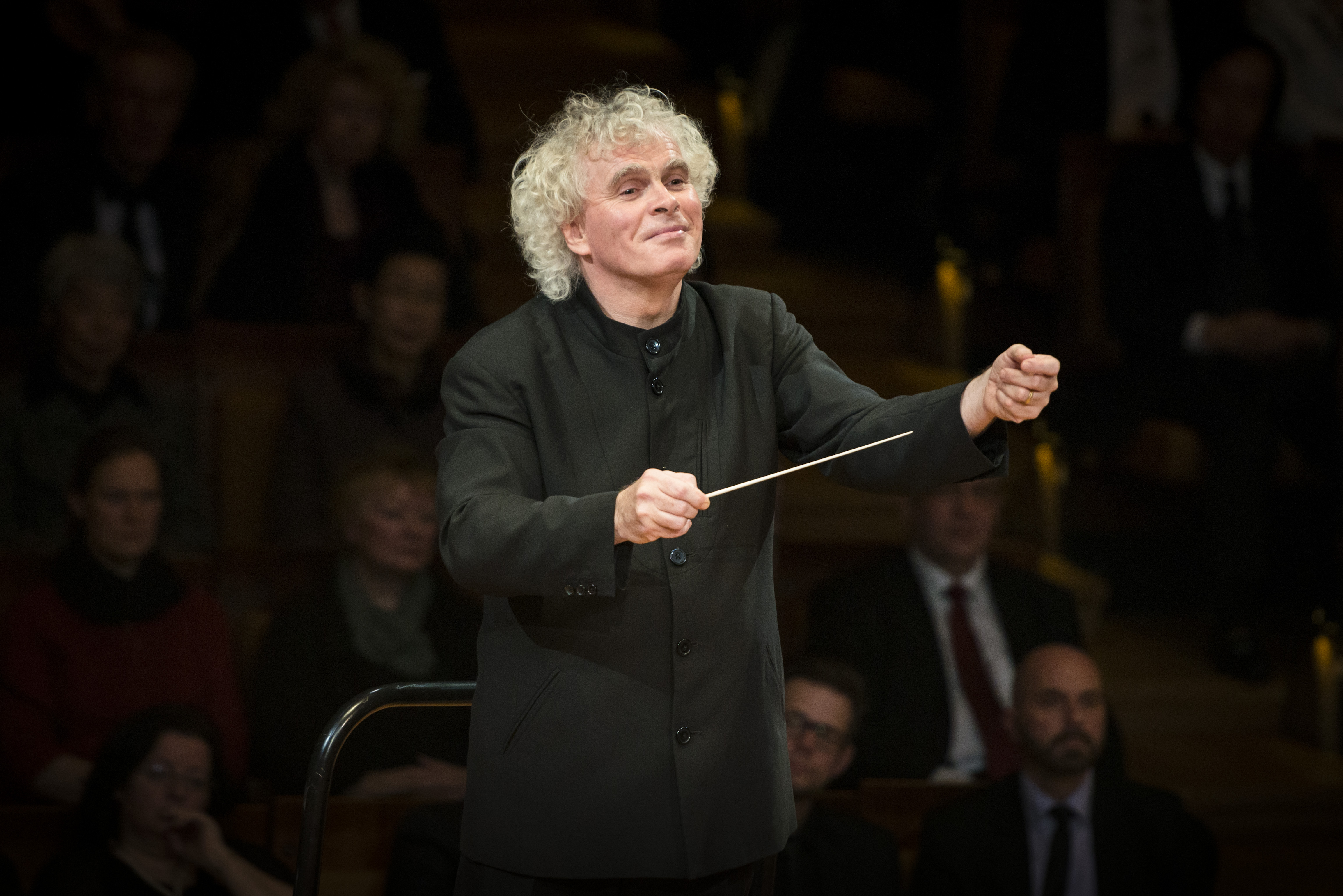
Last weekend saw the illustrious Berlin Philharmonic in Ann Arbor during a residency that included a pair of performances at Hill Auditorium as well as instrumental masterclasses with University of Michigan music students (I caught the session with principal flute Emmanuel Pahud).  The stop in Ann Arbor was part of an extensive US tour, expected to be the orchestra’s last with its celebrated music director Sir Simon Rattle before he leaves Berlin for London and passes the baton to Kirill Petrenko.  Both concerts were filmed by CBS’ 60 Minutes for a forthcoming segment on Rattle.

Berlin Philharmonic 1 by Sebastian Haenel.jpg
Berliner Philharmoniker, photo credit Sebastian Haenel

Saturday evening’s program began with a tribute to the late Pierre Boulez, the extraordinary visionary the world lost at the beginning of the year.  Boulez had a long and fruitful relationship with the Berliners, and it was a testament to their mutual admiration that the orchestra took one of his compositions on the road, despite his often abstruse language having the potential to alienate many audience members.  I certainly do not claim to have a thorough grasp of Boulez’s idiom, but nonetheless found the performance to be an altogether engaging aural experience and striking experiment in orchestral color.

Éclat dates from 1965 and is scored for a modest ensemble of fifteen instruments.  It is concerned with a dialogue between instruments with a resonance that abruptly fades (notably, piano, mandolin, guitar, and cimbalom), and the strings and winds, which can be sustained indefinitely.  The work opened with aggressive and virtuosic playing from pianist Majella Stockhausena before the latter category of instruments added their voice.  Rattle’s conducting was razor sharp, giving every phrase a sense of purpose regardless of how disconcerting it might sound to the ear to make the piece coalesce into more than just a collection of the fragments suggested by the title.  Yet by the same token, one was also struck at the interpretative latitude Rattle gave the musicians within the overarching structure to promote a lively conversation.

The bulk of the program was devoted to Mahler’s Seventh Symphony, itself an evening’s worth of music in its own right.  Easily the most enigmatic of Mahler’s symphonic corpus, it served as perhaps another tip of the hat to Boulez who had a revelatory and unashamedly modernist conception of the piece, as documented in his recording with the Cleveland Orchestra.  Rattle’s interpretation sought middle ground between Boulezian modernism and the hyper-Romantic reading of a Bernstein, for instance.  Impressively, Rattle conducted the entire score from memory, and his overall tempo choices were moderate with a total performance time clocking in just below the 80 minute mark.

Mahler famously said that a symphony should encompass the world; in the Seventh, the vast first movement alone embodies that scope.  Its opening was arresting in the richness of the tenor horn cast over an unsettling accompaniment, the rhythm of the latter purportedly inspired by the oars of a boat dipping into the water.  Contrast was to be found in the soaring melodies of the strings – with the violins split on either side of Rattle – in music of aching lyricism.  Most striking was the pastoral idyll at the movement’s midpoint, a beckoning to the providential vision of the Austrian countryside.  The level of intensity was ramped up for the coda in a thrilling conclusion.

The first of the two movements labelled Nachtmusik opened with a yearning horn call from principal Stefan Dohr before a lilting waltz in the cellos.  Distant cowbells were heard offstage, this wistful alpine dream serving as respite from the fractured psyche of fin de siècle Vienna.  The middle movement of the large-scale symmetrical architecture was a ghostly retreat to the shadows, notable for the orchestra’s mercurial playing.  In the latter Nachtmusik, there was delicate and refined playing from concertmaster Noah Bendix-Balgley, and the texture was made all the more sumptuous by harpist Marie-Pierre Langlamet.  The mandolin and guitar aren’t instruments that regularly appear in the standard orchestral literature, so it was a case of clever and certainly efficient programming that they were featured in both the evening’s works, with Detlef Tewes and Matthew Hunter respectively.  The pair were in fine form and gave the movement the feel of a lovely serenade.

The finale has perennially perplexed audiences, its seemingly unbridled optimism circumventing the enigmas confounded by the preceding.  Rattle seemed utterly convinced that this wasn’t music to be taken at face value and probed beneath the surface, emphasizing its parody and irony.  The thunderous timpani awakened matters from the night, and the sunrise first appeared in the shining brass.  Its obvious homage to Wagner’s courtly Meistersinger was tempered through a more rustic sensibility, the type of garish juxtaposition Rattle was keen to accentuate.  With a propulsive forward drive, the movement proceeded to a well-earned, glorious conclusion, the capacity crowd (no small feat given that the concert coincided with the Michigan vs. Iowa game!) responding with a tumultuous ovation.

simon-rattle-4-by-stephan-rabold
Sir Simon Rattle, photo credit Stephan Rabold