
Dayton Philharmonic Orchestra
Neal Gittleman, conductor
Sheridan K. Currie, viola
Jonathan Lee, cello
Kenneth Shaw, baritone
Kayla Oderah, soprano
Dayton Philharmonic Chorus
Steven Hankle, chorus director
Mead Theatre
Schuster Performing Arts Center
Dayton, OH
March 11, 2023
Boulanger: Pour les funérailles d’un soldat
Schelle: Resilience
Vaughan Williams: Symphony No. 3, Pastoral
Last weekend’s Dayton Philharmonic program was commendable for its organization around a common theme – reflections of war and aspirations for peace – as well selections that lie well outside the standard repertoire, likely unfamiliar quantities even to seasoned concertgoers. Lili Boulanger is one of the most tragic figures of 20th-century music, dying far too soon at age 24. Her work Pour les funérailles d’un soldat, written when she was 19, provided a captivating introduction to her compositional potential.
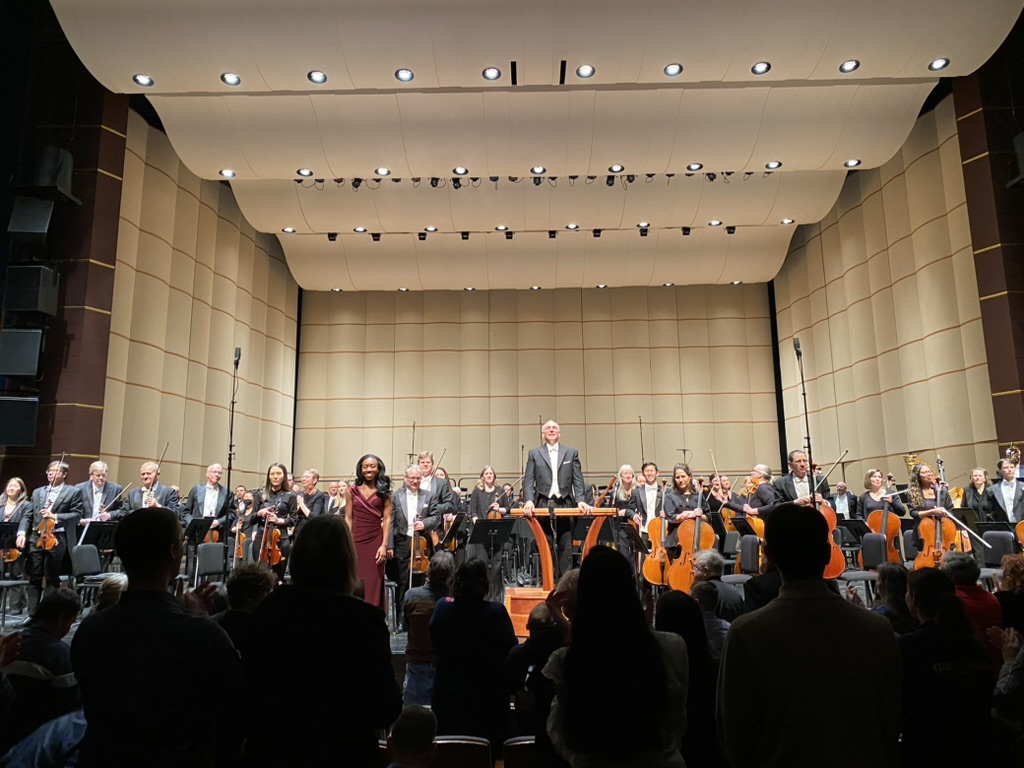
Music director Neal Gittleman – one of the last Americans to study with the composer’s better-known older sister, Nadia – fittingly described the work as a “mini-requiem,” scored for orchestra with choir and baritone soloist. Rumbling timpani opened, soon to be joined by funereal brass. The choir joined in with French text of a poem by Alfred de Musset; on cue with the line “Qu’on dise devant nous la prière des morts” (“Let the prayer of the dead be said before us”), the Dies irae appeared hauntingly in the strings. Kenneth Shaw delivered a powerful baritone, imposing in its solemnity, and the work faded away with the beating pulse of the timpani. A composer with the prodigious gifts of a Mendelssohn, writing fully polished works as a mere teenager.
Michael Schelle’s 2014 work Resilience was written to commemorate the 70th anniversary of World War II, of which his father was a veteran and his mother a nurse. A double concerto for viola and cello, it featured DPO principals Sheridan Currie and Jonathan Lee. Cast in three movements, the first concerns the European theater, the second the Pacific, and the last amounts to a prayer for peace. As the title suggests, the work takes inspiration from resilience in the face of adversity.
Percussive beginnings opened the work in shocking intensity in the first movement “Dachaulieder.” Dense textures pervaded, and the soloists entered with an eloquent invocation of a theme from Mendelssohn’s String Quartet No. 2. A further musical allusion came in the shape of quite literally a song from Dachau – namely, a melody found carved into the prison walls. As with the Mendelssohn, it celebrated the voices of Jewish composers which the Nazi regime attempted to silence. The soloists played with committed intensity and fervor, bringing clarity to chaos. A mournful clarinet passage, later answered by the duo, was another striking moment.
Double concertos for violin and cello are somewhat common (think Brahms), but turning things a notch lower by way of the viola here fittingly gave the music a more somber tone. The central “Rising Sun, Falling Sky” opened in stillness. Sighing gestures took form, with pizzicato passages angular and uneasy. A large metal spring – one of Schelle’s signature musical effects – made for striking sounds from the percussion section, but this was a movement generally inward and introspective. The clash of the beginning resurfaced in the closing “Blast of Silence”, in due course arriving at a serene lyricism with particularly lovely and intimate material from the duo, and the work faded away in hopeful resolution.
If there’s one composer who wrote a substantial body of symphonies that tend to be overlooked, surely it would be Ralph Vaughan Williams with nine major entries to his name. In his 150th anniversary year, I’ve enjoyed turning attention to them (and have particularly fond memories of hearing the Sixth in Cincinnati). This weekend the DPO offered the Third, known as the Pastoral. The composer was deeply moved by the startling emptiness of the English countryside following the mass casualties of the First World War; hardly a bucolic affair, the symphony captures those emotions. Pastoral-sounding winds opened – though I found Gittleman’s tempo choice a bit fast – introducing a striking, coloristic chord progression. Concertmaster Aurelian Oprea articulated a theme with fragile lyricism.
A forlorn horn solo opened the Lento moderato, and the strings meandered into mournful depths. An extended passage for solo trumpet – intentionally meant to sound out of tune to mimic an amateur military bugler – resounded to desolate effect. Though functioning as the scherzo and the most extrovert of the four movements, the Moderato pesante was hardly festive, lumbrous and weighed down, even including a thorny fugue. The closing Lento opened with a haunting wordless vocal from offstage, given with feeling by soprano Kayla Oderah. As one final elegiac paragraph, the movement was further highlighted by a touching flute solo, and Oderah was given the last word before music drifted to silence.
 quasi-faust