
Pittsburgh Symphony Orchestra
Manfred Honeck, conductor
Mendelssohn Choir of Pittsburgh
Daniel Singer, director
Jeanine De Bique, soprano
Reginald Mobley, countertenor
John Matthew Myers, tenor
Joshua Hopkins, baritone
Heinz Hall
Pittsburgh, PA
December 7, 2024
Handel: Messiah, HWV 56
If there’s a sign the holiday season is upon us, surely it would be a performance of Handel’s timeless oratorio Messiah — although it’s worth remembering that its first performance coincided instead with Easter. Buttressing Manfred Honeck and the Pittsburgh Symphony was the Mendelssohn Choir and a quartet of vocal soloists — two of which along with the Choir were featured in the previous night’s performance of the Fauré Requiem.
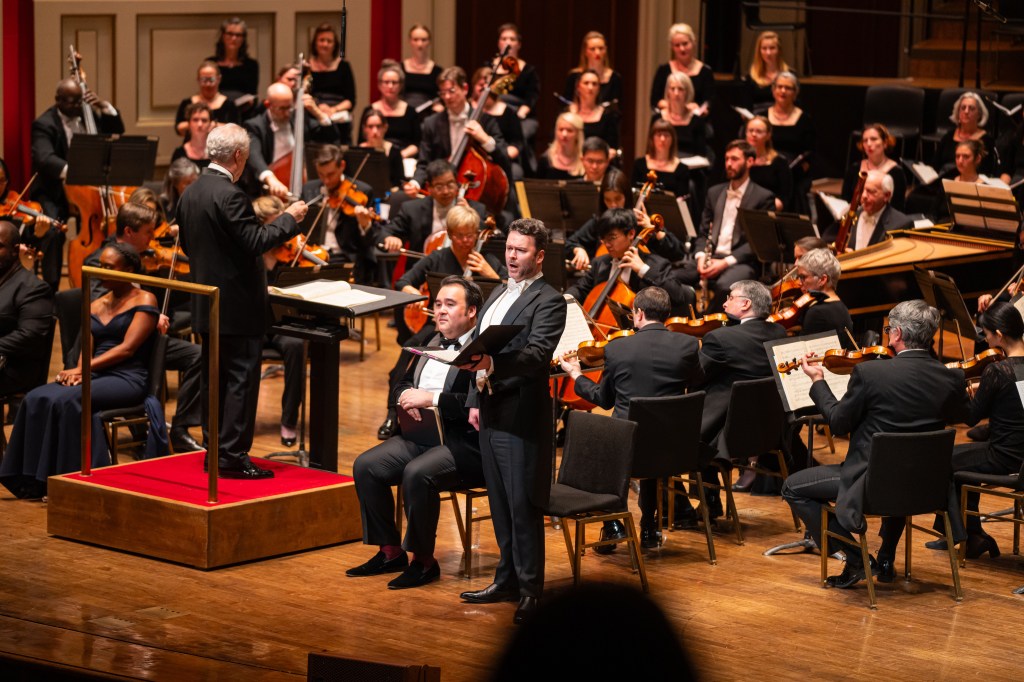
As is often done, cuts were made to the present performance with Honeck artfully selecting 41 of the 53 segments for a brisk 90 minutes of music. The opening Sinfonia for orchestra alone was crisply articulated, a stern, minor-key affair in sharp contrast from the exultant quality of most of the work. Tenor John Matthew Myers had the first vocal appearance of the evening in “Comfort ye, my people,” purveying a smooth, lyrical tone that was comforting indeed.
Baritone Joshua Hopkins maintained an imposing vocal presence, apparent from his entry in the recitative “Thus saith the Lord.” A highlight of the generally more introspective Part II of the work came in Hopkins’ aria “Why do the nations so furiously rage” — and one longs for a year when this isn’t so topical. “The trumpet shall sound” from the third and final part was fittingly bright with tenor and trumpet in clarion conversation.
Reginald Mobley offered a flexible countertenor, wide in range and elastic in melisma. “Behold, a virgin shall conceive” saw him in delicate dialogue with the principal strings and continuo. All selections that featured the soloists were for a single performer, save for “O death, where is thy sting?” which engaged Mobley and Hopkins in duet. Their voices blended harmoniously — a pity there weren’t more opportunities to hear the quartet in concert with each other.
Appearing for the first time near the end of Part I was soprano Jeanine De Bique, delicate and nuanced. She was particularly angelic in Part III’s aria “I know that my Redeemer liveth,” decorated in tinsel by high and strings and organ. “If God be for us” was a poignant and intimate moment ahead of the exuberant close, with solo passages from the concertmaster and cello touchingly decorating the soprano’s vocal line.
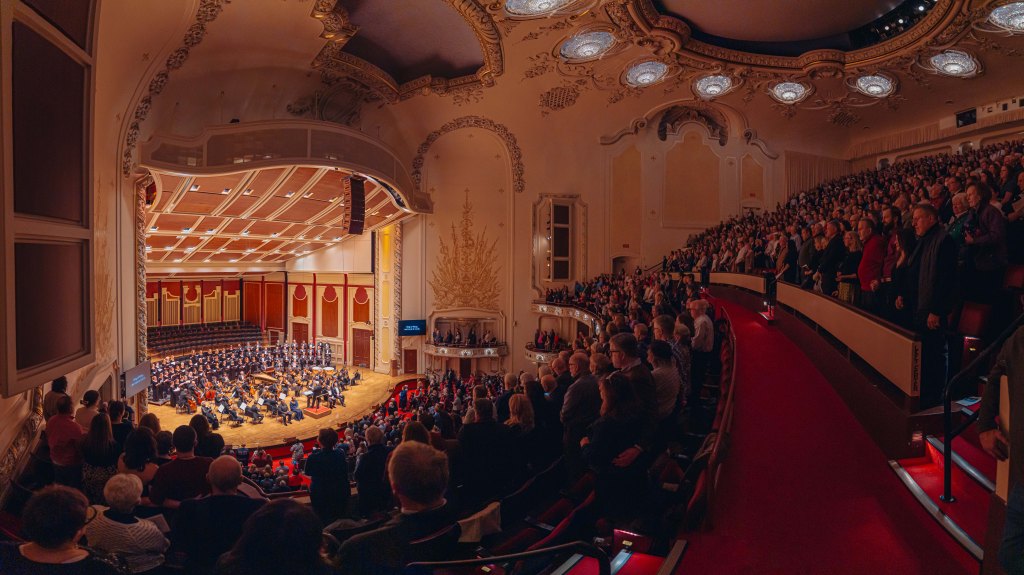
Of course the star of any Messiah performance is the chorus, and the Mendelssohn Choir delivered in spades. “And the Glory of the Lord,” marked their entry, delivering with clarity the intricate, multi-layered choral writing. The Hallelujah chorus, recognizable far beyond the confines of the concert hall, was festive and bright, and the audience followed the time-honored tradition of rising to their feet. “Worthy is the Lamb” closed the evening in the brilliance and weight of the full ensemble.


 quasi-faust