Leif Ove Andsnes contrasts Chopin with Norwegian piano sonatas in Cleveland recital

Leif Ove Andsnes, piano
Mandel Concert Hall
Severance Music Center
Cleveland, OH
March 27, 2025

Grieg: Piano Sonata in E minor, Op. 7
Tveitt: Piano Sonata No. 29, Op. 129, Sonata etere
Chopin: Preludes, Op. 28

Encore:
Debussy: La cathédrale engloutie, from Préludes Book I

The first half of Leif Ove Andsnes’ Thursday night piano recital in Cleveland plunged into wholly unfamiliar territory in an exploration of the Norwegian piano sonata. The pianist proved to be an incisive guide to the music of his home country, beginning with the Piano Sonata in E minor from the pen of a 22-year-old Edvard Grieg.
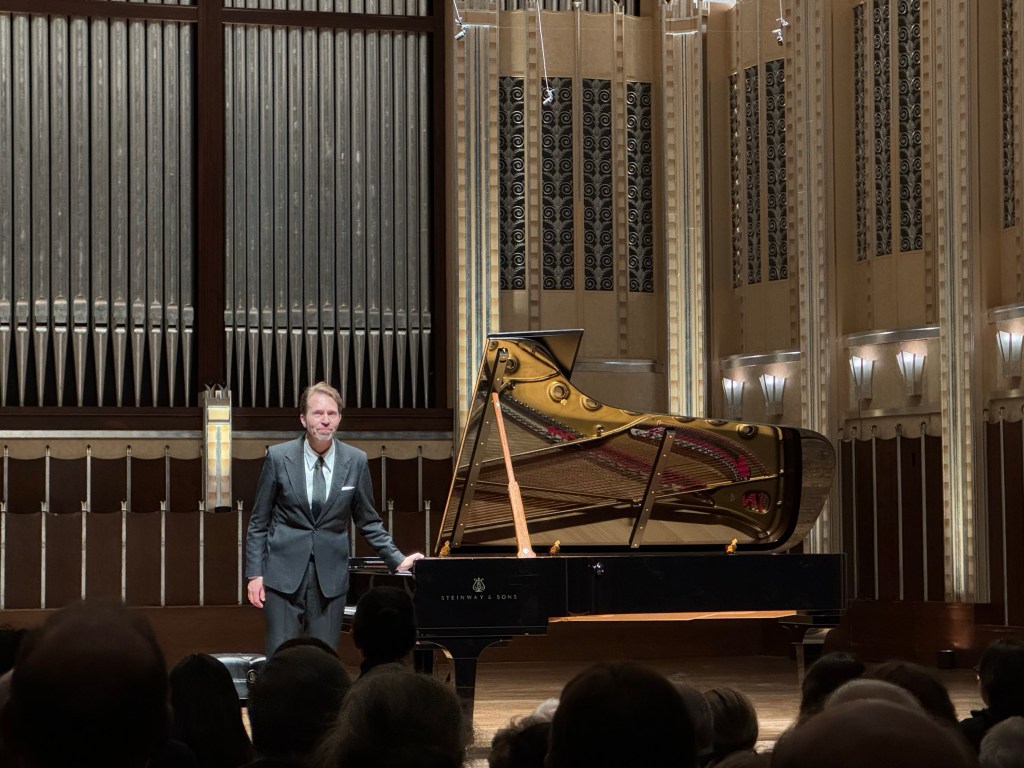
Leif Ove Andsnes at Severance Hall

Brimming with youthful energy, the piece balanced both the lyrical and the dramatic. A slow movement was delicate in its simplicity, though it built in density and traversed some striking harmonic modulations. The sonata very much bore the influence of Schumann above all, but the brief third movement was quite original, showing the composer finding his individual voice. The finale capped off this attractive work with a bravura march.

The real rarity came in the Piano Sonata No. 29 of Geirr Tveitt. Like Grieg, Tveitt studied in Leipzig, but returned to Norway where he developed his unique style. He settled in an isolated area in Norway’s Hardanger region, though tragedy would strike when a fire in 1970 would destroy nearly 300 of his unpublished manuscripts, the majority of his body of work. The Sonata etere (“Ethereal Sonata”) is the only surviving piano sonata — astonishingly, number 29 out of an unknown quantity lost to the flames.

A startlingly original work, there are perhaps nods to Prokofiev or Bartók in its percussive gestures or the French impressionists in its coloristic writing, but one imagines the composer writing in isolation, free from outside influences. A large-scale, 35-minute conception, the first movement (titled In cerca di — “In search of”) was propelled forward with driving energy — and I found Andsnes even more compelling than the composer’s own recording.

The central Tono Etereo in Variazoni consisted of 19 variations, most strikingly featuring a cluster of notes depressed with the pianist’s entire left arm, an ethereal resonance that would recur throughout. Overtop this were spiky jabs in the right hand the drew out the skeleton of a theme on which the variations were based. The variations were largely lyrical, and with subtle yet captivating effects. The closing Tempo di Pulsazione was virtuosic and bracing, though not purely percussive with its lyrical interludes, in due course fading away into the ether.

Chopin’s magnificent set of 24 preludes comprised the second half. Andsnes gave each one of these gems loving attention to detail, bringing out their unique personalities and sharpening contrasts across the set. I was struck by the majestic take on #9 and the ferocious energy given to #12, only outdone by the chillingly dramatic closing prelude. I loved the way he deftly voiced the chords in #20, and the warmly poetic readings he gave to #13 and #17 were deeply rewarding.

Andsnes offered a single encore from another great cycle of preludes in Debussy’s Sunken Cathedral, painting a wondrous soundscape.

While several artists have justly announced boycotts of the US in response to the current political climate, upon his arrival in this country, Andsnes thoughtfully mused on the potential music has to bring people together. A further post saw him marveling at the beauty of the Severance Hall stage. The pianist certainly proved that a captivating performance in a gorgeous venue can offer much-needed solace.
Pianist Tom Borrow joins Pittsburgh Symphony musicians for an evening of chamber music

Tom Borrow, piano
Justine Campagna, violin
Jeremy Black, violin
Tatjana Mead Chamis, viola
Anne Martindale Williams, cello
Strings of the Pittsburgh Symphony Orchestra

Heinz Hall
Pittsburgh, PA
October 19, 2024

Mozart: Violin Sonata No. 21 in E minor, K304
Grieg: Holberg Suite, Op. 40
Dvořák: Piano Quintet in A major, Op. 81

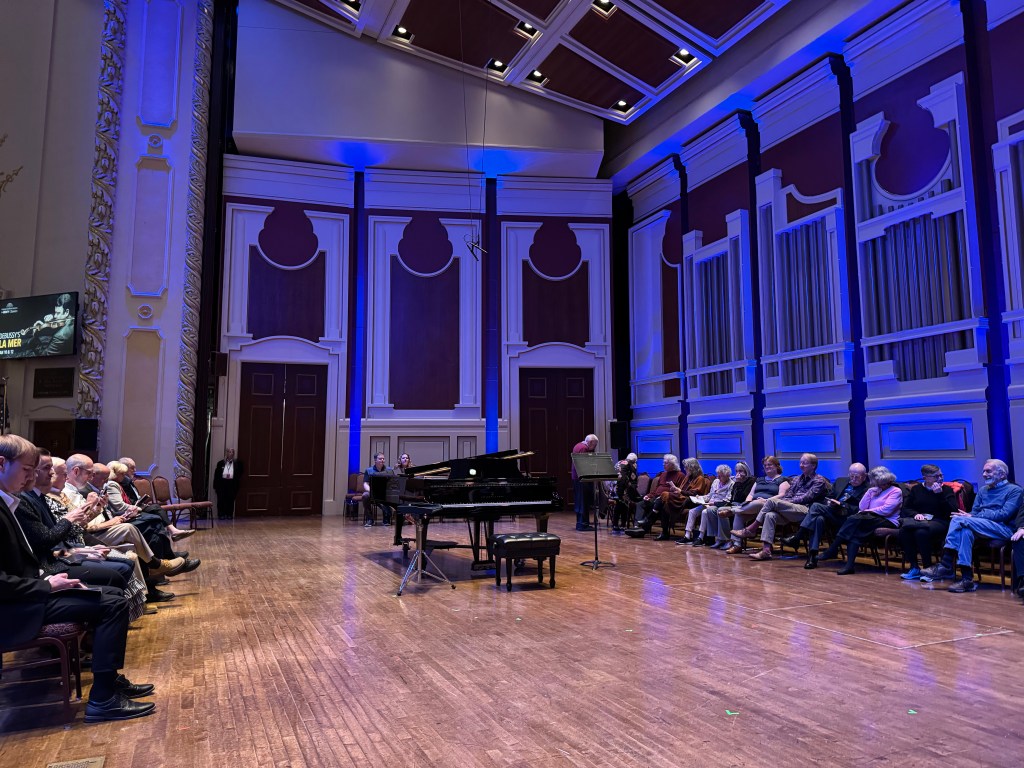
One of the Pittsburgh Symphony’s more enterprising endeavors is the PSO360 series, which engages the guest soloist from the weekend’s subscription concerts in chamber music with select PSO members. An intimate audience of 200 is seated on the Heinz Hall stage, circled around the performers, affording the opportunity to see another side of the soloist and orchestra players alike.

The soloist in question was the young Israeli pianist Tom Borrow, who made a strong impression in the performances of Ravel’s piano concerto that flanked Saturday’s chamber concert. To begin, Borrow teamed up with associate concertmaster Justine Campagna in Mozart’s E minor violin sonata. The only work in Mozart’s vast catalogue to be cast in that key, it’s a particularly deeply-felt creation, one that the program notes aptly compared to the A minor piano sonata (K310) for its expressive range.

Campagna was elegant and articulate, and Borrow responded in kind with sparkling, quintessentially Mozartian pianism. The development section was particularly emotive, and the minuet that closed the two-movement sonata was perhaps the most profound of all minuets, a rich conversation between violinist and pianist.

Grieg’s Holberg Suite brought out the Pittsburgh string section, and there was a visceral energy in being onstage with 20 string players, evident from the effusive prelude which opened. Peaceful, lyrical movements followed, swelling to a warm resonance, and I was especially struck by the clarity of the inner voices. Perhaps most affecting was the Air, songful and mournful — and a touching homage to Bach. The Rigaudon brought the suite to a close with joyous abandon.

Following intermission, Borrow returned with a quartet of strings for Dvořák’s great A major piano quintet. A graceful introduction in the piano paved the way for a lyrical cello passage (Anne Martindale Williams). The five players wove together a rich tapestry with a feverish intensity, yet at its core still as good-natured as the composer himself. An elegant piano gesture marked the Dumka, a wistful essay punctuated by gorgeous interludes.

There was a vivacity to the folk inflections of the Scherzo that could only put a smile on one’s face, and the finale continued in the highest of spirits — but not without a blistering fugato. Here as throughout, Borrow sounded like a seasoned collaborator with these Pittsburgh players.

Tom Borrow with members of the Pittsburgh Symphony

From Scandinavia to Italy, Cleveland Orchestra closes season in colorful travelogue

Cleveland Orchestra
Franz Welser-Möst, conductor
Simon Keenlyside, baritone
Severance Hall
Cleveland, OH
May 23, 2019

Grieg: Morning Mood, The Death of Åse, and At the Wedding from Peer Gynt, Op. 23
Sibelius: Kaiutar, No. 4 from Six Songs, Op. 72
Sibelius: Illale, No. 6 from Seven Songs, Op. 17
Sibelius: Aus banger Brust, No. 4 from Six Songs, Op. 50
Sibelius: Svarta rosor, No. 1 from Six Songs, Op. 36
Sibelius: Kom nu hit, död!, No. 1 from Two Songs for Shakespeare’s The Twelfth Night, Op. 60
Sibelius: Im Feld ein Mädchen singt, No. 3 from Six Songs, Op. 50
Sibelius: Die stille Stadt, No. 5 from Six Songs, Op. 50
Sibelius: Var det en dröm?, No. 4 from Five Songs, Op. 37
Strauss: Aus Italien, Op. 16

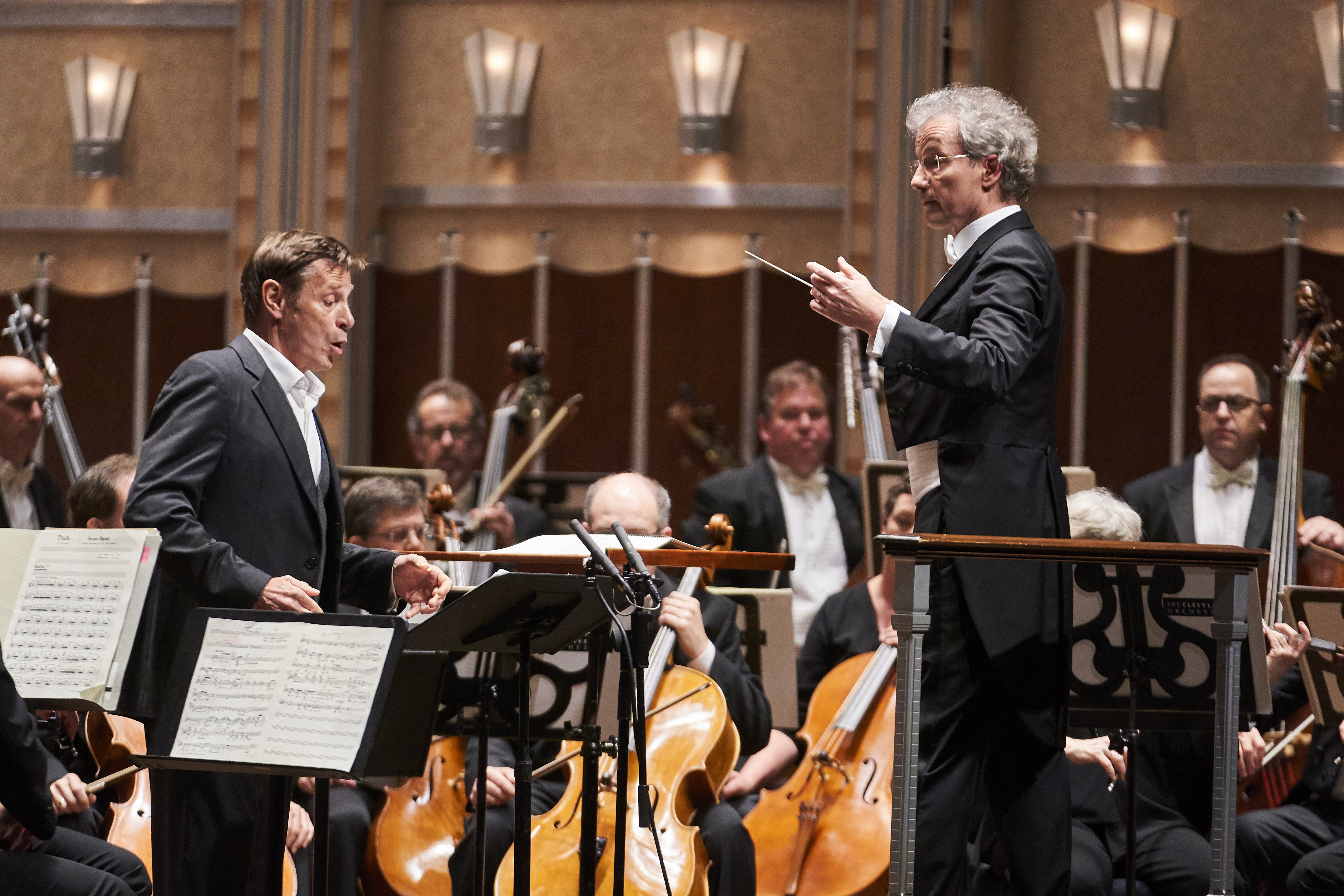
Franz Welser-Möst and The Cleveland Orchestra closed the 2018-19 season in an alluring program, with all selections stemming from the late 19th-century (and in to the early 20th), connected by Romantic fascinations from awe-inspiring destinations to drama and poetry. Beginning the evening were selections from Grieg’s incidental music to Peer Gynt. Welser-Möst culled his own suite of three excerpts rather than opting for either of the two suites the composer later produced. The selections were performed in reverse order of appearance in the source material, opening with the familiar Morning Mood (which serves as the prelude to Act 4). Silvery flutes beckoned the morning, with the songful theme passed around the woodwinds before appearing in the strings. Welser-Möst’s brisk tempo ensured matters were never sentimentalized. Lush and mournful strings made The Death of Åse the emotional crux, easily a precursor to Barber’s Adagio. At the Wedding (which opens the complete work) was given with vigor and joyous abandon. A more languorous theme was very finely played in turn by the principal winds while Wesley Collins’ offstage viola radiated folksy charm.

CLO052319__197_select
Simon Keenlyside and Franz Welser-Möst, photos credit Roger Mastroianni, Courtesy of The Cleveland Orchestra

On the heels of his lieder recital a few days prior, Simon Keenlyside returned for the evening’s centerpiece and highpoint – a helping of eight of the seldom-performed songs of Sibelius. The songs at hand were variously in Finnish, Swedish, or German, and in some cases orchestrated by Sibelius himself, others by contemporaries. Keenlyside brought out the lyrical qualities of the Swedish language in Kaiutar, with an orchestration that encouraged its fantastical, fairy-tale atmosphere. Crepuscular strings made Illale a true gem, and the next selection turned to German in a setting of Richard Dehmel’s Aus banger Brust. Dehmel’s poetry served as text for the likes of Strauss and Schoenberg, and Sibelius proved no less adept with the work’s acerbic dissonances and moving solo passages from concertmaster Peter Otto in faithful service of the text. Svarta rosor, a comparatively better-known quantity, was of robust lyricism and grand emotions, nearly operatic with an unforgiving close to boot.

Unlike the others all originally scored for voice and piano, Kom nu hit, död! came from a set of two Swedish settings of Shakespeare’s The Twelfth Night for voice and guitar, given a rather gloomy reading at present. The richness of Im Feld ein Mädchen singt could easily have been mistaken for Strauss, while Die stille Stadt – another Dehmel setting – maintained a remarkably surreal atmosphere, enhanced by ethereal sounds from the glockenspiel, harp, and high strings. The last selection, Var det en dröm?, displayed again Keenlyside’s keen ability to seamlessly switch languages, and brought matters to a passionate, satisfying close, feeling almost as if these eight otherwise disparate songs were conceived as a unified cycle.

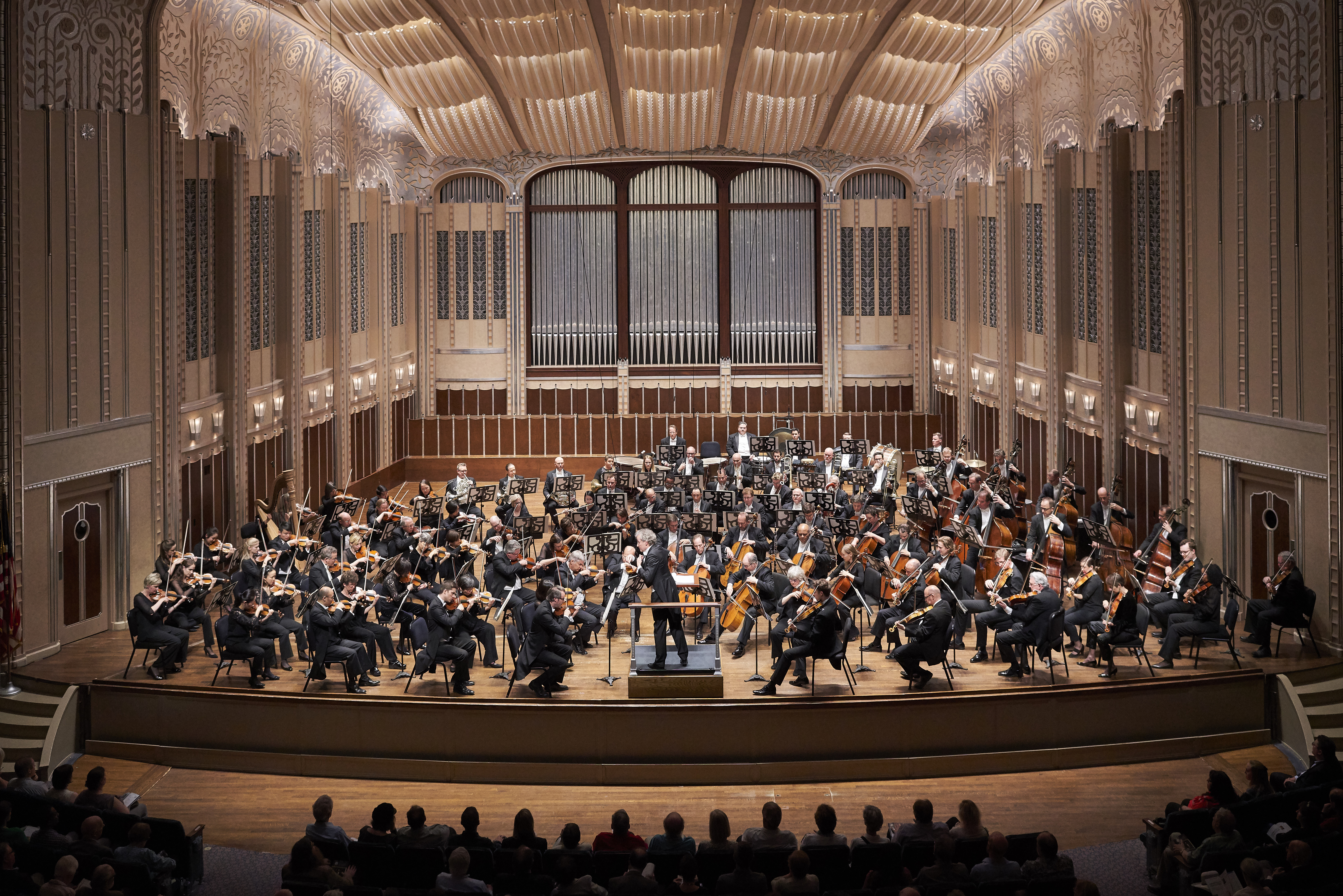
Strauss’ Aus Italien drew inspiration from an Italian journey undertaken by the composer as an impressionable youth, and became the first entry in his great series of tone poems. It’s an immature work to be sure, yet many Straussian hallmarks are already firmly in place, setting the stage for the musical revolutions that would soon be flowing from his pen. This was certainly apparent in the opening Auf der Campagne which could only have been written by Strauss, with elemental beginnings burgeoning into material larger than life. Brassy passages were of arresting vigor, although otherwise matters in performance weren’t entirely polished, sounding as if some extra rehearsal time was needed – no doubt, I suspect, ironed out by the Saturday performance.

Rather than the single-movement architecture of the successive tone poems, Aus Italien was conceived far less cohesively as four distinct portraits. In Roms Ruinen followed suit, generally lighter fare of Italianate charm interspersed with more solemn moments in awe of the eponymous ruins. Strauss’ idiomatic orchestral effects certainly began to crystallize in Am Strande von Sorrent, a coloristic painting of the sun-drenched coast of Sorrento. The closing Neapolitanisches Volksleben marked the work as a foreigner’s less than reliable view of Italy in that Strauss mistook a popular tune of the day for bone fide Neapolitan folk music (I was somewhat reminded of the All’Italiana movement from the Busoni piano concerto heard earlier this season – though there the composer was no foreigner, it too juxtaposed Italianate folk melodies in the context of an otherwise very Teutonic musical language). In any case, matters were nonetheless of an infectious joie de vivre, banal yet so colorfully orchestrated. The orchestra’s committed playing heightened one’s interest: ultimately the rewards were mixed, though the players on stage made as strong a case as they could in this vintage work displaying the budding composer’s incipient genius.

CLO052319__039_select
Franz Welser-Möst and The Cleveland Orchestra in Aus Italien