ProMusica musicians delight in folk-inspired chamber works

Victoria Moreira, violin
Joel Becktell, cello
Renee Keller, marimba & percussion
The Fives
Columbus, OH
February 18, 2022

Piazzolla: Fugata
Piazzolla: Mumuki
Barilari: The Mysteries
Kodály: Duo for Violin and Cello, Op. 7
Diz: Poema Bachiano
Granados: Danzas españolas, Op. 37 – No. 2 “Orientale”
Bartók/arr. Kraeuter – Selected Hungarian Folk Melodies
Piazzolla: Milonga del Angel
Piazzolla: Lo que vendrá

Friday evening saw the first of a series of three chamber music performances featuring various combinations of players from ProMuscia. The venue of choice was The Fives, ProMusica’s home last season wherein they found a way to perform even in the midst of the pandemic. Friday brought forth Victoria Moreira, Joel Becktell, and Renee Keller in music for violin, cello, and marimba – an intriguing if unusual combination. There’s a paucity of repertoire for these forces as one might expect; most of the selections were thus presented in arrangements or adaptations to fit the ensemble at hand. The program was refreshingly offbeat, with the common thread being each composers’ engagement with the folk music traditions of their respective homelands. Additionally, there was acknowledgement of Astor Piazzolla’s centenary (last year) with two pairs of the Argentine’s works framing the recital.

L-R: Victoria Moreira, Renee Keller, and Joel Becktell, photo credit ProMusica

Piazzolla’s Fugata opened the program, its contrapuntal intricacies tinged with a distinctive Latin flavor. From the onset, we were introduced to the appealing sound of this novel instrumentation and the fluid chemistry of the three musicians on stage. Mumuki was touchingly lyrical, and the scoring put the often stratospherically high cello in the spotlight. A world premiere followed, namely a three movement suite titled The Mysteries by Uruguayan composer Elbio Barilari, currently on the faculty at the University of Illinois at Chicago. Barilari was on hand to introduce the work and noted his inspiration from ancient Greece, which he aptly called the “cradle of civilization.” The opening “Delphic Dance” featured an incessant, pulsating dance rhythm, and some passing references to Greek scales. “Adonic Dance” was marked by a busy part for the violin, while the closing “Eleusinian Dance” was grounded by the beating drum and pizzicato cello. I wasn’t convinced the work probed as deep as the title suggested, but the music was as good-natured as the composer himself.

The first half closed with the most substantial work on the program, Kodály’s Duo for Violin and Cello. Cast in three movements, the first was commanding and big-boned, making much of the resources of the duo. One was taken by the resonant cello in the middle movement, often blending with high register of the violin for striking combinations, and the rapid-fire finale showcased the consummate virtuosity of these two string players. The most interesting discovery of the evening to my ears opened the latter half: Poema Bachiano, a 2008 work by Argentine composer Ezequiel Diz. A duet for marimba and violin, the work alludes to Bach’s D minor keyboard concerto in gesture and inflection. The complexities of the work were delivered with aplomb in this compelling reimagining of its Bachian influences, and perhaps something of a response to Villa-Lobos’ Bachianas Brasileiras. A second work of the same title was composed in 2020, a piece I suspect would be worth exploring on a future chamber music program.

A series of short pieces by Granados and Bartók followed, presented in arrangements for cello and percussion – thereby exhausting all combinatorial possibilities of the instruments available. A pulsating accompaniment in the marimba made a touching backdrop for the wistful cello melody of Granados’ “Orientale.” The three Bartók arrangements employed the vibraphone as the percussion of choice – its metallic brilliance was quite striking, further encouraging a piquant, folksy charm. Two Piazzolla selections reunited all members of the trio and brought us back full circle. Milonga del Angel was dreamy and evocative, while Lo que vendrá (“What is to come,” suggesting a sense of possibility after the composer’s formative studies with Boulanger) made for a rousing finish.
Osorio makes an impressive entry in Northwestern’s Skyline Piano Artist Series

Jorge Federico Osorio, piano
Mary B. Galvin Recital Hall
Evanston, IL
April 1, 2017

Beethoven: Piano Sonata No. 14 in C sharp minor, Op. 27 No. 2, Moonlight
Schubert: Piano Sonata No. 20 in A major, D959
Debussy: Préludes, Book II

Encores:
Granados: Andaluza, No. 5 from Danzas españolas, Op. 37
Granados: Orientale, No. 2 from Danzas españolas, Op. 37

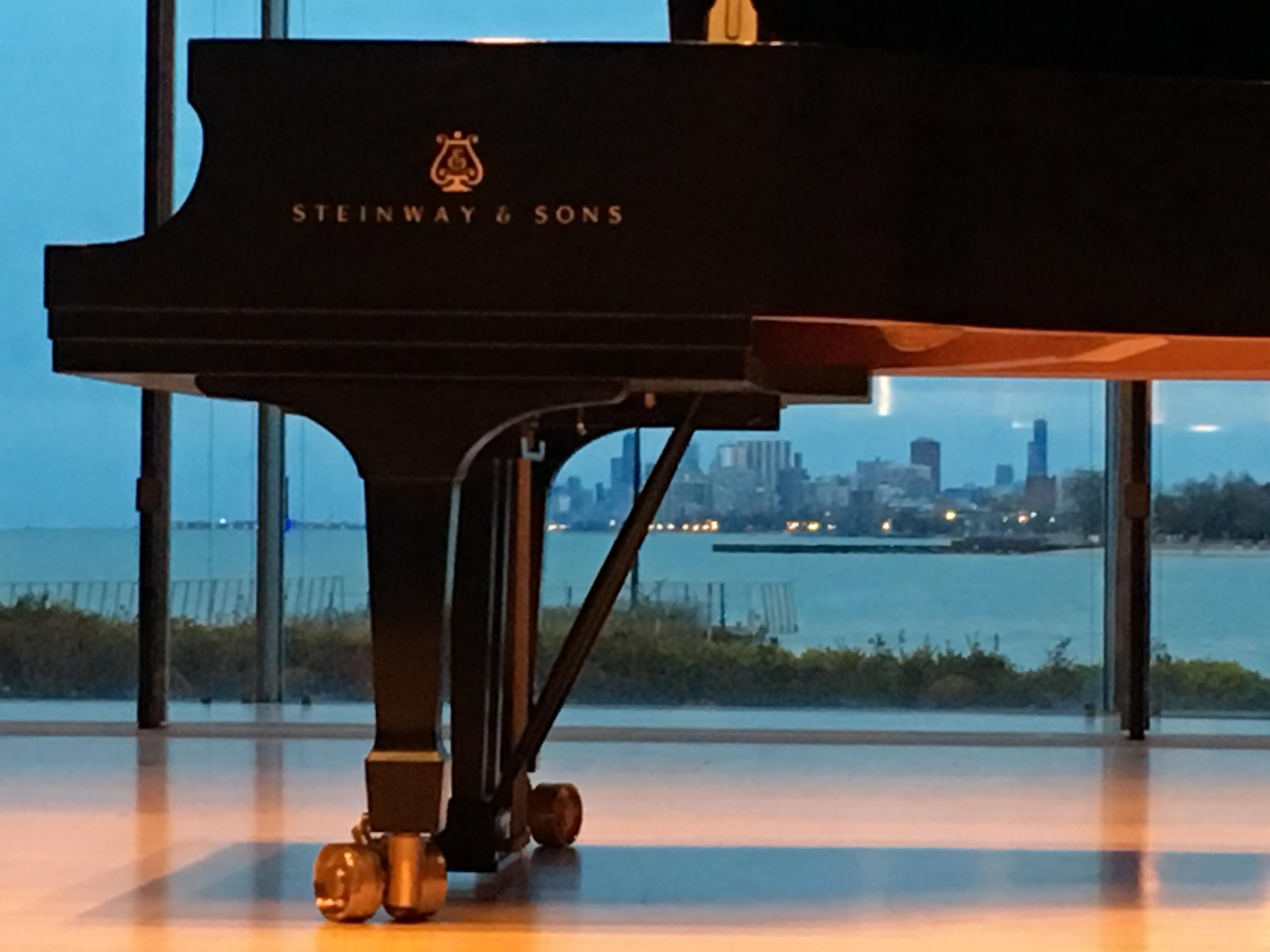
For piano enthusiasts, the Skyline Piano Artist Series at Northwestern, now in its second season, has become an essential complement to the Sunday afternoon recitals downtown at Symphony Center.  The venue of choice for the series is the recently built Galvin Recital Hall, one of Chicagoland’s most striking concert spaces, an intimate setting boasting stellar acoustics and stunning views of Lake Michigan and the distant Chicago skyline.  Chicago-based pianist Jorge Federico Osorio made a welcome appearance and offered a weighty program of Beethoven, Schubert, and Debussy.

JFO101006_035_ret3-682x1024
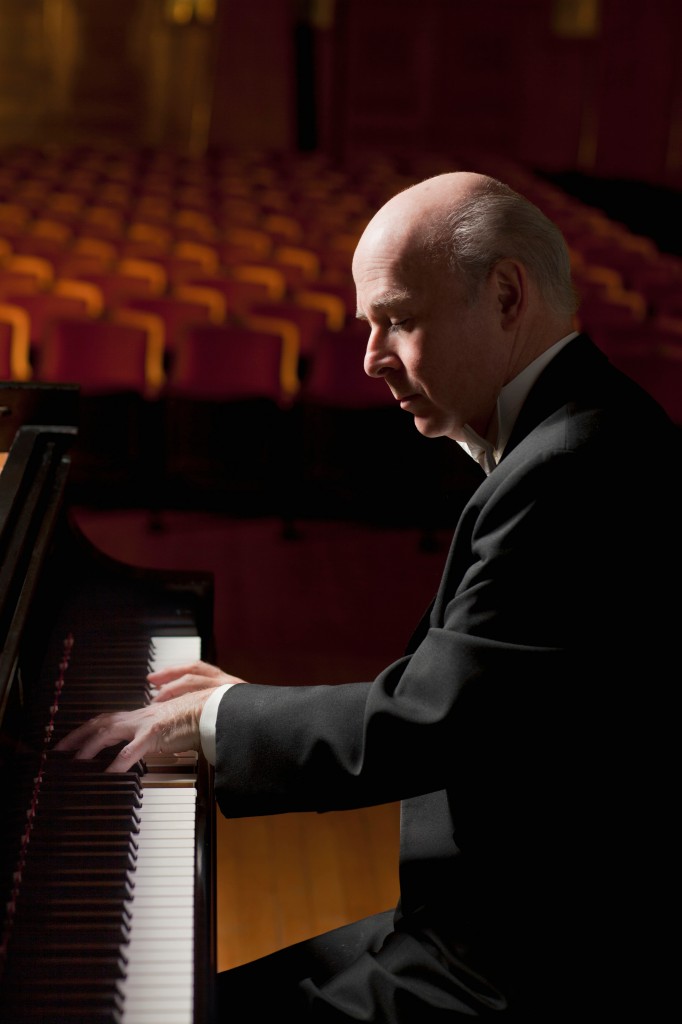
Jorge Federico Osorio, photo credit Todd Rosenberg
Beethoven’s ever-popular Moonlight sonata opened, the lights of the city skyline reflecting on the water making a fitting visual backdrop, though it should be remembered that the work’s ubiquitous sobriquet didn’t originate with the composer.  Under Osorio’s hands, the first movement was given a luminous, rippling effect, and treated almost like a nocturne.  The buoyant second movement served as a light interlude to the stormy finale.  In this impressive outpouring, Osorio mined the emotional depths of Beethoven’s explosive psyche; a few minor technical mishaps did little to detract from the drama.

In change from the order on the printed program, Osorio proceeded with Schubert’s late, great A major piano sonata (D959) to juxtapose the two epochal Viennese sonatas, both of which redefined the genre.  The grandeur of the capacious opening movement had an ineffable Schubertian grace, and Osorio opted for the lengthy repeat of the exposition.  A thoughtful sense of narrative guided the pianist in the labyrinths of the development, and its introspection was maintained through the mysterious, arpeggiated coda.  The Andantino had the lyricism of a song without words, and built to menacing outbursts in the strikingly contrasting middle section, while the scherzo danced in its mercurial drama, complemented by an especially lovely trio.  In the finale, the main theme’s blissfulness belied a dramatic potential which Osorio was keen to explore, and the movement harked back to the sonata’s declamatory opening in its concluding moments.

File_000
The dramatic setting of the Galvin Recital Hall
The second half was devoted to Debussy’s substantial second book of twelve preludes, a panoply of pianistic watercolors requiring a formidable technique.  Brouillards was given a limpid reading, the coloristic washes of sound suggesting the titular mists.  Contrast was soon to be had in the barren Feuilles mortes, and Osorio struck an ideal balance between the fiery and the sensuous in the faux-Spanish La puerta del Vino.  The quicksilver Les fées sont d’exquises danseuses was fantasy-like, and the resonant bells of a distant cathedral were suggested in Bruyères.  Osorio imbued Général Lavine – eccentric with its requisite eccentricity, one of Debussy’s rambunctious appropriations of the American cakewalk and ragtime music (and incidentally, this concert occurred on the 100th anniversary of Scott Joplin’s death).

The moonlight shimmered in La terrasse des audiences du clair de lune, and how apt it was given this prelude and the Beethoven sonata that concertgoers would leave the hall to the sight of a beautiful crescent moon.  Ondine was perhaps the most impressionistic of the set in its fantastical evocation of the titular water sprite.  The bombast of Hommage à S. Pickwick Esq. P.P.M.P.C. was countered by Canope, which for Osorio was a study in the beauty and purity of tone.  While Les tierces alternées sounds like the name of a dry Czerny etude, here the alternating thirds were used for solid musical purposes rather than mere technique.  The Préludes concluded with the unrelenting technical tour de force that is Feux d’artifice, and Osorio delivered it with panache and élan.

No Osorio recital would be complete without music from the Spanish speaking world, and the two Granados encores filled the gap.  Both were extracted from the 12 Danzas españolas: a jaunty “Andaluza”, fittingly paired with the touchingly lyrical “Orientale”.