The beauty of two cellos with Pablo Ferrández and the Pittsburgh Symphony

Pablo Ferrández, cello*†
David McCarroll, violin†
Justine Campagna, violin*
Dylan Naroff, violin†
Zhenwei Shi, viola*†
Anne Martindale Williams, cello*†

Heinz Hall
Pittsburgh, PA
November 15, 2025

Arensky: String Quartet No. 2 in A minor, Op. 35*
Schubert: String Quintet in C major, D956†

Following his lyrical and refined performance of Saint-Saëns with the Pittsburgh Symphony, the next evening cellist Pablo Ferrández was featured in a PSO360 program alongside string players drawn from the orchestra’s ranks — the first three of the violins, principal viola, and principal cello. Both the works programmed were strikingly scored for two cellos: the first a remarkable discovery, the latter, a pillar of the chamber repertoire.
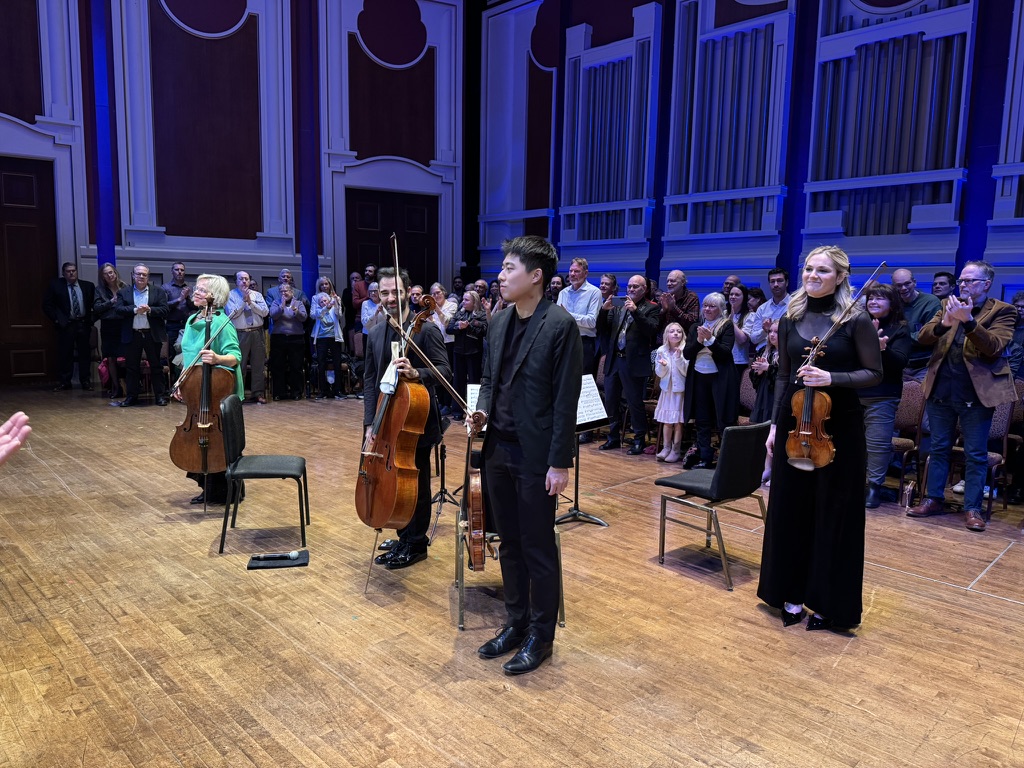
L-R: Anne Martindale Williams, Pablo Ferrández, Zhenwei Shi, Justine Campagna

Anton Arensky’s Second String Quartet quite unusually doubles the cellos in place of the violins. I know of no other works with this scoring, but the rich sound makes it an instrumentation with intriguing potential. A resonant Russian hymn opened, a theme that would return at key hingepoints. Energetic, expressive, and virtuosic, Ferrández and the PSO players offered a well-balanced reading with taut communication.

The central movement was cast as a set of variations on a theme by Tchaikovsky (namely, the fifth of the Op. 54 Children’s Songs), a lovely homage from one composer to another. Arensky would go on to expand this movement as a standalone piece for string orchestra (catalogued as Op. 35a). I particularly enjoyed the fourth variation with its remarkably textured oscillations between pizzicato and arco playing, and the sleight-of-hand sixth variation was sprightly and buoyant. The finale made use of the Russian coronation anthem Slava!, and the intricate counterpoint of a fugato section made for a breathless close.

Schubert’s great C major string quintet is certainly the pinnacle of the form, and made for a rewarding second half. The spacious first movement was paced with ample room to breathe, and an intensely lyrical theme enveloped one in the richness of the two cellos (I loved the musical chemistry between Ferrández and Anne Martindale Williams). A profound lyricism was achieved in the slow movement, countered by the energy and rustic abandon of the scherzo — the trio of which had some strikingly spellbinding harmonies. The finale was given with an infectious rhythmic snap, in no way glossing over its delicate details.

In a way, this continued what’s been of brief exploration of Schubert’s late chamber music, following a recent post-concert performance of a movement from the D887 quartet. The originally announced program was to include a string quintet transcription of Beethoven’s Kreutzer sonata in place of the Arensky — a work which I’m nonetheless keen to explore.
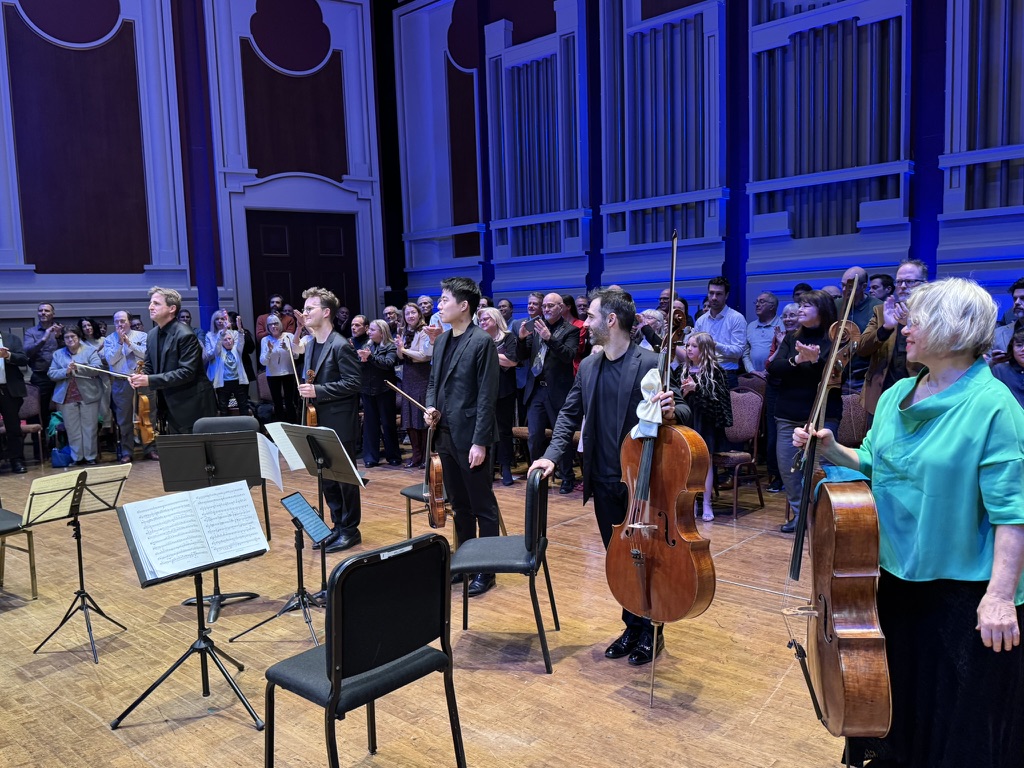
L-R: David McCarroll, Dylan Naroff, Zhenwei Shi, Pablo Ferrández, Anne Martindale Williams

Valčuha leads Pittsburgh Symphony in lush Strauss, Saint-Saëns

Pittsburgh Symphony Orchestra
Juraj Valčuha, conductor
Pablo Ferrández, cello
Heinz Hall
Pittsburgh, PA
November 14, 2025

Wolfe: Liberty Bell
Saint-Saëns: Cello Concerto No. 1 in A minor, Op. 33
 Encore:
 Bach: Sarabande from Cello Suite No. 3 in C major, BWV 1009
Strauss: Ein Heldenleben, Op. 40

Featuring a return to the Heinz Hall podium of Juraj Valčuha, this weekend’s PSO program opened with another entry in this season’s survey of American orchestral works. Receiving just its second performance was Julia Wolfe’s Liberty Bell, premiered in September at the Houston Symphony where Valčuha serves as music director. Based in the titular bell’s home of Philadelphia, Wolfe was on hand to introduce the piece in person (I liked how she described Philly and Pittsburgh as “the two pillars of Pennsylvania”).

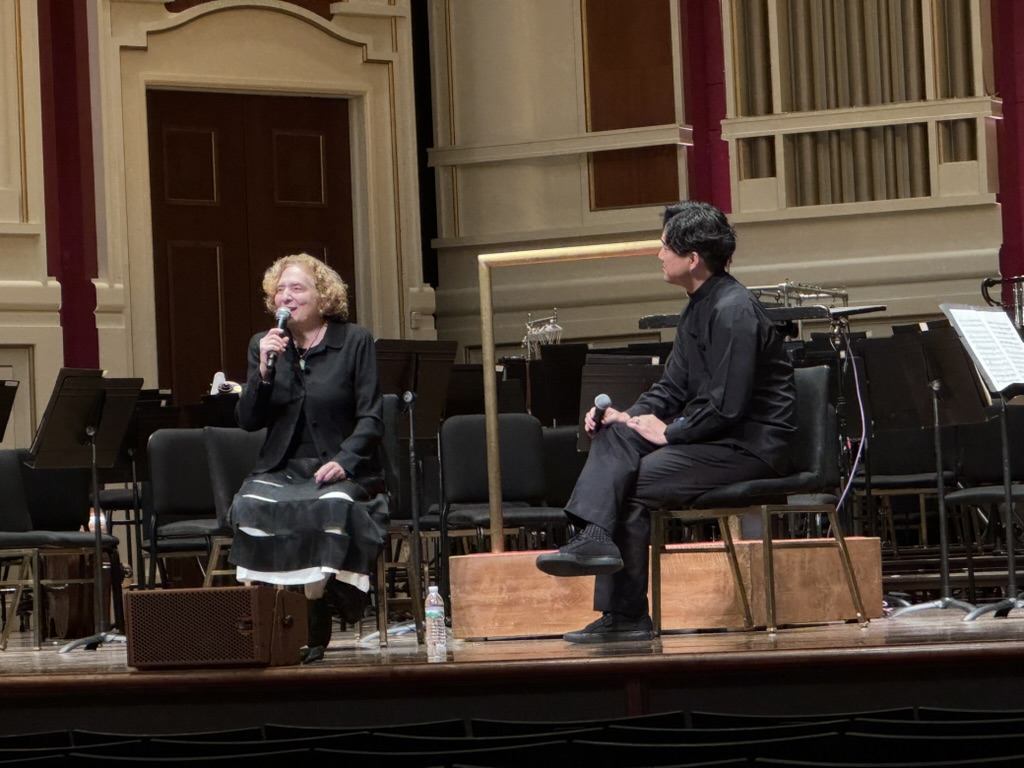
Preconcert interview with Julia Wolfe and assistant conductor Moon Doh

The 10 minute work opened with the clangor of vigorously tolling bells. Perhaps suggested the Liberty Bell’s iconic crack, the jagged, interlocking rhythms conveyed a fractured texture. The orchestration was brilliantly colored, celebratory yet conscious of the struggle to arrive there. At moments, matters paused as if to provide moments of reflection. Drawing on a diversity of traditions, there was even a raucous rock and roll beat, leading to a bold climax splashed with the resonance of the bell.

Saint-Saëns’ Cello Concerto No. 1 in A minor saw the return of Spanish cellist Pablo Ferrández (who will also be featured in this season’s first PSO360 performance). Cast in three compact, interconnected movements, the cellist opened with a lyrical, burnished tone, achieving long-bowed, artful phrasing. The orchestra supported him with a supple, sympathetic accompaniment. The central slow movement opened with a hushed passage in the strings, and Ferrández joined in an intimate dialogue with the orchestra. The robust finale was filled with technical fireworks, yet still lyrical at heart. As an encore, Ferrández offered a Bach sarabande, stately and pure.

Strauss’ great orchestral showpiece Ein Heldenleben opened the second half with bold and heroic beginnings. Yet the conductor thoughtfully didn’t begin too loud, allowing ample room for the muscular brass to grow. “The Hero’s Adversaries” which follows depicts the cranky music critics that bedeviled Strauss — listening to this from the vantage point of being a critic is always a delightfully uncomfortable experience. “The Hero’s Companion” was a passionate and affecting portrait of the composer’s wife, the singer Pauline de Ahna. It featured an extensive and demanding passage for solo violin, played by concertmaster David McCarroll with wide-ranging emotion and variegated color.

A battle was heralded by offstage brass in the fourth section, music that really gets one’s blood flowing before devolving into utter cacophony. The final two sections were rather more restrained, in the twilight of the hero’s life, a retrospective on a life’s work. The music faded into graceful triumph, but not without revisiting the iconic opening of Also sprach Zarathustra.

Pablo Ferrández and Juraj Valčuha with the PSO