PUBLIQuartet challenges convention at Chamber Music Pittsburgh

PUBLIQuartet
PNC Theatre
Pittsburgh Playhouse
Pittsburgh, PA
March 10, 2025

PUBLIQuartet: What is American? Improvisations on Dvořák’s “American” Quartet
Vijay Iyer: Dig the Say
Mazz Swift: Digging Gold; Deeper Blue 
Henry Threadgill: Sixfivetwo
Jeff Scott: Blues for Buddy
Jlin: Baobab
Sun Ra: Interstellar Low Ways
Duke Ellington: “Come Sunday” from Black, Brown, and Beige
Julia Perry: Prelude for Piano (arr. Hamilton Berry)
PUBLIQuartet: Wild Women Don’t Get the Blues. Improvisations on Tina Turner’s “Black Coffee,” Betty Davis’ “They Say I’m Different,” Alice Coltrane’s “Er Ra,” and Ida Cox’s “Wild Women Don’t Have the Blues”

Monday evening saw the Pittsburgh debut of the New York-based PUBLIQuartet in a diverse, inventive program at Chamber Music Pittsburgh. Entitled “Found Futures”, the program focused on particularly forward-thinking composers as part of the quartet’s larger project, What is American. An ambitious offering, the selections offered bore little resemblance to what one might expect at a typical string quartet recital.
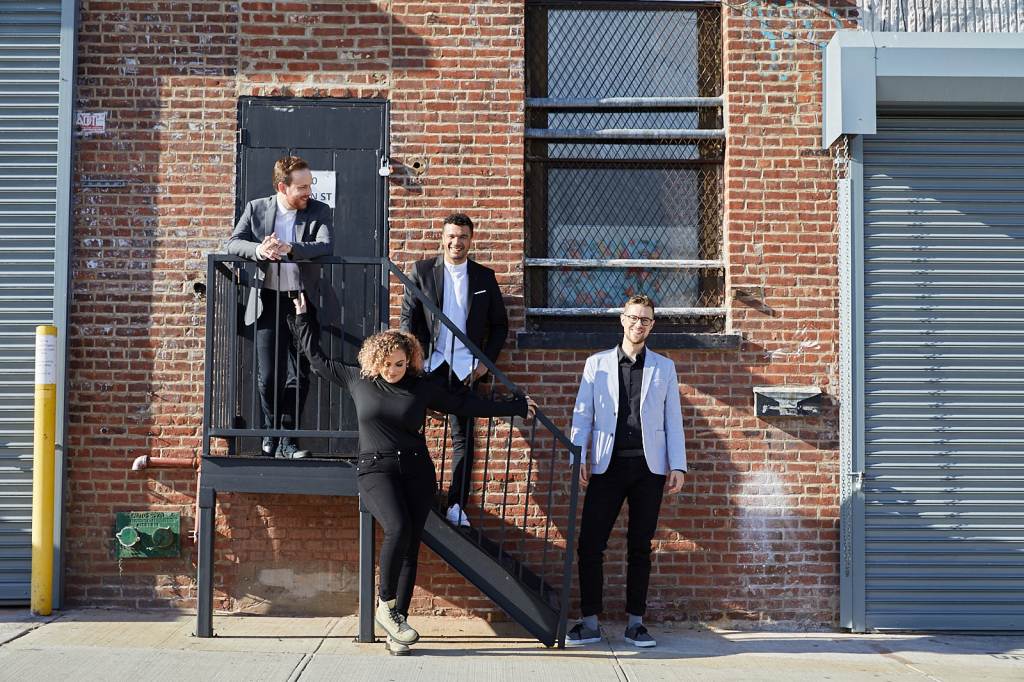
PUBLIQuartet, photo credit publiquartet.com

The evening began with one of PUBLIQuartet’s own creations, an improvisation based upon Dvořák’s American quartet (and the original version will be heard at Chamber Music Pittsburgh’s next event with the Dover Quartet). PQ has recast the entire work in their invigoratingly idiosyncratic style, but offered just the first movement on Monday. Nebulous beginnings were achieved through a panoply of extended techniques, and Dvořák’s sunny theme emerged out of the ether. A tapestry of American styles were woven into Dvořák’s music, traversing elements of blues, jazz, rock, and hip-hop.

Vijay Iyer’s Dig the Say was a tribute to the music of James Brown — never before have I heard a string quartet sound so groovy! Pizzicato cello served as a funky bass line, and the ensemble was asked to clap and stomp to further enliven this colorful score. Digging Gold; Deeper Blue by Mazz Swift followed. With elements of improvisation, it was a complex, multi-threaded score of interlocking intricacies, akin to solving a puzzle.

Henry Threadgill’s Sixfivetwo came about as part of the Kronos Quartet’s staggeringly ambitious 50 for the Future endeavor (see here for my review of Kronos performing several works from that project). PUBLIQuartet astutely negotiated the complex score, though to my ears it wasn’t a piece particularly approachable on first listen. A work by Jeff Scott (horn player and founding member of the Imani Winds) closed the first half, Blues for Buddy. Scott revealed to the quartet that Buddy was his late uncle, and the brief but touching work looked inward, sounding as a bluesy elegy.

Like the Scott piece, Jlin’s Baobab was also commissioned by the PUBLIQuartet. An electronic music composer, Jlin had the group improvise over pre-recorded electronica, oftentimes evoking an African drumming ensemble. Three transcriptions for string quartet followed, beginning with music based upon Sun Ra’s Interstellar Low Ways in its first performance. “Come Sunday” from Duke Ellington’s jazz symphony Black, Brown, and Beige was languid and pensive, proving to be effective when cast for these forces.

Originally for solo piano, a prelude by Julia Perry was given in a transcription by PQ’s cellist Hamilton Berry, showing its rich, forward-looking harmonic palette (one is further referred to a recent recording of Perry’s violin concerto by PQ violinist Curtis Stewart). Closing the evening was another PQ original, Wild Women Don’t Get the Blues, featuring the group’s improvisations and musical reflections on female singer-songwriters from generations past: Tina Turner, Betty Davis, Alice Coltrane, and Ida Cox.
Hamelin a star soloist in Cleveland Orchestra’s feast of American music

Cleveland Orchestra
David Robertson, conductor
Marc-André Hamelin, piano
Mandel Concert Hall
Severance Music Center
Cleveland, OH
November 29, 2024

Copland: Suite from Appalachian Spring (1945 orchestration)
Gershwin: Rhapsody in Blue (arr. Grofé)
Ellington: New World A-Comin’
Copland: Suite from The Tender Land

Over the Thanksgiving weekend, The Cleveland Orchestra and guest conductor David Roberston served up a rich course of American orchestral music. As the centerpiece was a pair of works for piano and orchestra with virtuoso Marc-André Hamelin, both of which artfully brought jazz and popular traditions into the concert hall.

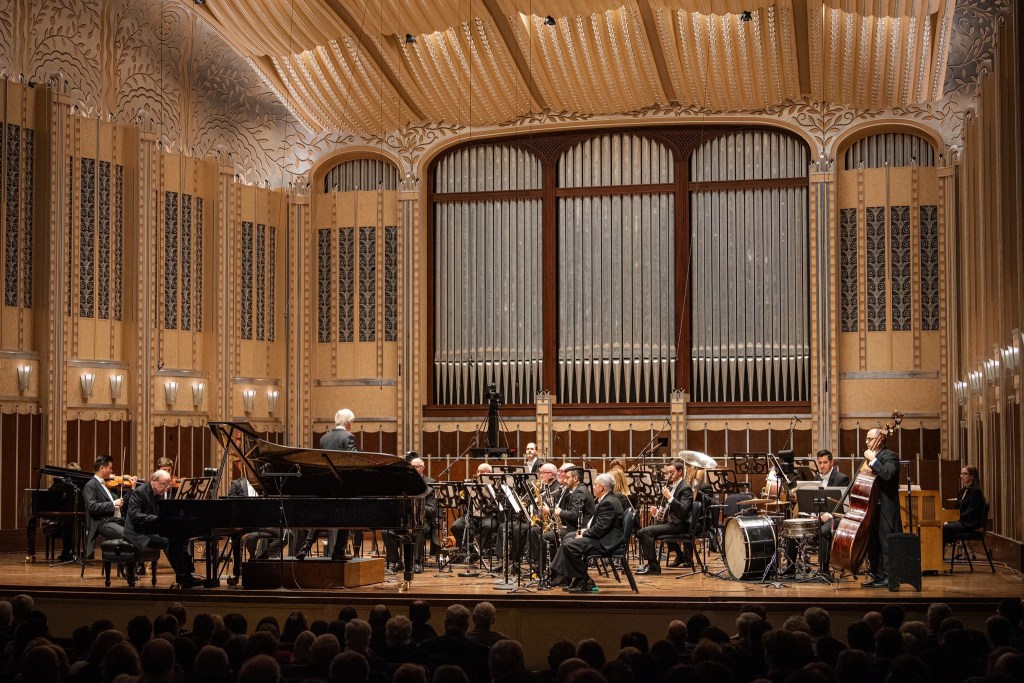
Marc-André Hamelin, David Robertson, and The Cleveland Orchestra perform Rhapsody in Blue. Photos credit Extraordinaire Photos

This year marks the centennial of Gershwin’s epochal Rhapsody in Blue, and the evening’s performers offered an energetic and joyous performance fitting for such an anniversary. The work was presented in its original jazz band orchestration arranged by Ferde Grofé, as it would have been heard in its 1924 premiere at Carnegie Hall — and The Cleveland Orchestra morphed into a bona fide dance hall band.

The iconic wail of the clarinet opened the work, stylishly played by Daniel McKelway. A muted trumpet responded in its striking timbre, setting the stage for Hamelin’s commanding pianism, given with flair and virtuosity. In this amalgamation of the classical and the vernacular, the two resided not in opposition, but as a unified whole. A downtempo section was a sultry affair, while a passage of repeated notes conveyed the mechanistic fury of the Industrial Age, not unlike what one finds in Prokofiev at the same time. All cares were left aside though in the abandon of the foot-tapping finale.

Duke Ellington’s 1943 work New World A-Comin’ premiered under similar circumstances as the Gershwin: a Carnegie Hall performance that endeavored to break the confines of the traditional classical repertoire. Unlike Rhapsody in Blue, Ellington’s work was not initially well-received. Credit, then to Hamelin et al. for offering a compelling performance. A lushly-scored opening in the orchestra gave way to a quasi-improvisatory passage for piano, with silky filigree and silvery runs, colored by jazz-inflected harmonies. A drum kit onstage added to the rhythmic pulse. Comprised of alternating sections for orchestra and piano, it lacked the cohesion of the Gershwin, but proved an attractive discovery nonetheless. On the subject of jazz-influenced classical works, Hamelin’s 2008 album In a state of jazz is warmly recommended.

Bookending the concertante works was music of Aaron Copland, in both cases orchestral suites extracted from stage works. Appalachian Spring made for a lovely opening to the evening. Earthy harmonies began, brimming with hope and possibility. Robertson and the orchestra gently breathed life into this soft-spoken material, starkly different from the bustling Manhattan streetscape conveyed in Gershwin’s Rhapsody. More angular material was enhanced by the sheen of the brass, and rhythmic inflections conveyed a dance-like quality — this was, after all, originally a ballet. A magical moment saw the first appearance of the Simple gifts hymn, first in the winds and then blooming to its magnificent orchestration. The loveliest of epilogues concluded, wholly at peace.

Less well-known was the three movement suite from Copland’s opera The Tender Land, dating about a decade after Appalachian Spring. Strident, brassy beginnings retreated inward for a gentle love song. A specialist of the American repertoire, Robertson served as a keen guide in this deeply lyrical writing. A boisterous, raucous “Party Scene” took matters in a rather different direction, splashed by piquant touches from the xylophone. The closing “Promise of the Living” was a peaceful paean with a fine English horn solo, and a touching, topical close for the Thanksgiving program.

And for those who couldn’t make it to Severance Hall in person, Sunday’s performance was live-streamed and subsequently available on demand through Adella and Stage+.

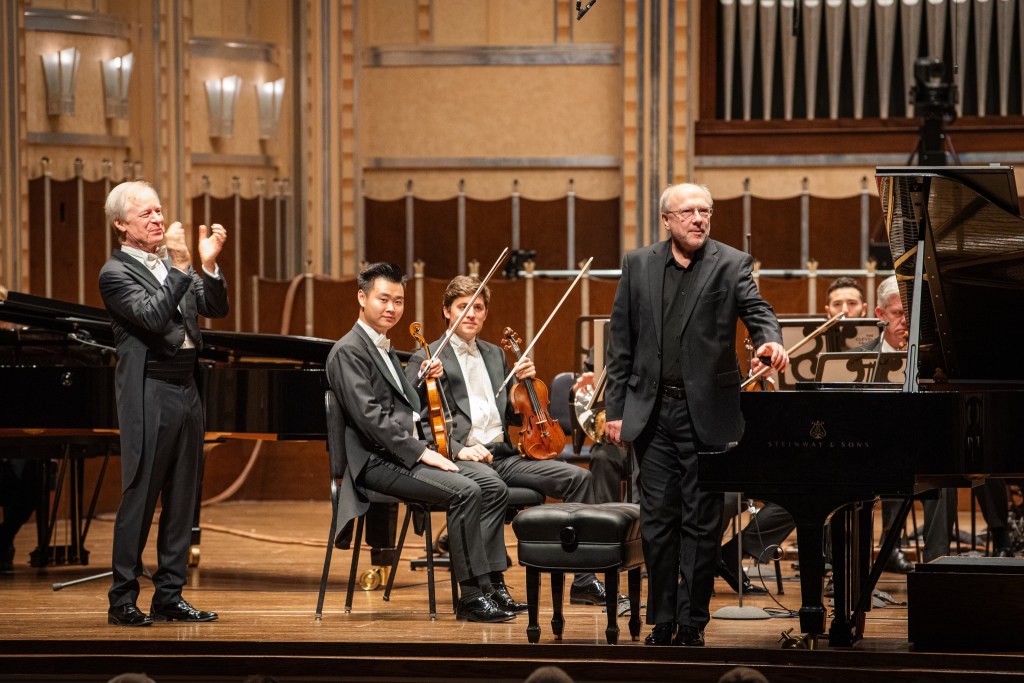
David Robertson applauds Marc-André Hamelin

Columbus Symphony explores the confluence of classical and jazz

Columbus Symphony Orchestra
Rossen Milanov, conductor
Aaron Diehl, piano
Ohio Theatre
Columbus, OH
March 17, 2023

Perry: Study for Orchestra
Gershwin: Concerto in F
Tchaikovsky: Suite from The Nutcracker, Op. 71a
Ellington/Strayhorn: The Nutcracker Suite

The Columbus Symphony’s program served as a colorful depiction of elements of jazz seeping into the classical tradition – and vice-versa. Matters began on a different note, however, with an example of the considerable body of work from the often forgotten 20th century American composer Julia Perry. A native of Lexington, Kentucky who spent her final years in Akron, Ohio, her reputation was tragically stifled by the establishment’s prejudices towards an African-American woman.

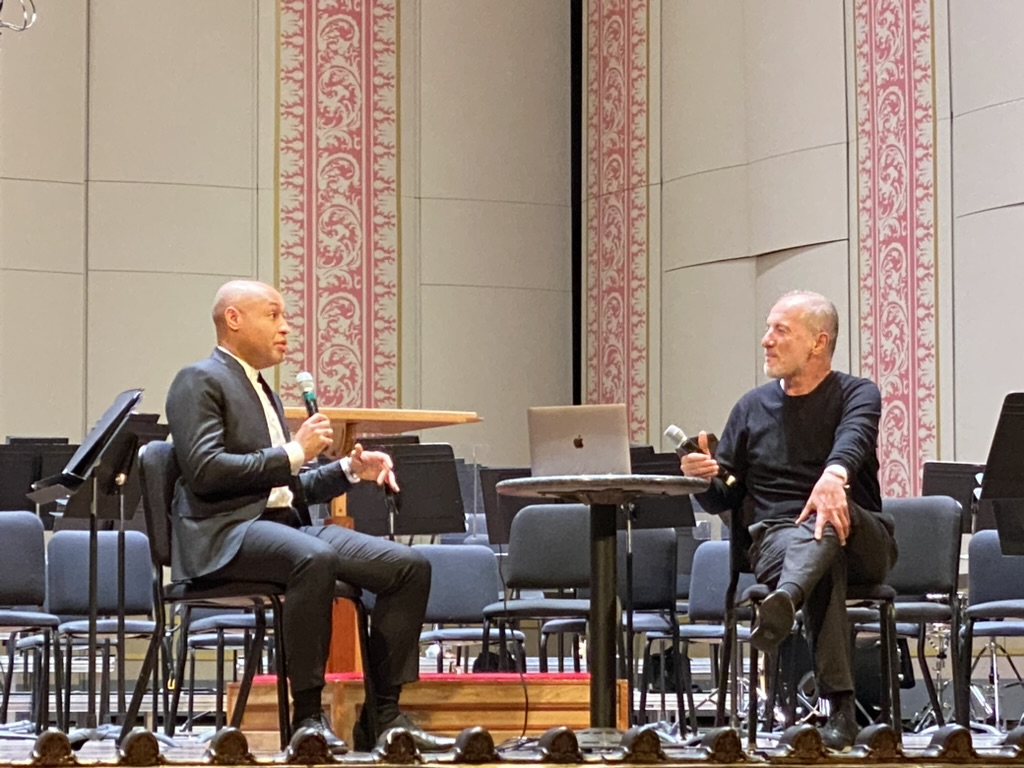
Aaron Diehl in conversation with Rossen Milanov

Nonetheless, she produced a substantial output – including more than ten symphonies – and the 1952 Study for Orchestra, included on the present program, was performed by the New York Philharmonic in 1965, certainly a major milestone. Bracing, strident beginnings gave way to more lyrical interludes. Albeit brief, it was a work of adroit craftsmanship, and certainly piqued my interest in discovering more of her music.

Gershwin’s great Concerto in F filled the balance of the first half, and was fitting platform for the belated CSO debut of Aaron Diehl – a Columbus native, Juilliard-trained, and equally at home in classical and jazz. A thunderous opening in the timpani pointed towards a lively Charleston rhythm. The pianist’s entry was graceful and elegant, with the virtuosity and vigor quickly ramping up. An impassioned lyrical melody served as the first movement’s climax, as lush as anything Rachmaninov wrote.

The brass with which the slow movement opened evidenced Gershwin’s skill at orchestration, much improved from the earlier Rhapsody in Blue for which he had the enlist the assistance of Ferde Grofé. The gently cascading piano was quite lovely, and the cadenza afforded Diehl the opportunity to improvise – and the orchestra musicians seemed to be watching him in awe. A motoric toccata-like movement closed the work with a big-boned finish. Diehl offered an encore (perhaps of his own composition?) that filled the theater with ethereal jazz harmonies.

In 1960, Duke Ellington released an album re-imagining Tchaikovsky’s Nutcracker as a jazz piece. Conductor Rossen Milanov cleverly devised a suite in which Tchaikovsky’s originals were interwoven with Ellington’s take, and it was quite fascinating to hear them juxtaposed. Delicate musical tinsel marked the opening Overture; in the ensuing Ellington version, the orchestra seamlessly morphed into a bona fide jazz band. Ellington’s adaptation of the Marche was styled as the “Peanut Brittle Brigade”; it expanded the rhythm and harmonies while the source material remained recognizable. In the “Dance of the Sugar Plum Fairy” the celesta sparkled; Ellington’s “Sugar Rum Cherry” retooled it for sax and brass. Tchaikovsky was given the final word, however, with a lush and lilting “Waltz of the Flowers.”