Columbus Symphony closes season in the splendor of Mozart

Columbus Symphony Orchestra
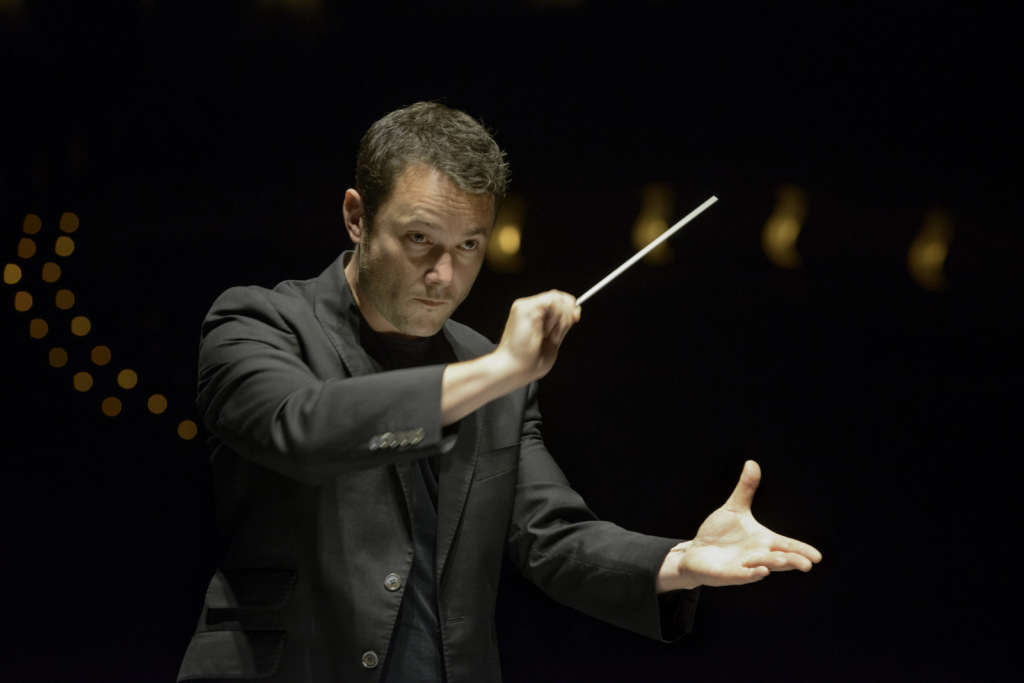
Rossen Milanov, conductor
Aubry Ballarò, soprano
Hilary Ginther, mezzo-soprano
David Walton, tenor
James Eder, bass

Stephen Caracciolo, chorus director
Columbus Symphony Chorus

Ohio Theatre
Columbus, OH
May 24, 2024

Mozart: Mass in C minor, K427, Great (completion by Ulrich Leisinger)

For the final program of the 2023-24 Masterworks season, the Columbus Symphony offered a single work in a brief but affecting program, an evening dedicated to Mozart’s C minor mass. Like the Requiem, Mozart never completed the Mass, and the CSO presented the work in a 2019 realization by Ulrich Leisinger, which eschews a liturgically complete mass in favor of only minimal additions to Mozart’s extant corpus.
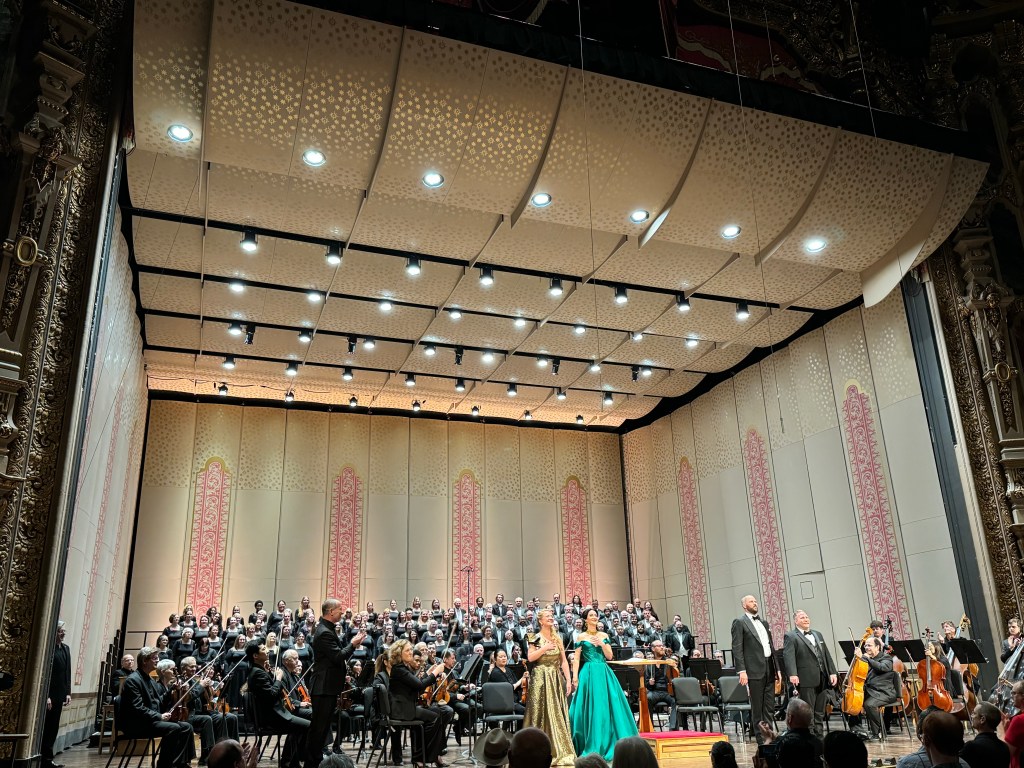
L-R: Rossen Milanov, Aubry Ballarò, Hilary Ginther, David Walton, and James Eder with the Columbus Symphony & Chorus

Under Rossen Milanov’s baton, the opening Kyrie began intimate and inward, quite striking for such a grandiose conception. Matters quickly grew in urgency, however, with the Chorus – prepared by Stephen Caracciolo – filling the cavernous Ohio Theatre. “Christe eleison” was intoned by soprano Aubry Ballarò, with flowing, extended melismas yielding a resonant effect – and I couldn’t help being reminded of the passage’s use in Amadeus.

The extensive Gloria began resplendent and exultant, structured such that the chorus alternated with the soloists, either as individuals or in various combinations. Hilary Ginther offered a second soprano voice in “Laudamus te,” articulate, and in command of the vocal intricacies, while “Dominus Deus” saw her in harmonious blend with Ballarò. In “Qui tollis,” the chorus was rapt and pious in the minor key profundities. The women were combined with tenor David Walton in “Quoniam,” the latter a bit overshadowed, and the final passage of the Gloria was given to the chorus, resplendent in its exacting counterpoint.

In the Credo, a soprano solo (Ballarò) prefaced an orchestral interlude, notable for fine playing from the winds. This was somewhat lighter fare compared to the preceding, but still certainly no trifle. The Sanctus was brightened by the brass – with the trombones especially striking – and the closing Benedictus was given heft with the sole appearance of bass James Eder, though it was the chorus who ultimately brought the work to its resonant close.
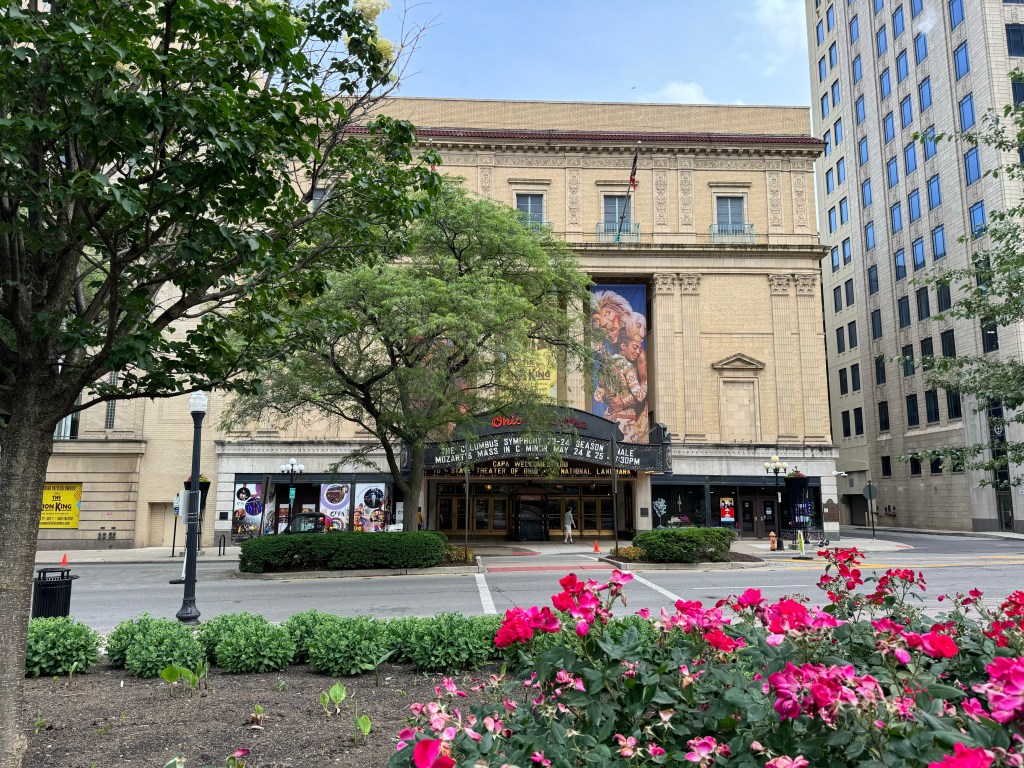
Ohio Theatre ahead of Friday’s performance

Halls leads Cleveland Orchestra in moving Mozart mass

Cleveland Orchestra
Matthew Halls, conductor

Joélle Harvey, soprano
Krisztina Szabo, mezzo-soprano
Paul Appleby, tenor
Michael Sumuel, bass-baritone
Blossom Festival Chorus
Lisa Wong, director

Severance Hall
Cleveland, OH
August 2, 2019

Mozart: Mass in C minor, K427, Great

The Blossom Festival Chorus had one chance to shine during the Summers@Severance series this year, and they more than made it count in Friday’s performance of Mozart’s Mass in C minor. Mozart perplexingly never completed the Mass (and unlike the case of the also incomplete Requiem, he lived for nearly another decade), yet even its fragmentary state, it remains an undisputed masterwork. Several attempts have been made to complete the work, but conductor Matthew Halls opted for the extant torso in a performing edition by Helmut Eder.

Matt-Halls-41-1024x683
Matthew Halls, photo credit Jon Christopher Meyers © Oregon Bach Festival

A weighty pathos, buttressing the epithet Great, was to be had from the onset of the Kyrie. The force of the chorus was quickly introduced, countered by the delicate beauty of soprano Joélle Harvey’s voice (in a passage I cannot dissociate from a memorable scene in Amadeus). A powerful response from the chorus was elicited. Tenor Paul Appleby introduced the Gloria unaccompanied as if to announce the commanding fugue, a rather glorious affair bearing a more than passing resemblance to Handel’s Hallelujah chorus.

Mozart wrote the work with his soprano wife Constanze in mind, and consequently there exists a bounty of wondrous writing for the two soprano soloists – and Krisztina Szabo’s flexible instrument was up to the vocal acrobatics in the “Laudamus te”. Crisp dotted rhythms during “Qui tollis” were emblematic of Halls’ tight direction, and there the choral passages were of a tragic beauty that foreshadowed the Requiem. The closing “Cum Sancto Spiritu” beamed in its contrapuntal splendors, anchored by an imposing bass line in the trombone.

The booming bass-baritone of Michael Sumuel opened the Credo just as Appleby did in the Gloria. “Et incarnatus est” was a highlight in its delicate orchestrations, with fine contributions from the principal winds, strings, organ, and Harvey’s limpid vocals. An ebullient and brassy Sanctus led to the prematurely closing Benedictus, the only time vocal quartet were scored together – one only wished there were more opportunities for the ensemble to explore their obvious chemistry.