Cleveland Orchestra’s stellar Mozart and Dvořák bookends Deutsch premiere

Cleveland Orchestra
Franz Welser-Möst, conductor
Mandel Concert Hall
Severance Music Center
Cleveland, OH
January 15, 2022

Mozart: Symphony No. 36 in C major, K425, Linz
Deutsch: Intensity
Dvořák: Symphony No. 8 in G major, Op. 88

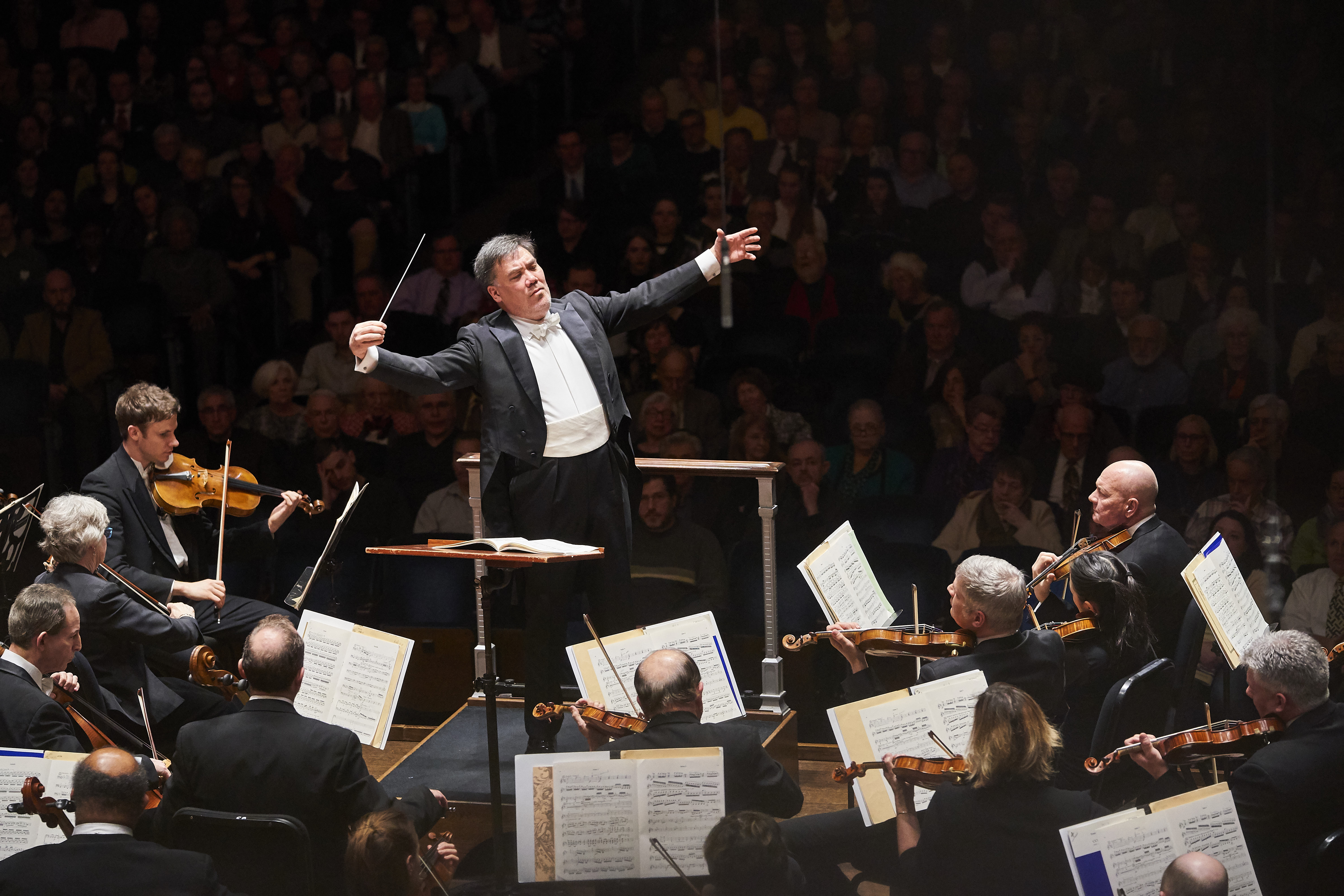
Under the baton of music director Franz Welser-Möst, The Cleveland Orchestra offered familiar and appealing symphonies of Mozart and Dvořák as bookends to a compelling premiere from its current composer in residence. Mozart’s Linz symphony made for a pearly opener. The dotted rhythms which opened the slow introduction were punctuated with heft while the ensuing Allegro spiritoso was a fittingly lighter affair, given with such energy as to mirror the frenetic pace at which it was composed. The Andante was delicate and intricately refined by way of Welser-Möst’s exacting attention to articulation and dynamics. In the Menuetto, one was struck by the rhythmic swagger, and the bold, big sound of the modern orchestra which the conductor cultivated – something of a foil to Nicholas McGegan’s airier and comparatively more historically-informed performance of the work a few seasons ago. Contrast was further sharpened by the rather more genial trio, and the finale was given with crystalline clarity even at breakneck tempo.
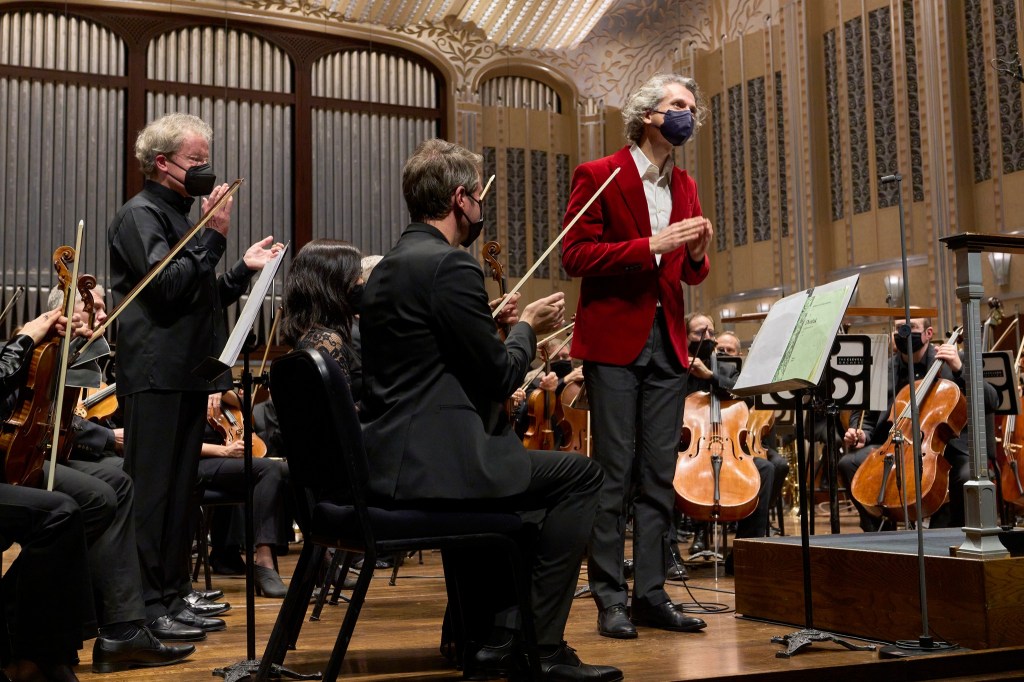
Bernd Richard Deutsch and The Cleveland Orchestra, photo credit Roger Mastroianni, courtesy of The Cleveland Orchestra

Bernd Richard Deutsch’s Okeanos made a strong impression on this listener when performed by the orchestra in March 2019 (and captured on the excellent A New Century). As the current Daniel R. Lewis Young Composer Fellow, Deutsch was commissioned to write a new work for TCO, originally slated for a May 2020 performance but inevitably postponed until this weekend. The product of this residency was Intensity, an aptly titled twenty-minute fantasy scored for massive orchestral forces – including a particularly extensive percussion battery. A sense of wound-up energy, pregnant with potential permeated the opening bars, and the colorful timbres of the percussion were utilized from the opening notes. Lyrical interludes at various interludes offered an anchor in otherwise stormy waters. The middle of the work’s three sections was spectral and dissipated, achieved through the striking aural palette of high strings, muted brass, percussion, and celesta. The namesake intensity ramped up again in the final section, encouraged by the boisterous percussion and finally culminating in a blast in the brass. A fitting tribute to the virtuosity and technical prowess of the The Cleveland Orchestra, and I hope a recording is released in the near future.

Dvořák’s Symphony No. 8 is certainly one of the most popular in the repertoire, but this performance was refreshingly far above the routine and pedestrian. Passionate beginnings, as coaxed from the resonant cellos, persisted for only a moment before the work’s sunny disposition shone through. Joshua Smith’s solo flute passages were a highlight, and Welser-Möst opted for a brisk tempo, keenly avoiding over-sentimentalizing. The Adagio showed Dvořák at his most lyrical, although a brilliant brass section added bold contrast. The Allegretto grazioso positively sparkled in its lilting textures, while clarion trumpets heralded the finale wherein the conductor guided the orchestra with conviction through the myriad of guises of this rousing theme and variations.
Columbus Symphony opens season with appealing Brahms and Dvořák

Columbus Symphony Orchestra
Rossen Milanov, conductor
Stefan Jackiw, violin
Ohio Theatre
Columbus, OH
October 22, 2021

Montgomery: Banner
Brahms: Violin Concerto in D major, Op. 77
 Encore:
 Bach: Largo from Violin Sonata No. 3 in C major, BWV 1005
Dvořák: Symphony No. 8 in G major, Op. 88

Friday marked opening night of the Columbus Symphony’s Masterworks series, the core of its landmark 70th season. As is standard practice from most American orchestras, the CSO would typically open the season with a rendition of the national anthem. Extraordinary times, however, make business as usual ring hollow, and a thoughtful opener was to be had in Jessie Montgomery’s 2014 work Banner. Written in 2014, two hundred years after Francis Scott Key’s indelible poem, the work pits the Star-Spangled Banner against a wealth of melodies from other cultures, depicting in musical terms the vast array of cultures that comprise the United States today. While the contours of the Star-Spangled Banner form the backbone of the work, no less than seven other songs are woven together into a single multicultural fabric, often yielding a spiky polytonality. A deeply engaging opener, and I hope the CSO continues to explore Montgomery’s work in future seasons.

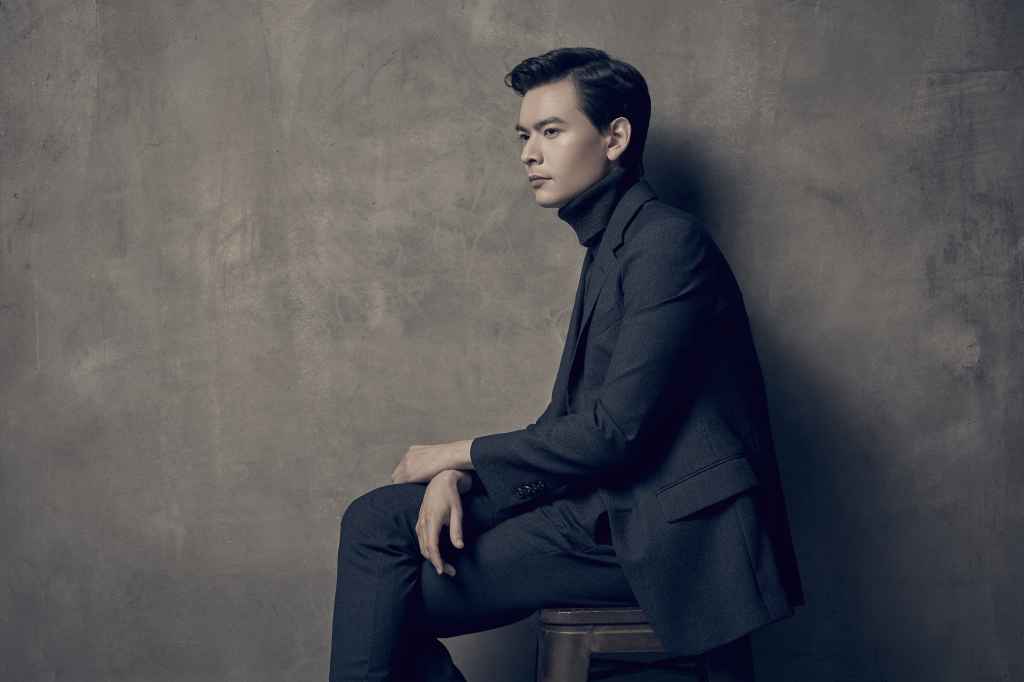
Stefan Jackiw, photo credit stefanjackiw.com

The remainder of the program retreated to more familiar territory in seminal works of Brahms and Dvořák. Stefan Jackiw served as a commendable soloist in the Brahms Violin Concerto. The graceful and genial opening gave way to the dramatic, punctuated by Jackiw’s jagged entrance. He displayed an accomplished virtuosity, delivering the extended cadenza with flair, but never without sensitivity, continually drawing focus towards the work’s lyrical heart. A rapturous oboe solo opened the central Adagio, answered in the rich lyricism of the solo violin. The Hungarian finale was given with both effervescence and drama, and the orchestra matched Jackiw’s high spirits. As an encore, Jackiw offered the Largo from Bach’s C major sonata – a lovely pendant.

Dvořák’s Symphony No. 8 closed the evening, and here, Milanov opted to conduct from memory. The work saw brooding beginnings, but rays of sunlight quickly broke through. The principal winds – the flute in particular – were the standouts here. A second movement Adagio proceeded as calm and untroubled affair, while the lilting penultimate movement had a dancing charm – though one wanted perhaps even more emphasis on the insouciant dance rhythms. Clarion trumpet calls heralded the boisterous finale. All in all, a very satisfying start to the season.

Weilerstein, Gilbert, and Cleveland Orchestra reunite in bracing Barber

Cleveland Orchestra
Alan Gilbert, conductor
Alisa Weilerstein, cello
Severance Hall
Cleveland, OH
March 15, 2018

Dvořák: The Watersprite, Op. 107
Barber: Cello Concerto, Op. 22
­ Encore:
 Bach: Cello Suite No. 4 in E flat major, BWV 1010 – Sarabande
Dvořák:  Symphony No. 8 in G major, Op. 88

The weekend’s Cleveland Orchestra concerts were a reunion of sorts, bringing together conductor Alan Gilbert and cellist Alisa Weilerstein – longtime collaborators with important roots in Cleveland. Gilbert, who would go on to become music director of the New York Philharmonic from 2009-17, had formative years Cleveland serving as assistant conductor from 1994-97; Weilerstein made her professional debut in 1995 as a 13-year-old wunderkind with this very orchestra and Gilbert at the podium. The repertoire of choice this time was the Cello Concerto by Samuel Barber, a work which Weilerstein has championed – and while a major entry in the concerto repertoire for cellists, it’s surprisingly rarely encountered, this being only the second time TCO has performed it.

CLO031518_023
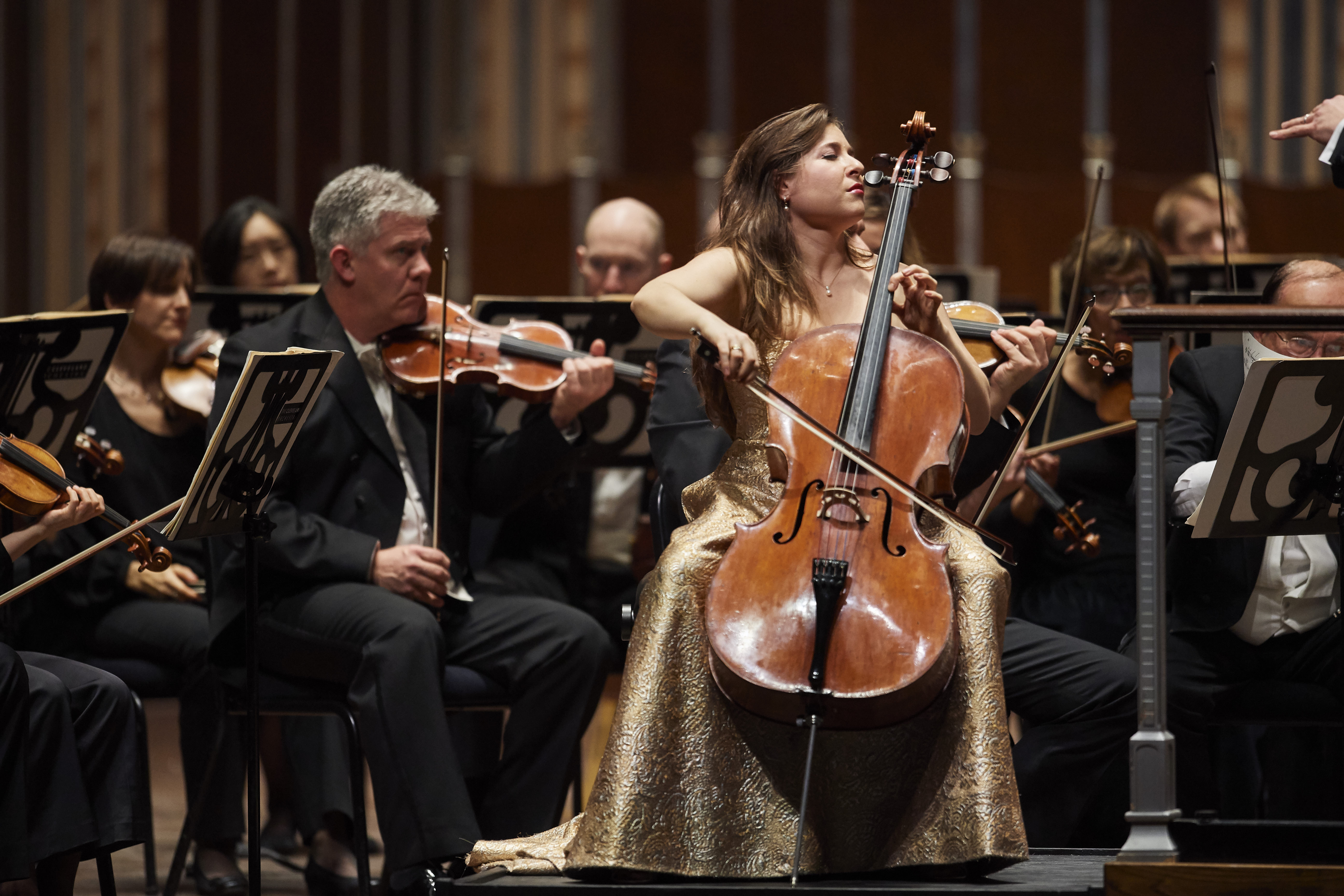
Alisa Weilerstein and The Cleveland Orchestra, all photos © Roger Mastroianni, Courtesy of The Cleveland Orchestra

Matters began with an arresting, angular theme and a gritty lyricism occasionally interjected by spiky pizzicatos. The extended cadenza was a monologue that stretched the technical possibilities of the cello, and Weilerstein delivered with an unblinking virtuosity, showing utter command of the work and of her instrument. The angular theme resurfaced in due course for the movement’s muscular conclusion. The central Andante sostenuto was remarkably lyrical if still falling short of the sumptuousness of that in the same composer’s Violin Concerto. A totally different side of the cello was on display here, the singing richness of the solo lines often entering the instrument’s highest register, and Weilerstein’s dialogue with oboist Frank Rosenwein was particularly affecting. The calm repose was duly broken for the tour de force finale. Most imposing was a chorale-like passage with fearsome double stops, and the work closed in gripping intensity. Weilerstein offered a well-deserved encore: the Sarabande from Bach’s Cello Suite No. 4, elegant in its stately simplicity.

Works of Dvořák framed the concerto, the opening selection coming from the Bohemian’s late quartet of tone poems. Dvořák lived a decade after completing his final symphony, and seemingly having exhausted all possibilities of that venerable medium, turned to the tone poem, writing to my mind some of his most ambitious music. Vodník (variously translated as the Watersprite or Water Goblin – a character who also featured prominently in Dvořák’s opera Rusalka) was given its first Cleveland Orchestra performance, a testament to the way these works have been overshadowed by the well-worn symphonies. Liquid flutes and flowing strings opened with the music steadily growing in urgency. A tender theme depicted the innocence of the girl from the Czech fairy tale which inspired the piece, with some noteworthy clarinet playing by Daniel McKelway. Gilbert and the orchestra drew out the narrative in delirious detail to its gruesome, somber end.

CLO031518_156
Alan Gilbert and The Cleveland Orchestra

Dvořák’s Symphony No. 8 in G major rounded off the program, its minor-inflected opening belying its wonderfully sunny disposition. Some particularly graceful passages were given in the flute by Joshua Smith, and the opening movement unfurled in great capaciousness. The Adagio opened in rich resound, with bubbling winds and a lithe solo line from concertmaster William Preucil adding to its pastoralism. Lilting, high-reaching strings marked the folk-inspired Allegretto grazioso, countered by a lovely, untroubled trio, not far removed in inspiration from a Schubert ländler. The declamatory finale opened with pealing trumpets. A more songful theme offered contrast, only to become increasingly rambunctious as the variations proceeded, and I’d be remiss not to give mention to the very fine contributions of clarinetist Afendi Yusuf.

CLO031518_119
Alan Gilbert and The Cleveland Orchestra