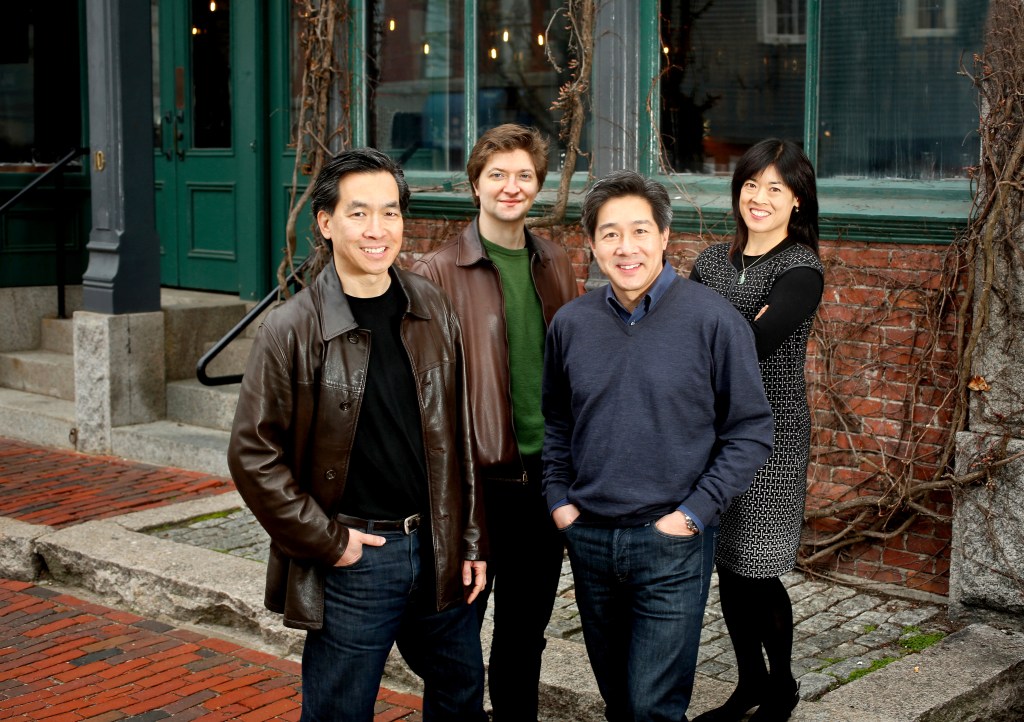
Takács Quartet marks 50th anniversary in return to Cleveland Chamber Music Society

Takács Quartet
Cultural Arts Center
Disciples Church
Cleveland Heights, OH
November 11, 2025

Haydn: String Quartet in G minor, Op. 74, No. 3, Hob. III:74, Rider
Bartók: String Quartet No. 3
Dvořák:  String Quartet No. 13 in G major, Op. 106

Encore:
Debussy: String Quartet in G minor – 2nd mvt.

Founded in 1975 while students at the Liszt Academy in Budapest, half a century later the Takács Quartet continues to offer a gold standard of string quartet playing — and remarkably, still counts one original member in its ranks (cellist András Fejér). Tuesday night marked a welcome return to the Cleveland Chamber Music Society (which celebrated its own 75th anniversary last season) where they have long been regular guests — in recent years, performing with Marc-André Hamelin and in a memorable Grieg/Shostakovich program.
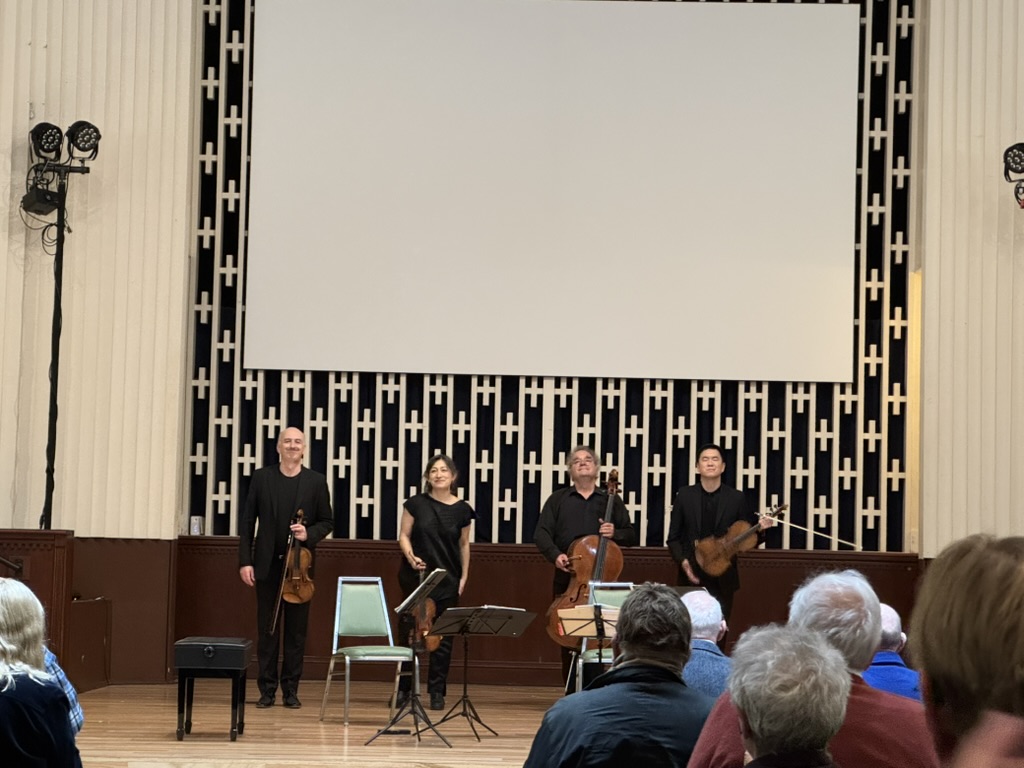
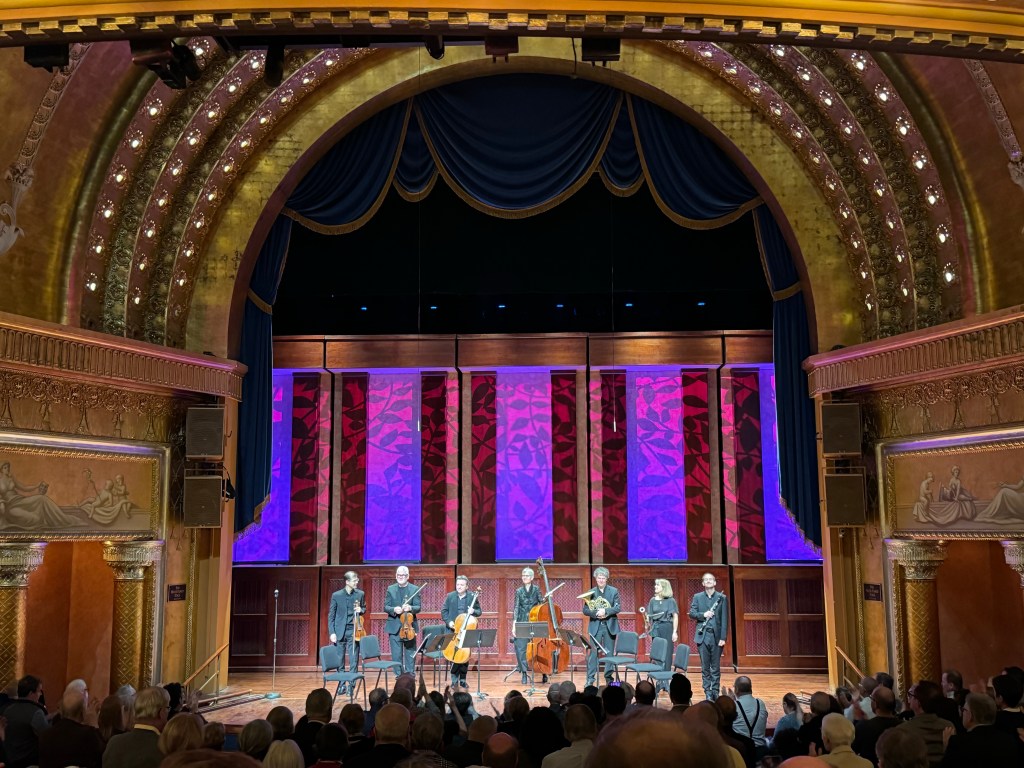
Takács Quartet at the Cleveland Chamber Music Society

The so-called father of the string quartet, Haydn is always a rewarding composer with which to begin a string quartet recital. Tuesday’s selection was the Rider quartet in its bristling G minor. It opened in quintessential Haydnesque fashion with its delicate ornamentations and sudden pauses. This genteel material was given with tight cohesion, carefully conveying its layered textures with clarity. Some striking modulations were heard in the slow movement before an elegant minuet countered by a rather stormy trio (usually it’s the trio that’s the calmer one). The fiery, galloping finale is what gave this work its epithet, and Haydn had the last laugh with its humorously deceptive close.

Of Bartók’s six iconoclastic quartets, the Third is the shortest but also the most concentrated. It’s quite unusual in form, too, with two contrasting parts subsequently repeated in a loose mirror of their initial presentation. Protean strands began, organically growing in weight and intensity — preconcert lecturer Kevin McLaughlin aptly compared this soundscape to Stravinsky’s Rite of Spring. A panoply of extended techniques were deployed, yielding an array of captivating sounds. Melodically, harmonically, and rhythmically intricate, the second part was blistering in its driving appropriation of folk song. The so-called Ricapitulazione of first part surfaced like a distant dream of the opening before the work’s uncompromising close.

It was lovely to hear Dvořák on a string quartet program in a piece that isn’t the justly famous American quartet. The Takács instead offered the Bohemian composer’s penultimate work in the genre: no. 13 in G major, Op. 106 (I was also reminded the Apollon Musagète Quartet presenting Dvořák’s final quartet on a CCMS program in February 2020, just ahead of the covid shutdown). In these last two works in the form, Dvořák sailed to new heights, only to then turn his attention away from chamber music and to opera and the tone poem.

Gentle gestures opened to set an intoxicatingly bucolic mood, only to grow in dramatic tension and orchestral heft. First violinist Edward Dusinberre had a soaring melodic line, and the broad first moment movement drew to particularly robust coda. Rich textures were layered on top of each in the angelic slow movement, somewhat reminiscent of Beethoven’s Heiliger Dankgesang. At its conclusion, some earthy pentatonicism reminded us this came from the same pen as the man wrote the New World symphony.

Even more quintessential Dvořák came in the following, wherein the composer proudly displayed his Czech origin in the shape of a spunky furiant. I was struck by the Takács intense physicality here, playing with their whole bodies. The bold, wide-ranging finale was given with unified direction for a powerful close.

As an encore, the quartet turned to the second movement of Debussy’s sole work in the medium in a show of their versatility, equally adept in the Frenchman’s impressionist enigma.
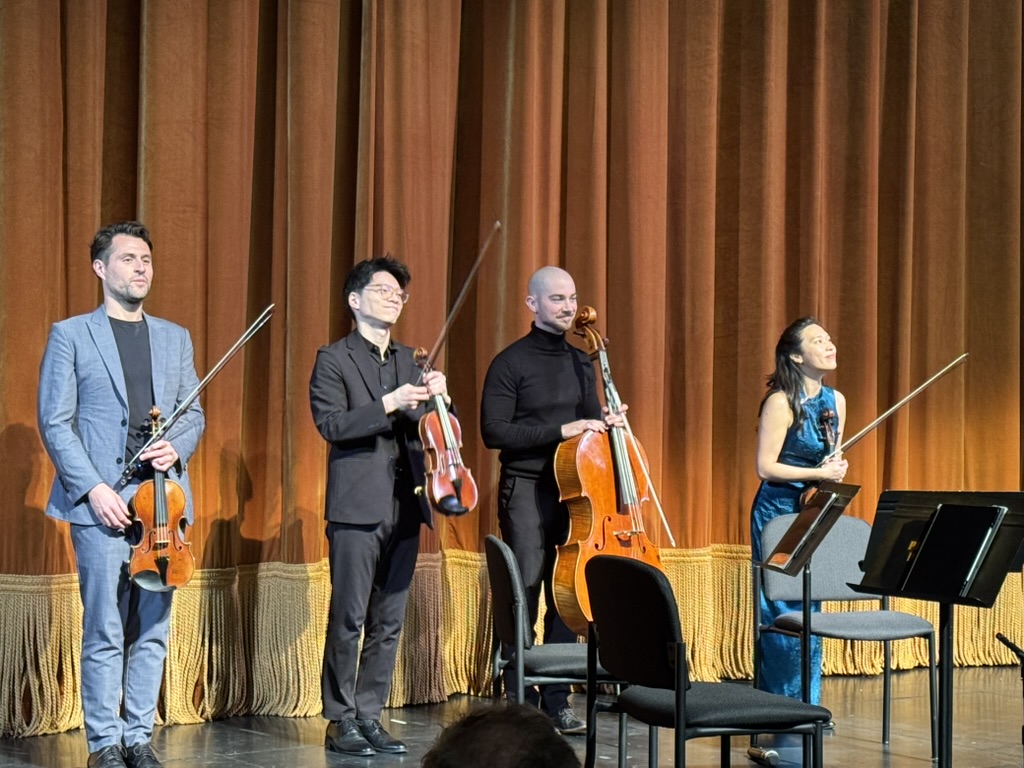
Dover Quartet presents decidedly American program at Chamber Music Pittsburgh

Dover Quartet
PNC Theatre
Pittsburgh Playhouse
Pittsburgh, PA
April 21, 2025

Montgomery: Strum
Fé: Rattle Songs (arr. Tate)
Tate: Woodland Songs
Dvořák: String Quartet No. 12 in F major, Op. 96, American

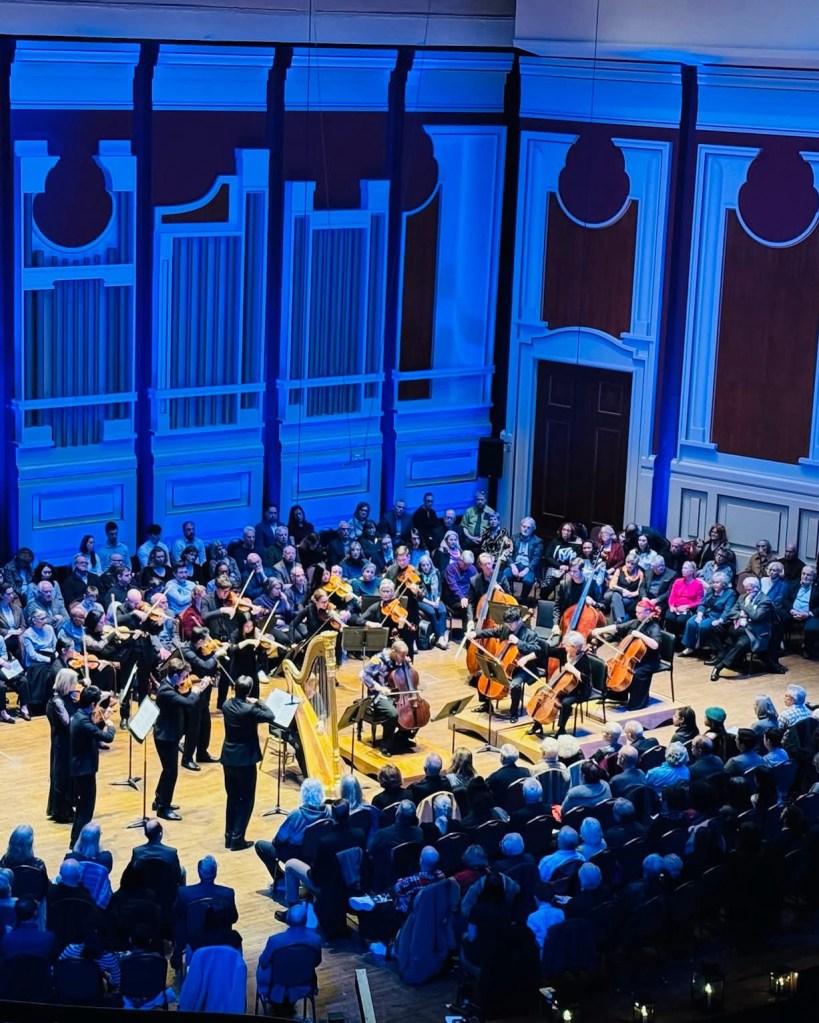
Closing Chamber Music Pittsburgh’s 64th season was the dynamic Dover Quartet. Challenging the Euro-centric associations one may have with the string quartet medium, the Dovers offered a thoughtful program of bona fide Americana, with a first half devoted to Black and Indigenous voices. Anchored by Dvořák’s American quartet (which one member described as his “gateway drug into string quartet playing”), the Dovers sought to explore the influences absorbed in Dvořák’s piece — an initiative that will also be captured on an upcoming recording.

Dover Quartet at Chamber Music Pittsburgh

Jessie Montgomery’s Strum has found a prominent place in the repertoire, and for good reason given its warm appeal. The viola was strummed like a guitar at the opening, and there was colorful interplay between bowed and plucked textures.

Camden Shaw, the Dover’s cellist, found himself quite taken by the album Mahk Jchi (“Our Hearts”) from the Native American a cappella group Ulali. The album features Native songs in a strikingly modernist bent, and includes the Rattle Songs by Ulali member Pura Fé. Shaw engaged Chickasaw composer Jerod Impichchaachaaha’ Tate to arrange the songs for string quartet. Seven brief pieces were conceived as a single entity, and the folk themes were artfully woven into the fabric of the sting quartet.

Generally lyrical works, the third piece stuck out as being gritty and percussive, bringing to life the titular rattles. “Women’s Shuffle” was somewhat bluesy, and the rapid repetitions in the closing “Great Grandpah’s Banjo” were an invigorating invocation of the instrument. It speaks to Tate’s skill as a composer and understanding of the repertoire for indigenous music to be so seamlessly transformed for string quartet.

Next, we got to hear a piece from Tate himself, written on commission for the Dovers in 2024. Woodland Songs paints a portrait of five woodland animals which also have a namesake Chickasaw clan. “Squirrel” opened vigorously — and not without a certain mischief. “Woodpecker” demanded great virtuosity from the quartet, countered by the quiet majesty of “Deer.” In “Fish,” one heard a lovely pizzicato line in the high register of the cello, set amidst swells of strings. The closing “Raccoon” — the clan to which the composer belongs — capped off the work with an autobiographical statement. For those interested in hearing more of Tate’s music, the Carnegie Mellon Philharmonic will be performing his Fire and Light this Sunday (April 27) at Heinz Hall.

Completing the program was a refreshing and energetic reading of Dvořák’s American. The genial main theme first surfaced in the viola, and Dover’s light and lithe textures painted the work as a lovely paean to the Czech composer’s adopted country. Still, there was ample drama and contrasts to capture one’s attention. The Lento was delicate and deeply felt, while the Scherzo radiated insouciant charm, an ethos that continued into the finale that closed in the highest of spirits.

One might also be reminded of Chamber Music Pittsburgh’s previous concert with PUBLIQuartet which featured improvisations on this quartet. Being the season finale, the upcoming 2025-26 was revealed, which most notably, will feature a return to the Carnegie Music Hall.

Kanneh-Mason bares the soul of the cello with Pittsburgh Symphony players

Sheku Kanneh-Mason, cello
David McCarroll, violin
Anne Martindale Williams, cello
Dale Jeong, cello
Bronwyn Banerdt, cello
Alexandra Lee, cello
Additional Strings and Harp of the Pittsburgh Symphony

Heinz Hall
Pittsburgh, PA
March 22, 2025

Bach: Komm, süßer Tod, komm selge Ruh, BWV 478 (arr. Kanneh-Mason)
Bach: Nun komm, der Heiden Heiland, BWV 659 (arr. Kanneh-Mason)
Bach: Adagio from Toccata, Adagio and Fugue in C major, BWV 564 (arr. Kanneh-Mason)
Finnis: Five Preludes for Solo Cello
Villa-Lobos: Prelude from Bachianas Brasileiras No. 1 (arr. Simon Parkin)
Clapton: Layla (arr. Parkin)
Ravel: Sonata for Violin and Cello, M. 73
Dvořák: Nocturne in B major for String Orchestra, Op. 40
Bloch: From Jewish Life (arr. Christopher Palmer)

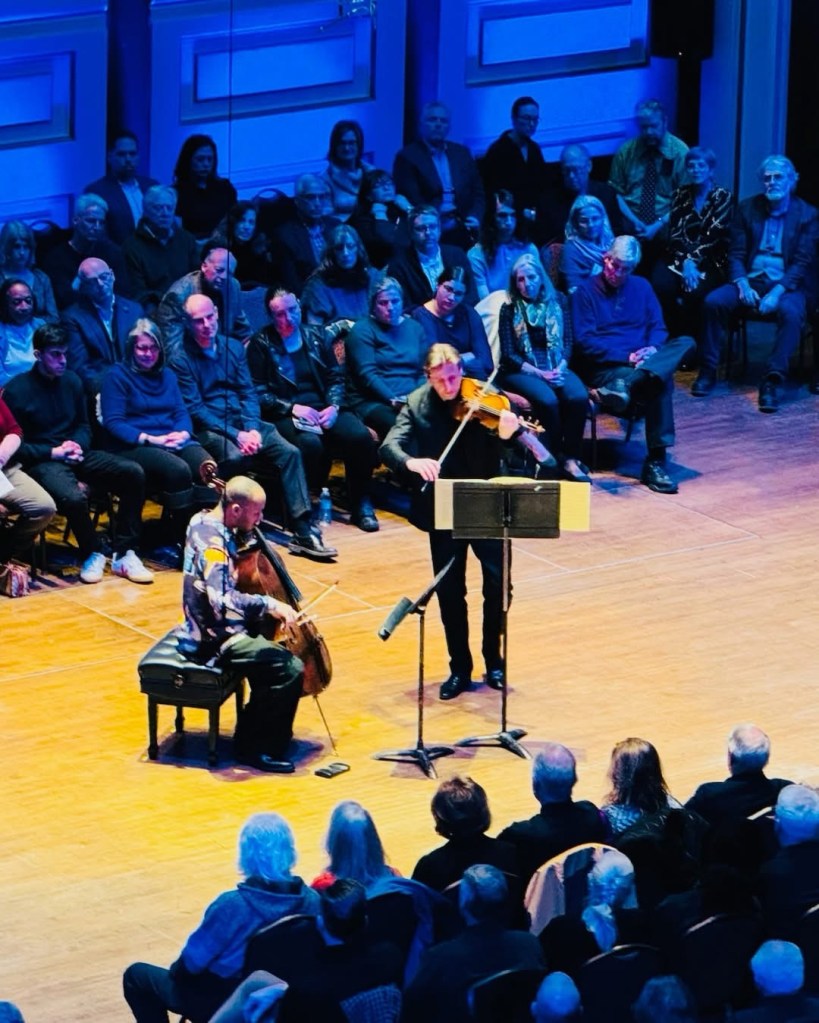
Following the Pittsburgh Symphony debut of Sheku Kanneh-Mason the night before, local concertgoers got to see many more sides of the cellist during an entry of the innovative and intimate PSO360 series. An indispensable offering at the PSO, for those who haven’t been, a guest artist bands together with select PSO musicians, and a small audience is seated in the round on the Heinz Hall stage. Entitled Soul of the Cello, the enterprising program showed the diverse potential of the instrument, and leaned heavily into music originally for other forces transcribed for cello — several of which were recorded on Kanneh-Mason’s Song album.

Sheku Kanneh-Mason with members of the PSO, photos credit Sheku Kanneh-Mason on Facebook

A trio of works by J.S. Bach began, all in transcriptions by Kanneh-Mason himself. The chorale prelude Komm, süßer Tod, komm selge Ruh opened, cast for a quintet of cellos. Deeply felt, and the resonance of five cellos was quite striking. A further chorale prelude in Nun komm, der Heiden Heiland followed — this one scored for four cellos — showing that this is music so universal it transcends the medium on which it is performed (the Busoni transcription for piano is a favorite of this writer). A pensive Adagio extracted from an organ work thoughtfully capped of this unique exploration of Bach.

Written for Kanneh-Mason in 2021 were the Five Preludes for Solo Cello by British composer Edmund Finnis. Each one of these pearls achieved a captivating expressive range in just a short span. Melodic contours were deftly shaped in the opening prelude, the second, marked Fleeting, was of minimalist gestures à la Philip Glass. The penultimate piece was underpinned by a drone, surfacing as a calming presence.

Returning to scoring for cello quintet, a pair of widely contrasting works rounded off the first half. In the remarkable suites titled Bachianas Brasileiras, composer Heitor Villa-Lobos wove Brazilian musical tradition into the style of Bach. Each is for a different combination of instruments; the first is for eight cellos. Redistributed amongst the five players on stage, it was like listening in on a close conversation amongst friends, a sentiment further encouraged by the cello’s proximity to the human voice. An energetic transcription of Eric Clapton’s Layla followed, filled with glissandos and other techniques to capture the effects of Clapton’s electric guitar. A sheer delight to see Kanneh-Mason rock out with the PSO cello section!

Opening the second half was Ravel’s remarkable duo sonata for violin and cello, a work the composer dedicated to the memory of Debussy. Kanneh-Mason teamed up with PSO concertmaster David McCarroll in a work that explored the different personalities of these string instruments. Taut communication between the two negotiated the score’s complexities. Textures in the second movement were strikingly spiked with pizzicato, and I was taken by the drive and vitality with which the work closed.

Dvořák’s Nocturne for string orchestra was sole work performed without the participation of Kanneh-Mason, affording the cellist a well-earned respite. An expanded version of the slow movement from his G major string quintet (the first movement of which was heard following a recent PSO performance), the PSO strings offered a serene, arching lyricism in this loveliest of creations.

Closing the memorable evening was Ernest Bloch’s From Jewish Life, a work originally for cello and piano. An arrangement by Christopher Palmer thoughtfully rescored the piece for solo cello buttressed by string orchestra and harp. A powerful “Prayer” began, showing the beauty of the cello and richness of the harp (Gretchen Van Hoesen). The central “Supplication” was of growing urgency, marked by a long cello line inflected by Jewish folk gestures; “Jewish Song” closed the piece in a manner more reflective than celebratory.

Sheku Kanneh-Mason and David McCarroll

Ólafsson and Wang dazzle in spectacular two piano recital

Yuja Wang, piano
Víkingur Ólafsson, piano
Mandel Concert Hall
Severance Music Center
Cleveland, OH
February 23, 2025

Berio: Wasserklavier (No. 3 from Six Encores)
Schubert: Fantasie in F minor, D940
Cage: Experiences No. 1
Nancarrow: Study No. 6 (arr. Adès)
Adams: Hallelujah Junction
Pärt: Hymn to a Great City
Rachmaninoff: Symphonic Dances, Op. 45

Encores:
Brahms: Waltz in A-flat major, Op. 39 No. 15
Dvořák: Slavonic Dance in E minor, Op. 72 No. 2
Brahms: Hungarian Dance No. 1 in G minor
Brahms: Waltz in E major, Op. 39 No. 2
Brahms: Waltz in G-sharp major, Op. 39 No. 3

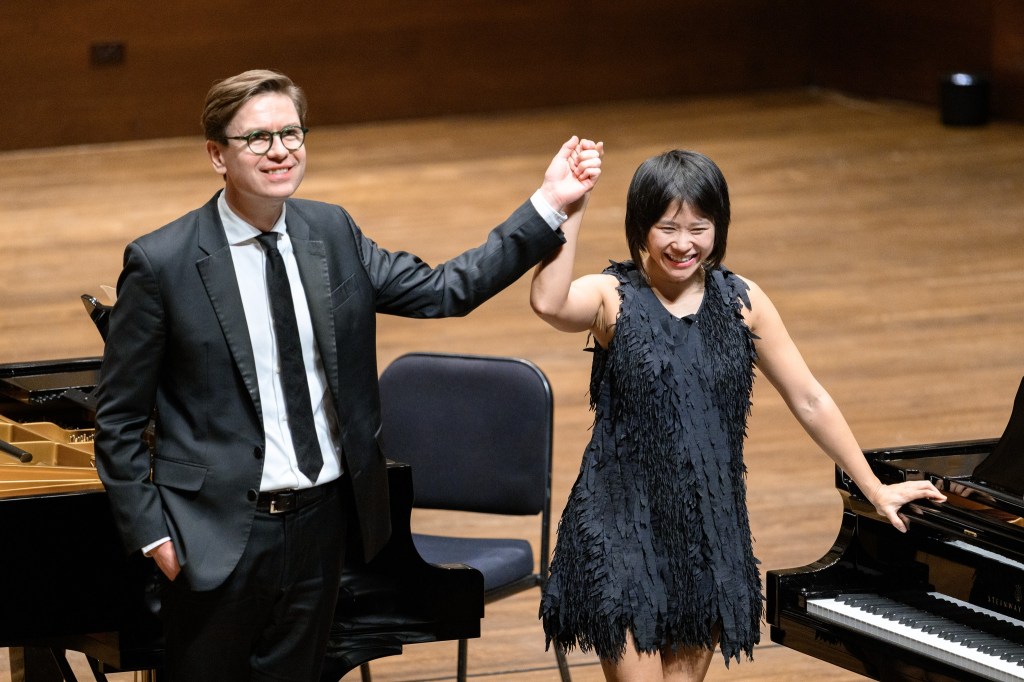
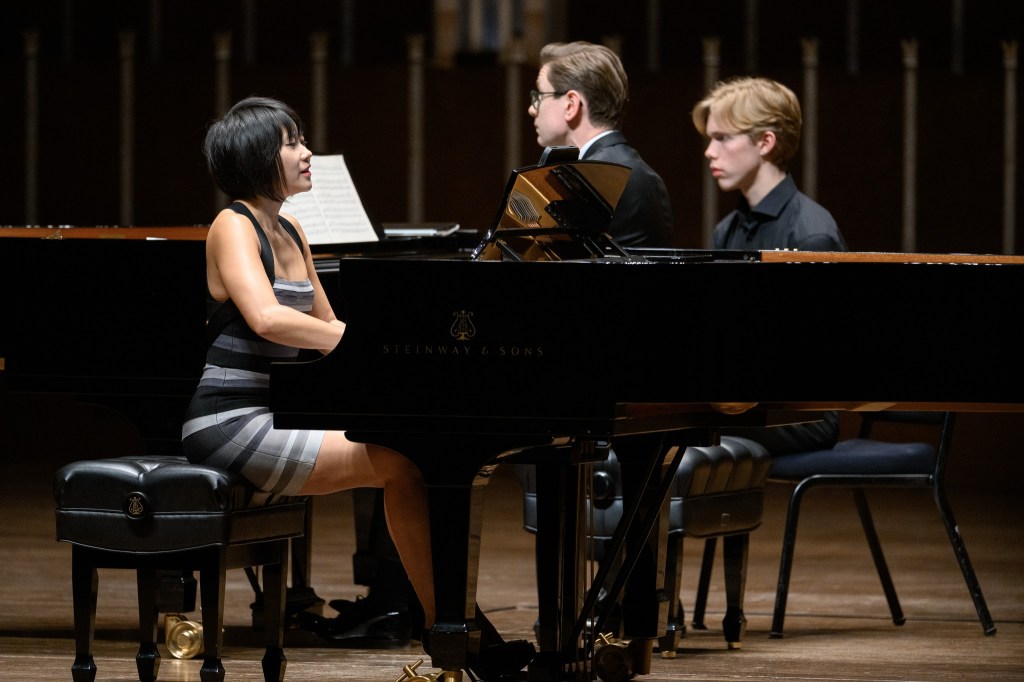
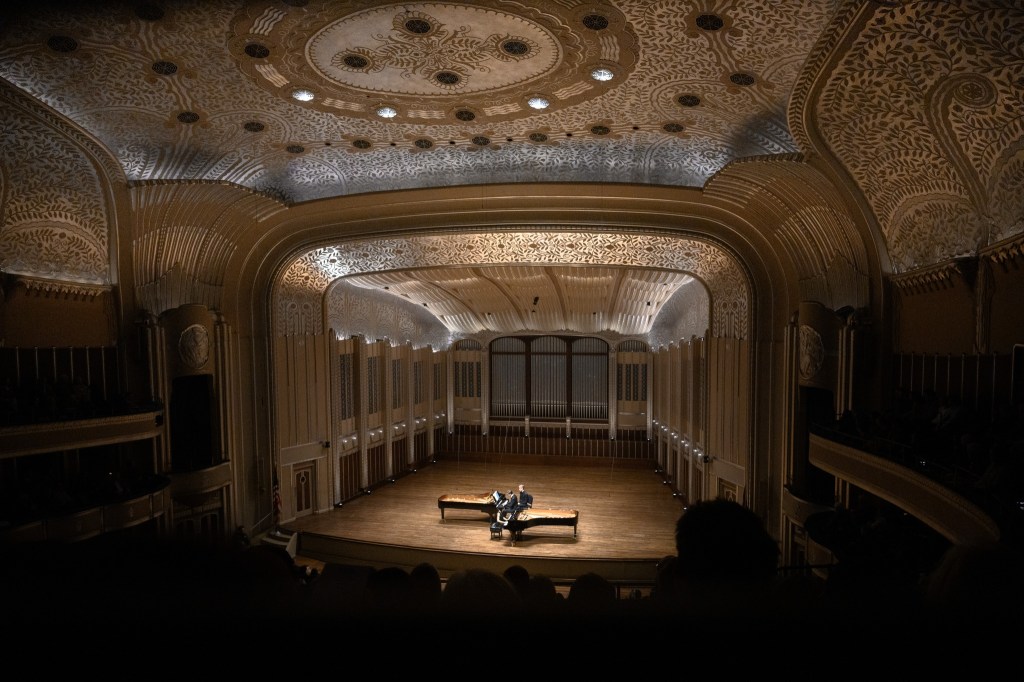
Sunday afternoon marked a remarkable high point in The Cleveland Orchestra’s immensely rewarding recital series, with pianists Yuja Wang and Víkingur Ólafsson joining forces in a stop at Severance Hall on a brief US tour. Both superstar soloists in their own right, it was truly electrifying seeing these two band together. Yet this was more than just a celebrity pairing calculated to maximize box office receipts: their artistic temperaments complemented each other well, showing the whole can be greater than the sum of its parts.

Víkingur Ólafsson and Yuja Wang at Severance Hall, photos credit Human Artist Photography + Cinema 

The program was ripe with discovery, skirting some of the more commonly played fare for two pianos. Luciano Berio’s Wasserklavier began, a meditative opening with liquescent textures freely flowing. The piece made subtle nods to Brahms and Schubert, and fittingly, the pianists artfully segued directly into the latter’s own Fantasie in F minor. Usually played four hands on a single piano, hearing it spread across two instruments gave the work a greater resonance and depth of sound.

Crisply articulated dotted rhythms began, plunging into penetrating drama — rarely will one hear Schubert played with such intensity. Dance-like sections contrasted, exuding joy with the twenty fingers at work, intricately choreographed. A fascinating selection of works from the late 20th-century followed, beginning with John Cage’s Experiences No. 1. The composer’s characteristic minimalist textures were piquantly harmonized, punctuated by silence.

The sixth of Conlon Nancarrow’s 49 studies for player piano followed, made humanly playable in its two-piano arrangement by Thomas Adès (who local concertgoers had the chance to see conduct a remarkable Cleveland Orchestra program just the night before). In this case, the two pianos seemed to be at odds with one another, yet the jagged rhythms fit together in interlocking fashion.

The first half closed with John Adams’ Hallelujah Junction, to my mind, the highlight of the program. Pulsating energy filled Severance Hall with pianistic brilliance. Music of almost perpetual motion — quite a contrast to the minimalism of Cage — gave a larger-than-life portrayal of the namesake town on the California-Nevada border, and demonstrated in no uncertain terms the electric chemistry between these two pianists. The more lyrical pulses of a downtempo section captivated in their rhythmic intricacies, only to build back up to a dazzling density of sound.

Arvo Pärt’s Hymn to a Great City was marked by Wang’s playing in the upper register that rang with the purity of bells, and some delicate filigree that decorated the otherwise barren textures. Rachmaninoff’s Symphonic Dances — his final work — closed the printed program. Hammering out the main theme with pile-driving intensity, an almost manic energy between the two created a rich orchestral sonority. Yet matters were still clear and articulate, with a contrasting theme of haunting lyrical beauty. Sultry waltz rhythms in the central dance were given with stylish playing, and the finale was bold and grandiose, with broad gestures cascading spectacularly.

No less than five encores followed, a delightful selection of dances by Brahms and Dvořák, performed on a single piano, four hands. A charming, convivial close to a memorable afternoon.

Pianist Tom Borrow joins Pittsburgh Symphony musicians for an evening of chamber music

Tom Borrow, piano
Justine Campagna, violin
Jeremy Black, violin
Tatjana Mead Chamis, viola
Anne Martindale Williams, cello
Strings of the Pittsburgh Symphony Orchestra

Heinz Hall
Pittsburgh, PA
October 19, 2024

Mozart: Violin Sonata No. 21 in E minor, K304
Grieg: Holberg Suite, Op. 40
Dvořák: Piano Quintet in A major, Op. 81

One of the Pittsburgh Symphony’s more enterprising endeavors is the PSO360 series, which engages the guest soloist from the weekend’s subscription concerts in chamber music with select PSO members. An intimate audience of 200 is seated on the Heinz Hall stage, circled around the performers, affording the opportunity to see another side of the soloist and orchestra players alike.

The soloist in question was the young Israeli pianist Tom Borrow, who made a strong impression in the performances of Ravel’s piano concerto that flanked Saturday’s chamber concert. To begin, Borrow teamed up with associate concertmaster Justine Campagna in Mozart’s E minor violin sonata. The only work in Mozart’s vast catalogue to be cast in that key, it’s a particularly deeply-felt creation, one that the program notes aptly compared to the A minor piano sonata (K310) for its expressive range.

Campagna was elegant and articulate, and Borrow responded in kind with sparkling, quintessentially Mozartian pianism. The development section was particularly emotive, and the minuet that closed the two-movement sonata was perhaps the most profound of all minuets, a rich conversation between violinist and pianist.

Grieg’s Holberg Suite brought out the Pittsburgh string section, and there was a visceral energy in being onstage with 20 string players, evident from the effusive prelude which opened. Peaceful, lyrical movements followed, swelling to a warm resonance, and I was especially struck by the clarity of the inner voices. Perhaps most affecting was the Air, songful and mournful — and a touching homage to Bach. The Rigaudon brought the suite to a close with joyous abandon.

Following intermission, Borrow returned with a quartet of strings for Dvořák’s great A major piano quintet. A graceful introduction in the piano paved the way for a lyrical cello passage (Anne Martindale Williams). The five players wove together a rich tapestry with a feverish intensity, yet at its core still as good-natured as the composer himself. An elegant piano gesture marked the Dumka, a wistful essay punctuated by gorgeous interludes.

There was a vivacity to the folk inflections of the Scherzo that could only put a smile on one’s face, and the finale continued in the highest of spirits — but not without a blistering fugato. Here as throughout, Borrow sounded like a seasoned collaborator with these Pittsburgh players.

Tom Borrow with members of the Pittsburgh Symphony

Inkinen makes Cleveland Orchestra debut in hearty Eastern European program

Cleveland Orchestra
Pietari Inkinen, conductor
Augstin Hadelich, violin
Mandel Concert Hall
Severance Music Center
Cleveland, OH
November 24, 2023

Dvořák: Othello Overture, Op. 93
Tchaikovsky: Violin Concerto in D major, Op. 35
 Encore:
 Forrester: Wild Fiddler’s Rag
Dvořák: Symphony No. 8 in G major, Op. 88

The Thanksgiving weekend saw the Finnish conductor Pietari Inkinen make his Cleveland Orchestra debut in a program of works all composed within just over a decade and from the heart of Eastern Europe. Dvořák’s Othello Overture opened, conceived as the final entry of a trilogy of related overtures. Written just four years after Verdi’s landmark opera on the same subject, Dvořák likely drew inspiration from the Italian he greatly admired, though his overture tended to suggest the essence of the Shakespearean source material rather than spell out a specific narrative.

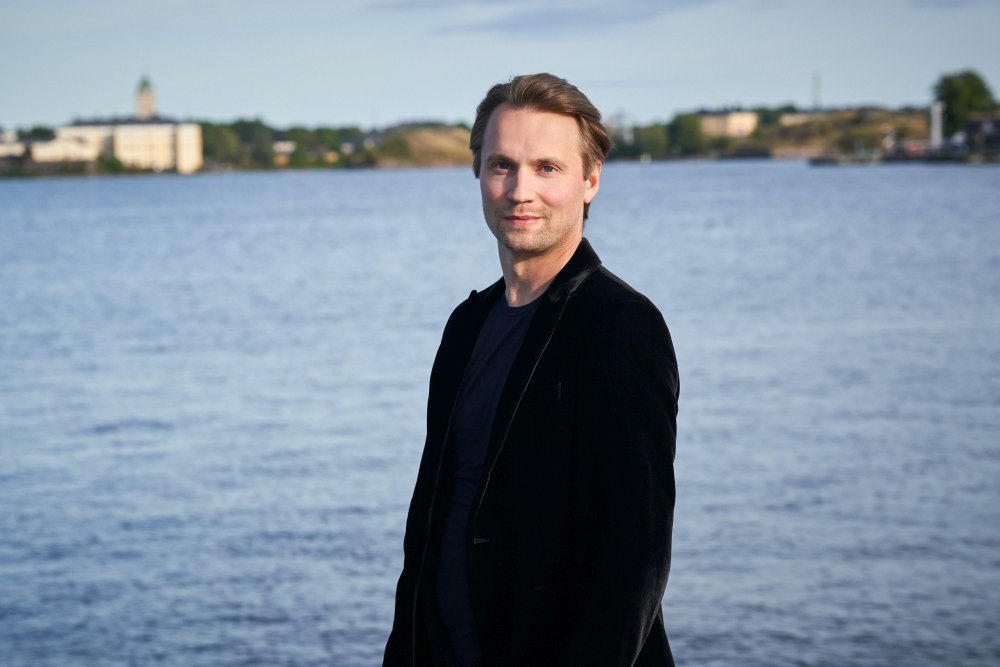
Pietari Inkinen, photo credit pietariinkinen.com

Slow and somber introductory material built to music of great drama. It seemed that Inkinen could have benefited from some additional rehearsal time with a handful of uncoordinated entrances, but an effective performance was managed nonetheless. The slow material returned at the end, with stentorian brass strikingly invoking the slumber motif from Wagner’s Die Walküre as something of a final prayer before the unequivocally tragic end. So much of the time Dvořák is programmed we hear one of the last few symphonies (or the cello concerto), but this overture was a welcome discovery, and should certainly encourage listens to look at Dvořák’s orchestral corpus beyond the warhorses.

The balance of the program, however, was dedicated to warhorses – and in no way a detriment! Tchaikovsky’s evergreen Violin Concerto called upon soloist Augustin Hadelich. A gentle dip set things in motion in this most graceful of openings, with Hadelich’s solo line articulate, keenly phrased, and above all, richly lyrical. Nimble and nuanced, he displayed some especially impressive fingerwork in the cadenza. A choir of winds opened the central Canzonetta, and the songful, mournful violin purveyed a delicate cantilena. The finale is such joyous affair for someone who lived such a tragic life as its composer, and Hadelich’s sprightly virtuosity closed the work in the highest spirits. He returned for a well-deserved encore, his own arrangement of Howdy Forrester’s Wild Fiddler’s Rag – a piece of great fun with its bluesy inflections.

Franz Welser-Möst set the bar high for Dvořák’s Eighth Symphony two seasons ago; while Inkinen didn’t quite reach that height, it was here he made the strongest impression – and opted to conduct this score from memory. The deeply lyrical opening gesture gave way in due course to material of an inimitable Bohemian charm, aided by fine solo passages from the principal winds. Still, greater dynamic contrast would have helped, with conductor leaning a bit too heavily in the orchestra’s upper end of the range.

A bucolic slow movement built to a resonant climax, and the lovely Allegretto grazioso was flowing and deftly shaped, though a tad rushed for my taste. The call to arms in the trumpet initiated the energetic and often boisterous finale, nearly overflowing with gracious material that never strayed far from the composer’s Czech origins. On a final note, how gratifying it was to see nearly every seat of Severance Hall filled, and with such a warm, enthusiastic audience.

Augustin Hadelich, photo credit Suxiao Yang

Academy of St. Martin in the Fields players delight in an evening of chamber music

Academy of St. Martin in the Fields Chamber Ensemble
Tomo Keller, violin
Harvey De Souza, violin
Robert Smissen, viola
Richard Harwood, cello
Lynda Houghton, double bass
Timothy Orpen, clarinet
Julie Price, bassoon
Stephen Stirling, horn

Southern Theatre
Columbus, OH
November 4, 2023

Nielsen: Serenata in vano, FS 68
Dvořák: String Quintet No. 2 in G major, Op. 77
Beethoven: Septet in E-flat major, Op. 20

Eight members of the illustrious Academy of St. Martin in the Fields made their way to Columbus Saturday evening for a varied program of chamber music. Matters began with Carl Nielsen’s Serenata in vano (“Serenade in Vain”), a quintet scored for the unusual combination of clarinet, bassoon, horn, cello, and double bass – an instrumentation that intentionally overlaps with that of the Beethoven Septet with which it was written to be paired, as was indeed the case at present.

ASMF Chamber Ensemble at the Southern Theatre

Pizzicato strumming in the strings underpinned the dominant clarinet (Timothy Orpen) melody (Nielsen was certainly a composer who knew how to write for clarinet, as epitomized by the significant Clarinet Concerto). The cello (Richard Harwood) was later granted a richly singing melody, enhanced by the warmth of the horn (Stephen Stirling). A lovely opener that showcased the individual personality of each instrument.

Dvořák’s String Quintet No. 2 in G major was a watershed work for the composer, capturing the attention of Brahms and vastly expanding his reputation. Like the Eighth Symphony in the same key that would follow some years later, it’s a warm and bucolic work, the jovial first movement in particular being given with flexible abandon, and always lyrical at heart – even during the heightened drama and tension of the development. The inclusion of double bass in place of the a second viola or cello as is more typical for a string quintet gave the work an added heft.

The scherzo was noted for its Bohemian inflections in its rhythmic vitality – a device that would become one of Dvořák’s signatures. The flowing, lyrical melody of the slow movement showed the quintet in deft balance, as they were perhaps even more so in the joyous finale that brought the first half to an energetic close.

Like the preceding, Beethoven’s Septet was a work that did much to enhance its composer’s renown. Following a bold, quasi-orchestral introduction, delicate filigree from violinist Tomo Keller served to bridge the elegant main theme. The Adagio cantabile boasted a long-breathed melody, first in the clarinet and then answered by the violin, while the horn and bassoon interlocked with an intricately-crafted countermelody. A bouncy minuet followed, perhaps more familiar from its use in the Op. 49 No. 2 piano sonata.

A theme and variations comprised the fourth movement, with a stately presentation of the theme preceding an increasingly florid set of embellishments. The mournful intro of the finale took the manner of a funeral march (a style the composer would often revisit), but quickly gave way following some fiery violin work, with the ensemble offering cohesion and chemistry even at its blistering Presto.

Columbus Symphony celebrates American music with standout guest conductor and soloist

Columbus Symphony Orchestra
David Alan Miller, conductor
Aubree Oliverson, violin
Ohio Theatre
Columbus, OH
February 3, 2023

Simon: This Land
Barber: Violin Concerto
 Encore:
 Puts: Arches
Dvořák: Symphony No. 9 in E minor, Op. 95, From the New World

Under guest conductor David Alan Miller, the Columbus Symphony presented an exuberant program of American music – the first half comprised of American composers, the latter the view of a foreigner looking in. As music director of the Albany Symphony Orchestra, Miller has developed a reputation for his commitment to contemporary music, and began the CSO program with a 2019 work of Carlos Simon. This Land is a musical depiction of the Statue of Liberty, and in particular, the Emma Lazarus poem at its base. It began introspectively with earthy harmonies, as a mediation on the poem and monument, and perhaps the less than promised realization of those ideals. A patchwork tapestry of various national anthems took shape, and the brief work closed as pensively as it began.

Aubree Oliverson, David Alan Miller, and the Columbus Symphony, photo credit Corinne Mares

Barber’s Violin Concerto put the considerable talents of soloist Aubree Oliverson in the spotlight. Eschewing introductory material, the music got right down to business with a rich lyricism from bar one, heightened by Oliverson’s warm, amber tone – self-assured, and articulately projecting over the orchestra. The movement was not without moments of tension, but never wandered far from its lyrical heart. A mournful oboe marked the central Andante, music clearly from the same pen as the Adagio for Strings, and the solo writing reached high into the range of Oliverson’s instrument. A breathless moto perpetuo – and the most harmonically adventurous of the movements – made for an exciting, energetic close. Certainly one of the finest concertos to come from this country, and on a personal note, I have fond memories of hearing the work here back in March 2010 – the very first time I attended the Columbus Symphony.

As a well-deserved encore, Oliverson selected another American composer in Kevin Puts, a name which has gotten much attention as of late following the premiere of his opera The Hours at the Met this past November. Arches proved to be a real treat for the audience: the violinist selected the final caprice wherein she drew out the titular arches without respite, increasingly wide and to mesmerizing effect – a jaw-droopingly virtuosic response to the Barber finale.

The evening closed with Dvořák’s “New World” symphony, the crowning product of his American sojourn. Some local concertgoers may have heard the symphony just the night before, concluding the Lviv National Philharmonic’s performance at Denison University. A passionate and brooding opening purveyed drama without bombast, while a stirring chorale began the Largo, setting the stage for the memorable English horn solo. In the scherzo, Dvořák found a way to remind us of his Czech origins in its flavor, seamlessly blended with the “American” material, and the lilting trio was especially delightful. The finale was dramatic to the finish of this polished performance, evidencing Miller’s fine chemistry with this orchestra.

Powerful Brahms and charming Dvořák at the Columbus Symphony

Columbus Symphony Orchestra
Rossen Milanov, conductor
Shai Wosner, piano
Ohio Theatre
Columbus, OH
November 5, 2022

Montgomery: Starburst
Brahms: Piano Concerto No. 2 in B-flat major, Op. 83
 Encore:
 Schubert: Hungarian Melody, D817
Dvořák: Symphony No. 6 in D major, Op. 60

Jessie Montgomery is a contemporary composer that has rightfully garnered much attention in recent years, and the Columbus Symphony opened their program with her 2012 work Starburst – a welcome further foray into her work after their inclusion of Banner last season (a program which in fact paired Montgomery with the same composers here). Starburst quite literally bursted with infectious, sparkling energy. One only wished this was sustained longer than its 5-minute duration, and I hope Montgomery is a composer the CSO continues to visit.

Shai Wosner with Rossen Milanov and the Columbus Symphony, photo creditt Corinne Mares

Brahms’ vast Second Piano Concerto made for a heavier contrast, and featured Israeli pianist Shai Wosner. A mellow horn call from principal Brian Mangrum made for a majestic opening to the weighty first movement. Wosner performed with intense, singular focus, though I felt his playing veered a bit too cautious and restrained. Although his technique wasn’t flawless, it nonetheless served well the daunting demands of the work. Both pianist and conductor Rossen Milanov seemed aligned in their conception of the grand, sweeping arc of the movement.

The scherzo that followed was hardly a trifle, still bearing much of the weight of the preceding, but sprightlier material contrasted. A deeply lyrical cello solo (Luis Biava) opened the Andante, and the piano entered with a gentle, song-like touch. The payoff came in the finale with its folk-inflected abandon, though hardly short on drama. As an encore, Wosner offered a lovely account of Schubert’s Hungarian Melody.

Dvořák’s Sixth Symphony was a milestone for the composer in that it was the first to published, and shows him blossoming into a mature symphonist. The spacious, expansive Allegro non tanto opened with a gentle, bucolic theme over pulsating accompaniment. It was certainly apposite to precede the symphony with Brahms as it bears the elder composer’s influence (particularly from Brahms’ own D major symphony), yet not without Dvořák’s individual hallmarks. 

A touching moment of repose was to be had in the Adagio, its thematic material charmingly introduced in the winds. The composer unmistakably revealed in his Czech origins in the lively furiant that followed, and the orchestra deftly negotiated the ever-changing meters, an energetic warmup of sorts for the jubilant finale.

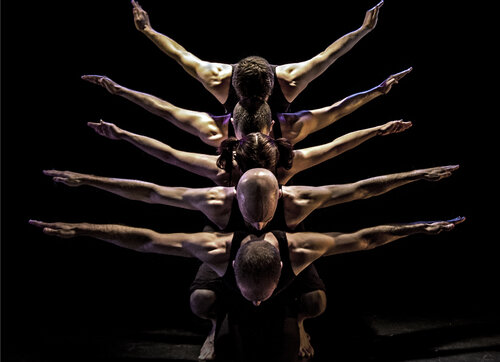
Ying Quartet and PUSH Physical Theatre explore connections of dance and chamber music

Ying Quartet
PUSH Physical Theatre
Southern Theatre
Columbus, OH
March 26, 2022

Theofanidis: Valley of Detachment from Conference of the Birds
Haydn: Allegro di molto from String Quartet in A major, Op. 20 No. 6, Hob. III:36
Haydn: Allegro from String Quartet in A major, Op. 20 No. 6, Hob. III:36
Bartók: Andante from String Quartet No. 5, Sz. 102
Wolf: Italian Serenade
Tchaikovsky: Andante funebre from String Quartet No. 3 in E-flat minor, Op. 30
Mendelssohn: Andante espressivo from String Quartet No. 3 in D major, Op. 44 No. 1
Schulhoff: Alla Czeca from Five Pieces for String Quartet
Schulhoff: Alla Tarantella from Five Pieces for String Quartet
Randall Thompson: Alleluia, Amen (arr. Ying Quartet)
Dvořák: Allegro ma non troppo from String Quartet No. 12 in F major, Op. 96, American

At Chamber Music Columbus, the Ying Quartet teamed up with PUSH Physical Theatre – both ensembles of which are based in Rochester, New York – to breathe fresh air into the vaunted sting quartet recital. A wide-ranging sampling of the string quartet literature was intriguingly presented in tandem with physical theater, with each group of selections centered on a particular theme to invoke a narrative arc. At the heart of this creative collision was the art of storytelling, which as violist Philip Yang noted in his spoken remarks, lies central to who we are as human beings.

Ying Quartet, photo credit Tim Greenway

A movement from Christopher Theofanidis’ Conference of the Birds opened, with the gestures from the dance troupe mirroring the ebb and flow of the music. Two movements from Haydn followed; in this case, the elegance of the music was contrasted by the rather more risqué dance. The Andante from Bartók’s great Fifth Quartet took us into the realm of the surreal, a prime example of the Hungarian composer’s rarefied night music. Hugo Wolf’s lovely Italian Serenade was brought to life by a laugh-out-loud routine from PUSH, bringing humor and levity to what is usually a serious affair. At the opposite end of the spectrum was the doleful Andante funebre from Tchaikovsky’s Third Quartet – a tender wistfulness which served to depict the human cost of war.

Randall Thompson’s 1940 “Alleluia, Amen” – given in an arrangement by the Ying Quartet – served as a plaintive contrast to the gritty perpetuum mobile of the Schulhoff that preceded. The performance came to a close with the spacious opening movement of Dvořák’s American quartet. It’s a piece that resonates deeply with the Ying Quartet – just as the composer found solace and inspiration while spending a summer in the small town of Spillville, Iowa, the Ying Quartet found similar stimulus and connection during an extended residency in Jesup, Iowa in the 1990s. The performers gave Dvořák’s music with a natural fluency and affinity – lyrical, gracious, and generous. For this audience member, the highlight was certainly the quartet’s fine playing, but I applaud their efforts to push the boundaries of the way we experience chamber music, and seek connections from one artistic discipline to another.

PUSH Physical Theatre, photo credit Avi Pryntz-Nadworny