ProMusica celebrates a decade of artistic partnership to close season

ProMusica Chamber Orchestra
David Danzmayr, conductor
Vadim Gluzman, violin
Southern Theatre
Columbus, OH
May 11, 2024

Silvestrov: Hymn – 2001
Tchaikovsky: Violin Concerto in D major, Op. 35
 Encore:
 Bach: Sarabande from Violin Partita No. 2 in D minor, BWV 1004
Brahms: Symphony No. 2 in D major, Op. 73

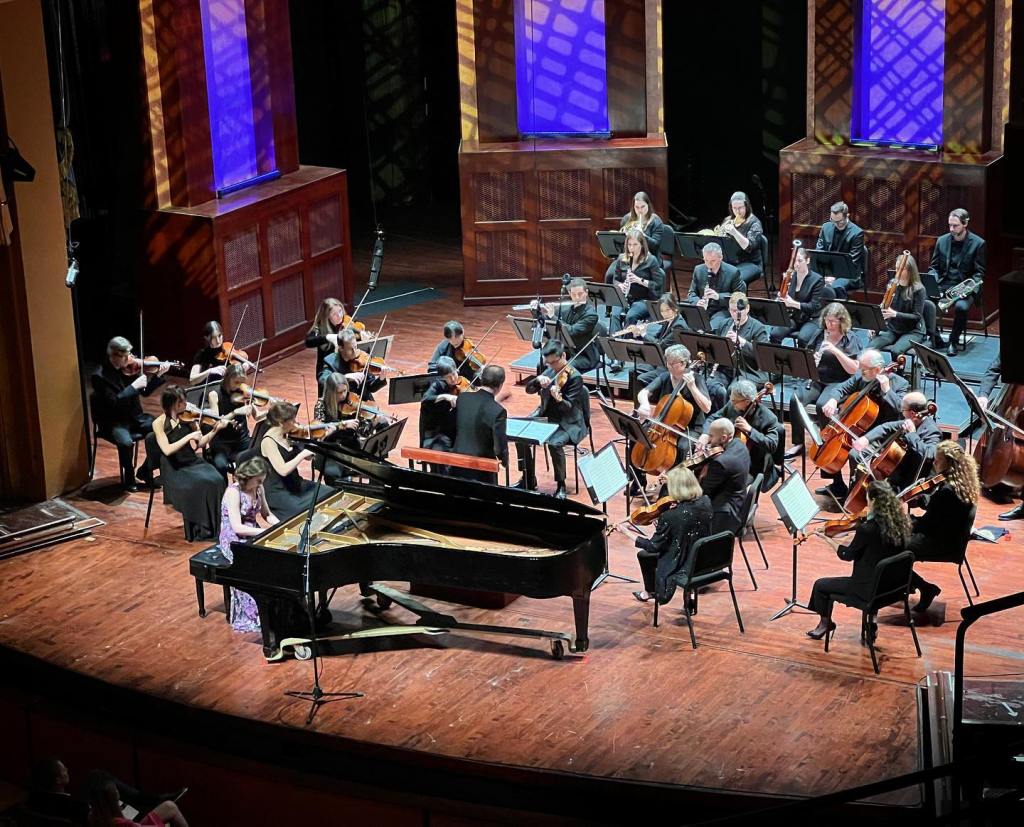
There was a celebratory air to ProMusica’s closing performances of their 45th season in marking a decade of having both David Danzmayr and Vadim Gluzman in the fold as music director and creative partner respectively. As has become tradition, the final weekend was opened with a short performance by students from the Play Us Forward program – this year, an excerpt from Vivaldi’s Autumn – celebrating ProMusica’s impact in the greater Columbus community.

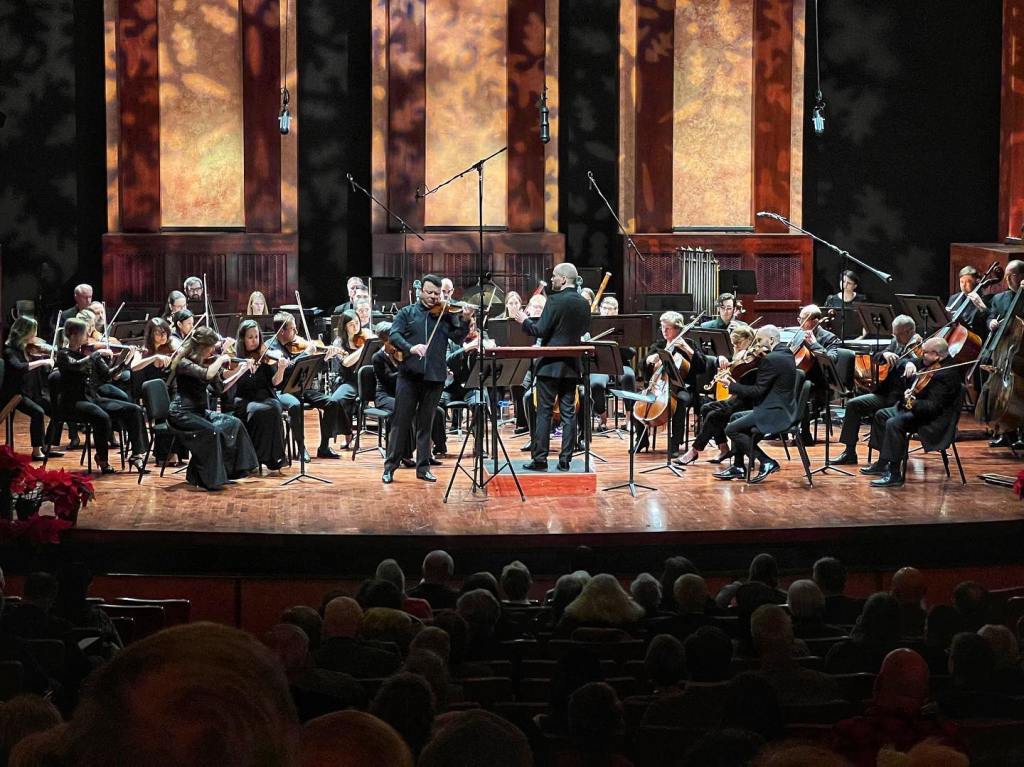
Vadim Gluzman performs with David Danzmayr and ProMusica, photo credit ProMusica

Valentin Silvestrov’s Hymn – 2001 began ProMusica’s program with a lush essay for string orchestra. There were fine solo passages from concertmaster Katherine McLin and principal second violin Jennifer Ross. Meaning was also drawn from punctuated moments of silence, with the Ukrainian composer acknowledging Cage’s 4’33” as an inspiration for this lyrical paean.

Tchaikovsky’s evergreen Violin Concerto served as the evening’s centerpiece, and put on full display the collaborative spark between Danzmayr and Gluzman. It’s a particular pleasure to see Gluzman play this work as he performs on a violin once owned by Leopold Auer, the concerto’s original dedicatee – in other words, the very violin this concerto was written for. I have fond memories of Gluzman performing this work with The Cleveland Orchestra and the late Michail Jurowski a few years ago – a privilege to hear this instrument in this work again.

Matters began with graceful charm, and the violinist filled the Southern with a resonantly lyrical tone. Gluzman gave an impassioned performance, and I was often simply in awe of the sound he drew from his storied instrument (Tchaikovsky must have liked it too!). Fleet fingers pulled off the more rapid passegework, further encouraged by a taut communication with Danzmayr, the product of a fruitful decade.

A choir of winds opened the central slow movement, and Gluzman answered with a long-bowed, somber melody, an articulate dialogue between soloist and orchestra. The finale was of rapid fire excitement, though a downtempo section of distinctly Slavic inflection contrasted before the blistering finish. An enthusiastic ovation brought the violinist back for an encore by Bach, a lovely pendant to the concerto, with Gluzman noting it an apropos choice given Silvestrov’s affinity for Bach.

Last season closed with a Brahms symphony, a feat reprised this past weekend with attention turned to the sunny Second. Once again, ProMusica, buttressed by an expanded string section, proved that the Brahms symphonies can be convincingly performed by a chamber-sized orchestra. A dip in the strings opened, warmly answered by horns and winds, with a particularly rich theme in the cellos to follow. Danzmayr opted out of the long repeat of the exposition, delving right into the energetic development. The slow movement proceeded as a beautifully lyrical paragraph, though seemingly all cares were left behind for the Allegretto grazioso, given with an abandon that was only a warmup for the jubilant finale.

Classical symphonies bookend wunderkind violinist at ProMusica

ProMusica Chamber Orchestra
David Danzmayr, conductor
Fiona Khuong-Huu, violin
Southern Theatre
Columbus, OH
January 28, 2024

Prokofiev: Symphony No. 1 in D major, Op. 25, Classical
Saint-Saëns: Introduction et Rondo capriccioso, Op. 28
Ravel: Tzigane
Haydn: Symphony No. 104 in D major, Hob. I:104, London

Last weekend’s ProMusica performances introduced Columbus audiences to the remarkable – and remarkably young – violinist Fiona Khuong-Huu. Just 16 years old, she has already scored a New York Philharmonic debut and is currently a student in Juilliard’s pre-college division. Additionally, she is recipient of the Fomin Scholarship Fund from the Chicago-area North Shore Chamber Festival, an organization helmed by ProMusica’s creative partner Vadim Gluzman.

Fiona Khuong-Huu, David Danzmayr, and ProMusica, photos credit ProMusica

Khuong-Huu offered two 10-minute or so virtuoso showpieces, beginning with Saint-Saëns’ Introduction and Rondo capriccioso. A long-bowed melody marked the introductory material, and the violinist played with a rich tone and a maturity beyond her years. The Rondo was elegantly ornamented, with Khuong-Huu self-assured across the range of her instrument. In a particularly striking moment, the soloist played a series of rapid, wide-ranging arpeggios as the theme surfaced in the winds.

Ravel’s Tzigane opened with a monologue for violin alone, replete with modal inflections in invocation of Romani music. It’s a work that made substantial technical demands, surmounted by the soloist with seeming effortlessness. It’s also a piece filled with novel timbres, from the rapid pizzicato passages to a substantial part for harp (Jeanne Norton). Khuong-Huu certainly has a bright future ahead of her, and a career I look forward to watching.

The evening began and ended with “classical” symphonies of various flavors – Prokofiev’s First, which consciously sought to emulate and imitate his symphonic forbears, and Haydn’s last, a veritable archetype of the form. The fizzy opening of the Prokofiev was further buttressed by a buoyant contrasting theme, almost weightless, though vigor was amassed as much was made from efficient use of the chamber-sized orchestra. The delicate inner voices were intricately brought out in the Larghetto, and the piquant dissonances of the haughty gavotte were given a stylish reading. The effervescence of the whirlwind finale was a worthy rival to Haydn himself.

A broad-stroked introduction began Haydn’s London symphony at the other end of the program, pointing towards an essay in equal parts energetic and elegant, epitomizing classical symmetry and balance. The irregularly dispersed accents and pauses of the minuet were of charming effect, as was the finale, derived from a Croatian folk song that sounded almost indistinguishable from a bona fide Haydn theme.

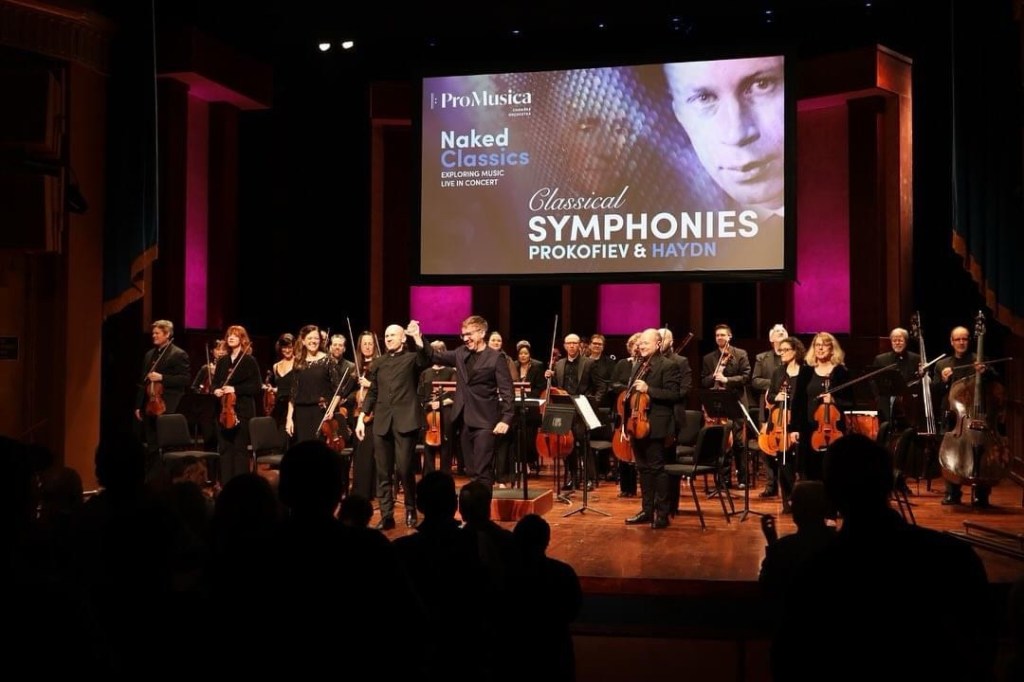
The preceding Friday night saw a further installment of Naked Classics, hosted by the ebullient and informed Paul Rissmann. Parallels and contrasts between the Haydn and Prokofiev symphonies were illuminated, culminating in a performance of both works. Here, the two symphonies were intertwined, with a movement of Prokofiev alternating with a movement of Haydn, an approach which may have helped illustrate comparisons but ultimately made for a disjointed listen.

Paul Rissmann with David Danzmayr and ProMusica

ProMusica celebrates Schubert – and the steel pan

ProMusica Chamber Orchestra
David Danzmayr, conductor
Andy Akiho, steel pan
Southern Theatre
Columbus, OH
November 11, 2023

Akiho: Beneath Lighted Coffers
 Encore:
 Akiho: Murasaki
Schubert: Symphony No. 9 in C major, D944, Great

Last weekend’s ProMusica performances offered a further installment in their admirable and illuminating Composer/Performer project, in which they shine light on that special breed of musicians who balance careers in both disciplines. Featured on the present program was composer and steel pannist Andy Akiho – who just the day before received no less than 3 Grammy nominations!

Andy Akiho and ProMusica, photos credit ProMusica

The work he offered ProMusica was a concerto for steel pan and orchestra entitled Beneath Lighted Coffers, written in 2015 on commission from the National Symphony Orchestra. The piece was inspired by time the composer spent in Rome, and in particular, the Pantheon with each of its five movements exploring a feature of the awe-inspiring edifice. Cascades in the pan alone started the opening “Portico” movement, and one was struck by Akiho’s thorough command of his instrument. Despite being essentially a foreign entity in the context of the Western classical orchestra, the pan naturally blended with the others under the composer’s skillful writing.

“Twenty-Eight” alluded to the Pantheon’s trapezoidal coffers, with strident, angular writing building these architectural elements in musical terms. Striking the edge of the pan, Akiho yielded a wide variety of timbre and color from the instrument. “Oculus” proceeded as meditative paean, and “Corelli” was a tribute to Baroque master buried at the Pantheon on an instrument the elder composer could scarcely have imagined. The composer’s adroitness at writing for orchestra was perhaps most convincing in the closing “Permanence” – a tuneful final statement abundant with virtuosic flourishes. Perhaps not the most profound score ProMusica has embraced, but a thoroughly enjoyable listen.

As an encore, Akiho offered his piece Murasaki, putting the capabilities and variety of the pan into focus – I was especially taken by the wide dynamic range. During the post-concert conversation, Akiho mentioned the inspiration came in the wee hours of the morning following a late shift at his father’s sushi restaurant – and a nod to reggae and Bob Marley.

Schubert’s final completed symphony was a weighty end to the evening. The broad stroked introduction evidenced the heft and proportion of the work (which Schumann would famously dub “heavenly length”), although here I prefer a bit more indulgent tempo and spacing than what Danzmayr offered. The first movement proper was given an energetic, vivacious workout, a spirited and life-affirming statement, and the trombone – novel in the symphony during Schubert’s time – provided a muscular backbone. The solo oboe of the slow movement proceeded as a gorgeous song without words, answered by a prayer-like passage in the strings.

The scherzo that followed was certainly no trifle, just as long as any of the other movements. It had a driving energy, and a recurrent tension between the fiery and the lyrical, contrasted by the loveliest of trios. Danzmayr and ProMusica romped through the vivacious finale with joy and abandon.

ProMusica opens 45th season with burnished Bruch and bold Beethoven

ProMusica Chamber Orchestra
David Danzmayr, conductor
Simone Porter, violin
Southern Theatre
Columbus, OH
October 7, 2023

Simon: Fate Now Conquers
Bruch: Violin Concerto No. 1 in G minor, Op. 26
Beethoven: Symphony No. 2 in D major, Op. 36

ProMusica Columbus opened its 45th season with what they do best: a work by a contemporary composer, a concerto with a star soloist, and a cornerstone symphony. Beginning the evening was Carlos Simon’s 2020 piece Fate Now Conquers. Since being premiered by the Philadelphia Orchestra, it’s a work that has quickly made rounds from ensembles across the country (I caught a performance in Indianapolis just about a year ago). The work is an homage to Beethoven, suggesting the harmonies of the Seventh Symphony’s Allegretto, and moreover, its title alludes to a passage from Homer’s Iliad which Beethoven had quoted in his diary.

Simone Porter and David Danzmayr with ProMusica, photo credit ProMusica

Terse, motivic gestures in lieu of singable melody marked the piece, very much à la Beethoven. There was a singular rhythmic drive that purveyed a Beethovenian fury, briefly countered by a lyrical cello before its forceful end – certainly packing a punch in a mere 5-minute duration. Bruch’s evergreen Violin Concerto No. 1 in G minor was vividly brought to life by the talents of Simone Porter. A plaintive, longing orchestral passage set the stage for the violin’s entrance; one was struck by Porter’s burnished tone from the onset, articulate and projected with assuredness. In the stately Vorspiel with which the concerto began, Porter made the technical demands look all but effortless, and conductor David Danzmayr offered an orchestral accompaniment that had just the right spark.

This opening prelude served as preparation for the heart of the work, a lyrical and languid Adagio – one hardly wanted this moment of serenity to end. The sprightly finale resided at the other end of the spectrum, however, given with verve and vivacity, and its Hungarian inflections recalled the finale of Brahms’ violin concerto – heard at ProMusica last season.

In his prefatory remarks, Danzmayr suggested a possible thematic connection between Simon’s Fate Now Conquers and Beethoven’s Second Symphony in that the latter was composed at a time when Beethoven was profoundly grappling with fate, as documented in the heart-wrenching Heiligenstadt Testament. In any case, this early entry in Beethoven’s symphonic corpus was marked by a broad introduction that gave way to buoyant theme – airy and joyous, but not without without an underlying sense of drama not far beneath the surface. Though his maturity as a symphonist began with the Eroica, the present work’s expansive and exploratory development made the case that it can’t be dismissed as merely imitative.

A graceful and delicate Larghetto countered, a finely detailed – a few brass flubs notwithstanding. The witty scherzo showed a certain indebtedness to Haydn, though I found Danzmayr’s tempo a bit brisk; I suspect a bit more breathing room wouldn’t have diminished the drama. The finale was as playful and high spirited as anything Beethoven wrote: it was mentioned that ProMusica recently acquired a new set of timpani modeled after those used in Beethoven’s time, and here they resounded to great effect.

ProMusica closes season with celebration of Caroline Shaw

ProMusica Chamber Orchestra
David Danzmayr, conductor
Caroline Shaw, vocals
Southern Theatre
Columbus, OH
May 13, 2023

Shaw: Blueprint
Shaw: Is a Rose
Shaw: Entr’acte
Brahms: Symphony No. 1 in C minor, Op. 68

Ever keen to celebrate living composers, ProMusica’s final performance of the season explored the work of the remarkable Caroline Shaw. In addition to being featured as composer, the multi-faceted Shaw was additionally seen as vocalist in one of her own works, and as violinist, joining ProMusica’s ranks for the Brahms symphony which closed the evening. Originally scheduled to take place prior to the pandemic, it was well worth the wait, and further to the convivial spirit of the evening, Shaw revealed a few touching Columbus connections: she had studied violin with ProMusica concertmaster Katherine McLin, and her mother sang in the Columbus Opera chorus in the 1970s.

Caroline Shaw performing Is a Rose with David Danzmayr and ProMusica, photos credit ProMusica

Scored for string quartet, Blueprint featured McLin along with Jennifer Ross, Mary Harris, and Cora Kuyvenhoven. Inspired by Beethoven, it captured the spirit of the elder composer indirectly and obliquely, not relying on obvious allusions. Snappy pizzicatos gave variety to the texture, and much was made of the empty space that separated its terse gestures, a sure sign of the quartet’s seamless cohesion.

Is a Rose constitutes a short song cycle, intriguingly scored for string orchestra with the addition of oboe and harpsichord. The three songs respectively set texts by Jacob Polley, Shaw herself, and Robert Burns, and it was really treat to hear Shaw sing her own work, an adept performer offering the insight of a composer. In “The Edge,” the oboe complemented the richness of the strings, with a gentle vocal line rising in intensity in mirror of the text. The harpsichord opened “And So,” here, the lyricism of Shaw’s voice complemented her lyrical text. In a clever orchestration, the words “borrowed time” were marked with pizzicato strings, sounding like a ticking clock. The closing setting of Burns’ “Red, Red Rose” made for a melancholy farewell.

As Blueprint looked towards Beethoven, Entr’acte drew inspiration from Haydn, take the minuet rhythm – a key element of much of Haydn’s output – as a departure point. Cast for string orchestra, its crunchy dissonances and use of harmonics offered Haydnesque wit fit for the 21st century – very much in Shaw’s own voice, but no less charming.

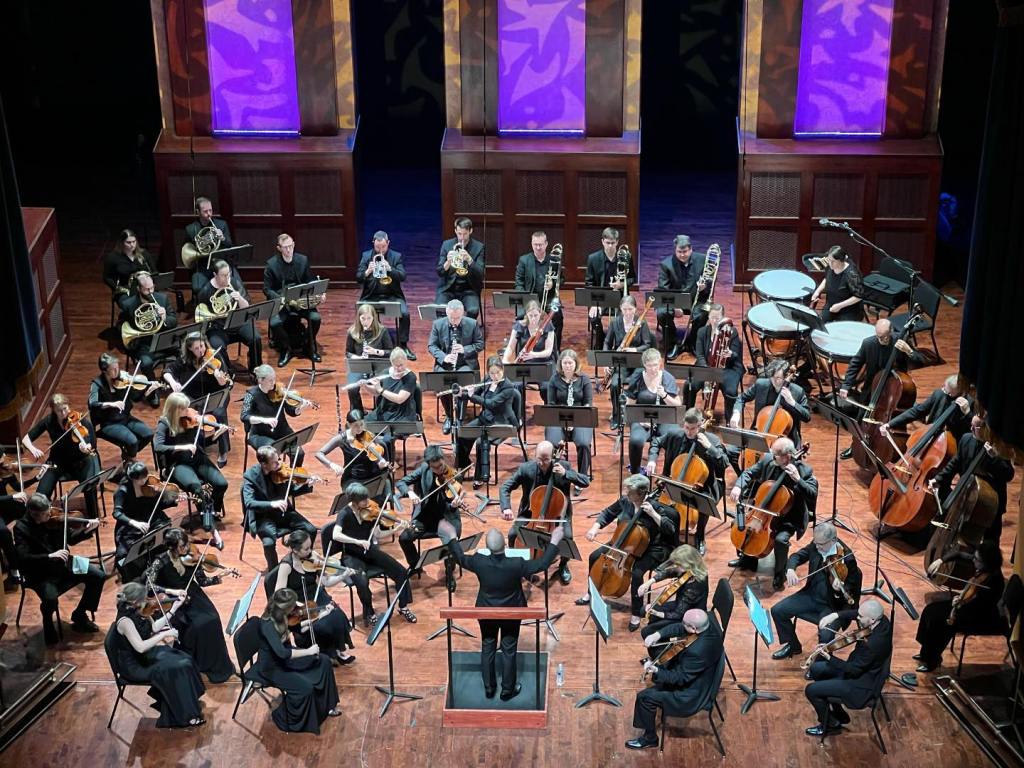
Conductor David Danzmayr noted that one may be surprised to see a Brahms symphony on a program from the chamber-sized ProMusica, but explained that Meiningen Hofkapelle that premiered some of Brahms’ symphonies was comparable in size. Thunderous, brooding beginnings opened this C minor First Symphony, though perhaps still a bit thinner sounding to contemporary areas accustomed to much larger ensembles. The first movement’s primary theme was articulated crisp and dramatic, taken at a rather brisk tempo.

The Andante sostentuo was a lyrical look inward, though it could have benefitted from greater dynamic contrast had Danzmayr brought down the dynamics down a bit more. Mellifluous clarinet marked the scherzo, but I felt the movement’s rustic charm needed to breathe more and a less-hurried tempo choice would have better suited. Gleaming brass opened the weighty finale, with lyrical strings intoning a melody that bore more than a passing resemblance to Beethoven’s Ode to Joy – a fitting nod to the evening’s beginning which saw students from ProMusica’s admirable Play Us Forward program performing a string arrangement of the Ode to Joy. Intense and articulate, Danzmayr guided the orchestra to a bold finish.

ProMusica performs Brahms’ Symphony No. 1 (spot Shaw on the far left!)

An eclectic mix prefaces a Mozart symphony at ProMusica’s neighborhood series

ProMusica Chamber Orchestra
David Danzmayr, conductor
Ellen Connors, bassoon
St Mary Catholic Church
Columbus, OH
March 19, 2023

Strauss: Serenade in E-flat major, Op. 7
Villa-Lobos: Ciranda das sete notas, W325
Tauský: Coventry: Meditation for Strings
Mozart: Symphony No. 38 in D major, K504, Prague

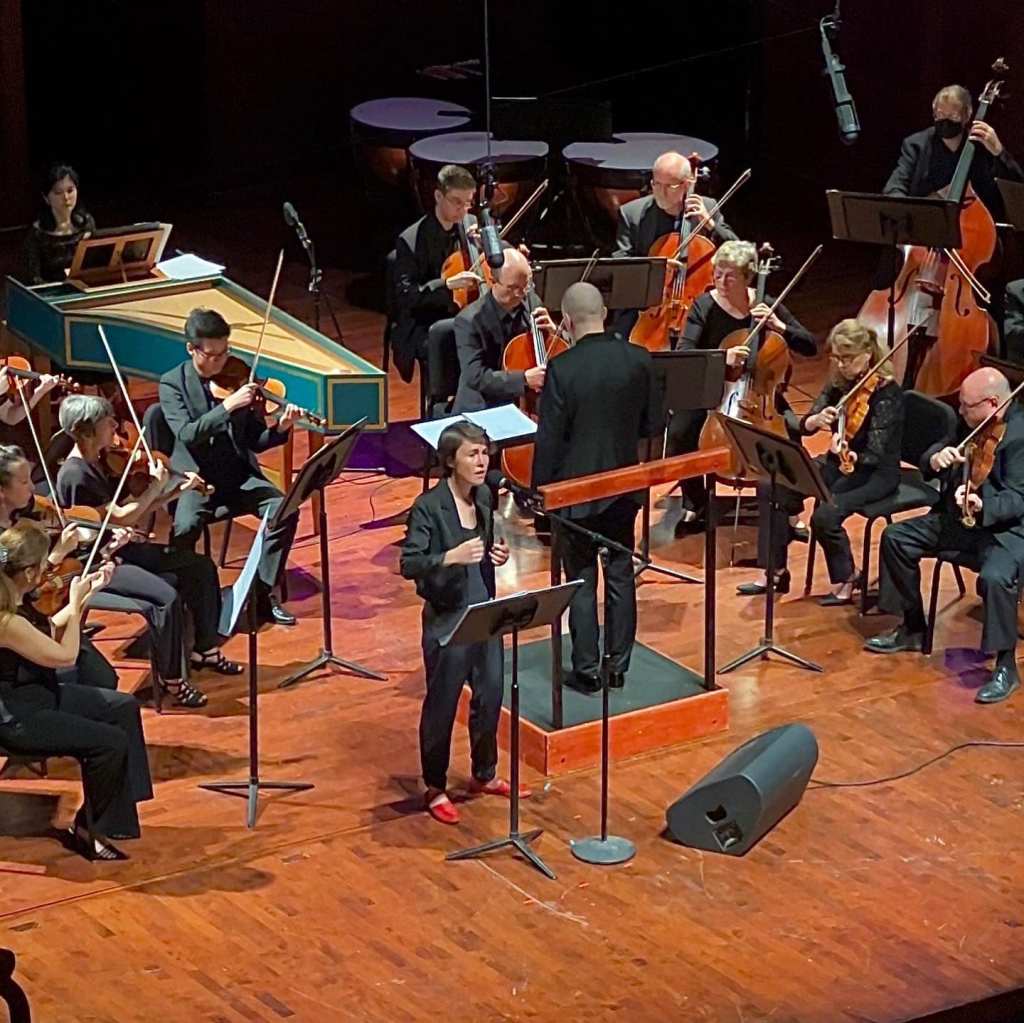
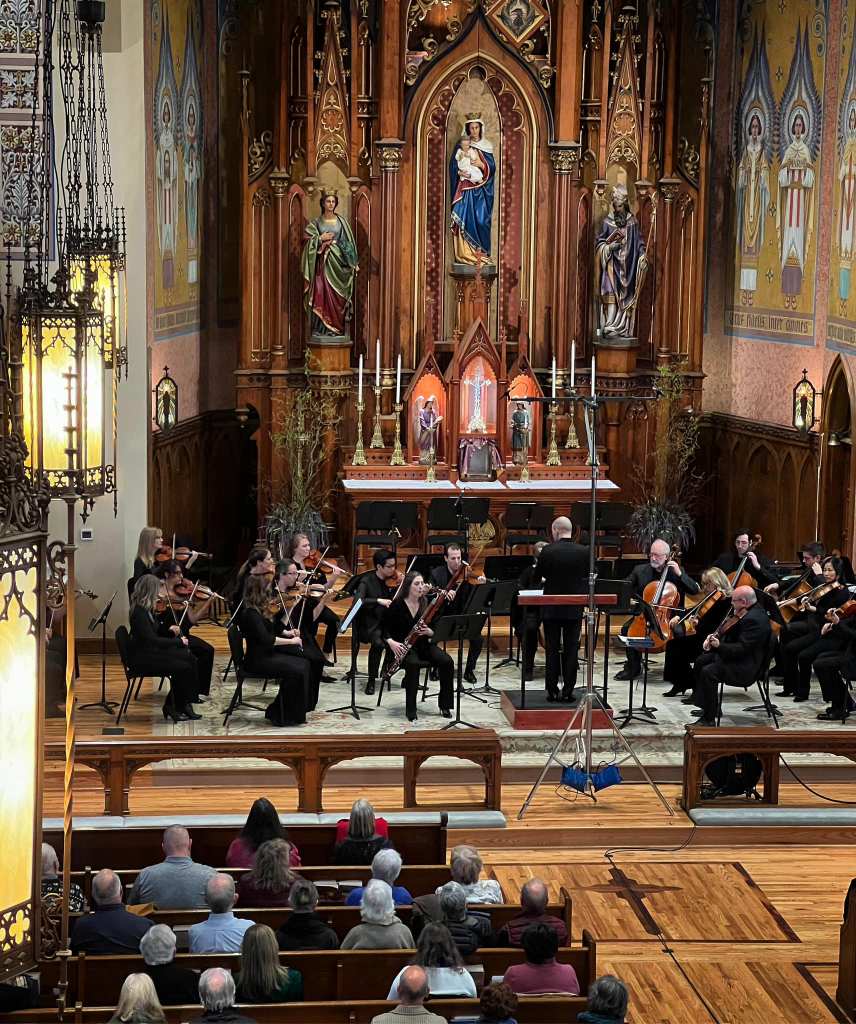
In a continued effort to reach wider audiences, ProMusica presents a “neighborhood series,” leaving their usual home at the Southern Theatre in favor of various locations throughout Columbus. I caught Sunday afternoon’s performance at the beautiful St Mary Church in German Village. A youthful Serenade by Richard Strauss opened. The winds and brass for which it was scored were warm and mellifluous in this classically-proportioned work, hardly foreshadowing the extravagant use of those instruments in the mighty tone poems that would follow. The ensemble filled the church almost like an organ; such a venue can suffer from excessive reverberation, though apparent, conductor David Danzmayr did much to adapt to the space.

Ellen Connors with David Danzmayr and ProMusica at St Mary, photo credit ProMusica

Villa-Lobos’ single movement Ciranda das sete notas (“Round Dance of Seven Notes”) brought forth ProMusica’s principal bassoon Ellen Connors. There was a wonderful energy present from the onset, and the richly harmonized material captured one’s attention. Connors offered a clear tone with playing surprisingly limber for such a lumbering instrument. The work demanded a substantial range and speed, with barely a moment for the soloist the breathe even in the slower central section. The meditative final moments were especially lovely.

A work for strings from the Czech composer Vilém Tauský followed. A Jew, he was forced to flee in homeland in 1939, settling in England where he remained until his death in 2004. Coventry, written in 1979, reflects with raw emotion on the trauma of war. One was struck by the resonance of low strings that opened, soon to be joined by the violins. Lyrical at heart but peppered with dissonances pained and poignant, it was a piece of solemn intensity that painted a forlorn picture.

Mozart’s Prague symphony was a markedly cheerier affair. Only a small handful of the composer’s 41 symphonies begin with a slow introduction; the Prague has the most substantial, stately and weighty beginnings before one of Mozart’s most delightful themes took shape. Danzmayr opted for a brisk tempo choice, but clarity was maintained even during the bracing development. A graceful and measured slow movement served as a moment of repose before the whirlwind finale, wherein the ProMusica woodwinds were in especially fine form.

ProMusica closes the year with lush Brahms and Mendelssohn

ProMusica Chamber Orchestra
David Danzmayr, conductor
Vadim Gluzman, violin
Southern Theatre
Columbus, OH
December 10, 2022

Chin: subito con forza
Brahms: Violin Concerto in D major, Op. 77
 Encore:
 Gluck: “Dance of the Blessed Spirits” from Orfeo ed Euridice (trans. Kreisler)
MacMillan: One
Mendelssohn: Symphony No. 5 in D major, Op. 107, Reformation

The final ProMusica program of the year presented two major scores from the 19th century (both in D major!), each prefaced by a brief but fitting contemporary work. Unusk Chin’s 2020 work subito con forza certainly made for an energetic opening. An homage of sorts to Beethoven, the opening gesture invoked the Coriolan overture before veering in a different direction, and powerful writing for the piano hinted at the Emperor piano concerto.

Vadim Gluzman, David Danzymar, and ProMusica, photo credit ProMusica

In her opening remarks, ProMusica CEO Janet Chen noted that this marks ten years since David Danzmayr and Vadim Gluzman assumed their current roles of music director and creative partner respectively. What followed was a veritable celebration of this now decade-long collaboration in Brahms’ Violin Concerto. The orchestral introduction was marked by an arching lyricism, and a fiery contrasting theme provided set up for the violin’s entrance. More lyrical material saw Gluzman sailing into the upper range of his instrument with a tone limber and flexible. The partnership between conductor, soloist, and orchestra certainly paid its dividends in convincingly conveying the large-scale architecture of the expansive opening movement.

A choir of winds opened the plangent Adagio, and Gluzman responded with a songful lyricism of his own. The Hungarian-inflected finale was a jocular affair, given with authentic flair. Gluzman returned with an encore in Gluck’s “Dance of the Blessed Spirits” from the opera Orfeo ed Euridice – presented in Kreisler’s transcription for violin with a touch of orchestral accompaniment. Its gorgeous, long-bowed melody was a lovely pendant to the Brahms.

As the title suggests, James MacMillan’s 2012 essay One explores single-line melodies, monastic in its starkness and somewhat suggestive of Gregorian chant. The religious orientation was apropos as it led without pause to Mendelssohn’s Reformation symphony – a fitting follow up to last season’s performances of the Scottish and Italian symphonies (perhaps a future ProMusica season could offer the rarely heard First and Second symphonies?). The slow introduction saw a rich invocation in the strings of the divine Dresden amen; the movement proper took shape with vigor in the stormier minor, delivered with momentum and precision.

The Allegro vivace was playful, lighter fare by contrast, and the gentle Andante was noted for its languid melody in the strings. The finale introduced the Lutheran hymn Ein feste Burg ist unser Gott in the flute (Nadine Hur) with matters building to a climax of both contrapuntal intricacy and festive exuberance.

ProMusica opens season with the brilliance of cellist Kian Soltani

ProMusica Chamber Orchestra
David Danzmayr, conductor
Kian Soltani, cello
Southern Theatre
Columbus, OH
October 8, 2022

Kernis: Musica Celestis
Haydn: Cello Concerto No. 1 in C major, Hob. VIIb:1
Vali: “The Girl from Shiraz” from Persian Folk Songs
Beethoven: Symphony No. 5 in C minor, Op. 67

ProMusica’s 2022-23 season opener was particularly auspicious in that it served as a platform for the local debut of Kian Soltani, a rapidly rising star in the cello world. The program began with the 1990 work for string orchestra Musica Celestis by American composer Aaron Jay Kernis. At the time of composition, the composer had been immersed in the work of Hildegard von Bingen, and the spirit of her work was woven into Kernis’ idiosyncratic texture. The piece unfolded glacially, with soaring passagework for both concertmasters. It reached celestial heights, ultimately arriving at peaceful resolution.

Kian Soltani, David Danzmayr, and ProMusica, photo credit ProMusica

A crisp, rhythmically punctuated introduction opened Haydn’s Cello Concerto No. 1. Soltani entered with a richly burnished tone, brimming with Viennese elegance, effortlessly fluent. Matters weren’t all pearly, however, with appropriate vigor given to the stormier sections. The cellist boasted a long-bowed, graceful melody in the central Adagio, and the finale rounded things off in the highest of spirits, with blistering virtuosity and vivacity.

Born in Austria of Iranian parentage, it was only fitting for Soltani to follow the Haydn with a work by Iranian composer Reza Vali – and Vali had in fact went to school with the cellist’s father in Iran. “The Girl from Shiraz,” a selection from the composer’s Persian Folk Songs – a work that just received its premiere earlier this year – made for an enticing contrast to the Haydn. A languid, winding melody in the cello introduced the titular melody, and the percussion scoring gave the work a decidedly non-Western feel. The latter section, known as “Love Drunk,” was a rambunctious and boisterous foil, pointing to a thunderous closing gesture.

Following the brilliance and intriguing programming choices of the first half, the balance of the program was rather more prosaic in Beethoven’s Fifth Symphony which nonetheless served as an exciting work with which to open the season. Danzmayr led a taut and focused performance, bringing out the work’s essential dramatic qualities.

ProMusica closes season with Beethoven and Mendelssohn

ProMusica Chamber Orchestra
David Danzmayr, conductor
Martina Filjak, piano
Southern Theatre
Columbus, OH
May 7, 2022

Clyne: Stride
Beethoven: Piano Concerto No. 3 in C minor, Op. 37
 Encore:
 Pärt: Für Alina
Mendelssohn: Symphony No. 4 in A major, Op. 90, Italian

This weekend saw the close of ProMusica’s 43rd season, and the first full season since the pandemic hit. The evening kicked off in particularly delightful fashion with young students from ProMusica’s Play Us Forward program performing two short works for strings. ProMusica then took to the stage with a recent work by Anna Clyne, written in 2020 for the Beethoven 250th anniversary. Stride takes its cue from Beethoven’s Pathétique sonata and its name comes from the broken octave figures in the bass that one finds in the sonata and would later be associated with stride piano playing. Clyne’s work is cast in three interconnected movements, mirroring the structure of the source material. As in the Pathétique, prominent dotted rhythm gestures opened, and the “stride” figures were interlaced with quotes from the sonata, some more veiled than others. I was particularly struck by theme of the rondo finale being presented at a slow tempo, revealing a languid character beneath the surface. A brilliant reimagining of this venerable sonata.

Martina Filjak, David Danzmayr, and ProMusica, photo credit ProMusica

Beethoven reserved C minor for some of his most personal works – a body of work that includes the Pathétique sonata as well as the Third Piano Concerto, the latter of which engaged Croatian pianist Martina Filjak. I remember seeing her last when she won the 2009 edition of the Cleveland International Piano Competition, and it was wonderful to see her again all these years later with a flourishing career to her name. The orchestral introduction was crisply articulated, although one perhaps wanted conductor David Danzmayr to draw out even greater dynamic contrasts and variety. Filjak’s entry had the requisite drama, but her playing was stylish and elegant at heart, showing Beethoven at his most urbane and cosmopolitan. It seemed that she approached the work more akin to a Mozart concerto; while the first two certainly show indebtedness to the composer’s predecessor, the Third marks a stark departure. Nonetheless, the cadenza was fiery and impassioned, and the first movement’s enigmatic ending was deftly executed.

The lovely Largo was prayer-like and plaintive, and the concluding Rondo started with a sudden burst of the energy, building to the brilliant switch to the major in the final few bars. As an encore, Filjak opted for a work worlds apart from Beethoven (despite any associations to Beethoven the title might suggest): Pärt’s Für Alina, strikingly wonderful in its barren textures and mystical musings.

This season has seen several major works of Mendelssohn performed – the Scottish symphony, the violin concerto – and the trend was continued with the ebullient Italian symphony. Some unevenness in the brass did little to detract from the first movement’s buoyancy, given with classical economy and balance. A really delightful performance, perhaps nowhere more so than in the kinetic energy of the vibrant, sunny saltarello that closed.

Gluzman and Roman terrific soloists with ProMusica

ProMusica Chamber Orchestra
David Danzmayr, conductor
Vadim Gluzman, violin
Joshua Roman, cello
Southern Theatre
Columbus, OH
April 2, 2022

Golijov: Last Round
Mendelssohn: Violin Concerto in E Minor, Op. 64
 Encore:
 Silvestrov: Serenade
Roman: Confluence
Haydn: Symphony No. 94 in G major, Hob. I:94, Surprise

April’s ProMusica program began in the always intriguing world of contemporary Argentine composer Osvaldo Golijov, namely with the 1996 string orchestra work Last Round. It was a lively, high-octane opener, marked by rhythmic drive and astringent harmonies. The more languid, tango-inflected latter section contrasted in its impassioned lyricism.

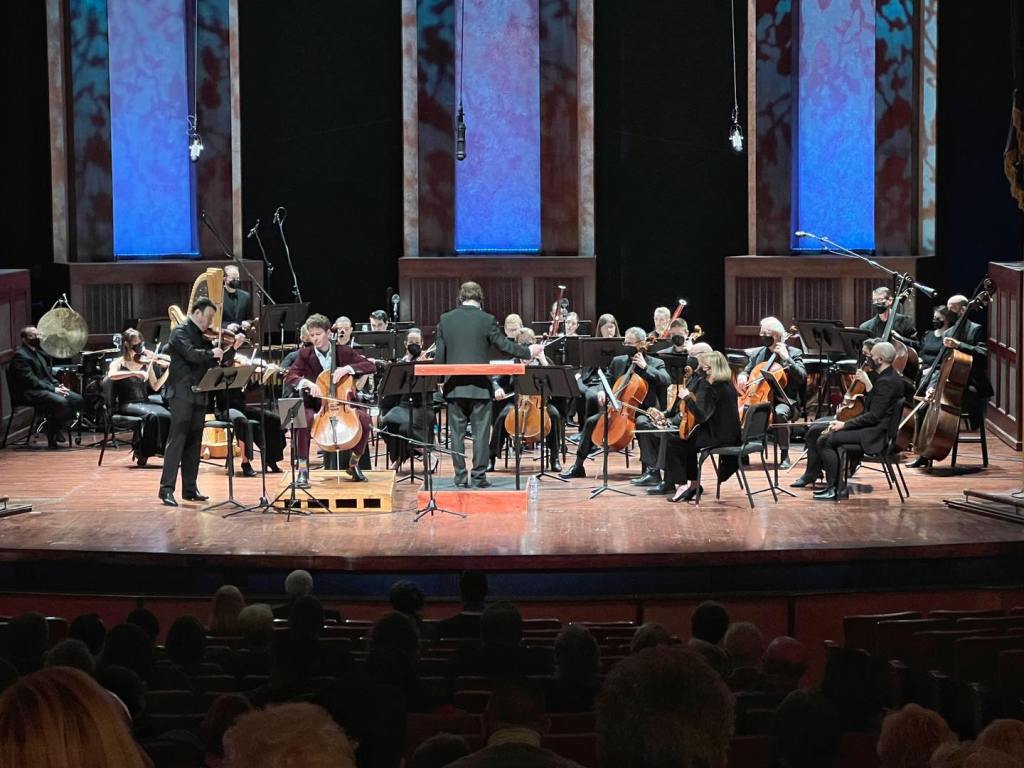
Vadim Gluzman, Joshua Roman, David Danzmayr, and ProMusica Chamber Orchestra, photo credit ProMusica

Mendelssohn’s evergreen Violin Concerto followed with ProMusica’s Creative Partner and Principal Guest Artist Vadim Gluzman as soloist. The haunting opening melody was clear-toned as it seared and soared, and Gluzman projected well atop the vigorous and supportive orchestral accompaniment. The cadenza displayed his virtuosity and control over whole range of the violin’s register, with the work clearly ingrained deep in his fingers. The Andante proceeded as a gentle song without words, and the finale was fleet and featherlight. As an encore, Gluzman turned towards music of his Ukrainian home country in Valentin Silvestorv’s deeply poignant Serenade. In contending with a heartbreaking global situation, Gluzman reminded us of the importance of art, referencing the Soviet quote “when the cannons are heard, the muses are silent. When the cannons are silent, the muses are heard.”

The latter half saw saw the latest entry in ProMusica’s enterprising Composer/Performer Project, an endeavor which features musicians distinguished in both disciplines – and has resulted in now 68 commissions. Joshua Roman’s Confluence was at last brought to life almost exactly two years to the day of the originally scheduled premiere, owing to covid cancellations. Roman was appointed principal cellist of the Seattle Symphony at age 22 – the youngest principal player in that ensemble’s history – but left after just a few years to pursue a solo career, and this marked the fourth work of his featured on a ProMusica program.

Confluence is a fifteen-minute work that hearkens back to the double concerto, featuring both cello and violin as soloists. A pulsating marimba made for a striking opening, and Gluzman’s rapid violin blended well with Roman’s lyrical cello. Roman did much to capitalize on his instrument’s resonant bass register, and true to the title, the work was marked by a confluence of harmonious, lyrical voices. A glass harp (wine glasses) added to the colorful soundscape, and a tender ending felt at peace with the world – in a way, at odds with the uncertain backdrop in which the piece was written.

The program closed with Haydn’s Surprise symphony, and Austrian conductor David Danzmayr showed a natural affinity for music of his compatriot. An effervescent joie de vivre made matters all the more delightful, and the musicians were clearly having fun in emphasizing the dynamic contrasts of the Andante which earned this symphony its moniker.

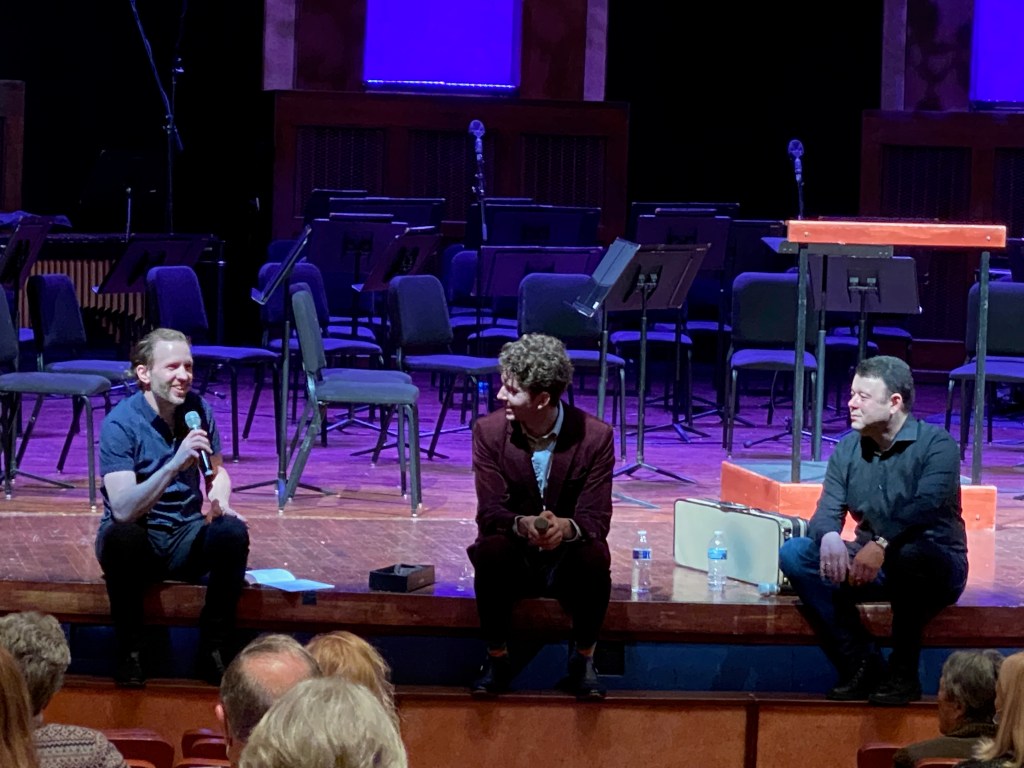
Post-concert Q&A with David Danzmayr, Joshua Roman, and Vadim Gluzman