Hamelin a star soloist in Cleveland Orchestra’s feast of American music

Cleveland Orchestra
David Robertson, conductor
Marc-André Hamelin, piano
Mandel Concert Hall
Severance Music Center
Cleveland, OH
November 29, 2024

Copland: Suite from Appalachian Spring (1945 orchestration)
Gershwin: Rhapsody in Blue (arr. Grofé)
Ellington: New World A-Comin’
Copland: Suite from The Tender Land

Over the Thanksgiving weekend, The Cleveland Orchestra and guest conductor David Roberston served up a rich course of American orchestral music. As the centerpiece was a pair of works for piano and orchestra with virtuoso Marc-André Hamelin, both of which artfully brought jazz and popular traditions into the concert hall.
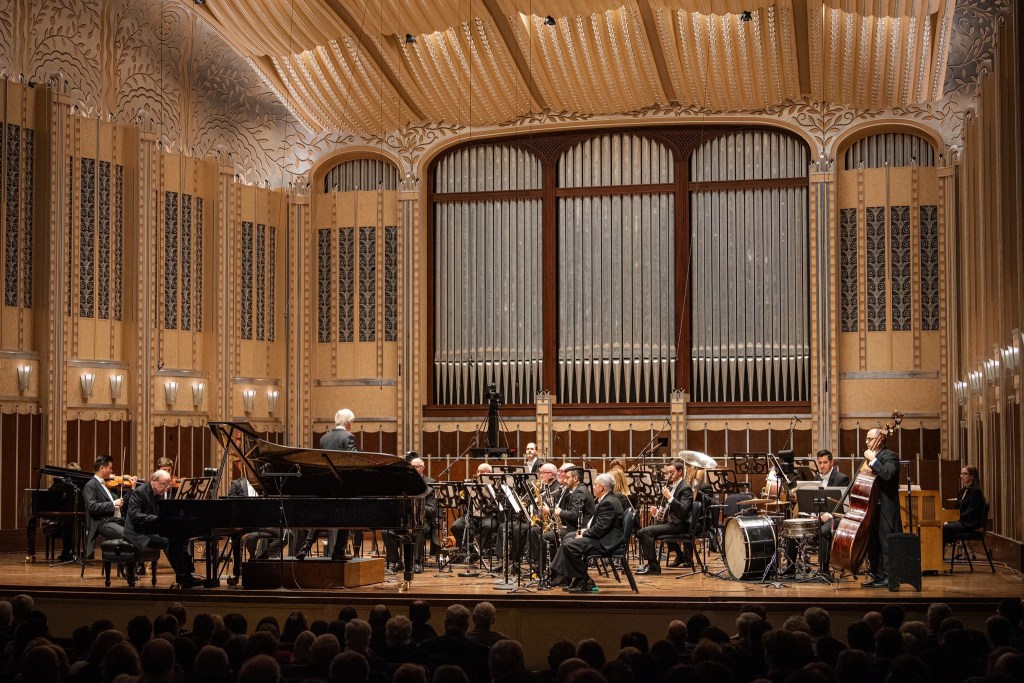
Marc-André Hamelin, David Robertson, and The Cleveland Orchestra perform Rhapsody in Blue. Photos credit Extraordinaire Photos

This year marks the centennial of Gershwin’s epochal Rhapsody in Blue, and the evening’s performers offered an energetic and joyous performance fitting for such an anniversary. The work was presented in its original jazz band orchestration arranged by Ferde Grofé, as it would have been heard in its 1924 premiere at Carnegie Hall — and The Cleveland Orchestra morphed into a bona fide dance hall band.

The iconic wail of the clarinet opened the work, stylishly played by Daniel McKelway. A muted trumpet responded in its striking timbre, setting the stage for Hamelin’s commanding pianism, given with flair and virtuosity. In this amalgamation of the classical and the vernacular, the two resided not in opposition, but as a unified whole. A downtempo section was a sultry affair, while a passage of repeated notes conveyed the mechanistic fury of the Industrial Age, not unlike what one finds in Prokofiev at the same time. All cares were left aside though in the abandon of the foot-tapping finale.

Duke Ellington’s 1943 work New World A-Comin’ premiered under similar circumstances as the Gershwin: a Carnegie Hall performance that endeavored to break the confines of the traditional classical repertoire. Unlike Rhapsody in Blue, Ellington’s work was not initially well-received. Credit, then to Hamelin et al. for offering a compelling performance. A lushly-scored opening in the orchestra gave way to a quasi-improvisatory passage for piano, with silky filigree and silvery runs, colored by jazz-inflected harmonies. A drum kit onstage added to the rhythmic pulse. Comprised of alternating sections for orchestra and piano, it lacked the cohesion of the Gershwin, but proved an attractive discovery nonetheless. On the subject of jazz-influenced classical works, Hamelin’s 2008 album In a state of jazz is warmly recommended.

Bookending the concertante works was music of Aaron Copland, in both cases orchestral suites extracted from stage works. Appalachian Spring made for a lovely opening to the evening. Earthy harmonies began, brimming with hope and possibility. Robertson and the orchestra gently breathed life into this soft-spoken material, starkly different from the bustling Manhattan streetscape conveyed in Gershwin’s Rhapsody. More angular material was enhanced by the sheen of the brass, and rhythmic inflections conveyed a dance-like quality — this was, after all, originally a ballet. A magical moment saw the first appearance of the Simple gifts hymn, first in the winds and then blooming to its magnificent orchestration. The loveliest of epilogues concluded, wholly at peace.

Less well-known was the three movement suite from Copland’s opera The Tender Land, dating about a decade after Appalachian Spring. Strident, brassy beginnings retreated inward for a gentle love song. A specialist of the American repertoire, Robertson served as a keen guide in this deeply lyrical writing. A boisterous, raucous “Party Scene” took matters in a rather different direction, splashed by piquant touches from the xylophone. The closing “Promise of the Living” was a peaceful paean with a fine English horn solo, and a touching, topical close for the Thanksgiving program.

And for those who couldn’t make it to Severance Hall in person, Sunday’s performance was live-streamed and subsequently available on demand through Adella and Stage+.
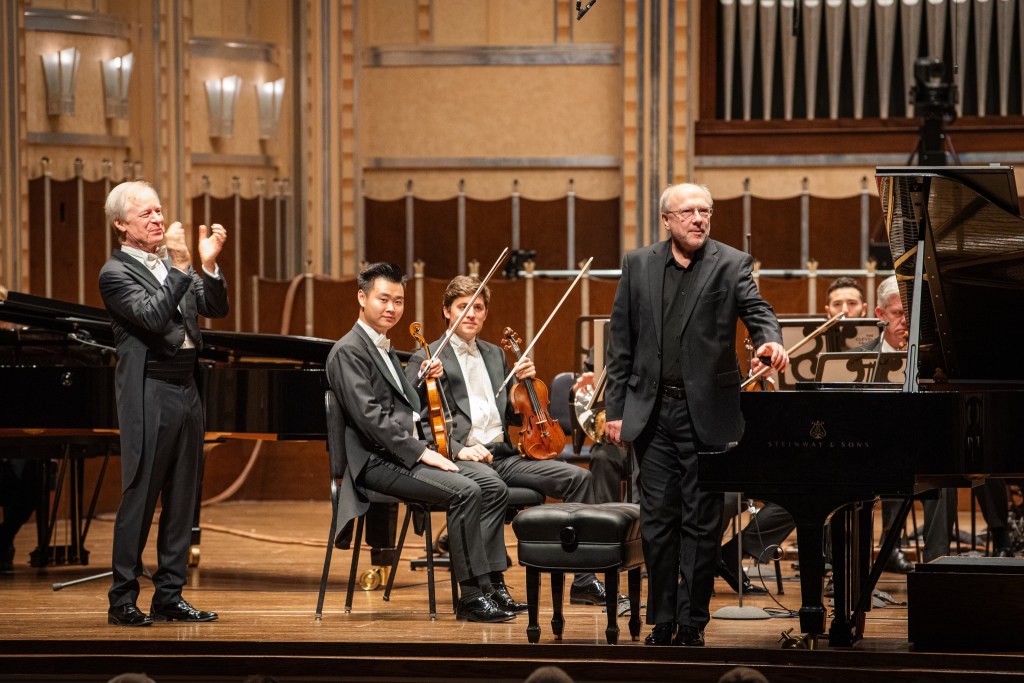
David Robertson applauds Marc-André Hamelin

Guerrero and Cleveland Orchestra serve sumptuous Tchaikovsky over Thanksgiving weekend

Cleveland Orchestra
Giancarlo Guerrero, conductor
Paul Jacobs, organ
Severance Hall
Cleveland, OH
November 26, 2017

Copland: El Salón México
Paulus: Grand Concerto for Organ and Orchestra
 Encore:
 Bach: Wir danken dir, Gott, wir danken dir, BWV 29 – Sinfonia (transc. Dupré)
Tchaikovsky: Symphony No. 4 in F minor, Op. 36

Over the Thanksgiving weekend, The Cleveland Orchestra presented a colorful program, each work fittingly rich and delectable as per the spirit of the holiday. On the podium was Costa Rican native Giancarlo Guerrero – currently music director of the Nashville Symphony, he is a familiar face to this orchestra having served as principal guest conductor of their Miami residency from 2011-16. The program opened with two attractive American works, serving as a lighter amuse-bouche before Tchaikovsky’s deeply tragic Fourth Symphony.

Guerrero9_study2 (credit Ma2la)
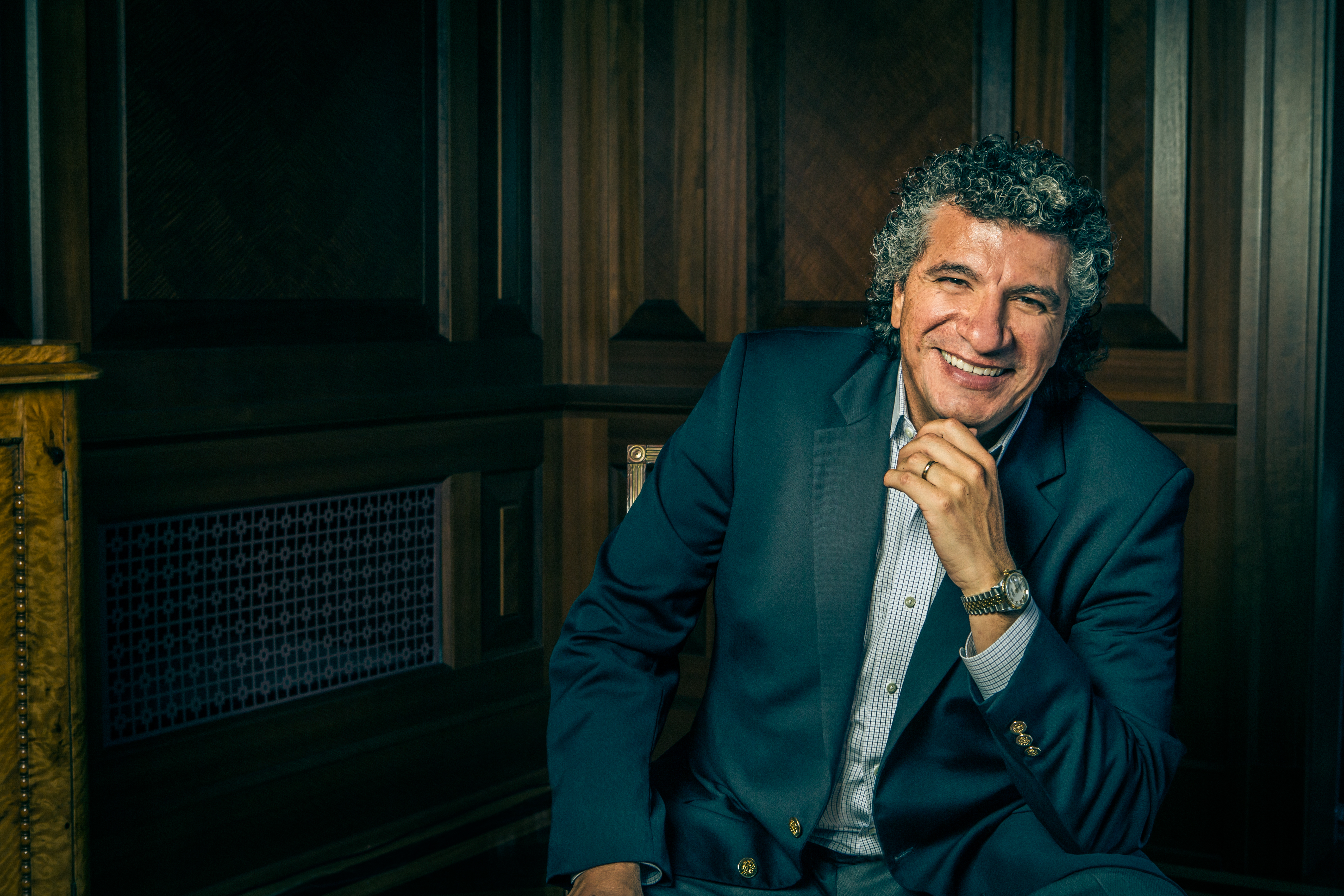
Giancarlo Guerrero, photo credit Tony Matula

Copland’s El Salón México marked a turning point in his career as looked towards folk music for inspiration, a style with the immediacy and appeal that would make him a populist sensation. Its boisterous opening brought to life a kaleidoscopic Mexican street scene, and potpourri of dance hall folk themes followed in due course, but as refined through lens of the classically trained composer. The performance was especially commendable for the handling of the work’s rhythmic complexities, particularly in the piano and percussion.

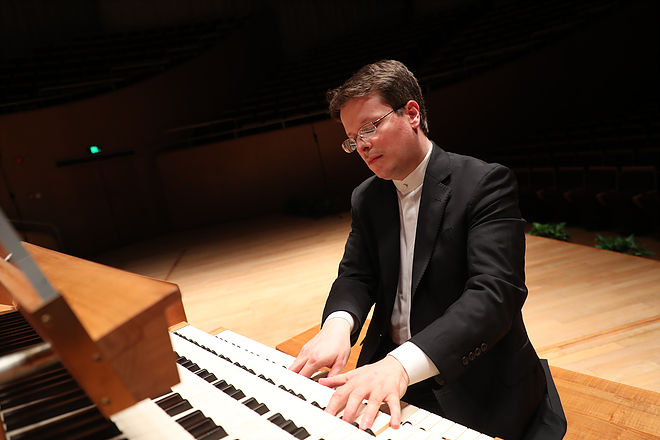
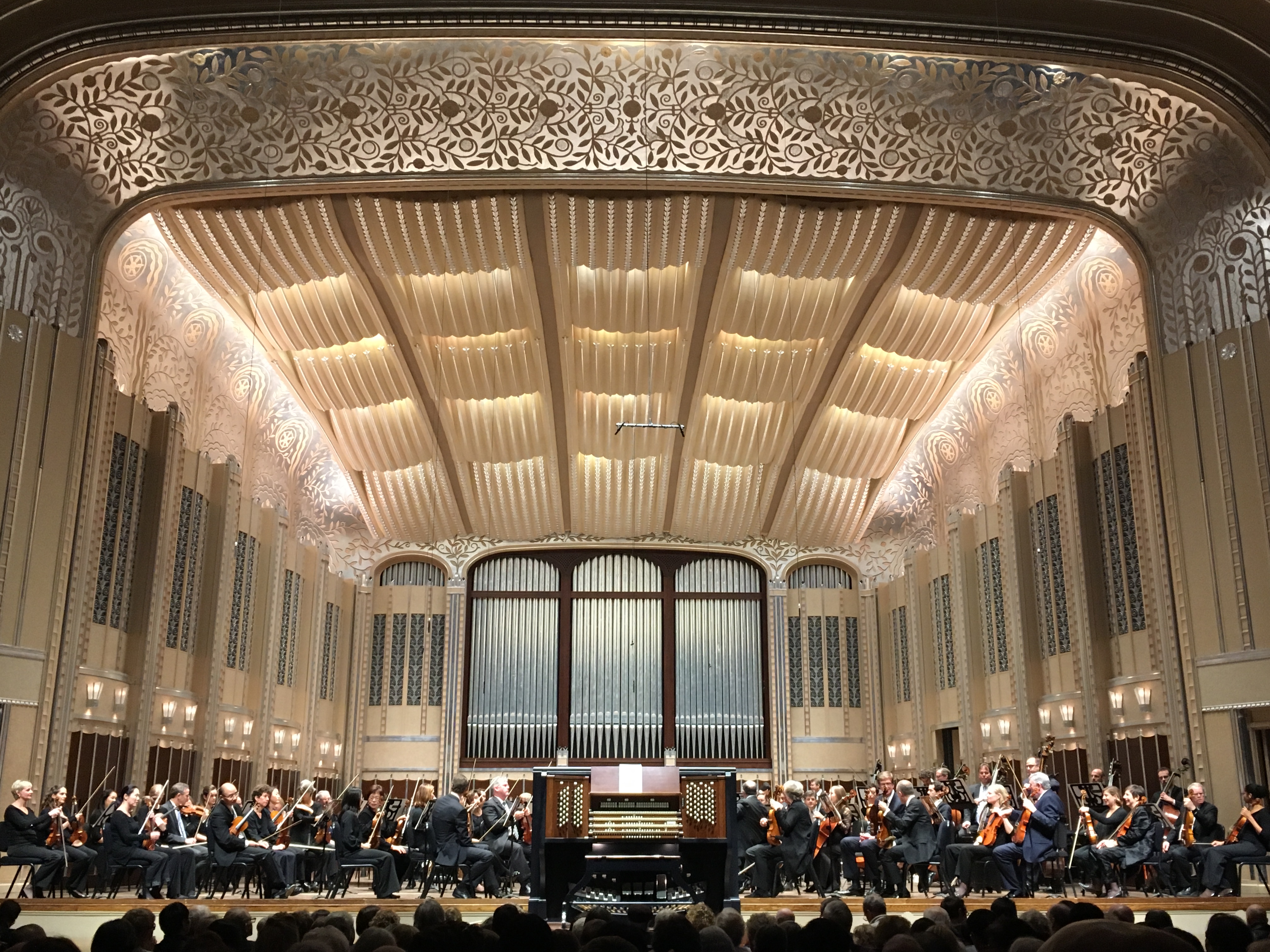
Stephen Paulus is a composer with an important Cleveland connection, having written his Violin Concerto No. 3 for concertmaster William Preucil in 2012. He also has no less than four organ concertos to his name; the aptly titled Grand Concerto, dating from 2003, was his third entry in the medium. It proved to be a fine showpiece for Grammy-winning organist Paul Jacobs as well as a good cause for bringing the console of the remarkable Norton Memorial Organ front and center.

dc7cc7_e26faaf5ad7848f6b3e26c0dca899ab0~mv2_d_5472_3648_s_4_2
Paul Jacobs, photo credit Shanghai Conservatory

In spite of the marking “Vivacious and Spirited”, the opening movement began mysteriously, grounded in the low strings and bottom registers of the organ. A duet was to be had between Jacobs and principal flute Joshua Smith, the latter’s instrument perhaps being the orchestral instrument most akin to the organ in that they both produce sound via a column of air traveling through a metallic cylinder. Matters became increasingly exuberant to live up to the composer’s indications, however, and the swashbuckling ending was nearly cinematic in its big-boned melodies.

Marked “Austere – foreboding”, the central movement was of great contrast to the opening, beginning in rigid stoicism, almost religious in discipline – it should be remembered the Paulus was an accomplished voice in the field of sacred music – and the movement built to a powerful chorale. “Jubilant” was a fitting description of the finale’s carnival-like atmosphere, replete with some dazzling footwork from Jacobs in the organ’s pedals. Jacobs indulged the audience with an encore, a wondrous account of the sinfonia from Bach’s Cantata BWV 29 in a transcription for organ. To my mind, more was said in those few minutes than in the entire duration of the Paulus concerto, enjoyable as it was.

Following intermission, Guerrero returned to conduct the main course from memory, namely Tchaikovsky’s Symphony No. 4 in F minor. The arresting opening in the brass, symbolizing fate, was so unforgiving as to suggest that the inevitability of one’s fate was already sealed. A nervous theme began the movement proper, and the principal winds were in in fine form during a section of downward cascades, a gentler moment in this movement of searing passion. The Andantino in modo di canzona began with a plaintive oboe solo from Frank Rosenwein, not as tragic as the preceding but still of deep melancholy, and the burnished tones of the cellos followed suit. A skittish pizzicato characterized the lighter scherzo, later countered by a Slavic folksong in the winds, played perhaps a bit too shrill. The powerhouse finale ramped up the decibels, only for the fate motive to make a fearsome return, rendering the exultant conclusion an unnervingly hollow victory.

Organ
Severance Hall, Norton Memorial Organ front and center