Milanov leads Columbus Symphony in a Mahlerian farewell to life

Columbus Symphony Orchestra
Rossen Milanov, conductor
Ohio Theatre
Columbus, OH
March 3, 2023

Mahler: Symphony No. 9 in D major

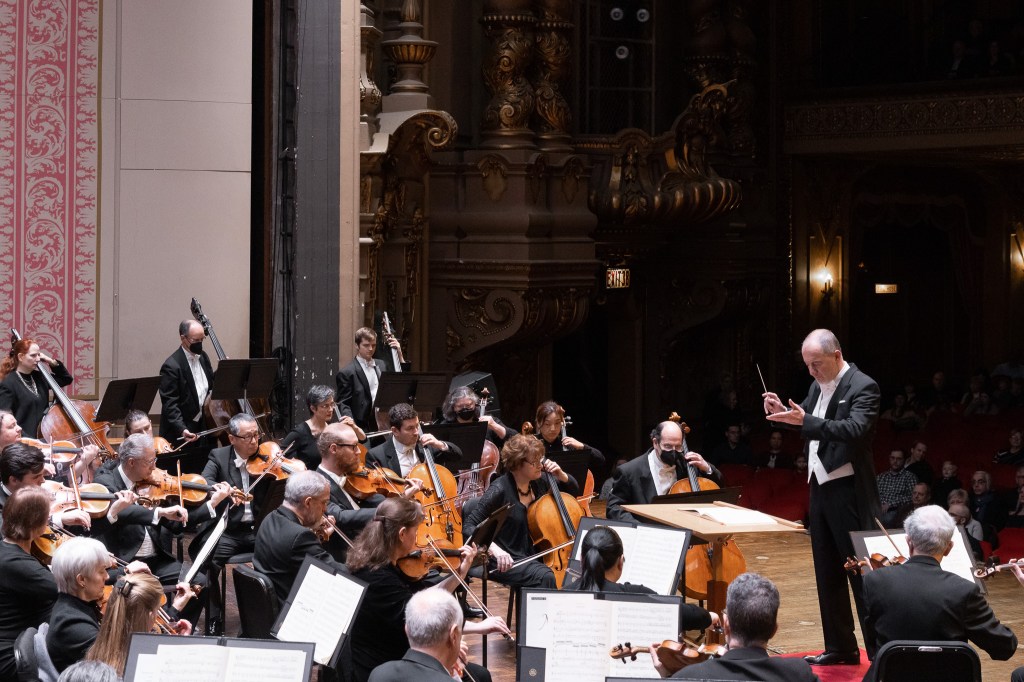
In his preconcert remarks, Columbus Symphony music director Rossen Milanov noted it has long been his dream to conduct Mahler’s final completed work, the Ninth Symphony. That opportunity finally arrived this weekend, leading the CSO – expanded to over 80 players – in this autumnal, valedictory canvas.
The work began tentatively, hesitantly, almost as if unsure of its footing – some have suggested the limping rhythmic figure was meant to mirror the composer’s irregular heartbeat. Nonetheless, the work soon found its stride in sighing, calming lyricism. The music surged to grating climaxes at key inflection points in the long paragraph of the opening Andante comodo, yet they tended to come across a bit thin, lacking the robustness one desires for Mahler. The tolling of the tubular bells was of striking effect, heralding the welcome return of the main theme after a long journey. A solo passage from concertmaster Joanna Frankel was quite tenderly played.

The following movement brought us back down to the corporeal world from the philosophical musings of the opening. A spunky ländler took shape, with Mahler ever keen to invoke his affinity for folk traditions, even (or perhaps especially) in this late work. A panoply of striking timbres colored the movement, with the orchestra sounding quite a bit more polished here. The ensuing Rondo-Burleske opened with a strident, angular trumpet call, and a vigor that inexorably pulled matters forward, only to be later stopped in its tracks by an impossibly high passage for trumpet, echoed in the strings and winds – and a preview of the plaintive finale to come. At one point, Milanov’s baton was launched airborne, as sure a sign as any of the intensity with which he conducted!

The finale is simply quite unlike anything else in the repertoire. A heartwrenching chorale resonated through the Ohio Theatre, with the Columbus strings shining in their aching, arching lyricism. In the final bars, matters were all but disembodied, drifting away to peaceful, serene resolution, and Milanov managed to hold the audience in contemplative silence – perhaps the most appropriate response to such a singular statement.

Columbus Symphony spotlights principal clarinet

Columbus Symphony Orchestra
Rossen Milanov, conductor
David Thomas, clarinet
Ohio Theatre
Columbus, OH
February 18, 2023

Price: Andante ma non troppo from Symphony No. 3 in C minor
Berio/Brahms: Op. 120 No. 1
Schubert: Symphony No. 4 in C minor, D417, Tragic

It has been deeply gratifying to see renewed attention given to the formidable work of Florence Price in the past few years. Last year’s Grammy for best orchestral performance went to the Philadelphia Orchestra’s warmly recommended recording of her First and Third symphonies under Yannick Nézet-Séguin – an ensemble of which Rossen Milanov served as assistant conductor for almost a dozen years before coming to Columbus. Last weekend’s Columbus Symphony program opened with the slow movement of the Third Symphony.

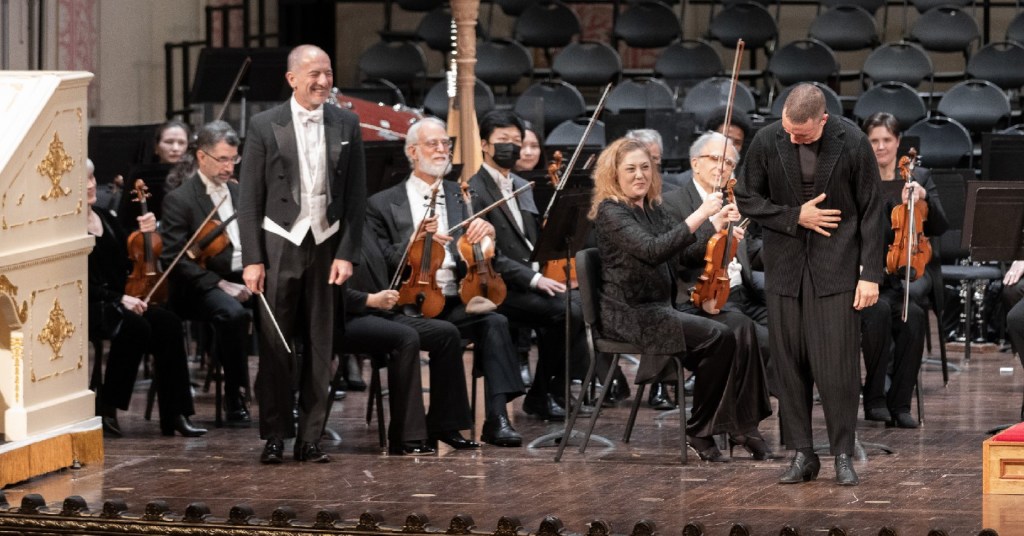
David Thomas, photo credit Columbus Symphony

A plaintive choir of winds began, with a tuneful melody gently unfolding. Like Dvorák before her (as in the New World symphony, heard here two weeks prior), Price purveyed a language steeped in folk tradition without making use of specific quotations. A passage for brass chorale was particularly affecting and distinctly American in character before the movement reached a serene ending, aided by a touch of harp. It certainly whetted one’s appetite for more, and I hope the complete symphony can be programmed in an upcoming season.

Though at the forefront of the avant-garde, Luciano Berio had a knack for faithfully transcribing other composers’ works for various media (including a particularly delightful selection of Beatles songs). A 1986 commission from the Los Angeles Philharmonic saw him transcribe Brahms’ late Clarinet Sonata in F minor, Op. 120 No. 1 for soloist and orchestra. Championing the work was David Thomas, serving as the CSO’s principal clarinet since 1989.

Passionate, brooding beginnings were had, with Berio’s orchestration inimitably Brahmsian as he left his iconoclastic proclivities far behind – the work sounded almost as the clarinet concerto Brahms never wrote. Thomas’ rich tone was well-suited to this autumnal work, finely balanced with the larger ensemble, and conveying a natural chemistry with his orchestral colleagues. The slow movement proceeded as a long-breathed song without words – really gorgeous – while an Allegretto grazioso charmed with its inflections of the ländler in both rhythm and spirit. A repeated motif marked the closing Vivace, a finale of appropriate vigor.

Another C minor symphony closed the program, namely Schubert’s Tragic. Weighty introductory material announced the minor tonality in no uncertain terms; the movement proper brimmed with Sturm und Drang in this early expression of Romanticism. The primary theme was deftly articulated in the strings, and a development section traversed distant keys before the movement landed – quite surprisingly – in the major.

The Andante boasted one of Schubert’s loveliest melodies, first presented in the strings with a touching countermelody in the oboe, searching for peace amidst the tumult of the rest of the work. The minor key shading gave the minuet added vigor, a contrast heightened by the lilting trio. Milanov leapt right in the to the finale – perhaps in reaction to some of the audience’s insistence on applauding after every movement. Matters felt a tad rushed, but this was an energetic outing nonetheless, leading to a dramatic finish.

Columbus Symphony celebrates American music with standout guest conductor and soloist

Columbus Symphony Orchestra
David Alan Miller, conductor
Aubree Oliverson, violin
Ohio Theatre
Columbus, OH
February 3, 2023

Simon: This Land
Barber: Violin Concerto
 Encore:
 Puts: Arches
Dvořák: Symphony No. 9 in E minor, Op. 95, From the New World

Under guest conductor David Alan Miller, the Columbus Symphony presented an exuberant program of American music – the first half comprised of American composers, the latter the view of a foreigner looking in. As music director of the Albany Symphony Orchestra, Miller has developed a reputation for his commitment to contemporary music, and began the CSO program with a 2019 work of Carlos Simon. This Land is a musical depiction of the Statue of Liberty, and in particular, the Emma Lazarus poem at its base. It began introspectively with earthy harmonies, as a mediation on the poem and monument, and perhaps the less than promised realization of those ideals. A patchwork tapestry of various national anthems took shape, and the brief work closed as pensively as it began.

Aubree Oliverson, David Alan Miller, and the Columbus Symphony, photo credit Corinne Mares

Barber’s Violin Concerto put the considerable talents of soloist Aubree Oliverson in the spotlight. Eschewing introductory material, the music got right down to business with a rich lyricism from bar one, heightened by Oliverson’s warm, amber tone – self-assured, and articulately projecting over the orchestra. The movement was not without moments of tension, but never wandered far from its lyrical heart. A mournful oboe marked the central Andante, music clearly from the same pen as the Adagio for Strings, and the solo writing reached high into the range of Oliverson’s instrument. A breathless moto perpetuo – and the most harmonically adventurous of the movements – made for an exciting, energetic close. Certainly one of the finest concertos to come from this country, and on a personal note, I have fond memories of hearing the work here back in March 2010 – the very first time I attended the Columbus Symphony.

As a well-deserved encore, Oliverson selected another American composer in Kevin Puts, a name which has gotten much attention as of late following the premiere of his opera The Hours at the Met this past November. Arches proved to be a real treat for the audience: the violinist selected the final caprice wherein she drew out the titular arches without respite, increasingly wide and to mesmerizing effect – a jaw-droopingly virtuosic response to the Barber finale.

The evening closed with Dvořák’s “New World” symphony, the crowning product of his American sojourn. Some local concertgoers may have heard the symphony just the night before, concluding the Lviv National Philharmonic’s performance at Denison University. A passionate and brooding opening purveyed drama without bombast, while a stirring chorale began the Largo, setting the stage for the memorable English horn solo. In the scherzo, Dvořák found a way to remind us of his Czech origins in its flavor, seamlessly blended with the “American” material, and the lilting trio was especially delightful. The finale was dramatic to the finish of this polished performance, evidencing Miller’s fine chemistry with this orchestra.

Columbus Symphony delights in Viennese triumvirate

Rossen Milanov, conductor
Columbus Symphony Orchestra
Ohio Theatre
Columbus, OH
January 20, 2023

Beethoven: Leonore Overture, Op. 72b
Mozart: Symphony No. 36 in C major, K425, Linz
Haydn: Symphony No. 100 in G major, Hob. I:100, Military

Haydn, Mozart, and Beethoven are all but synonymous with the classical style, and this weekend’s Columbus Symphony program offered one sterling example from each of these Viennese masters (and although indelibly associated with the Austrian capital, none were in fact natives). Beethoven produced no less than four overtures for his sole opera Fidelio; the third, bearing the opera’s original title Leonore, opened the program. Ripe with operatic drama, it functions well as a standalone concert piece – and in the opera house, it has become a long-standing tradition to inject this version between scenes in the second act.

 Rossen Milanov and the Columbus Symphony, photo credit Corinne Mares

Somber beginnings gave rise to dramatic tension, thoughtfully paced by Milanov. Offstage trumpets sounded as a fanfare, suggesting narrative details of the source material, and the work ended in brassy splendor. Slow introductions were par for the course in Haydn’s symphonies, but rather rare for Mozart’s output. He employed such a device for the first time in the Linz symphony (No. 36), a technique he would only revisit twice (nos. 38 and 39). It made for a stately opening, setting up the effervescent main subject of the movement proper, given with airy clarity.

The Andante made for a gentle interlude, though punctuated by insistent brass and timpani. A most elegant of minuets followed, with Milanov’s baton bringing emphasis to the sprightly triple meter. The finale was lithe, lean, and joyous – one of Mozart’s most untroubled creations.

The introduction to Haydn’s Military symphony was given with clarity and careful articulation; the main theme was established with the unusual scoring for flute and oboe, and matters proceeded with a refined charm. Over two centuries later, the Allegretto which gives this symphony its moniker is still so striking and wonderfully surprising with its ceremonial percussion and brass fanfare. Such a movement is a hard act to follow, but the minuet was full of wit and charisma, with playing from the well-rehearsed CSO boasting the requisite transparency demanded by this repertoire. A vigorous return of the percussion made the finale an especially exciting affair.

Columbus Symphony opens new year with hearty Russian program

Rossen Milanov, conductor
Bella Hristova, violin
Columbus Symphony Orchestra
Ohio Theatre
Columbus, OH
January 6, 2023

Rimsky-Korsakov: Suite from The Snow Maiden 
Prokofiev: Violin Concerto No. 1 in D major, Op. 19
Shostakovich: Symphony No. 6 in B minor, Op. 54

The Columbus Symphony’s first program of 2023 surveyed three giants of the Russian repertoire – Rimsky-Korsakov, Prokofiev, and Shostakovich. A suite from Rimsky’s opera The Snow Maiden opened, an appealing selection of highlights, though its twelve minute duration barely scratches the surface of the expansive opera – a work which the composer considered his finest. The Introduction brimmed with a quintessentially Russian melancholy. “Dance of the Birds” unmistakably portrayed the subject material from this master of orchestration, and “Dance of the Buffoons” – the most recognizable excerpt – made for a rollicking close.

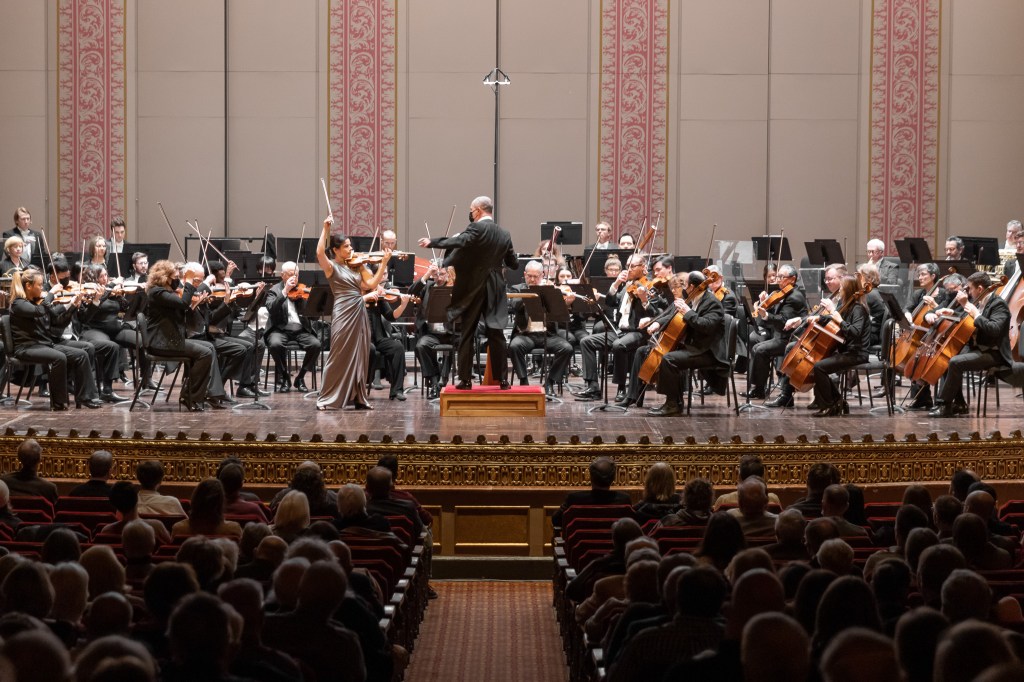
Bella Hristova, Rossen Milanov, and the Columbus Symphony, photo credit Corinne Mares

Prokofiev’s First Violin Concerto brought forth music director Rossen Milanov’s Bulgarian compatriot Bella Hristova – who was graciously on hand for a pre-concert interview with the conductor. Dreamy, meditative material opened, with a beguiling melody from the soloist. The movement gathered momentum, making relentless technical demands without being an overt display of showmanship. A thorny though brief scherzo as the concerto’s centerpiece showed the composer in a more recognizable guise as an enfant terrible. Severe challenges by and large met with aplomb, one nonetheless wanted cleaner intonation when the scoring reached high into the soloist’s register.

The finale served as the most wide-ranging segment of this compact concerto, at its endpoint landing on dreamy material in the spirit of where it all began. As an encore, Hristova offered the Bulgarian folk song “Ratchenitsa”, quipping that it would “break the mood of that gorgeous ending” – which it surely did, but in the best way possible!

Shostakovich’s Sixth Symphony dates from 1939, right on the cusp of World War II. It’s a powerful statement to be sure, but a perplexing work, not in the least because of its unusual structure: three movements, beginning with a vast Largo that occupies more space than the latter two fast movements combined. A searching melody in the low strings opened, not quite grounded. Sparse textures prevailed in this deeply personal, unembellished statement, sustaining a desolate atmosphere. A particularly striking moment came when string trills were pitted against strident brass.

The following Allegro was light-hearted, playful fare by contrast, gaining enormous vigor with its bombastic percussion. A oblique invocation of the Dies irae, however, suggested the darkness of the opening had hardly been overcome. The closing Presto was marked by a rambunctious dance-like theme, as caustic and sardonic as anything Shostakovich wrote.

Columbus Symphony, Chorus, and soloists deliver a riveting Glagolitic Mass

Columbus Symphony Orchestra
Rossen Milanov, conductor
Cameron Carpenter, organ

Abigail Rethwisch, soprano
Mariana Karpatova, mezzo-soprano
Jonathan Burton, tenor
Adam Cioffari, bass

Columbus Symphony Chorus
Ronald J. Jenkins, chorus director

Ohio Theatre
Columbus, OH
November 18, 2022

Nielsen: Overture to Maskarade
Poulenc: Organ Concerto in G minor, FP 93
Janáček: Glagolitic Mass

For the final subscription program of the calendar year, the Columbus Symphony served a fascinating program of three compelling yet infrequently heard works – the latter two which made use of the Ohio Theatre’s opulent Morton organ. The overture to Carl Nielsen’s ebullient opera Maskarade was of insouciant charm, with playing lithe and stylish for an energetic curtain-raiser.

Rossen Milanov, Cameron Carptener, and the Columbus Symphony, photo credit Corinne Mares

Composed 1934-38, Poulenc’s Organ Concerto is a product of the composer’s characteristic neoclassicism, but of a darker, more serious orientation than that employed in his earlier keyboard concertos – namely, the Concert champêtre and the Concerto for Two Pianos, works charming if a bit saccharine. The work is constructed as a single movement, though subdivided into seven discrete sections. It was a special treat to hear the Morton organ, and soloist Cameron Carpenter took masterful command of the instrument. A commanding opening for organ alone invoked the gravitas of Bach, but the lighter section that followed unmistakably bore Poulenc’s neoclassical stamp. A languid Andante moderato, by far the longest section, offered ample contrast.

Carpenter was assertively committed to utilizing the full possibilities of the Morton organ (and spoke in reverence of it during the pre-concert conversation), but one wondered how the piece would have come across differently had a more traditional concert hall organ been available (even in the more serious passages, to my ears the instrument inevitably invoked silent film accompaniment). A dramatic return of the opening material came in the final section before matters were distilled to hymn-like material – suggesting the composer’s reinvigorated interest in Catholicism at the time – and decorated with a delicate passage for solo viola, all a peaceful diversion before the bold closing statement. Carpenter returned with an encore that showed his sterling technique and exploited the instrument’s color and dramatic range.

Janáček’s Glagolitic Mass is a major artistic statement coming from the twilight years of the composer’s life. A setting of the mass in vernacular Czech, it is imposingly scored for large orchestra, organ, chorus, and a quartet of vocal soloists. Cast in eight movements, the first and final are for orchestra alone, the penultimate for organ alone. The opening orchestral introduction was a brassy call to attention, introducing an angular theme in Janáček’s rarefied musical language. In Gospodi pomiluj, the chorus entered as a pious contrast to the bracing orchestra, only to grow in urgency with the addition of soprano Abigail Rethwisch.

Slava was comparatively brighter, with the chorus impressive in negotiating the complexities of both the work itself and of the Czech language. Striking too was the use of organ and the composer’s unique use of the orchestral resources at hand. Jonathan Burton added a lyrical tenor to the extensive Věruju, and an organ interlude anticipated the solo movement to come. Adam Cioffari offered a resonant bass, finely complementing the richness of the chorus. Svet was by turn more pensive, with a touching solo line from concertmaster Joanna Frankel, and all four soloists in concert. That the seventh movement would be scored for organ alone underscored the importance of the instrument to the work; intensely dramatic, it was a further chance for Carpenter to shine, and the orchestra was subsequently given the last word in an ecstatically powerful final statement.

Powerful Brahms and charming Dvořák at the Columbus Symphony

Columbus Symphony Orchestra
Rossen Milanov, conductor
Shai Wosner, piano
Ohio Theatre
Columbus, OH
November 5, 2022

Montgomery: Starburst
Brahms: Piano Concerto No. 2 in B-flat major, Op. 83
 Encore:
 Schubert: Hungarian Melody, D817
Dvořák: Symphony No. 6 in D major, Op. 60

Jessie Montgomery is a contemporary composer that has rightfully garnered much attention in recent years, and the Columbus Symphony opened their program with her 2012 work Starburst – a welcome further foray into her work after their inclusion of Banner last season (a program which in fact paired Montgomery with the same composers here). Starburst quite literally bursted with infectious, sparkling energy. One only wished this was sustained longer than its 5-minute duration, and I hope Montgomery is a composer the CSO continues to visit.

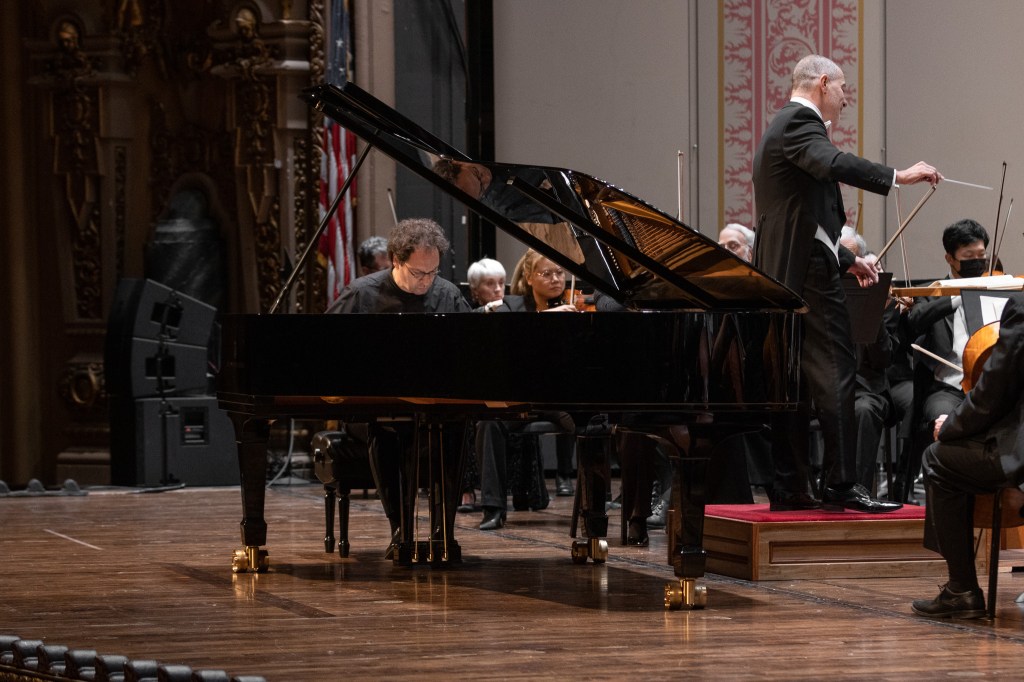
Shai Wosner with Rossen Milanov and the Columbus Symphony, photo creditt Corinne Mares

Brahms’ vast Second Piano Concerto made for a heavier contrast, and featured Israeli pianist Shai Wosner. A mellow horn call from principal Brian Mangrum made for a majestic opening to the weighty first movement. Wosner performed with intense, singular focus, though I felt his playing veered a bit too cautious and restrained. Although his technique wasn’t flawless, it nonetheless served well the daunting demands of the work. Both pianist and conductor Rossen Milanov seemed aligned in their conception of the grand, sweeping arc of the movement.

The scherzo that followed was hardly a trifle, still bearing much of the weight of the preceding, but sprightlier material contrasted. A deeply lyrical cello solo (Luis Biava) opened the Andante, and the piano entered with a gentle, song-like touch. The payoff came in the finale with its folk-inflected abandon, though hardly short on drama. As an encore, Wosner offered a lovely account of Schubert’s Hungarian Melody.

Dvořák’s Sixth Symphony was a milestone for the composer in that it was the first to published, and shows him blossoming into a mature symphonist. The spacious, expansive Allegro non tanto opened with a gentle, bucolic theme over pulsating accompaniment. It was certainly apposite to precede the symphony with Brahms as it bears the elder composer’s influence (particularly from Brahms’ own D major symphony), yet not without Dvořák’s individual hallmarks. 

A touching moment of repose was to be had in the Adagio, its thematic material charmingly introduced in the winds. The composer unmistakably revealed in his Czech origins in the lively furiant that followed, and the orchestra deftly negotiated the ever-changing meters, an energetic warmup of sorts for the jubilant finale.

Columbus Symphony opens season in the exuberance of Carmina Burana

Columbus Symphony Orchestra
Rossen Milanov, conductor 

Ashley Fabian, soprano 
Arthur W. Marks, tenor
Ethan Vincent, baritone 

Columbus Symphony Chorus 
Ronald J. Jenkins, chorus director 
Columbus Children’s Choir 
Jeanne Wohlgamuth, artistic director

Ohio Theatre
Columbus, OH
September 30, 2022

Orff: Carmina Burana

There’s only a handful of works from the twentieth century and later that generate an enduring popular appeal, and Orff’s 1937 cantata Carmina Burana is certainly one of them. A choice opener for the Columbus Symphony’s 2022-23 season, it also marked the first full-fledged return of the Chorus post-pandemic, having been relegated to more minor roles in the handful of repertoire last season that called for chorus. Adding to the sense of occasion on opening night was the presence of the League of American Orchestras CEO Simon Woods and Ohio Lt. Governor Jon Husted, introduced by CSO executive director Denise Rehg.

L-R Ronald J. Jenkins, Jeanne Wohlgamuth, Ethan Vincent, Ashley Fabian, Arthur W. Marks, Rossen Milanov with the Columbus Symphony & Chorus and Columbus Children’s Choir, photo credit Corinne Mares

The chorus is certainly the star of Carmina Burana, evident from the onset with the iconic “O Fortuna” that set the dramatic tone sustained for the remainder of the work. Finely prepared by Ronald J. Jenkins in his final season as chorus director, they negotiated no less than three languages – and dead languages at that: Latin, Middle High German, and Old French. The choral scoring more often than not puts the chorus in unison, and a strophic structure dominates, maximizing a directness of expression – this isn’t a work where one gets lost in a web of contrapuntal intricacies. Still, there were times where one wanted better projection over the large orchestra and greater clarity of diction (the texts and translations were fortunately provided in the program books).

It wasn’t all drama and bombast, however, with “Veris leta facies” bringing to life gentler, vernal delights, and the Round Dance sharply contrasting bacchanalia with the more introspective. The Columbus Children’s Choir under the direction of Jeanne Wohlgamuth offered a further choral layer in this lavish tapestry, almost angelic when in dialogue with soprano Ashley Fabian in “Amor volat undique.” Fabian was fittingly clothed in red, evoking the titular red tunic of “Stetit puella rufa tunica,” and served as a fitting foil to her male counterparts. She boasted an impressive command of labyrinthine melismas in “Dulcissime, totam tibi subdo me!”

Tenor Arthur W. Marks appeared offstage (and feathered) in “Olim lacus colueram”, dramatically one of the most striking moments of the work, singing high into his range in a pained dialogue with the masses of the chorus, although I felt the sense of tortured struggle could have been conveyed even more convincingly. I found baritone Ethan Vincent – who last appeared on this stage as Marcello in in La bohème – the most compelling of the trio of soloists. His first appearance in “Omnia Sol temperat” was given with charismatic delivery, and subsequently, he lumbered onstage, pantomiming inebriation in “Estuans interius” – yet ultimately, his delivery bordered on a sumptuousness more fit for Puccini. His command of the wide range demanded in “Dies, nox et omnia”, however, was where he was truly a standout.

Though the chorus rightly deserves the spotlight, the extensive orchestral forces were certainly an entity to be reckoned with. The dance movement for orchestra alone that opens “Uf dem anger” was given a vigorous workout, capped off with a silvery flute solo. “Were diu werlt alle min” was bursting with brassy splendor. The piano (Caroline Hong) features quite prominently in the score, perhaps most strikingly in “Veni, veni, venias.” The occasional uncoordinated entrance notwithstanding, music director Rossen Milanov commanded the disparate forces as a unified whole for a satisfying first entry of the season. As noted in both the program notes and Christopher Purdy’s preconcert lecture, Carmina Burana is in fact the first in a trilogy of related works. Despite the popularity of the first, the latter two remain largely uncharted territory – a potentially fascinating exploration for the CSO to undertake in future seasons.

Conductor Carolyn Kuan makes notable Columbus Symphony debut

Columbus Symphony Orchestra
Carolyn Kuan, conductor
Vijay Venkatesh, piano
Ohio Theatre
Columbus, OH
March 26, 2022

James Lee III: Towards a Greater Light
Saint-Saëns: Piano Concerto No. 2 in G minor, Op. 22
 Encore:
 Schubert-Liszt: Ständchen, S560/7
Schubert: Symphony No. 9 in C major, D944

Currently music director of the Hartford Symphony Orchestra, conductor Carolyn Kuan made a welcome debut with the Columbus Symphony in the final performance for March. The program opened with the brief 2017 work Towards a Greater Light by American composer James Lee III, meant to mark the 500th anniversary of the Protestant Reformation. Scored for strings alone, matters were often in a meditative stasis, saying much in its five-minute duration.

Carolyn Kuan, Vinjay Venkatesh, and the Columbus Symphony, photo credit Columbus Symphony

The young soloist Vijay Venkatesh was brought forth for Saint-Saëns’ Piano Concerto No. 2. The commanding, improvisatory-like opening for the soloist alone pointed towards the passionate primary theme. Venkatesh displayed a formidable technique, from delicate filigree to fiery double octaves. The central Allegro scherzando was gossamer – and rather Mendelssohnian – in texture. Though an impressive finish, it felt clarity was sacrificed for speed in the breakneck finale. Venkatesh returned for an encore in the Schubert-Liszt Ständchen transcription, showing a haunting, lyrical side of the pianist not revealed in the ebullient concerto.

An apt choice of encore given that the rest of the evening was devoted to Schubert in the towering Ninth Symphony. Kuan allowed for the solo horn call which opened to be played freely, though it perhaps could have benefitted from her conducting to initiate things with more focused direction. Matters gradually amassed, leading the grandiose movement proper. The trombones were especially striking, forming the spine of the work, and the busy orchestra harmoniously blended together. A limber oboe passage in the Andante con moto was a quintessentially Schubertian melody, and gorgeous strings were a turn inwards in a work that otherwise shows the composer at his most exuberant. The third movement’s vigor spoke to an affinity with dance, though never without a certain Viennese charm and grace, and the high-spirited energy was sustained through the vivacious finale. A strong showing from Kuan – let’s hope she’s invited back to the CSO podium soon.

Milanov and Columbus Symphony make compelling case for Liszt’s Dante Symphony

Columbus Symphony Orchestra
Rossen Milanov, conductor
Brian Mangrum, horn

Women of the Columbus Symphony Chorus
Ronald J. Jenkins, chorus director

Ohio Theatre
Columbus, OH
March 18, 2022

Britten: Four Sea Interludes from Peter Grimes, Op. 33a
Strauss: Horn Concerto No. 1 in E flat major, Op. 11
Liszt: Dante Symphony, S109

Though Franz Liszt is rightly remembered as chiefly a composer for the piano, he produced a vast body of orchestral works – including virtually inventing the tone poem – that should not be overlooked. In some particularly ambitious programming, the Columbus Symphony offered the first local performances of the Dante Symphony, an orchestral portrait of The Divine Comedy. An informative pre-concert conversation between music director Rossen Milanov and Jonathan Combs-Schilling from Ohio State’s Italian department gave thoughtful insight into both the music and its literary inspiration. A visual element was added with Gustave Doré‘s iconic illustrations to accompany the text – produced in 1857, the same year as the symphony – projected along with the music. Though an intriguing idea, the stage lights largely diluted the projections, rendering them more a distraction than an enhancement.

Gustave Doré’s illustration to Dante’s Inferno. Plate VIII: Canto III: The gate of Hell. “Abandon all hope ye who enter here”, photo credit Wikimedia Commons

The first movement Inferno began with an imposing descent to the hell in the low brass – trombones in particular have long been associated with depictions of the underworld, dating back to Monteverdi’s Orfeo. A wound-up tension was purveyed in music that was unrelenting, often overwhelming in ferocity, but Milanov had a thorough grasp of the large-scale form, serving as an incisive guide. Secondary material depicted the doomed love affair of Francesca and Paolo, a languid contrast. A skeletal recitative-like passage in the bass clarinet was quite striking, and Liszt made use of richly chromatic, Wagernian harmonies, sounding at times like a page out of Tristan. Milanov rightly reined in the bombast during the coda, but still yielded a close that was powerfully unforgiving.

The second movement Purgatorio provided some much needed peace after the preceding, with some especially touching scoring for the harp and oboe. This was fittingly music of stasis, held in contemplative limbo, although a triumphant passage and a thorny fugue gave matters both variety and perhaps a glimmer of hope. Liszt had originally envisioned concluding the work with a Paradiso movement, mirroring the source material, but conceded that depicting heaven would be all but impossible. Instead, he provided a lovely Magnificat as something of a pendant to previous movement. It’s a hymn of sorts wherein we manage just a glimpse of the entrance to paradise. It was a magical moment when the women of the Columbus Symphony Chorus appeared practically out of the ether, offering an angelic vision of what lies beyond in the most deeply moving music of the work. The performance was a laudable achievement, and I hope Milanov and the CSO will continue to explore Liszt’s lesser-known orchestral pieces.

The program began with Britten’s Four Sea Interludes from Peter Grimes, a quantity which amazingly hasn’t appeared on a CSO program since 1979. High strings opened with an almost mystical evocation of dawn, though the intonation left something to be desired. “Sunday Morning” saw a brassy awakening, replete with tolling church bells. “Moonlight” was tranquil though not without foreboding as matters took a darker turn in the closing “Storm.”

The ensemble afforded the spotlight to one of its own in Strauss’ Horn Concerto No. 1 in bringing Brian Mangrum front and center, the CSO’s principal horn since 2018. Written when the composer was a precocious 18 year old, the regal E flat major tonality set the stage for a decisive solo entrance, and Mangrum offered a warm, rich tone. A lyrical slow movement saw the horn in dialogue with a rising gesture in the strings, a moment of repose before the jaunty and limber finale.

Rossen Milanov, Brian Mangrum, and the Columbus Symphony. Photo credit Columbus Symphony