
Justin T. Swain, baritone
Dione Parker Bennett, soprano
Calvin Griffin, bass-baritone
Ed Bak, piano
Lincoln Theatre
Columbus, OH
January 15, 2023
Coleridge-Taylor: Songs of Sun and Shade – Nos. 2 and 4
Coleridge-Taylor: 24 Negro Melodies, Op. 59 – No. 8: The Bamboula
Coleridge-Taylor: Six Sorrow Songs, Op. 57 – Nos. 2 and 5
Coleridge-Taylor: Five Fairy Ballads – Nos. 3 and 4
Graham Du Bois: Excerpts from Tom Tom
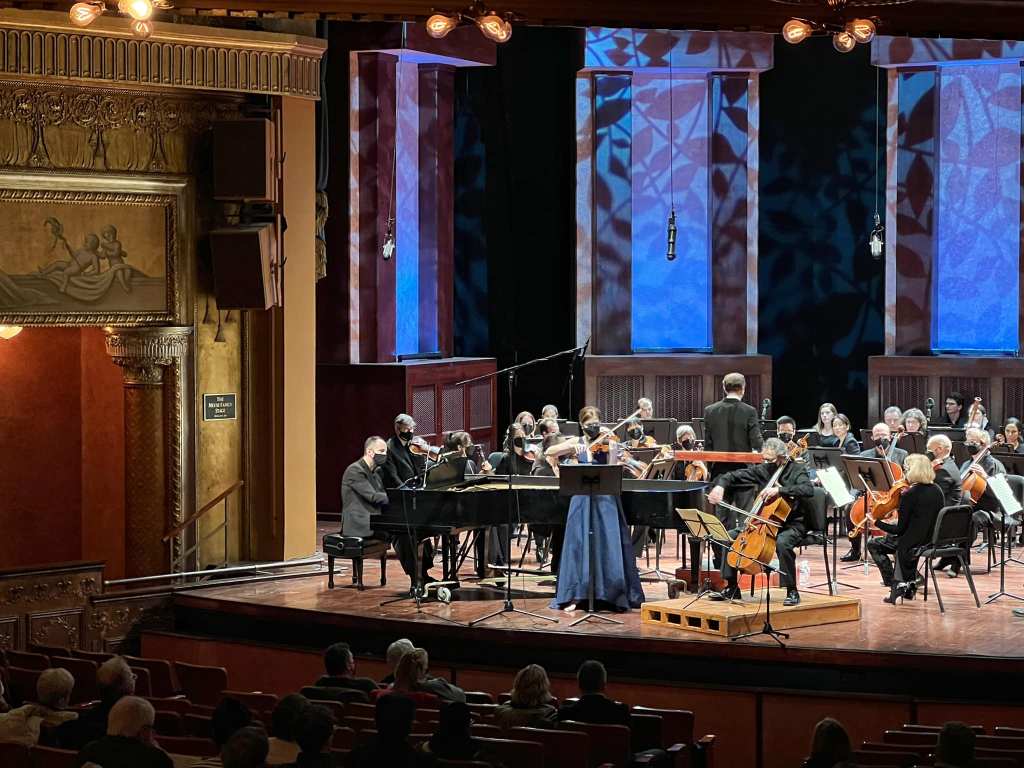
Opera Project Columbus first presented I, Too, Sing America in January 2021 – recorded in an empty hall in the midst of the covid pandemic. An initiative to shed light on the all too often forgotten or overlooked work of Black composers, a second installment was performed over the MLK Day weekend some two years later, this time to an enthusiastic live audience. Surveying art songs of Samuel Coleridge-Taylor and excerpts of a long-lost opera by Shirley Graham DuBois, it was an afternoon ripe with musical discovery, and the program was peppered with informative historical commentary from Toni Shorter-Smith. Like the first installment, this too was filmed, with a broadcast slated for June.

The first half was the devoted to the work of the considerably prolific Coleridge-Taylor, championed by baritone Justin T. Swain. Both vocalist and pianist (Ed Bak) were amplified – while presumably this will ensure fidelity on the recording, I found it to be rather overpowering in the 582-seat Lincoln Theatre. Two excerpts from Songs of Sun and Shade opened, displaying Swain’s sharp diction and powerful stage presence from the onset; the latter showed him more introspective. “The Bamboula” for solo piano followed, given by Bak with flair and virtuosity in its captivating interpolation of a folk melody – a quantity also used in Gottschalk’s work of the same title. A pair of examples from the Six Sorrow Songs were of fitting melancholy, and two of the Five Fairy Ballads closed the first half, noted for their broad expressive range – and the octave leaps of “Big Lady Moon” seemed to predict that gesture so recognizably used a few decades later in “Over the Rainbow.”
The wife of W.E.B. Du Bois, Shirley Graham Du Bois was a major talent in her own right, an accomplished writer, playwright, activist, and, as this afternoon proved, composer. Her 1932 opera Tom Tom: An Epic of Music and the Negro was given a single run of just two performances in Cleveland that collectively drew a crowd of over 25,000 (in a further Ohio connection, Graham Du Bois was educated at Oberlin College). Despite its initial success, the score was inexplicably lost, only to be rediscovered in recent years amongst her husband’s papers after they were acquired by Harvard in 2001 (the manuscript can be viewed online). The latter half of the present program was devoted to excerpts from the opera; if this preview was any indication, its an appealing and thought-provoking work of both cultural and musical significance – should Opera Project Columbus undertake a staged performance of the complete work, it would be a major and welcome achievement.
Calvin Griffin cut an imposing bass-baritone in “Listen to the distant Tom Toms,” and the piano accompaniment made strikingly innovative use of tone clusters, almost bringing to mind the music of Charles Ives. Swain delivered “Nkosi ke leh lah ee Africa” as a dirge-like interlude, while the dance material that followed was given with swagger, countered by the dulcet soprano of Dione Parker Bennett. Griffin brought “No! No! Not that! You are free!” to life as an expressive aria; Parker Bennet offered some particularly touching wistfulness in “No time.” “And now this ship will go to Africa” served as the final selection, putting Griffin in the spotlight again. Its meditative beginnings burgeoned to a thunderous conclusion.
 quasi-faust