Bruce Liu, piano Heinz Hall Pittsburgh, PA June 7, 2025
Tchaikovsky: The Seasons, Op. 37a – January, February, May, June Tchaikovsky (arr. Wild): “Dance of the Four Swans” from Swan Lake, Op. 20 Scriabin: Piano Sonata No. 4 in F-sharp major, Op. 30 Tchaikovsky: The Seasons, Op. 37a – July, August, October Chopin: Fantasie-Impromptu in C-sharp minor, Op. 66 Prokofiev: Piano Sonata No. 7 in B-flat major, Op. 83 – mvts 2 & 3
Encore: Chopin: Nocturne No. 20 in C-sharp minor, Op. posth.
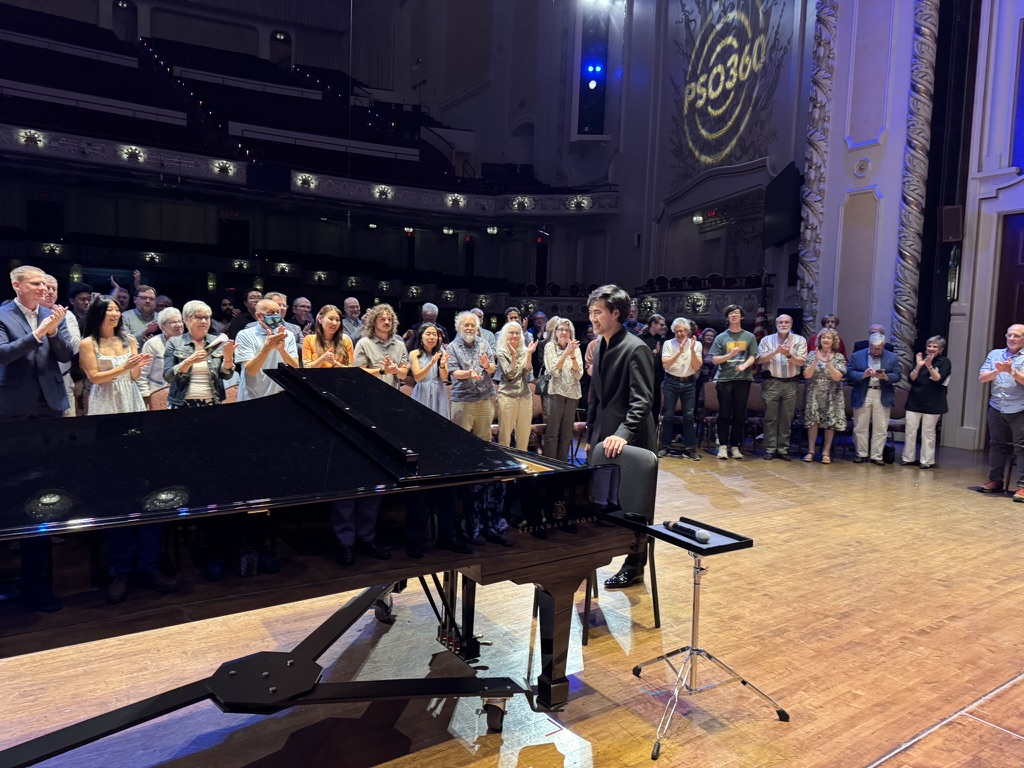
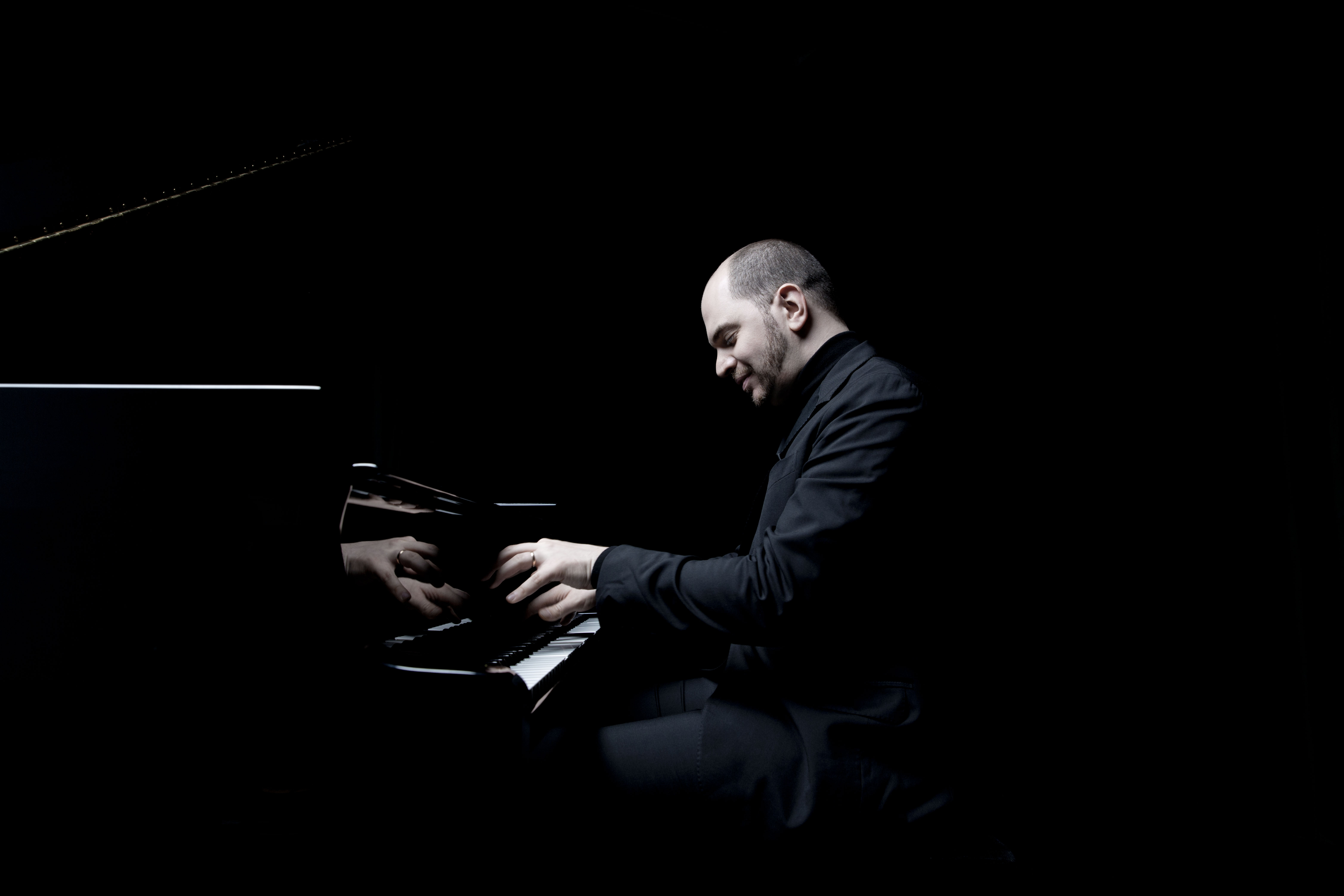
Filling in on short notice for Alice Sara Ott, pianist Bruce Liu was not only tasked with a Pittsburgh Symphony concerto appearance, but also an entry in the distinguished PSO360 series, an intimate chamber music presentation on stage at Heinz Hall. Instead of a collaboration with PSO players, Liu opted for a solo recital — the first to do so since the series’ inception in the 2017-18 season.
Bruce Liu’s PSO360 recital
A recent recording for Deutsche Grammophon featured Liu performing Tchaikovsky’s suite The Seasons, and Saturday’s recital was anchored by selections from that charming collection. The work shows the more intimate side of the composer — quite a contrast to the emotionally-fraught symphonies and concertos — and quite a perfect choice for the salon setting of a PSO360 performance. Liu imbued each with character and attention to detail, closing the first grouping with the beguiling June barcarolle.
A further Tchaikovsky work followed in Earl Wild’s transcription from Swan Lake in which Liu brought out the feathery filigree (as a sidebar: Earl Wild was a Pittsburgh native and attended Carnegie Mellon). The mystical world of Scriabin followed in the Piano Sonata No. 4 in F-sharp major. The opening movement was languid and atmospheric, further enhanced by the blue light which shrouded the stage — corresponding to the composer’s synesthetic association with F-sharp. The brief Prestissimo volando which closed was explosive, almost like a sudden burst of light and energy.
Three more excerpts from The Seasons followed, highlighted by the melancholic Autumn Song (October). One was certainly keen to hear Chopin played by a laureate of the Chopin Competition, and his Fantasie-Impromptu lived up to expectation. Why Liu jettisoned the first movement of Prokofiev’s Seventh Sonata I don’t know — musically it made little sense to present only a torso of the work. Regardless, the thrilling toccata finale made an exciting close to the recital. For a lone encore, Liu returned to Chopin with a pensive account of the C-sharp minor nocturne.
Pittsburgh Symphony Orchestra Manfred Honeck, conductor Bruce Liu, piano Lilit Davtyan, soprano Heinz Hall Pittsburgh, PA June 6, 2025
Vali: The Camel Bell Beethoven: Piano Concerto No. 3 in C minor, Op. 37 Encore: Chopin: Fantasie-Impromptu in C-sharp minor, Op. 66 Mahler: Symphony No. 4 in G major
Both of the Pittsburgh Symphony’s final two subscription programs of the season are scheduled to open with a world premiere, the first of which saw Reza Vali’s The Camel Bell come into being. Born in Iran, Vali is a composer with strong connections to Pittsburgh, having completed his PhD in composition at Pitt and subsequently teaching for many years at Carnegie Mellon. Additionally, this counts as his fourth PSO commission — the first three of which have been recorded on a recent Naxos release.
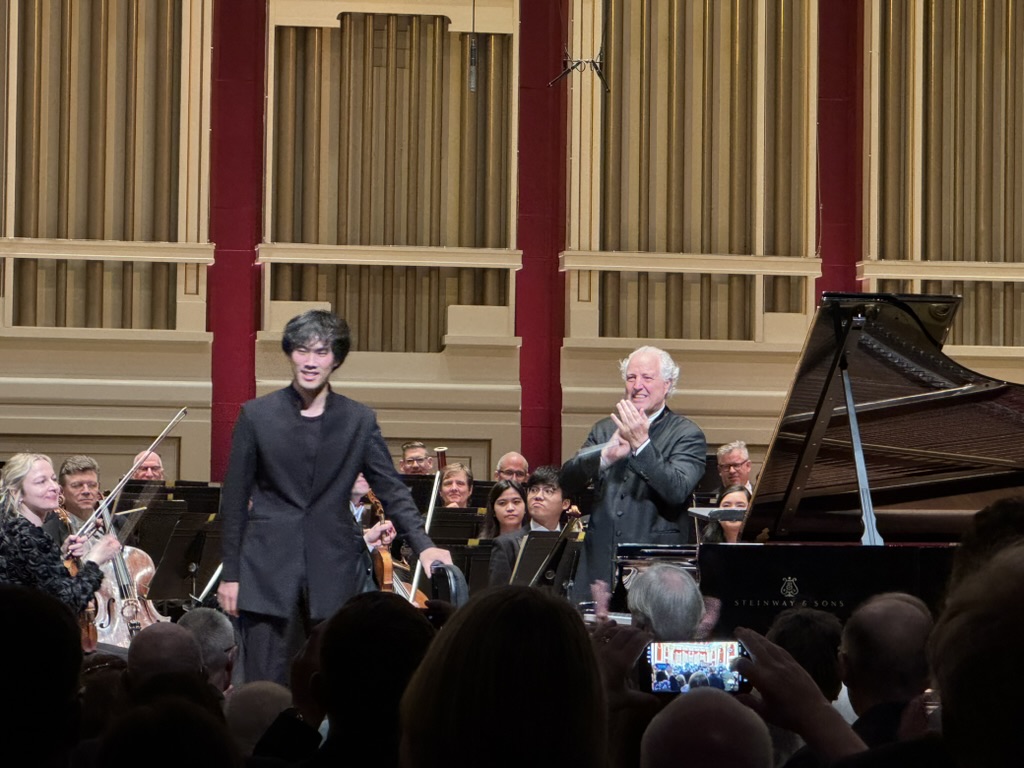
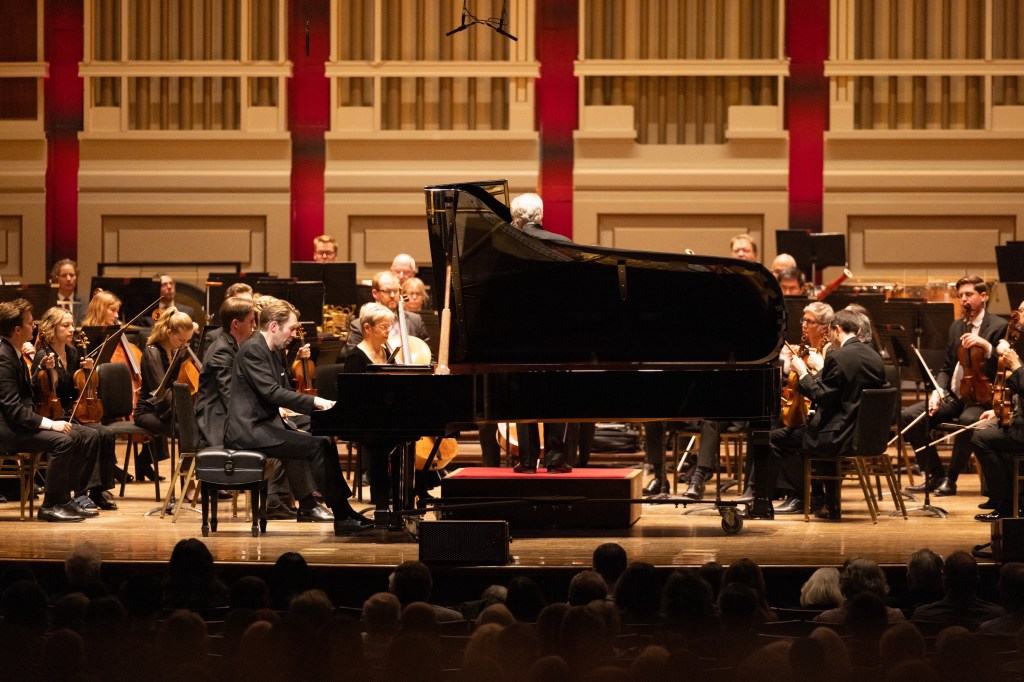
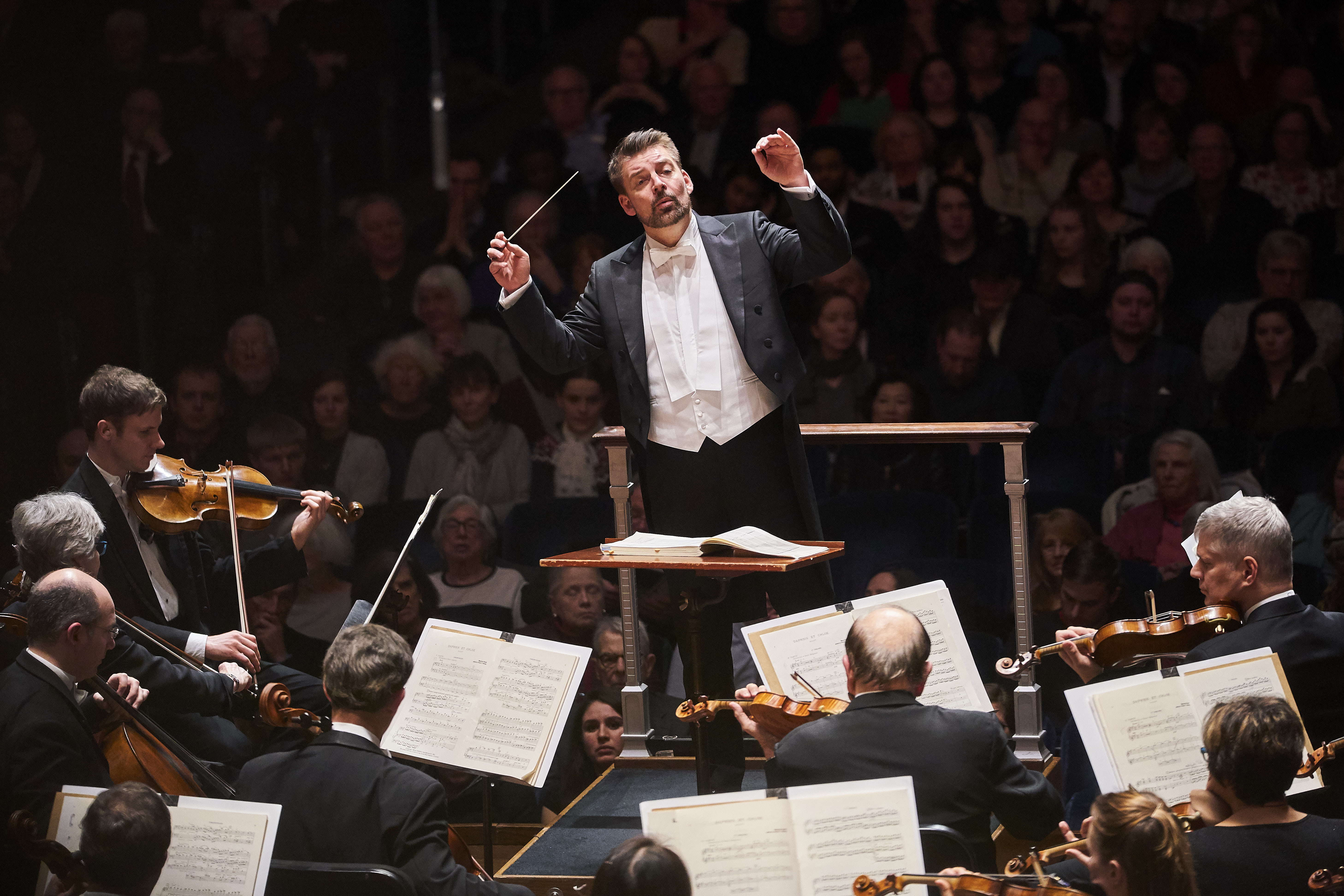
Bruce Liu with Manfred Honeck and the PSO
In his prefatory remarks, Vali likened the work to a “dialogue between great musical civilizations,” specifically noting it weaves together European, American, and Persian influences. A burst of energy began, and work explored the sounds of quarter tones – somewhat jarring to the Western ear, but a striking effect. Inflections even of jazz surfaced in this kaleidoscopic confluence of musical cultures, and I enjoyed the dueling solos between violinists David McCarroll and Jeremy Black. A tour de force closed one of the most impressive new pieces the PSO has introduced this season.
Pianist Alice Sara Ott was regrettably obliged to bow out of this weekend’s appearances due to acute tendinitis — much admiration to Bruce Liu for stepping in on short notice (as well as for the PSO360 recital situated between the two performances of this program). Liu has come to prominence after capturing first prize in the 2021 International Chopin Piano Competition, so a PSO debut from him was a welcome surprise.
Crisply articulated, the orchestral introduction to Beethoven’s Piano Concerto No. 3 introduced the C minor tonality, replete with requisite tension. Liu entered the fold by way of a fiery flourish on the keyboard, while nonetheless purveying a tone elegant and rippling, and the cadenza was given with dramatic flair. The unaccompanied piano opened the central Largo, prayer-like, and probing its great expressive potential. I was struck by Liu’s limber, flexible fingerwork in the stylishly elegant finale, ending in the brightness of C major. As an encore, Liu offered a marvelous account of Chopin’s impassioned Fantasie-Impromptu.
Mahler’s Fourth Symphony is a different animal than the composer’s other symphonies, slimmer and rather classically proportioned, yet still unmistakably Mahlerian. Music director Manfred Honeck drew the orchestral fabric with clarity and transparency, and a classical economy that brought out its details and nuances — and not without an infectious lilt. In the second movement, concertmaster McCarroll played a de-tuned violin, purveying a coarse, rustic quality further enhanced by a shrill clarinet.
In the sprawling Ruhevoll we were given the first glimpse of heaven, plaintive and serene, seemingly at peace — but still not without a certain strife with which to contend. The finale began with an innocent purity, free from world-weary concerns. Soprano Lilit Davtyan perhaps could have benefitted from clearer diction, but I was mostly taken by the angelic quality of her voice, and the way the orchestra deftly matched it.
Leif Ove Andsnes, piano Mandel Concert Hall Severance Music Center Cleveland, OH March 27, 2025
Grieg: Piano Sonata in E minor, Op. 7 Tveitt: Piano Sonata No. 29, Op. 129, Sonata etere Chopin: Preludes, Op. 28
Encore: Debussy: La cathédrale engloutie, from Préludes Book I
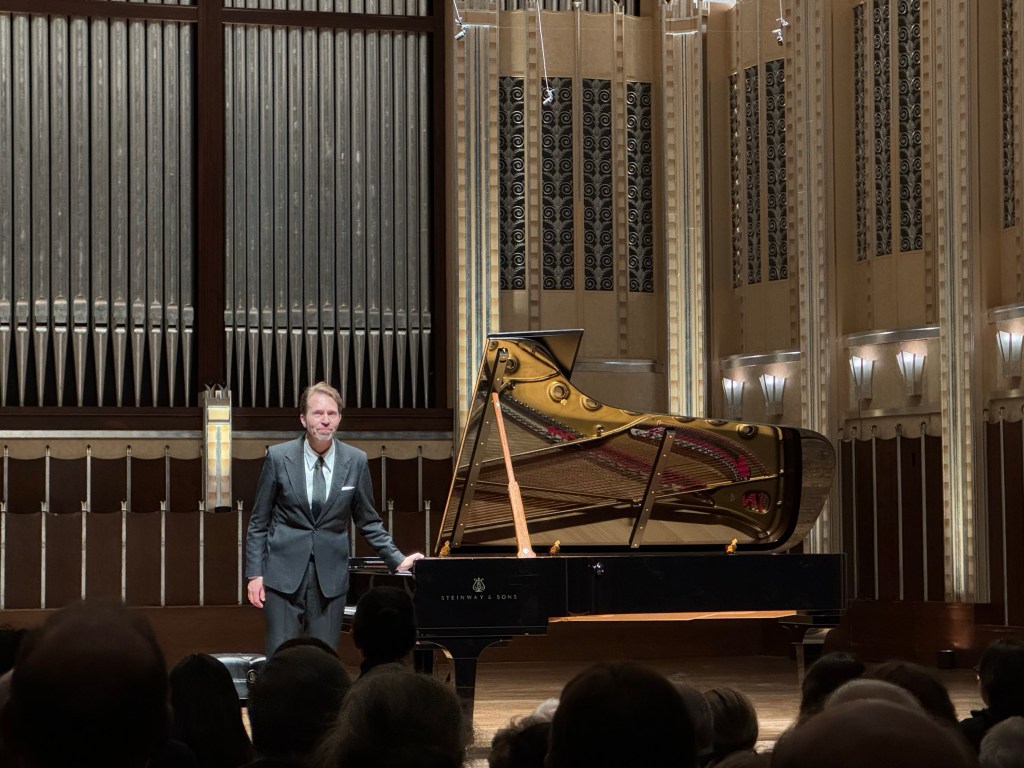
The first half of Leif Ove Andsnes’ Thursday night piano recital in Cleveland plunged into wholly unfamiliar territory in an exploration of the Norwegian piano sonata. The pianist proved to be an incisive guide to the music of his home country, beginning with the Piano Sonata in E minor from the pen of a 22-year-old Edvard Grieg.
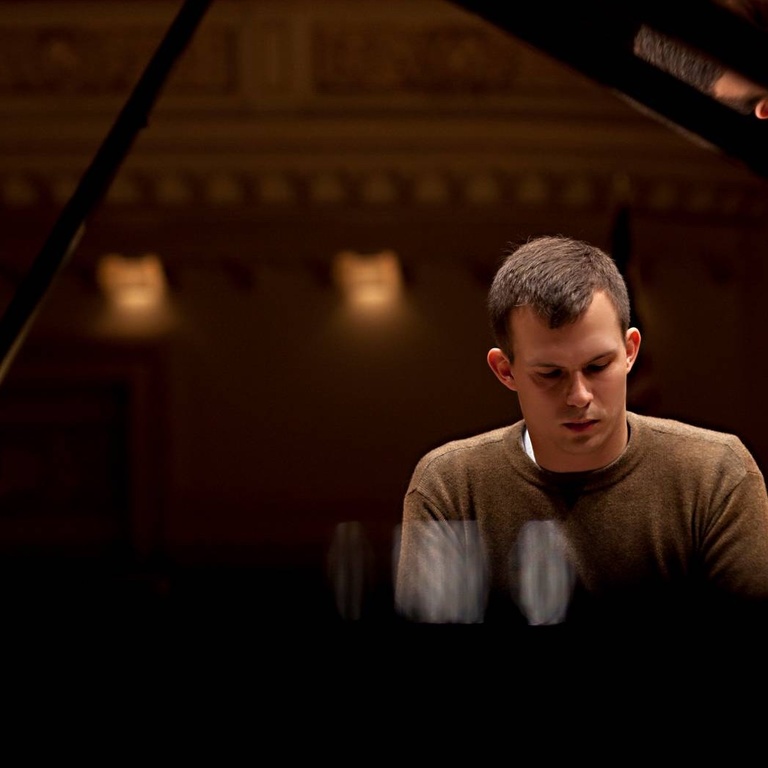
Leif Ove Andsnes at Severance Hall
Brimming with youthful energy, the piece balanced both the lyrical and the dramatic. A slow movement was delicate in its simplicity, though it built in density and traversed some striking harmonic modulations. The sonata very much bore the influence of Schumann above all, but the brief third movement was quite original, showing the composer finding his individual voice. The finale capped off this attractive work with a bravura march.
The real rarity came in the Piano Sonata No. 29 of Geirr Tveitt. Like Grieg, Tveitt studied in Leipzig, but returned to Norway where he developed his unique style. He settled in an isolated area in Norway’s Hardanger region, though tragedy would strike when a fire in 1970 would destroy nearly 300 of his unpublished manuscripts, the majority of his body of work. The Sonata etere (“Ethereal Sonata”) is the only surviving piano sonata — astonishingly, number 29 out of an unknown quantity lost to the flames.
A startlingly original work, there are perhaps nods to Prokofiev or Bartók in its percussive gestures or the French impressionists in its coloristic writing, but one imagines the composer writing in isolation, free from outside influences. A large-scale, 35-minute conception, the first movement (titled In cerca di — “In search of”) was propelled forward with driving energy — and I found Andsnes even more compelling than the composer’s own recording.
The central Tono Etereo in Variazoni consisted of 19 variations, most strikingly featuring a cluster of notes depressed with the pianist’s entire left arm, an ethereal resonance that would recur throughout. Overtop this were spiky jabs in the right hand the drew out the skeleton of a theme on which the variations were based. The variations were largely lyrical, and with subtle yet captivating effects. The closing Tempo di Pulsazione was virtuosic and bracing, though not purely percussive with its lyrical interludes, in due course fading away into the ether.
Chopin’s magnificent set of 24 preludes comprised the second half. Andsnes gave each one of these gems loving attention to detail, bringing out their unique personalities and sharpening contrasts across the set. I was struck by the majestic take on #9 and the ferocious energy given to #12, only outdone by the chillingly dramatic closing prelude. I loved the way he deftly voiced the chords in #20, and the warmly poetic readings he gave to #13 and #17 were deeply rewarding.
Andsnes offered a single encore from another great cycle of preludes in Debussy’s Sunken Cathedral, painting a wondrous soundscape.
While several artists have justly announced boycotts of the US in response to the current political climate, upon his arrival in this country, Andsnes thoughtfully mused on the potential music has to bring people together. A further post saw him marveling at the beauty of the Severance Hall stage. The pianist certainly proved that a captivating performance in a gorgeous venue can offer much-needed solace.
Pittsburgh Symphony Orchestra Manfred Honeck, conductor Emanuel Ax, piano Heinz Hall Pittsburgh, PA February 21, 2025
Ishizaki: Spin Mozart: Piano Concerto No. 25 in C major, K503 Encore: Chopin: Nocturne No. 7 in C-sharp minor, Op. 27 No. 1 Korngold: Symphony in F-sharp major, Op. 40
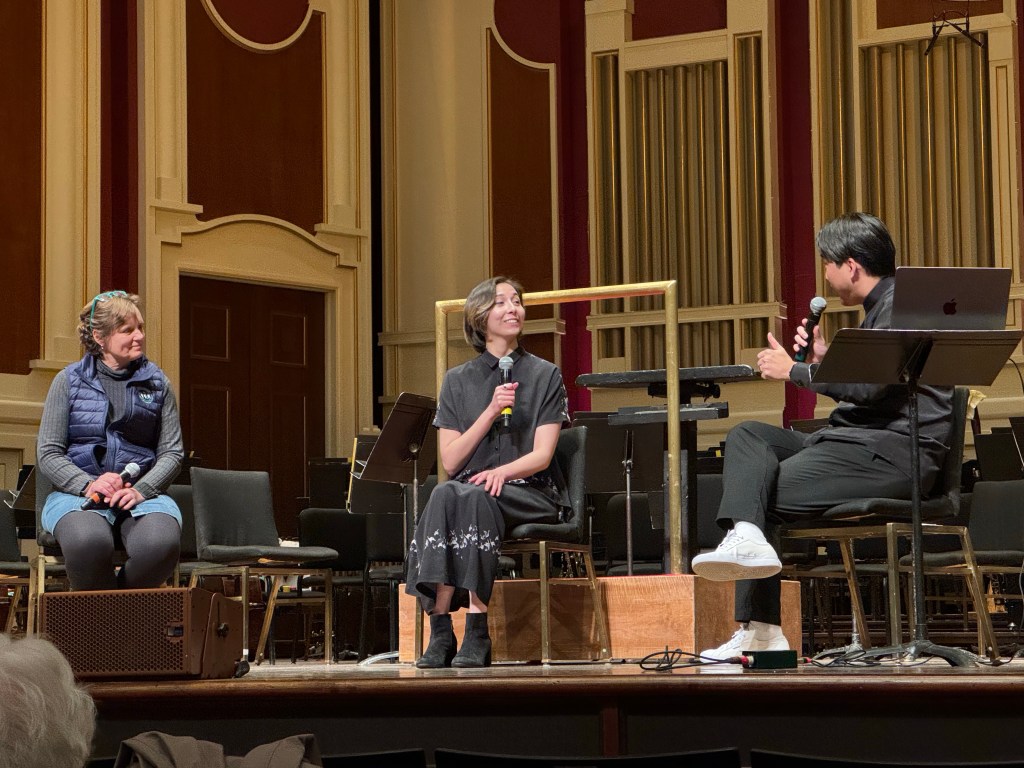
All three works on Manfred Honeck’s generous Pittsburgh Symphony engaged in some fashion with the rich musical heritage of Vienna. The opening turned to a local voice, 24-year-old Pittsburgh area native Hannah Ishizaki, currently a doctoral student in music composition at Princeton (see NEXTpittsburgh for a lovely interview). Receiving its world premiere was Spin, a five-minute curtain-raiser that drew on dance traditions as disparate as Viennese waltz and electronic dance music.
Pre-concert interview with piccolo Rhian Kenny, composer Hannah Ishizaki, and assistant conductor Moon Doh
The work began almost in media res, as if it had always been in motion, dropping the needle in the thick of things. Driving rhythms made for an exciting listen, and Ishizaki made skillful use of the large orchestra she employed. A homecoming for the composer, writing for this orchestra in this hall is not without deep personal significance. A solo passage invoking a kinetic dance club beat was given to the contrabassoon, whom the composer counts as a mentor.
There’s hardly a more choice soloist in a Mozart piano concerto than Emanuel Ax, and the regal no. 25 in C major was a particularly fine vehicle for the pianist’s pearly technique and refined interpretation. A bold opening was fitting for one of the composer’s grandest conceptions in the medium, and the orchestra offered a nuanced reading, with detailed inflections and attention to the inner voices. The pianist’s entry was in the shape of just a single line, hesitant at first, before its full flourishing, displaying the crystalline, rippling playing of this masterful Mozartean.
Easily surmounting the decorative trills, rapid scales, and other technical demands, Ax also offered his own cadenza, an essay artfully expressive and wide-ranging. The central Andante served as a songful blending of piano and orchestra, and the finale brimmed with Viennese elegance, pointed and articulate. More so than the typical Mozart finale, it also probed the lyrical, particularly when Ax was in a lovely dialogue with the winds. A warmly enthusiastic reception — Ax seemed visibly moved — brought him back for an encore in a Chopin nocturne, a quantity which starkly contrasted the languid and the dramatic.
Something of a Mozart of his day, Erich Wolfgang Korngold was a prodigy in Vienna of extraordinary precocity. Fleeing the Nazis, he then found fame and fortune in Hollywood where he became one of the first major composers of film scores (John Williams cites him as a major influence). His sole symphony dates from the mid-1950s and is cast in the unusual key of F-sharp major. It’s not a work one encounters in concert often, but seems to have had a resurgence lately — a performance by the Berlin Philharmonic was quite memorable for this listener, and The Cleveland Orchestra has also programmed it in a recent season.
A jagged primary theme took shape in the clarinet, teetering on the brink of tonality, but firmly residing in the late Romantic tradition. Honeck and the PSO delivered a bracing, razor-sharp reading of this dense score with singular drama. As sumptuous as it gets, it’s almost to the point of excess and — as if one perhaps had a few too many slices of sachertorte. A high-octane scherzo followed, further showing the variegated color spectrum, with particularly piquant splashes from the piano and celesta. Matters were at the very edge of control without ever falling into chaos, and the brass passages had the cinematic effect of a film score.
Korngold looked towards Austrian compatriot Anton Bruckner in the towering slow movement, conceived in this case as a memorial to FDR. Brass and strings resounded through Heinz Hall, swelling to lush textures, though a solo passage for flute was delicately forlorn. The finale returned to the vigor and angular gestures of the opening, and militant brass fanfares threaded George M. Cohan’s Over There into the score. A welcome opportunity to hear a major if infrequently performed work — and certainly a highlight of the PSO season thus far.
In a brief post-concert performance, a quintet of PSO string players offered the first movement of Dvořák’s String Quintet No. 2, Op. 77. The use of double bass gives this work an orchestral heft, and made for a delightful capstone to the Dvořák heard the previous week.
Manfred Honeck, Emanuel Ax, and the Pittsburgh Symphony
Pittsburgh Symphony Orchestra Manfred Honeck, conductor Leif Ove Andsnes, piano
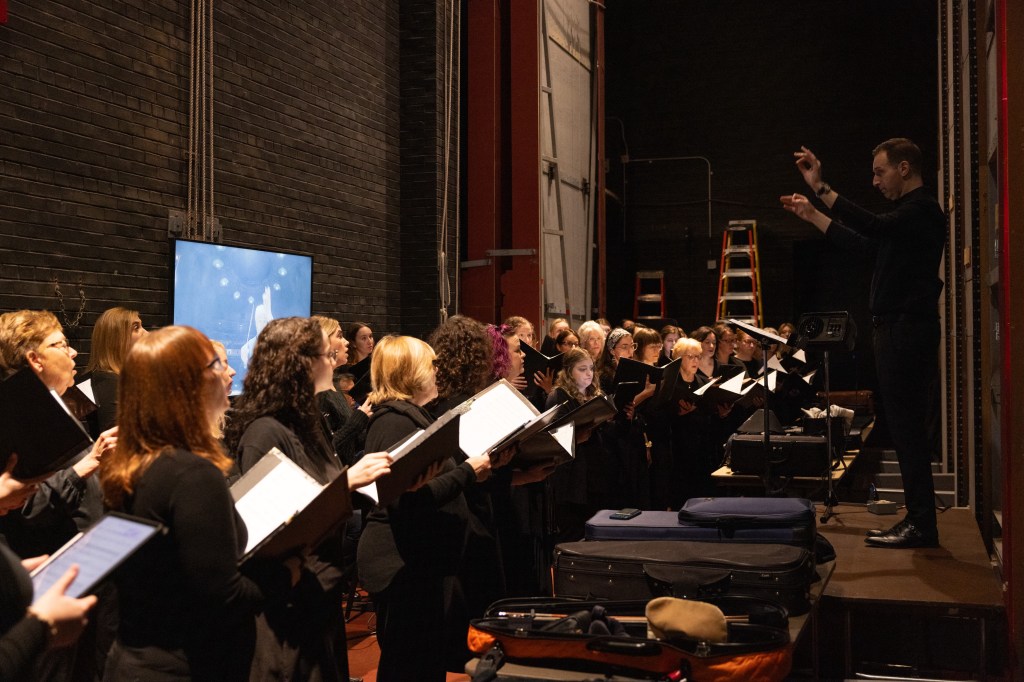
Women of the Mendelssohn Choir of Pittsburgh Daniel Singer, director
Heinz Hall Pittsburgh, PA April 21, 2024
Rachmaninoff: Piano Concerto No. 3 in D minor, Op. 30 Encore: Chopin: Mazurka in D major, Op. 33 No. 2 Liszt: Dante Symphony, S109
Sunday afternoon’s Pittsburgh Symphony performance began on a somber note, with a moment of silence in memoriam of Sir Andrew Davis, who served as the PSO’s artistic advisor from 2005-07. Music director Manfred Honeck offered a few words and dedicated the performance to Davis’ memory. On a personal note, I have fond memories of seeing Davis often during his two decade stint at Lyric Opera of Chicago, and caught him in robust form as recently as last June with the Minnesota Orchestra.
Leif Ove Andsnes with Manfred Honeck and the Pittsburgh Symphony, photos credit George Lange
The first half of the program was devoted to Rachmaninoff’s fiendishly difficult Third Piano Concerto, calling upon Leif Ove Andsnes as soloist. A barren, monastic melody opened, direct and undiluted in its expression before complexities multiplied. Andsnes drew a bold and robust tone, amply projecting through the hall and over the large orchestra. The PSO was a fine partner to the pianist, with some particularly sturdy playing from the brass. Andsnes opted for the larger of the two cadenzas the composer supplied, cresting to a thunderous climax.
The opening of the central intermezzo offered a rare respite for the piano, a strained paragraph for strings and winds to introduce a ravishing melody in the piano, increasingly impassioned. The finale proceeded as an electric march, with a grand, sweeping melody at the heart. One was kept at the edge of their seat through the sparkling coda in this bombshell of a performance. Andsnes returned for an encore in Chopin’s D major mazurka (op. 33 no. 2), bringing out the dance’s stylish rhythms and ineffable charm.
Matters went from warhorse to rarity with the latter half seeing a rare outing of Liszt’s Dante Symphony, an extensive work the composer wrote moved by his reading of the Divine Comedy (and a companion of sorts to the better-known Dante Sonata). This weekend marked the belated Pittsburgh premiere of the work, though I’ve had the unexpected fortune of seeing it elsewhere over the last few years – Chicago (2017) and Columbus (2022). Two large movements represent the Inferno and Purgatorio respectively; not feeling music could adequately represent Paradisio, Liszt instead opted to close with a brief Magnificat that employs a female choir.
Low brass opened in an uncompromising descent to hell, with thundering timpani further conjuring the inferno in no uncertain terms. A bit overblown, perhaps, but Honeck and the PSO were strong advocates of the work and offered a compelling interpretation. A lyrical contrast was provided in material that represented Francesca da Rimini, conveyed by the bass clarinet and harp. With a certain inevitability, the movement was brought to a bleak, crashing close – with all hope duly abandoned.
Purgatorio was far more at peace in music that appropriately suggested a sense of stasis. A fine passage for oboe was a highlight, as well as a moving chorale for low brass – here, no longer a menacing force. The closing Magnificat offered a spiritual glimpse of the divine, with the angelic voices of the women of the Mendelssohn Choir coming from backstage. High strings and harp further conveyed the celestial in this closing hymn, a touchingly beautiful statement that Wagner no doubt looked towards when writing the final moments of Parsifal.
Daniel Singer leads the Women of the Mendelssohn Choir from backstage
Gabriela Montero, piano Reinberger Chamber Hall Severance Music Center Cleveland, OH July 9, 2023
Chopin: Polonaise-fantaisie, Op. 61 Schumann: Carnaval, Op. 9 Stravinsky: Piano Sonata Montero: Improvisations on themes by Beethoven, Gershwin, and Piaf
As part of the Cleveland International Piano Competition and Institute for Young Artists, Venezuelan pianist Gabriela Montero presented a wide-ranging recital at Severance’s Reinberger Chamber Hall. Two pinnacles of the Romantic repertoire occupied the first half – both works which often feature on contestant programs in Piano Cleveland’s adult counterpart of the youth competition, to be held next in 2024. Chopin’s Polonaise-fantaisie was given an introspective, spacious opening, more fantasy than polonaise before the dance meter took shape.
Gabriela Montero at Reinberger Chamber Hall
Montero purveyed remarkably clear voicing through Chopin’s densely-textured writing, crisply punctuating the polonaise rhythms. A chorale section was of lyrical contrast, its delicate cantilena suggesting an Italianate bel canto, in due course giving way to an energetic coda. Schumann’s Carnaval provided a wonderfully picturesque series of vignettes from the titular festival, arrestingly brought to life by Montero. An opening preamble was colorful and exuberant, almost orchestral in force.
Each subsequent scene was shaped with distinct character: the coquettishness of “Arlequin”, the darkly passionate “Chiarina” – emphasizing the dotted rhythms, Montero sculpted a fervent climax. “Chopin” was rapturously lyrical, a fitting tribute to the Pole – and in the present recital, a callback to the previous selection – while “Paganini” was a sprightly affair with Montero traversing the keyboard in leaps and bounds. The buoyant march which closed the work did much to heighten its drama.
I first encountered Stravinsky’s brief piano sonata on a warmly recommended album from Earl Wild. Despite being a pianist himself, Stravinsky’s output for the instrument tends to get overlooked, and the sonata made for an intriguing opening to the latter half. Crisp and detached, it epitomized the composer’s neoclassical period, though a melody of surprising sweetness took shape. The central movement served as an interlude replete with piquant dissonances and intricate ornamentations. The finale recalled the measure of the opening, though its imitative textures suggested a two-part invention.
The balance of the evening was devoted to Montero’s signature improvisations, wherein she requests a theme from the audience and proceeds to develop a five-minute or so improvisation based on that theme. It’s a rare thing to experience in a classical piano recital, and a remarkable gift to witness. In her spoken remarks, Montero noted that improvisation is “the way I communicate through sound”; indeed, what followed flowed just as natural conversation, improvising on Beethoven’s Für Elise, Gershwin’s Rhapsody in Blue, Piaf’s La Vie en rose, and Beethoven again in the opening theme of the Fifth Symphony.
Ivo Pogorelić, piano Gallagher Student Center Theater Xavier University Cincinnati, OH April 22, 2022
Chopin: Fantaisie in F minor, Op. 49 Chopin: Piano Sonata No. 3 in B minor, Op. 58 Chopin: Polonaise-fantaisie in A-flat major, Op. 61 Chopin: Berceuse in D-flat major, Op. 57 Chopin: Barcarolle in F-sharp major, Op. 60
Encores: Chopin: Prelude in C-sharp minor, Op. 45 Chopin: Nocturne No. 18 in E major, Op. 62 No. 2
Ivo Pogorelić is perhaps the archetypal maverick amongst pianists, coming to international attention not by winning a competition, but by being cut in the 1980 edition of the Chopin Competition – which famously caused Martha Argerich to resign from the jury in protest. What followed was a legendary rise to prominence in the 1980s and 1990s, a subsequent hiatus from the public eye, a return which led to the infamous New York Times review calling him “an immense talent gone tragically astray,” and individualized, idiosyncratic interpretations of standard repertoire that continue to this day to polarize audiences.
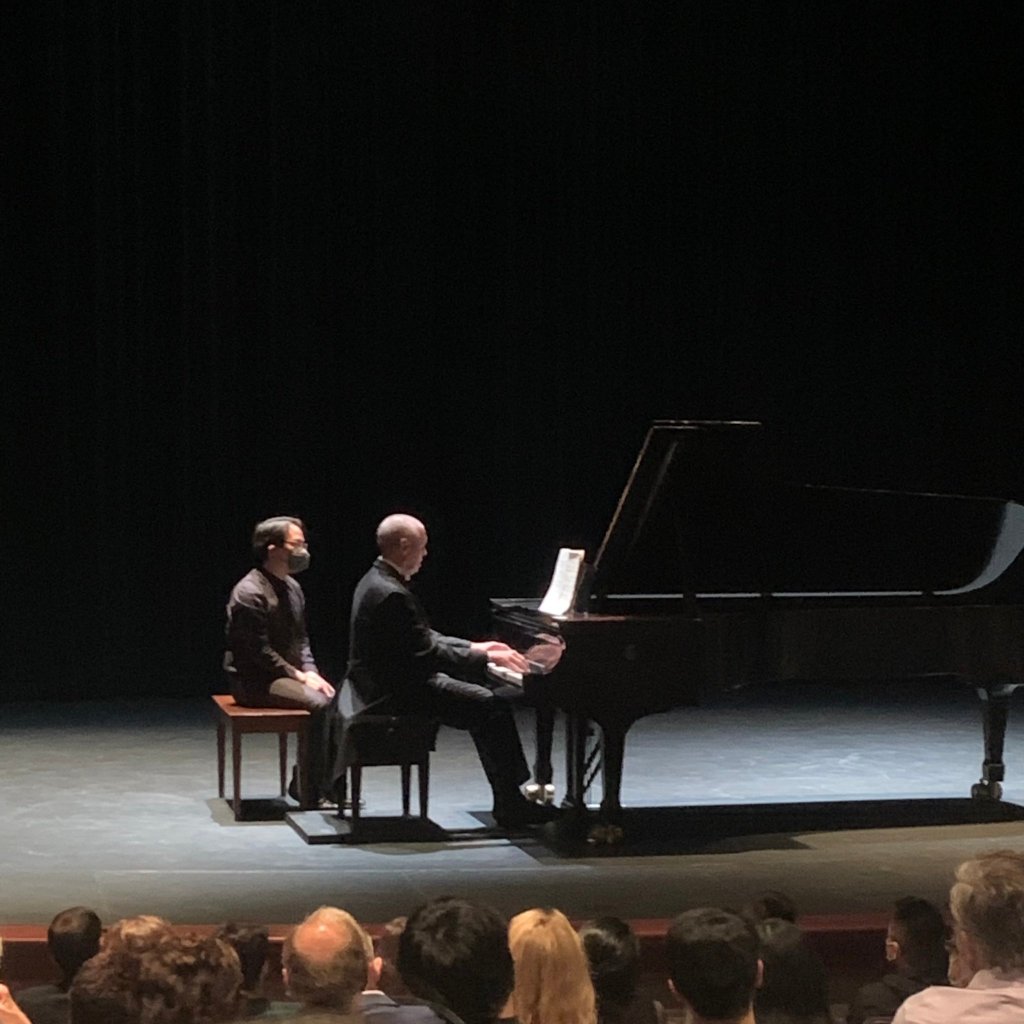
Ivo Pogorelić at Xavier University, photo credit Xavier Music Series
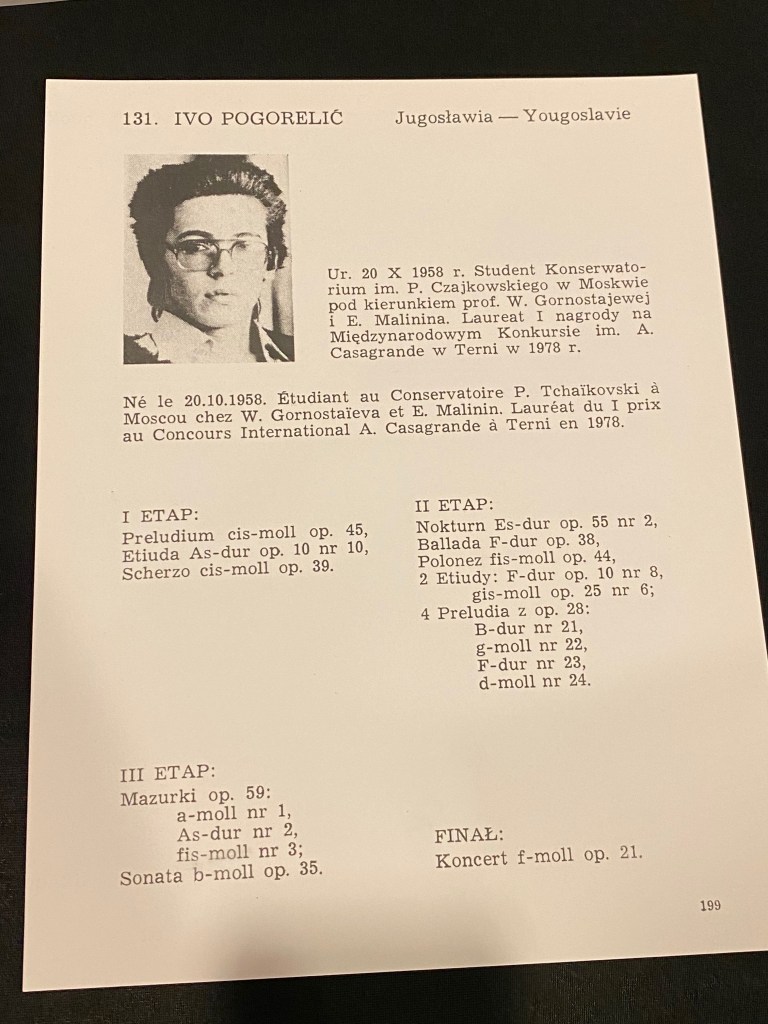
In 2019, Pogorelić returned to the recording studio after more than two decades away, producing an album of sonatas by Beethoven and Rachmaninov, and a survey of Chopin’s late piano music appeared at the beginning of this year. Friday night’s program at Xavier’s Classical Piano Series overlapped with much of the contents of the Chopin album, focusing on the Polish composer’s late masterpieces – and this marks the pianist’s only US appearance on his current recital tour. A fascinating display of memorabilia pertaining to Pogorelić and the Chopin Competition was on display in the lobby. Though generally customary for pianists to memorize recital programs, Pogorelić played from score – with no less than Zsolt Bognár as page-turner.
In the Fantaisie in F minor which opened, the pianist played the gestures in the bass dry and detached, proceeding at a glacial tempo choice and dynamics barely above a whisper. In due course, however, the fantasy took flight, rhapsodically building to great drama – though the oceanic fortes came across rather too percussive for Chopin. The Third Piano Sonata filled out the first half, with an almost funereal tempo choice in the Allegro maestoso, anchored by muscular playing – but again, really to the point of overkill. Textures were murky, and the fleet scherzo that followed also would have benefitted from greater clarity in its articulation. The Largo is perhaps the heart of the work, and here Pogorelić was far more convincing in this languid nocturne, holding the audience spellbound in stasis before the return of the main theme. In the finale, matters were in equal measure impassioned and bombastic.
Following intermission, the Polonaise-fantaisie was initiated with a commanding opening, and rhapsodic flourishes that recalled the previously heard Fantaisie. Pogorelić punctuated the polonaise rhythms, and maintained intense concentration and composure in spite of the many latecomers filing in. Two comparatively more subdued selections rounded out the printed program to counter the dramatic and tragic works – to my ears, where Pogorelić was at his best. A delicate cantilena highlighted the Berceuse, and the chromatically-tinted lyricism of the Barcarolle made for a poignant close. Pogorelić offered a pair of encores before even taking a curtain call – the resonant Prelude, Op. 45, and finally, ending on a gentle note with a late nocturne.
On a personal note, I have a memory of attempting to attend a Pogorelić recital at the Vienna Konzerthaus back in October 2008. A completely sold-out affair, I was amongst a sizable group queuing at the box office in hopes of scoring a returned ticket, only for all of us to be disappointedly turned away. How glad I am to have now had the chance to see Pogorelić in concert some fourteen years later.
Pogorelić’s program at the 1980 Chopin Competition, on display in the lobby
Gartner Auditorium Cleveland Museum of Art Cleveland, OH July 29 – August 1, 2021
Inevitably postponed last summer due to the pandemic, the Cleveland International Piano Competition has made a remarkable comeback here in 2021, a wonderfully exciting return to in-person performances. An initial pool of over 250 applicants from more than 40 countries was pared down to 26 contestants, all of whom performed in the Competition’s first two rounds. Owing to the travel and health restrictions that still persist, these rounds were conducted virtually, filmed at venues across the world – and available for free viewing on YouTube. Eight outstanding semi-finalists were selected to proceed onsite in Cleveland, a cohort to be further narrowed down to four finalists who will perform a chamber music round with the Escher Quartet and a concerto round with The Cleveland Orchestra under the baton of Jahja Ling.
Gartner Auditorium before Session 1 of the Semi-Final Round
Compared to the relative brevity of the first two rounds, the semi-finals offer an even more in-depth portrait of each artist, performing a recital of approximately 40 minutes. A few new and welcome additions for this year’s edition: each semi-finalist included in their program a popular song transcription commissioned from composer Alexey Kurbatov. Four selections were available, namely “America” from Bernstein’s West Side Story, Queen’s “Bohemian Rhapsody”, themes from Mission Impossible, and John Williams’ Olympic Fanfare. Regrettably, none of the eight selected the Williams piece, but perhaps a recording can be posted in due course. I also hope publication of these scores is imminent as they undoubtedly can serve as particularly enjoyable encore pieces.
Also for the first time was the inclusion of piano duets – the two performers from each session teamed up following their solo material for either the Fantasie in F minor by Schubert or Mozart’s Sonata for Two Pianos in D major. A lovely addendum that not only tested the contestants’ ability to collaborate with another pianist, but encouraged a spirit of camaraderie. Finally, excellent program notes for every piece performed – from the first round to the finals – were provided by Marissa Glynias Moore, Anna M. O’Connell, and Marco Ladd. Indispensable reading for attendees and a veritable crash course in piano literature. Below are some brief impressions I had of each semi-finalist.
Session 1 July 29, 2021
Ying Li Mozart: Piano Sonata No. 13 in B-flat Major, K. 333 Grainger: “Ramble on Love” from Der Rosenkavalier Bartók: Piano Sonata, Sz. 80 Schifrin: Themes from Mission Impossible (arr. Kurbatov)
Honggi Kim Schifrin: Themes from Mission Impossible (arr. Kurbatov) Chopin: Twelve Etudes, Op. 25
Schubert: Fantasie in F Minor, D. 940
Ying Li (China) opened the semi-final round with a Mozart sonata, delicate and balanced, exuding the pearly classical style. I found her pacing of the slow movement a bit hard to follow but was quite taken by the sprightly finale. Grainger’s so-called Ramble on Love, paraphrasing themes from Strauss’ Rosenkavalier, gave sumptuous treatment to the source material’s lush and languid melody. Bartók’s Piano Sonata was for me the highlight of her performance, opening with a manic energy – and the live video screens did much to enhance the audience experience, offering close-ups of the intricate hand-crossings.
Honggi Kim (South Korea) opened with the same piece with which Li closed, namely the Kurbatov Mission Impossible transcription. Kim was perhaps a bit more percussive than Li; both displayed how the composer brilliantly interpolated the familiar themes. All contestants are required to present a Chopin etude in the first two rounds – here in the semi-finals, Kim offered all twelve etudes from Op. 25. An ambitious undertaking to be sure, though I found his playing fitfully uneven. No. 2, for instance, would have benefitted from greater clarity, although I did like the way he brought out melodic material in the left hand. In No. 5, one wanted more accentuated contrast between the dissonant sections and the lyrical. The rapid double thirds of No. 6 were quite impressive, however. Op. 25 is certainly an end-weighted set, and perhaps one’s performance should be judged primarily on the final three which concluded on a high note: the rapid octaves of No. 10, a chillingly dramatic “Winter Wind”, and a rather marvelous finish in the intense depths of the “Ocean” etude.
Li and Kim were impressive four-hands partners in the Schubert Fantasie, bringing out contrasts from the brooding to the dancing.
Session 2 July 30, 2021
Jiarui Cheng Scarlatti: Sonata in B Minor, K. 87 Chopin: Barcarolle in F-sharp Major, Op. 60 Rachmaninov: Variations on a Theme of Corelli, Op. 42 Bernstein: “America” from West Side Story (arr. Kurbatov)
Yedam Kim Chopin: Polonaise-Fantaisie in A-flat Major, Op. 61 Prokofiev: Sonata No. 4 in C Minor, Op. 29 Mercury: Bohemian Rhapsody (arr. Kurbatov)
Mozart: Sonata for Two Pianos in D Major, K. 448
Jiarui Cheng (China) selected one of the more introspective of the Scarlatti sonatas, emphasizing its lyrical quality. Continuing the thread, he did much to bring out the wistful melancholy in Chopin’s late gem, the Barcarolle. In Rachmaninov’s Corelli Variations, Cheng sculpted an individual character in each variation – an excellent performance. Kurbatov’s transcription of Bernstein’s “America” ended matters on a jovial note.
Yedam Kim (South Korea) opened with a mesmerizing account of Chopin’s Polonaise-Fantaisie – contemporaneous with the previously-heard Barcarolle – the composer’s crowning achievement in the polonaise form. A commanding performance of Prokofiev’s Fourth Sonata followed, with searching, unsettling material leading to a bright and brilliant finale. In the Queen original, “Bohemian Rhapsody” is something of a mini tone poem with its wealth of thematic material and operatic narrative and dramatic flow – qualities very much brought out in Kim’s performance, perhaps the most impressive of the Kurbatov transcriptions.
Session 3 July 31, 2021
Rafael Skorka Bernstein: “America” from West Side Story (arr. Kurbatov) Leighton: Fantasia Contrappuntistica, Op. 24 (“Homage to Bach”) (1956) Brahms: Sieben Fantasien, Op. 116
Martín García García Schubert: Wanderer-Fantasie in C Major, D. 760 Liszt: “Les cloches de Genève (Nocturne)” from Années de Pèlerinage I, S. 160 Liszt: Étude de Concert, S. 145, No. 2 (“Gnomenreigen”) Liszt: Transcendental Etude, S. 139, No. 10 Mercury: Bohemian Rhapsody (arr. Kurbatov)
Schubert: Fantasie in F Minor, D. 940
Rafael Skorka (Israel) had confident beginnings with a memorable account of Bernstein’s “America”. The most intriguing discovery during the semi-final round came in the shape of Kenneth Leighton’s Fantasia Contrappuntistica, a 1956 homage to Bach (and to Busoni, given the elder composer’s monumental work of the same title). A virtuosic opening gave way to a pensive chorale and a pair of fugues rounded off the work. Skorka deftly negotiated the contrapuntal intricacies to bring matters to a vigorous close. The pianist continued to make a strong showing in Brahms’ Fantasies, Op. 116, just as convincing in the lyrical selections (nos. 2, 4, and the touching chorale of no. 6) as the more extrovert ones, giving the first piece an energetic workout and reserving the most overt virtuosity for the seventh and final fantasy.
Martín García García (Spain) offered an arresting account of Schubert’s ingenious Wanderer-Fantasie. While his tone at times veered a bit too percussive for my taste, he did much to bring out a wide dynamic and dramatic contrast and a keen sense of the work’s large-scale architecture. An interesting selection of three Liszt pieces followed. Deft use of the pedal did much to bring out the sonorities of the titular bells in Les cloches de Genève while García conveyed much charm in the impish legerdemain of Gnomenreigen. The Transcendental Etude No. 10 was technically impressive, although I found myself longing for even more firepower.
Session 4 August 1, 2021
Byeol Kim C. Schumann: Notturno in F Major, Op. 6, No. 2 Schumann: Arabeske in C Major, Op. 18 Mendelssohn: Fantasie in F-sharp Minor, Op. 28 Mercury: Bohemian Rhapsody (arr. Kurbatov) Jalbert: Toccata (2001) Gottschalk: The Union, Op. 48
Lovre Marušić Scarlatti: Sonata in E Major, K. 380 Schumann: Kreisleriana, Op. 16 Mercury: Bohemian Rhapsody (arr. Kurbatov)
Mozart: Sonata for Two Pianos in D Major, K. 448
Byeol Kim (South Korea) assembled the most diverse and wide-ranging semi-final program, beginning with music from both the Schumanns. Clara’s Notturno boasted a haunting, Chopinesque melody, a performance which should put Kim in the running for the Female Composer Prize, one of over a dozen special prizes being offered. A limpid account of Robert’s Arabeske followed, and Mendelssohn’s Fantasie in F sharp minor was given a passionate and dramatic performance. I really enjoyed the way Kim brought out the sweeping lyrical main theme in her take on the “Bohemian Rhapsody” transcription. Jalbert’s Toccata was a breathless study in perpetual motion, and Gottschalk’s Union, a wonderfully inventive cornucopia of Americana, put Kim’s searing virtuosity and vast dynamic range on full display. A clear audience favorite, she was the only one of the eight to receive a standing ovation.
Lovre Marušić (Croatia) began with a stately account of Scarlatti’s K380 sonata. Schumann’s extensive Kreisleriana followed. I felt Marušić’s reading would have been even more engaging with sharper contrasts between the wide range of expressions the work explores, but I certainly sensed the pianist becoming increasingly self-assured as the work progressed. Sunday’s session was a high note on which to conclude the semi-finals as we await the jury’s announcement of the four finalists, and the fine level of pianism we can expect from them in the subsequent chamber and concerto rounds.
Cleveland Orchestra
Matthias Pintscher, conductor
Kirill Gerstein, piano
Severance Hall
Cleveland, OH
November 1, 2018
Rachmaninov: Piano Concerto No. 3 in D minor, Op. 30
Encore:
Chopin: Waltz in A flat major, Op. 42
Bartók: The Wooden Prince, Op. 13, Sz. 60
A return appearance from former Daniel R. Lewis Young Composer Fellow Matthias Pintscher is always a welcome sight at Severance Hall. Pintscher’s program was comprised of two large-scale works, both from Eastern Europe, and both from the first decades of the 20th-century. Rachmaninov’s enduring Third Piano Concerto made for a meaty first half with Gilmore Artist Award winner Kirill Gerstein at the keyboard. The opening melody was haunting in its monastic simplicity, and never sentimentalized. Gerstein took matters at a fairly brisk tempo – at times feeling a bit rushed, but he always maintained a certain elegance. His commanding tone and massive dynamic range made the lasting impact, however – an unflagging intensity which paid its dividends especially in the cadenza. Gerstein elected for the larger of the two the composer supplied; beginning with a rumbling in the bass it built to immense power. The cadenza quite ingeniously also served as the movement’s recapitulation; without much left to say after that monstrosity the movement ended quietly, almost impressionistically.
Mathias Pintscher and The Cleveland Orchestra, photo credit Roger Mastroianni, Courtesy of The Cleveland Orchestra
A doleful lament marked the slow movement, encouraged by the choir of winds and long-bowed strings. Gerstein’s line was initially distressed but soon gave way to display his lyrical gift, and a multitude of moods were traversed, in turns scherzo-like, impassioned, and the sudden yet seamless transition to the finale. A vigorous march, bright and brilliant, offered no respite for Gerstein’s prodigious stamina and technical arsenal, up to and including the triumphant major-key ending in cascading glory. An encore was nearly demanded; Gerstein obliged with a Chopin waltz of effortless elegance.
Bartók’s The Wooden Prince, in only its third Cleveland Orchestra performance, was a foray into much less familiar territory. A one-act ballet spanning the continuum of nearly an hour, it is scored for an astonishingly large orchestra (some highlights: quadruple woodwinds – including two contrabassoons and two saxophones – an extensive percussion section, and four-hands celesta). The work began with a mysterious sounding drone (perhaps echoing Wagner’s Das Rheingold), firmly in a late-Romantic idiom. In many ways, this is a work in the tradition of Stravinsky’s groundbreaking scores for the Ballets Russes, with the intensity of some passages rivaling even that of the Rite.
The story of The Wooden Prince is a bit convoluted, but certain instruments representing specific characters served as a loose roadmap. The sweetly playful tone Afendi Yusuf’s clarinet deftly brought the princess’s coquettishness to life, and a folk melody in the low strings that would later resurface was quite striking. The dance between the princess and titular wooden prince (much to the chagrin of the real prince) was given with a relentless drive and folksy authenticity, with clever scoring emphasizing the prince’s wooden composition – castanets, xylophone, and col legno strings. Robert Walters’ fine English horn solo brought forth an apotheosis, buttressed by heavenly high strings (to my ears, another nod to Wagner, namely the prelude to Lohengrin). A happily-ever-after ending was achieved, marked by peaceful resolution and a sparkling celesta. Like the Rachmaninov that preceded, this was a supreme test of stamina and energy which Pintscher and the orchestra surmounted admirably. By happy coincidence (or smart programming), those interested in Pintscher’s other persona as a composer will have a chance to hear one of his works next week.
Ádám György, piano
Reinberger Chamber Hall
Severance Hall
Cleveland, OH
October 16, 2017
György: Improvisations on Hungarian folk songs, themes by Ádám György, and themes by Keith Jarrett
Chopin: Nocturne in C minor, Op. 48 No. 1
Chopin: Mazurka in C sharp minor, Op. 6 No. 2
Chopin: Mazurka in A minor, Op. 17 No. 4
Liszt: Rigoletto Paraphrase, S434
Liszt: La campanella, No. 3 from Grandes études de Paganini, S141
Liszt: St. François de Paule marchant sur les flots, No. 2 from Deux légendes, S175
Chopin: Scherzo No. 2 in B flat minor, Op. 31
Encore:
Liszt: Hungarian Rhapsody No. 2 in C sharp minor, S244/2
After seeing pianist Ádám György give a memorable performance of Liszt’s Piano Sonata in B minor at the 2017 American Liszt Society Festival this past spring, I have been eager to hear him in a full length recital. The opportunity for just that came Monday evening when the pianist stopped in Cleveland as part of a brief US recital tour, culminating in a Carnegie Hall performance this Sunday – which, by no coincidence, falls on Liszt’s birthday. The venue of choice was the intimate Rheinberger Chamber Hall at Severance Hall, an ideal setting for recitals and chamber music.
Ádám György, photo credit adamgyorgy.com
Introduced as a “diplomat for Hungarian culture abroad”, György boldly opened the program with one of his own compositions, a 20 minute set of improvisations on source material as disparate as Hungarian folk songs, themes by Keith Jarrett, and themes by the pianist himself. It began almost impressionistically, unfolding at a glacial pace and contrasting the extreme ends of the piano’s registers. The work favored a rhapsodic ebb and flow over a taut structural cohesion; while it may have consequently meandered at times, the juxtapositions of modal folk music and the jazz-inflected Jarrett melodies were given with a remarkable fluidity.
Chopin’s Nocturne in C minor, Op. 48 No. 1 followed attacca, offered as something of a pendant to the improvisations. Though perhaps a jarring interpretative choice, György’s reading of the nocturne left little to be desired. An ineffable melancholy characterized the primary theme which led to a stately chordal procession, and the concluding agitato section bordered on the ecstatic. Eschewing the standard concert practice of punctuating selections with stage exits, György remained at the keyboard for the duration, presenting the program in an unbroken arc. A pair of Chopin’s mazurkas followed, both contrasting wistfulness with a folksy charm and rhythmic snap.
Liszt’s Rigoletto Paraphrase is based on the famous quartet from the namesake Verdi opera, and under György’s hands the theme was presented with a delicate elegance, increasingly complex and ornamented. While one would have preferred a bit more clarity in some of the octave leaps and rapid scalar runs, the cascading octaves that concluded showed György’s virtuosity at its finest. La campanella was a tour de force of pianistic acrobatics, the repeated notes high in the treble sounding as bell-like as the title suggests. György sailed through the fearsome trills with apparent ease, and the work built to a thunderous coda. The final Liszt selection on the printed program was the second of the two Légendes, namely St. François de Paule marchant sur les flots. A work of deep religious introspection, the rocking waves depicted in the bass made this imposing piece the evening’s emotional climax.
György turned attention back to Chopin one final time in the Scherzo No. 2 in B flat minor, and this commanding performance was filled with passion and drama. The modest but enthusiastic audience was indulged with a substantial encore, Liszt’s Hungarian Rhapsody No. 2 in C sharp minor, to end the evening on a quintessentially Hungarian note and in a blaze of pianistic brilliance.




 quasi-faust