Merz Trio brings Chamber Music Columbus’ 75th season to an impassioned close

Merz Trio
Southern Theatre
Columbus, OH
May 6, 2023

Hu: An Eternal Hope
Rachmaninov: Trio élégiaque No. 1 in G minor
Al-Zand: Lines in Motion
Shostakovich: Piano Trio No. 1 in C minor, Op. 8
Schumann: Piano Trio No. 2 in F major, Op. 80

Encore:
Piaf: La Vie en rose

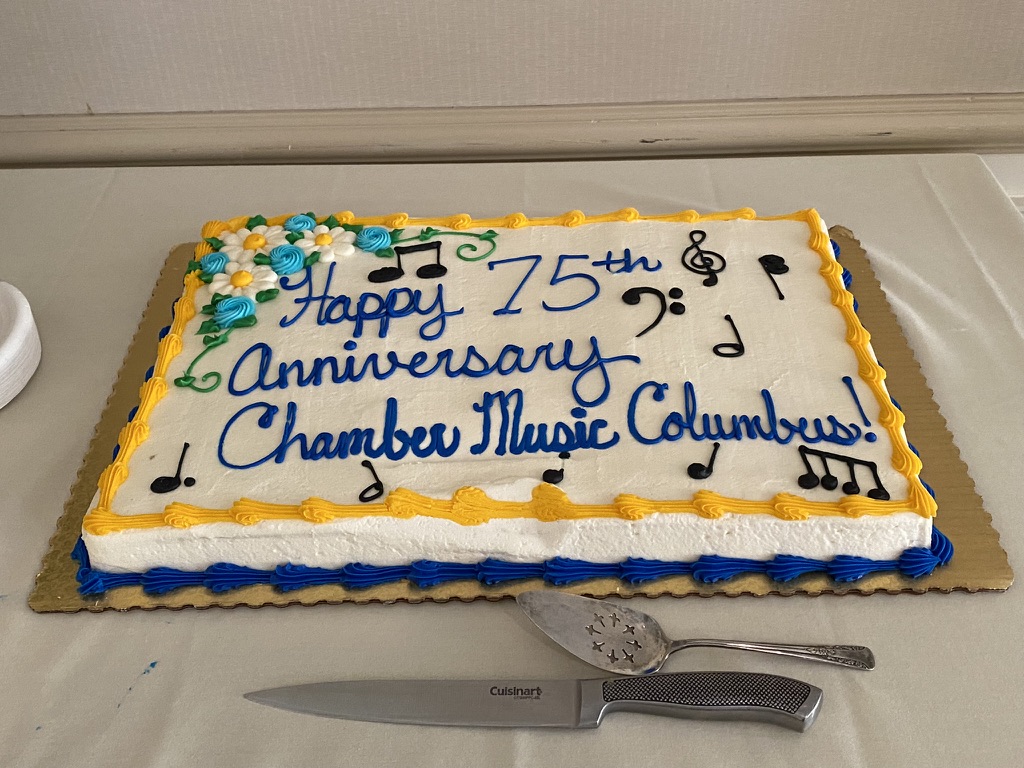
Chamber Music Columbus’ 75th season has now come to a close, and what a celebration it has been. Seven momentous concerts, each featuring a newly commissioned work, and the season finale from the Merz Trio certainly closed matters on a high note. A particularly lush program, leaning heavily into the Romantic repertoire, it was an evening of energetic and virtuosic performance.
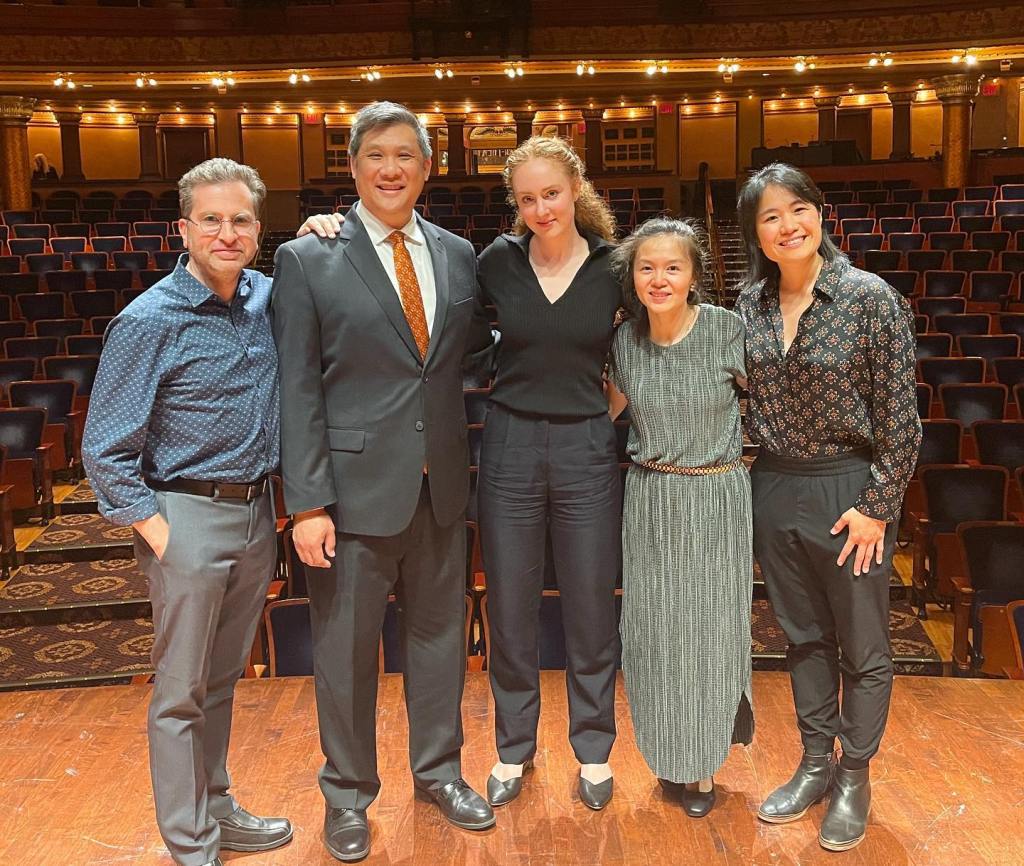
Merz Trio with Karim Al-Zand and Ching-chu Hu, photo credit Merz Trio

Ching-Chu Hu is certainly a familiar presence at the Southern Theatre by now, and the Merz Trio presented the final piece of his season-long fanfare, titled An Eternal Hope. In his spoken remarks, Hu noted the work conveys a hope for growth, beautifully timed with the advent of spring here in early May. A busy piano part made this rather more extrovert than some of the previous installments. It evoked a certain radiance and built to a bold finish. The trio has recently undergone a changing of the guard with a new pianist; one would never have guessed she was new to ensemble given how seamlessly she gelled with her string colleagues.

Rachmaninov’s first Trio élégiaque opened with a soft, undulating gesture in the strings, setting up a distinctly Russian melody in the piano. Though the composer was a mere 18 year old when writing the work, its sumptuous melody and surging passions left little doubt as to who the composer was, with the work fulfilling the promise of its title in leading to a somber, funereal close. Another early work from a major Russian composer followed in a C minor trio from the pen of a 16 year old Shostakovich. Though there were hints of his idiosyncratic wit and sarcasm, it was largely a Romantic work, with meditative beginnings and particularly lovely passage in thirds on the piano.

Sandwiched between the Russian works was Lines in Motion, a commission from Karim Al-Zand, first performed this past January at Chamber Music Houston, where the composer is based. A he discussed in our interview, Al-Zand has a particular affinity for extramusical inspirations. Lines in Motion was no exception, with the composer pointing to selected black and white woodcut illustrations (helpfully reproduced in the program books), corresponding to each of the three movements. As the title suggests, each of prints in question striking use geometric lines to convey a sense of motion on the printed page.

The opening On the Big Sea took inspiration from René Quillivic’s En pleine mar. Roiling piano figurations were answered by calming lines in the strings, and I heard shades of French Impressionism which often used water and the sea as subject material. Angular gestures and bright, brilliant textures dominated In the Big City, capturing the busy skyscraper scene of Frans Masereel’s America. At the Spirit Dance (a nod to Rhythms by Wharton Esherick) was of energetic, driving dance rhythms for a rollicking close. This is a work I certainly look forward to hearing again.

The latter half was devoted to Schumann’s F major piano trio, a work uncharacteristically cheery and optimistic for the often depressive composer. The ensemble purveyed an attractive, singing tone in articulating the bounty of beautiful melody the composer provided. Sophisticated contrapuntal passages provided some textural contrast, delivered with nuanced clarity. The second movement bears the marking Mit innigem Ausdruck (“with innermost expression”), and it was indeed a look inward, lovingly conveyed.

The following movement was marked by a loose suggestion of a waltz figure, while the finale excited in its further use of counterpoint, giving each individual voice of the trio the space to shine. An well-deserved encore was offered, namely, an arrangement of Edith Piaf’s song La Vie en rose, wistful and nostaglic. A memorable close to a memorable season!
Calidore Quartet contrasts elegant Mozart and Beethoven with contemporary works at Chamber Music Columbus

Calidore String Quartet
Southern Theatre
Columbus, OH
April 1, 2023

Hu: A Wondrous Hope
Mozart: String Quartet No. 17 in B-flat major, K458, The Hunt
Watkins: String Quartet No. 2
Beethoven: String Quartet No. 16 in F major, Op. 135

Encore:
Beethoven: Cavatina from String Quartet No. 13 in B-flat major, Op. 130

The penultimate installment of Chamber Music Columbus’ 75th season saw the Calidore Quartet – the third consecutive string quartet to be featured this season – in a program anchored by major works of Mozart and Beethoven. The next “puzzle piece” of Ching-Chu Hu’s ubiquitous fanfare opened the evening, titled A Wondrous Hope. Filled with yearning, it explored different combinations within the quartet in harmonious balance, and shifts in texture added variety and color.

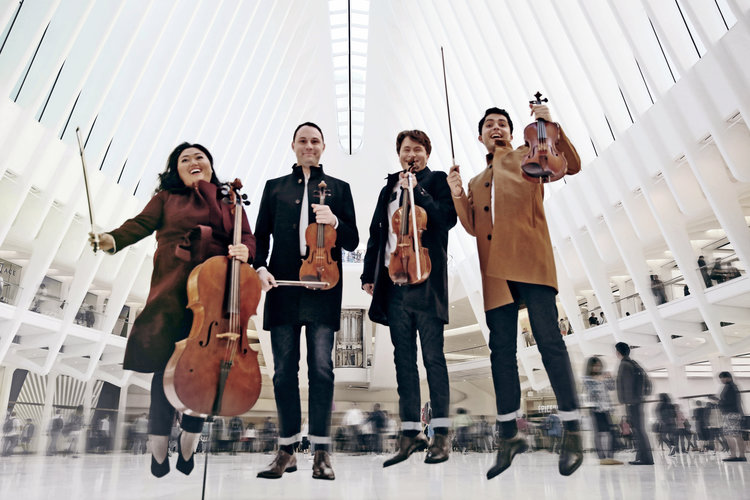
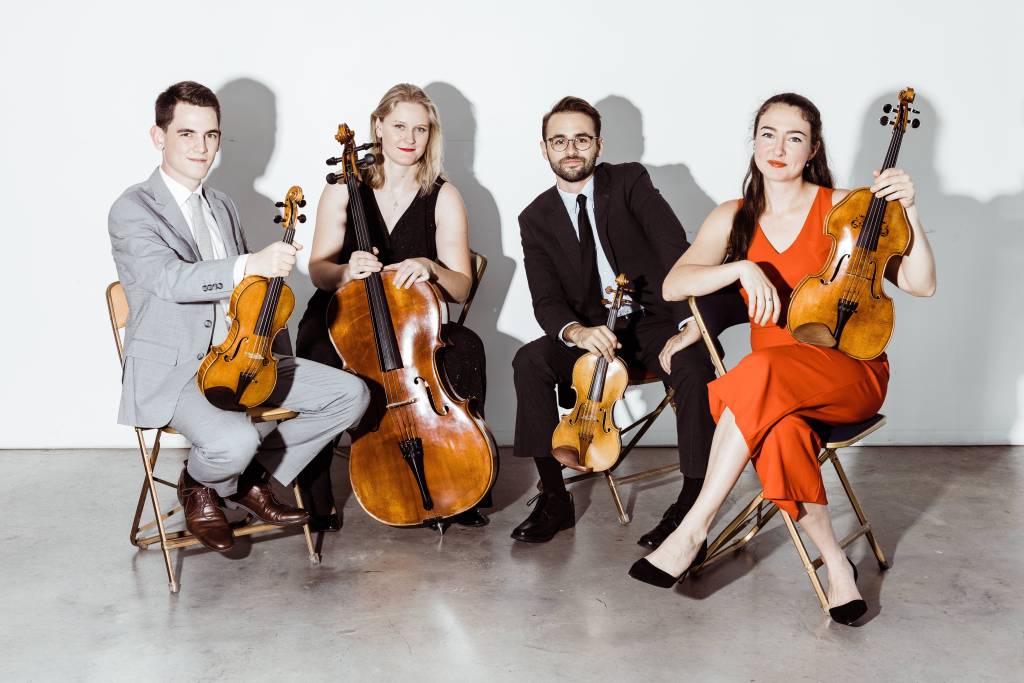
Calidore Quartet, photo credit calidorestringquartet.com

Mozart’s Hunt quartet was given with deft balance and clear articulation – particularly evident during the delicate ornaments – and a genteel approach at times tempered by a more rustic feel, fitting per its epithet. The minuet danced with light touch and an elegant melody from first violinist Jeffrey Myers (who also appeared on this stage during the season-opening performance with VIVO). The Adagio was a songful, flowing statement, and like the best of Mozart’s finales, the closing movement was of high spirits and exuberance.

Though unable to make it to Columbus in person, Huw Watkins conveyed to the trio his “thoughts of joy and optimism” when writing his String Quartet No. 2, premiered by Calidore at the Wigmore Hall last May, with Saturday counting as the first American performance. Starting with a single pluck, fragments of themes coalesced, signaling much potential to be explored. Matters took flight, fluttering into the strings’ high register, and was given an energetic workout. A central slow movement began sweetly nostalgic, growing in urgency as the composer explored more dissonant harmonies, though never straying too far from resolute tonality. The opening pluck returned to set off the finale of vigorous, pungent harmonies, closing in a burst of energy.

Beethoven’s final string quartet (the last major work he completed) closed the evening. A resonant gesture in the viola began, evidencing the ensemble’s keen attention to the inner voices for a reading refined and reflective. The Vivace was of rhythmic vitality and intricacy, and not without some unexpected syncopations. Deeply felt, the plaintive slow movement unfolded with eloquence, a divinely beautiful prayer. A discursive, questioning gesture initiated the wide-ranging finale, further demonstrating the quartet’s chemistry and cohesion.

Introducing the encore, Myers – a Columbus native – spoke fondly of the influence of two luminary violinists we have sadly lost in recent months, Charles Weatherbee and David Niwa. Dedicating the closing selection of Beethoven’s Cavatina from the op. 130 quartet to their memory, it was a gorgeous, loving tribute.

Callisto Quartet pairs new and old at Chamber Music Columbus

Callisto Quartet
Southern Theatre
Columbus, OH
February 18, 2023

Haydn: String Quartet in F major, Op. 77 No. 2, Hob. III:82
Fujiwara: Sunsets, Like Childhood
Hu: As Hope Builds
Debussy: String Quartet in G minor, Op. 10

February’s Chamber Music Columbus concert was originally slated to feature the St. Lawrence String Quartet; following the very sad passing of their first violinist Geoff Nuttall, a substitute was booked in the Callisto Quartet – an ensemble currently serving as quartet in residence at the Yale School of Music. Kudos to Callisto for presenting a very fine, polished program on short notice that included two world premieres along with two cornerstones of the quartet repertoire.

Callisto Quartet, photo credit callistoquartet.com

The program opened with Haydn’s final completed quartet (Op. 77 No. 2) from his vast output in the form (a projected sixty-eighth string quartet would follow as Op. 103, but was left incomplete). The opening Allegro moderato was elegant and deftly balanced. Bucking the tradition the composer himself largely established, a Menuetto was placed ahead of the slow movement. Sprightly and harmonically adventurous, it was almost more akin to something of Beethoven. The theme and variations Andante was given with careful attention to detail, bringing out its rhythmic intricacies. Despite being the composer’s final quartet, there was certainly nothing valedictory about the finale, spirited and vivacious, with some particularly energetic playing from first violinist Cameron Daly.

As the 75th anniversary celebrations continue, the next featured composer was Korine Fujiwara. Though now based in the Pacific Northwest, she is someone with strong local connections (describing Columbus as her “emotional home” during her spoken remarks): violinist in the Columbus Symphony for many years, composer of a new work for Opera Columbus, and founding member of the Carpe Diem String Quartet. Sunsets, Like Childhood alludes to a quote from author Richard Paul Evans, and seeks to capture the energy of a sunset, and childlike sense of wonder many of us continue to have for this daily occurrence.

A short cello line opened, soon joined by the rest of the ensemble in lush harmony. Rapid tremolos and arpeggios conveyed a sense of evanescence like the fleeting sunset. The piece was simply full of life – celebratory, almost exuberant, yet still wistful and reflective with a particularly lovely theme surfacing about halfway through before the work peacefully drifted away into the night.

Ching-chu Hu’s next “puzzle piece” of the 75th anniversary fanfare opened the second half, entitled As Hope Builds. A self-described “eternal optimist,” that mindset was very much reflected in the work’s theme and character, amassing strength and vigor through the titular hope.

The recital closed with Debussy’s sole entry in the string quartet medium, and a fine one at that. A rich sound opened, with the quartet communicating as a seasoned ensemble as the conversation on stage naturally shifted to Debussy’s impressionist language. Striking pizzicato sonorities marked the scherzo, and not without a certain wit one doesn’t always associate with the Frenchman. The Andantino was the heart of the work, gorgeous and serene with the quartet purveying a singing tone throughout, an essay of repose before cleanly negotiating the thorny textures of the finale.

Cavani Quartet makes strong impression in diverse program at Chamber Music Columbus

Louise Toppin, soprano
Southern Theatre
Columbus, OH
January 28, 2023

Hu: The Clarity of Hope
Saint-Georges: String Quartet in C minor, Op. 1 No. 4
Lomax: A Prayer for Love
Price: String Quartet No. 2 in A minor

Encore:
Washington: Midnight Child

Chamber Music Columbus’ first program of the new year brought forth the Cleveland-based Cavani String Quartet in an afternoon of diverse string quartets by an equally diverse body of composers – none of whom fit the “dead white male” archetype all too prevalent in classical music, perhaps the vaunted string quartet even more so. The program opened with the next iteration of Ching-chu Hu’s fanfare for the organization’s 75th anniversary, styled here as The Clarity of Hope.

Cavani String Quartet, photo credit Robert Muller

In this guise, one was taken by the intimate warmth of the strings – rather different than the initial casting for brass quintet – and the scoring afforded each member of the quartet a moment in the spotlight. Cavani next turned to the work of the fascinating figure sometimes referred to as the “Black Mozart”: namely, Joseph Bologne, Chevalier de Saint-Georges, born in Guadeloupe a decade before Mozart to a French father and Senegalese mother. The brief C minor quartet had an opening filled with longing of that tragic key (a tonality later favored by both Mozart and Beethoven for their most personal, profound creations), but an elegance at its core as encouraged by Cavani’s detailed reading. The closing Rondeau was a lively foil, in due course arriving at a bright C major.

The next of the 75th anniversary commissions turned toward one of Columbus’ own, the multi-faceted Mark Lomax II. A Prayer for Love intriguingly adds soprano voice to the quartet, singing the text of “A Prayer” by Claude McKay, Jamaican-born poet of the Harlem Renaissance. Searching, richly chromatic harmonies opened, and the work’s rhythmic complexities were astutely articulated by Cavani – surely Lomax’s background as as drummer encouraged his keen attention to rhythm. Louise Toppin’s lyrical soprano soared over the uncertain, often jagged accompaniment, at last giving way to peaceful resolution. In his interview with me, Lomax noted inspiration from Mahler’s blending of voice with orchestra, and the intimacy that creates in the context of a vast symphony. The taut communication here between soprano and strings conveyed, in a similar vein, an inward-looking affinity.

In recent years, a renewed attention has been given to the work of Florence Price – a major talent and essential voice of American music – and Cavani closed the printed program with her substantial String Quartet No. 2, dating from 1935. A wistfulness wandered throughout the opening Moderato, encouraged by the warm resonance of the strings: an eloquent statement, often bracing. Though in the European tradition, the work exuded a distinctly American flavor with stylistic echoes of Dvořák’s “American” quartet, though arguably more authentic.

The richly voiced Andante cantabile served as a calming spiritual, while the third movement Juba was of good-natured charm, brimming with syncopations that invoked ragtime and were played with abandon. The finale was a largely energetic affair, though still lyrical at its core, and led towards a blistering coda. As an encore, the quartet selected a work by Columbus native Charles Washington called Midnight Child, based upon the spiritual “Sometimes I Feel Like a Motherless Child”: freely incorporating jazz elements, it made for a delightful close to the afternoon.

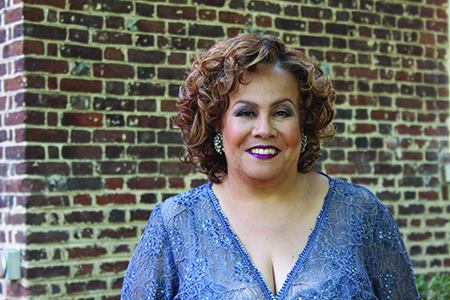
Louise Toppin, photo credit umich.edu

Kibbey and Kenney delight in harp and violin duos at Chamber Music Columbus

Bridget Kibbey, harp
Alexi Kenney, violin
Southern Theatre
Columbus, OH
November 5, 2022

Saint-Saëns: Fantaisie in A major, Op. 124
Hu: Chamber Music Columbus Fanfare
CPE Bach: Sonata in G Minor, H 542.5
Bartók: Romanian Folk Dances
Larsen: Sun Strider
Biber: Mystery Sonata No. 1 (“Annunciation”)
Messiaen: Vocalise-étude
Dowland: Flow my Teares
Rodrigo: Madrigales amatorios
Falla: Siete canciones populares españolas
Currier: Night Time

Appealing as the combination may seem, music for harp and violin duo is an uncommon occurrence. Leave it Bridget Kibbey and Alexi Kenney to make a strong case for the medium in lovely program of duets at Chamber Music Columbus. Most of the selections performed were by necessity arrangements of other works, but the duo highlighted a few pieces written expressly for this combination, including a world premiere from Libby Larsen.

Alexi Kenney and Bridget Kibbey, photo credit Chamber Music Columbus

One such work with this instrumentation in mind was Saint-Saëns’ Fantaisie in A major. Graciously lyrical, the musical synergy between Kibbey and Kenney was apparent from the first bars. Impressive virtuosity served well the fantasy, improvisatory-like elements of the piece. Following was Ching-chu Hu’s Fanfare, a mainstay of all Chamber Music Columbus performances this season. After previously hearing it cast for brass quintet, it was quite fascinating to hear it undertaken by such vastly different forces.

A transcription of a sonata by CPE Bach opened with extravagant material for harp alone, and the violin later joined in imitation. A long-bowed violin melody over harp filigree made a touching Adagio, and the rapid finale was given with seamless cohesion. In place of the Clara Schumann Romances, Op. 22 listed on the program, the duo opted for the livelier Romanian Folk Dances of Bartók, a series of six miniatures (originally for piano, Sz. 56) boasting a folksy flair.

A co-commission from Chamber Music Columbus and the Schubert Club of Saint Paul, Minnesota (an ever older organization than CMC – celebrating 140 years this season!), Libby Larsen’s Sun Strider opened the second half. Matters gradually amassed, gathering energy, and the different characteristics of the strings of each instrument were exploited for contrast (a subject Larsen discussed during my interview with her). Novel sounds were drawn from the harp, taking full advantage of Kibbey’s peerless technique, and the work was at heart deeply lyrical – and generously so. The title evokes the sun’s journey across the sky; when sunset arrived, the music faded away, leaving only the vibrations of the strings.

A varied selection of shorter works followed, beginning with the first of Biber’s mystical Mystery Sonatas. Though separated by a few centuries. Messiaen’s Vocalise-étude occupied a similar sense of religious wonderment. For a Spanish sojourn, Rodrigo’s Madrigales amatorios were interwoven with selections from Falla’s Siete canciones populares españolas, works by turn feisty and jaunty or sultry and seductive.

Sebastian Currier’s 1998 work Night Time closed the recital – along with the Saint-Saëns and the new Hu and Larsen pieces, the only other work on the program conceived originally for harp and violin. Depicting the enigma of the night, its striking musical language seemed to be Currier’s response to Bartók’s “night music.” The second movement “Sleepless” was appropriately filled with jarringly irregular accents, though calm arrived in the concluding “Starlight” wherein matters drifted off into the depths of night.

Chamber Music Columbus opens 75th season in the splendor of the American Brass Quintet

American Brass Quintet
Southern Theatre
Columbus, OH
October 8, 2022

Hu: Chamber Music Columbus Fanfare: Celebrating 75 Years
Three English Fancies (edited by Raymond Mase)
       William Simmes: Fancy a 5
       John Ward: Fancy No. 11 “Cor Mio”
       Giovanni Coperario: Fancy a 5
Garrop: Helios
Hu: A Distant Hope
Tower: Copperwave
Higdon: Selections from Book of Brass
Maurer: Selections from Twelve Little Pieces for Brass                          
Ewazen: Frost Fire

On the heels of the joint presentation with VIVO just over a month prior, Chamber Music Columbus’ 75th season proper officially opened with the dynamic American Brass Quintet. In the spirit of celebration, the first music heard was Ching-chu Hu’s Chamber Music Columbus Fanfare, a work which we will continue to revisit throughout the season for the various combinations of instruments on the docket. The brief work was fittingly celebratory, in this incarnation, leveraging the brightness of the brass to exciting effect.

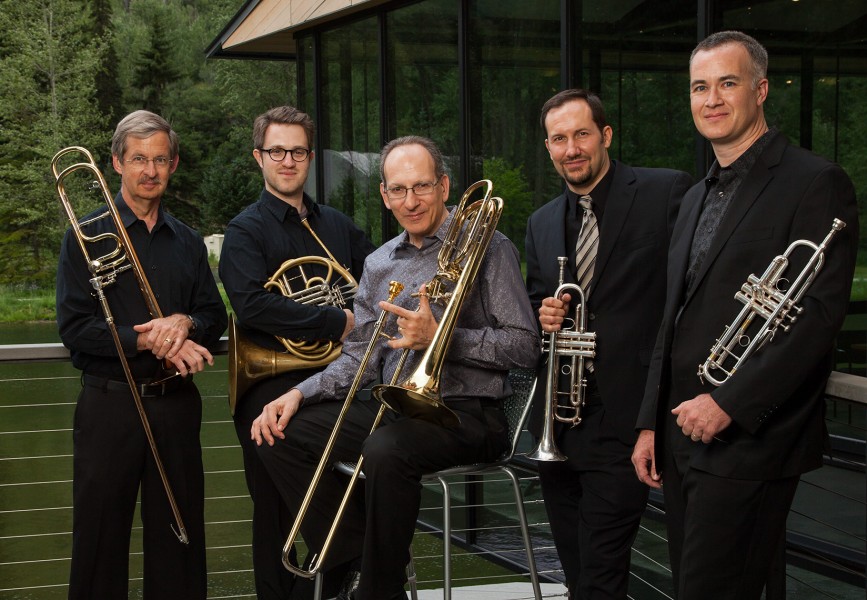
American Brass Quintet, photo credit americanbrassquintet.org

The repertoire for brass quintet tends to fall into two categories: music for Renaissance brass ensemble recast for modern instruments, and contemporary works – with little in between. The next selections fell into the former category, collectively titled Three English Fancies which included a work from Simmes, Ward, and Coperario. Elegant, refined glances towards a distant time, they readily adapted to modern brass ensemble. Stacy Garrop’s 2011 work Helios followed. Dense textures opened, contrasted by a more solemn central section and a pensive conclusion. In introducing Hu’s A Distant Hope, receiving its world premiere, trumpeter Louis Hanzlik noted a personal connection to the composer who was his music theory TA at the University of Iowa. The work is an extension of the Fanfare; Hu described his objective as “deconstructing a fanfare” to create a work “hoping for hope.”

The opening “Skyward” began with the fanfare theme, a call to attention, but ultimately more mellow material took over, of a resonant lyricism. A busier texture was to be had in the closing “Voyaging,” with the uses of mutes offering a varied, colorful timbre, and an ebullient ending that inspired hope and celebration. Joan Tower’s 2006 work Copperwave was a striking close to the first half. The title evokes South American copper mines, and the work captivated in its rhythmic intensity and vast variety of color. ABQ performed with great energy and virtuosity with their individual talents highlighted by solo cadenzas.

Jennifer Higdon’s Book of Brass officially receives its world premiere at Bowling Green the following Wednesday, but Columbus audiences were treated to a preview of two movements from the suite. “Glide & Fade” was of arching lyricism and piquant dissonances; “Punch it Up” was apt description for its vivacity. Ludwig Maurer’s Twelve Little Pieces for Brass is the odd work from the 19th-century scored for brass quintet. ABQ offered five selections, charming vignettes – what they lacked in depth they made up for in appeal. Eric Ewazen’s 1990 work Frost Fire closed the program, its sonorous scoring making use of the energy and rich resources of the quintet, setting the stage for a tour de force ending. It’s worth noting that several of the featured composers have an Ohio connection – Hu is on faculty at Dennison, Garrop was recently featured as guest composer at Bowling Green’s New Music Festival, and Ewazen is a Cleveland native. An auspicious opening to a banner season!