Blomstedt and Cleveland Orchestra stellar partners in Nielsen and Beethoven

Cleveland Orchestra
Herbert Blomstedt, conductor
Mandel Concert Hall
Severance Music Center
Cleveland, OH
February 12, 2022

Nielsen: Symphony No. 4, Op. 29, The Inextinguishable
Beethoven: Symphony No. 5 in C minor, Op. 67

An appearance from the remarkably indefatigable Herbert Blomstedt is virtually guaranteed to yield stupendous results, and Saturday night’s performance was certainly no exception. The Swedish-American conductor paired major symphonies of Nielsen and Beethoven, the same two composers which comprised his debut program with this orchestra in April 2006. It’s a fitting coupling to be sure, both composers major symphonists of their respective generations, and in the present case, both works employed a progressive tonality, taking the listener on a journey to a distant destination rather than coming full circle.

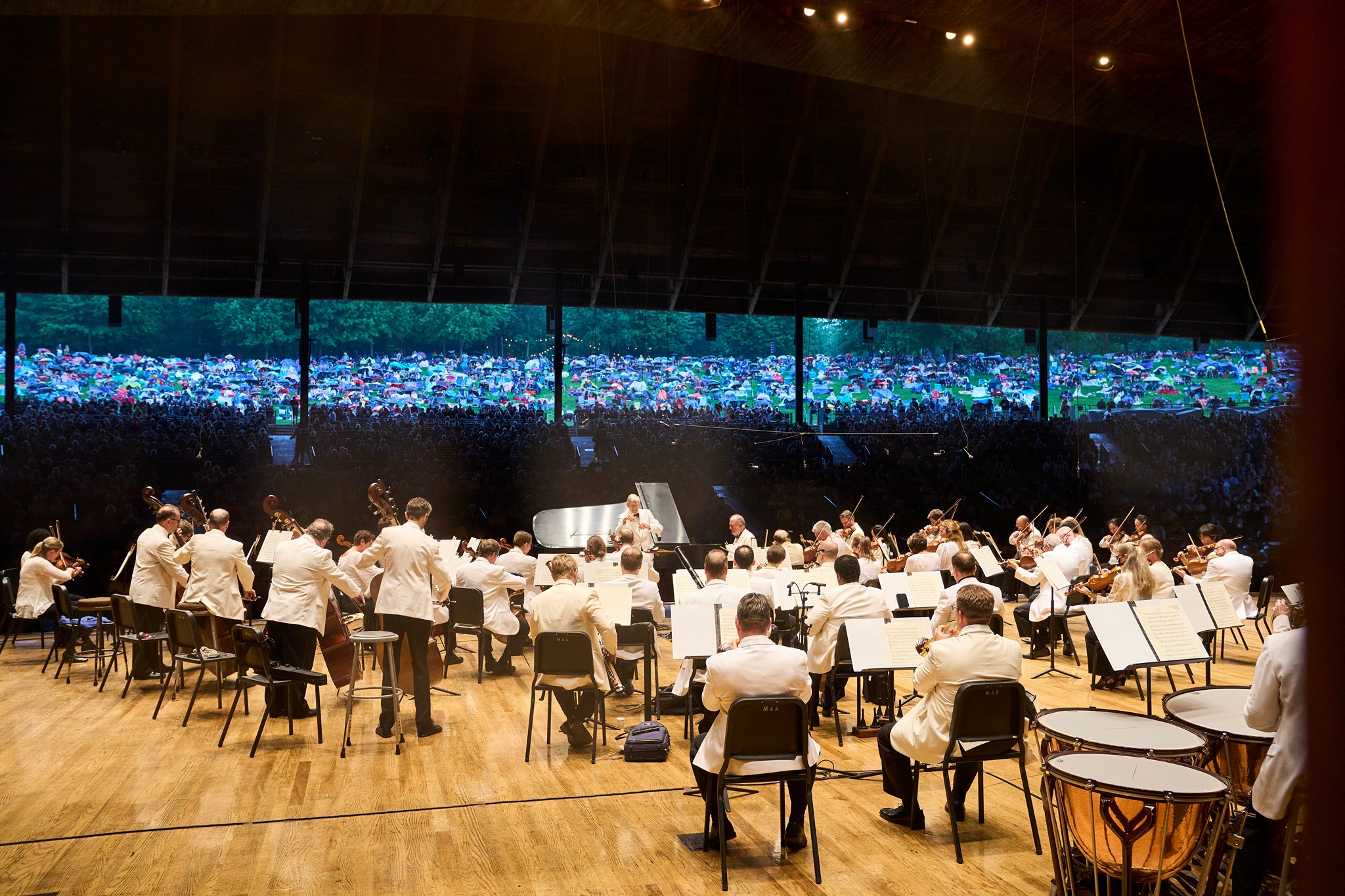
Herbert Blomstedt and The Cleveland Orchestra, photo credit Roger Mastroianni, courtesy of The Cleveland Orchestra

Nielsen’s musical language can be somewhat intractable and austere, but The Cleveland Orchestra is well-equipped for the challenge. A compelling performance of the Fifth Symphony was given a few seasons ago, and this weekend the orchestra rose to the task even more under Blomstedt’s incisive guidance. The clangorous introductory material was given with clarity and inexorable drive. Nielsen’s palette is resolutely tonal though craggy and unforgiving; some respite was to be had when the conductor coaxed a piquant lyricism from the woodwinds. Despite the first movement’s busyness, matters closed in a simple grandeur, with the pulsating of the timpani foreshadowing their role to come.

The gentle and folksy nature of the Poco allegretto seemed to take its cue from the analogous movement of a Brahms symphony. Dulcet clarinets were the highlights in this movement scored for winds alone, occasionally buttressed by touches of pizzicato strings. Pained and discursive strings opened the slow movement. A lyrical dialogue was had between concertmaster Peter Otto and principal viola Wesley Collins before the material built to a stentorian climax. The finale opened in rapid-fire energy and the dueling timpanists (Paul Yancich and Tom Freer) on opposite ends of the stage were to thrilling effect. Blomstedt has an uncanny ability to get the expansive orchestra to morph into a single organism, and nowhere was this more apparent than in the unambiguously triumphant ending.

It’s a great challenge to make Beethoven’s Fifth – surely the most frequently performed symphony in the repertoire – sound more than merely routine, but Blomstedt certainly did. This weekend also served as something of a capstone to his memorable all-Beethoven program presented at Blossom last summer. The Allegro con brio was commanding and authoritative, its energy taut, focused, and searingly intense. Long, flowing lines in the low strings brought out the warmth of the slow movement with thoughtful contrasts illuminating the double variation structure. The scherzo, though weighty in its own right, served as something of a preface to the grandiose finale, a glorious race to the finish line of this archetypal journey from darkness to light.
The 3 Bs: Blomstedt, Beethoven, and Blossom

Cleveland Orchestra
Herbert Blomstedt, conductor
Garrick Ohlsson, piano
Blossom Music Center
Cuyahoga Falls, OH
August 1, 2021

Beethoven: Piano Concerto No. 4 in G major, Op. 58
Beethoven: Symphony No. 7 in A major, Op. 92

Two of The Cleveland Orchestra’s veteran collaborators – Herbert Blomstedt (now a remarkable 94 years old!) and Garrick Ohlsson – combined forces for a memorable summer evening at Blossom, offering an emblematic piano concerto and symphony of Beethoven. On a personal note, this was my first time seeing a full orchestra in person since before the pandemic, and what a pleasure it was to be back in the audience.

The entire trajectory of the Fourth Piano Concerto is set by the brief but beguiling opening statement in the piano. Ohlsson offered a gentle sound, deftly voiced and articulated. A lyrical presentation of the movement’s primary themes followed in the orchestra, a supple accompaniment encouraged by Blomstedt’s graceful direction. Ohlsson blended beautifully with the orchestra with his sterling technique being used for the noblest of causes. Still, the stormier passages were perhaps a bit too genial, certainly when considering what one might expect from the often fiery playing of a pianist known for his mastery of the Romantic repertoire. A wondrous purity of tone was cultivated in the slow movement, and what ensued was an enigmatic dialogue between pianist and orchestra. At this point, the clouds opened up for a heavy rainstorm, but the performers onstage remained unfettered. The finale served as a fitting foil to the seriousness of the preceding, jocular and elegant.

While the Seventh Symphony had bellicose beginnings, it was the gracefulness of Blomstedt’s baton-less conducting that made the strongest impact; the rhythmic motifs that propelled matters forward were lithe and stylish. Top-drawer playing was heard throughout the orchestra, although it was the winds that made for particular standouts with Joshua Smith’s pivotal flute solo pointing the way to the heart of the symphony. The indelible Allegretto was of chilling effect, intensified by the long-bowed strings. In the latter two movements, Blomstedt did much to capitalize on the vivaciousness of the omnipresent dance rhythms, music as joyous and vigorous as anything Beethoven wrote.

Blomstedt and Brahms: an inspired pairing

Cleveland Orchestra
Herbert Blomstedt, conductor
Severance Hall
Cleveland, OH
July 27, 2018

Brahms: Symphony No. 4 in E minor, Op. 98

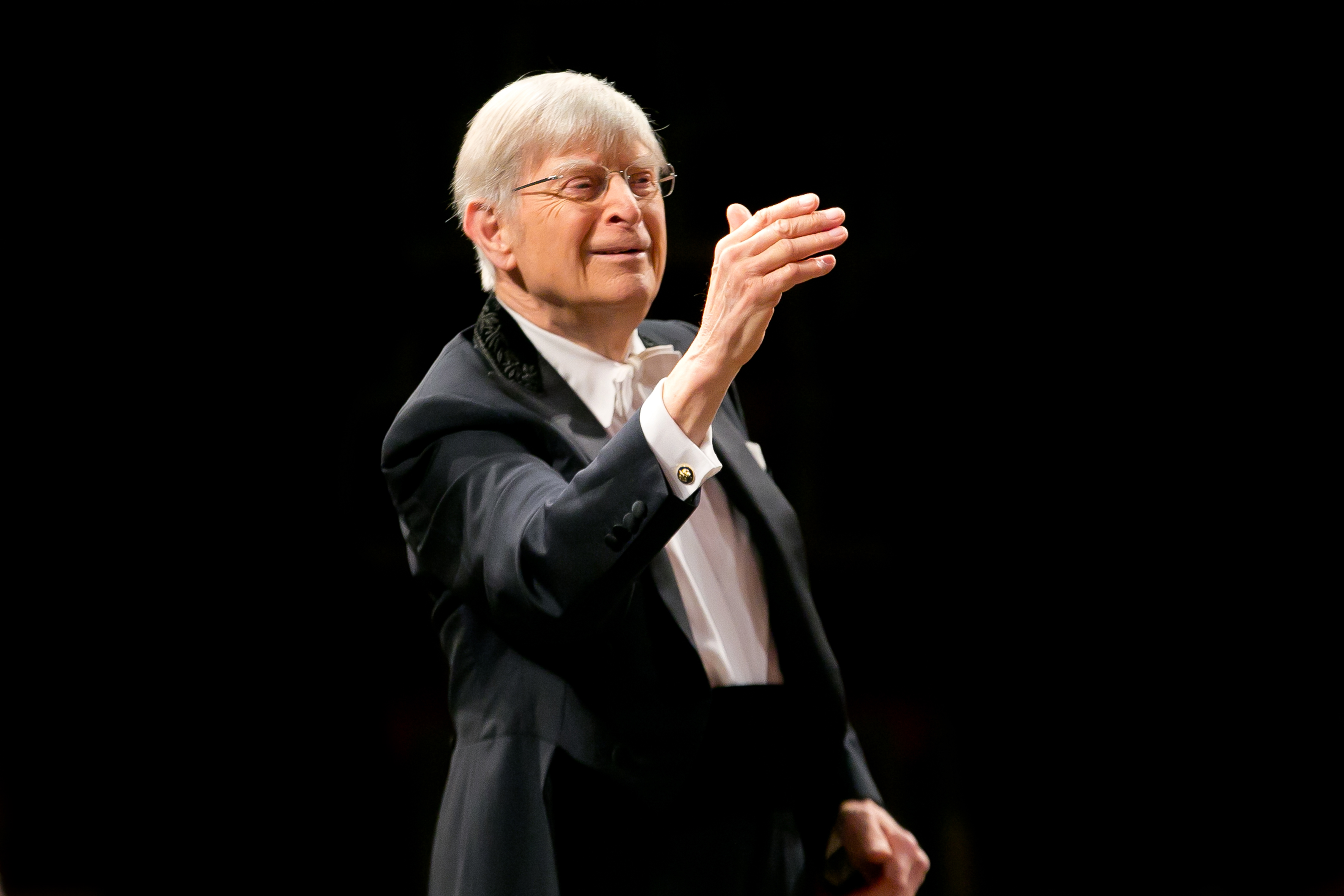
The opening Summers@Severance evening for this season saw the return of Herbert Blomstedt, remarkably now 91 years old but hardly flagging in vitality. Draped in a white coat, he dressed the part of the elder statesman that he is, masterfully leading the orchestra in a single work, namely Brahms’ Fourth Symphony. Tonight sees him reprise the program at Blossom with the addition of Mozart’s Jupiter – while I wished that or at least an overture could have padded out Friday’s brief program, the gripping performance certainly mitigated the desire for more music.

160519 GC
Herbert Blomstedt, photo credit Gert Mothes

Blomstedt’s graceful, batonless conducting produced the gentle rise and fall of the primary theme, and the balance he achieved was quite idiosyncratic – rather than opting for a homogenized sound, each instrument family was clearly delineated in a striking array of coloristic variety. During the development, the main theme resurfaced as a stentorian skeleton of itself to mesmerizing effect, and matters built to searing passion and heightened drama. An arresting horn call opened the slow movement, only to give way to graceful and peaceful plodding, rallying to vigor as needed. A fine clarinet solo from Daniel McKelway was a memorable highlight.

The scherzo was given a spirited workout, gleaming with brassy exuberance and the unmistakable ring of the triangle. A progression of eight deftly sculpted chords served as the bedrock of the imposing passacaglia finale. Prominent roles for each instrument abounded in the movement’s intricacies, almost like a concerto for orchestra, and Blomstedt guided his colleagues to a blistering conclusion.

In other Cleveland Orchestra news, concertmaster William Preucil was officially suspended earlier in the day in response to multiple allegations of sexual assault, right on the heels of a major exposé in The Washington Post detailing assault in classical music circles. As noted in the linked article, some of these allegations have been public for over a decade – I was relieved to hear of some decisive action taking place, overdue as it might be.