Mao Fujita traces the development of Romanticism in Cleveland recital

Mao Fujita, piano
Mandel Concert Hall
Severance Music Center
Cleveland, OH
February 17, 2026

Beethoven: Piano Sonata No. 1 in F minor, Op. 2 No. 1
Wagner: In das Album Fürstin Metternich
Berg: Twelve Variations on an Original Theme
Mendelssohn: Variations sérieuses, Op. 54
Brahms: Piano Sonata No. 1 in C major, Op. 1
Liszt: Isoldes Liebestod, S447

Encore:
Rachmaninoff: Piano Sonata No. 1 in D minor, Op. 28 – Lento

In another memorable entry of The Cleveland Orchestra’s recital series, Japanese pianist Mao Fujita delivered a wind-ranging, thoughtfully-curated program at Severance Hall. This counted as his debut in the hall, having previously performed with TCO at Blossom in 2023. I recall viewing a live-streamed recital he gave in Berlin during the pandemic; even watching from my computer during those lonely days of lockdown, his playing was utterly enthralling, so an opportunity to see him in the flesh in Cleveland was unmissable.
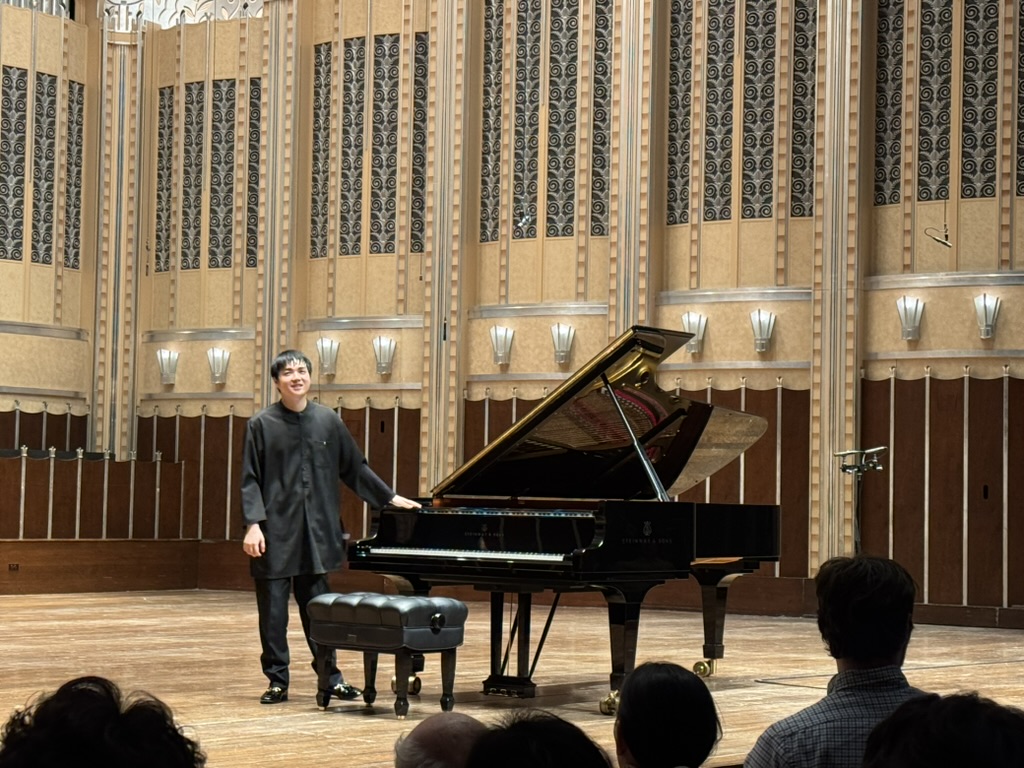
Mao Fujita at Severance Hall

The program was quite interesting, mapping the development of Romanticism from Beethoven’s First Piano Sonata to perhaps the greatest culmination of it, Wagner’s Tristan und Isolde. For the first essay in a genre he would redefine with his incomparable cycle of 32 piano sonatas, Beethoven chose the key of F minor, one that would later be associated with some of Romanticism’s most impassioned works (think of Beethoven’s own Appassionata, Chopin’s Fourth Ballade or Fantasy, Liszt’s Transcendental Etude No. 10).

Though a stormy piece, at this point one never felt classical elegance was left far behind. I was struck by Fujita’s delicate, detailed playing, with a refined balance that deftly brought out the left hand. The finale of the four-movement sonata had a wide dynamic range, and here more than anywhere it seemed the seeds of Romanticism were firmly unleashed.

A pair of rarities followed, the first which was a miniature from someone usually rather maximalist — Richard Wagner. Ein Albumlatt is a gem of a piece, saying much in little by way of its wistful, longing melodic line. Alban Berg’s Twelve Variations on an Original Theme was quite a striking discovery, showing Berg as a late Romantic. It sounds almost nothing like atonal works we associate with him, and could very well be mistaken for a work by Brahms. The sprightly fourth variation was captivating in its leaps and bounds; subsequent variations in the form of canons were given with clarity ahead of the impassioned conclusion. 

Rounding out the first half was another but much better-known set of variations in Mendelssohn’s Variations sérieuses. Deft voicings in the brooding theme drew out the melody. The variations oscillated between intense drama and lyrical sensitivity, with Fujita a thoughtful interpreter across the spectrum. The work’s close was one of majestic power. 

The largest work on the program was the First Piano Sonata of Brahms. Brahms’ three works in the medium were written in rapid succession at the very beginning of his career. While the Third is an undisputed masterpiece, the first two remain compelling listens in their own right. A commanding opening showed a fountain of inspiration pouring from the composer’s youthful pen. A rapturously lyrical secondary theme offered contrast, while the development thundered with intensity.

The brief slow movement was of quiet resonance, upended by the scherzo bursting forth with explosive energy, an energy that in no way flagged for the jubilant finale. No matter how pianistically awkward the writing was, Fujita sailed through its technical demands and made an arresting case for this early work. Capping off the recital was the Liebestod from Wagner’s Tristan und Isolde in a magnificent piano transcription by Franz Liszt. Its divine melody and webs of chromaticism made for a deeply affecting close, as if the previous repertoire was mere warmup for this profoundly touching statement.

For a lone encore, Fujita turned to another First Piano Sonata, that of Rachmaninoff. Offering its slow movement, the pianist concluded the thought-provoking recital in music of languorous melancholy.
Metzmacher and Tetzlaff in coloristic evocation of fin de siècle Vienna

Cleveland Orchestra
Ingo Metzmacher, conductor
Christian Tetzlaff, violin
Severance Hall
Cleveland, OH
October 27, 2018

Webern: Passacaglia, Op. 1
Berg: Violin Concerto
 Encore:
 Bach: Violin Sonata No. 3 in C major, BWV 1005 – Largo
Schoenberg: Pelleas und Melisande, Op. 5

Vienna at the turn of the 20th-century was the site of seismic changes in culture, with the birth of the modern, wary consciousness brought on by the likes of Freud, Klimt, and Schnitzler – and the revolutions in music were no less consequential. Branded as the Second Viennese School, Schoenberg and his disciples – principally Berg and Webern – upended the common practice period harmony that had been foundational to Western music for centuries. The Cleveland Orchestra’s program this week, with guest conductor Ingo Metzmacher at the helm, included a work from each of the triptych of iconoclastic Viennese composers for a noticeably underpopulated but raptly attentive Severance Hall.

5b243fd129f4c
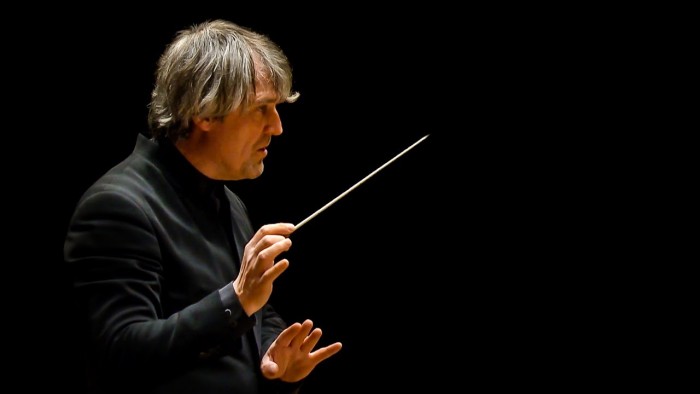
Ingo Metzmacher, photo credit Opera Musica

Webern’s Passacaglia served as beguiling opener. Dubbed his opus 1, it was certainly not his inaugural work, but the first major composition to result from his studies with Schoenberg. An eight bar bassline opened, suggesting not a link to not just the form’s Baroque forebears, but to the finale of Brahms’ Fourth Symphony (and it should be remembered that Schoenberg, whose radicalism was rooted in a keen sense of history, would later write an essay provocatively titled “Brahms the Progressive”). The orchestra’s gift for razor-sharp clarity and precision paid its dividends amply in this work, encouraged by Metzmacher’s guidance even without a utilizing a baton. Even in this rather academic form, the music was of eerie beauty, building to a supercharged climax only to evaporate at the end.

While the opening and closing selections were from their respective composers’ early years, hanging on to the last embers of tonality, Berg’s Violin Concerto was a work of full maturity and one of the crowning achievements of twelve-tone serialism. Matters began with unassuming arpeggios, first in the harp, then in Christian Tetzlaff’s solo violin – despite its serialist rigor, the work ingeniously never ventured far from an oblique invocation of tonality (and Clevelanders will likely be amused by Robert Conrad’s hilarious twelve-tone “infomercial”, wherein the not-so-ostentatious virtuosity of the Berg concerto is duly lampooned). Tetzlaff’s long-bowed playing emanated a biting lyricism, contrasted by the more jocular interpolation of a Carinthian folk song. The violinist was deftly balanced against the richly colored orchestral tapestry, playing with an exacting intensity.

A ferocious unease began the second movement, later countered by the wistful reminiscence of another tonal source, the Lutheran chorale Es ist genug, almost monastic in presentation – and fitting its elegiac subtitle “to the memory of an angel”, referencing the tragic death of Manon Gropious. In the final moments, the violin solo left the orchestra behind to be among the angels in its haunting close. Tetzlaff offered an encore in the Largo from Bach’s third sonata for unaccompanied violin, touchingly dedicating it to the Jewish community of Pittsburgh in response to the horrific events earlier in the day. A poignant performance of deeply felt beauty, and a much-needed moment of solace.

The remainder of the evening was devoted to Schoenberg’s extensive Pelleas und Mellisande. A far cry from the language with which Schoenberg would make waves, the work is lush and hyper-Romantic (though not quite to the excess of the earlier Gurre-Lieder). A tone poem spanning a continuous arc of over 40 minutes, its rich, pictorial detailing sounded very much akin to the contemporaneous works of Strauss (who convinced Schoenberg to take on Pelleas as a subject matter, concurrent with Debussy’s opera – which TCO performed to acclaim not long ago). As delineated in the program books, the work can also be conceived of as following a four movement symphonic structure, but I wasn’t convinced those demarcations were particularly useful.

Wagnerian leitmotifs depicting the characters were introduced at the onset, uneasily commingling in foretelling an unhappy fate. The music swelled in passionate ebb and flow with top-drawer orchestral playing, though I was especially struck by the lush clarinet solos of Afendi Yusuf. Jestful music depicted the symbolic fountain scene, and functioned as a scherzo of sorts (and somewhat reminiscent of “Klaus-Narr” from the Gurre-Lieder), and there was a fine viola solo from principal Wesley Collins. A love scene followed, surely taking cue from Act II of Tristan – a divine serenity only to be caustically interrupted by Golaud. Mellisande’s death was marked by a funereal downward procession, in what was some of the work’s most affecting music. The epilogue began with a stately lyricism, but ultimately the mysteries propounded the unknowing central to Maeterlinck’s symbolist fantasy – different here than the perfumes of Debussy, but nonetheless shrouded in ambiguity.

DSC_8314-4253x2846
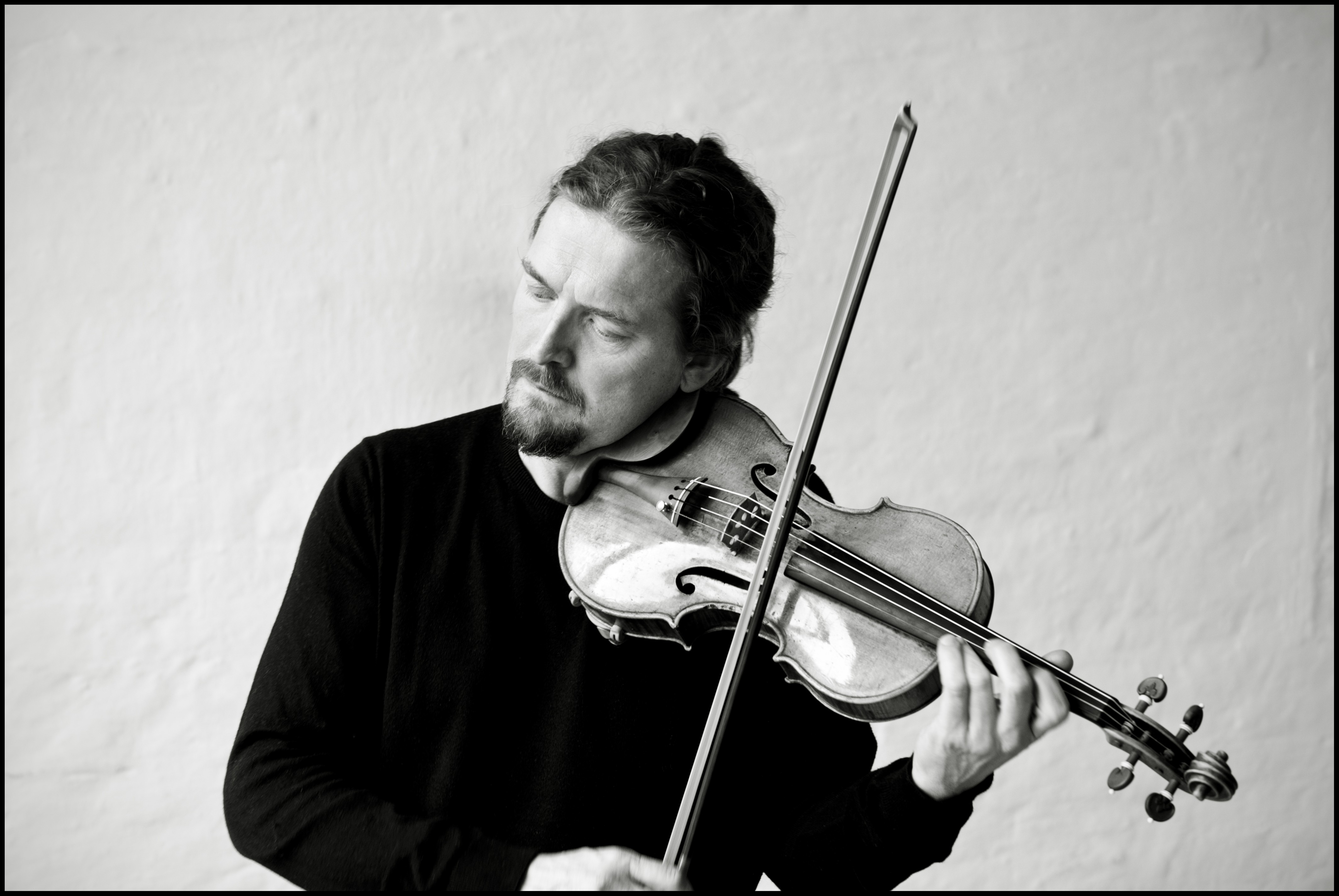
Christian Tetzlaff, photo credit Giorgia Bertazzi

Simon Rattle and the Berlin Philharmonic: in Mahler’s wake

Berliner Philharmoniker
Sir Simon Rattle, conductor
Hill Auditorium
Ann Arbor, MI
November 13, 2016

Schoenberg: Fünf Orchesterstücke, Op. 16
Webern: Sechs Stücke für Orchester, Op. 6b
Berg: Drei Orchesterstücke, Op. 6
Brahms: Symphony No. 2 in D major, Op. 73

Sunday afternoon’s concert picked up right where Saturday’s left off, with the first half comprised of the sets of orchestral pieces of Schoenberg and his disciples Webern and Berg.  These three composers were faced with the not insubstantial question of what one could possibly write in the wake of Mahler, and while it erred dangerously close to an overdose of the Second Viennese School, programming all three sets gave the listener an intriguing look at the direction Mahler might have gone had he lived a few more years.  Rattle elected to perform them without pause between, and in his spoken introduction invited the audience to conceive of it as “a 14 movement suite” or “Mahler’s eleventh symphony.”

Each of the 14 pieces are relatively brief, as if a shard of broken Romanticism, distilled to its essential meaning.  Schoenberg’s Five Pieces were given with an intensity that rivaled that of James Levine’s performance I saw in Chicago just the previous week.  The repeated figure in the celesta made the titular reminiscences of Vergangenes all the more unnerving, and Farben was a shimmering exposé in orchestral color.  A calmer moment in Peripetie was given by principal flutist Mathieu Dufour, a familiar face to this listener as he previously held that position with the Chicago Symphony.

Webern’s Six Pieces were presented in the revised 1928 version, scored for a somewhat slimmer orchestra.  Surprising lyricism was to be found in the otherwise terse and aphoristic opening selection while the third was characterized by a viola solo.  The fourth was the most extended, with rumbling percussion building to a massive, unrelenting crescendo, contrasted by the clarinet passagework of principal Wenzel Fuchs.

Berg’s Three Pieces were the most patently Mahlerian.  The opening Präludium, while otherwise impressionistic, began and ended with the percussion evoking a military band, a familiar device from a Mahler symphony.  Daishin Kashimoto assumed concertmaster duties for the Sunday performance and was prominent in Reigen, obliquely suggesting the waltz and the ländler as obfuscated through the distorted lens of expressionism.  The ferocious Marsch was firmly in the realm of the grotesque, ending with a cataclysmic hammer blow, suggesting Mahler’s Sixth Symphony of which Berg was a staunch admirer.

More familiar territory – and a welcome relief – came after intermission with Brahms’ genial Second Symphony.  While Brahms is often thought of as a dean of conservatism, this was another clever programming choice as an article from Schoenberg’s pen once provocatively christened Brahms a progressive.  It began unassumingly with a gentle dip in the cellos, unhurried and basking in its pastoral beauty.  Rattle eschewed the repeat of the exposition, instead opting for a tauter structure.  The lushness of the low strings opened the slow movement, and music of gorgeous serenity poured from the orchestra.  The winds were in top form during the scherzo, contrasted by the quicksilver energy of the strings which set the stage for the exultant finale, leaving Sunday’s audience uplifted in its celestial radiance.