Igor Levit auspicious in Chicago recital debut

Igor Levit, piano
Symphony Center
Chicago, IL
March 12, 2017

Rzewski: Dreams, Part II
Beethoven: Diabelli Variations, Op. 120

Encore:
Shostakovich: Waltz-Scherzo, No. 5 from Dances of the Dolls, Op. 91b

One of the most exciting Russian pianists of his generation, Igor Levit made a somewhat belated Chicago debut in Symphony Center’s Sunday afternoon piano series.  A thoughtful program comprised of a recent work of Frederic Rzewski paired with Beethoven’s mighty Diabelli Variations made for a probing, rigorous recital, and the stellar reputation that preceded Levit lived up to expectation.

Igor-Levit_51A3267_Robbie-Lawrence_4_klein
Igor Levit, photo credit Robbie Lawrence

Inspired by the 1990 Akira Kurosawa film Yume, Rzewski was moved to compose his first book of Dreams (the English rendering of the film’s Japanese title) in 2012-13, followed by a second book of four further works in 2014.  Part II was composed expressly for Levit who gave the world premiere in 2015, and one couldn’t have asked for a more convincing interpreter of this substantial 35-minute work.  The opening “Bells” began in the depths of the piano’s lowest register, to my ears suggesting the beginning of Liszt’s Funérailles, and proceeded at a glacial pace of imposing power.  “Fireflies” was a lighter affair, with a series of trills bringing the titular insects to life, reminiscent of Scriabin’s F sharp major etude from Op. 42 (nicknamed after a much less pleasant insect – the mosquito), and in due course building to wild intensity.

“Ruins” was a chaconne of sorts, its contrapuntal intricacies looking to the Baroque as a guiding light, and a particularly striking effect was achieved with tremolos in both hands.  The concluding “Wake Up” was quintessential Rzewski in its appropriation of folk music, here the song of the same title by Woody Guthrie.  The Guthrie was first introduced in the right hand alone, and appearing again at the very end, but with jarring tone clusters, and movement’s climaxes certainly served to wake one up indeed.

The incomparable Diabelli Variations of Beethoven made for a logical juxtaposition as they were of deep inspiration to Rzewski in his own monumental set of variations, based on the Chilean protest song The People United Will Never Be Defeated! (and incidentally, local admirers of Rzewski’s piano music will have a chance to see that work performed by Ran Dank at Mandel Hall next month).  Levit gave the opening theme a sprightly workout before embarking on the work’s epic trajectory, Beethoven’s compendium of a lifetime’s worth of discoveries in piano technique.

Under Levit’s self-assurance and commanding execution, there was essentially never a dull moment in the hour-long work.  The presto of Variation X was given at a mind-boggling velocity, while time was all but suspended in the solemnity of Variation XIV.  Deft voicing was achieved in the somber Variation XX, while just minutes later there was much humor to be had in Variation XXII’s interpolation of Mozart’s “Notte e giorno faticar”.  Levit clearly delineated the contrapuntal lines of the Fughetta (Variation XXIV), and the rippling effect he created in Variation XXVI was wondrous.  The final, slow variations entered the spiritual realm, culminating in the massive Fugue (Variation XXXII), and the closing minuet, seemingly a nostalgic look backwards to the work’s humble beginnings.

After the weight of the Beethoven, some lighter fare was needed.  Levit responded in kind with a lone encore, Shostakovich’s “Waltz-Scherzo”, bubbling with an irresistible impish charm.
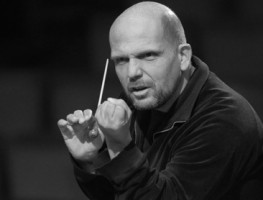

Van Zweden, Trifonov, and the Cleveland Orchestra find fresh inspiration in Mozart and Beethoven

Cleveland Orchestra
Jaap van Zweden, conductor
Daniil Trifonov, piano
Severance Hall
Cleveland, OH
November 27, 2016

Britten: Sinfonia da Requiem, Op. 20
Mozart: Piano Concerto No. 23 in A major, K488
Beethoven: Symphony No. 5 in C minor, Op. 67

Over the Thanksgiving weekend, the Cleveland Orchestra presented a sumptuous program anchored by seminal works of Mozart and Beethoven.  After being heralded earlier this year as the New York Philharmonic’s music director-designate, all eyes have been on Jaap van Zweden.  The program played on his strengths, and even the most familiar of repertoire sounded dynamic and anew under his probing guidance.

Antwerp_JvZ1-263x200.jpg
Jaap van Zweden, photo credit Bert Hulselmans

The afternoon began in somewhat less familiar territory with Britten’s Sinfonia da Requiem, a work the orchestra has not performed since the 1970s.  A triptych of succinct, interconnected movements, it encapsulates the composer’s pacifist leanings and is an important precursor to the watershed War Requiem.  The opening Lacrymosa began quite strikingly in the timpani and piano, keyboardist Joela Jones providing an unrelenting, anxious ostinato.  The oboe passages of principal Frank Rosenwein were strained and pained in a texture that built to surging brass climaxes in its ethos of despair.

Nervous flutes opened the Dies irae but the heart of the piece was in the concluding Requiem aeternam.  While in lesser hands it can sound like a plodding passacaglia, under van Zweden’s baton it was peaceful and plaintive, building to an arching lyricism in serene resolution, worlds apart from the austerity of the opening.

Mozart’s Piano Concerto No. 23 brought forth the remarkable young pianist Daniil Trifonov, who has an important connection to the city having studied at the Cleveland Institute of Music.  The concerto opened in the airy textures of the strings, with a gesture as gentle as an exhale, and it was with that naturalness the music flowed.  Trifonov’s entrance was unassuming and graceful, and he emphasized the work’s lyrical beauty and dramatic contrasts as per his propensity to the Romantic repertoire, though never in excess.  The cadenza was fleet and deftly balanced, displaying Trifonov’s astonishing dexterity.

7714
Daniil Trifonov

Cast in the relative key of F sharp minor, the slow movement was filled with longing, and the winds were almost decadent in the splendor of their singing lines.  Trifonov would often glance heavenward as if seeking some divine inspiration, fitting for music this sublime.  The sprightly rondo finale is inherently familiar to many Clevelanders, in its frequent appearances as theme music on WCLV.  Although there were shades of darkness in its minor key episodes, the overall mood was of pure joie de vivre.

Perhaps the greatest interpretative challenge of Beethoven’s Fifth Symphony is making one of the most popular pieces in the literature sound anything but trite and clichéd.  Van Zweden proved amply up to the challenge as was apparent right from the crispness of the arresting opening, in a first movement that was lean and taut.  Its violent contrasts were emphasized, keeping the audience on the edge of their seats as it seemingly could devolve into wild abandon at any moment, yet matters were always tightly controlled.

The slow movement began with some especially lovely tones in the cellos, and the interplay between the martial and lyrical themes was cleanly delineated.  I was especially struck by the clarity of the third movement’s fugato section, the contrapuntal lines weaving in and out of the strings.  The finale was an exuberant and joyous affair, and the noteworthy addition of the trombone and the piccolo heightened its sense of drama to bring the concert to a rousing close.