Cincinnati Symphony musicians delight in Chamber Players concert

Musicians from the Cincinnati Symphony Orchestra*
Wilks Studio
Music Hall
Cincinnati, OH
October 28, 2022

Gounod: Petite symphonie
Schumann: Piano Quartet in E-flat major, Op. 47
Beethoven: String Quintet in C major, Op. 29

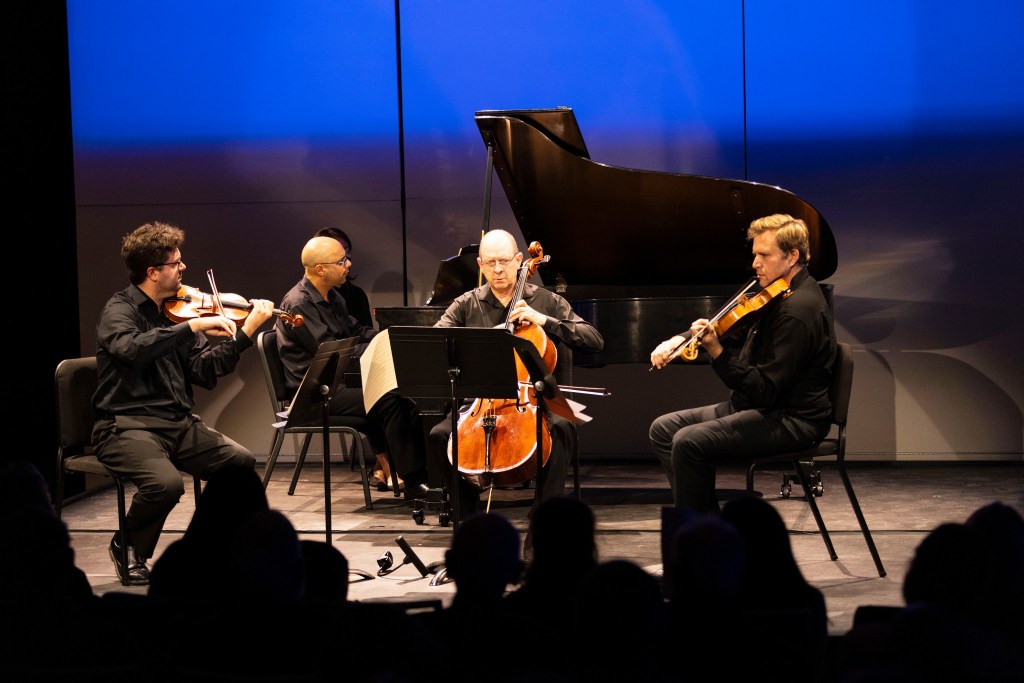
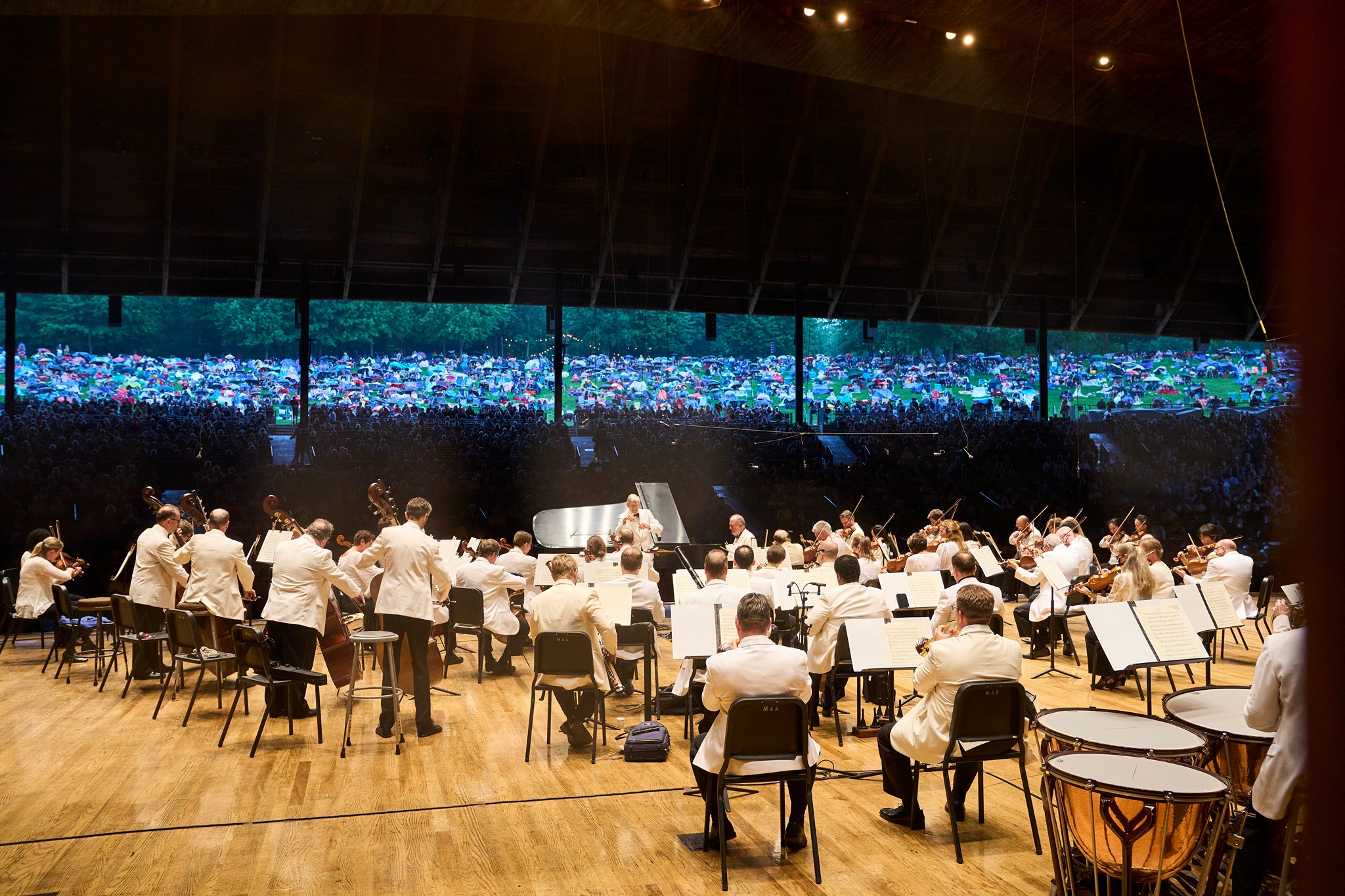
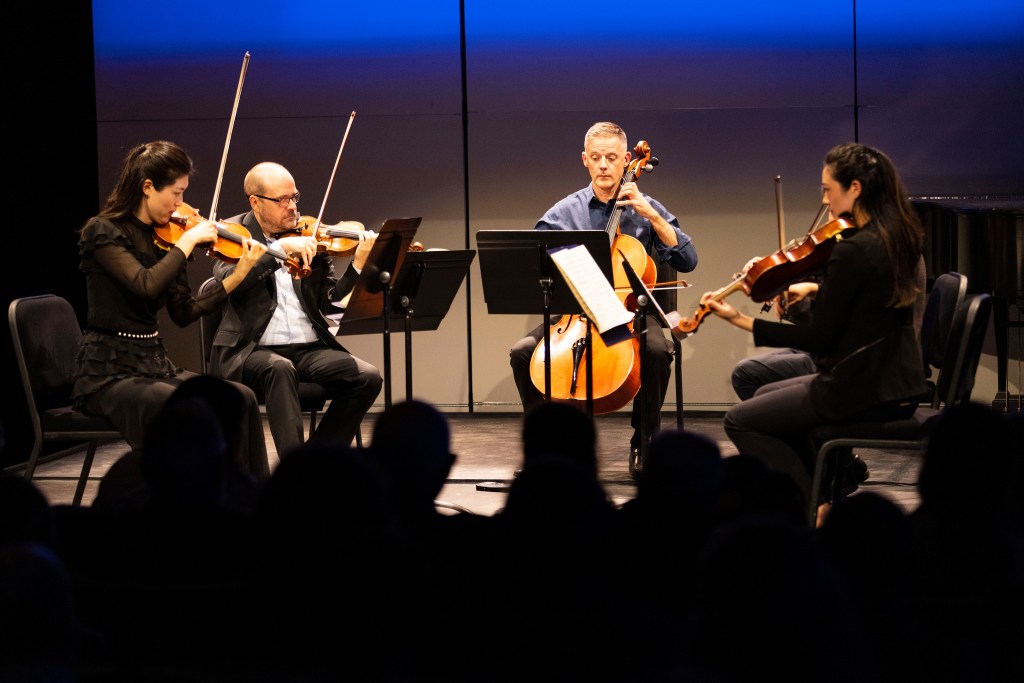
The evening prior to a particularly memorable Cincinnati Symphony program, one had the distinct pleasure of hearing select CSO musicians band together for a varied selection of chamber music. Held in the Wilks Studio – a rather more intimate space than the Springer Auditorium – the trio of works presented spanned the nineteenth-century, traversing configurations as diverse as wind nonet, piano quartet, and string quintet.
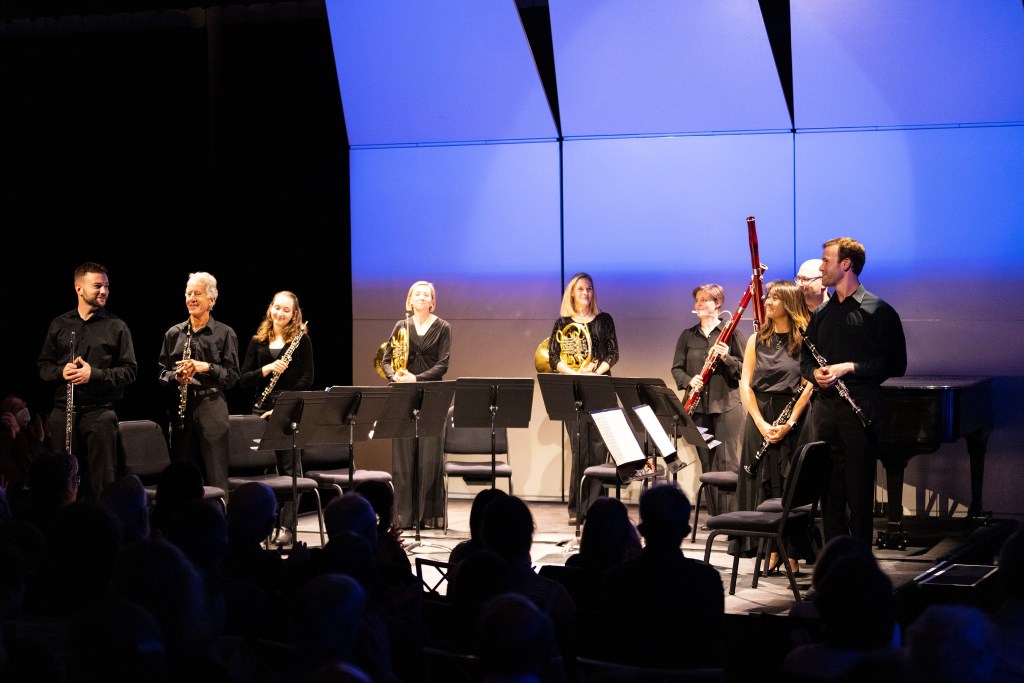
Going in reverse chronological order, the program opened with Gounod’s delightful Petite symphonie, scored for nine winds – a work which flautist Henrik Heide aptly introduced as one of the “pearls of the wind chamber music repertoire.” A stately, classical introduction initiated, an enticing set up for the movement proper’s pure joie de vivre, its Gallic lightness a sparkling contrast to the weightier Germanic works that would follow. A limpid, singing flute line highlighted the Andante cantabile, while the scherzo saw its march-like material regally announced by the horns. The finale rounded matters off with insouciant charm.

Schumann’s Piano Quartet occupied a vastly different soundworld – and also makes for an interesting contrast to the composer’s more frequently heard but contemporaneous Piano Quintet, also in E-flat major: though not without ample drama, the Quartet tends to be more restrained and intimate. Introductory material functioned a bit like a rhapsodic warmup, and a richly flowing melody built to fervent passions, encouraged by the powerful pianism of Dror Biran. Schumann took a cue from Beethoven in placing the scherzo second, a movement played by this group of musicians seamlessly even at breakneck speed. The slow movement that followed was truly gorgeous, with especially generous material from the cello (Daniel Culnan) and a searching line in the violin (Charles Morey), and the melody was increasingly decorated – very much in the spirit of the lieder pouring from the composer’s pen at the time. An energetic affair, the finale was especially striking in its fugato passage, expertly and crisply articulated.

Beethoven’s String Quintet in C major is, perhaps surprisingly, his only work in the medium, save for some adaptations of other pieces. The work opened graceful and genial, varied by sprightly filigree, occasionally leading to stormier sections – especially in the development. A slow movement was sweetly lyrical by contrast, while the scherzo saw a tenuous balance of drama and buoyancy – although a handful of passages could have been served by better intonation. As Beethoven was oft to do in closing movements, the final Presto was replete with contrapuntal textures, though it was the more playful material that was given the last word.

*
Gounod:
Henrik Heide, flute
Lon Bussell, oboe
Emily Beare, oboe
Christopher Pell, clarinet
Ixi Chen, clarinet
Martin Garcia, bassoon
Jennifer Monroe, bassoon
Elizabeth Freimuth, horn
Lisa Conway, horn

Schumann:
Charles Morey, violin
Christopher Fischer, viola
Daniel Culnan, cello
Dror Biran, piano

Beethoven:
Minyoung Baik, violin
Eric Bates, violin
Caterina Longhi, viola
Gerry Itzkoff, viola
Theodore Nelson, cello

ProMusica opens season with the brilliance of cellist Kian Soltani

ProMusica Chamber Orchestra
David Danzmayr, conductor
Kian Soltani, cello
Southern Theatre
Columbus, OH
October 8, 2022

Kernis: Musica Celestis
Haydn: Cello Concerto No. 1 in C major, Hob. VIIb:1
Vali: “The Girl from Shiraz” from Persian Folk Songs
Beethoven: Symphony No. 5 in C minor, Op. 67

ProMusica’s 2022-23 season opener was particularly auspicious in that it served as a platform for the local debut of Kian Soltani, a rapidly rising star in the cello world. The program began with the 1990 work for string orchestra Musica Celestis by American composer Aaron Jay Kernis. At the time of composition, the composer had been immersed in the work of Hildegard von Bingen, and the spirit of her work was woven into Kernis’ idiosyncratic texture. The piece unfolded glacially, with soaring passagework for both concertmasters. It reached celestial heights, ultimately arriving at peaceful resolution.

Kian Soltani, David Danzmayr, and ProMusica, photo credit ProMusica

A crisp, rhythmically punctuated introduction opened Haydn’s Cello Concerto No. 1. Soltani entered with a richly burnished tone, brimming with Viennese elegance, effortlessly fluent. Matters weren’t all pearly, however, with appropriate vigor given to the stormier sections. The cellist boasted a long-bowed, graceful melody in the central Adagio, and the finale rounded things off in the highest of spirits, with blistering virtuosity and vivacity.

Born in Austria of Iranian parentage, it was only fitting for Soltani to follow the Haydn with a work by Iranian composer Reza Vali – and Vali had in fact went to school with the cellist’s father in Iran. “The Girl from Shiraz,” a selection from the composer’s Persian Folk Songs – a work that just received its premiere earlier this year – made for an enticing contrast to the Haydn. A languid, winding melody in the cello introduced the titular melody, and the percussion scoring gave the work a decidedly non-Western feel. The latter section, known as “Love Drunk,” was a rambunctious and boisterous foil, pointing to a thunderous closing gesture.

Following the brilliance and intriguing programming choices of the first half, the balance of the program was rather more prosaic in Beethoven’s Fifth Symphony which nonetheless served as an exciting work with which to open the season. Danzmayr led a taut and focused performance, bringing out the work’s essential dramatic qualities.

Brooklyn Rider offers healing through music at Chamber Music Columbus

Brooklyn Rider
Southern Theatre
Columbus, OH
May 21, 2022

Shaw: Schisma
Esmail: Zeher
Dutilleux: Ainsi la nuit
Beethoven: String Quartet No. 15 in A minor, Op. 132

In the concluding entry of Chamber Music Columbus’ 74th season, Brooklyn Rider presented a program drawing upon their recent commissioning project and subsequent album Healing Modes. Inspired by Beethoven’s Op. 132 quartet which the composer used as a means to express his profound gratitude upon healing from illness, the project engaged contemporary composers to explore the healing properties of music. The five works commissioned were premiered by Brooklyn Rider at various venues during the 2018-19 concert season.

Brooklyn Rider, photo credit Shervin Lainez

Caroline Shaw’s Schisma (literally translating from Greek to “cleft”) takes as inspiration the Greek islands which have become makeshift refugee camps for Syrians escaping war. The score was colored by harmonies and figures that wouldn’t have been out of place in a work by Philip Glass (a composer this quartet has recorded extensively), and Shaw made creative use of pizzicatos and the percussive potential of the string instruments’ wooden bodies. A brief work, but the textural variety made for a gripping listen. Reena Esmail’s Zeher (the Hindustani word for “poison”) reflects on the composer’s bout with a throat infection (the titular poison). The Hindustani vocal style was mimicked in the cello (Michael Nicolas – one of Esmail’s classmates at Juilliard), with astringent dissonances in the rest of the ensemble. The work ended with resolution and clarity, finally freed of the pathogen.

The first half was to include the remaining works of the Healing Modes project – traversing pieces of Gabriela Lena Frank, Du Yun, and Mantana Roberts, which I’m keen to explore on BR’s recording – but a previously unannounced program change instead offered a preview of the quartet’s next major endeavor, The Four Elements. The project will seek to explore the four classical elements in musical terms, with Dutilleux’s 1976 work Ainsi la nuit (“Thus the night”) representative of air. Cast in seven movements, Ainsi la nuit is one of the landmark works for string quartet from the late 20th century. A kaleidoscope of moods were traversed in this extensive meditation on the night. It’s a work that challenges the listener, but was made all the more approachable by way of Brooklyn Rider’s committed and incisive performance.

Beethoven’s penultimate string quartet was likewise a landmark of its own time, and certainly a work that continues to speak to listeners. Slow introductory material probed for meaning before the first movement took shape with energy and synergy, given with a poignant dramatic sweep. The minuet that followed was rather lighter fare before the great Heiliger Dankgesang. Even for a composer with so many profound and heart-wrenching slow movements to his name, this is certainly a standout, a gracious paean and the emotional core of the work. Far removed from those meditative musings was the jaunty but brief Alla marcia, and lastly, a darkly-hued, impassioned finale, with the quartet’s fiery playing making matters especially arresting.

ProMusica closes season with Beethoven and Mendelssohn

ProMusica Chamber Orchestra
David Danzmayr, conductor
Martina Filjak, piano
Southern Theatre
Columbus, OH
May 7, 2022

Clyne: Stride
Beethoven: Piano Concerto No. 3 in C minor, Op. 37
 Encore:
 Pärt: Für Alina
Mendelssohn: Symphony No. 4 in A major, Op. 90, Italian

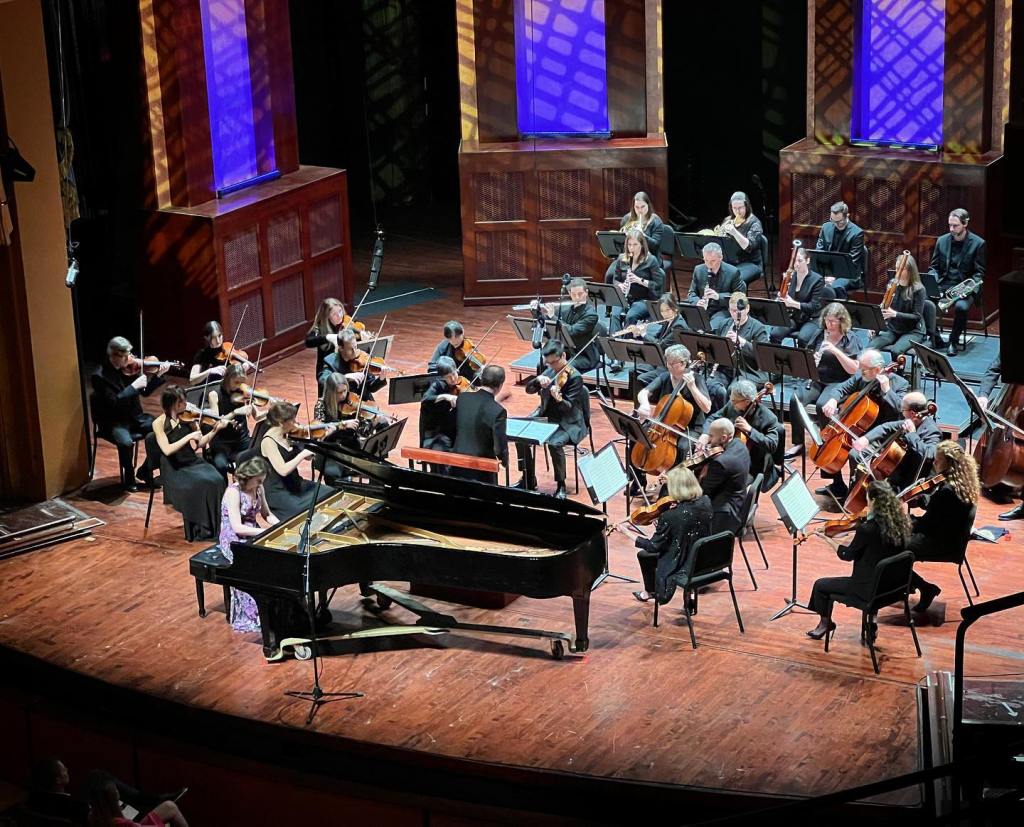
This weekend saw the close of ProMusica’s 43rd season, and the first full season since the pandemic hit. The evening kicked off in particularly delightful fashion with young students from ProMusica’s Play Us Forward program performing two short works for strings. ProMusica then took to the stage with a recent work by Anna Clyne, written in 2020 for the Beethoven 250th anniversary. Stride takes its cue from Beethoven’s Pathétique sonata and its name comes from the broken octave figures in the bass that one finds in the sonata and would later be associated with stride piano playing. Clyne’s work is cast in three interconnected movements, mirroring the structure of the source material. As in the Pathétique, prominent dotted rhythm gestures opened, and the “stride” figures were interlaced with quotes from the sonata, some more veiled than others. I was particularly struck by theme of the rondo finale being presented at a slow tempo, revealing a languid character beneath the surface. A brilliant reimagining of this venerable sonata.

Martina Filjak, David Danzmayr, and ProMusica, photo credit ProMusica

Beethoven reserved C minor for some of his most personal works – a body of work that includes the Pathétique sonata as well as the Third Piano Concerto, the latter of which engaged Croatian pianist Martina Filjak. I remember seeing her last when she won the 2009 edition of the Cleveland International Piano Competition, and it was wonderful to see her again all these years later with a flourishing career to her name. The orchestral introduction was crisply articulated, although one perhaps wanted conductor David Danzmayr to draw out even greater dynamic contrasts and variety. Filjak’s entry had the requisite drama, but her playing was stylish and elegant at heart, showing Beethoven at his most urbane and cosmopolitan. It seemed that she approached the work more akin to a Mozart concerto; while the first two certainly show indebtedness to the composer’s predecessor, the Third marks a stark departure. Nonetheless, the cadenza was fiery and impassioned, and the first movement’s enigmatic ending was deftly executed.

The lovely Largo was prayer-like and plaintive, and the concluding Rondo started with a sudden burst of the energy, building to the brilliant switch to the major in the final few bars. As an encore, Filjak opted for a work worlds apart from Beethoven (despite any associations to Beethoven the title might suggest): Pärt’s Für Alina, strikingly wonderful in its barren textures and mystical musings.

This season has seen several major works of Mendelssohn performed – the Scottish symphony, the violin concerto – and the trend was continued with the ebullient Italian symphony. Some unevenness in the brass did little to detract from the first movement’s buoyancy, given with classical economy and balance. A really delightful performance, perhaps nowhere more so than in the kinetic energy of the vibrant, sunny saltarello that closed.

Eddins shows his mettle as both conductor and pianist with the Columbus Symphony

Columbus Symphony Orchestra
William Eddins, conductor and piano
Ohio Theatre
Columbus, OH
February 20, 2022

Perkinson: Sinfonietta No. 1
Gershwin: Rhapsody in Blue (1926 orchestration, Grofé)
Beethoven: Symphony No. 5 in C minor, Op. 67

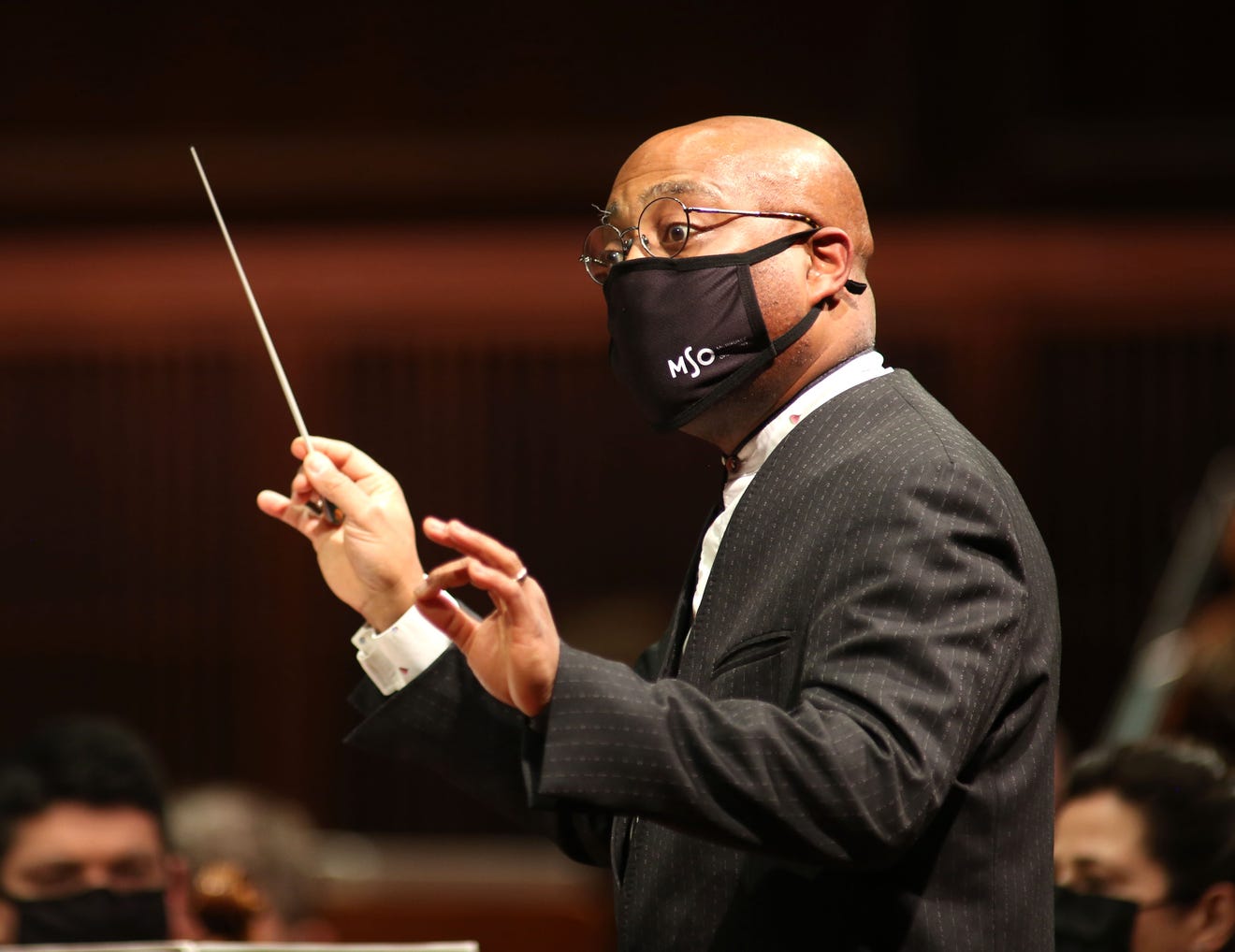
Guest conductor Williams Eddins led the Columbus Symphony last weekend in a decidedly populist program, though matters nonetheless opened with an unfamiliar work by an unfamiliar composer. The quantity in question was the Sinfonietta No. 1 by African-American composer Coleridge-Taylor Perkinson, named after Samuel Coleridge-Taylor who perhaps served as a guiding inspiration to the younger composer. A compact three-movement work dating from 1954, the work opened with angular gestures though generally lyrical at heart, colored by piquant harmonies. A mournful slow movement seemed to echo Barber’s Adagio for Strings (this work too was scored for strings alone), while the vigorous finale purveyed textures akin to a Baroque concerto grosso. A finely crafted product of midcentury America given with compelling advocacy from Eddins and the Columbus strings.

William Eddins, photo credit Jonathan Kim

Eddins served double duty as pianist and conductor in Gershwin’s Rhapsody in Blue, but first took several minutes to introduce the work – as historically-informed as it was entertaining. Principal clarinet David Thomas delivered the iconic opening in a sultry solo. The work was presented in its 1926 pit orchestra scoring for an authentic feel of the roaring twenties, and it was certainly fitting for the performance to take place in a venue that was a product of the same decade. Eddins proved equally adept at both roles, and guided the ensemble in a charismatic, high-octane performance.

It’s a challenge for conductors to make such a well-worn piece as Beethoven’s Fifth Symphony sound fresh. I wasn’t convinced Eddins managed to say anything novel, but the performance nonetheless served as an always welcome encounter with an old friend. The opening Allegro con brio benefitted from Eddins’ energetic conducting, an intensity countered by the warm lyricism of the strings in the slow movement – though I found the brass to be a bit overzealous. The scherzo started out as a whisper, employing the ubiquitous rhythmic gesture that binds the work, and gradually grew in urgency. Matters were held in suspense until the brassy C major finale broke through the clouds. Still, the journey is far from over – Beethoven has gift for profligate finales! – and the energy on stage seemed to flag for a somewhat anticlimactic ending.

Blomstedt and Cleveland Orchestra stellar partners in Nielsen and Beethoven

Cleveland Orchestra
Herbert Blomstedt, conductor
Mandel Concert Hall
Severance Music Center
Cleveland, OH
February 12, 2022

Nielsen: Symphony No. 4, Op. 29, The Inextinguishable
Beethoven: Symphony No. 5 in C minor, Op. 67

An appearance from the remarkably indefatigable Herbert Blomstedt is virtually guaranteed to yield stupendous results, and Saturday night’s performance was certainly no exception. The Swedish-American conductor paired major symphonies of Nielsen and Beethoven, the same two composers which comprised his debut program with this orchestra in April 2006. It’s a fitting coupling to be sure, both composers major symphonists of their respective generations, and in the present case, both works employed a progressive tonality, taking the listener on a journey to a distant destination rather than coming full circle.

Herbert Blomstedt and The Cleveland Orchestra, photo credit Roger Mastroianni, courtesy of The Cleveland Orchestra

Nielsen’s musical language can be somewhat intractable and austere, but The Cleveland Orchestra is well-equipped for the challenge. A compelling performance of the Fifth Symphony was given a few seasons ago, and this weekend the orchestra rose to the task even more under Blomstedt’s incisive guidance. The clangorous introductory material was given with clarity and inexorable drive. Nielsen’s palette is resolutely tonal though craggy and unforgiving; some respite was to be had when the conductor coaxed a piquant lyricism from the woodwinds. Despite the first movement’s busyness, matters closed in a simple grandeur, with the pulsating of the timpani foreshadowing their role to come.

The gentle and folksy nature of the Poco allegretto seemed to take its cue from the analogous movement of a Brahms symphony. Dulcet clarinets were the highlights in this movement scored for winds alone, occasionally buttressed by touches of pizzicato strings. Pained and discursive strings opened the slow movement. A lyrical dialogue was had between concertmaster Peter Otto and principal viola Wesley Collins before the material built to a stentorian climax. The finale opened in rapid-fire energy and the dueling timpanists (Paul Yancich and Tom Freer) on opposite ends of the stage were to thrilling effect. Blomstedt has an uncanny ability to get the expansive orchestra to morph into a single organism, and nowhere was this more apparent than in the unambiguously triumphant ending.

It’s a great challenge to make Beethoven’s Fifth – surely the most frequently performed symphony in the repertoire – sound more than merely routine, but Blomstedt certainly did. This weekend also served as something of a capstone to his memorable all-Beethoven program presented at Blossom last summer. The Allegro con brio was commanding and authoritative, its energy taut, focused, and searingly intense. Long, flowing lines in the low strings brought out the warmth of the slow movement with thoughtful contrasts illuminating the double variation structure. The scherzo, though weighty in its own right, served as something of a preface to the grandiose finale, a glorious race to the finish line of this archetypal journey from darkness to light.

Soloists shine in Beethoven’s Triple Concerto at ProMusica

ProMusica Chamber Orchestra
David Danzmayr, conductor
Katherine McLin, violin
Marc Moskovitz, cello
Spencer Myer, piano
Southern Theatre
Columbus, OH
January 23, 2022

Coleridge-Taylor: Four Novelletten, Op. 52 – Nos. 3 & 4
Beethoven: Triple Concerto in C major, Op. 56
Mendelssohn: Symphony No. 3 in A minor, Op. 56, Scottish

A true rarity – and wonderful discovery – opened ProMusica’s January program, namely the latter two entries of Samuel Coleridge-Taylor’s Four Novelletten, scored for string orchestra with a touch of percussion. The Valse was imbued with melancholy, in a similar vein to Tchaikovsky’s Valse mélancolique heard earlier in the day from the Columbus Symphony. Free-falling solo passages from assistant concertmaster Rebecca Willie added much charm, and the modest percussion neatly complemented the strings. A vigorous foil was to be had in the closing Allegro molto – with music of such quality and allure, I wish there had been time for the complete work!

Spencer Myer, Katherine McLin, and Marc Moskovitz with David Danzmayr and ProMusica, photo credit ProMusica

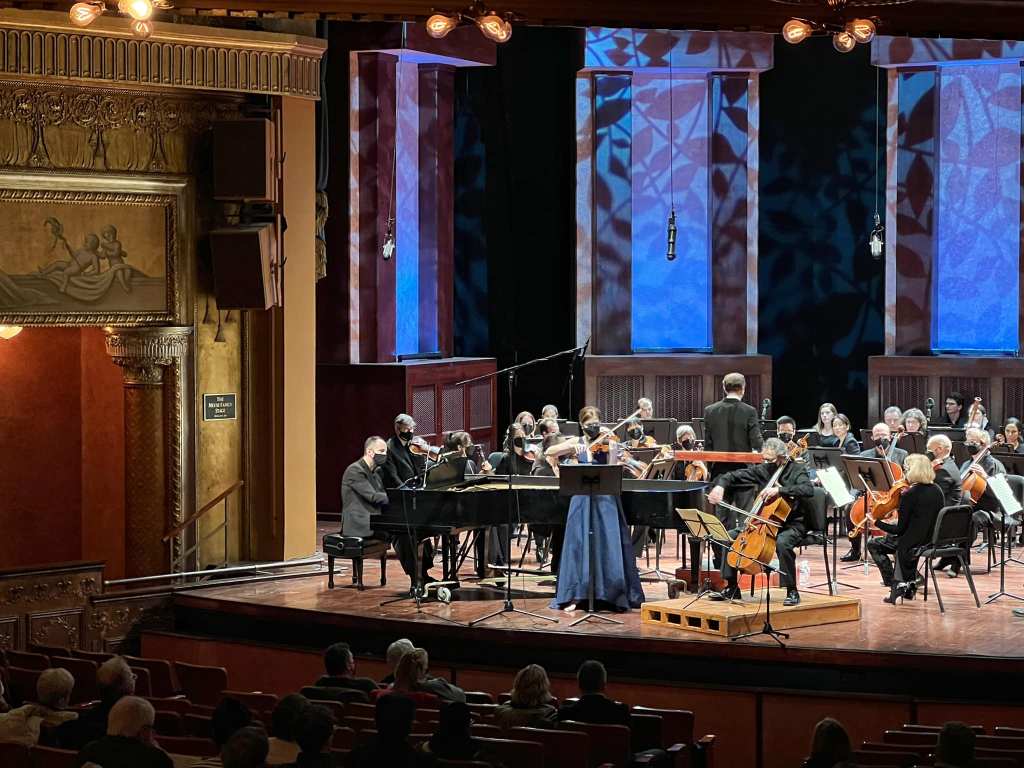
Beethoven’s Triple Concerto formed the heart of the program – and as a somewhat late program change, a tip of the hat to the soloists for nonetheless putting together a tight and convincing performance. ProMusica’s concertmaster Katherine McLin and principal cello Marc Moskovitz were buttressed by pianist Spencer Myer, and the trio purveyed a warm chemistry, both amongst themselves and with the orchestra at large. The graceful orchestral introduction began in the low strings, and Moskovitz’s lyrical cello introduced the soloists – the cello being the most prominent of the trio (in the informative post-concert conversation, it was suggested that this is effectively Beethoven’s cello concerto in all but name). What followed in the spacious opening movement was genial and untroubled, showing a lighter side of the composer – worlds apart from weighty works that comprise the adjacent opus numbers, namely the Eroica symphony and Appassionata piano sonata. The serene Largo peered inward, given with the intimacy of chamber music, before a seamless transition to the rambunctious Rondo alla Polacca, wherein once again the main theme was guided by the cello.

Mendelssohn’s Scottish symphony closed the program and offered the finest playing of the evening. Matters opened in brooding solemnity, conveying the composer’s awe of his Scottish sojourn. The first movement was shrouded in mystery, encouraged by Danzmayr’s taut dynamic control, and often passionate with some particularly notable playing from the clarinet. As a counter to the weight of the preceding, the scherzo was of folksy charm, quintessentially Mendelssohnian in its sparkling textures. A certain solemnity returned in the following movement, heightened by striking chorale writing, while the vigorous finale was an uncompromising affair until the triumphant closing material, unequivocally arriving in the major.

Aizuri Quartet illuminates enterprising program at Chamber Music Columbus

Aizuri Quartet
Southern Theatre
Columbus, OH
November 13, 2021

Strozzi: L’usignuolo, Op. 1 No. 5, arr. Alex Fortes
Strozzi: L’amante modesto, Op. 1 No. 13, arr. Alex Fortes
Young: Memento mori (Phase I)
Alberga: String Quartet No. 1
Beethoven: String Quartet No. 12 in E-flat Major, Op. 127

With a name derived from a particularly vibrant style of Japanese woodblock printing, the Aizuri Quartet cuts a fittingly dynamic stage presence, and made a welcome appearance at Chamber Music Columbus. During their stay in Columbus, the quartet also found time to work with local music students. As a prelude to the evening, a group of high school age string players showed the fruits of their coaching from Aizuri in a performance of the first movement of Haydn’s “Fifths” quartet. The first half of the Aizuri program was particularly inventive and wide-ranging, spanning repertoire from the seventeenth through twenty-first centuries.

Aizuri Quartet, photo credit Shervin Lainez

The first works performed in fact predate the modern string quartet, namely a pair of madrigals by Barbara Strozzi, both extracted from her first book of works in the medium (Op. 1). Thoughtfully recast for string quartet by violinist Alex Fortes on an Aizuri commission, the present transcriptions afforded the ensemble the opportunity to explore a repertoire otherwise out of scope for a string quartet. Fortes’ skillful use of the quartet deftly imitated the singing of the source material, and both works made for a touching opening statement.

Marked contrast was to be had in the succeeding work as we were fast-forwarded to a 2013 composition by Nina C. Young. Memento mori (Phase I) is the first of four projected works in the series. The Latin title translates to “remember that you will die,” and and its core, this work is concerned with the inevitability of death and the passage of time. It looks towards the past quite literally in interpolating material from Bach’s Art of Fugue, though often buried deep in the intricate fabric of the work. The challenges posed by the rhythmic complexities evidenced the quartet’s tight communication and musical synergy. Ultimately, and perhaps inevitably, the work faded away into the ether. A compelling listen.

Dating from 1993, the String Quartet No. 1 by Jamaican composer Eleanor Alberga made for another unfamiliar but engaging selection. Alberga’s impetus to compose the quartet came from a rather unusual source of inspiration: a physics lecture, in this case concerned with the notion that all matter is derived from star dust. Even if the musical content wasn’t engaging (spoiler alert: it was), the work would still stand out for its inventive tempo indications; surely the first movement takes the prize with the wonderfully multilingual marking “Détaché et matellato e zehr lebhaft und Swing It Man.” Indeed, it was performed with a singular propulsive drive. The spectral central movement (“Espressivo with Wonder and Yearning”) was heightened by a yearning, gracious melody from first violinist Emma Frucht, reaching high into the cosmos. The finale (“Frantically Driven yet Playful”) was a wild ride, punctuated by a striking pizzicato section, and matters came to a close by way of a vigorous chordal gesture.

Though a retreat to more standard repertoire, the latter half was no less ambitious in being devoted to the first of Beethoven’s monumental, incomparable series of late quartets (Op. 127). Resonant chords heralded the work before diving into the heart of the opening movement, spacious and elegant but not without appropriate weight. The slow movement, one of Beethoven’s most expansive, was serene and warm, with the quartet drawing out the individual character of each variation. Far from a mere trifle, the excitement of the scherzo was encouraged by sharp dynamic contrasts. In the finale, a jagged opening gesture melted into a graceful theme, buoyant and dance-like, perpetuating a genial atmosphere before a cascading finish ended on a sequence of chords, just as the work began.

Southern Theatre at intermission during the Aizuri’s performance

The 3 Bs: Blomstedt, Beethoven, and Blossom

Cleveland Orchestra
Herbert Blomstedt, conductor
Garrick Ohlsson, piano
Blossom Music Center
Cuyahoga Falls, OH
August 1, 2021

Beethoven: Piano Concerto No. 4 in G major, Op. 58
Beethoven: Symphony No. 7 in A major, Op. 92

Two of The Cleveland Orchestra’s veteran collaborators – Herbert Blomstedt (now a remarkable 94 years old!) and Garrick Ohlsson – combined forces for a memorable summer evening at Blossom, offering an emblematic piano concerto and symphony of Beethoven. On a personal note, this was my first time seeing a full orchestra in person since before the pandemic, and what a pleasure it was to be back in the audience.

The entire trajectory of the Fourth Piano Concerto is set by the brief but beguiling opening statement in the piano. Ohlsson offered a gentle sound, deftly voiced and articulated. A lyrical presentation of the movement’s primary themes followed in the orchestra, a supple accompaniment encouraged by Blomstedt’s graceful direction. Ohlsson blended beautifully with the orchestra with his sterling technique being used for the noblest of causes. Still, the stormier passages were perhaps a bit too genial, certainly when considering what one might expect from the often fiery playing of a pianist known for his mastery of the Romantic repertoire. A wondrous purity of tone was cultivated in the slow movement, and what ensued was an enigmatic dialogue between pianist and orchestra. At this point, the clouds opened up for a heavy rainstorm, but the performers onstage remained unfettered. The finale served as a fitting foil to the seriousness of the preceding, jocular and elegant.

While the Seventh Symphony had bellicose beginnings, it was the gracefulness of Blomstedt’s baton-less conducting that made the strongest impact; the rhythmic motifs that propelled matters forward were lithe and stylish. Top-drawer playing was heard throughout the orchestra, although it was the winds that made for particular standouts with Joshua Smith’s pivotal flute solo pointing the way to the heart of the symphony. The indelible Allegretto was of chilling effect, intensified by the long-bowed strings. In the latter two movements, Blomstedt did much to capitalize on the vivaciousness of the omnipresent dance rhythms, music as joyous and vigorous as anything Beethoven wrote.

Roderick Williams vividly brings Die schöne Magelone to life at 92Y

Roderick Williams, baritone
Julius Drake, piano
Adam Gopnik, narrator
Cristina Garcia Martin, animations

Theresa L. Kaufmann Concert Hall
92nd Street Y
New York, NY
January 22, 2020

Beethoven: An die ferne Geliebte, Op. 98
Brahms: Romanzen aus L. Tieck’s Die schöne Magelone, Op. 33

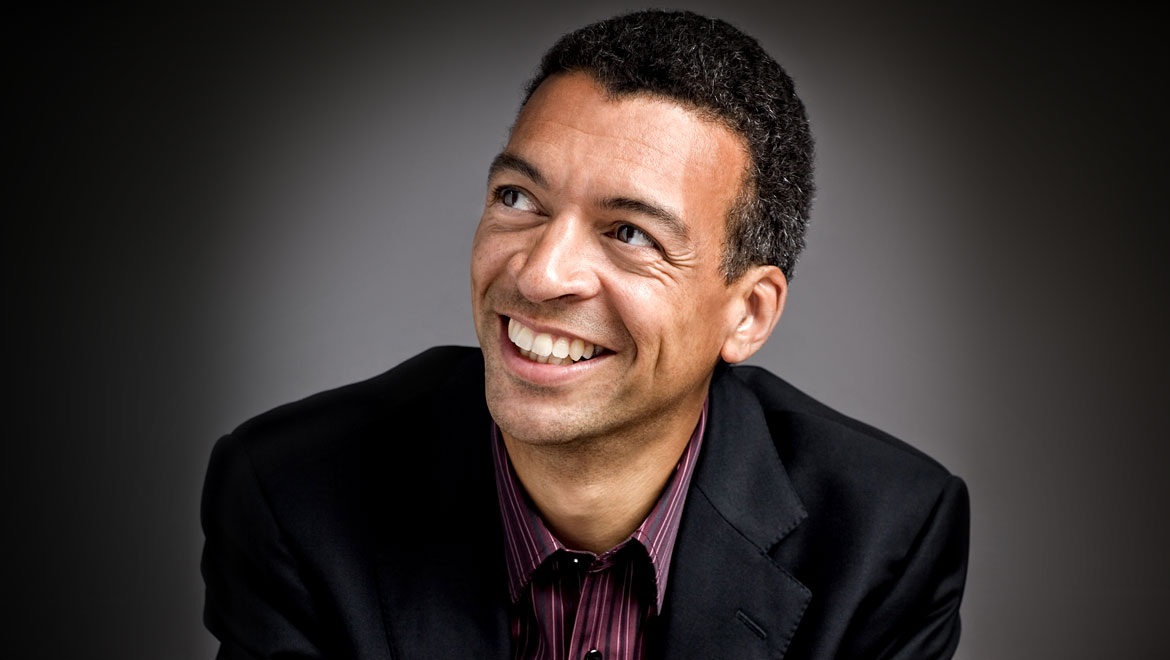
If Beethoven didn’t invent the song cycle, surely he was the first great composer to embrace such a structure with his modest yet nonetheless epochal An die ferne Geliebte. In this 250th anniversary of Beethoven’s birth year, all the installments of 92Y’s vocal series include the aforementioned in concert with an entry from the immense body of work it spawned: Roderick Williams and Julius Drake’s Wednesday evening recital paired it with Brahms’ Die schöne Magelone. Before diving in to the Beethoven archetype, the affable Williams addressed the audience with some musings about what constitutes a song cycle, humorously noting that one such distinction is the point at which one applauds.

Roderick-Williams-2-Groves-Artists
Roderick Williams, photo credit Groves Artists

The six songs that comprise An die ferne Geliebte barely stretch a quarter hour, but they say much in little – tautly constructed, and with ingenious transitions in the piano to connect each song to its successor in a continuous arc. Williams’ razor-sharp German diction served to convey the wistfulness in the opening Auf dem Hügel sitz ich spähend, as did the longing appoggiaturas from the keyboard. A texture of roiling triplets marked Leichte Segler in den Höhen, delivered with a lightness of touch though matters grew darker along with the clouds depicted. The closing Nimm sie hin denn, diese Lieder counted as a further highlight in its sonorous resound in conveyance of deep Sehnsucht, with a recurrence of the material from the first song bringing things to a satisfyingly cyclical close.

The rather more extensive Magelone songs – which the program notes rightfully called a “neglected masterpiece” – were given an ambitious multimedia treatment. Brahms asked for portions of Tieck’s prose (published in the late 18th century, drawing on a legend that dates from medieval France) to be read between songs – in many regards, a necessity given the cumbersome narrative and that not all songs are from the protagonist’s point of view. Writer and essayist Adam Gopnik served as a fine narrator, delivering Tieck’s florid text in an English translation by Williams. Additionally, during the narrations, animations by Cristina Garcia Martin were projected, illustrating the tale on a colorful and stylish canvas, and at their best, obviating the need for the audience to meticulously follow along with texts and translations.

The opening Keinen hat es noch gereut was a courtly affair of rollicking energy, while the succeeding Traun! Bogen und Pfeil showed the performers at their most defiant, with Drake offering some extrovert playing, handily surmounting Brahms’ thorny piano writing. Wie soll ich die Freude was a touchingly lyrical expression of bliss and joy – this fairy tale with an eventual happy ending so much the opposite of the tragic depths favored in the Romantic era song cycles – and served as a logical break before the intermission. Wir müssen uns trennen offered delicate imitation of the lute, and here was a clear case where the narration and animation helped frame the song in context – otherwise one might well have been left wondering why at this point the protagonist was singing a heartfelt goodbye to a lute.

By the same token, given the improbability of this fairy tale narrative, I couldn’t help but wonder if these extramusical interjections were altogether necessary – perhaps it is more fruitful to eschew any distractions from a convoluted plot and instead allow the audience to zero in on the exquisitely crafted music in of itself. Wie schnell verschwindet was the first real instance of melancholy, and quite movingly so, but countered in due course by the coquettishness of Sulima. Williams and Drake gave the penultimate Wie froh und frisch mein its requisite heroism, and the closing Treue Liebe dauert lange was a hymn to the power of true love, with Williams’ rich baritone resonating stately and pensive.

54
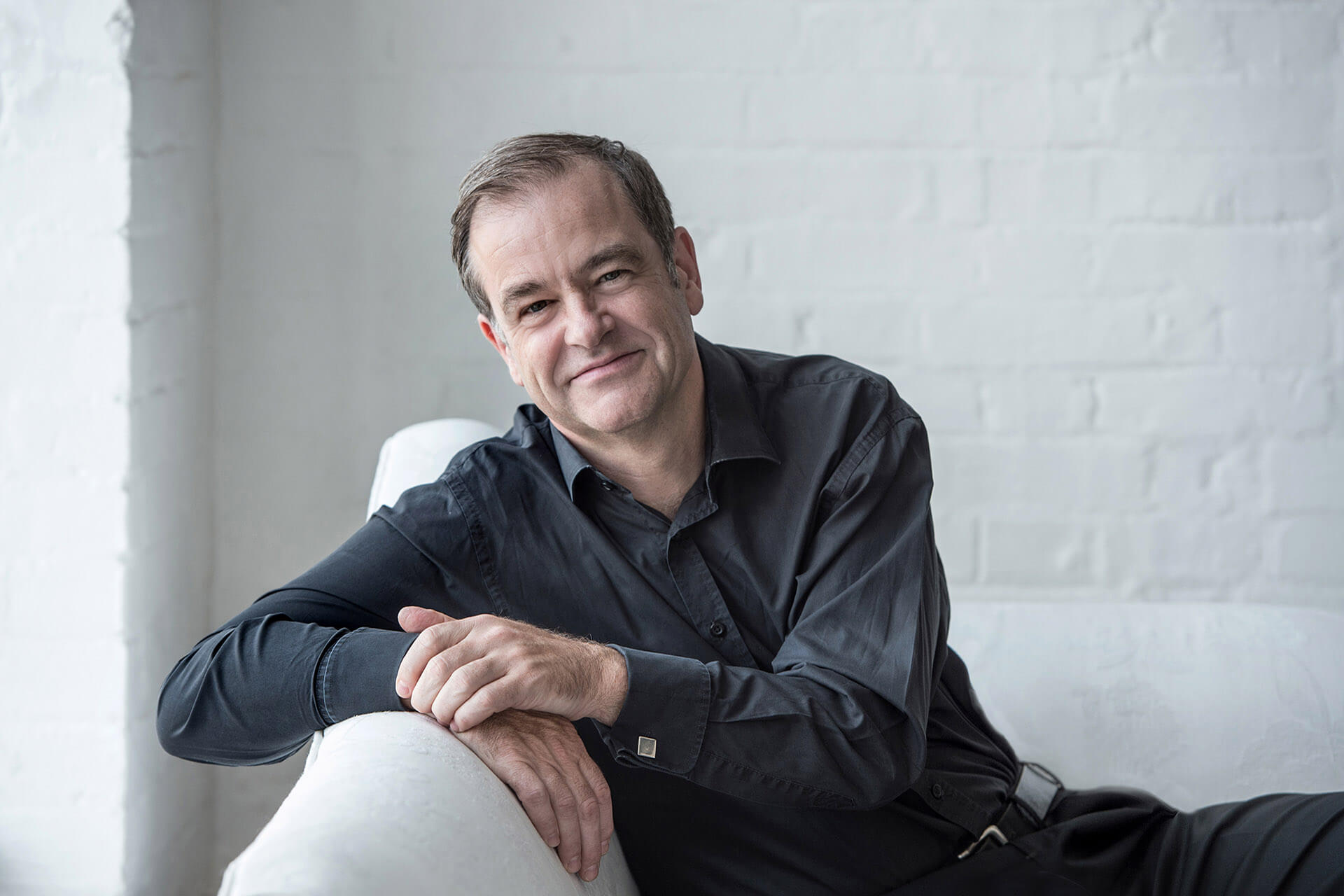
Julius Drake, photo credit Sim Canetty-Clarke