North Carolina Symphony delights in Farrenc and Beethoven

North Carolina Symphony
Joseph Peters, conductor
Meymandi Concert Hall
Martin Marietta Center for the Performing Arts
Raleigh, NC
September 27, 2024

Farrenc: Symphony No. 3 in G minor, Op. 36
Beethoven: Symphony No. 8 in F major, Op. 93

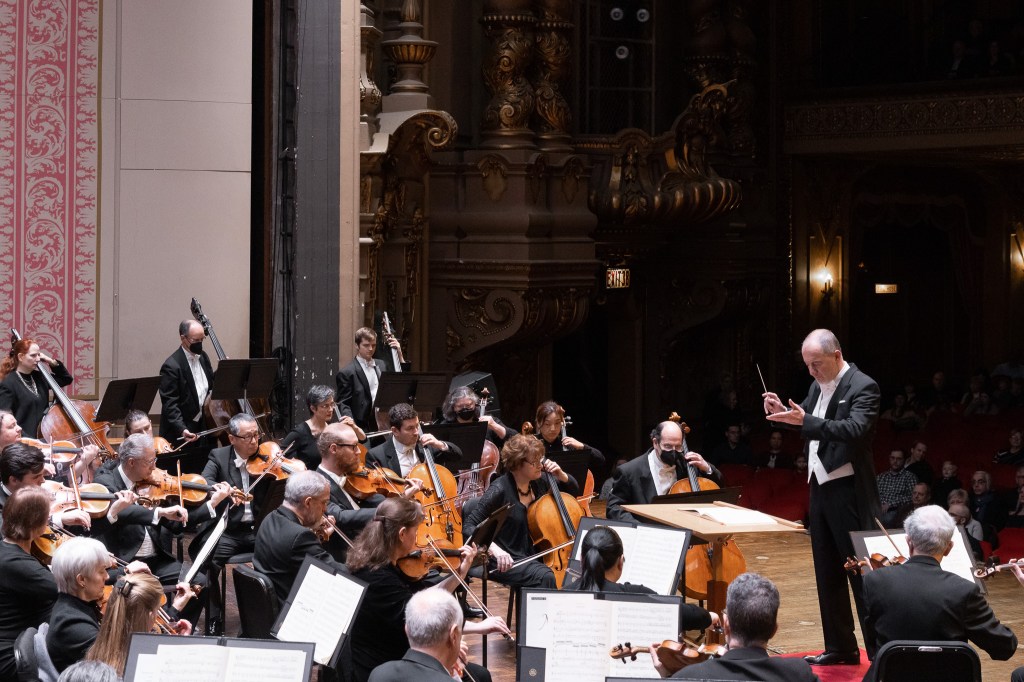
Despite the threat of severe thunderstorms as vestiges of Hurricane Helene, the show went on at Raleigh’s Meymandi Concert Hall, with the North Carolina Symphony offering a delightful matinee program. At the podium was Joseph Peters, who also serves as the Symphony’s associate principal oboe and English horn.
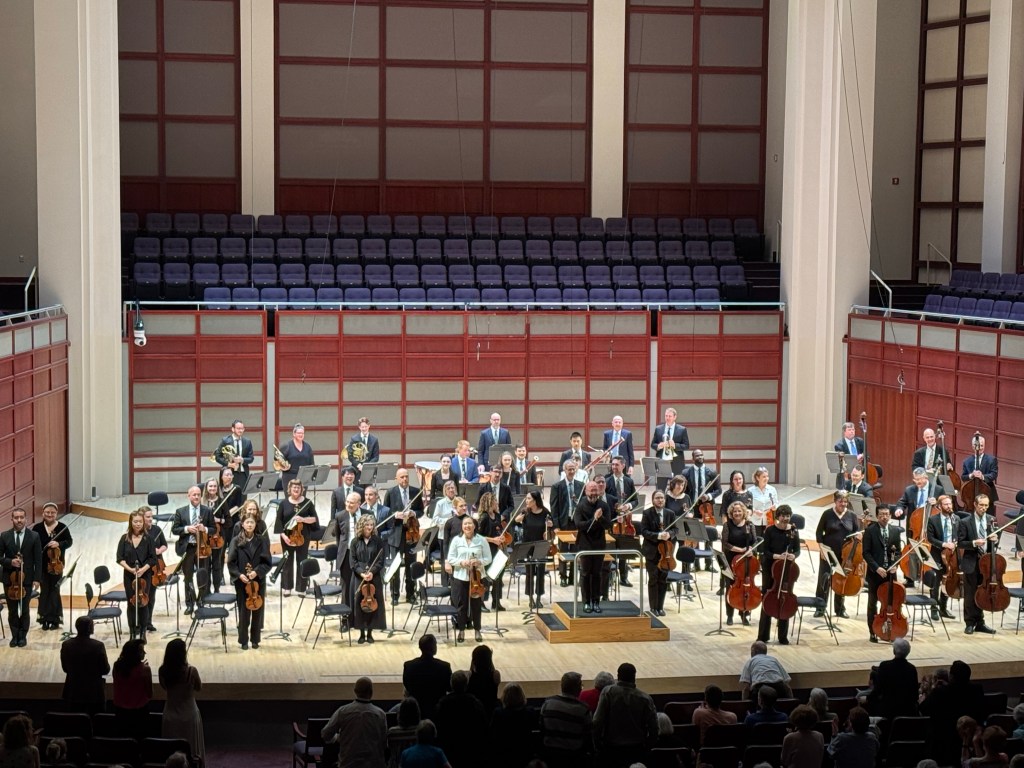
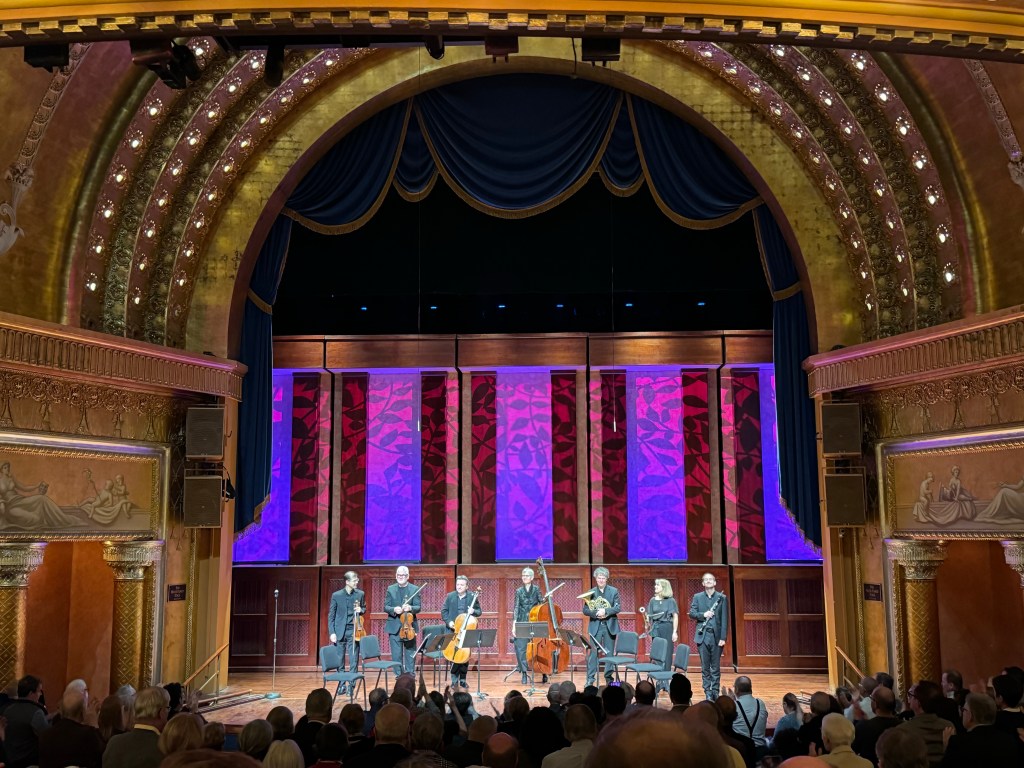
North Carolina Symphony and Joseph Peters

With a Strauss serenade being jettisoned for the shortened afternoon performance, two symphonies were contrasted, beginning with the largely forgetten Third Symphony of Louise Farrenc. A testament to her talent, Farrenc had the distinction of the being the only woman to hold professorship at the Paris Conservatoire in the nineteenth century. Her third and final symphony dates from 1847, a rare instance of a French symphony from that time as French composers sought to explore mediums different from their Germanic counterparts.

A brief slow introduction served to firmly establish the G minor tonality, giving way to a pointed theme, crisply articulate in its presentation. To me, it sounded as something of an amalgamation of Mozart’s two great symphonies in the same key with a touch of Mendelssohn’s Scottish — though there was ample evidence of Farrenc’s own voice, not the least in the mellifluous winds which offered an inimitable Gallic charm. A blistering coda brought the opening movement to a close.

The Adagio cantabile was marked by a deeply lyrical theme in the honeyed clarinet, answered by the strings. Beginning quietly, dynamic contrasts were maximized in the scherzo, Mendelssohnian in its briskness — and to no detriment of clarity. A brief but vigorous finale led to a to satisfying conclusion, and this counted as a welcome opportunity to hear a neglected yet skillfully crafted work.

In Beethoven’s Eighth Symphony, he aspired to the lightheartedness and joviality of his former teacher Haydn — almost as if he needed to create seven monuments before he could attempt such an endeavor. The opening seemingly overflowed with exuberance, with accents punctuating its rhythmic vivacity. The Allegretto scherzando was light and gossamer, and the most patently indebted to Haydn’s wit. Despite being a driving force in replacing the minuet with a scherzo in the symphony, here Beethoven retreated to the venerable dance form. The swagger was infectious, and the horns in the gentler trio were especially lovely — and the work’s finale was of an ebullience that even exceeded that of the opening.
Guest conductor, cellist feature in Columbus Symphony program

Columbus Symphony Orchestra
Kenneth Bean, conductor 
Tommy Mesa, cello
Ohio Theatre
Columbus, OH
May 17, 2024

Mendelssohn: The Hebrides, Op. 26
Montgomery: Divided
Tchaikovsky: Variations on a Rococo Theme, Op. 33
Beethoven: Symphony No. 2 in D major, Op. 36

The penultimate offering of the Columbus Symphony season saw a local podium debut from Kenneth Bean, currently an assistant conductor at the Princeton Symphony Orchestra (CSO music director Rossen Milanov’s other ensemble). The evening began with Mendelssohn’s Hebrides overture, a bit rushed here for my taste, not quite capturing the foggy mystery of the Scottish coast. Matters improved, however, with more measured drama, and fine solo passages from the clarinets.

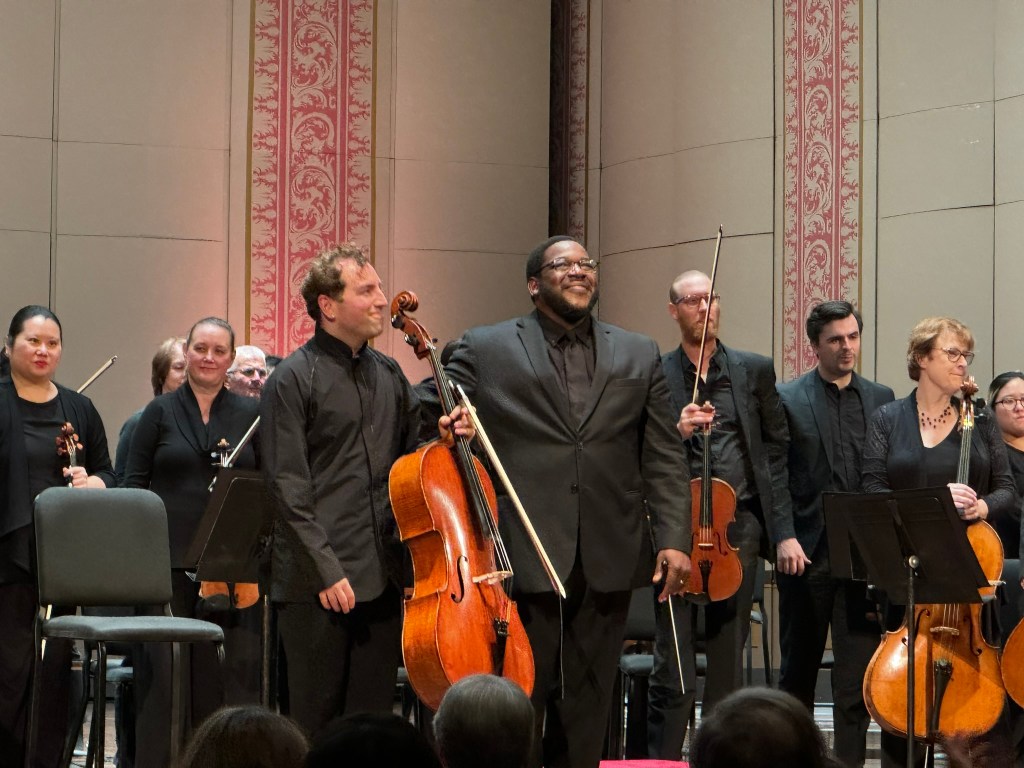
Tommy Mesa and Kenneth Bean with the Columbus Symphony

Two works for cello and orchestra followed, bringing forth Cuban-American cellist Tommy Mesa. Both works fell short of a full-fledged cello concerto, but said much in the space of their more modest dimensions. Mesa himself gave the premiere of Jessie Montgomery’s Divided with the Sphinx Ensemble at Carnegie Hall in 2022. The work’s title refers to the divisions and inequalities rampant in American society, with the cello often at grating odds with the orchestra. A drone from the soloist in the manner of a lamentation opened. The orchestra joined as if in conflict with the soloist, but the cello part became more declamatory and impassioned, a lyricism that suggested tepid resolution.

Tchaikovsky’s Rococo Variations began with an elegant presentation of the alluring theme following a brief orchestral introduction. The variations that succeeded further elaborated on the theme, and displayed Mesa’s limber technique – though his intonation at times left something to be desired. A slow variation offered contrast, and Mesa was perhaps at his best in a pensive section ahead of the ebullient conclusion.

Though still an early work, Beethoven’s Second Symphony is very much recognizable as the composer’s own, an epoch-defining musical language that had already begun to crystallize. A weighty introduction was anchored by the timpani before the first movement proper took flight with a jovial theme interwoven with drama. It was in this work that Bean seemed to gel best with the CSO. An extended Larghetto was calm and bucolic, though not quite of the heart-wrenching depths Beethoven would aspire to in his slow movements to come. The Second is noted for using a scherzo in place of the time-honored minuet, something that would certainly become one of the composer’s hallmarks, and the jocular finale brought the work to a bold finish.

Sara Davis Buechner joins Columbus Symphony in Viennese program

Columbus Symphony Orchestra
Rossen Milanov, conductor 
Sara Davis Buechner, piano
Ohio Theatre
Columbus, OH
April 5, 2024

Haydn: Symphony No. 82 in C major, Hob. I:82, The Bear
Mozart: Symphony No. 31 in D major, K297, Paris
Beethoven: Piano Concerto No. 1 in C major, Op. 15

Encore:
Gershwin: The Man I Love

This weekend’s Columbus Symphony program traversed Haydn, Mozart, and Beethoven, all of whom spent most of their professional life in Vienna, and crystallized and embodied what we now know as the Classical style. Though a Viennese evening, the first two selections were associated with Paris, beginning with Haydn’s Symphony No. 82. The first of the six so-called Paris symphonies, it and its successors were written on commission for performances in the French capital throughout 1786.

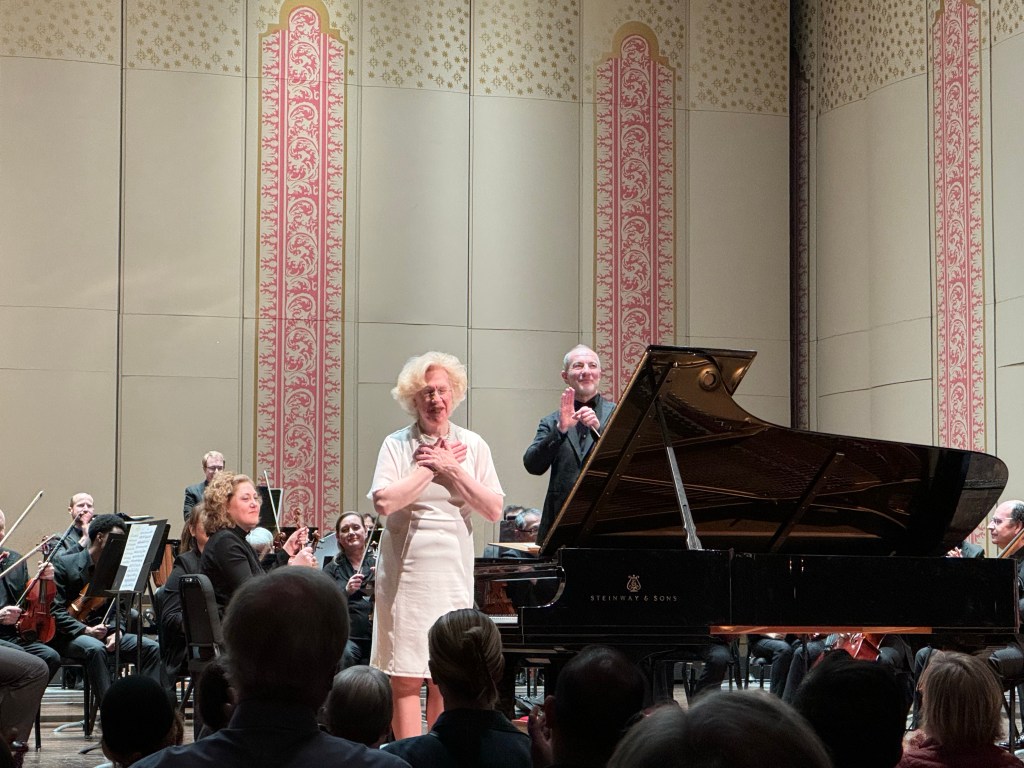
Sara Davis Buechner, Rossen Milanov, and the Columbus Symphony

Despite its numerical order, No. 82 was the last of the Paris symphonies to be composed. The rather heavy-handed opening lumbered forward, soon to be countered by a gentler theme in a back and forth with the more martial material. The development introduced some piquant dissonances that to my ears seemed to anticipate those in Beethoven’s Eroica. Haydn showed himself master of the double variation in the Allegretto. The finale was marked by a sustained drone, giving rise to the work’s ursine nickname, imitating the music used to accompany the barbaric practice of dancing bears, in any case, themes of folk inflection gave the symphony a spirited close.

Though the program was presented chronologically by composer, Mozart’s Paris symphony (no. 31) predates Haydn’s by almost a decade. A bold opening – and perhaps a bit overbearingly so Friday night – showcased the expanded orchestra (inclusive of clarinets, the first Mozart symphony to employ them), a quantity that must have dazzled Parisian audiences at the time. Delicately drawn-out melody made the central slow movement especially lyrical, and the finale was a pristine balance of both abandon and sophistication.

The first of Beethoven’s five genre-defining piano concertos brought forth Sara Davis Buechner as soloist. A gentle theme brimming with playful potential was heard from the orchestra, though the time-honored tradition of an orchestral introduction is a device the composer would jettison in his later works in the medium. Buechner’s entry was an elegant affair, deftly ornamented and replete with smooth runs across the keyboard, engaging in an energetic conversation with the orchestra. Though the work still very much bears the influence of Mozart, a lyrical flourish several minutes in unmistakably showed Beethoven’s individual stamp. Buechner’s snappy rhythmic punctuations and dynamic contrasts imbued the performance with excitement, and especially so in the wide-ranging cadenza of her own device (though perhaps not as wide-ranging as the one Alkan supplied for the Third Concerto!).

The Largo was gorgeous and serene, a mood sustained by the delicate cantilena in the piano. Quite a contrast to the Allegro scherzando finale which rivaled the mischievousness of his teacher Haydn – and moreover, in this case a nod to one Andreas Hofer – and Buechner offered a reading with flexibility and freedom. An enthusiastic reception brought her back for an encore which she introduced as “an unnecessary delay before my first martini” – a delay we’re grateful for, as it proved to be a lovely and sultry account of Gershwin’s The Man I Love.

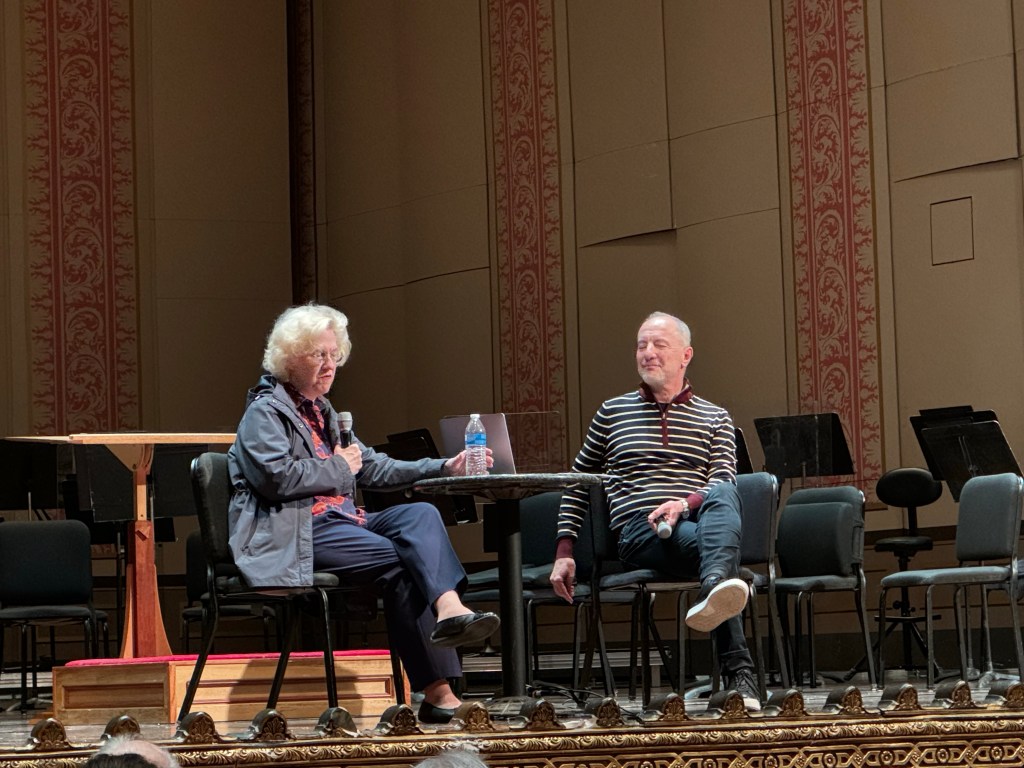
Buechner and Milanov during the preconcert conversation

Rosamunde Quartet anchors Linton Chamber Music program with sublime Beethoven

Rosamunde String Quartet
First Unitarian Church of Cincinnati
Cincinnati, OH
March 3, 2024

Haydn: String Quartet in C major, Op. 20 No. 2, Hob. III:32
Puts: Credo
Beethoven: String Quartet No. 15 in A minor, Op. 132

Something of a supergroup amongst string quartets, the Rosamunde is comprised of current or former members of the Berlin, New York, and Los Angeles philharmonics, affording these players an opportunity to supplement their orchestral responsibilities by indulging in their love of chamber music. Their Sunday afternoon program at Cincinnati’s Linton Chamber Music offered two major classical period quartets sandwiching a more recent expression in the medium.

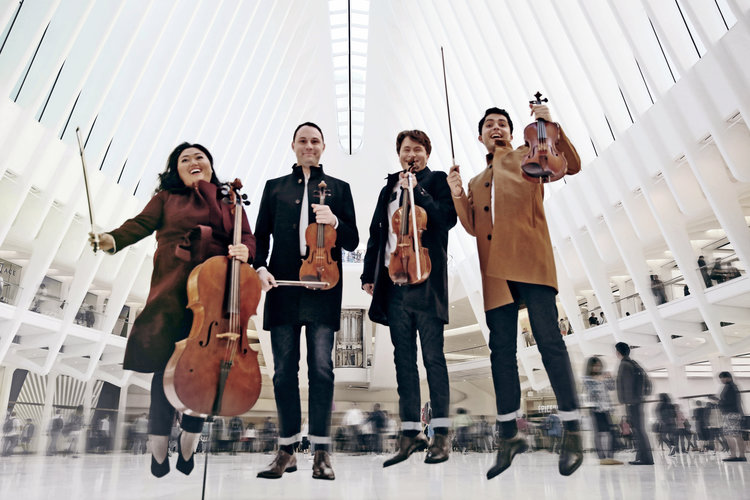
Rosamunde String Quartet at Linton Chamber Music. L-R Nathan Vickery, Shanshan Yao, Teng Li, Noah Bendix-Balgley

Dubbed the “father of the sting quartet,” Haydn virtually invented the form – and it was the set of six that comprise the watershed opus 20 in particular that earned him the title. Collectively known as the Sun Quartets owing to an early edition’s cover illustration, the Rosamunde selected the second quartet, in the sunny key of C major. A rather mellow beginning was had with the first violin absent from the opening few bars, and there was a particularly robust part for cello – Haydn was at his most lyrical here. A slow movement was stern and solemn, perhaps a look back towards the Baroque stylistically, but the latter section was truly radiant – and fittingly timed with the late afternoon sunlight streaming through the church’s stained glass windows.

A minuet followed without pause, much more restrained than typical for the composer, and a trio contrasted in the minor. Though less of a hallmark of Haydn’s later quartets, half of opus 20 concludes with a fugue. The four-voice fugue that closed the present example evidenced the Rosamunde’s incisive clarity and taut communication.

A 2007 work by Kevin Puts took the string quartet to the present day. On commission from the Miró Quartet, Puts was tasked with writing a work to capture the “lighter side of America,” a requirement he found quite a challenge given the backdrop of wars in the Middle East and mass shootings back home. The resulting Credo painted short vignettes which inspired feelings of hope in some fashion.

The Violin Guru of Kantonah brought to life an instrument maker in the titular New York town. Improvisatory in character, it seemed to gingerly experiment with the different possibilities of the instruments, and a cross-section of excerpts from the violin repertoire surfaced in the first violin. Infrastructure was inspired by the bridges and highways the composer passed taking the path along the Monongahela River in Pittsburgh. Guttural and motoric, it depicted the marvels of industry with vigor.

Intermezzo: Learning to Dance recollected when Puts observed a mother teaching her daughter how to dance, its nostalgic lyricism capturing a sweet moment. The Pittsburgh tableau was reprised with the vigor turned up one more notch before the closing Credo, the heart of the piece. Puts purveyed a resonant lyricism, grappling and questioning for answers, ultimately finding a peaceful if inconclusive resolution.

Beethoven’s monumental opus 132 completed the program. Somewhat in the manner of where the Puts left off, Beethoven’s penultimate quartet began searching and musing, with the opening movement finding its footing in material that the Rosamunde gave with a rich sonority, a wide-ranging essay that culminated in a blistering coda. The crux of the work came in the central Heiliger Dankgesang, unfolding as a deeply-felt hymn. In his spoken remarks, violinist Noah Bendix-Balgley suggested a connective thread between the Puts and Beethoven in that both find hope in difficult times (in Beethoven’s case, in the wake of recovering from serious illness). At times the mood was simply ecstatic, an expression of joy all too uncommon for the tragic composer. The brief march that followed was rather quotidian by comparison, bringing matters back down to the earthly, and providing a moment of levity before the pathos-laden finale.

Columbus Symphony and Chorus riveting in Frank’s Conquest Requiem

Rossen Milanov, conductor
Columbus Symphony Orchestra

Jessica Rivera, soprano
Andrew Garland, baritone
Stephen Caracciolo, chorus director
Columbus Symphony Chorus

Ohio Theatre
Columbus, OH
November 17, 2023

Beethoven: Symphony No. 6 in F major, Op. 68, Pastoral
Frank: Conquest Requiem

Ahead of the Thanksgiving holiday, the Columbus Symphony offered a substantial program of two highly contrasting works, spaced apart by two centuries: Beethoven’s Pastoral Symphony and a recent work of Gabriela Lena Frank, the latter of which engaged the chorus and a pair of vocal soloists.

Music director Rossen Milanov opened the Pastoral at a relaxed tempo, drawing reserves of resonant sound out of the CSO. A bucolic scene was painted by the slow movement with its graceful, gentle melody inflected by elegant ornamentations. Dialogue between the winds and strings was well-executed, as was the pictorial series of bird calls. A folksy and charming movement followed, quite literally the calm before the storm which offered dark and tumultuous contrast, while the finale calmed matters in its hymn-like paean, some foibles in the horns notwithstanding.

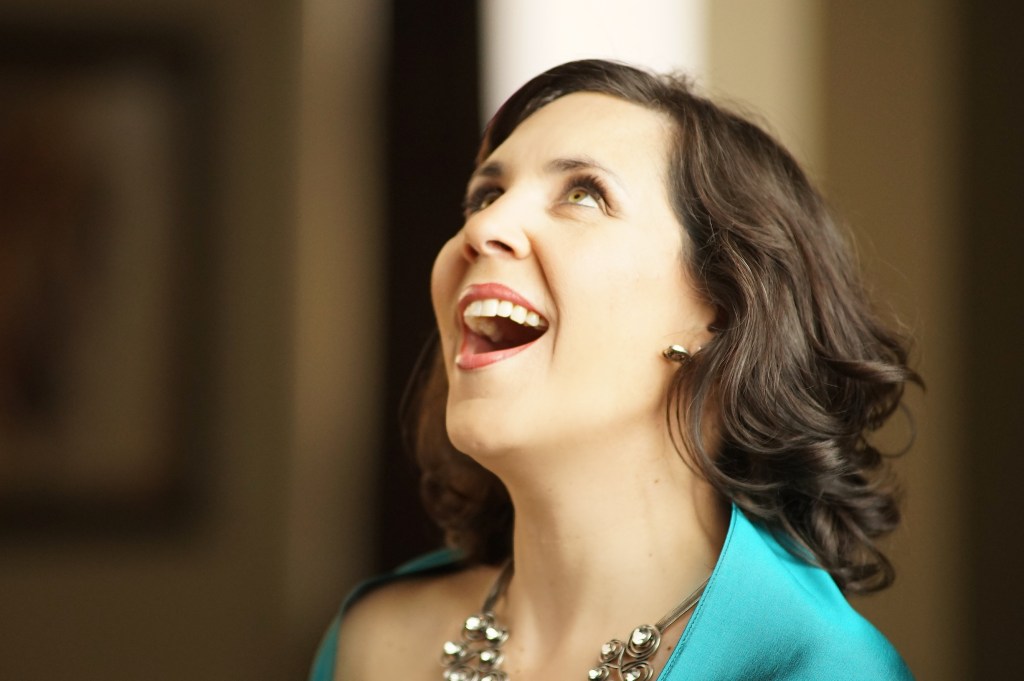
Jessica Rivera, photo credit Tina Gutierrez

An ambitious programming choice occupied the reminder of the program, namely Gabriela Lena Frank’s 2017 Conquest Requiem. Written on commission from the Houston Symphony, it’s a work that has subsequently only been heard in Nashville and Boston ahead of last weekend’s Columbus premiere. The work is concerned with the Spanish conquest of the Aztec empire, and thus functions as a requiem for lost culture. With the broad framework of the Latin requiem mass informing the underlying structure, parts for the vocal soloists were variously in Nahuatl and Spanish – it was regrettable the program books didn’t include the full text by librettist Nilo Cruz, which may be viewed here. The clash of cultures is perhaps a natural subject for Frank, mirroring her own diverse background, inclusive of Chinese, Jewish, Eastern European, Peruvian, Spanish, and Quechua ancestry.

Soprano Jessica Rivera embodied the role of Malinche, an enslaved Nahua woman and mistress of Cortés, with whom she bore a son Martín, sung by baritone Andrew Garland. Both soloists were also engaged for the Houston premiere, and it was clear by the urgency and persuasion of their performances that this is a work they emphatically believe in. A descending gesture opened, with the solemn chorus a present force nearly from the onset, offering the Latin requiem text as a layer of the work’s rich tapestry. Interwoven with the requiem text were the soloists’ exclamations, beginning with Malinche who sang initially in Spanish. Rivera was both impassioned and conflicted, capturing the straddling of cultures.

Frank made effective use of a large orchestra – with some particularly striking scoring for percussion – in a musical language that was approachable without being derivative, especially evident in the strident and rousing Judex ergo or the chilling setting of the Dies irae that followed, wherein Garland introduced Martín with conviction. Material for strings and harp was an orchestral highlight, a calming passage before Rivera sang of Malinche’s inner turmoil in an agonizing climax. A duet saw the soloists blend their voices harmoniously, with the thought-provoking work landing on a plaintive if inconclusive Amen.

Academy of St. Martin in the Fields players delight in an evening of chamber music

Academy of St. Martin in the Fields Chamber Ensemble
Tomo Keller, violin
Harvey De Souza, violin
Robert Smissen, viola
Richard Harwood, cello
Lynda Houghton, double bass
Timothy Orpen, clarinet
Julie Price, bassoon
Stephen Stirling, horn

Southern Theatre
Columbus, OH
November 4, 2023

Nielsen: Serenata in vano, FS 68
Dvořák: String Quintet No. 2 in G major, Op. 77
Beethoven: Septet in E-flat major, Op. 20

Eight members of the illustrious Academy of St. Martin in the Fields made their way to Columbus Saturday evening for a varied program of chamber music. Matters began with Carl Nielsen’s Serenata in vano (“Serenade in Vain”), a quintet scored for the unusual combination of clarinet, bassoon, horn, cello, and double bass – an instrumentation that intentionally overlaps with that of the Beethoven Septet with which it was written to be paired, as was indeed the case at present.

ASMF Chamber Ensemble at the Southern Theatre

Pizzicato strumming in the strings underpinned the dominant clarinet (Timothy Orpen) melody (Nielsen was certainly a composer who knew how to write for clarinet, as epitomized by the significant Clarinet Concerto). The cello (Richard Harwood) was later granted a richly singing melody, enhanced by the warmth of the horn (Stephen Stirling). A lovely opener that showcased the individual personality of each instrument.

Dvořák’s String Quintet No. 2 in G major was a watershed work for the composer, capturing the attention of Brahms and vastly expanding his reputation. Like the Eighth Symphony in the same key that would follow some years later, it’s a warm and bucolic work, the jovial first movement in particular being given with flexible abandon, and always lyrical at heart – even during the heightened drama and tension of the development. The inclusion of double bass in place of the a second viola or cello as is more typical for a string quintet gave the work an added heft.

The scherzo was noted for its Bohemian inflections in its rhythmic vitality – a device that would become one of Dvořák’s signatures. The flowing, lyrical melody of the slow movement showed the quintet in deft balance, as they were perhaps even more so in the joyous finale that brought the first half to an energetic close.

Like the preceding, Beethoven’s Septet was a work that did much to enhance its composer’s renown. Following a bold, quasi-orchestral introduction, delicate filigree from violinist Tomo Keller served to bridge the elegant main theme. The Adagio cantabile boasted a long-breathed melody, first in the clarinet and then answered by the violin, while the horn and bassoon interlocked with an intricately-crafted countermelody. A bouncy minuet followed, perhaps more familiar from its use in the Op. 49 No. 2 piano sonata.

A theme and variations comprised the fourth movement, with a stately presentation of the theme preceding an increasingly florid set of embellishments. The mournful intro of the finale took the manner of a funeral march (a style the composer would often revisit), but quickly gave way following some fiery violin work, with the ensemble offering cohesion and chemistry even at its blistering Presto.

ProMusica opens 45th season with burnished Bruch and bold Beethoven

ProMusica Chamber Orchestra
David Danzmayr, conductor
Simone Porter, violin
Southern Theatre
Columbus, OH
October 7, 2023

Simon: Fate Now Conquers
Bruch: Violin Concerto No. 1 in G minor, Op. 26
Beethoven: Symphony No. 2 in D major, Op. 36

ProMusica Columbus opened its 45th season with what they do best: a work by a contemporary composer, a concerto with a star soloist, and a cornerstone symphony. Beginning the evening was Carlos Simon’s 2020 piece Fate Now Conquers. Since being premiered by the Philadelphia Orchestra, it’s a work that has quickly made rounds from ensembles across the country (I caught a performance in Indianapolis just about a year ago). The work is an homage to Beethoven, suggesting the harmonies of the Seventh Symphony’s Allegretto, and moreover, its title alludes to a passage from Homer’s Iliad which Beethoven had quoted in his diary.

Simone Porter and David Danzmayr with ProMusica, photo credit ProMusica

Terse, motivic gestures in lieu of singable melody marked the piece, very much à la Beethoven. There was a singular rhythmic drive that purveyed a Beethovenian fury, briefly countered by a lyrical cello before its forceful end – certainly packing a punch in a mere 5-minute duration. Bruch’s evergreen Violin Concerto No. 1 in G minor was vividly brought to life by the talents of Simone Porter. A plaintive, longing orchestral passage set the stage for the violin’s entrance; one was struck by Porter’s burnished tone from the onset, articulate and projected with assuredness. In the stately Vorspiel with which the concerto began, Porter made the technical demands look all but effortless, and conductor David Danzmayr offered an orchestral accompaniment that had just the right spark.

This opening prelude served as preparation for the heart of the work, a lyrical and languid Adagio – one hardly wanted this moment of serenity to end. The sprightly finale resided at the other end of the spectrum, however, given with verve and vivacity, and its Hungarian inflections recalled the finale of Brahms’ violin concerto – heard at ProMusica last season.

In his prefatory remarks, Danzmayr suggested a possible thematic connection between Simon’s Fate Now Conquers and Beethoven’s Second Symphony in that the latter was composed at a time when Beethoven was profoundly grappling with fate, as documented in the heart-wrenching Heiligenstadt Testament. In any case, this early entry in Beethoven’s symphonic corpus was marked by a broad introduction that gave way to buoyant theme – airy and joyous, but not without without an underlying sense of drama not far beneath the surface. Though his maturity as a symphonist began with the Eroica, the present work’s expansive and exploratory development made the case that it can’t be dismissed as merely imitative.

A graceful and delicate Larghetto countered, a finely detailed – a few brass flubs notwithstanding. The witty scherzo showed a certain indebtedness to Haydn, though I found Danzmayr’s tempo a bit brisk; I suspect a bit more breathing room wouldn’t have diminished the drama. The finale was as playful and high spirited as anything Beethoven wrote: it was mentioned that ProMusica recently acquired a new set of timpani modeled after those used in Beethoven’s time, and here they resounded to great effect.

Calidore Quartet contrasts elegant Mozart and Beethoven with contemporary works at Chamber Music Columbus

Calidore String Quartet
Southern Theatre
Columbus, OH
April 1, 2023

Hu: A Wondrous Hope
Mozart: String Quartet No. 17 in B-flat major, K458, The Hunt
Watkins: String Quartet No. 2
Beethoven: String Quartet No. 16 in F major, Op. 135

Encore:
Beethoven: Cavatina from String Quartet No. 13 in B-flat major, Op. 130

The penultimate installment of Chamber Music Columbus’ 75th season saw the Calidore Quartet – the third consecutive string quartet to be featured this season – in a program anchored by major works of Mozart and Beethoven. The next “puzzle piece” of Ching-Chu Hu’s ubiquitous fanfare opened the evening, titled A Wondrous Hope. Filled with yearning, it explored different combinations within the quartet in harmonious balance, and shifts in texture added variety and color.

Calidore Quartet, photo credit calidorestringquartet.com

Mozart’s Hunt quartet was given with deft balance and clear articulation – particularly evident during the delicate ornaments – and a genteel approach at times tempered by a more rustic feel, fitting per its epithet. The minuet danced with light touch and an elegant melody from first violinist Jeffrey Myers (who also appeared on this stage during the season-opening performance with VIVO). The Adagio was a songful, flowing statement, and like the best of Mozart’s finales, the closing movement was of high spirits and exuberance.

Though unable to make it to Columbus in person, Huw Watkins conveyed to the trio his “thoughts of joy and optimism” when writing his String Quartet No. 2, premiered by Calidore at the Wigmore Hall last May, with Saturday counting as the first American performance. Starting with a single pluck, fragments of themes coalesced, signaling much potential to be explored. Matters took flight, fluttering into the strings’ high register, and was given an energetic workout. A central slow movement began sweetly nostalgic, growing in urgency as the composer explored more dissonant harmonies, though never straying too far from resolute tonality. The opening pluck returned to set off the finale of vigorous, pungent harmonies, closing in a burst of energy.

Beethoven’s final string quartet (the last major work he completed) closed the evening. A resonant gesture in the viola began, evidencing the ensemble’s keen attention to the inner voices for a reading refined and reflective. The Vivace was of rhythmic vitality and intricacy, and not without some unexpected syncopations. Deeply felt, the plaintive slow movement unfolded with eloquence, a divinely beautiful prayer. A discursive, questioning gesture initiated the wide-ranging finale, further demonstrating the quartet’s chemistry and cohesion.

Introducing the encore, Myers – a Columbus native – spoke fondly of the influence of two luminary violinists we have sadly lost in recent months, Charles Weatherbee and David Niwa. Dedicating the closing selection of Beethoven’s Cavatina from the op. 130 quartet to their memory, it was a gorgeous, loving tribute.

Uchida embarks on spiritual journey in Beethoven’s final piano sonatas

Mitsuko Uchida, piano
Mandel Concert Hall
Severance Music Center
Cleveland, OH
February 26, 2023

Beethoven: Piano Sonata No. 30 in E major, Op. 109
Beethoven: Piano Sonata No. 31 in A flat major, Op. 110
Beethoven: Piano Sonata No. 32 in C minor, Op. 111

After seeing the stage of Severance Hall filled to the brim the night before for an opulent Strauss tone poem, it was quite a contrast to enter Sunday afternoon to the sight of a lone grand piano. A welcome sight to be sure, however, the setting for one of Cleveland’s most cherished musical guests to offer the next installment of this season’s piano series. This is the always remarkable Mitsuko Uchida, presenting perhaps the weightiest of all solo piano programs: the final three piano sonatas of Beethoven – and a fitting follow-up to her 2019 program of Schubert sonatas on the same stage.

Mitsuko Uchida in recital at Severance Hall

The bright E major of op. 109 opened graciously and generously lyrical, soon to be contrasted by the rhythmic snap and punch of the Prestissimo. A noble, expansive set of variations closed the work, with the singing theme showing the notoriously stormy composer wholly at peace with the world. Uchida did much to bring out the distinct character and nuance of each variation, and it was quite striking how much musical ground was traversed in a mere six variations. A fugue surfaced in the fifth variation, a signal of the importance of the form to this sonata trilogy and to late Beethoven more broadly speaking.

Thought certainly worthy of applause, Uchida requested the audience to withhold following op. 109 – a directive not followed, and it seemed to take her some time to get back in the zone. Once she did, op. 110 opened in amber warmth, and a sublimely songful melody decorated by fleeting arabesques given with utter weightlessness. I was reminded of Evgeny Kissin’s performance of the sonata on his program here last April. A fiery scherzo followed, sharply accented.

Thus far, the work very closely mirrored its predecessor. The Adagio ma non troppo that followed served as something of a spiritual contemplation – with a longing melody of deepest tenderness – as if the composer was pondering what direction to go next. A fugal finale then broke through, clearly the destination all along. Uchida cut through the counterpoint with exacting clarity, though in no way sacrificing its wondrous musicality.

Op. 111 was certainly worthy of occupying the entire second half. Many pianists will play the opening octaves with both hands instead of the left hand alone as Beethoven notated, but Uchida respected that wish as the composer wasn’t one to create technical challenges without valid musical reasons. Arresting beginnings plunged us into the darkness of C minor, with Uchida unrelenting in weight and power, and even more so in the penetrating, unforgiving fugato.

There’s few things in the repertoire more calming than the opening gesture of the Airietta, an Everest in of itself. There was entrancing purity in the simplicity of the theme, though rhythmic complexities amassed on the note-spattered pages – and while the virtuosity was there in spades, it always took a backseat, in service of the composer, not the pianist. Only Beethoven could make something as seemingly mundane as a trill, the mere oscillation of two consecutive pitches, sound so utterly transcendent. The climax of the movement pushed towards an even higher spiritual plane, only to a retreat to a direct, unadorned final statement to close this spellbinding performance.

Columbus Symphony delights in Viennese triumvirate

Rossen Milanov, conductor
Columbus Symphony Orchestra
Ohio Theatre
Columbus, OH
January 20, 2023

Beethoven: Leonore Overture, Op. 72b
Mozart: Symphony No. 36 in C major, K425, Linz
Haydn: Symphony No. 100 in G major, Hob. I:100, Military

Haydn, Mozart, and Beethoven are all but synonymous with the classical style, and this weekend’s Columbus Symphony program offered one sterling example from each of these Viennese masters (and although indelibly associated with the Austrian capital, none were in fact natives). Beethoven produced no less than four overtures for his sole opera Fidelio; the third, bearing the opera’s original title Leonore, opened the program. Ripe with operatic drama, it functions well as a standalone concert piece – and in the opera house, it has become a long-standing tradition to inject this version between scenes in the second act.

 Rossen Milanov and the Columbus Symphony, photo credit Corinne Mares

Somber beginnings gave rise to dramatic tension, thoughtfully paced by Milanov. Offstage trumpets sounded as a fanfare, suggesting narrative details of the source material, and the work ended in brassy splendor. Slow introductions were par for the course in Haydn’s symphonies, but rather rare for Mozart’s output. He employed such a device for the first time in the Linz symphony (No. 36), a technique he would only revisit twice (nos. 38 and 39). It made for a stately opening, setting up the effervescent main subject of the movement proper, given with airy clarity.

The Andante made for a gentle interlude, though punctuated by insistent brass and timpani. A most elegant of minuets followed, with Milanov’s baton bringing emphasis to the sprightly triple meter. The finale was lithe, lean, and joyous – one of Mozart’s most untroubled creations.

The introduction to Haydn’s Military symphony was given with clarity and careful articulation; the main theme was established with the unusual scoring for flute and oboe, and matters proceeded with a refined charm. Over two centuries later, the Allegretto which gives this symphony its moniker is still so striking and wonderfully surprising with its ceremonial percussion and brass fanfare. Such a movement is a hard act to follow, but the minuet was full of wit and charisma, with playing from the well-rehearsed CSO boasting the requisite transparency demanded by this repertoire. A vigorous return of the percussion made the finale an especially exciting affair.