Marc-André Hamelin offers probing virtuosity at Akron’s Tuesday Musical

Marc-André Hamelin, piano
EJ Thomas Hall
Akron, OH
October 21, 2025

Beethoven: Piano Sonata No. 29 in B-flat major, Op. 106, Hammerklavier
Schumann: Waldszenen, Op. 82
Ravel: Gaspard de la nuit

Encore:
Debussy: Reflets dans l’eau (No. 1 from Images, Book 1)

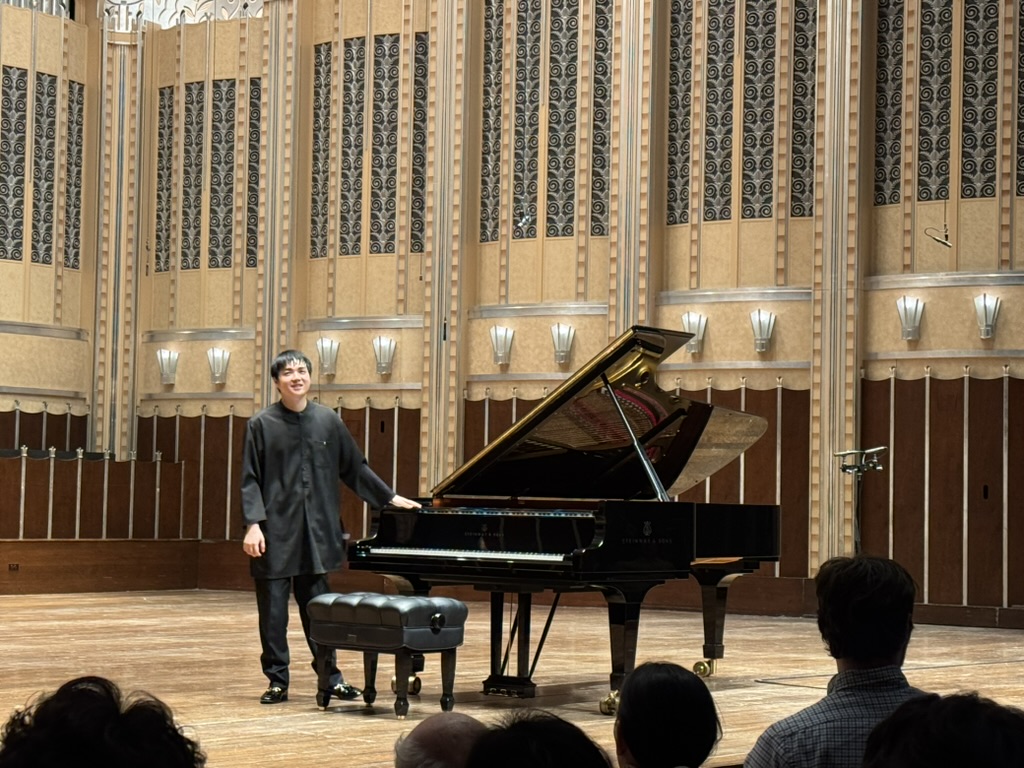
No part of Marc-André Hamelin’s recital at Akron’s Tuesday Musical was for the faint of heart. The repertoire spanned a mammoth Beethoven sonata, the rewarding Romanticism of Schumann, and Ravel at his most mercurial and ferocious. Opening night of Tuesday Musical’s 138th(!) season, Hamelin served as the annual Margaret Baxtresser Pianist, in which capacity he led a masterclass at Kent State the following day. Additionally, the evening performance began with a rippling account of Liszt’s La leggierezza by local high school student Saya Uejima.

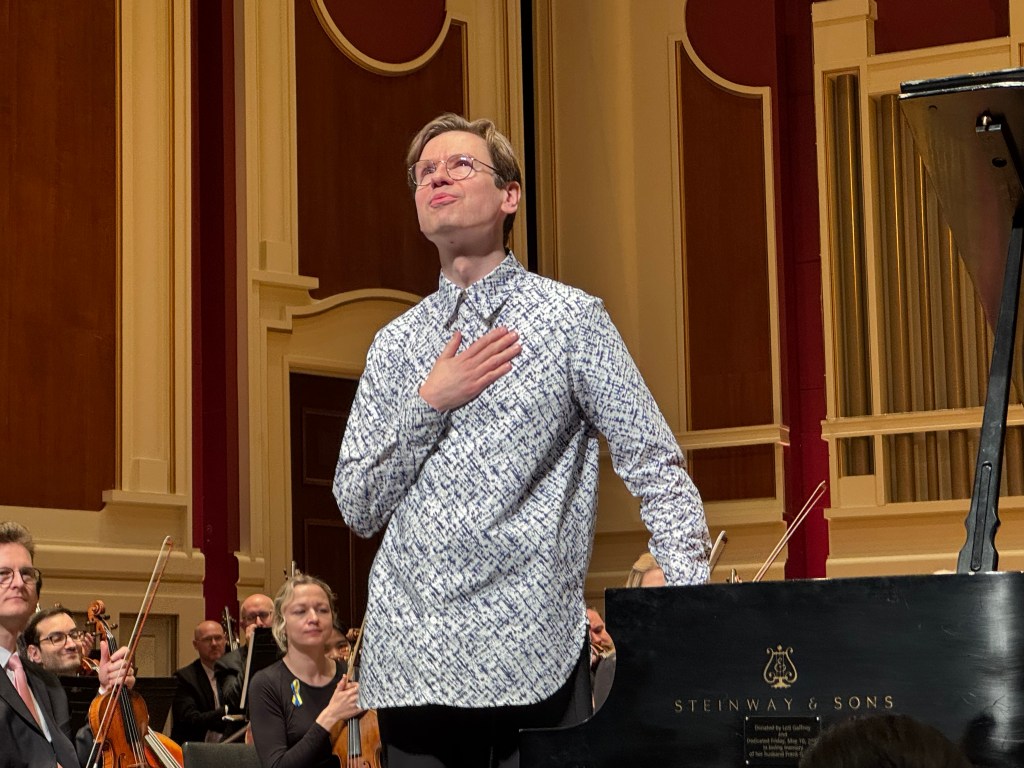
Marc-André Hamelin at EJ Thomas Hall, photo credit Tuesday Musical

Along with the Diabelli Variations, the Hammerklavier is Beethoven’s largest and most demanding work for solo piano. A granite monument of the piano literature, Hamelin has recently recorded it to acclaim. As if totally unfazed by its technical demands, it comprised merely the first half of Tuesday’s recital. The bold Allegro movement made for a commanding beginning. Hamelin opted to strike the opening bass note with the right hand rather than the left for added power. Textures were crisp and brisk, with deft voicing of its intricacies, balancing the exuberant with more graceful material. The development saw some spiky contrapuntal passages, a preview of sorts for what was to come, before the movement’s blistering, uncompromising coda.

Though short in length, the scherzo that followed was hardly a trifle. Hamelin conjured a tempest, though an impulse towards restraint here kept the otherwise tumultuous writing in check. What followed was the work’s magnificent slow movement. Drawing on deep reserves of emotion, Hamelin sustained a spellbinding atmosphere over its nearly twenty-minute duration. Worlds apart from the robustness of the outer movements, here Hamelin purveyed a velvety touch to striking effect, landing on the profound sequence of chords that closed, beautifully voiced. With meditative, improvisatory beginnings, the massive fugue that concluded the sonata saw Hamelin at his best — a dazzling technique used in service of the music.

Schumann’s Waldszenen (Forest Scenes) made for a genial opening to the second half. Eintritt (Arrival) extended a warm and gracious entry into the forest, played with rippling lyricism. Hunting songs came second and second-to-last in this nine-part suite, in both cases given with vigorous flexibility. I was touched by the delicate nostalgia of Einsame Blumen (Lonely Flowers) and the uber-Romantic lushness of Herberge (Wayside Inn). The closing Abschied (Farewell) bid adieu with the same warmth with which it began.

The evening concluded with another work famous for its extraordinary technical demands in Ravel’s Gaspard de la nuit. Though a mainstay of Hamelin’s recital programs for years, it’s the only work of the present selection he has not yet recorded. The work brings to life in musical terms poems by Aloysious Bertrand, all of which deal with fantastical, rather demonic figures — a seasonally appropriate selection for late October! Ondine positively shimmered in this remarkable soundworld of the titular water nymph, building to an ecstatic climax. Le Gibet was a striking contrast in its funereal stasis ahead of Scarbo, closing with a spattering of iridescent colors and ferocious virtuosity.

Hamelin offered just a single encore in Debussy’s Reflets dans l’eau, which like Ondine, paints a mesmerizingly impressionist aquatic scene. A clip of Hamelin discussing the work can be viewed here.

Two years ago, I saw Hamelin play a very similar program in Cleveland with another massive piano sonata — Charles Ives’ Concord — in place of the Hammerklavier. See review here. Lastly, Hamelin was on hand ahead of his Akron recital for a brief but affable interview with WCLV’s Jacqueline Gerber, available for listening here.

Robin Ticciati makes notable Pittsburgh debut with impassioned Berlioz

Pittsburgh Symphony Orchestra
Robin Ticciati, conductor
Francesco Piemontesi, piano
Heinz Hall
Pittsburgh, PA
October 10, 2025

Beethoven: Piano Concerto No. 4 in G major, Op. 58
 Encore:
 Mozart: Piano Sonata No. 12 in F major, K332 – 2. Adagio
Berlioz: Symphonie fantastique, Op. 14

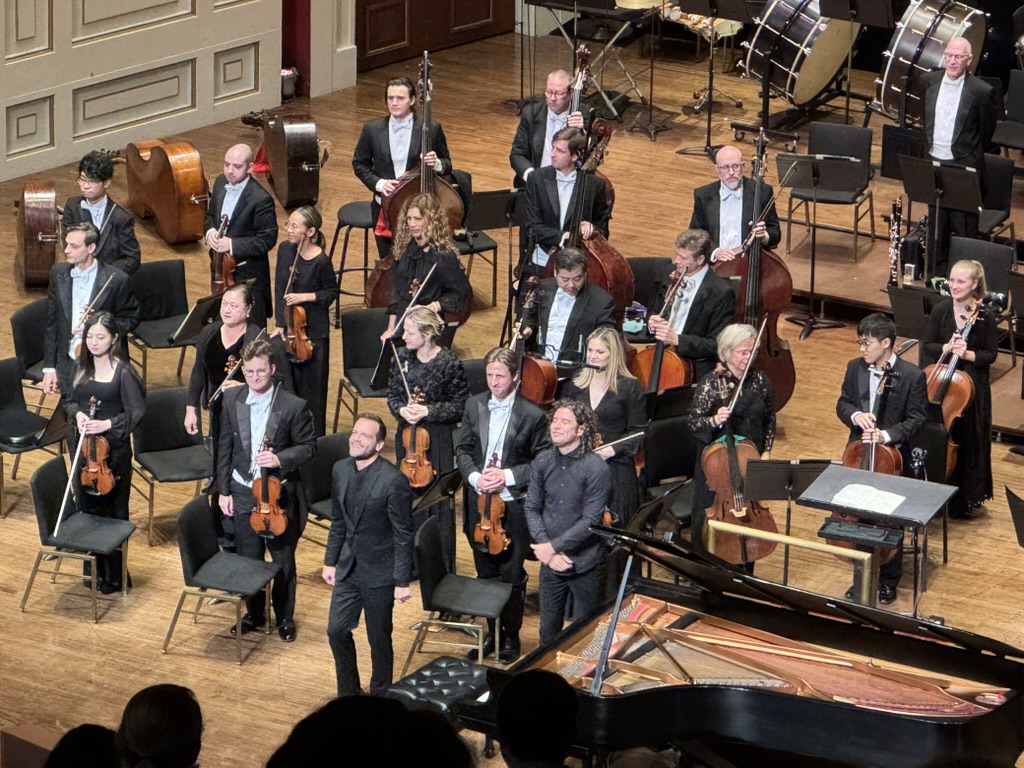
The second week of the Pittsburgh Symphony’s 2025-26 subscription season saw the first of several debuts on tap in British conductor Robin Ticciati. The program was comprised of two major and deeply rewarding works, one at the precipice of Romanticism, the other, the epitome of Romanticism. Beethoven’s genial Piano Concerto No. 4 brought back pianist Francesco Piemontesi, last appearing on this stage just a few months ago.

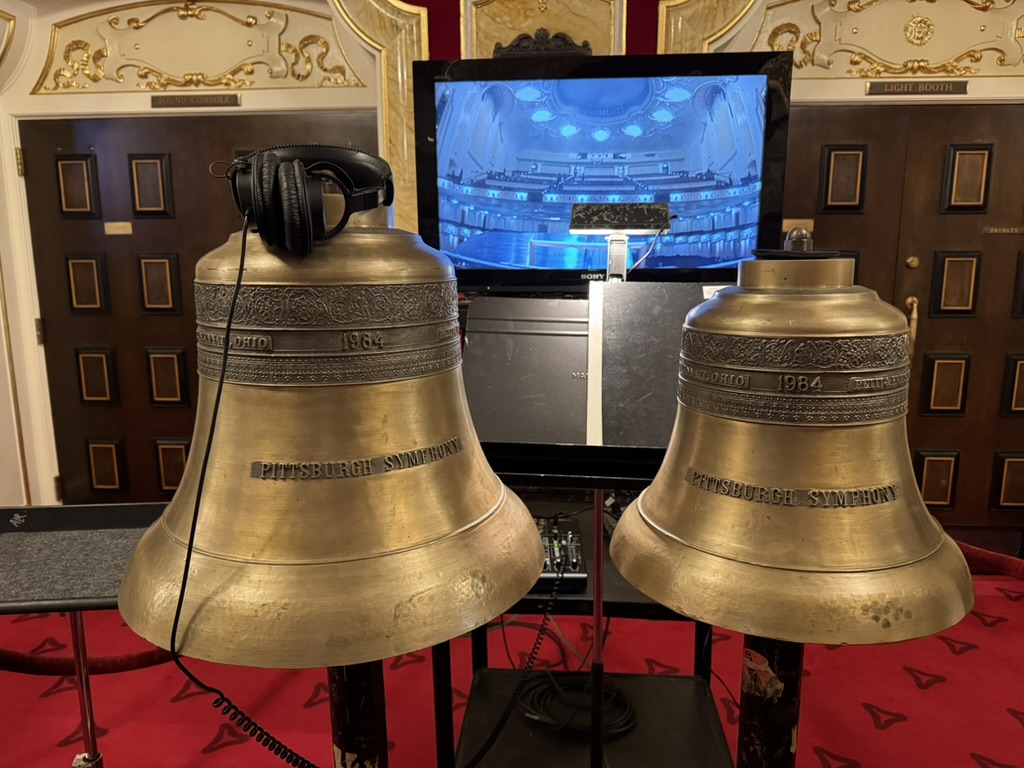
Offstage bells used in the Symphonie fantastique

The solo piano opened the work with a gentle resonance, followed by a long-breathed orchestral exposition. The most intimate and personal of Beethoven’s five piano concertos, Piemontesi drew deep reserves of expression. His thoughtful, probing playing perhaps recalled that of his mentor, Alfred Brendel, and he found great drama in the cadenza. In the Andante con moto, coarse strings introduced the plaintive piano, arriving at a spiritual stasis amidst moments of agitation. As if unsure what direction to go after, the closing rondo started in hesitation before robustly bursting forth with vigor and abandon. For an encore, the pianist selected a lovely slow movement from a Mozart sonata.

Revolutionary a work as it may be, Berlioz’s Symphonie fantastique was written only three years after Beethoven’s death. Tentative beginnings introduced a dreamlike trance, and Ticciati teased out the richness of the strings, favoring minimal vibrato. I was struck by his energetic conducting, nearly using his entire body as his baton danced along to the music. Still, at times the orchestral balance left something to be desired. The first presentation of the idée fixe that binds the work was graceful and filled with longing.

In Un bal, the harps introduced an elegant waltz theme; a striking dialogue between English horn and offstage oboe opened the central Scène aux champs. A widely contrasting portrait of nature, matters went from the calm to the passionate to the stormy, ending with the forlorn English horn all alone. Matters came alive in the iconic Marche au supplice, given an energetic workout in all its brassy splendor. The closing Songe d’une nuit du sabbat opened in an eerie soundscape, filled with the striking timbres of the shrill E-flat clarinet, tolling bells (performed offstage from the lobby), and a chilling invocation of the Dies irae chant in the low brass.

In a post-concert performance, Piemontesi teamed up with PSO wind players for the latter two movements of Beethoven’s Quintet for Piano and Winds. A lovely pendant to the evening, and given the pianist’s chemistry with these players, I’d love to see him perform as part of the orchestra’s PSO360 series.

Two personal notes. One of my fondest concert memories consists of this same Beethoven/Berlioz pairing. The first of many performances I attended at Vienna’s Musikverein during a formative college year in the Austrian capital, conductor and piano were respectively Claudio Abbado and Maurizio Pollini — two of my musical heroes who are sadly no longer with us.

I am eagerly anticipating Marc-André Hamelin’s next album Found Objects/Sound Objects, due for release at the end of the month. In quintessential MAH fashion, it’s an enterprising blend of little-known works mostly dating from the last half-century. The disc concludes with his own Hexensabbat (Witches’ Sabbath). With obvious allusions to the Berlioz (including use of the Dies irae), how fitting it was for the track to be released as a single the same day as the PSO performance — and it’s a thrilling listen.

Francesco Piemontesi, Robin Ticciati, and the PSO

Brooklyn Rider opens Chamber Music Pittsburgh’s 65th season with thoughtful, politically-informed program

Brooklyn Rider
Carnegie Music Hall
Pittsburgh, PA
September 16, 2025

Haydn: String Quartet in F minor, Op. 20 No. 5, Hob. III:35
Byron: String Quartet No. 3
Hearne: We Are Working Tirelessly for a Ceasefire
Negrón: Our Children Speak English and Spanish
Dylan: The Times they are a-changin’ (arr. Colin Jacobsen)
Beethoven: String Quartet No. 9 in C Major, Op. 59 No. 3

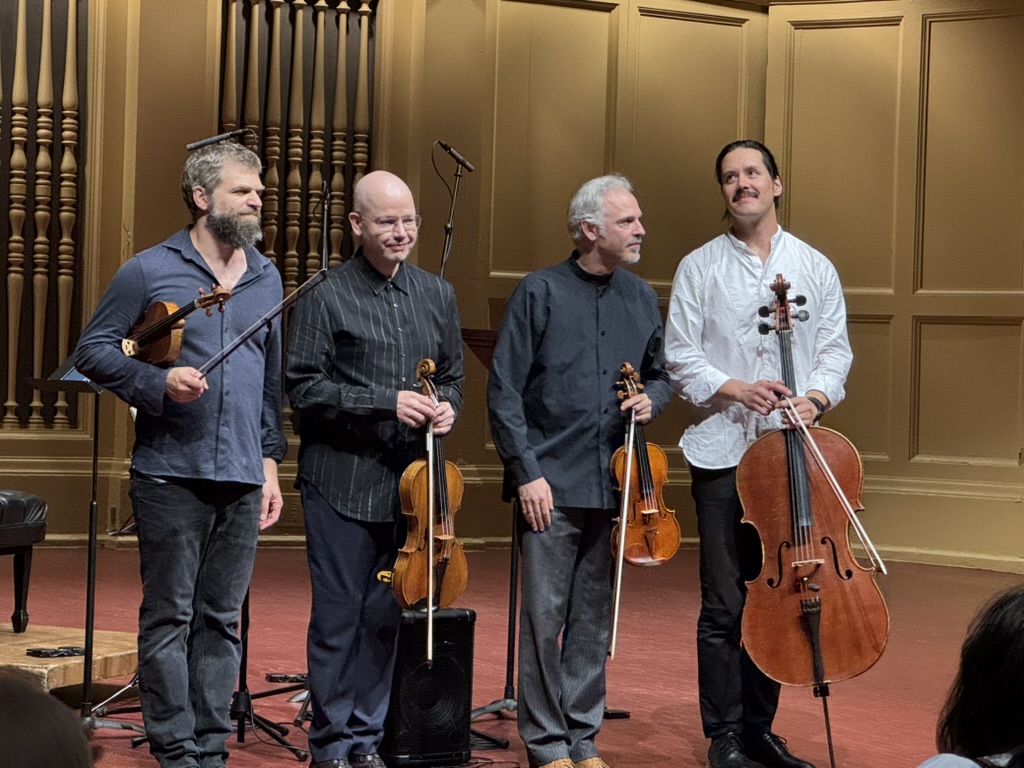
Returning to its former home at the Carnegie Music Hall for the first after the extensive renovation, Chamber Music Pittsburgh began its 65th season with the enterprising string quartet Brooklyn Rider. A banner year for the quartet as well, with this being its 20th anniversary. BR has a gift for thought-provoking recital programs that often become the basis for recordings (see my review of a program which touched on their Healing Modes and Four Elements projects). Tuesday’s offering introduced their Citizenship Notes initiative, celebrating democratic ideals through the string quartet, itself a microcosm of a functioning democracy with its four generally equal voices.

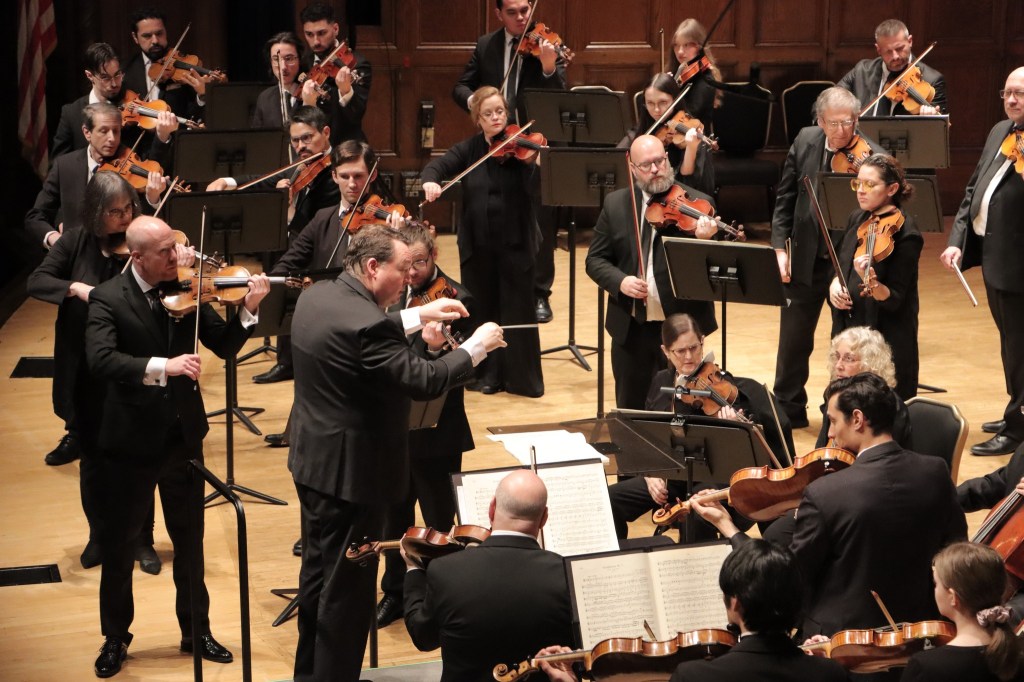
Brooklyn Rider at Chamber Music Pittsburgh

The evening opened with Haydn, whose works bear the ideals of the Enlightenment. The String Quartet in F minor is marked by unusually rich writing from the generally economic classicist, given by BR with ample heft and a refined clarity and balance between the four parts. The slow movement featured some graceful playing in triple meter before the fugal writing of the finale, whisked off with crisp precision. The fugue is perhaps the greatest musical expression of democracy with its lively discourse and equality amongst parts, and the present performance made one wish it was a form Haydn explored more.

A quartet of new commissions followed, all centered around the democratic theme — and the composers engaged were given much latitude on how they wished to express that. Don Byron’s String Quartet No. 3 makes only veiled reference to the theme. Rapid runs in endless succession made for chaotic beginnings, and a colorful employ of pizzicato yielded shifting, contrasting textures. The only overt acknowledgment of the politically charged theme was in the central second movement — denoted “Russian March,” with obvious implications against of the backdrop of the war in Ukraine. An ostinato was used to ominous effect, and the strife was unabated in the finale.

Ted Hearne’s We Are Working Tirelessly for a Ceasefire refers the oft-repeated line from politicians in reference to the Gaza war that amounts to all talk and no action. Incessant repetitions in the music seemed to evoke this deluge of platitudes, and with rhythms out of sync, one perhaps felt the cacophony of a session of Congress. Our Children Speak English and Spanish by Puerto Rican composer Angélica Negrón looked to the children as the surest hope for a democratic future, with pre-recorded bits of children’s voices interwoven with the strings.

Brooklyn Rider violinist Colin Jacobsen offered his own transcription of Bob Dylan’s anthem The Times they are a-changin’, and it was a remarkable way to hear a classic afresh. Much more ambitious than a straightforward transcription, it took the Dylan tune in a multitude of directions as members of the quartet sang the familiar lyrics.

The third and final of Beethoven’s so-called Razumovsky quartets closed the program, neatly bookending the contemporary works with masters of the form. A prolonged and rather static introductory passage was quite striking before a gently cascading main theme took shape, resonating with the brightness of C major. The first two of the Razumovsky quartets explicitly contain a Russian theme — although no such designation is made in the third, the captivating theme of the slow movement is likely of Russian origin (perhaps a connection to the Byron work heard earlier). Winding and wistful, the melodic line was underpinned by pizzicato cello. Like the selected Haydn quartet, Beethoven too closed with a fugue — indeed, the most appropriate way to conclude this program. Blazing by in a whirlwind, it made for one of Beethoven’s most thrilling finales.

Angelic Mahler – and an unexpected debut – at the Pittsburgh Symphony

Pittsburgh Symphony Orchestra
Manfred Honeck, conductor
Bruce Liu, piano
Lilit Davtyan, soprano
Heinz Hall
Pittsburgh, PA
June 6, 2025

Vali: The Camel Bell
Beethoven: Piano Concerto No. 3 in C minor, Op. 37
 Encore:
 Chopin: Fantasie-Impromptu in C-sharp minor, Op. 66
Mahler: Symphony No. 4 in G major

Both of the Pittsburgh Symphony’s final two subscription programs of the season are scheduled to open with a world premiere, the first of which saw Reza Vali’s The Camel Bell come into being. Born in Iran, Vali is a composer with strong connections to Pittsburgh, having completed his PhD in composition at Pitt and subsequently teaching for many years at Carnegie Mellon. Additionally, this counts as his fourth PSO commission — the first three of which have been recorded on a recent Naxos release.

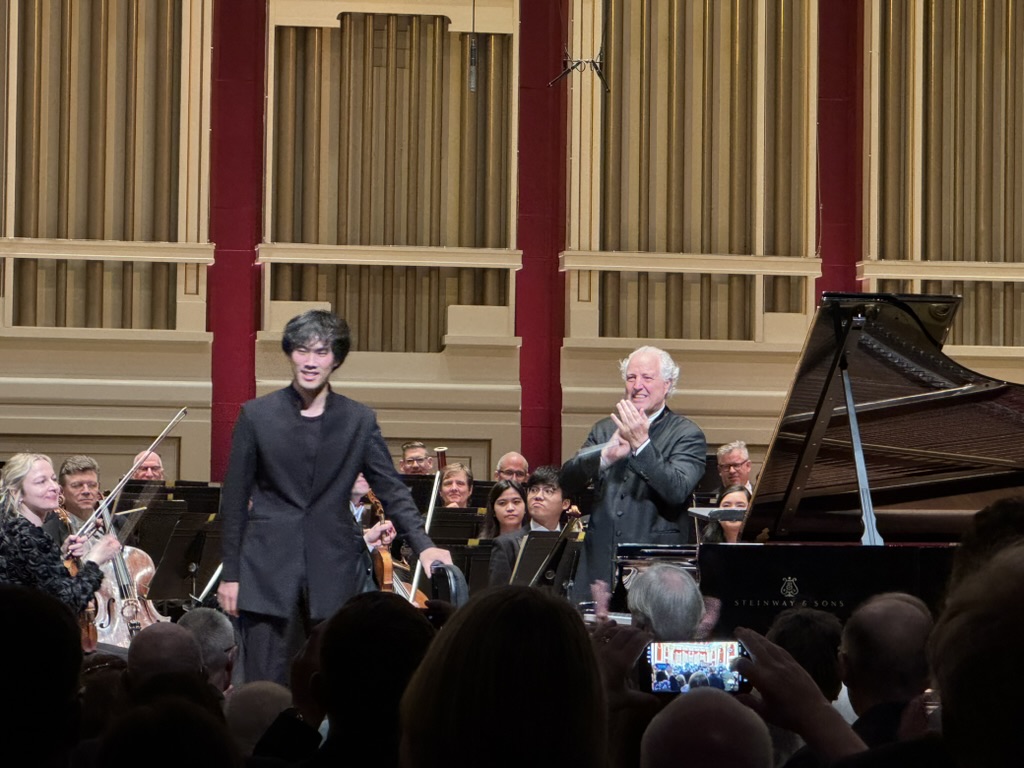
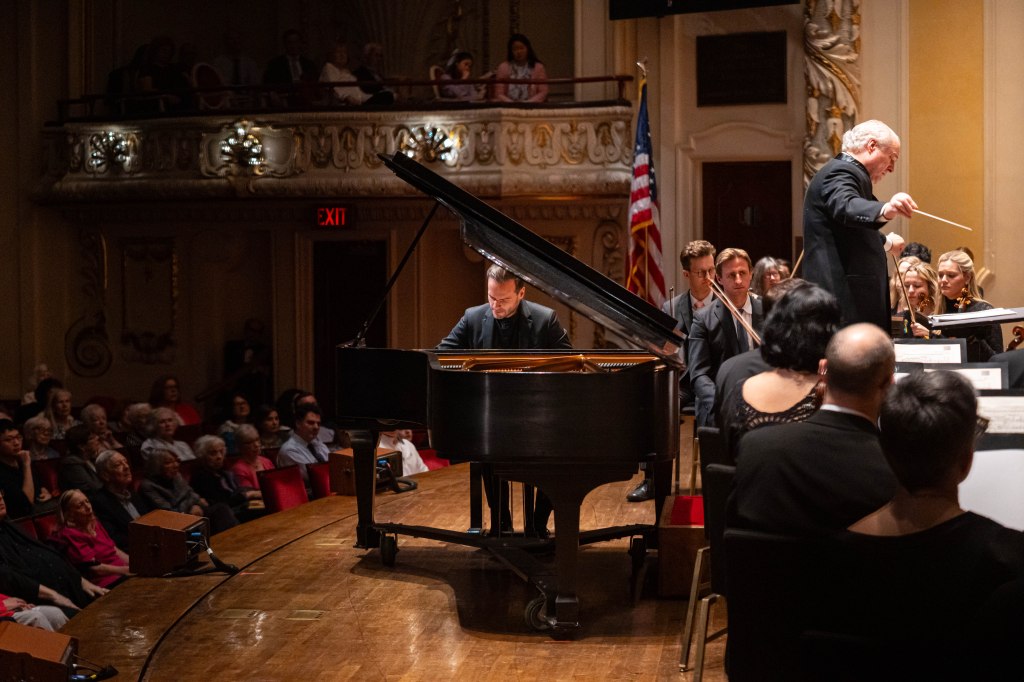
Bruce Liu with Manfred Honeck and the PSO

In his prefatory remarks, Vali likened the work to a “dialogue between great musical civilizations,” specifically noting it weaves together European, American, and Persian influences. A burst of energy began, and work explored the sounds of quarter tones – somewhat jarring to the Western ear, but a striking effect. Inflections even of jazz surfaced in this kaleidoscopic confluence of musical cultures, and I enjoyed the dueling solos between violinists David McCarroll and Jeremy Black. A tour de force closed one of the most impressive new pieces the PSO has introduced this season.

Pianist Alice Sara Ott was regrettably obliged to bow out of this weekend’s appearances due to acute tendinitis — much admiration to Bruce Liu for stepping in on short notice (as well as for the PSO360 recital situated between the two performances of this program). Liu has come to prominence after capturing first prize in the 2021 International Chopin Piano Competition, so a PSO debut from him was a welcome surprise.

Crisply articulated, the orchestral introduction to Beethoven’s Piano Concerto No. 3 introduced the C minor tonality, replete with requisite tension. Liu entered the fold by way of a fiery flourish on the keyboard, while nonetheless purveying a tone elegant and rippling, and the cadenza was given with dramatic flair. The unaccompanied piano opened the central Largo, prayer-like, and probing its great expressive potential. I was struck by Liu’s limber, flexible fingerwork in the stylishly elegant finale, ending in the brightness of C major. As an encore, Liu offered a marvelous account of Chopin’s impassioned Fantasie-Impromptu.

Mahler’s Fourth Symphony is a different animal than the composer’s other symphonies, slimmer and rather classically proportioned, yet still unmistakably Mahlerian. Music director Manfred Honeck drew the orchestral fabric with clarity and transparency, and a classical economy that brought out its details and nuances — and not without an infectious lilt. In the second movement, concertmaster McCarroll played a de-tuned violin, purveying a coarse, rustic quality further enhanced by a shrill clarinet.

In the sprawling Ruhevoll we were given the first glimpse of heaven, plaintive and serene, seemingly at peace — but still not without a certain strife with which to contend. The finale began with an innocent purity, free from world-weary concerns. Soprano Lilit Davtyan perhaps could have benefitted from clearer diction, but I was mostly taken by the angelic quality of her voice, and the way the orchestra deftly matched it.

Víkingur Ólafsson makes magnificent Pittsburgh Symphony debut with impassioned Brahms

Pittsburgh Symphony Orchestra
Manfred Honeck, conductor
Víkingur Ólafsson, piano
Heinz Hall
Pittsburgh, PA
April 27, 2025

Jani: Flare
Beethoven: Symphony No. 1 in C major, Op. 21
Brahms: Piano Concerto No. 1 in D minor, Op. 15

Encores:
Rameau/Ólafsson: The Arts and the Hours
Rameau: Le Rappel des oiseaux

With a Grammy award, an extensive discography, and appearances with the world’s leading orchestras and at the most prestigious concert halls, it’s a bit surprising it’s taken until 2025 for Icelandic pianist Víkingur Ólafsson to debut with the Pittsburgh Symphony. It was worth the wait, however, as he treated Pittsburgh audiences to an arresting, majestic performance of Brahms’ brooding First Piano Concerto (though he was originally scheduled to perform the Second Concerto).

Víkingur Ólafsson at the Pittsburgh Symphony

There was dramatic tension from bar one, with a dark and impassioned orchestral introduction. Ólafsson entered by way of a dulcet chorale, scaling to ferocious tremolos. He purveyed a bold and commanding tone, showing that music of great technical demands can be wholly devoid of showy virtuosity. A thoughtful and probing interpreter, Ólafsson’s absorption in the music was absolute, even bobbing his head during the orchestral interludes like a bona fide rockstar before the expansive first movement reached a bleak, uncompromising close.

The central Adagio was plaintive and filled with longing, and the pianist’s deft voicing and phrasing brought out a resonant lyricism. A ferocious fugato marked the closing rondo finale, with both pianist and orchestra seemingly running on endless reserves of dramatic energy. From the piano bench, Ólafsson eyed his orchestral colleagues with joy and admiration — there was some impressive contrapuntal playing to be heard — and the long journey pointed to a triumphant end.

With charismatic charm, Ólafsson addressed the audience and expressed his gratitude to be in Pittsburgh, reminiscing how impressed he was by the PSO’s playing when he caught them during a performance in Berlin in 2013 (reviewed by a colleague here). He generously offered a pair of encores, both by Rameau — his own transcription styled as The Arts and the Hours from Rameau’s final opera (Les Boréades), and the intricate gem Le Rappel des oiseaux. An impressive way to cap off the most significant local debut of the season.

The program began with the 2021 work Flare by German composer Sophia Jani. Loosely drawing inspiration from the poetry of Mary Oliver, Flare was of a colorful soundscape. Clangorous brass formed the backbone of the work, building to bold climaxes in a style that seemed to be a nod towards film scores.

Beethoven’s First Symphony rounded off the program — if there’s a connective thread, all three works program were by German composers, and all counted as one of their composers’ earliest forays into writing for orchestra. A work very much in Manfred Honeck’s wheelhouse, the weight of the introductory material in the youthful C major symphony gave way to buoyant textures that effervesced — though the development was not without fire and drama. The slow movement was articulate with careful detailing of the rhythmic inflections. Wholly at peace and untroubled, but contrasts were sharpened to add tension. A minuet sparkled with exuberance, a warmup for the boisterous finale, with perhaps the occasional hint to the dramatic style the composer would soon develop.

Manfred Honeck and the Pittsburgh Symphony herald springtime with Beethoven’s Pastoral

Pittsburgh Symphony Orchestra
Manfred Honeck, conductor
Francesco Piemontesi, piano
Heinz Hall
Pittsburgh, PA
March 30, 2025

Eisendle: heliosis
Liszt: Piano Concerto No. 2 in A major, S125
 Encore:
 Schubert: Impromptu in G-flat major, Op. 90 No. 3
Habibi: Jeder Baum spricht
Beethoven: Symphony No. 6 in F major, Op. 68, Pastoral

Over the closing weekend of March, Manfred Honeck and the Pittsburgh Symphony offered a program anchored by Beethoven’s Pastoral symphony, certainly an apt way to mark the arrival of spring (and I’m happy to report I spotted some cherry blossoms on the way to Heinz Hall!). In the graceful material that opened the symphony, the PSO radiated a joyous exuberance from the stage.

Francesco Piemontesi, Manfred Honeck, and the PSO, photo credit JMilteer Photography

I was particularly touched by the warmth of the clarinet in the gentle slow movement, hardly portending the storm that lay ahead. The PSO romped through the minuet that followed, with Honeck inviting the musicians to stomp their feet, perhaps giving the authentic air of a country dance. Ample drama painted the ensuing storm in vivid realism, making the closing Shepherd’s Song all the more rewarding.

Prefacing the Beethoven was the 2019 work Jeder Baum spricht (“Every Tree Speaks”) by Iranian composer Iman Habibi. Written for the Philadelphia Orchestra’s celebration of Beethoven’s 250th anniversary, it was explicitly conceived to precede the Fifth and Sixth symphonies, and makes numerous if somewhat veiled references to both. The title comes from Beethoven’s diaries, and in his prerecorded video remarks, Habibi noted a further resonance to the current climate crisis. An invocation of the fate motif from the Fifth opened, and a panoply of nature sounds abounded in this brief, five-minute prelude.

Opening the program was another contemporary work, a 2021 piece by Austrian composer Hannah Eisendle entitled heliosis (a medical term for sunstroke). Following an attention-grabbing opening, there was a retreat to a desolate, sun-drenched soundscape. The scoring emphasized the percussion, and its driving rhythms to my ears echoed Stravinsky’s Rite of Spring.

The program further featured pianist Francesco Piemontesi in Liszt’s Second Piano Concerto (a work I also heard him play at the Chicago Symphony just a few months earlier). Gentle winds began, answered by rolling arpeggios across the piano, as if gingerly exploring the potential of the instrument. Virtuosity was quickly ramped up, however, with the theme being transformed into an energetic march. In a more serene moment, the piano was in a richly lyrical duet with the cello (Anne Martindale Williams), a moment of respite before the fiery end. As an encore, the pianist selected Schubert’s G-flat impromptu — lovely and lyrical, and also a favorite of Piemontesi’s mentor Alfred Brendel.

Youngstown Symphony pairs Beethoven’s Eroica with rarely-heard Cherubini

Youngstown Symphony Orchestra
Erik Ochsner, conductor
Stambaugh Auditorium
Youngstown, OH
January 19, 2025

Cherubini: Overture to L’hôtellerie portugaise
Cherubini: Symphony in D major
Beethoven: Symphony No. 3 in E-flat major, Op. 55, Eroica

For the first time in its almost 100-year history, the Youngstown Symphony Orchestra performed music of Luigi Cherubini. A representative overture and symphony comprised the first half of Sunday afternoon’s program at Stambaugh Auditorium. When asked who of his contemporaries he most admired, Beethoven cited Cherubini — quite a stamp of approval for the Italian composer who was once highly regarded for his operas, but to whom history has been much less kind. Kudos to conductor Erik Ochsner for devising an intriguing, historically informed program.

Eric Ochsner conducting the YSO, photo credit Youngstown Symphony

The program opened with the overture to his opera L’hôtellerie portugaise (“The Portuguese Inn”), proving to be quite an effective curtain-raiser. A playful, flippant gesture opened, countered by touchingly resonant strings. Given with joy and vivacity, it predicted the charm and ebullience that would become such hallmarks of Rossini’s overtures. The drama in the present overture was fittingly operatic, and left me intrigued to discover the rest of the opera.

Cherubini’s Symphony in D major followed, a somewhat uncommon medium for Italian composers. Much like early Beethoven and Schubert, it’s a work that bridges the gap between the Classical and Romantic styles, a key piece of the puzzle to the development of the aesthetic that would dominate most of the nineteenth century. The elegant slow introduction recalled the symphonies of Haydn (Cherubini, like Haydn, also spent formative years in London), and the first movement proper was marked by charming strings and touches of winds and brass.

The Larghetto cantabile served as a lyrical interlude conveyed with genuine feeling, decorated with delicate ornaments and deft layering of the inner voices. A foot-tapping scherzo followed, and the sprightly finale ranged from the lithe to the bellicose. A well-balanced performance evidenced the YSO’s committed advocacy for this rarely-heard work.

Familiar territory was reached in the second half devoted to Beethoven’s epochal Eroica. Pairing it with the Cherubini symphony went to show just how revolutionary and ahead of his time Beethoven was — the former dates from 1815, more than a decade after Beethoven’s, yet sounds so conservative by comparison. Given with a noticeably more polished reading than the Cherubini works, it’s certainly a piece more in the comfort zone of both players and audience alike. Yet ultimately Sunday’s performance was more inspired than routine, with the first movement spacious and exultant, and dramatic tension was teased out of the striking dissonances in the development.

In the somber funeral march, one was struck by the richness of the strings, and the glimmers of triumph during the brassy maggiore. The scherzo was vigorous but not rushed, though the brass intonation in its trio left something to be desired. A burst of energy opened the finale, followed by a pizzicato presentation of the theme which served as the source for the wide-ranging variations that ensued, showing the many sides of a seemingly simple subject.

Early symphonies and a new violin concerto at Los Angeles Chamber Orchestra

Los Angeles Chamber Orchestra
Jaime Martín, conductor
Kelly Hall-Tompkins, violin
Alex Theatre
Glendale, CA
November 2, 2024

Haydn: Symphony No. 7 in C major, Hob. I:7, Le midi
Beal: Body in Motion
Beethoven: Overture to Egmont, Op. 84
Beethoven: Symphony No. 1 in C major, Op. 21

Held at the historic Alex Theatre in Glendale, the Los Angeles Chamber Orchestra presented an alluring program bookended by early forays into the symphony from Haydn and Beethoven. As a centerpiece was a recent violin concerto by Jeff Beal, receiving its West Coast premiere.

Jaime Martín, Jeff Beal, and Kelly Hall-Tompkins with LACO

Haydn’s Seventh Symphony is the middle of early trilogy, in which each entry represents a different time of day (the other two are also being performed by LACO this season). Le midi (Noon) was written for the composer’s inaugural concert for the Esterházy family, the beginnings of an enormously fruitful musical relationship. The introduction was marked by crisp dotted rhythms, and I was struck from the first bars by music director Jaime Martín’s graceful conducting — without a baton, he seemed to be acting out the music he intended to draw from the orchestra rather than merely beating time.

The work proceeded with delightful interplay amongst the musicians on stage, and evidenced Haydn’s blossoming compositional skill — though one scarcely could have imagined that nearly 100 more symphonies would follow. Solo passages from concertmaster and principal cello were further highlights. A recitative served as an introduction to the Adagio — an inventive device which the composer would rarely revisit. Genteel material was decorated by fluttering flutes, and a duet between violin and cello gave a certain chamber-like quality. An elegant minuet followed — with a striking double bass solo in the trio — rounded off a by a finale brisk and full of vitality.

Jeff Beal is a California native particularly known for his work in film and television, including scores for House of Cards and Monk. His violin concerto titled Body in Motion received its first hearing at the St. Louis Symphony this past January, and LACO also engaged dedicatee Kelly Hall-Tompkins as soloist. Each of the three movements depicts a certain physiological phenomenon, beginning with head above water. Rippling material in the orchestra opened, with the violin soloist entering on the crest of the wave. A long and lyrical melody contrasted the orchestra’s bubbling gestures. Matters were ramped up in vigor with rapid-fire playing from the soloist, and a colorful touch of percussion. A wide-ranging cadenza followed, and finally, the sea swells of the opening resurfaced.

Plaintive strings, barely present, opened the central breathing movement. Hall-Tompkins joined in to draw out a melodic line in this meditative, inward-facing moment. Coarsely pulsating material began the closing running, and Beal made clever, efficient use of the slimmer resources of a chamber-sized orchestra. The violin writing was quite demanding, traversing the range of her instrument to bring the work to a rousing close. An appealing listen even if not particularly profound.

The remainder of the program was devoted to Beethoven, beginning with the Egmont overture. Bold and bellicose, there was wound-up tension from the opening, further emphasized by LACO through stark dynamic contrasts. The payoff came in the heroic ending, full of brassy splendor. The First Symphony opened with strikingly dissonant chords, quickly resolved — a device which Martín charismatically demonstrated in his spoken remarks. Fleet and buoyant, there was particularly fine playing from the winds, capped off by a joyous finale in all its foot-tapping vigor.

North Carolina Symphony delights in Farrenc and Beethoven

North Carolina Symphony
Joseph Peters, conductor
Meymandi Concert Hall
Martin Marietta Center for the Performing Arts
Raleigh, NC
September 27, 2024

Farrenc: Symphony No. 3 in G minor, Op. 36
Beethoven: Symphony No. 8 in F major, Op. 93

Despite the threat of severe thunderstorms as vestiges of Hurricane Helene, the show went on at Raleigh’s Meymandi Concert Hall, with the North Carolina Symphony offering a delightful matinee program. At the podium was Joseph Peters, who also serves as the Symphony’s associate principal oboe and English horn.

North Carolina Symphony and Joseph Peters

With a Strauss serenade being jettisoned for the shortened afternoon performance, two symphonies were contrasted, beginning with the largely forgetten Third Symphony of Louise Farrenc. A testament to her talent, Farrenc had the distinction of the being the only woman to hold professorship at the Paris Conservatoire in the nineteenth century. Her third and final symphony dates from 1847, a rare instance of a French symphony from that time as French composers sought to explore mediums different from their Germanic counterparts.

A brief slow introduction served to firmly establish the G minor tonality, giving way to a pointed theme, crisply articulate in its presentation. To me, it sounded as something of an amalgamation of Mozart’s two great symphonies in the same key with a touch of Mendelssohn’s Scottish — though there was ample evidence of Farrenc’s own voice, not the least in the mellifluous winds which offered an inimitable Gallic charm. A blistering coda brought the opening movement to a close.

The Adagio cantabile was marked by a deeply lyrical theme in the honeyed clarinet, answered by the strings. Beginning quietly, dynamic contrasts were maximized in the scherzo, Mendelssohnian in its briskness — and to no detriment of clarity. A brief but vigorous finale led to a to satisfying conclusion, and this counted as a welcome opportunity to hear a neglected yet skillfully crafted work.

In Beethoven’s Eighth Symphony, he aspired to the lightheartedness and joviality of his former teacher Haydn — almost as if he needed to create seven monuments before he could attempt such an endeavor. The opening seemingly overflowed with exuberance, with accents punctuating its rhythmic vivacity. The Allegretto scherzando was light and gossamer, and the most patently indebted to Haydn’s wit. Despite being a driving force in replacing the minuet with a scherzo in the symphony, here Beethoven retreated to the venerable dance form. The swagger was infectious, and the horns in the gentler trio were especially lovely — and the work’s finale was of an ebullience that even exceeded that of the opening.

Guest conductor, cellist feature in Columbus Symphony program

Columbus Symphony Orchestra
Kenneth Bean, conductor 
Tommy Mesa, cello
Ohio Theatre
Columbus, OH
May 17, 2024

Mendelssohn: The Hebrides, Op. 26
Montgomery: Divided
Tchaikovsky: Variations on a Rococo Theme, Op. 33
Beethoven: Symphony No. 2 in D major, Op. 36

The penultimate offering of the Columbus Symphony season saw a local podium debut from Kenneth Bean, currently an assistant conductor at the Princeton Symphony Orchestra (CSO music director Rossen Milanov’s other ensemble). The evening began with Mendelssohn’s Hebrides overture, a bit rushed here for my taste, not quite capturing the foggy mystery of the Scottish coast. Matters improved, however, with more measured drama, and fine solo passages from the clarinets.

Tommy Mesa and Kenneth Bean with the Columbus Symphony

Two works for cello and orchestra followed, bringing forth Cuban-American cellist Tommy Mesa. Both works fell short of a full-fledged cello concerto, but said much in the space of their more modest dimensions. Mesa himself gave the premiere of Jessie Montgomery’s Divided with the Sphinx Ensemble at Carnegie Hall in 2022. The work’s title refers to the divisions and inequalities rampant in American society, with the cello often at grating odds with the orchestra. A drone from the soloist in the manner of a lamentation opened. The orchestra joined as if in conflict with the soloist, but the cello part became more declamatory and impassioned, a lyricism that suggested tepid resolution.

Tchaikovsky’s Rococo Variations began with an elegant presentation of the alluring theme following a brief orchestral introduction. The variations that succeeded further elaborated on the theme, and displayed Mesa’s limber technique – though his intonation at times left something to be desired. A slow variation offered contrast, and Mesa was perhaps at his best in a pensive section ahead of the ebullient conclusion.

Though still an early work, Beethoven’s Second Symphony is very much recognizable as the composer’s own, an epoch-defining musical language that had already begun to crystallize. A weighty introduction was anchored by the timpani before the first movement proper took flight with a jovial theme interwoven with drama. It was in this work that Bean seemed to gel best with the CSO. An extended Larghetto was calm and bucolic, though not quite of the heart-wrenching depths Beethoven would aspire to in his slow movements to come. The Second is noted for using a scherzo in place of the time-honored minuet, something that would certainly become one of the composer’s hallmarks, and the jocular finale brought the work to a bold finish.