
Columbus Symphony Orchestra
Kenneth Bean, conductor
Tommy Mesa, cello
Ohio Theatre
Columbus, OH
May 17, 2024
Mendelssohn: The Hebrides, Op. 26
Montgomery: Divided
Tchaikovsky: Variations on a Rococo Theme, Op. 33
Beethoven: Symphony No. 2 in D major, Op. 36
The penultimate offering of the Columbus Symphony season saw a local podium debut from Kenneth Bean, currently an assistant conductor at the Princeton Symphony Orchestra (CSO music director Rossen Milanov’s other ensemble). The evening began with Mendelssohn’s Hebrides overture, a bit rushed here for my taste, not quite capturing the foggy mystery of the Scottish coast. Matters improved, however, with more measured drama, and fine solo passages from the clarinets.
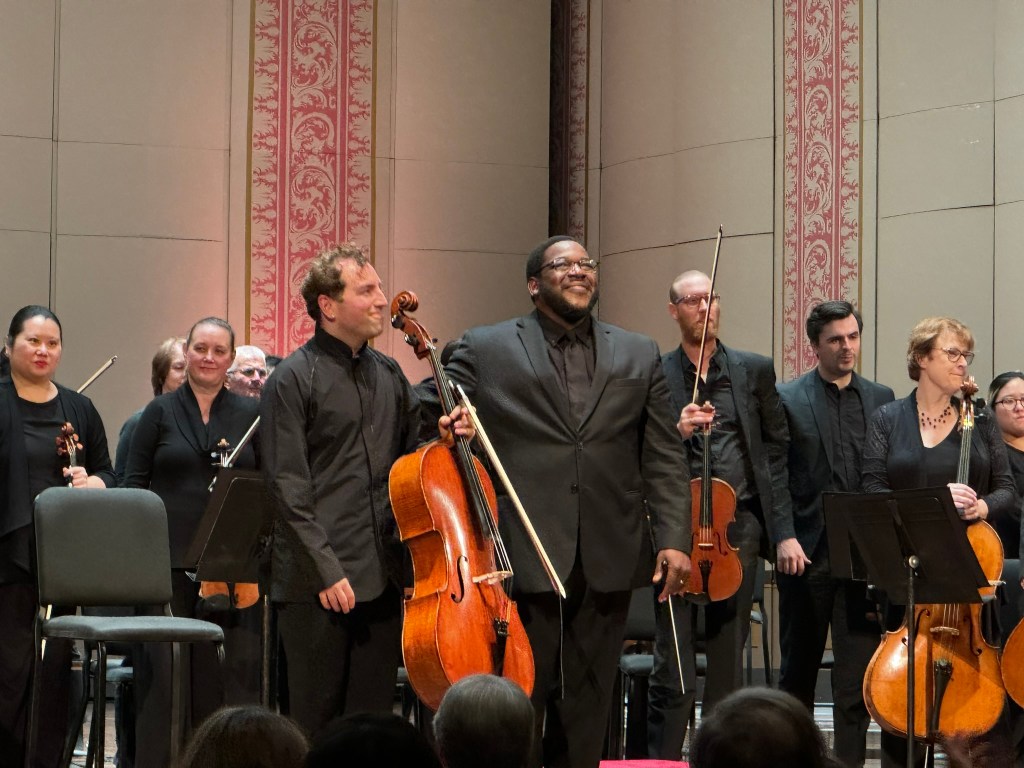
Two works for cello and orchestra followed, bringing forth Cuban-American cellist Tommy Mesa. Both works fell short of a full-fledged cello concerto, but said much in the space of their more modest dimensions. Mesa himself gave the premiere of Jessie Montgomery’s Divided with the Sphinx Ensemble at Carnegie Hall in 2022. The work’s title refers to the divisions and inequalities rampant in American society, with the cello often at grating odds with the orchestra. A drone from the soloist in the manner of a lamentation opened. The orchestra joined as if in conflict with the soloist, but the cello part became more declamatory and impassioned, a lyricism that suggested tepid resolution.
Tchaikovsky’s Rococo Variations began with an elegant presentation of the alluring theme following a brief orchestral introduction. The variations that succeeded further elaborated on the theme, and displayed Mesa’s limber technique – though his intonation at times left something to be desired. A slow variation offered contrast, and Mesa was perhaps at his best in a pensive section ahead of the ebullient conclusion.
Though still an early work, Beethoven’s Second Symphony is very much recognizable as the composer’s own, an epoch-defining musical language that had already begun to crystallize. A weighty introduction was anchored by the timpani before the first movement proper took flight with a jovial theme interwoven with drama. It was in this work that Bean seemed to gel best with the CSO. An extended Larghetto was calm and bucolic, though not quite of the heart-wrenching depths Beethoven would aspire to in his slow movements to come. The Second is noted for using a scherzo in place of the time-honored minuet, something that would certainly become one of the composer’s hallmarks, and the jocular finale brought the work to a bold finish.
 quasi-faust