Escher Quartet and Jordan Bak open Chamber Music Pittsburgh season

Escher Quartet
Jordan Bak, viola
PNC Theatre
Pittsburgh Playhouse
Pittsburgh, PA
October 21, 2024

Barber: String Quartet in B minor, Op. 11
Price: String Quartet No. 2 in A minor
Brahms: String Quintet No. 2 in G major, Op. 111

Opening the 2024-25 season of Chamber Music Pittsburgh was the New York-based Escher Quartet — an ensemble whose last local appearance was a streamed performance without audience during the covid lockdown. Euro-centric a tradition as the string quartet may be, the Escher’s program interesting opened with two American works, beginning with Samuel Barber’s youthful entry in B minor.

Escher Quartet with Jordan Bak, photo credit Chamber Music Pittsburgh

Terse, rapid gesture were given with singular intestity, interspersed with more lyrical material. The central Molto adagio would later become the iconic, standalone Adagio for Strings — and how fascinating it was to hear it in its original context, blanketed by contrasting outer movements. Far less saturated than the later expansion for string orchestra, it allowed one to better take note of its intricacies, particularly the melody for viola. The music grew to the impassioned, only to fade to somber quietude. Barber here was at his most neo-Romantic, sharply diverging from the stark modernism that opened. A brief finale followed without pause, at first recalling the gestures of the beginning, but then taking a life of its own in a brief but blistering coda.

The opening of Florence Price’s Second Quartet had a distinctive, recognizably American sound, balancing erudite sophistication with a certain down-to-earth abandon. A genial and gracious melodic line was tinged with folk tradition, and the slow movement that followed was a songful interlude, seemingly at peace with the world. A Juba movement is a device Price often used, and here it took the usual place of the Scherzo. Given without inhibition, bluesy harmonies and vibrant syncopations made for a delightful listen. The finale saw heightened drama, showcasing Price’s compositional skill with its coruscating counterpoint. An impressive close to the American half of the recital, and the Eschers served as strong advocates for Price.

Quartet then became quintet with the addition of violist Jordan Bak, affording the Pittsburgh audience the opportunity to hear Brahms’ expansive G major string quintet. The composer originally envisioned the work as his fifth symphony, and the vestiges of symphonic heft were evident from the grand sweep of the opening. A singing theme added contrast, with the addition of the second viola making matters all the more lovely. Bak blended well with the quartet, and the combined forces offered mastery of the work’s large-scale form.

A pizzicato bass line from the cello was a striking effect in the serene Adagio, as was a richly articulated melodic line in the first violin. The hesitating gesture in the penultimate movement gave it a certain autumnal quality, fitting for a work from late in the composer’s life, but the finale was a playful affair, hardly dour, with a bold and bracing finish fitting for a work of such proportion.

Columbus Symphony celebrates American music with standout guest conductor and soloist

Columbus Symphony Orchestra
David Alan Miller, conductor
Aubree Oliverson, violin
Ohio Theatre
Columbus, OH
February 3, 2023

Simon: This Land
Barber: Violin Concerto
 Encore:
 Puts: Arches
Dvořák: Symphony No. 9 in E minor, Op. 95, From the New World

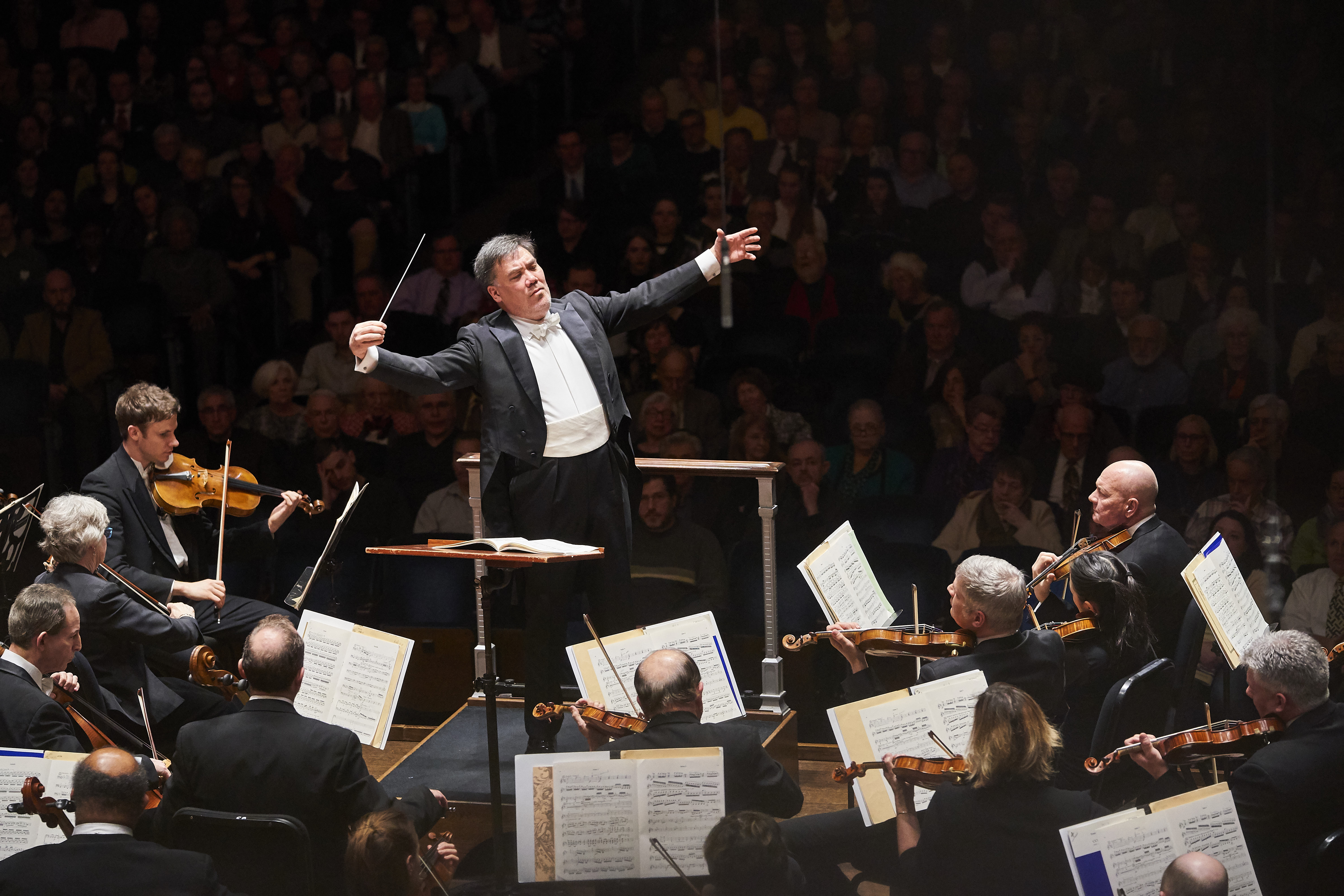
Under guest conductor David Alan Miller, the Columbus Symphony presented an exuberant program of American music – the first half comprised of American composers, the latter the view of a foreigner looking in. As music director of the Albany Symphony Orchestra, Miller has developed a reputation for his commitment to contemporary music, and began the CSO program with a 2019 work of Carlos Simon. This Land is a musical depiction of the Statue of Liberty, and in particular, the Emma Lazarus poem at its base. It began introspectively with earthy harmonies, as a mediation on the poem and monument, and perhaps the less than promised realization of those ideals. A patchwork tapestry of various national anthems took shape, and the brief work closed as pensively as it began.

Aubree Oliverson, David Alan Miller, and the Columbus Symphony, photo credit Corinne Mares

Barber’s Violin Concerto put the considerable talents of soloist Aubree Oliverson in the spotlight. Eschewing introductory material, the music got right down to business with a rich lyricism from bar one, heightened by Oliverson’s warm, amber tone – self-assured, and articulately projecting over the orchestra. The movement was not without moments of tension, but never wandered far from its lyrical heart. A mournful oboe marked the central Andante, music clearly from the same pen as the Adagio for Strings, and the solo writing reached high into the range of Oliverson’s instrument. A breathless moto perpetuo – and the most harmonically adventurous of the movements – made for an exciting, energetic close. Certainly one of the finest concertos to come from this country, and on a personal note, I have fond memories of hearing the work here back in March 2010 – the very first time I attended the Columbus Symphony.

As a well-deserved encore, Oliverson selected another American composer in Kevin Puts, a name which has gotten much attention as of late following the premiere of his opera The Hours at the Met this past November. Arches proved to be a real treat for the audience: the violinist selected the final caprice wherein she drew out the titular arches without respite, increasingly wide and to mesmerizing effect – a jaw-droopingly virtuosic response to the Barber finale.

The evening closed with Dvořák’s “New World” symphony, the crowning product of his American sojourn. Some local concertgoers may have heard the symphony just the night before, concluding the Lviv National Philharmonic’s performance at Denison University. A passionate and brooding opening purveyed drama without bombast, while a stirring chorale began the Largo, setting the stage for the memorable English horn solo. In the scherzo, Dvořák found a way to remind us of his Czech origins in its flavor, seamlessly blended with the “American” material, and the lilting trio was especially delightful. The finale was dramatic to the finish of this polished performance, evidencing Miller’s fine chemistry with this orchestra.

Weilerstein, Gilbert, and Cleveland Orchestra reunite in bracing Barber

Cleveland Orchestra
Alan Gilbert, conductor
Alisa Weilerstein, cello
Severance Hall
Cleveland, OH
March 15, 2018

Dvořák: The Watersprite, Op. 107
Barber: Cello Concerto, Op. 22
­ Encore:
 Bach: Cello Suite No. 4 in E flat major, BWV 1010 – Sarabande
Dvořák:  Symphony No. 8 in G major, Op. 88

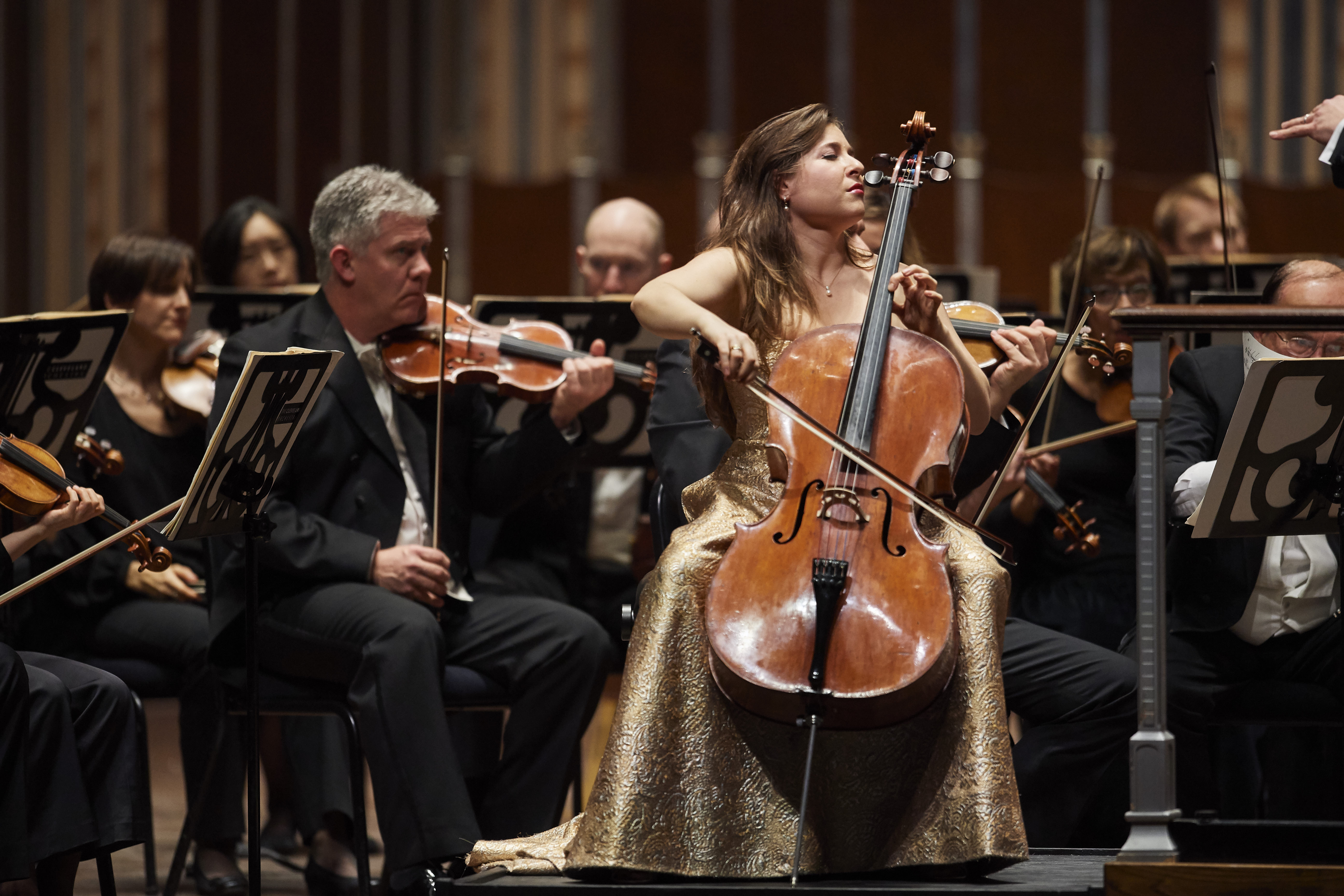
The weekend’s Cleveland Orchestra concerts were a reunion of sorts, bringing together conductor Alan Gilbert and cellist Alisa Weilerstein – longtime collaborators with important roots in Cleveland. Gilbert, who would go on to become music director of the New York Philharmonic from 2009-17, had formative years Cleveland serving as assistant conductor from 1994-97; Weilerstein made her professional debut in 1995 as a 13-year-old wunderkind with this very orchestra and Gilbert at the podium. The repertoire of choice this time was the Cello Concerto by Samuel Barber, a work which Weilerstein has championed – and while a major entry in the concerto repertoire for cellists, it’s surprisingly rarely encountered, this being only the second time TCO has performed it.

CLO031518_023
Alisa Weilerstein and The Cleveland Orchestra, all photos © Roger Mastroianni, Courtesy of The Cleveland Orchestra

Matters began with an arresting, angular theme and a gritty lyricism occasionally interjected by spiky pizzicatos. The extended cadenza was a monologue that stretched the technical possibilities of the cello, and Weilerstein delivered with an unblinking virtuosity, showing utter command of the work and of her instrument. The angular theme resurfaced in due course for the movement’s muscular conclusion. The central Andante sostenuto was remarkably lyrical if still falling short of the sumptuousness of that in the same composer’s Violin Concerto. A totally different side of the cello was on display here, the singing richness of the solo lines often entering the instrument’s highest register, and Weilerstein’s dialogue with oboist Frank Rosenwein was particularly affecting. The calm repose was duly broken for the tour de force finale. Most imposing was a chorale-like passage with fearsome double stops, and the work closed in gripping intensity. Weilerstein offered a well-deserved encore: the Sarabande from Bach’s Cello Suite No. 4, elegant in its stately simplicity.

Works of Dvořák framed the concerto, the opening selection coming from the Bohemian’s late quartet of tone poems. Dvořák lived a decade after completing his final symphony, and seemingly having exhausted all possibilities of that venerable medium, turned to the tone poem, writing to my mind some of his most ambitious music. Vodník (variously translated as the Watersprite or Water Goblin – a character who also featured prominently in Dvořák’s opera Rusalka) was given its first Cleveland Orchestra performance, a testament to the way these works have been overshadowed by the well-worn symphonies. Liquid flutes and flowing strings opened with the music steadily growing in urgency. A tender theme depicted the innocence of the girl from the Czech fairy tale which inspired the piece, with some noteworthy clarinet playing by Daniel McKelway. Gilbert and the orchestra drew out the narrative in delirious detail to its gruesome, somber end.

CLO031518_156
Alan Gilbert and The Cleveland Orchestra

Dvořák’s Symphony No. 8 in G major rounded off the program, its minor-inflected opening belying its wonderfully sunny disposition. Some particularly graceful passages were given in the flute by Joshua Smith, and the opening movement unfurled in great capaciousness. The Adagio opened in rich resound, with bubbling winds and a lithe solo line from concertmaster William Preucil adding to its pastoralism. Lilting, high-reaching strings marked the folk-inspired Allegretto grazioso, countered by a lovely, untroubled trio, not far removed in inspiration from a Schubert ländler. The declamatory finale opened with pealing trumpets. A more songful theme offered contrast, only to become increasingly rambunctious as the variations proceeded, and I’d be remiss not to give mention to the very fine contributions of clarinetist Afendi Yusuf.

CLO031518_119
Alan Gilbert and The Cleveland Orchestra