Honeck and Pittsburgh Symphony offer delectable potpourri in Thanksgiving program

Pittsburgh Symphony Orchestra
Manfred Honeck, conductor
Steven Banks, saxophone
Heinz Hall
Pittsburgh, PA
December 1, 2024

Weber: Overture to Der Freischütz
Tomasi: Concerto for Alto Saxophone
Strauss II: Overture to Die Fledermaus
Strauss II: Éljen a Magyar!, Op. 332
Puccini: Intermezzo from Act III of Manon Lescaut
Strauss II: Leichtes Blut, Op. 319
Banks: Strength of My Life from Come As You Are (arr. Corey Dundee)
Strauss II: Kaiser-Walzer, Op. 437
Strauss II: Auf der Jagd, Op. 373

Encores:
Josef Strauss: Feurfest!, Op. 269
Strauss Sr.: Radetzky-Marsch, Op. 228

In a standing tradition, the Pittsburgh Symphony presented a populist Thanksgiving program highlighted by a brimming selection of waltzes, polkas, and marches from the Strauss family. The first half began on a rather more serious note, however, opening with the overture to Weber’s landmark opera Der Freischütz.

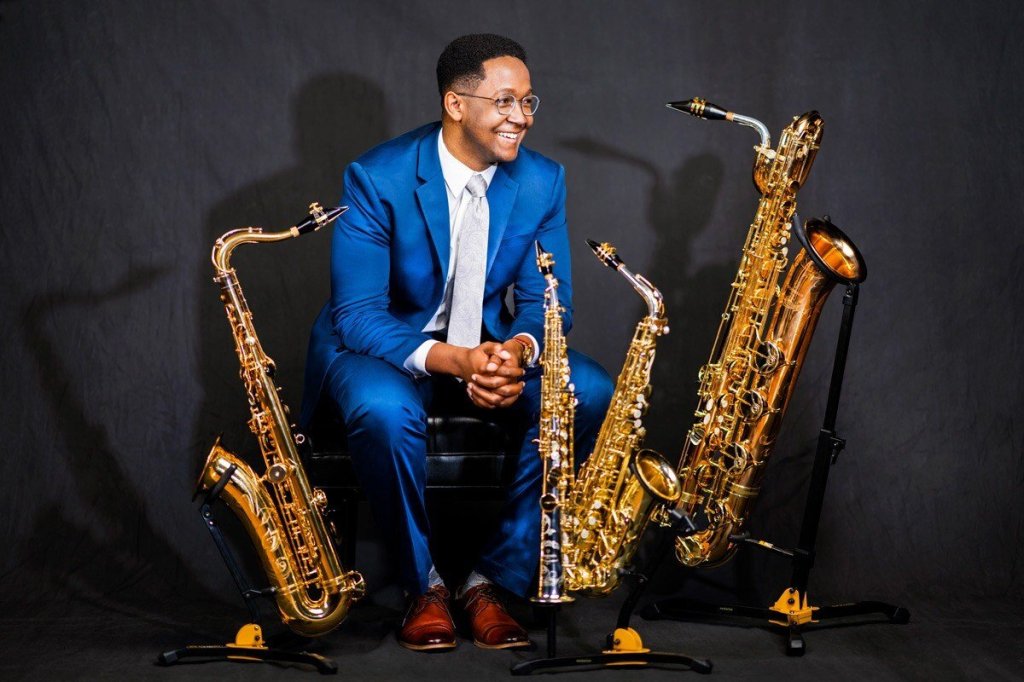
Steven Banks, Manfred Honeck, and the PSO. Photo credit Manfred Honeck on Facebook

A long-bowed melody in the arching strings was tempered by warm chorales from the Pittsburgh brass. With vigor, darker material took over in full-fledged operatic drama, though in the end the triumphant conclusion won the day.

A rarity followed in the 1949 Alto Saxophone Concerto by Henri Tomasi, a quantity for the PSO debut of Steven Banks. A modernist soundscape was drawn from its piquant bitonalities, and the lyrical potential of the saxophone was exploited to remarkable effect — a markedly distinct style from the jazz sound one is more accustomed to. The Allegro section that followed the concerto’s introductory remarks was of a coloristic mid-century aesthetic, with a lively orchestration to boot, and Banks traversed a wide array of tone and timbre.

The closing Giration-Final saw the soloist dazzle in rapid fingerwork, and the movement’s dance inflections added to its excitement. As an encore, Banks offered The Lord’s Prayer, a slow and lyrical paragraph that showed yet another side of his instrument — and the power it has to resound unaccompanied.

The Strauss-heavy latter half was very much in the spirit of a Vienna Philharmonic New Year’s Concert, as if Heinz Hall was momentarily morphed into the golden Musikverein (and one should also be reminded that an authentic Austrian-style Christmas market lies a few blocks away at Market Square). One could have hardly asked for a more informed interpreter than Austrian native Manfred Honeck.

Lithe and elegant, the overture to the operetta Die Fledermaus fizzed with vigor and flamboyance. Hungarian folk melodies — including echoes of the indelible Rákóczi March — were woven in the exuberant Éljen a Magyar! Rather different but equally appealing was an intermezzo from Puccini’s Manon Lescaut, lush and filled with longing. Harps swelled for a sumptuous texture, further encouraged by fine playing from the solo cello.

Banks returned to showcase his own composition entitled Come As You Are. Originally scored for tenor saxophone and piano, the suite is a lovely tribute to his faith and family. On offer was an arrangement for tenor sax and strings of the third movement “Strength of My Life.” Touchingly reflective, it was well-suited to the rich, mellow sound of the tenor.

Back to Strauss. The Emperor Waltzes were fittingly regal, and Auf der Jagd concluded the printed program complete with some humorous theatrics. Honeck and the PSO indulged the audience with a pair of encores beginning with Feuerfest! from the pen of Johann Jr’s brother Josef. Brought to life by use of the anvil, it was only outdone by the rambunctious Radetzky March.

In a post-concert performance, the Pittsburgh Cello Quartet (comprised of four PSO cellists) offered a brief selection of mostly holiday fare. More memorable was a transcription of Poulenc’s pensive O magnum mysterium.
Unfamiliar Dawson symphony highlights Columbus Symphony’s eclectic program

Columbus Symphony Orchestra
Rossen Milanov, conductor
Steven Banks, alto saxophone
Ohio Theatre
Columbus, OH
February 4, 2024

Stravinsky: Suite from The Firebird (1919)
Tomasi: Concerto for Alto Saxophone
Dawson: Negro Folk Symphony

Last weekend saw the Columbus Symphony opening their program with an orchestral favorite before courageously veering firmly into unfamiliar territory. Stravinsky’s Firebird, presented in its most commonly heard 1919 suite, made for a glittering opening. Ominous rumbling in the low strings set the mood and built tension. A warm and gracious theme of folk origin marked the “Dance of the Princesses”, most prominently heard in the oboe. The vigor was substantially ramped up in the “Infernal Dance”, with thunderous punctuations from the bass drum, ultimately pointing to the resplendent finale. In his preconcert talk, Christopher Purdy noted that Stravinsky himself conducted the CSO on one occasion in 1968.

Steven Banks, photo credit steven-banks.com

Henri Tomasi’s 1949 Concerto for Alto Saxophone brought forth an excellent soloist in Steven Banks. Its misty opening in the orchestra gave way to the lyrical tone of the sax, making the case that this is an instrument that has a place in the concert hall as well as the jazz club. Banks impressed in his rapid fingerwork during the extended cadenza, and the timbre of his instrument offered striking contrast to the rest of the orchestra in this colorful midcentury score. The closing “Giration” again showcased the soloist’s limber flexibility, broadening to a clangorous coda. As an encore, Banks performed “The Lord’s Prayer”, a plaintive spiritual that further showcased the saxophone’s range and variety.

The major discovery of the program came in William Dawson’s Negro Folk Symphony. A substantial work, it puts Dawson in same pantheon as fellow Black composers Florence Price, William Grant Still, or Julia Perry – and served as a meaningful acknowledgment of Black History Month. Written in 1934, it was premiered to acclaim by Leopold Stokowski and the Philadelphia Orchestra, only to soon recede into obscurity. Dawson would revise the work decades later, further fleshing out the percussion section after being inspired by a trip to the African continent. In very recent years, orchestras have begun to rediscover the score – and Philadelphia returned to it once again, producing a Grammy-nominated recording.

The three movements each take their titles from spirituals, and the work is an amalgamation of themes based on spirituals and those of Dawson’s own device. In this regard, he very much took cue from Dvořák who found great inspiration in the spiritual and encouraged American composers to embrace its authenticity. The Bond of Africa opened with a horn call, leading to a paragraph spacious and earthy, and in no hurry to arrive at the percussive coda. The work bore Dawson’s individual stamp and I was struck by the composer’s skillful orchestration and control of form – a shame he didn’t write more.

The crepuscular Hope in the Night was more introspective, and with a prominent passage for English horn (also a favorite instrument of Dvořák). It swelled to climaxes strained and pained – with a striking orchestration for bells. Glimmers of hope shone through in more playful material, but the bells resurfaced in a particularly gripping passage, underpinned by eerily pulsating percussion. I found the closing O, Le’ Me Shine, Shine Like a Morning Star! to be the least convincing, but a warm brass chorale helped bring the work to a radiant close.